I’ve been corresponding with a fan of my book Grief: The Great Yearning who is dealing with the loss of a life mate/soul mate.
In my last response to an email from this griever I wrote:
I understand. I really do. I remember thinking I’d never make it through . . . well, any of it. His death. Clearing out our home. Going to stay with my father. Jeff’s birthday, then all the holidays. (I was lucky, if there is such a thing when it comes to grief, but I didn’t have to deal with the holidays for several months. You’re getting everything all at once.) The couplehoodness (for lack of a better word) of our society about did me in. Everywhere I went were couples. Couples walking. Couples eating. Couples doing things together. And there I was. Alone. It seemed such an affront. As if grief itself wasn’t enough to bear.
It truly is hard, especially since for every step towards some sort of light (or lightness of being) you fall back two, three, ten steps. There is no other thing you can do when faced with the Sisyphean task of grief but to pause to cry or scream, and then to take a deep breath and keep on going. It takes years longer than you can ever imagine, but eventually, I promise, it does get better. You just have to keep going one minute at a time. There is no way to handle more than that.
After I sent the email, I felt a bit guilty because there was no real comfort, nothing to hang on to, just the bitter truth that grief is hard and lasts a long time. To my surprise, the response I got in return for this harsh email was a warm message telling me how much my words help.
On reflection, it makes sense that those stark words describing the bleak reality of grief would be a help. I think what grievers most want from others is acknowledgement of their pain, maybe even validation of their grief. Oddly, even though everyone dies, not everyone goes through profound grief. (The math explains it — when one of a couple dies, only one is left to experience the grief.) And when you lose a partner at a relatively young age, there aren’t many people around who understand.
At the beginning of my grief, I was offered plenty of platitudes, a lot of blank stares, even some wary looks, as if a mournful woman was a bizarrely alien creature. The most helpful comments were from people who had gone through the same thing, people who told me that even ten years later, they still missed their partner. The least helpful comment came from people who said that grief took as long as it took, which contains an underlying feeling of exaggerated patience or that something is wrong with you if you don’t “get over” grief as quickly as others. (Sort of like telling the unathletic kid to take as long as she needs in order to run around the track even though all the athletic kids finished ages ago.) The most bewildering and least welcome comments were from people who told me they wished they could take away my pain. I didn’t want my pain taken away. It was the only thing connecting me to him, and besides, the pain wasn’t the problem. The problem was that he was dead, and no one could fix that.
If you’re one of the bereft, you know what I’m talking about. If you’ve never experienced the death of a life mate/soul mate, a child, or any other profound loss, I hope you will listen when people tell you of their grief, even if you don’t understand. Don’t try to mitigate their pain with words that make you feel better but don’t address their reality at all.
But then, what do I know. The world has managed to struggle along without advice from me for billions of years. Just know that if you are experiencing any sort of grief, profound or not, I understand.
***
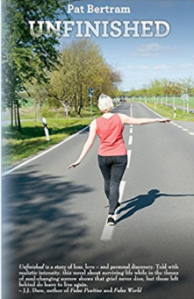
See also: What Do You Say to Someone Who is Grieving at Christmas? And if by chance you know someone who is grieving, either of my books about grief — Grief: The Great Yearning or the novel Unfinished would make a nice gift.
***
Pat Bertram is the author of the suspense novels Unfinished, Madame ZeeZee’s Nightmare, Light Bringer, More Deaths Than One, A Spark of Heavenly Fire, and Daughter Am I. Bertram is also the author of Grief: The Great Yearning, “an exquisite book, wrenching to read, and at the same time full of profound truths.” Connect with Pat on Google+. Like Pat on Facebook.








 Bertram's Blog