Nothing to Do With Me

Every once in a great while, I will see a spike in my blog statistics where suddenly, for no apparent reason, the views on a particular day jump by 1000% or even more. During the first years of blogging, I could see where views came from, what was googled, or what link was clicked to get here, but apparently, privacy laws have now eliminated much of the practice. Sometimes I can see what posts were read, but when there is a big jump, all I see is that the views were for the homepage of my blog, not any specific article.

So I’m left wondering what it was I said that struck such a chord. I know it’s not something I wrote on that day, because this even happened a few times when this blog was all but dormant. Since no one left a comment on any post (which few people do any more), I’m left in the dark.

I’d think this was an algorithmic anomaly or maybe bots trolling the site since sometimes the jump signifies a single view, but sometimes the statistics show that people stayed to check out another post or two. Why? I have no idea. In the past when this happened, I’d congratulate myself on having said something that resonated with people, but now I wonder if such a jump in views has anything to do with me at all.

For a non-blog example: it used to be that when people were kind to me, I’d be pleased with myself, thinking that their kindness was because of something I did, my own kindness, perhaps, then it dawned on me that they were kind to me simply because they themselves were kind. It had nothing to do with me.

Is it possible the jump in views has nothing to do with me or anything I wrote? It certainly has nothing to do with any promotion I’m doing because I gave up promoting this blog years ago when Facebook banned it for being spam. Sometimes I like to think this blog could be considered S.P.A.M. — Special, Perspicacious, Astute, Meaningful — at least to some people, but that’s just me being self-indulgent. But, come to think of it, writing this blog itself is a form of self-indulgence. And so perhaps is wondering what brings people here.

I don’t suppose it matters why people come, at least it shouldn’t matter to me, though I can hope it matters to those who stop by. In any case, I can only write what I feel, throw my words out to the winds of the internet, and what happens after that has nothing to do with me.

It’s like that saying: “What others think of you is none of your business.” Perhaps nothing that happens here after I post is any of my business. Though that doesn’t mean I can’t be curious about what brings people here.

***

Pat Bertram is the author of Grief: The Inside Story – A Guide to Surviving the Loss of a Loved One.
How are characters integral to the setting?

I often troll my site statistics, curious as to how people found this blog, and the other day, several people landed here after Googling “How are characters integral to the setting?” It sounds like they were taking the easy way out doing their homework, but still, it’s a very good question. If the setting is simply a place for events to unfold, then the author has missed out on an opportunity to tighten the story by making the characters an integral part of the setting and the setting an integral part of characterization. Everything should be in service to the story, including the setting.

In my novel, A Spark of Heavenly Fire, the setting and characters are intertwined. The setting is Colorado in the midst of an epidemic. The story is driven by the women, all very ordinary, especially Kate. And that was the point — to tell a story of an ordinary woman who struggled during prosperous times when everyone else was doing well, but who managed to prosper in the dark times when everyone else was having difficulties. Without the epidemic, without the quarantine, without the very terrain of Colorado, Kate would have no being. And without Kate and the other characters, the setting would have no meaning.

Eudora Welty said, “Every story would be another story, and unrecognizable if it took up its characters and plot and happened somewhere else.” Most of my books are set in mountain climes, and the mountains create the characters and the characters complete the setting. A stage is empty and lifeless without the characters. You need characters to interact with the setting to make it come alive.

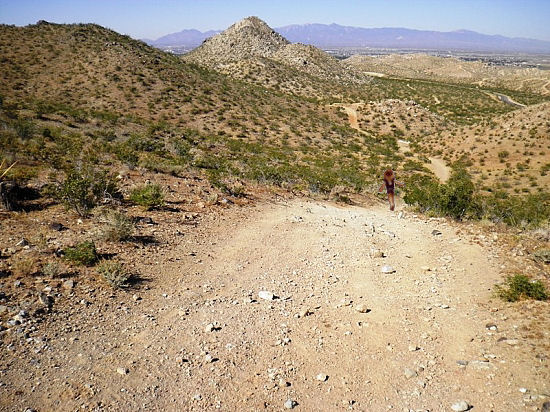
Think of a desolate area, such as a desert road. It evokes a feeling of loneliness, but if you put a character on that road, you personify the loneliness.

The setting/character relationship is not simply a story construct. We are integral to our settings and vice versa. Gardening and lawn care is one very obvious way we are integral to our settings. If not for gardeners, gardens would not exist. But the settings of our lives extend beyond such evident comparisons.

I used to live off a highway on a dead end road bounded by fenced alfalfa fields, so the only place I could walk was by trudging up and down that .3 mile road. This was indicative of my life at the time. My life mate/soul mate was dying, had been dying for a long time, we were stuck in a terribe situation that seemed to be going nowhere.

He is gone out of my life now, and so are the interminable laps on the short road. I left that place of constraints and came to this desert community to take care of my 95-year-old father. When I first got here, I walked the long straight roads in the nearby desert. They seemed indicative of my new life — emptiness and desolation and loneliness stretching endlessly before me. More recently, I’ve taken to hiking a narrow path up and over the knolls. This too is indicative of my life. The desolation isn’t as pronounced, but the challenges are becoming greater as it sinks it that I will always live with his absence, that I will be growing old alone. The true challenge, though, is to make room for joy along with the continued sadness.

I’ve come to see that this is the true purpose of grief — to stretch our minds, souls, psyches so that we can encompass all that life has to offer. At first I thought I could get over my grief. Then I thought I could bury it with new activities. Now I see that sorrow will always be a part of me, but that doesn’t mean it will be the only part of me. Nor will I always be here in the desert. There will be new places to walk, places that reflect the changing me at the same time as I reflect the places.

How are your characters (or you) integral to the setting?




