Two Years, Two Months, Two Weeks, And Two Days of Grief

Two years, two months, two weeks, and two days. That’s how long my life mate/soul mate has been dead, and I still can’t make sense of it all — our meeting, the years we shared, his death, my continued life.

Neither of us had every expected (or wanted) to share a life with anyone, and yet we spent more than three decades together. Our meeting was almost miraculous. In a fit of loneliness, he wished he had someone, and the next week, I walked into his store. We started out with such hope, but our life together was no fairy tale. Much of it was wonderful, more vital than anything I could ever have imagined, yet we were trapped by various failures, not the least of which was his increasingly poor health. I was so tired of it all, so exhausted by trying to hold myself together, that a few times that last year I wished he’d die and get it over with. I never said it aloud, of course, but he knew. How could I have been so horrid? Shouldn’t I have been more patient? Wiser? Kinder? It’s a terrible thing, knowing I am not the woman I thought I was.

During the last few weeks of his life, we reconnected, and I remembered why I loved him.

And then he was gone.

I don’t understand how he can be dead. Well, obviously, I understand the biology of it — I watched him die a bit every day for a lot of years — but the man I knew in the form I knew is gone. Forever. I can’t wrap my mind around that. Even worse, I am forgetting him. My memories are drifting off-center, and I no longer feel the truth of him.

People used to tell me that he still exists in memory, but if so, he is dying a bit more every day. There could come a time when I don’t remember him, when I only remember his absence. I can feel it happening already. Some days now it seems as if he were a stranger I knew long ago rather than a person with whom I spent most of my waking hours for more than half my life. I don’t know whether I should cling to the memory of him, even if it is skewed, or if I should let the memory of him fade and simply deal with what life brings me every day.

I don’t understand my continued life, either. Was I really that woman? That woman who watched a man slowly die, who wanted the suffering to end, yet whose love was so ineffectual she couldn’t make him well or take away a single moment of his pain? That woman so connected to another human being she felt shattered into a thousand pieces after his death? That woman who screamed the pain of her loss to the winds? All these months later, I still don’t know how to deal with his death. Don’t know why I continue to be sad. Don’t know why I feel his absence acutely when I barely remember him.

Mostly I’m trying to look at the future as an adventure, but I’ve had so many immense changes in my life in the past few years, with more on the way, that I feel as if I have no foundation to build on. That feeling, at least, is not true. I have the foundation of all I have done, all I have learned, all I have become — what I don’t have is certainty and security (though no one really does).

And most of all, what I don’t have is him. But perhaps I never did? It could be we were simply passing by and stopped to visit awhile before we continued our journeys. Alone.

New Steps on the Journey Through Grief

I’ve reached a new level of grief. I’m still sad, but I can barely remember why. I still feel the absence of my life mate/soul mate, who died two years and two months ago, yet I can barely remember the living man. The life I shared with him is receding, as if it happened to someone else. There is still a hole in my life and a decided lack of “life” — no sparks kindling new ideas, no electricity of excitement, no radiance — but I no longer have anything with which to compare that lack of life. It’s as if these sad and lonely days are the way it has always been for me.

During those years when we were together, I had someone to talk to, someone who could help put life into a different perspective, and now there is just me. To tell the truth, I still talk to him, but he never offers a different perspective. I used to feel a tenuous connection to him (or at least to our shared past) when I talked to him, but now I have no idea if I’m even talking to him or simply talking aloud.

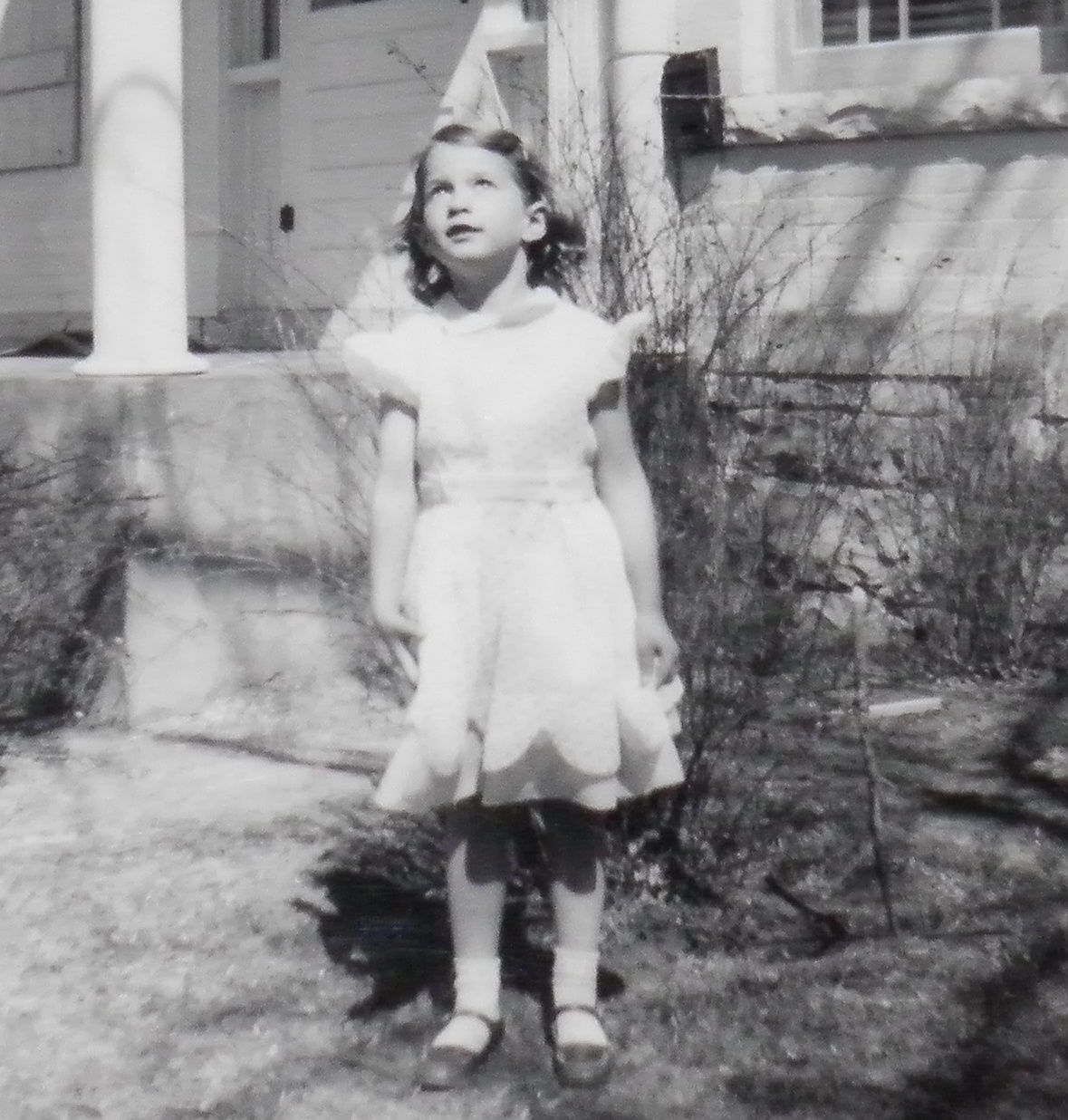
With our shared life moving further into the dim past and my memories of him fading, I worry that I will forget him. I know I’ll forget the person I was when I was with him. No matter how I change, I’m always just me, and yet, (for example) I cannot remember this little girl, cannot remember being her. She has receded far into my past. Or perhaps she’s become subsumed into my current persona? Either way, she no longer exists even in memory. And so will the person I was with him disappear as I move further into the future without him.

The irony is that I was in such pain after his death that I made a special point to experience new things so I could create new memories. I thought new memories would help cushion the severity of the break between our shared life and my life alone, yet those very memories are taking me further away from him.

I might not completely forget him. I have moments when I flash onto a vivid image of him, and as heartbreaking as those moments are (because I am reminded once again that he is dead), they are all I have left of him except for some of his things. It seems cruel that their things outlive the dead. Shouldn’t people live longer than things? Or else, shouldn’t the things disappear when our loved ones do? And yet, as my memories fade, the things I kept of his and the things I kept of ours, such as our household goods, will be all I have to remember him by.

Every new step on the journey through grief brings its own grief. It saddens me that he is forever receding from me. Yet I am still here, and I must live. I can’t cocoon myself in memories of him and our life together. I can only go on doing what I have been doing — experiencing new things and making new memories, even if they take me further away from him.

Grief Update — Two Years and One Month

Grief continues to confound me. It is now two years and one month after the death of my life mate/soul mate. I would have thought I’d have moved beyond grief’s ability to disquiet me, but I still have times where tears rush in to fill the void he left behind.

Some of my grief now is the poking-at-a-sore-tooth-to-see-the-extent-of-the-pain kind rather than the overwhelming agony and angst of the first year. There are still sore spots, most notably the obvious one — that he is dead. I cannot fathom death. My mind just cannot work itself around the conundrum of a once living person being so very gone from this earth. And there is the corollary murmuring deep in my psyche, “and someday you will be gone, too.” But . . . gone where?

When my grief was new, I often wandered in the desert crying out in desperation, “Where are you? Can you hear me?” I don’t call out any more, though I still wonder where he is, if he is, what he is. I envy those who believe without a doubt that their deceased loved ones still exist and that they will see them again because I have no such constant belief, though I do have flickers.

One of the many paradoxes of my grief is that I hope he still exists somewhere, but for myself, I’d be okay with oblivion. Is his death worse for me if he still exists somewhere beyond my ability to connect with him? Or is it worse if he is completely deleted except for a spark of indestructible non-conscious energy? Either way, he is gone out of my life. Either way, I have to deal with the mysteries of death, love, grief, and what the heck am I going to do with the rest of my life?

I met my life mate when I was young and believed in fate and destiny and a mystical connection with the universe. I subscribed to the belief that when the student is ready, the master will appear. And he appeared. He was so radiant, it seemed to me he was a higher being come to earth to help me on my life’s quest. In the few ups and many downs of our shared life, I forgot that feeling. And no wonder — as he got sicker and sicker, his radiance dimmed and all but went out.

During that last year, when he could no longer carry on a two-sided conversation, he would lecture me on what I should do after he was gone. He kept saying, “Listen to me. I won’t always be here to teach you.” I didn’t accept that his dying was imminent, so these lectures aggravated me, as if he thought I was so stupid I couldn’t live on my own. (I’d give anything to hear one of those “lectures” again. How could I not have treasured every word?) But the point is, apparently, deep in his subconscious, he believed what I had once believed, that he came here to be my teacher.

There is not a single question (except the unanswerable ones such where he is and if he is) that has arisen in the past twenty-five months that I didn’t know the answer to. We had discussed everything, sometimes all day, day after day, year after year. He took me as far as he could, imparted his wisdom, and left.

If there is any truth to this scenario, rather than being the rather romantic idea created by a bereft woman grasping hold of life any way she can, then the question of what I am going to do with the rest of my life takes on even greater significance. What is so important about me and my life that this radiant creature would share half his lifetime and all of his long and painful dying with me? I suppose that is what I am left to find out.

Two Years and One Day of Grief

Today I embark on my third year of grief since the death of my life mate/soul mate, and I am now in uncharted territory.

The first year of grief passes in a blur of angst, emotional shock, myriad physical reactions, painful surprises about the nature of loss and grief, and the almost impossible effort of going through the chores of living.

The second year of grief is one of learning to deal with the truth that he is dead, and that there is nothing you can do about it. No matter how well you deal with your grief, no matter how you rise to the challenge of life without him, he is not coming back. You knew this, of course, but now it has seeped deeper into your consciousness, and you feel it with every breath you take. Because of this, the second year (or at least parts of it) can be worse than the first. What makes the second year even harder to face is that you’ve used your grief card. Everyone thinks you should be over your grief, and they have little patience for your continued tears. They urge you to get on with your life, but they don’t understand that this is how you are getting on with your life.

The third year of grief is . . . I don’t yet know since this is only the first day of this new year. Today feels no different from yesterday or the day before, and I don’t imagine tomorrow will feel any different.

During the past two years, I’ve been looking for the bedrock of my new life — the thing, the idea, the place, whatever that bedrock might be — that gives me a foundation on which to build a future. Mostly, I’ve been waiting for my grief to dissipate so I can find my way, but the truth is, I will always grieve for him, though perhaps not as actively as I have been, because he will always be dead.

Acceptance is supposed to be one of the stages of grief, but I’ve never actually reached that stage (nor did I experience most of the supposed stages of grief). I cannot accept that he is dead for the simple reason that it’s not my place to accept it. Acceptance to me suggests that it is okay, and I will never believe that it is okay for him to be dead (even though I do understand the necessity of it). Perhaps acceptance only means that I accept the reality of my continued sorrow and loneliness.

People tell me that you never do get over such a grievous loss, but that after three to five years you rediscover the importance of living. It might be easier to meet the future head-on if I’m not expecting my sadness to dissipate. Maybe this is my bedrock — the missing, the yearning, the sadness, the loneliness. If so, I just need to accept that they are part of my life, and build from there.

Two Years of Grief

A year ago today, my life mate/soul mate died of inoperable kidney cancer. Wait . . .  what am I saying? One year? No. It’s been two years since he died. What a strange error to have made, yet perhaps it’s understandable. The night he died is still so very clear, as if he’s been gone only months, not years.

On the recommendation of his hospice nurse, I’d taken him to the hospice care center in the hopes that they could figure out how to regulate his drugs to give him the most lucidity and the least pain. It crushed my heart to take him there. I never got to talk with him again — he was in a drug-induced coma for those last five days of his life. I think he was at peace the final two days, though. All the time he was there, his breathing sounded like moaning, and I worried that he was in pain, but during his next-to-last day he exhaled a few melodious-sounding breaths, as if he wanted to reassure me he was okay.

He once told me that if it ever came to his being in a facility, he didn’t want me to visit, but how could I not? Even though the care center was sixty-five miles away, I went there every day, but I left early enough so I could get home before dark. The irony is he agreed to go so I could get some rest, but I never did sleep those nights. I was too worried about him.

His last night, Friday night, I didn’t go home. A few snowflakes fell and I used that as an excuse to stay. Also, I was restless, sensing the end was near. So I waited.

Around 1:30 in the morning, his breathing changed. Became harsher. I went to his side, said it was okay for him to leave, that I would be all right. At 1:40, he took a breath. His Adam’s apple bobbed once. Twice. And then he was dead. I kissed him by the side of his mouth. Waited a few minutes before I went to get the nurse.

I like that I got to tell them he was gone rather than have them tell me.

The nurse confirmed that he was gone. She called the funeral home, and I sat there in the room with him for two hours, just waiting. I might have cried. I might have been numb. I don’t really remember. I couldn’t even see his face — they had cleaned him and wrapped him in a blanket — so I just sat there, thinking nothing until almost dawn, when they came for him. (They came in an SUV, not a hearse. And they used a red plush coverlet, not a body bag.)

I followed them outside, watched them put him in the SUV and drive away, then I left. The highway was dry, but about halfway home, I skid. (I must have hit a patch of black ice, because there was no indication that patch of road was any different from what I’d already traveled.) I went careening, around and around, back and forth, my car totally out of control. I thought I was going to die, but oddly, I never left the road. The car finally came to a halt facing the wrong way on the highway. I was fine. So was the car. I remember wondering if he had stopped by on his way out of this world to leave me a final reminder to be careful, or maybe he was shaking his ghostly head, thinking that after his being gone only two hours, I was already getting careless.

He always worried that I wasn’t careful enough. I’m trying to be careful. Trying to take care of myself. I hope he’s taking care of himself.

The past two years have been agony for me. I know there was no way he could have continued to live considering the vast extent of the tumors. I know death was the only way to set him free from his excruciating pain. When he died, I truly was relieved. And yet . . . he was my best friend, my playmate, my business partner, my life companion. He was the one person who listened to me, who was always there for me. (As I was for him.) Even though I can see the necesssity of his death, I hate that he’s gone from this earth.

Not one of the previous 731 days have passed without my missing him. Even as I go on with my life, even as he and my grief recede further from me, I will continue to miss him. He was a good man. The earth is poorer for his death.

Still Confounded by Grief

For two years, my reaction to the death of my life mate/soul mate has bewildered me. I knew he was dying and I’d spent over a decade preparing myself for that eventuality. I thought I’d accepted the inevitable, but now I see I was merely resigned (and perhaps exhausted). Still, I am independent-minded, always have been. I know how to do things on my own, know how to entertain myself, know how to take care of myself. I’ve never been afraid of being alone, never been one to hide behind pretty lies or protective fantasies. And yet his death devastated me as much as it confounded me. In fact, after almost two years (two years minus two days, to be exact; 729 days) I still feel lost, still feel broken.

Not all deaths affect people the same. My mother died three years before my mate, and my brother died a year before that. My grief for them was what I used to consider “normal.” I missed them and felt bad that they were gone, but my life went on without any major upheavals. But when my mate died, it was a cataclysm, affecting every part of my life. And the strong connection we always had, a cosmic-twin sort of connection, was broken.

The day before my mother’s funeral, I broke my ankle, so I spent her viewing at the emergency room and I spent her funeral at the bone specialist. It turns out that what I had was a very bad sprain, so bad that when the ligaments tore away, they cracked the bone.

I realize now this same sort of thing happened when my mate died. Whatever connection we had was so strong that when he was torn away from me and our life, it fractured me. This fracture had nothing to do with my being weak or too dependent on him or unwilling to face the truth or any of the other snide rationalities people have made about my sorrow. However deep and prolonged, my grief for him is normal and understandable. It takes a long time for a broken bone to heal and regain its former strength. How much longer must it take when one’s psyche has been broken.

And so, I still deal with the fracture his death caused in me, and I still deal with the bewilderment of his death. Perhaps when he died, he took a chunk of me with him, the same way bone still adheres to torn ligaments, and so part of me would be wherever he is, if he is. His death felt like an amputation, and I can no longer feel that part of me where we were attached. Some people still feel connected to those who are gone, but I never do. I merely feel his goneness, his absence, which seems as strong as his presence once did. And I still feel fractured. Still feel lost. Perhaps to a certain extent I will always feel this way, because the cause of this loss, his being dead, will always be a part of me. And that is one truth I wish I didn’t have to face.

Introduction to “Grief: The Great Yearning”

Grief: The Great Yearning, the book about my first year of grief has finally been published. I wrote this article during the summer following my life mate/soul mate’s death, long before I ever knew my writings about grief would be published, but with the addition of the last paragraph, it made the perfect introduction to the book. Grief: The Great Yearning is available from Amazon, Second Wind Publishing, and in various ebook formats from Smashwords.

Death came in the spring.

At the beginning of March, the doctors said that Jeff, my life mate—my soul mate—had inoperable kidney cancer and that he had six months to live. He had only three weeks. We’d spent thirty-four years together, and suddenly I was alone, unprepared, and totally devastated. I couldn’t even begin to comprehend the wreckage of my life. It wasn’t just he who died but “we.” There was no more “us,” no more shared plans and dreams and private jokes. There was only me.

Other losses compounded the misery. I had to sort through the accumulation of decades, dismantle what was left of our life, move from our home. We bereft are counseled not to make major changes during the first year after a significant loss—one’s thinking processes become muddled, leaving one prey to faulty logic and rash decisions—but I needed to go stay with my father for a while. Although he was doing well by himself, he was 93 years old, and it wasn’t wise for him to continue living alone.

I relocated from cool mountain climes to the heat of a southwestern community. Lost, heartbroken, awash in tears, I walked for hours every day beneath the cloudless sky, finding what comfort I could in the simple activity. During one such walk, I turned down an unfamiliar city street, and followed it . . . into the desert.

I was stunned to find myself in a vast wilderness of rocky knolls, creosote bushes, cacti, rabbits, lizards, and snakes. I’d been to the area several times during my mother’s last few months, but I’d spent little time outside. I hated the heat, the constant glare of the sun, the harsh winds. After Jeff died, however, that bleak weather, that bleak terrain seemed to mirror my inner landscape. Wandering in the desert, crying in the wilderness, I tried to find meaning in all that had happened. I didn’t find it, of course. How can there be meaning in the painful, horrific death of a 63-year-old man? I didn’t find myself, either. It was too soon for me to move on, to abandon my grief. I felt as if I’d be negating him and the life we led.

What I did find was the peace of the moment.

Children, most of whom know little of death and the horrors of life, live in the moment because they can—it’s all they have. The bereft, who know too much about death and the horrors of life, live in the moment because they must—it’s the only way they can survive.

During the first year after Jeff’s death, I lived as a child—moment to moment, embracing my grief, trying not to think about the future because such thoughts brought panic about growing old alone, trying not to think about the past because such thoughts reminded me of all I had lost.

And so went the seasons of my soul. The spring of death gave way to the summer of grief, and grief flowed into the fall and winter of renewal.

Grief: The Great Yearning is not a how-to but a how-done, a compilation of letters, blog posts, and journal entries I wrote while struggling to survive my first year of grief. As you journey through grief, I hope you will find comfort in knowing you are not alone. Whatever you feel, others have felt. Whatever seemingly crazy thing you do to bring yourself comfort, others have done. And, as impossible as it is to imagine now, you will survive.

Grief Means Never Having to Say I’m Sorry

I found myself crying yesterday morning. Nothing major, just a few tears and a desperate plea for forgiveness from my life mate/soul mate. “I’m sorry. I’m sorry,” I wailed, as if I had done something to make him leave me and now I’m left to suffer the consequences. I did nothing, of course, and he didn’t leave me — he died. But somewhere in the depths of my being, I cannot process his death. I witnessed his last days, weeks, hours. I was there for his last breath. I saw the nurses clean him, wrap him in a white blanket shroud. Accompanied the gurney out to the hearse (a black SUV, actually). Watched the SUV drive away. Picked up his ashes several days later. There is no doubt in my mind he is dead. And yet . . . and yet . . .

I mentioned in my post a couple of days ago that there is an element of blank when it comes to death, a non-comprehension of what it means for him to be so very gone from this earth. I must have assumed that his death would feel as if he’s in another room, or out running errands, or some such. But it doesn’t feel like that at all. It feels like there’s a massive void where once he lived in my mind, my heart.

Last night, when I got the final proof of my grief book, I starting sobbing because the reality of his death really struck home. As I wrote to a bereft friend, “I haven’t cried this long for many weeks, but now I can’t stop crying. All of a sudden it is too damn real. He never is coming back, is he? It really is over. I feel as if I have been playing at grief these past months, and now playtime is finished, and real life begins. I don’t want to do this for the rest of my life.”

I knew he wasn’t coming back. I accepted that he was dead from the moment he died. But there’s been something unreal about my grief. I am not an emotional person. I’m very staid and down-to-earth, but his death rocketed me out of myself into another persona, and last night I felt as if I’m settling back into my old self. And he is dead for real.

How many times can one man die? When it comes to grief, apparently there are more deaths than one, and we grieve for every single one of them. Knowing that Grief: The Great Yearning is finished, knowing that our story has been told and that it even has an ending, has brought the truth home to me on a deeper level than ever before. No more waiting for him to call to tell me I can come home. No more hoping to meet him for a mountain rendezvous or a swim in a north country lake. There’s just me, now, and the memories that haunt me.

And I am so very sorry that he is gone.

The Final Resting Place for My Grief

I’ve been working on my new book Grief: The Great Yearning for the past couple of months, trying to get it as perfect as possible for publication, though I doubt anyone will notice if there are any typos. So, far, no one has been able to read it without weeping, and tears would mask any imperfections.

The text has been ready for over a month, but for some reason, the printer kept smearing the back cover copy. This sort of delay drove me nuts with my other books, but I’ve been patient with this one. I know it’s important to get it published, and yet I’m ambivalent. Do I really want all those raw emotions let loose on the world? Forever after, I will be a grieving woman. Even if I find happiness in some unimaginable future, my grief will still be there in my words, as desperate and real and profound as the day I felt them.

Today I received the final proof, and it is perfect. (Well, perfect except for the typo or two I have since found, but I am NOT going to worry about those.)

I’m sitting here weeping as I write this. I don’t know why the publication of this book makes the death of my life mate/soul mate final, but it does. His death and my grief are no longer my personal affair, but something real, something books are made of. He has no funeral plot, no memorial, no epitaph engraved for all eternity. Or rather, he didn’t have those things. Now he does — this book is his epitaph, his memorial, the final resting place for my grief.

It’s as if the past thirty-six years, and especially the past twenty-three months culminated in this one moment tonight when I held the book in my hands. Where did it all go? Where did he go? Where did my love go? How can our shared life, begun with such hope and radiance, have ended already?

I know now there are worse deaths than his, and there are worse fates than mine, but still, this wasn’t the way things were supposed to end. We always took care of ourselves, didn’t make stupid or foolish decisions, didn’t act rashly. We were kind to each other, looked out for each other, respected each other. We shared as much as is possible for two people to share. And this is how it ended: between the covers of a 166 page book.

It will still be a few days before Grief: The Great Yearning appears on Amazon in print and Kindle, and a few more days before it shows up on B&N, Apple, and the various other ebook sources, but my part is finished. And suddenly, I don’t want to let go.

Counting Down to the Second Anniversary of Grief

And so begins the countdown to the two-year anniversary of my life mate’s death.

I don’t know why the second anniversary of his death has me so spooked. I can’t imagine there are many surprises left for me when it comes to grief, though everything about grief up to this point has shocked me. I was shocked that I even felt grief — he’d been sick for so long, and I’d been looking forward to an ending for his pain that it never occurred to me that I would feel more than relief at his death. I was shocked by the severity of my grief and its global nature, affecting as it does, body, mind, emotions, equilibrium. I was shocked by the recurring violent upsurges of grief that made it seem as if he’d left the earth that very moment instead of months previously. I was shocked by how long grief takes. And mostly I’ve been shocked and continue to be shocked by how very gone he is.

His goneness still affects me, still bewilders me. We spent most of our time together for thirty-four years, and now he’s . . . gone. He’s not just gone from my life, he’s gone from the earth. If he were still here, maybe living with a new love, I’d miss him, and probably would be furious at him for what he put me through, but I could understand that. What I can’t understand is his total goneness. There is a void where he once was, a blankness that my mind cannot comprehend.

Still, this noncomprehension is something I am getting used to. The rough edges of the void are smoothing out, and I don’t always bang my mental shins on that enormous mindblock, though I do occasionally get a freefalling-elevator feeling when the thought hits me . . . again . . . that he is dead.

The countdown to the first anniversary of his death was very painful. It was as if I were reliving the last weeks of his life, feeling everything that I couldn’t let myself feel when I lived through it. This countdown to the second anniversary is mild compared to that, so why am I dreading the anniversary itself? I don’t know, unless I’m afraid grief still has more surprises. Or maybe I’m afraid that it holds no more surprises, and for the rest of my life I will be moving further and further away from our shared life into . . . what? I still don’t know.

For thirty-four years I was constantly aware of his presence. Even if we weren’t in the same room, I was aware of his nearness. For the past twenty-three months, I have been constantly aware of his absence. Even when I don’t consciously remember that he’s dead, there is that subliminal feeling of blank.

This blog might make you think that I have done nothing for the past twenty-three months but sit around and feel sorry for myself, and that is far from the truth. From the beginning, despite the overwhelming agony of my grief, I have taken life into my hands and run with it. I relocated a thousand miles from where we lived to help care for my 95-year-old father. I’ve traveled to new cities, made excursions to museums, fairs, expositions. I’ve walked thousands of miles, lifted weights, eaten in dozens of restaurants, sampled new foods. I’ve written hundreds of blog posts, participated in several different writing projects, read hundreds of books, made new friends.

Yet, here I am, counting down the days to the second anniversary of his death, and I still don’t know where I am going, or if I am even going anywhere. Still don’t know how to live with his ever-present absence in my life.

People keep telling me I need to focus on others, that doing volunteer work and such is how one gets through this, but I’m wondering if perhaps I need to focus on myself. He may be absent, but I am still here.

***

Pat Bertram is the author of Grief: The Inside Story – A Guide to Surviving the Loss of a Loved One. “Grief: The Inside Story is perfect and that is not hyperbole! It is exactly what folk who are grieving need to read.” –Leesa Healy, RN, GDAS GDAT, Emotional/Mental Health Therapist & Educator.