Two Years, Two Months, Two Weeks, And Two Days of Grief

Two years, two months, two weeks, and two days. That’s how long my life mate/soul mate has been dead, and I still can’t make sense of it all — our meeting, the years we shared, his death, my continued life.
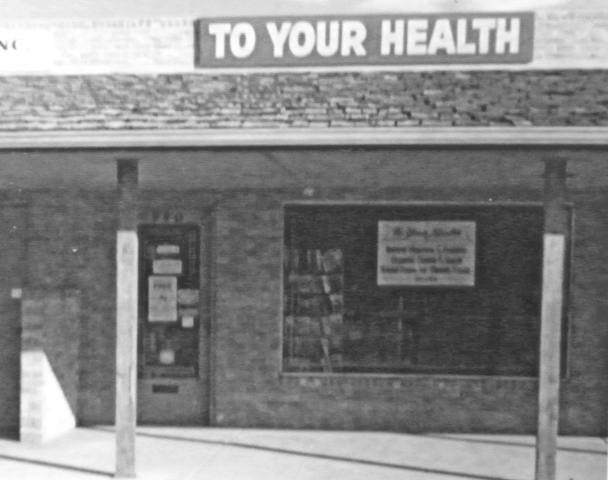
Neither of us had every expected (or wanted) to share a life with anyone, and yet we spent more than three decades together. Our meeting was almost miraculous. In a fit of loneliness, he wished he had someone, and the next week, I walked into his store. We started out with such hope, but our life together was no fairy tale. Much of it was wonderful, more vital than anything I could ever have imagined, yet we were trapped by various failures, not the least of which was his increasingly poor health. I was so tired of it all, so exhausted by trying to hold myself together, that a few times that last year I wished he’d die and get it over with. I never said it aloud, of course, but he knew. How could I have been so horrid? Shouldn’t I have been more patient? Wiser? Kinder? It’s a terrible thing, knowing I am not the woman I thought I was.

During the last few weeks of his life, we reconnected, and I remembered why I loved him.

And then he was gone.

I don’t understand how he can be dead. Well, obviously, I understand the biology of it — I watched him die a bit every day for a lot of years — but the man I knew in the form I knew is gone. Forever. I can’t wrap my mind around that. Even worse, I am forgetting him. My memories are drifting off-center, and I no longer feel the truth of him.

People used to tell me that he still exists in memory, but if so, he is dying a bit more every day. There could come a time when I don’t remember him, when I only remember his absence. I can feel it happening already. Some days now it seems as if he were a stranger I knew long ago rather than a person with whom I spent most of my waking hours for more than half my life. I don’t know whether I should cling to the memory of him, even if it is skewed, or if I should let the memory of him fade and simply deal with what life brings me every day.

I don’t understand my continued life, either. Was I really that woman? That woman who watched a man slowly die, who wanted the suffering to end, yet whose love was so ineffectual she couldn’t make him well or take away a single moment of his pain? That woman so connected to another human being she felt shattered into a thousand pieces after his death? That woman who screamed the pain of her loss to the winds? All these months later, I still don’t know how to deal with his death. Don’t know why I continue to be sad. Don’t know why I feel his absence acutely when I barely remember him.

Mostly I’m trying to look at the future as an adventure, but I’ve had so many immense changes in my life in the past few years, with more on the way, that I feel as if I have no foundation to build on. That feeling, at least, is not true. I have the foundation of all I have done, all I have learned, all I have become — what I don’t have is certainty and security (though no one really does).

And most of all, what I don’t have is him. But perhaps I never did? It could be we were simply passing by and stopped to visit awhile before we continued our journeys. Alone.
Two Years of Grief

A year ago today, my life mate/soul mate died of inoperable kidney cancer. Wait . . .  what am I saying? One year? No. It’s been two years since he died. What a strange error to have made, yet perhaps it’s understandable. The night he died is still so very clear, as if he’s been gone only months, not years.

On the recommendation of his hospice nurse, I’d taken him to the hospice care center in the hopes that they could figure out how to regulate his drugs to give him the most lucidity and the least pain. It crushed my heart to take him there. I never got to talk with him again — he was in a drug-induced coma for those last five days of his life. I think he was at peace the final two days, though. All the time he was there, his breathing sounded like moaning, and I worried that he was in pain, but during his next-to-last day he exhaled a few melodious-sounding breaths, as if he wanted to reassure me he was okay.

He once told me that if it ever came to his being in a facility, he didn’t want me to visit, but how could I not? Even though the care center was sixty-five miles away, I went there every day, but I left early enough so I could get home before dark. The irony is he agreed to go so I could get some rest, but I never did sleep those nights. I was too worried about him.

His last night, Friday night, I didn’t go home. A few snowflakes fell and I used that as an excuse to stay. Also, I was restless, sensing the end was near. So I waited.

Around 1:30 in the morning, his breathing changed. Became harsher. I went to his side, said it was okay for him to leave, that I would be all right. At 1:40, he took a breath. His Adam’s apple bobbed once. Twice. And then he was dead. I kissed him by the side of his mouth. Waited a few minutes before I went to get the nurse.

I like that I got to tell them he was gone rather than have them tell me.

The nurse confirmed that he was gone. She called the funeral home, and I sat there in the room with him for two hours, just waiting. I might have cried. I might have been numb. I don’t really remember. I couldn’t even see his face — they had cleaned him and wrapped him in a blanket — so I just sat there, thinking nothing until almost dawn, when they came for him. (They came in an SUV, not a hearse. And they used a red plush coverlet, not a body bag.)

I followed them outside, watched them put him in the SUV and drive away, then I left. The highway was dry, but about halfway home, I skid. (I must have hit a patch of black ice, because there was no indication that patch of road was any different from what I’d already traveled.) I went careening, around and around, back and forth, my car totally out of control. I thought I was going to die, but oddly, I never left the road. The car finally came to a halt facing the wrong way on the highway. I was fine. So was the car. I remember wondering if he had stopped by on his way out of this world to leave me a final reminder to be careful, or maybe he was shaking his ghostly head, thinking that after his being gone only two hours, I was already getting careless.

He always worried that I wasn’t careful enough. I’m trying to be careful. Trying to take care of myself. I hope he’s taking care of himself.

The past two years have been agony for me. I know there was no way he could have continued to live considering the vast extent of the tumors. I know death was the only way to set him free from his excruciating pain. When he died, I truly was relieved. And yet . . . he was my best friend, my playmate, my business partner, my life companion. He was the one person who listened to me, who was always there for me. (As I was for him.) Even though I can see the necesssity of his death, I hate that he’s gone from this earth.

Not one of the previous 731 days have passed without my missing him. Even as I go on with my life, even as he and my grief recede further from me, I will continue to miss him. He was a good man. The earth is poorer for his death.

A Great Love Story

I’m working on my grief book, typing up my grief journal entries. I thought this would be a book about grief, but it seems more like a love story, which is so very ironic. Soon after I met my life mate — my soul mate — I quit my job to write. I wanted to tell the story of a great love that transcended time and physical bonds, told with wisdom and beauty. I sat down to write, and  . . . nothing. Back then, I thought all one had to do to write was to sit down, pen in hand, and let the words flow. Well the words didn’t flow. So I put off my dream of being a writer and went about the business of living. Years later, while going about the business of dying (his dying) I started writing again just to get out of my head, to get a respite from my life. I eventually learned how to write, but I always wrote slowly . . . until I started a grief journal and posthumous letters to my mate. Those flowed. And now it turns out that this grief book could be that love story I always wanted to tell. Life sure plays games with us!

Several people have told me they envied me my great love, but I’ve hesitated to tell the truth: it didn’t feel like love. We never had much of a romance. After a few brief years of hope and happiness, our love was sublimated by the constraints of his growing ill-health. It seemed that our cosmic love devolved into the prosaic things of life: cooking meals, doing errands, struggling to keep our retail business alive. And then it devolved further into simply surviving. Getting through the days as best as we could. We thought we’d stopped loving each other. We thought we were ready for the coming separation — he to death, me to life alone.

His hospice nurse, who got to know us both very well, told me she didn’t think he and I knew how much we loved each other. And apparently that was true. That mystifies me — how could we not  have known? We always knew we had a deep connection, though we never understood it and at times we both railed against it in our struggle to maintain our own identities, but we took that connection for granted. And what is that connection if not love?

In my foolish youth, I thought I’d still be able to feel his presence when he was dead, but I only feel his absence, and maybe that’s enough to remind me that love is not all hearts and flowers and passion. It is not what you feel. It is what you do. It is being there for each other. And, until the very end, we always were.

I Am a Thirteen-Month Grief Survivor

Yesterday at my grief support group we were asked to complete the sentence, “After he died, I was surprised that . . .” Everything that happened in the thirteen months since the death of my life mate — my soul mate — has surprised me. No, not surprised me. Shocked me.

I was shocked that the end came so quickly. He’d been sick such a very long time, his health fading slowly, that his dying became our way of life. When he was finally diagnosed with inoperable kidney cancer, we were told he had three to six months to live. He had only three weeks. And those weeks seemed to evaporate in just a few hours.

After he died, I was shocked by the very presence of grief. My brother died four and a half years ago, and my mother died a year later. I handled both deaths well, so I thought I could cope with the death of my mate. I didn’t know, had no way of knowing, that one didn’t grieve the same for every loss. I didn’t know, had no way of knowing, that there was a physical component to the death of a long time mate, that it would feel like an amputation.

After he died, I was shocked by the depth and breadth of my feelings. During the last year of his life, and especially the last six months, he’d begun withdrawing from the world and from me. This withdrawal, this lessening of a need to be with others is a natural part of dying, and my response to his withdrawal was just as natural — an increased determination to live. He might be dying but I wasn’t, and I had to untangle our lives, find a way to survive his dying and his death. I thought I had successfully completed this task, but his death rocked me to the core of my being.

After his death, I was shocked by his sheer goneness. Because I’d spent so much time alone that last year, I thought life without him would feel much the same, but it isn’t like he is in another room or another city or another country — it’s like nothing I’d ever experienced before. I still have no words to describe the finality, the undoableness, the vacuum of death. He was part of my life for thirty-four years. We breathed the same air. We were connected by our thoughts, our shared experiences, the zillion words we’d spoken to each other. And then he was gone from this earth. Erased. Deleted. I still can’t wrap my mind around that.

After his death, I was shocked that I felt so shattered. So broken. And I am shocked that I still feel that way at times. I am shocked that no matter how strong you are, how well you are healing, grief can slam into you at any time, especially after a good day when you’re not expecting it, and the pain feels as raw as it was at the beginning.

After his death, I was shocked by the scope of grief. You grieve for the one who died and you grieve for yourself because you have to live without him. You grieve for all the things you did and the things you didn’t do. You grieve for what went wrong in your shared life and what went right. You grieve for the past and you grieve for the lost future. You grieve for all the hopes and dreams and possibilities that died with him. It’s amazing that anyone can survive all that pain, but we do, and that shocks me, too.

After his death, I was shocked by how complicated human emotions can be. You can feel sad and unsad at the same time. You can be determined to live, yet not care if you live or die. You can know in your depths he’s gone, but still listen for him, still yearn for him, still worry about him.

Mostly I’m shocked that I am still the same person I was before he died. Such emotional trauma should have changed me, made me stronger and wiser perhaps, yet I’m still just me. Sadder, but still recognizably me. Well, there is one change. I’ve always been a worrier, but now I try not to fret about the future, try not to wonder how I’m going to cope with growing old alone. After his death, I am no longer shocked that life can remain the same year after year. Nor am I shocked that it can change in an instant.

Grief: Cleaning Up the Past

Thirty weeks and still counting. I’ve already stopped counting the days since my life mate — my soul mate — died, soon I’ll stop counting the weeks, and eventually I’ll stop counting the months. Perhaps there will even come a time when the anniversary of his death goes unnoticed. But in the end, it doesn’t matter. Whatever happens in my life, he will always be a part of it — almost everything I do, feel, say relates to him in some way. He was instrumental in making me who I am, and his death is the catalyst to make me who I will become, though I still don’t feel different from who I was before he died. So much of the change in me came before his death, during the long years of his dying.

During the last year of his life, as the cancer spread from his kidney up to his brain, he spent more and more time alone. I thought I coped well with the situation, continuing with my life, taking his dying for granted. I thought I’d moved on. In fact, I told him I’d be okay after he was gone, that I’d finished with my grieving. And I believed it.

After he died, the depth of my grief stunned me. His death shattered my state of suspended animation, and I was appalled by the way I’d behaved that last year. How could I possibly have taken his dying for granted? How could I have refused to see what he was feeling? How could I have become impatient with his growing weakness, his reclusiveness, his inability to carry on the long ping-ponging conversations that had characterized our relationship? How could I not have treasured his every word? Even after his diagnosis, even after we’d apologized for any wrongs, even after we become as close as we had been at the beginning, I continued to think I wouldn’t grieve. How could I have not known how much I still loved him?

I’d been living that last year over and over again in memory, trying to make it come out right, but no matter what I did, I could not change the past. It haunted me, that year. I could feel everything I refused to feel back then, and it about crushed me. A few days ago, while I was crying uncontrollably, I remembered hearing something during my grief support group session that struck a bell, so I checked back over the paper the counselor had read to us. “Self protection — denying the meaning of the loss.” Aha!

I had never denied his dying, just the immediacy of it. (Which is not surprising. He had the strongest determination of anyone I’d ever met, and he kept rallying until he couldn’t rally anymore.) But unconsciously (or subconsciously), I had denied what his death would mean to me. Denied what he meant to me.

After my aha moment, I started wondering what would have happened if I hadn’t gone into suspended animation, and I realized if, during that last year, I had let myself see what he was feeling, let myself feel what his dying and his death would mean to me, I would have been in such agony I would have cried all the time. He would have hated that he was causing me so much pain, which would have made me feel even worse. I still couldn’t have done anything for him, so eventually I would have blocked out all that was happening. I would have gone on with my own life and left his dying to him. I would have become impatient with the restrictions of our life, with his weakness, with his retreat into himself. In other words, even if I could have gone back and relived that year knowing the truth of it, my behavior would have been the same. And he would still have died.

With that realization, my tears stopped. I continue to have teary moments, but I am at peace with the way I acted that last year of his life. I still wish I could have done something to make that last year easier for him, of course, but perhaps I did — with all his troubles, at least he didn’t have to deal with my grief.

Is Twenty-Five Weeks a Long Time or a Little Time?

Is twenty-five weeks a long time or a little time? I haven’t a clue. All I know is that twenty-five weeks ago my life mate — my soul mate — died of inoperable kidney cancer, and I am still learning to deal with his absence. Sometimes it seems as if he’s been gone forever, and other times it feels as if he just left, as if I should be able to reach out, hold him in my arms, and keep him safe. Strange, that — I couldn’t stop his dying when he was living it. I certainly can’t stop it now that he is gone.

When I was a child, twenty-five weeks seemed a lifetime, especially if I was counting down to Christmas or summer vacation. When the weight of age began settling on my shoulders, twenty-five weeks went by in a flash. Or at least they used to. Now weeks stop and go, dam and flow, and I no longer have a concept of time, perhaps because the passing weeks are not relative to anything but his death and my loss.

Even the future seems long and short by turns. I think of growing old by myself, of learning to live with the limitations aging will bring, and ultimately of dying alone, and the coming years seem long. Yet those same years will still be full of life, maybe even happiness, which will make them feel short.

I do know that twenty-five weeks is a long time when it comes to feeling lost, alone, and confused by this major change — both his and mine. (I am very confused by his death. I worry about him still, feel sad for what he is missing, glad he is beyond pain.) At the same time, twenty-five weeks is way too short to even begin to process all that this experience means and will mean.

So, is twenty-five weeks a long time or a little time? I haven’t a clue.

The Healing Power of Stories

I attend a bereavement group every week, which surprises me, considering that I’ve always been a do-it-yourself sort. I only started going to the meetings because I wanted to know how to survive the terrible agony of grief I experienced after the loss of my mate. I didn’t learn how — it’s something no one can teach another — but I learned that one could survive those first unbelievably painful weeks when I met people who had survived them. I keep going to the group because of those same people. We have something in common, a shared understanding, a survivor’s respect. And now, after five months, I am one of those who, just by being there, show the newly shell-shocked bereaved that one can learn to live with the devastation of a major loss.

Each meeting begins with a lesson, and today’s lesson was about the importance of stories and how they help us heal. The people who attended the meeting today all happened to be women who had lost their mates after decades of being together, and the counselor asked each of us to tell the story not of our mates’ deaths, but of how we met. We all knew the end of each of our love stories — over the months we have told the story of our grief many times. But this is the first time we talked about the beginning of our love stories, and in those stories we found hope, comfort, smiles, a reconnection to our past.

According to the handout we were given, the benefits of telling stories are:

  • Searching for wholeness among our fractured parts
  • Coming to know who we are in new and unexpected ways
  • We can explore our past and come to a more profound understanding of our future direction
  • We can seek forgiveness and be humbled by our own mortality
  • We can discover the route to healing lies not only in the physical realm, but also in the emotional and spiritual realms.

An unexpected result of today’s lesson was a new understanding of the importance of writing. For me, anyway.

These past months, I’ve spent a lot of time reading. I have always tried to lose myself — and find myself — in fictional worlds during periods of trauma, but this time it’s not working the way I hoped. I’m not finding healing in current books. The authors seem to be going for the shock effect of not-so-good versus unbelievably-outrageous-evil, for story people who have identifiable characteristics but no character, for fast-paced stories with little substance or truth. How does one find wholeness in such stories? How do we come to know each other or come to a more profound understanding of our future in trite mysteries and unrealistic thrillers?

Perhaps it’s not important. Maybe entertainment is all that counts when it comes to fiction, but I want something more. And I especially want something more when it comes to my own writing. I don’t know where grief is taking me — it is changing me in ways I cannot yet fathom — but I hope I will end up writing stories of truth, of understanding, of healing. I hope I will make people smile. I hope my words will matter.