Today when I mentioned my idea of walking up the coast, a friend asked, “Why walking?” I had to stop and think about that. I originally planned a journey by car, crisscrossing the country, so I’m not sure how the idea of driving metamorphosed into walking, or why the idea took hold except that I’ve always had an affinity for walking.
When I first started roaming the desert after the death of my life mate/soul mate, I would follow the paths drawn in the sandy soil by bikes and ATVs, always wanting to see what was up ahead, around the next turning, behind the next knoll. I had to be careful not to wear myself out because I needed to make sure I had enough energy to get myself back to home base, and I couldn’t help wondering what would happen if there were no home base, if I could just walk until I got tired, and when I was rested, continue on. Such practical things as being able to carry enough water, food, and protective coverings to get me to wherever I was going didn’t enter the equation. I just like the idea of walking to see . . . whatever there was to see.
Back then, I was still going through the pain of first grief, and walking was the only way I could find any peace. Somedays I walked for hours, limited only by my strength and the amount of water I’d brought. My walking, though it was always circular rather than to a special place, seemed like a pilgrimage, a long journey to a new life. My old life was dead, cremated along with my life mate/soul mate, and somehow I had to find a new way to connect with the world. My current idea of walking up the Pacific coast seems like a continuation of that grief-born pilgrimage.
“Pilgrimage” has been defined variously as any long journey, especially one undertaken as a quest; a journey or search of moral or spiritual significance; a walk in search of something intangible. Although making a pilgrimage was not my intention when I first thought of walking up the coast, “pilgrimage” seems to define most what I want out of the journey. I don’t want the journey to be one of survival (though I do intend to survive it, of course). My wilderness survival skills are nil, so in any contest between me and the wilderness, the wilderness would win. My ability to carry a heavy pack is also nil. And yet, I would like to see the coast more intimately than from the window of a car passing by at 65 miles an hour, with only periodic stops to rest. I would like to see what I am made of. Could I handle the endless hours of nothing to do after my walking stint is finished for the day? How would I connect with the world? Could I handle the uncertainty of never quite knowing what will happen? Could I spend so much time outside without becoming ill? I’d stay in motels when I could, but for long stretches, there would be just me and whatever was around the next bend.
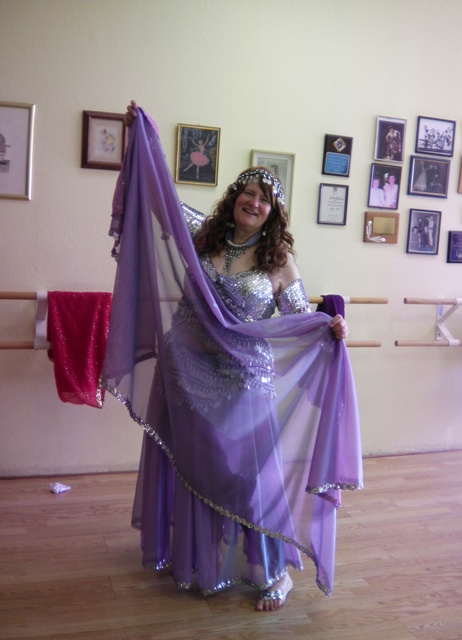 Meantime, I am on another pilgrimage. Bruce Chatwin in Anatomy of Restlessness wrote, “To dance is to go on pilgrimage.” Some people see dancing just as exercise, but for me it’s a way of connecting with life, of being alive, of searching for something intangible, if only proficiency and grace. Dance is a journey of the spirit just as I would hope an epic walk would be, and it’s changing me in some ephemeral way. For example, for the first time in my life, I have no body image problems. All that time in front of a mirror is making me comfortable with the way I look, both my good points and bad. Dancing also seems to reach inside to hidden places and pull out previously unknown joys.
Dancing is the one thing besides physical inability that would change my mind about walking up the coast. It’s a rare and special privilege to be able to learn how to dance at any age but especially when one is sliding down the banister of life.
At the beginning of my journey into grief, a wise woman told me that I could be entering the happiest time of my life, and though it took longer than I expected, I can see that she was right. The pain of grief seems like a portal I went through, and now on the other side I can feel the possibility of true happiness and joy.
Walking. Dancing. Embracing whatever the future might bring.
My pilgrimage.
***
Pat Bertram is the author of the suspense novels Light Bringer, More Deaths Than One, A Spark of Heavenly Fire, and Daughter Am I. Bertram is also the author of Grief: The Great Yearning, “an exquisite book, wrenching to read, and at the same time full of profound truths.” Connect with Pat on Google+. Like Pat on Facebook.








 Bertram's Blog