Gardening Game

I’d just decided that gardening is simply a game I am playing so there’s no need for me to fuss about anything that grows or doesn’t grow, when I went out to work on the yard and was greeted with several unpleasantnesses: more stinkhorn mushrooms and eggs, a mess of cat diarrhea, a scourge of spurge, and tarantula wasps. I suppose I should consider these things part of the game, because a game is not a game if there are no challenges to overcome. On the other hand, a game is something you do for amusement, and my “challenges” today were far from amusing.

The tarantula wasp, a two-inch monstrosity, isn’t really unpleasant . . . unless you’re a tarantula, that is. The wasp seems to have little interest in humans — at least not this human — so they don’t pose a threat. Seeing the wasp, though, reminded me that despite a return to temperatures in the nineties, fall really is coming. And it reminds me to see if I can find any tarantulas as they begin their wandering to find a mate. Although this area is known for the so-called tarantula migration, the past couple of years these arachnids have been scarce. Perhaps this year things will be different. Other things sure were different (plants that grew enormously, for example, and weeds that moved into new territories), so why not the tarantulas?

If gardening is a game (though it seems to be more of a creative endeavor than a true game), then any wins come from the good things one finds in the garden, and today there were some beauties. A monarch butterfly that flitted about so much I couldn’t get a picture, a yellow coreopsis, a cucumber, sunflowers, and amaranth.

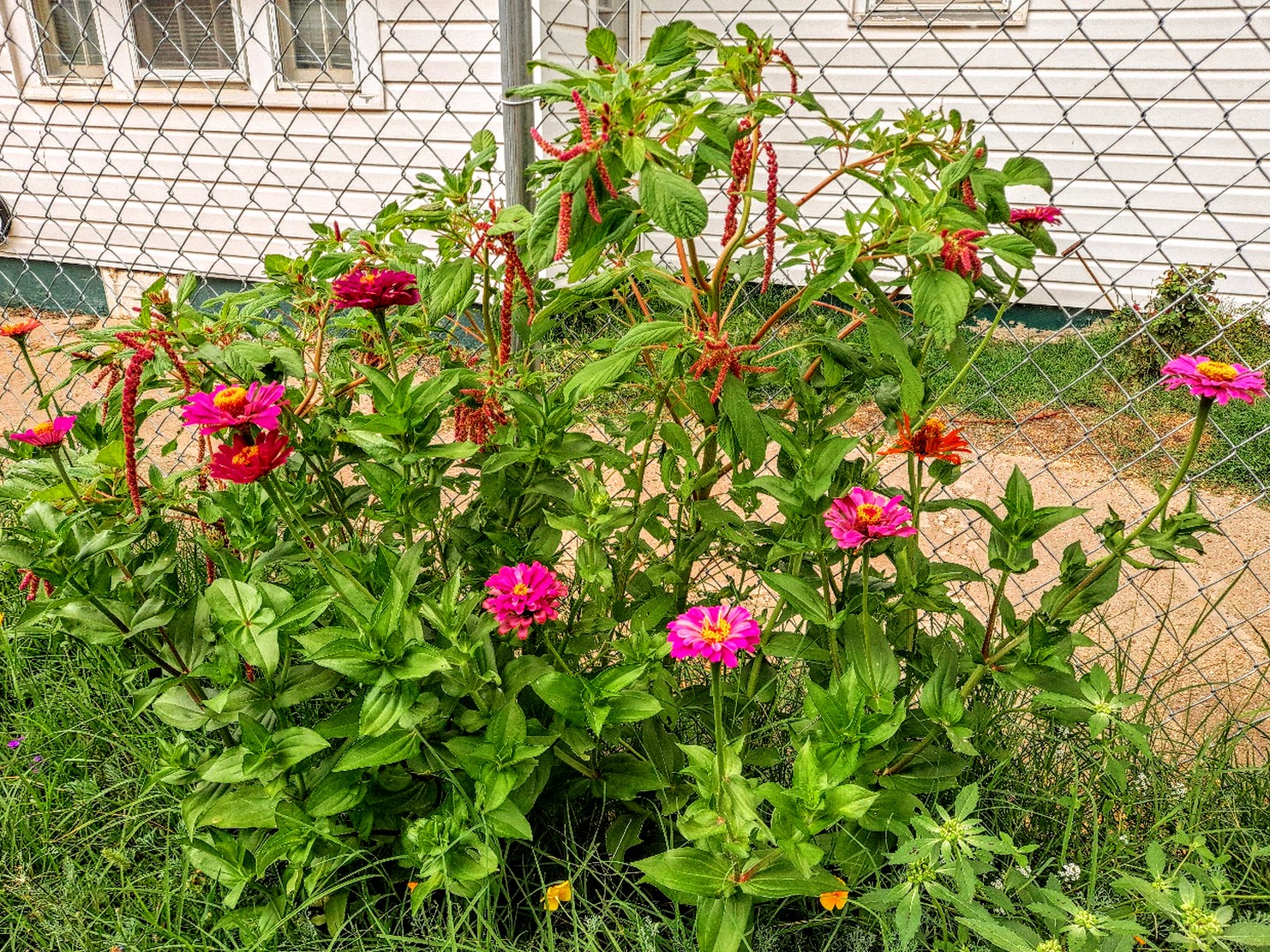
I wasn’t sure if I liked this foxtail amaranth, but it is growing well as well as growing on me (euphemistically speaking), so I might get some more seeds for next year. (They were in a packet of wildflower seeds, most of which didn’t grow perhaps because the seeds were old, so that makes me even more impressed with the amaranth.)

There really isn’t a score to keep in this gardening game, but if there were, taking into consideration the unpleasantness situations as well as the pleasantness ones, I’d have to call today a draw.

***

What if God decided S/He didn’t like how the world turned out, and turned it over to a development company from the planet Xerxes for re-creation? Would you survive? Could you survive?

A fun book for not-so-fun times.

Click here to buy Bob, The Right Hand of God.
Love Lies Bleeding

There is an interesting plant in my yard that everyone who sees comments on. I had a couple of those plants last year, too, but I didn’t know if the plants were friends or foes (flowers or weeds, in other words), so when they grew too tall for where they were planted, I pulled them up.

This year, instead of pulling them up, I left them in place for a conversation piece. A couple of times I tried to track down the name of the plant, but apparently, I put in the wrong search terms because I tried again today, and the answer popped right up. The weird looking ropy red flowers are called foxtail amaranth. It’s an annual that seems to have been included in a wildflower seed mix that I threw out there last winter, so unless I buy more seeds, this is the only time I will have the flowers.

Here they are, along the fence behind the zinnias:

And here is a close-up:

The flowers are also called Love Lies Bleeding, a holdover from the Victorian era, when flowers were used to send messages. The message of this flower is hopelessness or hopeless love, which seems a mean thing to want to say to someone in words, let alone in flowers.

I was going to plagiarize another of my posts to fill out this tale of “talking” flowers, but instead, I’ll just direct you to this link if you want to find more “Meanings of Flowers”.

Love Lies Bleeding would be a great title for a book since the phrase could be used to set scenes and develop themes throughout the story: my loved one is lying there bleeding; you broke my heart, and now it lies bleeding; my lover lied and now is bleeding.

Unfortunately, many other authors had the same idea — that Love Lies Bleeding would be a great name for a book — because a quick check on book sites showed a whole library’s worth of books using that title or a variation thereof.

Of course, if I really wanted to use the title, there’s no reason I couldn’t since titles aren’t copyrighted (I could also legally name a book Gone with the Wind if I wanted to, but that would be nothing short of author suicide). I prefer using less trite titles, however, and anyway, there is no book in me at the moment, so a title is the last thing I need.

Not so the plant itself. There are a lot of “last things I need” in my garden — weeds and weedy grasses top that list — but even though the foxtail amaranth isn’t on that list, it doesn’t add much to my yard except as a conversation piece, which, come to think of it, is actually a good thing to have. And now that I know the name of this plant, it not only will serve as a conversation starter, but can become the whole conversation, because truly, Love Lies Bleeding is an evocative name with an interesting history.

***

Pat Bertram is the author of intriguing fiction and insightful works of grief.




