The Strangeness of Friends

(Pat Bertram is the author of the suspense novels Light Bringer, More Deaths Than One, A Spark of Heavenly Fire, and Daughter Am I. Bertram is also the author of Grief: The Great Yearning, “an exquisite book, wrenching to read, and at the same time full of profound truths.”)

***

One half of knowing what you want is knowing what you must give up before you get it.” ~ Sidney Howard (1891-1939) American playwright and screenwriter, best known the screenplay of Gone with the Wind.

I’m not exactly sure what I want. Adventure, of course. Experiencing life in a way I never have before, for sure. Becoming more deeply connected to the world, if possible. But those are all just nebulous ideas. I have no specific idea of how to achieve that or what I will be doing except going with the flow.

I expected to be heading towards even more of a solitary existence, but oddly, what I am giving up, at least for now, is time alone, and that is fine. People are treating me well, insisting I have not outstayed my welcome, but I don’t seem to be able to find long empty stretches to keep up with this blog. That too is fine. I have no new insights, no incredibly awesome or incredibly awful experiences to talk about. Just an unsettled life that is rapidly beginning to feel normal.

I imagine that when I finally set off for points unknown, that too will feel normal. The changes are happening now while I am so uncharacteristically depending on the friendliness of strangers. Or should I say the strangeness of friends? It does seem strange that these people are being so kind to someone who appeared in their lives such a short time ago, but I am so very grateful for their kindness.

And grateful for these unexpected few minutes alone.

Choosing Book Titles

The title of a book is important. It’s the first thing a prospective reader sees . . . or at least it used to be. Now the author’s name generally comes first and apparently is a much better selling tool than the title ever was. A title is still important, however. It often sets the mood for the book, it lays out the theme, and it tantalizes readers into opening the book. Think of Gone With the Wind. With such a title, you expect a wide sweep of a story. The title speaks of loss and perhaps survival in the face of broad changes. Even before you open the book, you are primed to find out what is lost and why it disappeared into the wind. Imagine then, how different your feeling would be if the book had been published under its working title. Pansy. Would the book, the movie, the character have ever had such an impact if that had been the name? Of course not.

Another major work with last minute name changes was Catch 22 by Joseph Heller. Originally Catch 18, it was changed because of another book that was coming out at the same time: Leon Uris’s Mila 18. And 1984 was originally 1948. So not the same feeling!

Choosing a title is not an easy task. My novels all had simple working titles: The Red Death, The Chameleon, The Gangster Book, The Alien Book, but except for The Red Death, none of those titles were ever possible for the real title.

For A Spark of Heavenly Fire, I considered using the title The Red Death since my quarantine mirrored the middle ages, though in a hi-tech way, but the name had already been used several times. And anyway, from the very first, I’d planned on using A Spark of Heavenly Fire. That was my inspiration for the book, the Washington Irving quote: “There is in every true woman’s heart a spark of heavenly fire, which lies dormant in the broad daylight of prosperity; but which kindles up, and beams and blazes in the dark hour of adversity.” I wanted to tell the story of ordinary women, women who seemed colorless in ordinary times, but who blazed brightly in dark times. When I found no takers for the book, I thought perhaps the title didn’t reflect the story, so I changed it to In the Dark Hour. And I got an agent. She couldn’t sell the book, so when my contract was up, I changed the title back to A Spark of Heavenly Fire. And that’s the title Second Wind Publishing released it under.
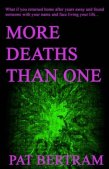
I had to try several times before I got the title of More Deaths Than One right. The working title was The Chameleon but that was never a real contender since I didn’t want to give the story away. So first I used the Law of the Jungle, which amused me since the jungle was so much a part of the story. Also, at one point I had my hero say that the villain might be above the law, but he wasn’t above the law of the jungle. Both the line in the book and the title ended up being deleted because they were too trite, so next I went with Nature of the Beast. It was adequate, and I would have stuck with it despite its triteness, but then I came across a couplet from Oscar Wilde’s “Ballad of Reading Gaol”: He who lives more lives than one/More deaths than one must die. Since my hero appeared to have more lives (and deaths) than one, More Deaths Than One struck me as the perfect title.
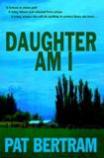
Daughter Am I, my gangster book, only had one previous title: Sins of the Fathers, though really it should have been Sins of the Grandfathers. Then I found the Rudyard Kipling quote: “Daughter am I in my mother’s house but mistress in my own.” The quote would have more accurately described the theme of the book if it were “daughter am I in my father’s house,” but I was taken with the title Daughter Am I and decided it was close enough.

Which brings me to my most recent novel, Light Bringer. Sad to say, I haven’t a single story to tell about the title. Even though the working title was The Alien Book, I always knew the title was Light Bringer. Light is the theme of the book, and the Light Bringer (planet X) was the reason for the story.

So, as a reader, what are your favorite titles? As an author, how did you come up with the names of your books?
In the Beginning: Starting to Write a Novel

I finished writing my fourth novel several months ago, and I feel as if I should be starting another one. After all, a writer writes, right?

I have a synopsis and a great hook, but I just can’t get into the story. I don’t know who my characters are or why anyone, including me, should like them. I am bored by the minutiae of their ordinary lives and I want to jump right into the extraordinary times that are coming, but I need the preamble to set up the story. I suppose I could start with the last chapter as Margaret Mitchell did for Gone With the Wind, and work my way toward the beginning, but my linear mind would rebel. Or I could start with a violent scene to get my adrenaline going. Books that start with violence sell better than ones that begin more passively, anyway.

I tell myself that, good or bad, I should just get the story down on paper and worry about rewriting later. Then I remember that it’s hard for me to find any words, so they need to be good.

Starting to write a novel is always difficult, even for professionals like Mary Higgins Clark who have been writing for decades. She admitted in an interview that it never gets easier. But still she writes.

Perhaps if I were writing for publication as she does, I would be motivated. There is nothing like the threat of having to return an advance to keep a writer churning out the words. I am not writing for publication yet, and I already have four unpublished novels packed away in the dusty reaches of my computer. Adding another seems pathetic.

So what’s the alternative? Blogging. It satisfies my writing urge, the posts are short and don’t require a big commitment of my time, and I don’t need to create interesting characters.

Characters are the key to a good beginning. Once you know who they are and what they want, they can help drive the story. But the only way to learn who they are and what they want is to write them. It’s a vicious circle.

For now, I’ll stick to blogging.

In Publishing, as in Life, Timing is Everything

 Performing artists like actors and comedians know that timing is everything. Without the right pause, the right word, the right gesture, the piece falls apart.

Life too is all about timing. Turn a corner and bump into a stranger who will become your mate. Run back into the house to answer the phone before you leave for work and later discover you missed being in an accident by those few minutes. Invest in a friend’s start-up business as a favor and end up being a millionaire.

Getting published is all about timing, too. You’ve written and rewritten your masterpiece, but you can find no takers. At best, you’re inundated with form rejection letters; at worst, you’re ignored. It’s entirely possible you are correct and your masterpiece is the bestseller-waiting-to-happen that you know it is. So how come you can’t get published?

Timing. As in the performing arts and the art of life, timing is everything, but unlike the performing arts, you cannot stand before a mirror and practice until you master your timing. All you can do is keep sending out your manuscript in the hopes that one day it will be on the right desk at the right time. Because one thing is certain, your desk is not the right one.

So how do you cope with all that rejection? Don’t think of it as rejection. Think of it as practicing your timing. Practice may not make perfect, but it does give you a chance.

After all, Gone with the Wind was published after being rejected thirty-two times.

Scarlett by any other name would have been sweet.

Scarlett O’Hara was originally called Pansy. If Margaret Mitchell had kept that name, would her epic novel ever have become so popular? I doubt it. A Pansy would be sweet and biddable with rare moments of stubbornness, but she could never be as strong-willed as Scarlett, and she would never have caught and kept the attention of such a worldly man as Rhett.

Unlike women characters, men tend not to have exotic names. They usually have common, clipped names, which work well enough in most cases, but what if Rhett had been called Jack or Clint or even Brad? Millions of women would probably still have fallen in love with him, but they certainly would not have found him so intriguing.

Clothes may make the man and woman, but their names (in fiction, anyway) define them.

Though Scarlett fits the name of the character in Gone With the Wind, it could not be the name of a medieval heroine. In those days, almost all girls were named Mary, with Elizabeth coming in a distant second.

I suppose if Gone With the Wind were written in the 1980s, Scarlett’s name would have been Heather. Odd to think that in another forty years, youth will scorn that name as being old-fashioned, fit only for elderly women, much like Effie is today. (I shudder to think how many babies being born right now are being named Britney, Lindsay, or Paris.)

But I digress. The point I’m trying to make is that names matter and should be chosen wisely. A book may not be rejected because of a character’s name, but why take the chance?