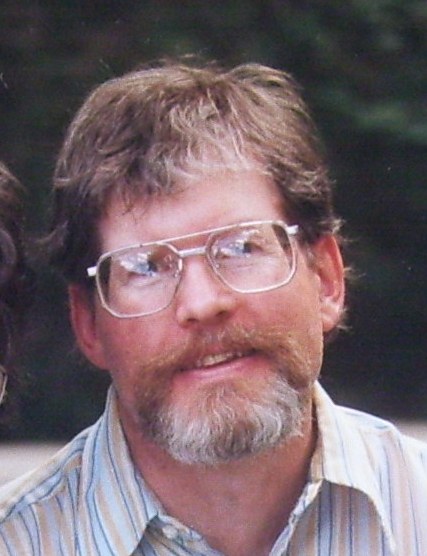
 Today is the tenth anniversary of the day Jeff, my life mate/soul mate, died and to be honest, I don’t really know what to think of it. It seems such a very long time and yet no time at all. Has it really been ten years? It must be. I no longer feel that if I could just reach far enough I could touch him. I no longer expect him to call and tell me I can come home. I am home. For so long, my home was wherever he was, and now my home is where I am.
My life is so different now from what it was with him that it seems as if the loss happened to someone else. I miss him, of course, think about him almost every day, still feel a hole in my heart/life/soul where he once was, but there has been no real upsurge of grief this year. It could be that too many years have passed, but I think it has more to do with my current situation.
Physical pain somehow has a way of overriding any emotional pain, which is why so often, when new grievers get sick or injured, they get a respite from the effects of grief. I know I did. I’ve always hated being sick, hated colds especially since they linger so long in my system, and yet, those first few years after Jeff died, I welcomed those illnesses because it gave me a break from the worst of my grief.
When I was doing the research for my book, Grief: The Inside Story – A Guide to Surviving the Loss of a Loved One, I discovered that the answer to this anomaly has to do with brain fog and the role the brain plays in grief.
Those of us who have lost our mates know that grief is not merely emotional, but also spiritual, physical, and especially mental. The whole brain is involved in the grief process, but the prefrontal cortex is the part of the brain that seems to contribute the most to brain fog, the grief-induced amnesia, dazedness, and fogginess that shroud us after the death of a life mate — the prefrontal cortex is considered the executive branch of the brain and is associated with rational thinking and making sense of emotions, developing and pursuing goals as well as coordinating the brain’s activities. Because we grievers are on total emotional overload, our prefrontal cortex is unable to process all the information it is being fed from all parts of the brain. The more we try to suppress our emotions and try to think our way out of grief, the more overloaded the brain becomes.
When one is assaulted with some sort of physical trauma, such as an illness, the brain seems to heave a huge sigh of relief, as if to say, “This I understand!” No more scurrying around in the far recesses of our minds, looking for the truth of death . . . and life. No more lizard brain screaming for the loss of its survival unit. (We humans are essentially pack animals, and our very survival depends on the strength of this unit, one of the many reasons we are so deeply connected to our life mates.) No more conflicts between fight or flight hormones.
All the brain does is hunker down and send all its resources to getting the body well. And once that’s finished, grief again takes hold.
So what is my situation? A couple of weeks ago, I must have tweaked my knee while asleep because I woke up with a pain that wasn’t too severe, but kept me from doing things I normally would. I could still walk, and so I did. But the knee never got better. And yesterday, when I took a wrong step, my poor knee gave a loud crack (the kind of crack like knuckles cracking not like a bone cracking) and I felt a horrible pain. So not fun! (I now know that trekking poles make good canes.)
So today most of my energy is going toward taking care of my knee. And no, I’m not going to urgent care. (The last I heard, the closest urgent care was closed because of a case of The Bob.) And no, I’m not going to the emergency room. Considering I am in the high-risk group, I’d have to have a bone poking out of my skin before I’d take a chance on being around sick folks. And no, I don’t have a doctor. Even though I’ve been here a year, there was no reason to find one.
So here I am, taking care of my knee, doing the best I can to take care of myself even though I can barely walk. And the tenth anniversary is passing.
I miss not feeling the connection with Jeff — even though it’s only a connection of sorrow and loss — that I generally feel on the anniversaries. It’s the one time I can still feel him in my life, and I miss that. I miss him. I miss us. I miss who I was when I was with him.
The person I am today is a direct result of both my life with him and my grief after him. Is this a good thing? Am I a better person? I don’t know. I do know that, despite the constant barrage of news, all that’s going on in the world seems like . . . life as usual. When you’ve experienced one of the worst things a person can experience, all else seems rather tame.
Despite this almost blasé attitude, you can see that I still do not put myself in harm’s way if at all possible. I owe it to Jeff to live the best life I can, to savor the freedom his death gave to me. It was an inadvertent gift — his dying — but it has given me ten years of learning and experiencing and new beginnings rather than ten years of being worn down taking care of him.
Would I wish it were otherwise? I don’t know because I don’t know that woman any more. All I know is today.
And today, I am forcibly alone, missing Jeff, wondering about that road we could not take together. Would he be proud of the roads I did take? Would he be proud of me? Silly questions, I suppose. Considering the itinerary life handed me, I can’t be other than who I am today.
And today, I am a ten-year grief survivor.
And today, like every day, I miss him.
***
 Pat Bertram is the author of Grief: The Inside Story – A Guide to Surviving the Loss of a Loved One. “Grief: The Inside Story is perfect and that is not hyperbole! It is exactly what folk who are grieving need to read.” –Leesa Healy, RN, GDAS GDAT, Emotional/Mental Health Therapist & Educator.








 Bertram's Blog