Grief Rant

I still have some anger in me, apparently. I occasionally “flame out” as one friend said when I disagreed with an email that friend sent. I am regaining my equilibrium, though, able to get through my days mostly even tempered, but one thing continues to raise my ire: when people assume all grief is the same, and especially when they assume they understand the grief of someone who lost a soul mate because they lost a beloved pet. Such a comment set me off tonight, and when my reply ended up being longer than some of my blog posts, I decided to publish the comment here rather than get in a grief match (“my grief is worse than your grief”) because, honestly, all loss is devastating, especially when it happens to you.

And yet . . . the death of a pet, no matter how beloved, is not the same as losing a soul mate. Nor is the trauma of losing a brother or a mother the same as losing a long-time spouse. The only thing that comes close is losing a child. (My younger brother’s death hastened my mother’s death. She died a year after he did.)

I understand there are all kinds of grief, and I know they all have to be honored. Grief of any kind that is not processed can cause additional problems. (Or not. Some people seem to do quite well walling off their grief.)

My concern has always been for those who have to deal with the death of a spouse, whether a life mate or a soul mate because that sort of all-encompassing grief is more than most people can comprehend. I thought I understood grief — after all, I grieved the deaths of my brother and my mother — but until the death of my life mate/soul mate, I never even knew such profound grief existed. During the past two and a half years, I have met dozens, maybe hundreds of women who have lost their mates, and they all mentioned the same thing — they had to hide their grief because no one understood. That is unconscionable. (I didn’t have this problem. I’m a quasi hermit, so no one was around to see me mourning.)

The truth is, it’s the very prevalence of grief that makes people uncomfortable with the profound grief of someone who lost a soul mate. People figure they got over their grief, whatever or whoever it was for, so you should, too. The trouble with losing your mate is that your grief is not just emotional, but also physical. In addition to the unimaginable agony of loss, you have to deal with shock, a blizzard of hormonal reactions, changes in brain chemistry, an incredible level of stress (losing a mate is considered the most stressful thing a person ever has to deal with; many people end up being treated for PTSD). Your death rate climbs 25% for all causes.

Added to that are all the horrendous “death” chores you have to deal with such as planning a funeral and filling out all the official and financial paperwork involved in “removing” someone from the world. As your emotions begin to stabilize, you have other griefs to deal with since a soul mate is more than a spouse — he’s also a best friend, companion, sometimes even a business partner, and all those losses have to be processed. You also grieve for the loss of yourself, at least your coupled self. And then you have to deal with the restructuring of your life. Your dreams are gone as are your plans for the future so you need to find new reasons to live. Sometimes you have to leave your home. It takes years to sort out all the losses so you can process them and begin again.

I don’t mean to belittle anyone’s grief. But, as I explained in my post, Why I Write About My Grief, people who have lost a mate deserve a lot more consideration and understanding from their family and friends than the assumption that their loss is comparable to the loss of a beloved pet.

***

Pat Bertram is the author of the conspiracy novels Light Bringer, More Deaths Than One, A Spark of Heavenly Fire, and Daughter Am I. Bertram is also the author of Grief: The Great Yearning, “an exquisite book, wrenching to read, and at the same time full of profound truths.” Connect with Pat on Google+

Why I Write About My Grief

I started writing about grief not only to make sense of my own feelings, but also as a rebellion against a society that reveres happiness at all costs. I’d never heard of the sort of all-consuming grief that I experienced except for those who were considered unstable, but I knew I was completely well adjusted, so anything I felt had to be normal.

To be honest, I never had any intention of getting personal in this blog. I launched it to establish an online presence for when I got published. (After starting this blog, it took a year to find a publisher, although I’d already been on the quest for several years. After acceptance, it took another six months for my books to be published, but I made it!) Those first years of blogging, I wrote about my efforts to get published, what I learned about improving my writing, the novels I read and what I learned about writing from their inadequacies.

After my life mate/soul mate died, everything changed. I’d intended to keep my grief to myself and continue writing innocuous little posts, but I kept stumbling over people’s ignorance of grief. I found this ignorance in people I knew. (I will never forget those blank looks of incomprehension in people’s eyes when, sobbing, I told them about my loss. Sometimes they looked at me as if I were an alien species, or some kind of strange bug.)

And I found this ignorance in books I read.

One novelist dismissed her character’s grief at the death of his wife with a single sentence, “He went through all the five stages of grief.” Anyone who has gone through the multi-faceted grief of losing a soul mate knows that there are dozens of stages of grief (or none at all). You spiral round and round, in a dizzying whirl of emotions, not just shock and anger and sadness, but frustration, bitterness, yearning, hope, helplessness, confusion, loneliness, despair, guilt, questioning, angst over loss of faith, and you keep revisiting each of these emotions, hanging on the best you can, until ideally, you reach a place of peace and life opens up again.

Another novelist had her widow cry for a night then put aside her grief and get on with her life. Believe me, you can’t put aside such grief. It’s not just emotional but also physical, a ripping away of his presence from your soul, a deep-seated panic when your lizard brain realizes that half of your survival unit is gone, a body/mind bewilderment so great you can barely breathe. You don’t control raw grief. Grief controls you.

Not only did I discover that few people had any idea of the scope of such grief, most people selfishly urged the bereft to get on with their lives because they couldn’t bear to see their mother/sister/friend’s sadness.

There is something dreadfully wrong with a society that expects the bereft to hide their grief after a couple of months simply because it makes people uncomfortable to see outward shows of mourning. Seeing grief makes people realize how ephemeral their lives really are, and they can’t handle it (which leaves the bereft, who already feel isolated, totally alone with their sorrow.) It also cracks the facade of our relentlessly glass-half-full society.

Although I am a private person, not given to airing my problems in public, I thought it wrong to continue the charade that life goes on as normal after losing the one person who makes life worth living. So, over the past two-and-a-half years, I have made it my mission to tell the truth about grief. Even though I have mostly reached the stage of peace, and life is opening up again, at least a little bit, grief is still a part of my life. There is a void in my world — an absence — where he once was, and that void shadows me and probably always will. Although his death changed the circumstances of my life, thrusting me into an alien world, grief — living with it, dealing with it, accepting it — changed me . . . forever. It has made me who I am today and who I will become tomorrow — strong, confident, and able to handle anything that comes my way.

Would I prefer to have him in my life? Absolutely. But that is not an option. All I can do, all any of us can do, is deal with what lies before us, regardless of a society that frowns on mourning. It takes three to five years to find a renewed interest in life after such a grievous loss, so the next time you see your mother, father, sister, daughter crying for her/his spouse, deal with it. Just because you’re no longer tearful, be aware that even though you have lost the same person, you have not lost the same connection. If it makes you sad to see her mourning, think how much sadder it is for her to experience that sorrow. Hug her, be there for her. Don’t hurry her through grief. She’ll find her way back to happiness in her own time.

***

Pat Bertram is the author of the conspiracy novels Light Bringer, More Deaths Than One, A Spark of Heavenly Fire, and Daughter Am I. Bertram is also the author of Grief: The Great Yearning, “an exquisite book, wrenching to read, and at the same time full of profound truths.” All Bertram’s books are available both in print and in ebook format. You can get them online at Second Wind Publishing, Amazon, B&N and Smashwords. At Smashwords, the books are available in all ebook formats including palm reading devices, and you can download the first 20-30% free. Print books can be ordered from your favorite bookstore.

Meeting the Challenges of the Third Year of Grief

The challenges we face during the first year after the death of a life mate/soul mate (or any other significant person in our lives who connects us to the world), are too great to enumerate. It’s all we can do to cope with the seemingly endless chores of laying our beloved to rest while dealing with the emotional shock, the physical pain, the psychological affront that are our constant companions. Sometimes the first anniversary of his death is one of peace when we realize that we managed to survive the worst year of our life, but then we wake up to the second year and find a whole other set of challenges to meet.

The five main challenges we face during the second year after the death of a life mate/soul mate are:

1. Trying to understand where he went.
2. Living without him
3. Dealing with continued grief bursts.
4. Finding something to look forward to rather than simply existing.
5. Handling the yearning.

There are other challenges, of course, some unique to each individual, but all the challenges are dealt with the same way: by continuing to feel the pain when it erupts rather than turning away from it to satisfy the concerns of those who don’t understand; by taking care of ourselves even when we don’t see the point; by trying new things.

In other words, we meet the challenges of the second year by living. It sounds simple, but nothing about grief for a life mate/soul mate is simple. By living, we begin to move away from our pain, but we also move away from the person we loved more than any other. For some bereft, this feels like a betrayal of their love — how can you continue to live when life on this earth is denied him? For others, it seems like a betrayal of themselves — how can you become the person you need to be without betraying the person you once were?

The third year of grief seems to be a year of transition with only one new challenge — beginning to rebuild our lives. (We still have upsurges of sadness, still miss our loved one, still yearn for him, but these feelings are not as prominent as they once were.) Most of us no longer feel that continued life is a betrayal of our love because we understand that we had no choice in the matter, either in his death or in our continued life. Nor do we feel we are betraying the person we once were — we are no longer that person, though we have not yet developed into the person we are to become. Most of us are still trying to figure out who that person is and what that person wants and needs.

Many of us third-year bereft are caught in circumstances beyond our control — we are taking care of aged parents, new mothers, grandchildren. Although this transition between our old coupled life and our new life alone seems to be a time of stasis, we are still rebuilding our lives day by day, becoming who we need to be. We are also beginning to look beyond this transitional stage to what will come after, which is a sign of life and hope for the future even if we are not yet feeling hopeful.

By now, some bereft are ready to be in a new relationship, and they too seem to be in a transitional stage — not yet in a relationship but looking for possible partners. In other words, dating. I can’t even begin to go into the challenges such bereft face; it seems an impossible task, to go from where they are to where they want to be.

A few people jump into a relationship too soon, and then have the added grief of an aborted love affair. Some find that while they want emotional intimacy, the would-be partner only wants physical intimacy. Complicating the typical adult dating woes of ex-wives, grown children, incompatible schedules, is the date’s incomprehension of the bereft’s grief. Too often, he doesn’t want to hear about the deceased, which leaves the bereft dangling in an emotional limbo, because how can you have a meaningful relationship with someone who denies that which once gave your life meaning?

Others in this third year of grief are not looking for a new relationship, though they wouldn’t turn love down if it came their way.

Whatever the challenges we bereft have to deal with in this third year of grief, we will meet them as we did all the other challenges we have faced: with courage, perseverance, and strength.

***

Pat Bertram is the author of Grief: The Inside Story – A Guide to Surviving the Loss of a Loved One. “Grief: The Inside Story is perfect and that is not hyperbole! It is exactly what folk who are grieving need to read.” –Leesa Healy, RN, GDAS GDAT, Emotional/Mental Health Therapist & Educator.

Like Pat on Facebook.

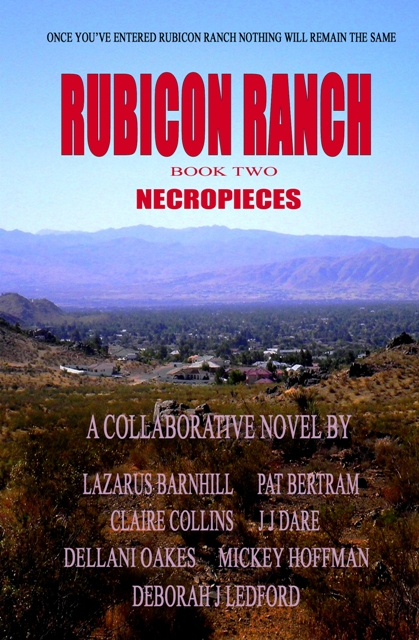
Rubicon Ranch: Necropieces — The Story Continues

Rubicon Ranch is a collaborative and innovative crime series set in the desert community of Rubicon Ranch and is being written online by the authors of Second Wind Publishing. Seven authors, including me, are involved in the current story — Rubicon Ranch: Necropieces.

Residents of Rubicon Ranch are finding body parts scattered all over the desert. Who was the victim and why did someone want him so very dead? Everyone in this upscale housing development is hiding something. Everyone has an agenda. Everyone’s life will be different after they have encountered the Rubicon. Rubicon Ranch, that is.

Although some of the characters were introduced in Rubicon Ranch: Riley’s Story, a previous collaboration, Rubicon Ranch: Necropieces is a stand-alone novel. The first chapter will be posted on Monday, June 11, and one chapter will be posted every Monday after that.

We hope you will enjoy seeing the story develop as we write it. Let the mystery begin! Whodunit? No one knows, not even the writers, and we won’t know until the very end!

Chapter 17: Melanie Gray
by Pat Bertram

Melanie stood at the window of her upstairs office, waiting for the photos of Eloy’s dog to finish printing.

Waiting. Always waiting.

Still waiting for Alexander to come home or call, though he had been dead for more than three months. Still waiting for the sheriff to investigate her husband’s accident—if in fact it had been an accident that killed Alexander. Still waiting for her grief to end and her life to begin.

The printer chugged as if deliberating over each line of data. Finally, it spit out the last photo of the puppy. Melanie shook her head at the amateurish product. She’d used high-grade photo copy paper, and the image was a good one, but the picture didn’t have the hard finish of a professionally developed photo.

This was the first place they’d lived where Alexander hadn’t set up a darkroom. She wouldn’t have known how to use the equipment even if she had it, but the absence of the chemical smells underlined the absence of her husband. They were only going to stay in this rental property a short while, just long enough to do the job and move on, and setting up a darkroom wouldn’t be worth the trouble, or so Alexander had claimed. He’d never said where their next job would take them, but he’d seemed anxious about the assignment. And now it didn’t matter. He was dead and she was . . . waiting.

Melanie fanned out the printed photos. Four eight-by-eleven pictures of the puppy, each a different pose, each charming. She printed a fifth page with smaller versions of the images, gathered up the papers, stuffed them in a large Manila envelope, and headed outside.

The cloudless sky was pale blue, and though not particularly hot, the air felt oppressive and humid. The small effort of walking the few steps to Delano Road made Melanie’s skin feel sticky. Normally she would have taken this as a sign that a storm would soon be passing through, but nothing appeared to work normally in Rubicon Ranch.

A curtain in the front window of the Sinclair house twitched. Was someone watching her? Melanie quickened her steps and let out a sigh of relief when she’d passed the house. She hesitated in front of Eloy’s place. The old man’s empty chair stood empty. She’d planned to hand him the photos and slip away before he could get awkwardly avuncular again. So, now what? Wait for him?

Waiting. Always waiting.

Melanie marched to the front door and rang the bell. Silence. Not even a bark or a yip from the puppy. Had something happened to the old man? Maybe he’d meddled in something he shouldn’t have.

In the months she’d lived here, she hadn’t seen Eloy do anything but sit on his front porch and glower at everyone who went by, and the recent change in him seemed suspect. If he’d wanted a dog, a monstrous canine would have better fit his image, but he’d gotten a puppy, for cripe’s sake. And what did he mean when he’d said Morris wouldn’t be bothering her any longer? Why would he make her welfare his concern? Besides, she knew how to take care of herself—Alexander had made sure of that, insisting she take lessons in self-defense and weaponry before they started traveling to dangerous locales. They’d lived in a whole alphabet of perilous countries, from Afghanistan to Zambia, and she’d survived them all.  When they’d moved here to Rubicon Ranch, she’d felt safe for the first time in years, but this quiet community had turned out to be the deadliest place of all.

Melanie pressed the doorbell once more on the off chance the old man and young pup were simply napping, but the chimes still elicited no response. Grateful she didn’t have to talk to the old man, she slipped a corner of the envelope beneath the welcome mat to anchor it. Wondering why that most unwelcoming man had a welcome mat on his porch, Melanie trudged to the street.

Moody half walked, half trotted toward her, a hand raised in greeting. “I need to talk to you.”

Melanie waited for her neighbor. “I need to talk to you, too. A couple of weeks ago Morris told me—”

“That Alexander had been taking photos of necropieces for him? I overheard my father talking to you that day. I’m sorry he upset you. He won’t bother you again.”

Anger surged through Melanie, temporarily displacing the sorrow that weighed on her. “Why does everyone think I need protection? I’ve dealt with worse things than a nasty old man who needed to be exterminated.”

Moody held up her hands, palms out. “Sorry. I didn’t realize protection was an issue with you.”

Melanie gritted her teeth to keep from blurting out a denial. She remembered that Moody had once been a psychologist, and any further discussion would give the woman fodder for more assumptions. She pivoted on one foot, getting ready to walk away, then turned back. Her neighbor might be a psychologist and a Sinclair, but she was the only one who could explain why Morris had accused her of killing Alexander.

“Your father mentioned something else that day. He said Riley told you she’d seen me messing with our car.”

Moody blew out a breath. “The bastard lied. Riley only said she’d seen someone messing with the car. That’s all. Never mentioned a name. I didn’t believe her, though. If you knew Riley, you’d know she loved to cause mischief. Even I found it hard to discern when she was telling the truth.”

“But could she have seen someone messing with the car?”

Moody put a finger to her chin and said slowly, “It’s possible. Generally, Riley’s lies were quite detailed—more like stories—but she made the remark about the car in an offhand manner. Are you thinking someone deliberately caused your husband’s accident?”

“Sheriff Bryan told me the accident looked suspicious, but . . .”

“You don’t trust him.”

Melanie focused on the peak of a distant knoll. Did she trust the sheriff? She lowered her gaze to meet Moody’s. “I think he has . . . agendas.”

Moody nodded. “That’s my take on the sheriff, too. I also think he’s on a quest for redemption, whether he’s aware of it yet or not. I’ll let you know if I recall anything else Riley said about your car or Alexander.”

“Thank you.” Melanie turned and started walking up Delano Street toward the desert.

“Wait. Please?”

Melanie stopped.

Waiting. Always waiting.

“I need to warn you about Jake,” Moody said, a new urgency in her voice.

Melanie spun to face the woman. “Are you trying to protect me again? I can take care of myself.”

“Yes. You said. But Jake . . . Jake’s my brother. He wears a cloak of righteousness, but his heart is as black as the rest of the Sinclairs’.”

Melanie frowned at her neighbor. Moody was a Sinclair, too. Could she be warning Melanie that as Morris’s daughter, Moody also had a black heart? A lifetime with Alexander should have prepared her to deal with the Sinclairs, but she sensed nuances of evil in the family next door that made Alexander’s machinations seem like child’s play.

“You don’t believe me,” Moody said flatly.

“Why are you worried about me all of a sudden?”

“I haven’t seen Jake in years, and he just showed up. Supposedly he’s been in the area for several weeks participating in some sort of revival, and he heard about Morris being missing. So now he’s come to . . .”

Interested despite herself, Melanie said, “So now he’s come to—what?”

Moody shrugged, a strange look on her face. Fear, maybe? She glanced toward her house, then fixed an intense gaze on Melanie. “He knows about you. Knows you found the foot yesterday. Don’t believe a word he says. And whatever you do, don’t get yourself in a situation where you are alone with him.”

Melanie watched her neighbor hurry back to Morris’s house. As Moody walked up the driveway, the door opened, and a man walked out.

Melanie gave a start. Morris! Couldn’t be. This man looked younger than the writer. Must be Jake, the son.

Jake glared at Moody, then turned his head toward Melanie. He seemed to study her, the Sinclair dead-fish stare frozen on his face.

And then he smiled.

Melanie fled to the desert. She inhaled the humid, creosote-scented air, trying to remove the stench of the Sinclairs from her nostrils, but no cleansing breath could remove the memory of that evil leer.

Forget the Sinclairs. Focus.

Melanie took a swig of water from her canteen, screwed the cap back on, and reached in her pocket for her little digital camera. Thinking of the last photos she took, the photos of Eloy’s dog, she wondered if her photos would be better if she had professional equipment. She made a mental note to ask the sheriff about her husband’s cameras—Alexander had taken them when he left on that fatal car trip, and they hadn’t been returned to her.

Melanie shot a few photos at random—a jogger in red shorts, a wadded fast food wrapper that looked like a yellow rose nestled in the scrub, a frisky puppy running circles around an old man. Captain and Eloy. Seeing Eloy in the desert again made her shoulders itch. Too much strangeness. Too much change.

She picked her way up the steep rock-strewn track to the top of the knoll, past the place where she’d found Riley’s body stuffed in a television console, past the place where she’d found the foot. She stopped to snap a few shots of the vast desert wilderness spread out before her, a sight that never failed to bring her comfort.

Distant shouts rising above the whine of idling motors caught her attention. She cut to the left until she glimpsed the altercation. Two people, one in red racing gear and one in silver, were standing by a canoe, balancing motor bikes with one hand while gesturing with the other.

“No!” bellowed the red-garbed racer. He hopped on his red bike and sped toward Melanie.

The silver racer got on his bike and chased after his companion. “Someone got chainsaw massacred. We have to call the cops and tell them we found a part of a body.”

“No,” yelled the red racer again. “We can’t. My mom will kill me. I’m supposed to be home looking after my little sister.”

They hurtled past Melanie, still shouting. She took pictures of the two boys, then of the canoe. She’d often seen the abandoned canoe in her treks, but until today, the boat had always been turned upside down. Apparently the boys had found something hidden beneath the canoe. A necropiece.

Could she take a chance that the boys hadn’t seen her, and so pass on calling the sheriff? She hadn’t found the body part, but she felt sure the sheriff would use her presence as an excuse to lay the blame at her feet. She sighed and pulled her phone out of a pocket. Even if the boys didn’t say anything, the sheriff would eventually find out she had been in the vicinity of more death. Not notifying him would seem more suspicious than making the call.

She talked to the dispatcher, explained the situation, described the boys and gave directions on how to find the canoe from Tehachapi Road.

“Wait right there,” the dispatcher said. “Someone will arrive as soon as possible.”

Melanie shoved the phone in her pocket, and shifted from foot to foot.

Waiting. Always waiting.

To hell with that. If the sheriff wanted her, he knew where to find her.

Melanie turned away from the canoe and tramped across the desert expanse, heading toward the storm clouds gathering on the horizon.

No One to Do Nothing With

When my life mate/soul mate/best friend died two and a half years ago, people often compared my loss to the death of a pet or an aged grandparent or a sibling (all the while snug in the comfort of their own marriages). Some people compared my loss to their divorce. A couple of people even mystified me by comparing my loss to their struggles with alcoholism. Although these comparisons seemed insensitive at the time (I had previously lost both a sibling and my mother, and those losses in no way resembled what I felt after my soul mate died), I now understand people were reaching out to me, trying to comprehend my grief and to put it into a context they could understand.

The wound where his presence was ripped from my soul no longer gapes as widely; the feeling of his total goneness doesn’t haunt me quite so much; the anguish and physical distress has ebbed to an underlying sadness. This easing of grief has unmasked more subtle feelings of loss, and suddenly I can see how this itch to see him once more is comparable to the struggles of an alcoholic. We both  have to live — forever —with a deep craving that can never be satisfied, both have an empty feeling that can never be filled, and we both live in a world where others routinely enjoy what we can’t. (Like all comparisons, this one falls short since those who give up drink have to do so from sheer force of will, while my lack is simply a result of fate.)

I hadn’t realized until after he was gone how much I counted on his very presence.

The sound of his voice filled my ears and my mind. From the moment we met until the cancer metastasized into his brain, we talked and talked and talked. We talked about everything — history, books, health, truth, all the many and various things we researched over the years. Though we said everything we needed to say, I still wish for one more word from him.

During silent times, his smiles nourished my soul. Even at the end, in his moments of lucidity before either the pain or the morphine swept him away, he still managed to smile at me. And oh, how I wish for one more smile.

A couple of days ago I wrote about my growing soul hunger, an indefinable need his presence had once satisfied, and now I wonder if that need is . . . nothing. Although we worked and played and talked for more than three decades , we often did nothing together. Were just there, a presence in each other’s lives. As his dying became the focus of our lives, and we couldn’t do much of anything together, not even carry on a conversation, we could still do nothing together, and we often did.

Although I am finding others to fill some of the roles he played in my life, this last is the role no one can fill. I have people to do things with, but I have no one to do nothing with. And, like an alcoholic, the one thing I need is the one thing I can’t have. He was a presence in my life first thing in the morning and the last thing at night. He was a presence in the kitchen when we fixed meals together. He was a presence when we watched movies or ran errands or did chores. He was a presence in my thoughts — because we had spent so much time together, discussing history and current events, our ideas developed in tandem. And we didn’t have to explain ourselves or our state of affairs — we were there and saw the effects life had on the other.

I understand that this sort of companionship is rare, and I feel greedy and perhaps insensitive for even mentioning the lack of his presence in my life, but this is my truth, my experience, my sorrow. No matter how much I wish things were different, these circumstances will never change, but I will. I am becoming more accepting of my situation, more respectful of the soul hunger, more grateful for what I once had. It’s possible someday I will even get used to having no one to do nothing with.

There is No Journey Through Grief

People often talk of the journey through grief. (I myself have iterated this adage.) During the past few months as my grief is waning, I’ve come to see that there is no separate journey through grief. There is only the journey through life. Grief accompanies us part of the way, maybe even most of the way, though not always with the intensity of new grief. Grief, in fact, has driven me through the steep rocky path of my life during the past few years, first a numbing grief at my life mate/soul mate’s dying, and then later, a soul-shattering grief at his death.

Like many bereft, I was not always sure I want to continue living, but I wasn’t particularly ready for death, either, so I did the only thing I could do — continue my journey, taking each day as it comes, trying new things, finding comfort in knowing that nothing lasts forever.

By sheer waves of happenstance, I’ve been temporarily beached in a residential area that borders the desert. (If you have been following the Second Wind online collaboration called Rubicon Ranch, you will be familiar with this community, though so far, unlike my hapless alter ego, widow Melanie Gray, I have not yet stumbled upon body parts out in the desert.)

Someday, those waves of chance might sweep me into other climes, so I am making sure I use this opportunity to get to know my desert self. There are few frills in the desert, no vibrant colors or showy flowers (though brilliant cactus flowers do bloom in the spring). There are just stark hills, creosote bushes, hard-packed sandy soil. The bleak landscape suited me when I first came here, sodden with tears and steeped in pain, and it suits me still. There is peace in starkness — no particular sight rivets my attention, no exotic sounds or aromas tantalize my senses. There’s just me, the hills, the air I breathe.

Other waves of happenstance landed me in a yoga class. The teacher has a different approach, focusing not on the forms so much as breathing and being. That, too suits me.

I’ve added a few of those exercises to my morning perambulations. I stand out in the desert, away from the things of humankind, open my arms and breathe in the desert. In that moment, I am happy. There are no shadows of grief, no sad memories or niggling fears. There’s just me, believing I am where I am supposed to be.

Yet Another Saturday, My Sadder Day

Yesterday was Saturday, my sadder day. The love of my life died one Saturday almost two and a half years ago, and I have not yet managed to get completely over it. You don’t ever get over such a grievous loss, of course, but you can come to an accommodation with the absence, develop a new focus, perhaps even find happiness. It just takes a very long time — three to five years, or so I’ve been told. I’m doing well, all things considered, but I still struggle to find my way.

I loved him with all my being, and I continue to love him. My love for him has no outlet — I can no longer do anything for him or with him — so his share of my love fills my heart like a pool of unshed tears. I try to use that love to propel me into my future, knowing he wouldn’t want me to be sad for him, but the truth is, he has no say in the matter. (I don’t always a have a say, either — grief comes and goes as it pleases, following a timetable I seldom understand.) He’s gone, and that goneness continues to shadow my life. I feel his absence like an itch deep in my soul. I feel it in the world around me, in the very air I breathe. I’m practicing being part of the world, planting my feet on the ground, feeling connected to my self and my surroundings. Still, the world feels alien with him not in it.

I’ve come a long way from the shattered woman who screamed her pain to the uncaring winds. I’ve made new friends, seen amazing sites, tried different activities, sampled exotic foods, wrote hundreds of blogs, walked more than a thousand miles. I’ve done the best I can to life fully, but the truth is, I’m tired. I’m tired of his being dead, tired of having to put a positive slant on a situation that has no upside, tired of trying to live whole-heartedly with half a heart. Just . . . tired.

I’m not young anymore, but I’m not old, either. Sometimes the future yawns before me like a bleak and empty landscape. Most times, of course, I can look to the future with hope, though I probably will always be saddened and bewildered by his goneness, especially on Saturday, my sadder day.

Trusting in My Journey as a Writer

I am not a natural storyteller. It took me my whole life to learn the elements of storytelling and to learn to write in a manner that pulls readers into my stories. After that, it took years to get published, because at the same time I was writing my first four novels, I had to learn the industry, such as what was required and who required it. I finally found a publisher who loved my books, and when the first two were released simultaneously, and a third six months later, I thought I stood poised for greatness. I was prepared to do what it would take to make a name for myself, but then, before that could ever happen, the gates of the book business burst open, and a horde of self-publishers surged into the arena. Not only did I have to compete with the established writers, I had to compete with millions of unknowns who were much better at marketing than I could ever hope to be.

Well, fate had other challenges in store for me. Five months after Second Wind Publishing released my third book, my life mate/soul mate/best friend/personal editor died, shattering me and my life beyond all recognition. One of the problems with losing the one person who connects you to the earth is that you no longer know who you are. For more than two years now, I’ve been tormented with the question of my place in the universe. With so many billions of people alive today, what is the point of being me?

I recently realized that the point of being me is simply to be me. I am the only me in the universe as far as I know, unique in a way only I can be. In the past few months, I have learned to trust in my life’s journey. I am trying to believe I am where I am supposed to be, being who I am supposed to be.

I now have five books released — the final novel my life mate helped me edit, and a journal of my grief — and I still have not reached the readership I’d hoped to find. I’ve been feeling as if I were adrift in an ocean of books, and I haven’t been able to find a reason to continue writing fiction. The books that apparently appeal to book buyers seem to have been written to capitalize on a trend — vampires, zombies, eroticism, bondage, symbols, serial killers — and my books are completely different from any of those. With so many millions of people publishing today, what is the point of my being one more unbestselling author?

If you’ve been reading my recent articles, you know how much this question about the meaning of writing has plagued me, and yesterday I found the answer. The point of writing is the same as the point of living — to be me. No one else can write the books I write. No one else sees the world in the same way as I do. Even better, most people who read my books love them. Such an incredible thing — to have written a book that even one person truly loves, and there are many who love my books. Would it be nice to make a living by writing, to be a bestselling author? Yes, of course, but in truth, it’s important for me to just write.

Now all I have to do is learn to trust in my journey as a writer. To believe I am where I am supposed to be. To write what only I can write. To be me.

Echoes of Grief

Today marks twenty-nine months since the death of my life mate/soul mate/best friend. I’ve come a very long way from that shattered woman who screamed her pain to the winds, who cried for hours when she accidentally broke his mug.

I still miss him, still want one more word from him, one more smile, one more day. I still have an upsurge of sorrow when I remember he is gone. And although I know — I feel — how very gone he is from my life, I still am prone to the foolish fantasy that when I am finished looking after my father and leave here to start a new life, my mate and I will be starting it together. But . . .

I barely remember our life together. It seems so very long ago and as if it happened to someone else. (Which is true — it did. Because of what I have endured these past two years and five months, because of embracing the challenges of the present and opening myself to hopes for the future, I am not the same as I was then.) I’ve turned enough corners now that even my grief seems unreal, as if that, too, happened to a different person. And yet . . .

Our shared life is very much a part of me still. Almost everything I do is accompanied by an echo from our past, almost everything I use originates from that time. I’ve bought a few new things — bits of clothing, mugs with my book covers on them (a totally indulgent purchase since I seldom use mugs), but I don’t really need anything. Most of our possessions are in storage, and I both dread and look forward to the day when I unpack them. I’m not sure whether I will find comfort in having our things around me, or if I will find more pain, but that puzzle is for another day, and perhaps another person. I am changing rapidly and will continue to change as my life changes, so the person who will need to deal with those possessions is not the me of today.

In a strange sort of way, I have been getting messages from him. Not messages from wherever he is now, but from where he was when he still inhabited this earth.

He used to tape movies — movies that we both liked, and movies that spoke specially to him. I am going through his movie collection, watching in backward order (from the ones he taped last to the ones he taped first), and I catch glimpses of what concerned him toward the end of his life. Death, of course, and me, perhaps. So many of the movies he taped that last year were about people (mostly women) whose spouse had died, forcing them to create new lives for themselves.

We watched these movies together when he first taped them, and I thought I knew then why he liked them — he was always fascinated with second chances, new beginnings, characters who came out of catastrophes to find renewal. But now, seeing the movies from this side of his death, they have a whole new meaning for me. Over and over again is the message: take care of yourself, accept the challenge and the change and the freedom that death brings, and most of all, find happiness again.

Sheesh. I made myself cry. But dang it — this new life would be so much more happier if he were here to share it.

A Kinder, Gentler Grief

A few days ago, I posted an article on this blog saying that a story begins when the world becomes unbalanced. If this is also true in real life, then my story began when my life mate/soul mate died. Nothing else I have ever experienced unbalanced my world the way his death did. It rocked me to my very core, and I am just now recovering a sense of equilibrium.

In a story, as the character strives to restore the balance, matters get worse. That usually happens in the case of grief, too (though generally not because of anything the bereft did — it’s simply the way life is). In some cases, the bereft had to move soon after the funeral, sending them further into grief. In other cases, more losses followed, leaving the bereft feeling as if they were drowning in death. Sometimes nothing happened, which at times is even worse, since it leaves the bereft alone in a limbo of sorrow.

I am on my way to finding a new balance, but I am not there yet. I still have upsurges of grief, though for the most part the surges are gentler and easier to handle. A few nostalgic tears, a brief indulgence of remembering, an acknowledgement that I miss him and want to go home to him, then I continue on with my life.

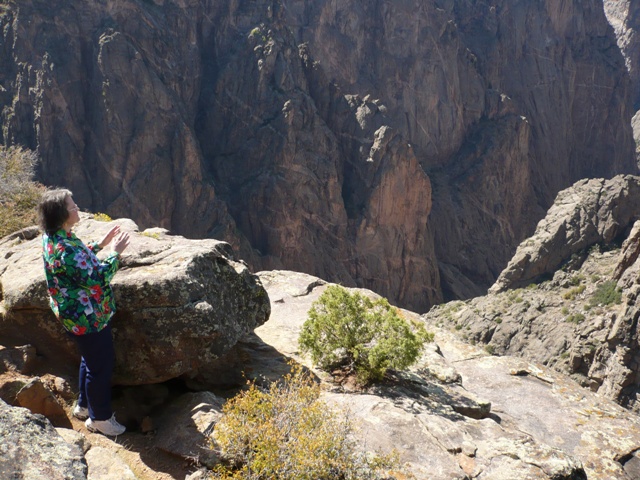
My most recent upsurge began on Saturday, always a sad day, and culminated in a walk in the desert. I haven’t called out to him in a long time, though I still talk to him, but today, I desperately needed to feel some sort of connection, so I yelled, “Can you hear me?” He didn’t answer, at least not in any way I understood.

I’m not sure how one finds a new balance after such a devastating imbalance as losing a life mate. Perhaps it’s a matter of making additional changes, the way small controlled fires can help put out major fires. Maybe it’s a matter of continuing to take one step at a time and waiting until the world rights itself. Or it could be a matter of being present, of being in one’s body, of simply being.

I’ve had to make changes, of course — I had to leave our shared home so I could look after my father — and I will be making other changes when this part of my life comes to an end. Meanwhile, I am trying to take life one step at a time, to capture each moment as it comes, to be present in my life, to be. In a story, of course, such passive actions don’t create a compelling plot, but in real life, sometimes “being” is the best we can expect at any given moment.

And anyway, my story hasn’t ended yet. In some respects, it feels as if this new story hasn’t even begun, as if I’m still in the first chapter, sorting out the imbalance.