Rubicon Ranch: Necropieces — The Story Continues

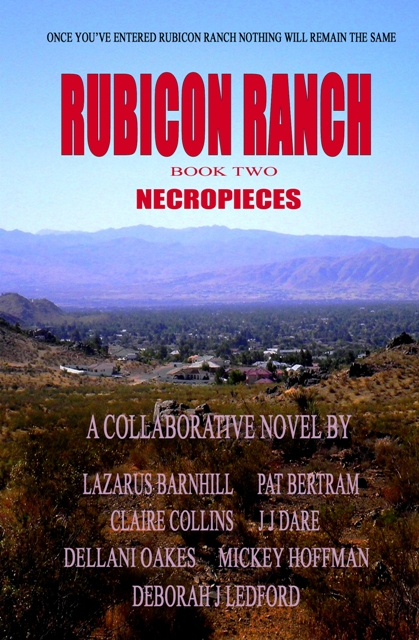
Rubicon Ranch is a collaborative and innovative crime series set in the desert community of Rubicon Ranch and is being written online by the authors of Second Wind Publishing. Seven authors, including me, are involved in the current story — Rubicon Ranch: Necropieces.

Residents of Rubicon Ranch are finding body parts scattered all over the desert. Who was the victim and why did someone want him so very dead? Everyone in this upscale housing development is hiding something. Everyone has an agenda. Everyone’s life will be different after they have encountered the Rubicon. Rubicon Ranch, that is.

Although some of the characters were introduced in Rubicon Ranch: Riley’s Story, a previous collaboration, Rubicon Ranch: Necropieces is a stand-alone novel.

We hope you will enjoy seeing the story develop as we write it. Let the mystery begin! Whodunit? No one knows, not even the writers, and we won’t know until the very end!

Chapter 9: Melanie Gray
by Pat Bertram

Melanie locked the front door of the house and turned around to face the day. It was clear and warm with a platinum sun shining in an azure sky. She felt her spirits rise. With such lovely weather, things couldn’t be as bad as they seemed. She marched down the driveway, and her spirits plummeted as fast as they had risen. The sheriff’s tan Navigator, like a brooding predator, loomed in the driveway of the Sinclair house next door.

Melanie had tried to forget Sheriff Seth Bryan and the conflicted feelings he had aroused in her, but apparently she hadn’t succeeded. She could feel the emotions rushing back to fill the emptiness inside her. She still couldn’t tell if she’d felt more drawn to him or more repelled by him. With any luck, she’d never have to explore those feelings. As soon as he finished his business and left the area, she could forget him again.

She heard the sound of his voice, though not his words, and for a moment she considered dashing back into the house to avoid any encounter with him, but then she realized the truth. The sheriff had no interest in her. It had been almost three months since she’d last seen him, and in all that time, he had made no effort to contact her.

She lifted her chin. She didn’t need him or any man. They were all worthless creatures who had no regard for anyone but themselves.

Still, it wouldn’t hurt to see what he was up to.

She took a few steps forward so she could see the front door of the Sinclair house. The sheriff looked the same as he always had. Jeans and a white shirt with a badge on the shoulder clothed his lean, flat-bellied body, and a navy blue ball cap with a yellow “Sheriff” embroidered on it covered most of his dark brown hair. And he still wore those ridiculous mirrored sunglasses.

The sheriff and Moody seemed to be standing closer together than politeness dictated. Could something be going on between the two of them? Movement in the passenger seat of the Navigator caught her attention. Deputy Midget. If the sheriff intended anything shady, surely he wouldn’t bring a deputy along to witness his behavior? Then this must be an official visit.

Moody looked okay — happy, even. It had been very quiet the last week or so without “The Sounds of Silence” blaring at all hours, and she’d probably been enjoying herself in Morris’s absence.

The sheriff starting walking toward his vehicle. Melanie squatted to retie a shoelace, hoping he wouldn’t catch sight of her. She might have the courage not to seek refuge in the house, but she had nothing to say to him.

When she heard the sheriff’s Navigator slowly moving down the street, she squelched a pang of disappointment. As annoying as his attentions were, at least they had reminded her she was alive. She’d been living with the dead — or rather memories of the dead—for way too long.

She arose with only the slight aid of one hand to push her erect, and angled her steps to the right of her driveway, intending to head up Delano Road to the desert. She paused, took two steps to the left.

The Daily Indecision is how she’d come to think of this inability to act. “Sounds like a newspaper,” she said aloud. “They’d print both sides of every story since the editor would be unable to decide which view to stand behind. Or maybe the paper would be blank because they’d never be able to decide which stories were newsworthy. And since when do you talk to yourself?”

Since Alexander died. She often wandered in the desert, trying to understand her husband’s death and her grief, and she’d gotten in the habit of talking aloud to him, hoping he could help make sense of her chaotic thoughts. He never responded. But then, he’d seldom replied even before he died.

When had their relationship become all about him? And why hadn’t she noticed the change? She sighed. Probably because she’d spent so much time online doing research for the coffee table books she and Alexander wrote. Well, she wrote. He took the photos. After his death, she discovered he’d somehow squandered the advance for the book about the Mojave Desert they’d contracted for, so now she needed to take the photographs in addition to writing the text. She thought she’d become good at shooting photos, but just this morning she’d received an email from her publisher:

“Some of your photos are usable, but most are uninspired. You take photographs, but the great photographers, like Alexander, make photographs. And when they make photographs, they make love. We feel the empathy between the external and internal events.”

Whatever that meant.

“What it means,” she said aloud, “is that you have work to do.” She took five resolute steps up Delano Road, then stopped. She could see Eloy Franklin hunched on his porch like a land-locked amphibian, watching everything that went on in his vicinity.

After all the turmoil the neighborhood had gone through recently, after all the deaths, she thought that things would have changed, but there Eloy sat, as unapproachable and forbidding as always. She’d smiled at him a couple of times when she passed in front of his house, but he’d never acknowledged her efforts at friendliness by so much as a nod.

Unable to stand the thought of Eloy’s scrutiny, she turned left. The sheriff’s navigator hadn’t gotten far, only a few houses away. The vehicle still moved slowly, as if the sheriff were looking for something. Trying to see the neighborhood through his eyes, Melanie peered down Delano Road. A petit woman held a camera to her face, either taking photographs or hiding behind it. Did Sheriff Bryan think the woman was Melanie? Melanie smiled to herself. Whatever faults the man might have, mistaking one woman for another was not one of them. Melanie had seen the woman several times before; she was shorter, prettier, and younger than Melanie, and had the clear luminous complexion of someone with a mixed race heritage.

Beyond the woman, a skinny man lurched along the side of the road. Melanie had also seen him several times before, and he worried her. Anger seemed to crackle around him, like lightning right before it strikes.

The Navigator’s siren blared, and the vehicle shot down the street and tore around the corner onto Tehachapi Road, heading east.

A dark cloud seemed to lift from the neighborhood, and Melanie’s indecision disappeared. She turned right, past Moody’s house, past the strange no-man’s land that separated the Sinclair land from the Franklin land, past Eloy’s house.

The wilderness beckoned.

*     *     *

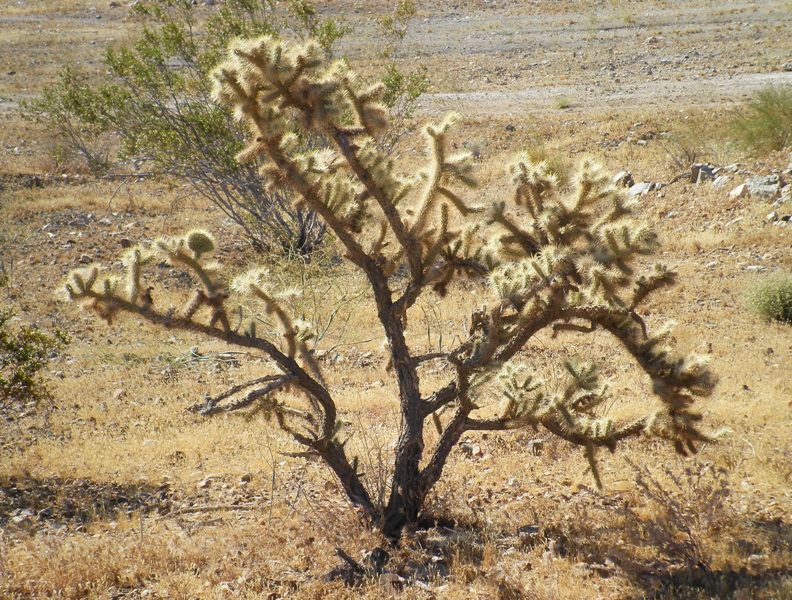
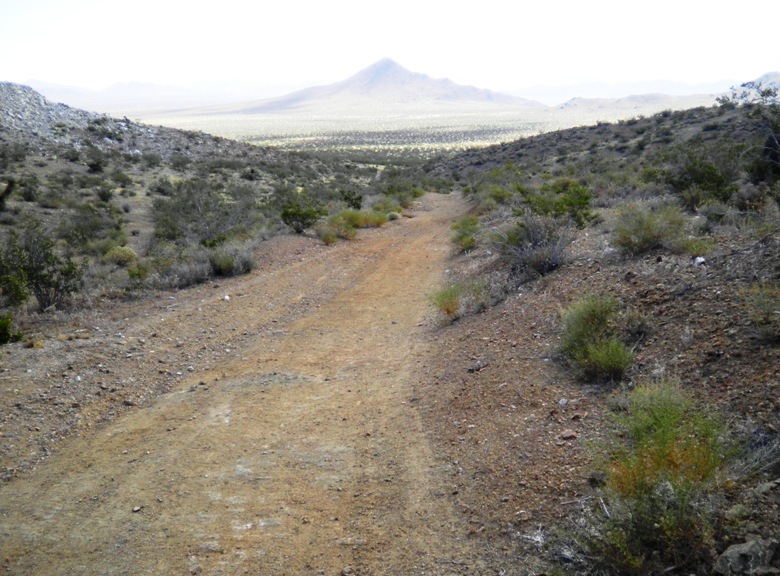
Melanie stood at the crest of knoll and surveyed the expanse of desert. Somewhere out there, midst the creosote bushes and cacti, a photograph she could make waited for her — an image so compelling, viewers would immediately sense her empathy with the subject.

But how did one get emotionally connected to something as vast and as alien as the Mojave Desert? Then she remembered Alexander saying he looked for a significant detail. By focusing on a single feature, by making it the heart of the photo, the rest of the scene came into focus.

Crap. I’ll never get the hang of photography. Damn you, Alexander, for putting me through this.

She heard a sound closing in on her from behind, a leisurely whup . . . whup . . . whup. She turned and froze, transfixed by the raven gliding by. It flew so close she could see the brown pupil of its bright black eye and the purple and blue sheen of its feathers. She’d never seen such a huge bird—the body looked bigger than a cat, and its wings spanned at least three feet, maybe four. For a moment, it seemed to hang motionless, then a graceful wing beat stirred the air and propelled it forward.

Melanie fumbled with her camera, almost in tears. She’d had a perfect opportunity to make a photograph, but she’d become so lost in the moment, she’d forgotten all about taking a picture. Alexander wouldn’t have forgotten. His camera had been an extension of his hands, his eyes. He never let anything get between him and an image he wanted to capture. Not even Melanie. Especially not Melanie.

Then she heard it behind her again, the whup . . . whup of wing beats. And this time she held her camera ready. As the second raven passed her, she caught the image. Joy burst inside her.

I did it!

Only then did it strike her as odd that the two ravens had been so focused on their goal that they hadn’t seemed to notice how close they’d been to her.

The first raven had already disappeared, but she watched the second one descend behind a rocky outcrop thirty feet away.

She followed a barely perceptible track through the scrub to where six or seven ravens pecked at what looked to be the carcass of a small animal. A rabbit, maybe. Thinking how wonderfully the image of this raw savagery would contrast with the majesty of the flying raven photo, she crept closer. And gagged.

The ravens weren’t feeding on a rabbit, but something oddly familiar and totally out of place.

*     *     *

Melanie waited for Sheriff Bryan and Deputy Midget to pick their way up the rock-strewn path to the top of the hill. The sun glinted off the sheriff’s mirrored sunglasses, making him appear soulless.

When he drew near, Sheriff Bryan grunted. “I wish you’d stop finding bodies in such out of the way locations.”

“I didn’t find a body. I found . . .” She swept out a hand, showing the track and which direction he should travel.

The sheriff furrowed his brow at her, then followed the track. Deputy Midget trailed after him. Melanie brought up the rear.

Sheriff Bryan stopped by the outcropping. “A boot? You called me here to see crows playing with an old bloody boot? You must really be desperate to talk to me.”

“Desperate?” Melanie stared at him, the heat of anger flushing through her body. “Are you really so self-absorbed that you think I called you here on a pretext? I didn’t call you. I called dispatch and told them exactly what I found. It’s not a pretext, and they’re not crows. They are ravens.”

The sheriff and his deputy exchanged shrugs, then proceeded forward. The ravens squawked, rose as one, and circled above them, as if protecting their treasure.

Sheriff Bryan squatted, then whipped his head around, lips drawn back in a rictus, and faced Melanie. “A foot? That’s what you found, a foot?”

Midget took a step back. “It looks like something out of Morris Sinclair’s books.”

“Necropieces,” Bryan said, turning back to the foot.

“So where’s the body?” Midget asked.

“Maybe there isn’t one. Someone could have been illegally dumping medical waste.” Bryan rose and loomed over Melanie. “What do you know about this?”

She studied him for a moment, wondering what was going on behind those sunglasses. “Are you accusing me of something?”

The sheriff cocked his head like a raven getting ready to peck at its prey. “The person who calls in a report is always suspect.”

Becoming Who I Need to Be

For a long time, I lamented that I hadn’t been changing, and I thought I should have been.

After the death of my life mate/soul mate, I was totally blindsided by grief. I’d lost my mother a couple of years previously, and a brother the year before that, so I thought I understood what grief was. Besides, I knew my mate was dying. We’d spent the last three years of his life disentangling our lives and severing the connection so we could go our separate ways — he to death, me to life alone. I truly thought I’d moved on, yet after he died, I experienced such agony and angst that it shattered me, my identity, my understanding of life . . . everything. An experience like that should change a person, yet month after month I remained . . . just me.

Now, two years and four months after his death, the changes are occurring on an almost daily basis. I’m still just me, but the person I am today is not the same as the one who screamed the pain of her loss to the uncaring winds. Nor am I the one so connected to another human being she still felt broken more than a year after his death. I left those women out in the desert somewhere. I’ve walked about 2,000 miles since he died, and a bit of that me evaporated with every step.

I am stronger than that person was, maybe even wiser, certainly more confident and open to whatever comes, willing to accept life on its own terms.

I no longer fear growing old alone as she did. I might not live to a great age, and if I do, I might not be alone, but even if I am, that woman will not be the me of today. She will older, used to dealing with the infirmities that come with age, perhaps even experienced in the ways of dying. She will have lived her life to the fullest of her ability, and might even be able to wake each morning feeling the joy of living one more day, no matter how painful. Or not. But the point is, I am not in that place today, and the person I am today will never be in that place. So there is no reason to be afraid.

For so long, I’ve been worried about what will happen to me now that I am alone. I worried that I’d become the crazy cat lady (sans cats) or the pathetic, lonely old woman that everyone whispers about (when they remember her at all). If I end up alone and lonely, so be it. I’ll be okay. I am quite comfortable with being alone. (I always was, to be honest. Grief skewed things, made me desperately fearful of loneliness.)

But I am not alone now. I have friends to go to lunch with, online friends to plan trips with, siblings to talk to now and again, an aged father to look after. I thought it would bother me no longer being part of a couple, but the other day at lunch when some women my age were talking about maybe meeting guys and falling in love again, I asked, “Why?” All of a sudden it seemed strange to want such a thing. Three of us had mates with compromised health, and now that they are gone, we are free to simply be. It’s not out of any loyalty to my deceased mate that I find myself unwilling to pursue a hypothetical relationship right now, but out of loyalty to me.

And that brings me to the biggest change of all. It bothered me that no matter what happened, I was always just me. Now I see that as a good thing. No matter what happens in my life, no matter what challenges I face, I will always be there, becoming who I need to be, even if it takes longer than I think it should.

My Dirty Little Secret

When my life mate/soul mate died two and a third years ago, something in me broke wide open, leaving me exposed and willing to talk about that great soul quake. As I heal and settle back into being me, I’m not sure I will have the courage to continue exposing myself, so I’m going to tell you my dirty little secret before I wimp out.

Part of me misses my grief.

Bizarre, isn’t it? For two years I’ve screamed my pain into the depths of the blogoshere, totally confused by the vastness of my agony and the enormity of my loss. I don’t miss the pain at all, it truly was almost more than I could handle, and I truly hate that he is gone, but I miss feeling as if I were on the edge of something important, something vital . . . something eternal.

It’s as if for the past few years, during his dying, his death, and my grief, I was on stage in the middle of a great tragedy. That it wasn’t my tragedy didn’t matter — I still had a major role, that of the chief mourner. Now, the curtain is down, the audience is gone, the lights are off, the stage is empty, and I, no longer a tragic figure, just an actor with no role left to play, am heading home alone down the dark empty streets.

If my grief had been supplanted with something else — a new love, a new focus, a new outlook even — I might not feel so
. . . diminished. But the truth is, my grief seems to have burned itself out, and since I have not yet rebuilt my life, I am in a sort of limbo. I still have moments of sadness, still have moments of tears, still miss him, still want to go home to him, but all of this is not the focus of my life as it has been for so long.

I suppose it’s just as well I don’t know what I want to do with my life alone since I still have obligations, and so could not act on any desires, but someday I will need to find a new focus. I am doing what I can to prepare. I take long walks, exercise, try to eat right. I’m even doing a bit of writing. And of course, I’m still doing a lot of thinking, though I’m trying to curtail the mental activity and simply be, and more specifically, simply be me. (I haven’t a clue what that means, but since I am the only me the universe has to offer, I might as well make use of the opportunity, right?)

A lot of the angst and questioning is dissipating along with my pain. Most recently I wondered “why something instead of nothing?” and found an answer I am satisfied with: because something is possible. Maybe in the end, that’s the whole point of life — possibility. When my current obligations come to an end, my whole life opens up into one huge possibility. I have no where to be, no one to be with, no task that needs to be done. Sounds to me as if my life will be opening up to endless possibilities. But until then, it’s just a matter of heading down those dark empty streets and seeing where I end up.

Grief Update: Going on Alone

A week ago I mentioned that all of a sudden my grief seemed to have changed, and that change appears to be holding true.

After the second anniversary of the death of my life mate/soul mate I didn’t feel any different than I’d felt the previous year. I was still sad and weepy at times, and more recently I had a week-long grief upsurge starting on the fourth of July, but lately, as I’m nearing the two-and-a-third-year mark, I seem to have made some sort of accommodation with his death and my grief.

For most of the past twenty-eight months, I’ve felt bad for him, for the horror of his last years, and for all that he is missing out on, but I don’t feel bad for him any more. I’m glad he’s out of this life, glad he doesn’t have to deal with any of the political, financial, and medical changes that are coming our way, glad he no longer has to contend with growing old or to be fearful of ending up as a helpless invalid.

I’m sorry his life was cut short, but his death doesn’t shatter me any more. I take comfort in knowing that for the most part, he did it his way. He endured incredible pain, but he knew any drugs strong enough to end his suffering would also end him, and that proved to be true. When he finally had to start taking morphine, he became someone else, and I’m glad he didn’t have to endure living as that stranger for very long. I still miss him, will always miss him, but someday I will be dead, too. He just went first. It would have been nice if we’d had more good years together, but because of his illness, the good years were behind us. It would have been nice to have had more of our dreams come true and more of our hopes work out, but they no longer matter since our shared hopes and dreams died when he did.

I still have times of doubt and fears, sorrow and tears, still question the meaning of it all, but I’m getting used to the idea of going on alone, getting used to the idea of being alone.

Tomorrow, of course, I could be back in the depths of grief, feeling shattered beyond repair, but I don’t think so. The tears that come now are more nostalgic than agonizing. When I think about it, I still hate that he’s dead, but I don’t think about it much. I try to focus more on being me, on being here in this day. I still feel a disconnect, as if some of the tendons connecting me to life that ripped when he died have never healed, but I don’t think it’s a bad thing. The disconnect reminds me that everything comes to an end sooner or later, even me.

Getting over the worst of the pain of grief is only the first step. Next comes rebuilding. Although I don’t believe in destiny and signs and things that are meant-to-be, part of me clings to the idea that he wouldn’t have left me if he hadn’t known I’ll be okay. I hold on to that thought because otherwise the idea of growing old alone scares me, as does the idea of creating a whole new life for myself.

I won’t say reconstructing my life will be easy in comparison to the agony and angst of losing the one person who connects me to the world since I don’t know what challenges lie before me. But I will say that after surviving such devastating grief, I have become stronger than I ever thought possible, and I will be able to handle whatever comes my way.

Trying to Fill The Void Of His Absence With Remembered Joy

All of a sudden, it seems, there have been changes in my life pertaining to my grief for my life mate/soul mate. For about a week after the Fourth of July, I endured a heavy upsurge in sorrow, but in its wake, I have found a semblance of peace midst the sadness.

Saturday was his birthday, and I started out the day feeling almost upbeat, gladder that he’d spent so many years with me than sadder that he is gone from my life. I’d never sung Happy Birthday to him when he was alive, so I sang to him out in the desert, where no one could hear. (Believe me, you do not want to hear me sing!) I planned to get a cake, too, but sometime that afternoon, the sadness returned. Next year, perhaps, I’ll bake a cake to celebrate his life.

I’ve also had some stray thoughts that indicate a shift in my perspective. A couple of days before his birthday, I found myself thinking, “He beat the system. He’s out of it now.” I don’t know where that idea came from because he didn’t beat the system. He didn’t have to grow elderly, but he was sick for so long it seemed as if he’d skipped a couple of decades of middle age and went straight to old age. But still, he is out of this life. He won’t have to worry about the coming changes in medical insurance or any other such foolishness, won’t have to watch himself age further, won’t have to continue suffering. Wherever he is (if he is) he is safe. And free.

To a great extent, our life together now seems unreal. I’ve been trying to live in the moment, and in the moment, he is not here. I’m still sad, still want to go home to him, still yearn to talk to him, but wanting such things seems to speak more of longing than of recollection, as if somewhere in the back of my mind I had conjured up a mate and a life and time of togetherness. But the truth is, if I had conjured up such a fantasy out of nothing but loneliness, I would have created happier memories. Too much of our life together was steeped in sickness and failure. Still, there were joys. The astonishing beginning of our relationship when he was radiant with youth and strength and health, the electricity of our long-lasting discussions, the sweetness of our final hug, the beauty of his smile, his wonderful gift of appreciation, his vast courage, and his determination to accomplish something each day despite his waning health.

I came across these words today from “Remembered Joy,” an Irish prayer:

I could not stay another day,
To love, to laugh, to work or play;
Tasks left undone must stay that way.
And if my parting has left a void,
Then fill it with remembered joy.

He stayed as long as he could, and it would pain him to know that his death brought me so much sorrow. I don’t know if I’ll ever be able to fill the void of his absence with only remembered joy, but I’m continuing with my life, filling it with new experiences, and for now that’s the best I can do.

Floundering in a Sea of Sorrow

A friend sent me a link to website describing grief as walking a tightrope back to life, which is an interesting metaphor, but doesn’t fit with what I’ve been feeling lately. Mostly it seems as if I am bobbing on a sea of sadness, going with the flow, accepting what has happened to both me and my deceased life mate/soul mate, then suddenly I start floundering and, occasionally, I feel as if I am foundering.

The verb flounder means to struggle, to make clumsy efforts to move or regain one’s balance, much like a fish out of water. The verb founder means to fail utterly, to collapse, and comes from a Latin word meaning “bottom.”

I seldom feel as if I am reaching bottom any more, though sometimes, grief catches me unaware and I feel as if I am once again drowning in the sea of sadness. Those times confuse me, because after two years and three months, I feel as if I shouldn’t still become so submerged in sadness. Luckily, though, my times of feeling as if I am foundering don’t last long. My times of floundering, however, are still fairly frequent. A few days can pass without an up swell of grief, and then for no reason I can fathom, I begin floundering again, and have to try to regain my balance.

Even though I’m becoming used to his absence, his goneness still confuses me at times. How can such a vital human being be gone from my life, gone from this earth, just . . . gone? And why do I still miss him? Shouldn’t I be over him? Accept that he is gone and get on with my life? But grief doesn’t work that way, or at least, my grief doesn’t.

He was a big part of my life for more than half my years. Almost everything I own belonged to the two of us. I have a few things that predate his appearance in my life — my car, some household goods — but everything else reminds me of him. He was my best friend, the one person to whom I could say anything, no matter how shocking the rest of the world would find my musings. Oddly, he is still the only person I can talk to, though I do find it pathetic at times that the only one I have to converse with on a regular basis is a dead guy, especially since he doesn’t keep up his end of the conversation.

I am getting on with my life, though I seem to be missing something — verve perhaps, or buoyancy. Even when things were going wrong, our togetherness brought lightness to my life, and I don’t know how to find that in myself. I feel heavy-hearted and lead-footed, as if every movement takes more effort than it should. I suppose it’s just a matter of getting used to this weightiness as well as his goneness and my loneliness and everything else I have to get used to.

And I will get used to it all. My good days, my days of going with the flow show me that it’s possible. And then I flounder, and I wonder how I ever managed to get as far as I have without foundering.

Waiting. Always Waiting.

I am waiting. Always waiting.

I’ve had this sense of waiting for a very long time, but didn’t realize until yesterday how much energy I put into waiting. I wait for the phone to ring. I wait for the mail to come. I check each of my email accounts several times a day, waiting for . . . hoping for . . . I don’t know what. Perhaps a few words that will make sense of my life? Maybe a sense of connection to another person or to life itself?

This pervasive sense of waiting started years ago when my life mate/soul mate first got sick. I used to wait for him to get better, and then, during that final, terrible year, I waited for him to die. After his death, I waited for the worst of my grief to pass. I waited for him to call and tell me I can come home — he never did, of course, and I understand now. . . I feel it . . . that he never will. I also waited for something wonderful to happen, because only something extraordinarily good could balance such a trauma as his death. Since life does not keep a balance sheet and does not seem to care that we need to believe in balance and fairness, I gave up that particular notion.

But still I wait.

When we are happy, we are automatically in the moment. We are where we want to be, so there is no more waiting — we have arrived. But when we are not particularly happy, it’s hard to accept the truth of the present, and we wait for something else.

I need to get past this sense of waiting and realize that however empty and lonely, this is my life at the moment. This is what I have to deal with. This is where I am. (And yet, at the same time, I have to allow for the possibility of something wonderful happening.)

Sometimes when I finish writing a blog post, I’ve figured out the answer to that day’s conundrum, but not this time. I haven’t a clue how to deal with this sense of waiting. Maybe I need to live more in the real world? Stay away from the internet with its siren song of expectation? That will be difficult. Offline, not much occurs in my life, but online there always seems to be something to do. Writing this essay for example. Clicking on facebook to see what is happening in my online world. Checking my email accounts, waiting for . . . hoping for . . .

Celebrating My Independence

I woke in tears this morning, and I have no idea why. This was not an especially festive day for me my life mate/soul mate, and I don’t remember having an upsurge in grief on either of the previous July 4ths since his death. It’s possible the emphasis on family this holiday is making me more aware that he is no longer here with me. It’s also possible the stresses of dealing with his being gone have been building up again, and as you know, tears are my way of relieving the stress. I have been doing very well lately adapting to life without him, but still, I’m tired of having to adapt, tired of trying to put the best light on the situation.

Despite this day not having a special meaning for me and my mate, I have a hunch the holiday itself brought on the tears, but for an unexpected reason. This is the day to celebrate independence, and I am not yet ready to celebrate my independence as a single woman.

Being alone has its advantages, or so they say, but I miss him. Miss feeling that life was special because he was in it. Miss feeling as if I belonged to something bigger than me — our life together did seem greater than the sum of the two of us. Part of me thinks I should be beyond these feelings by now, but the truth is, I’m not sure I will ever be beyond missing him.

The truth is also that he is gone and I am alone. Maybe I should turn off the computer, fix a festive meal, and celebrate my two plus years of independence, as unwelcome as they might be.

Putting Grief into Perspective

In light of all the horrors going on the world today — massive fires, floods, ghastly diseases — talking about my grief seems a bit self-indulgent. In my favor, my intent was never to get people to feel sorry for me, but merely to chronicle one woman’s journey through grief. I wanted to tell what it felt like to lose a life mate/soul mate since I’d never experienced such a massive onslaught of pain, both physical and psychical. In fact, I never even knew such hurt was possible.

Now that my pain has subsided to irritation and sensitivity, mood swings and easily hurt feelings, continuing to blog about my grief does seem a bit over the top as if I’m trying to dramatize myself. But again, that is not my intention. Grief lasts a long time and can cause much damage to the souls of the bereft if not allowed to follow a natural healing cycle, and these more petty side effects of grief are still part of the grieving process. Even when I’m mostly healed and grief assimilated into my life, there will still be the second half of the process to deal with — finding new meaning, new joy, perhaps even a new identity. And all those steps are worth chronicling.

I write this blog mostly for me (and also to show writers the truth about grief since many get it wrong), so any help other grievers glean from my writing is an added blessing. In other words, what I’m writing here in this post today is a reminder for myself of what I am trying to accomplish with these posts as well as trying to put my grieving into perspective.

Sometimes now, I am far removed from the initial pain, and I look back and wonder what the big deal was. So I lost my life mate/soul mate — others have endured such losses and not screamed their pain to the blogosphere. Was it really so hard? Um . . . yeah. It was excruciatingly difficult.

At the same time I marvel that I made such a big deal of my grief, I marvel that within two months of his death I managed to get his funerary arrangements made, his finances tied up, his “effects” and belonging disposed of, the house cleaned, our remaining possessions packed and stored, a new bank account set up, my driver’s license renewed, and make my way 1000 miles from home to look after my 95-year-old father. That’s a lot of work even for a person who isn’t grieving to do by herself. I have no idea how I managed to get all that done within such a short time, especially since I was reeling from a tsunami of agony and anger and angst.

In the two years and three months since his death, others have lost their spouses, their children, their parents, their health, their houses and all they hold dear, and my grief seems pale in comparison, but the truth is, all we can do is travel our own path. What might seem rosier in another’s life or what might seem more horrific, doesn’t change the truth of our own journey. And this is my path — following grief wherever it might lead me.

Lingering Effects of Grief

Even as my pain subsides, even as my memories of a coupled life fade, the effects of grief linger.

When the significant person in your life dies, the tearing away of their presence from your soul creates ripples of changes in your life. In my case, after the death of my life mate/soul mate, I relocated a thousand miles from our home, exchanging a mountainous climate for a desert one. As difficult as that change was, it turned out to be the easiest, probably because my long walks in the desert help me feel connected to the earth. Other changes are harder to deal with, such as loneliness and sorrow, a heightened sense of mortality, and mood swings.

During most of my life, I tried to keep my emotions on an even keel in the belief that what goes up must come down, but now such control seems beyond me.

At the beginning of my grief, I got a newsletter from hospice warning about mood swings and explaining that euphoria followed by despair is common. I didn’t pay much attention to the article because I was not prone to euphoria. I was grief-stricken, heartbroken, and soul-shattered, and I stayed that way for months on end.

Now, though, I can laugh one minute and cry the next. I succumb to irritability more often than I would like. And I am overly sensitive. Things that once I could have taken in stride now bring me to tears, as if something in me, an equalizer, perhaps, is broken. The bloody stump where he was ripped from my psyche is healing, but I am still very tender and sore, and that makes me subject to the vagaries of emotion. (Though I still haven’t experienced any euphoria.)

I don’t like this part of the process. Well, of course not. No part of the grieving process is fun, but there is a big difference between the agony of a soul crying out, “Where are you? Can you hear me?” and the pettiness of a woman upset because someone who promised to call didn’t.

Apparently, part of me believes that I paid my dues with my great loss, and now I deserve to have everything go my way. But life is not like that. Life does not keep a balance sheet.

I know that as I continue to assimilate my grief, I will eventually regain my equilibrium and find a way to deal with the minor heartaches and setbacks of life. But for now, all I can do is cling to the wildly swinging pendulum and hope I can manage to hang on until I find peace once again.