Life, Grief, and Entropy

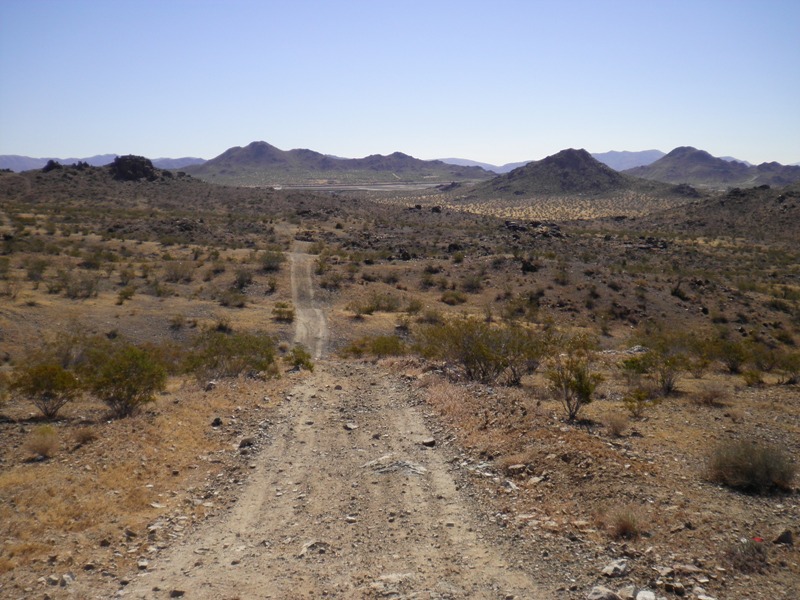
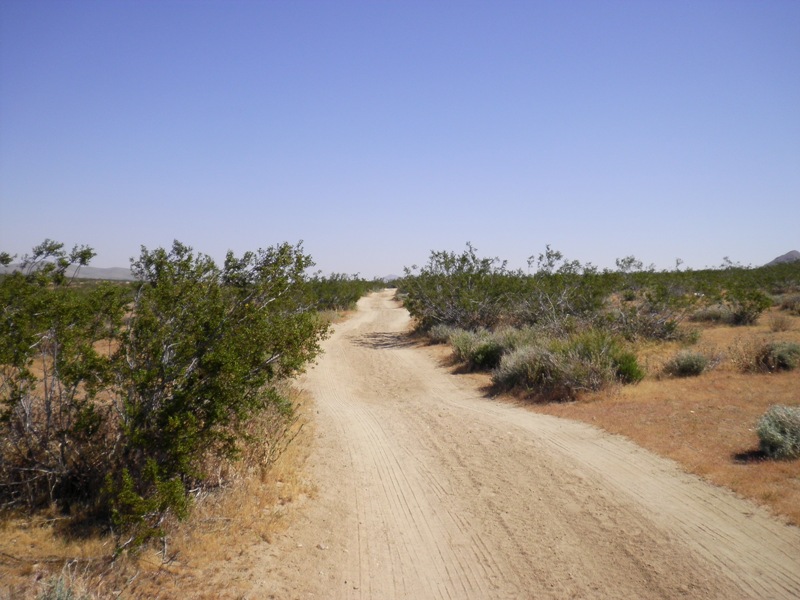
For just a moment yesterday, while I was walking in the desert, all seemed clear to me. Well, all as related to my grief that is. I could see that things happened the way they needed to. My life mate/soul mate and I could not continue the life we’d been living. We were trapped in an untenable situation, not just because of his health and our finances, but because the place we were living was stifling us. There was nowhere to walk except a 600-yard-long road, nothing to do we hadn’t already done a hundred times, nothing to see that we hadn’t seen a thousand times, but we couldn’t leave. He was too sick to survive a move. Besides, he was comfortable where he was.

Those years of entrapment seemed to go on forever, the only changes being a continual worsening of his health, a continual increasing of his pain, and a continual deadening of my senses.

We were living a classic example of entropy. Entropy is a measure of the amount of energy that is unavailable to do work, and it tends to increase in closed systems. In other words, in a closed system, things break down and stop working. Because of his health, we could not do anything to stop the entropy of our lives. We could only endure.

And then one day, he was set free from his pain-wracked body and cancer-ridden brain. And I was set free from the horror of entropy.

It seemed to me, yesterday, that our lives worked out as they should have. That in a terrible way, we both got what we needed.

I felt at peace most of the day, but the feeling didn’t hold. Last night, the thought “But he’s dead!” hit me. And so sorrow descended once more.

I can see, though, that such moments of clarity will increase until I can finally accept that yes, he is dead, but so what? Someday, I will be dead, too. Meantime, I live to battle entropy another day.

Grief: The Twenty-Seventh Twenty-Seventh

My life mate/soul mate died of inoperable kidney cancer on the 27th of March, 2010, and today is the twenty-seventh twenty-seventh I have managed to survive. Some such dates are fading — I no longer count the days or weeks, no longer count my sad Saturdays (he died on a Saturday, and always on Saturday, I feel an upsurge of sorrow), but I am still very aware of the day of the month he died.

This twenty-seventh month marks a big change. For the first time in my long odyssey, I am more grateful for what I had with him than I am sorrowful for what I didn’t have. I can even smile when I think of him, though I don’t think of him as often as I used to. For the first two years of my grief, he consumed my thoughts. It was as if I were afraid to stop thinking of him, lest he disappear completely from life and memory. Despite that vigilance, my memories of him are fading, and while I still feel the sorrow, still feel the immense hole in my life, I am forgetting the particulars. Forgetting, even, what he looked like.

This forgetting seems like a death in itself, but I can’t keep him here by thinking of him. Though I wish with all my being that he were strong and healthy and living, he is gone. And I am not.

In recognition of this, I have put away the only two photos I have of him. I could not bear to look at the pictures for the first fifteen months after he died, but I gradually inured myself to the sight of them. For a while, the images brought me comfort, but now they only remind me of my sadness. Maybe someday I will set out the photos again; meantime, I am learning to survive without this crutch. The photos might not be a crutch so much as a reminder, or maybe simply something to talk to, but whatever these pieces of paper are, they are not him.

I am still beset by tears and fears, and there’s a chance I always will be. His death seemed to open a crack in the EveryThing, and I could almost feel the winds of eternity. Some of the wildness of my grief and the accompanying panic came from this contact with a truth I am not yet capable of understanding. I don’t know what I will become because of the experience, but even though I don’t feel any different, I know I have changed in some fundamental way.

I am weary of trying to find my way, weary of trying to work around the immense hole he left behind, weary of trying to emphasize the good in my life. Perhaps one day, I won’t have to expend so much effort to find ways and reasons to live. I will simply . . . live.

Grief: Finally Grateful

Two years and three months after the death of my life mate/soul mate, I am finally beginning to understand that this is my life and my life alone.

Sharing a life with someone might shroud the basic aloneness for a while, but after the person dies, it eventually becomes apparent that your destiny belongs only to you. (Because, obviously, if it belonged to both of you, he would still be here.)

Surviving a mate is hard on many counts. The sheer agony of his being ripped from your life leaving you feeling amputated. The bewilderment and angst that come with confronting death. The collateral losses that go along with losing a mate, such as the loss of one’s connection to the world, the loss of one’s best friend, the loss of someone to share the burden of decisions and chores. But beyond the obvious hardships are the more subtle problems of loving someone who is no longer alive, of continuing to worry about their wellbeing, of feeling bad for them that their life was cut short. (Much of my grief was for him, a posthumous empathy for his suffering and for his dreams that never came to fruition.)

I do not know the truth of his death — perhaps he is sunning himself on some cosmic beach or playing with a couple of galactic cats. Perhaps he is glad to be dead, assuming he even knows that he is. The corollary to this being my life and my life alone is that his life is his alone. Despite all that we did together, all that we shared, all that we were together, I am no longer part of his life.

In some ways, his death set me free. Our lives had become so constrained because of his illness and our financial concerns, that it trapped both of us in a world that was barely tolerable. (I was going to say that it was unbearable, but we did bear it.) His death brought an end to that world for both of us, though losing him catapulted me into the world of grief.

I am not over my grief — I never will be — but my sorrow is being assimilated into my life, and I am coming closer to an acceptance of the gift of freedom he gave me. I am still prone to tears and fears, but finally, after all these months, I am able to think of him and smile, and be grateful that he shared his life with me.

Dreaming of the Dead

I don’t often dream about my deceased life mate/soul mate, but last night was an exception. Perhaps my bloggerie yesterday, where I mentioned a revelation I had while walking in the desert, instigated the dream. The revelation — that having a sign from him wouldn’t change my life, that I’m already doing the best I can to be the best person I can be — was a pivotal point for me. Or perhaps it was because I’ve been going through the movies he taped and have thrown away some I know I will never watch. Whatever the reason, it was good being with him again for a few minutes.

I don’t think the dream was a sign from him, nor do I think he actually visited me. In fact, I knew it was a dream while dreaming.

In the dream, we were going somewhere on foot, and I realized that it would be cold before we got back, so I went inside to get a coat. In my closet were two of his coats — a jacket and a trench coat, which I have in fact kept. As I was pulling the jacket off the hangar, I remembered that I had gotten rid of most of his things after he died, and I panicked, wondering how to tell him that his stuff was gone. I left the room, and met one of the moderators of the grief group I had attended. He asked how I was, so I explained the situation, then I added, “It’s a good thing this is a dream, otherwise he would be really angry.”

In the dream, I was glad not to have to tell him his things were gone, and I’m glad I don’t have to tell him in real life. Even though he told me what to do with most things, he never told me what to do with his tape collection, and I don’t know what he would think of my throwing any of them away. But he is beyond caring about such things now.

Part of me wants to get rid of everything that reminds me of him — which would mean getting rid of everything I own. But part of me thinks there might come a day when having our things around me might help connect the disparate parts of my life — the years with him and the future years without him.

It still seems bizarre to me that a person’s things outlast him. In this age of obsolescence, you’d think it would be the other way around. Besides our household goods, his tape collection, and various things I have not been able to get rid of yet, I have a great many papers  in his handwriting — recipes, the list of video tapes, a foot-high stack of notes from his studies into health and nutrition, and various other notes I come across from time to time. Oddly, for something so personal, an unexpected glimpse of his handwriting doesn’t sadden me, which is a good thing. I’m sad enough as it is.

Desert Revelation: Dealing with Life on My Own

People often tell me how sorry they are that I’ve had no signs from my dead life mate/soul mate, but the truth is, even if he does still exist somewhere, there is no reason for him to try to contact me. A sign from him wouldn’t change anything, not his life, not his death, not my missing him. And it wouldn’t change my life.

I am not an Ebenezer Scrooge who needs to be shown the effects of my evil ways, nor am I a George Bailey who needs to be shown the effects of my benevolent ways. I do the best I can each day, trying to be kind to others, trying to be kind to myself.

All my life, I’ve studied religions, philosophies, mythologies. I’ve even had strong beliefs at various times, and have lived accordingly, though those beliefs have shifted through the entire spectrum of theological thought. I haven’t just been living haphazardly with nothing in my head but me me me. Whatever lies beyond this life, whether we retain our individuality or our energy becomes part of the “everything,” it isn’t germane to my life here on Earth since this is the only life I know. Understanding the truth of my existence won’t change anything I do.

I still question, of course, because that’s what my life is all about — quest(ion)ing. As with all quests, it’s the journey that counts, not the elixir of truth you find at the end. Even if you were shown the truth ahead of time, until you become the person who understands that truth, the truth remains obscure.

And so is this blog post — obscure. But I don’t mean it to be. I’m just trying to put today’s desert revelation into words. I am still prone to strange and mystical thoughts on my daily walks in the desert, though the thoughts could be the result of heat baking my brain instead of true insights. But this one feels true.

As much as I would like to talk to my mate, to find out how he’s doing, to know if he’s glad he’s dead, it wouldn’t change anything. I call him my soul mate because while he was alive, we had an incredibly strong connection, but I don’t think he’s actually sharing my soul. He’s his own person, on his own quest, and the further I get from our shared life, the more I feel the truth of that. Besides, I have my own quest to deal with, and it’s all I can handle right now.

Two Years, Two Months, Two Weeks, And Two Days of Grief

Two years, two months, two weeks, and two days. That’s how long my life mate/soul mate has been dead, and I still can’t make sense of it all — our meeting, the years we shared, his death, my continued life.

Neither of us had every expected (or wanted) to share a life with anyone, and yet we spent more than three decades together. Our meeting was almost miraculous. In a fit of loneliness, he wished he had someone, and the next week, I walked into his store. We started out with such hope, but our life together was no fairy tale. Much of it was wonderful, more vital than anything I could ever have imagined, yet we were trapped by various failures, not the least of which was his increasingly poor health. I was so tired of it all, so exhausted by trying to hold myself together, that a few times that last year I wished he’d die and get it over with. I never said it aloud, of course, but he knew. How could I have been so horrid? Shouldn’t I have been more patient? Wiser? Kinder? It’s a terrible thing, knowing I am not the woman I thought I was.

During the last few weeks of his life, we reconnected, and I remembered why I loved him.

And then he was gone.

I don’t understand how he can be dead. Well, obviously, I understand the biology of it — I watched him die a bit every day for a lot of years — but the man I knew in the form I knew is gone. Forever. I can’t wrap my mind around that. Even worse, I am forgetting him. My memories are drifting off-center, and I no longer feel the truth of him.

People used to tell me that he still exists in memory, but if so, he is dying a bit more every day. There could come a time when I don’t remember him, when I only remember his absence. I can feel it happening already. Some days now it seems as if he were a stranger I knew long ago rather than a person with whom I spent most of my waking hours for more than half my life. I don’t know whether I should cling to the memory of him, even if it is skewed, or if I should let the memory of him fade and simply deal with what life brings me every day.

I don’t understand my continued life, either. Was I really that woman? That woman who watched a man slowly die, who wanted the suffering to end, yet whose love was so ineffectual she couldn’t make him well or take away a single moment of his pain? That woman so connected to another human being she felt shattered into a thousand pieces after his death? That woman who screamed the pain of her loss to the winds? All these months later, I still don’t know how to deal with his death. Don’t know why I continue to be sad. Don’t know why I feel his absence acutely when I barely remember him.

Mostly I’m trying to look at the future as an adventure, but I’ve had so many immense changes in my life in the past few years, with more on the way, that I feel as if I have no foundation to build on. That feeling, at least, is not true. I have the foundation of all I have done, all I have learned, all I have become — what I don’t have is certainty and security (though no one really does).

And most of all, what I don’t have is him. But perhaps I never did? It could be we were simply passing by and stopped to visit awhile before we continued our journeys. Alone.

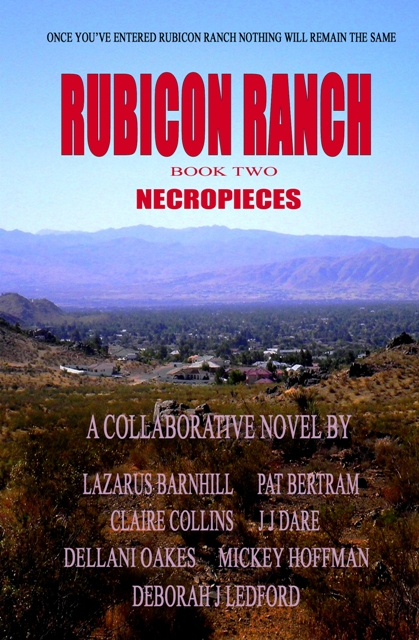
Sneak Preview of Rubicon Ranch: Necropieces

Rubicon Ranch is a collaborative and innovative crime series set in the desert community of Rubicon Ranch and is being written online by the authors of Second Wind Publishing. Seven authors, including me, are involved in the current story — Rubicon Ranch: Necropieces.

Residents of Rubicon Ranch are finding body parts scattered all over the desert. Who was the victim and why did someone want him so very dead? Everyone in this upscale housing development is hiding something. Everyone has an agenda. Everyone’s life will be different after they have encountered the Rubicon. Rubicon Ranch, that is.

Although some of the characters were introduced in Rubicon Ranch: Riley’s Story, a previous collaboration, Rubicon Ranch: Necropieces is a stand-alone novel. The first chapter will be posted on Monday, June 11, and one chapter will be posted every Monday after that.

We hope you will enjoy seeing the story develop as we write it. Let the mystery begin! Whodunit? No one knows, not even the writers, and we won’t know until the very end!

Chapter 1: Melanie Gray
by Pat Bertram

Melanie Gray woke with tears on her face. She sat up in the bed she’d shared with her husband Alexander, put her elbows on crossed knees, and cradled her face in her hands. The pain she tried to hide even from herself erupted, filling her chest with such agony she could only breathe in shuddering gasps.

She’d been doing so well, concentrating on shooting the photographs to finish their coffee table book on desert life, photos that Alexander should have taken, would have taken if he hadn’t died. So why the upsurge in grief? Then it came to her—today marked the third month since Alexander’s death.

Three months! Melanie saw the months marching on, one by one, each carefully counted while she grew old alone. She was only forty-three, which meant a lifetime of loneliness ahead of her.

I can’t do this.

But she’d already been doing it—living each shocking day as it came.

First, she’d found out that Alexander had died in a one-car crash under suspicious circumstances — maybe an accident, or maybe something worse, something she couldn’t bear to think about. Then she had discovered that he’d been texting a woman when he died, a woman who claimed to be his mistress. Finally, she learned that somehow he’d managed to spend the considerable advance they’d received for their book, leaving her with a six-month paid lease on this house, barely enough cash for groceries, and a book contract she needed to fulfill. No savings. And no car.

At least the desert was close, so she didn’t need a car to do her job. Rubicon Ranch, the bedroom community where they’d rented the house, bordered on the high desert of inland California, and offered gorgeous vistas, wildlife . . . and death.

“Damn you, Alexander! Why did you have to die? You were the one who was supposed to shoot the photos. I only wrote the words. If you’d paid attention to your driving, you’d still be alive, and I’d never have found that little girl’s body.”

Poor little Riley Peterson. Kidnapped as a baby, dead at age nine without ever knowing that her biological parents had spent her whole life searching for her.

Melanie let her tears fall for a few more minutes, took one more shuddering breath, and hauled herself to her feet. As bleak as her life seemed, as sad and as lonely as she felt, she was still alive. And she had work to do.

As always, she dressed in white — loose cotton pants, billowing long-sleeved top, wide-brimmed straw hat, flowing scarf. She checked her pockets to make sure she had her cell phone, camera, and extra memory card. Then she grabbed a canteen of water, slung the strap over her shoulder like a bandolier, and stepped outside.

A perfect early fall day. Clear blue skies, the deepest blue she’d seen since she’d moved to Rubicon Ranch. A hint of a sweet-scented breeze wafting up Delano Road. Temperatures in the high seventies, though they would probably rise to the mid-eighties by noon.

The grizzled homeowner across the street picked up a newspaper from his driveway, waved it at Melanie, turned, and stood still. Wondering what had caught his attention, Melanie followed his gaze.

A tan bullmastiff towed a pretty woman up the street. The woman’s dark hair, drawn into a ponytail, swished jauntily as she ran to keep up with her exuberant dog. What should have looked like a carefree moment seemed one of desperation to Melanie, as if the woman were running from demons only she could see.

“Funny how art often imitates life, eh?” came a deep voice from behind Melanie.

She jerked her head in the direction of the voice, and gaped at Morris Sinclair, her next-door neighbor, who had managed to sneak up on her without her noticing.

Morris, an international bestselling horror novelist had been a suspect in Riley Peterson’s death. The sheriff had declared the author innocent of the murder but guilty of buying stolen crime scene photos. And guilty of feigning Alzheimer’s. Melanie didn’t know how the sheriff had come to that conclusion. As far as she could see, if Morris had been feigning Alzheimer’s, he must have been trying to hide the truth — that he was insanely evil. Or evilly insane.

“Or maybe, in her case, life is imitating art,” Morris said.

“What are you doing here,” Melanie demanded. “Does Moody know you’re on the loose?” Moody, Morris’s daughter, had spent time in prison for the accidental death of a child. You’d think a man as perverse as Morris would be proud of her for that accomplishment, but he treated his daughter with even less regard than he treated everyone else.

“Am I my daughter’s keeper?” Morris intoned.

Melanie backed away from him. “I’m sorry. I don’t have time for this.”

“I know. You have to go out into the desert to shoot more of your little photos.” He bared his long, old-ivory-colored teeth at her in what might have been meant as a smile but came across as a predatory leer. Pointing a bony finger at her camera, he added, “You know how to use that thing, right?”

Melanie lifted her chin. “I do.”

“I’ll offer you the same arrangement I had with your husband.”

“You had an arrangement with Alexander?”

“Yeah. Alexander. Did you have more than one husband?”

Melanie stared at him in confusion, but when his dark opaque eyes met her gaze, she ducked her head.

“Alexander used to take certain . . . photos for me.” Morris raised his voice. “Photos of body parts.”

“Body parts?” Melanie asked. “You mean like arms and legs? You can find photos of those anywhere.”

“But I need amputated body parts. Dead parts. Lots of blood and gore. Necropieces.”

Melanie recognized the name of Morris’s most famous horror series — Necropieces — but none of his other words made sense. “You’re telling me Alexander took photos of amputated limbs for you?”

“And entrails. And organs. He loved shooting the images. Had a nicely developed sense of the macabre.”

“No,” Melanie said in a normal tone of voice. Then, all at once, the agony of the past few months gathered itself and launched a scream. “Nooooo.”

The word seemed to echo up and down the quiet street. She caught a glimpse of movement on the porch a couple of houses away, and she realized the old man who lived there, Eloy Franklin, had heard her shriek, but she didn’t care. She had enough of insanity and things that didn’t make sense.

“You leave me alone, Sinclair,” she shouted as loud as she could so that Morris would get the message, “or I’ll be shooting your dead body parts.”

“Every one of you bastards wants me dead!” Morris screamed, matching her decibel for decibel. He threw his arms wide as if to address the neighborhood. “Kill me! Kill me! Kill me. Cowards, every one of you! None of you have the guts to do anything but sit in your dark little caves and try to wish me away. Cowards! And you—” He turned to face Melanie. “I dare you. Kill me like you killed Alexander.”

Melanie gasped. “Alexander died in an accident.”

“An accident you created,” Morris said calmly, as if he’d never raised his voice. “Before that little girl died, she told Moody you’d messed with your car.”

“You’re lying.” Melanie’s words barely squeaked through her clenched teeth.

“Ask Moody.” Morris put a finger to his chin and cocked his head to one side. “So, will you take the photos for me? I’ll pay you well.”
Waiting for My New Life to Begin

I never had much of a yen for travel; I’m too much of a homebody. I wouldn’t mind seeing exotic places, but it takes too much time to get there, and plane travel is simply no fun. Still, the only way I’ve been able to make sense of the death of my life mate/soul mate and my ensuing grief is to do things that I wouldn’t have done if he had lived. Since he had been sick so long, we hadn’t been doing much, so it leaves the whole world open to me. I’ve visited museums and art galleries, taken day trips and plane trips, gone to county fairs and other festivals.

I’ve even done less edifying things such as putting together jigsaw puzzles. I’ve always hated jigsaw puzzles. They seem so pointless, but in a world where everything now seems pointless, they make as much sense as anything else. And, oddly, for such a structured activity, jigsaw puzzles seem to be stimulating my creativity. I’ve been trying to do whatever I can to create new pathways in my brain, to get out of the cerebral ruts I’ve gouged for myself, and the puzzles are doing the trick. Maybe it’s because of the pattern recognition skills? For whatever reason, I’m getting interested in writing again. I even printed out my WIP (which has been stalled for so long, I call it my work-in-pause) so I can read it and see where I am. It’s a silly story (was meant to be silly) and I haven’t been in the mood for silliness for a very long time, but poor Chet has been incarcerated in the human zoo long enough. It’s time for me to let him move on.

One day, I’ll be moving on, too. Right now, I’m taking care of my 95-year-old father, but when he’s gone, I’m going to have to figure out where to go next, both geographically and mentally. Where do I want to be? Who do I want to be? Tough questions, both of them.

I’ll be in a unique position, though, free of responsibility — except for myself, of course. I’ll be continuing my quest to try experience new things, to do that which I wouldn’t have done if my mate were still alive, and so far, such plans entail travel (and a means of making money to pay for the trips).

I’ll taking a cross-country road trip with a bereft author friend, perhaps to check out book stores and do signings, but mostly to run away from our sadness and look for fun. She wants to visit Times Square and other such populated areas. I’m more interested in bucolic spots.  Should be an exciting and eclectic trip.

Another friend wants to take a bus trip. Greyhound offers a pass for unlimited travel, so we would go wherever we wished, get off the bus whenever we wanted. Her desire is to see Washington DC and Cape Cod. Sounds good to me. I would never have chosen either of those destinations, which is the beauty of such a trip. I want to do things and go places I would never before have considered.

And still another friend, my first ever online friend, wants me to visit her in New Zealand. The thought of such a long plane trip makes me cringe. Besides, last year I flew to St. Simons Island and Seattle, so air travel holds no novelty. But . . .! She told me I could go by freighter. I had no idea such travel was still possible. It takes approximately two weeks to get to New Zealand by water. Just think of it — two weeks on the open sea (well, four if I return by freighter). A real voyage. And perhaps a voyage of self-discovery?

That pretty much covers all methods of travel except train. So, of course, I’ll take a train trip. A long one. And go first class — rent a room. Where will I go? I don’t know, but it will be somewhere I’ve never been before.

It sounds exciting when I tell people of such things, and yet these experiences don’t make up for a second of my mate’s being gone. But still, I have to do something, so I might as well experience life to the fullest. Or, at least plan to experience life. I’m still waiting for my new life to begin.

New Steps on the Journey Through Grief

I’ve reached a new level of grief. I’m still sad, but I can barely remember why. I still feel the absence of my life mate/soul mate, who died two years and two months ago, yet I can barely remember the living man. The life I shared with him is receding, as if it happened to someone else. There is still a hole in my life and a decided lack of “life” — no sparks kindling new ideas, no electricity of excitement, no radiance — but I no longer have anything with which to compare that lack of life. It’s as if these sad and lonely days are the way it has always been for me.

During those years when we were together, I had someone to talk to, someone who could help put life into a different perspective, and now there is just me. To tell the truth, I still talk to him, but he never offers a different perspective. I used to feel a tenuous connection to him (or at least to our shared past) when I talked to him, but now I have no idea if I’m even talking to him or simply talking aloud.

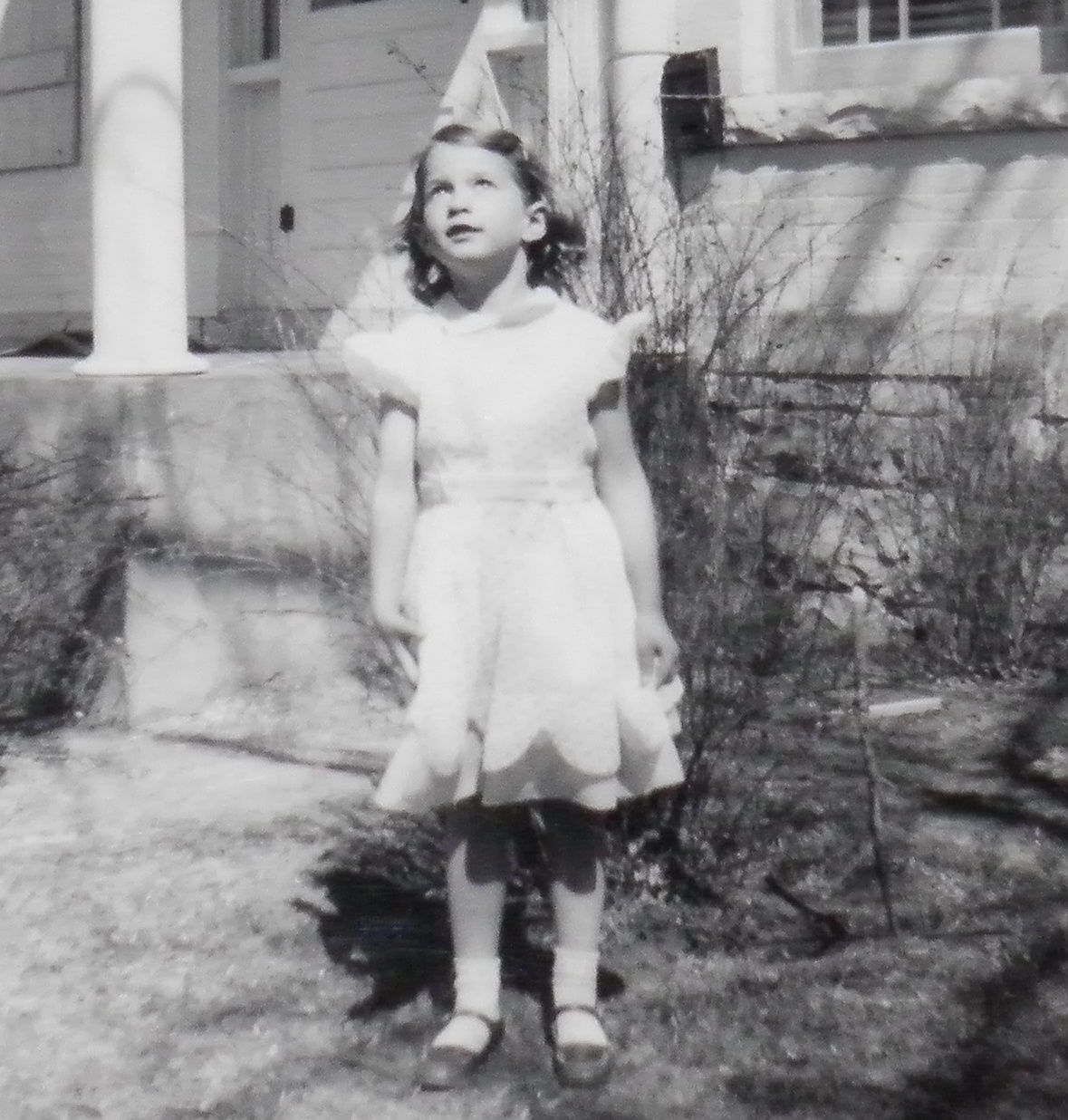
With our shared life moving further into the dim past and my memories of him fading, I worry that I will forget him. I know I’ll forget the person I was when I was with him. No matter how I change, I’m always just me, and yet, (for example) I cannot remember this little girl, cannot remember being her. She has receded far into my past. Or perhaps she’s become subsumed into my current persona? Either way, she no longer exists even in memory. And so will the person I was with him disappear as I move further into the future without him.

The irony is that I was in such pain after his death that I made a special point to experience new things so I could create new memories. I thought new memories would help cushion the severity of the break between our shared life and my life alone, yet those very memories are taking me further away from him.

I might not completely forget him. I have moments when I flash onto a vivid image of him, and as heartbreaking as those moments are (because I am reminded once again that he is dead), they are all I have left of him except for some of his things. It seems cruel that their things outlive the dead. Shouldn’t people live longer than things? Or else, shouldn’t the things disappear when our loved ones do? And yet, as my memories fade, the things I kept of his and the things I kept of ours, such as our household goods, will be all I have to remember him by.

Every new step on the journey through grief brings its own grief. It saddens me that he is forever receding from me. Yet I am still here, and I must live. I can’t cocoon myself in memories of him and our life together. I can only go on doing what I have been doing — experiencing new things and making new memories, even if they take me further away from him.

Learning to Deal With the Real World

It seems strange to have to learn to deal with the real world at my age, but for more than half of my life, I didn’t have to deal with the world as it is. My life mate/soul mate and I created our own world of peace and accord. We always wanted the best for each other without ever a hint of envy or resentment. We helped each other. We listened to each other. We cared for each other and took care of each other. We shared values, income, responsibilities without counting the cost or worrying about who got more than their share. In fact, we often worried that we were taking more than we gave.

It wasn’t like that at the end, of course. Long-term illness skews things, so during his last years, there was often tension and frustration as our lives started to diverge — he to death, me to life alone. We could feel the disruption of our world, and though we were under tremendous stress and occasionally gave in to fits of pettiness, we mostly managed to deal peaceably with each other. To others, however, we appeared to be in perfect accord. During one of their visits, the hospice nurse turned to the social worker and said, “I don’t think they have any idea how much they love each other.”

What we had didn’t feel like love, and yet, what else could it be, this creation of a world where we each gave whatever we could without stopping to count the cost? We didn’t have an easy time of it — so often life took disastrous turns, but still, we were always there for each other.

And now we’re not.

He’s . . . somewhere (or nowhere) and I? I’m here, muddling along as best as I can in this alien world. The world is alien in part because his absence has created a black hole into which so much light has disappeared; in part because I am alone without someone listening, caring, helping; in part because it truly is alien. Though people often say, “We’re all in this world together,” they don’t mean it. People want things and they pursue those things with a passion. Isn’t that what most people think life is about? Finding someone or something to be passionate about? But here is the conundrum — passion takes what it wants and doesn’t count the cost to others. (That is why passion is such a great story driver.)

He and I used to play games where the goal was not to win or lose, but to come out evenly matched. We hated games where one person won everything and the other lost everything. It seemed too cruel. Neither of us wanted to lose, but we didn’t want the other to lose, either, because we knew how much losing hurt. (It probably won’t come as any surprise if I tell you we created our own games.)

We never argued. Well, there was that once, six weeks before he died, but I hate thinking of that. I understand now the horrendous pressure of our lives, but for so long all I could think of was how horrible I was for having my first fight with my mate six weeks before his death. (I understand it now, but I still can’t think of it without tearing up. I never wanted to be that woman.) But for more than three decades, if we disagreed, he’d state his position and I’d state mine (or vice versa). If we couldn’t come to a resolution, we’d walk away (sometimes in a huff, sometimes in frustration). The next day, he’d bring up the subject again, conceding that I was right. Of course, by then I’d have mulled over what he said, and I’d concede that he was right. So we were back where we started. The best thing about it is I knew he’d thought about what I said, he hadn’t just blown me off by walking away.

When he died, my world of accord died, too, and now I live in the world everyone else does — a world where some have way too much and some have way too little. A world where passions tear people apart as often as they bring them together. A world where competition is rampant, where it’s not enough just to win, but also to make sure others lose. A world where small disagreements escalate into battles. Admittedly, this is what the world has always been like, but I didn’t have to deal with it.

And now I do.