Two Years and Two Months of Grief

I never expected to feel so sad two years and two months after the death of my life mate/soul mate, and I never expected to still be so easily brought to tears. But then, I never expected most of what I’ve experienced with grief, especially since I tend to be more contemplative and stoic than emotional. As I’ve learned, though, grief might manifest as emotion, but it is so much more than that — it’s a restructuring of the world as we know it, a reconfiguring of reality. And that takes a lot of energy, both mental and physical. And it takes time. A person who was a major part of our life is gone, ripping a hole in our reality, and our brains are struggling to patch the hole (or at least to figure a way around it), which causes an incredible amount of stress.

Part of that restructuring is a new consciousness of death. We all know we are going to die, but after the death of someone we are profoundly connected with, we KNOW deep within our psyches. This knowledge makes life on Earth seem at once more significant and less vital (or do I mean more vital and less significant?), which is why so many of us bereft struggle for meaning. Some of us will eventually settle back into every day life, but for the rest of us, life will always seem a bit off, as if a part of us knows we are aliens in an alien land.

Mostly, I’m doing okay. If we were to meet, you’d have no idea of my ongoing sadness. I don’t try to hide it, it’s just that the sadness has become such a part of me that it doesn’t impede my living. I can smile and laugh and chat as if everything were fine, and it is, for that moment. But when I am alone and not focused on a task, sorrow percolates to the surface. Sometimes our life together seems very far away, as if it were only a dream born of loneliness, but this ongoing sadness reminds me of the truth — I once was with someone I loved deeply, and now I’m not.

I never feel his presence, but his absence hovers beside me as if it were a living thing. When I make a salad, I am aware that he is not washing the vegetables for me. When I am at the grocery store, I am aware that he is not helping pick out what we need. When I am exercising, I am aware he is not in the room. When I need someone to talk to, I am aware he cannot respond. When I watch one of his many video tapes, I am aware he is not sitting next to me. Every time I use something of ours, even something as inconsequential as a spoon, I am aware that he has no need of the article.

I don’t purposely think of such things. In fact, the awareness is not a thought. It’s just that everything I do and everything I own echoes with his absence. Maybe someday even the echo will die away and all I’ll have of our shared life are fading memories. But no matter how I feel or what I forget, I’ll always be grateful that an extraordinary man shared his life with me.

***

Pat Bertram is the author of the suspense novels Light Bringer, More Deaths Than One, A Spark of Heavenly Fire, and Daughter Am I. Bertram is also the author of Grief: The Great Yearning, “an exquisite book, wrenching to read, and at the same time full of profound truths.” Connect with Pat on Google+. Like Pat on Facebook.


The Two-Year Anniversary of the Worst Day of My Life

The worst day of my life was not the day my life mate/soul mate died. That particular day was sadly inevitable, one I actually had looked forward to. He’d been sick for so long and in such pain, that I was glad he finally let go and drifted away. After he died, I kissed him goodbye then went to get the nurse, who confirmed that he was gone. She called the funeral home, and I sat there in the room with him for two hours until they finally came for him. (They came in an SUV, not a hearse. And they used a red plush coverlet, not a body bag.) I might have cried. I might have been numb. I don’t really remember. All I know is that I sat there with him until almost dawn. I couldn’t even see his face — they had cleaned him and wrapped him in a blanket — so I just sat there, thinking nothing.

The worst day of my life came fifty-five days later, exactly two years ago. I spent all day cleaning out his closet and drawers, and going through boxes of his “effects.” He had planned to do it himself, but right before he could get started, he was stricken with debilitating pain that lasted to the end of his life, and so he left it for me to do. I would not have undertaken the task so early in my grief, but I had to leave the house where we’d lived for two decades and go stay with my 95-year-old father, who could no longer live alone.

I knew what to do with most things because my mate had rallied enough to tell me, but still, a few items blindsided me, such as photos and business cards from his store To Your Health (where we met). Every single item he owned was emotionally laden, both with his feelings and mine. The day was like a protracted memorial service, a remembrance of his life, a eulogy for “us”.

How do you dismantle someone’s life? How do you dismantle a shared life? With care and tears, apparently. I cried the entire day, huge tears dripping unchecked. I have never felt such soul-wrenching agony. I’ll never be able to do anything else for him, so the work and my pain was my final gift to him. I was glad I could do that one last service, but I sure don’t want to ever go through anything like that again.

The only good thing about living the worst day of your life is that every day afterward, no matter how bad, will be better than that day.

I’m not particularly sad today — the sadness came yesterday. Despite it being Saturday, my sadder day, and a day of sporadic tears, I woke with a smile. I’d dreamt we were cleaning out the house (which is odd considering that I did not remember until afterward that today was the anniversary of when I went through his effects). In the midst of the usual chaotic dream images, there was one short clear moment. We were sitting side-by-side. He smiled at me, kissed me gently, and I rested my head on his shoulder.

This was the first time in almost two years that I’d dreamt about him. It was lovely seeing him again, if only in my dreams.

When You Lose the Person Who Connects You to the World, What do You Become?

“When you find that one person who connects you to the world, and that person is taken from you, what do you become then?” —John Reese (Person of Interest)

John Reese might be fictional (at least I assume so; I had never of Person of Interest until I saw this quote) but his question is one many of us bereft are pondering. When that one person is first taken from us, we wonder how we are going to survive. We never figure it out, but still, the days pass, then the weeks, months and years, and we realize that somehow we did it. We survived. Then the question facing us is what do we become.

I’m still waiting to find out the answer. So far, I seem to be just . . . me. Sadder, but me. I keep hoping that grief will bring some sort of mind/soul expansion that will allow me to become . . . well, something other than the same person I have always been. I hope for wisdom, perhaps a glimpse into the eternal mysteries, maybe a greater understanding. But so far, such experiences remain beyond my grasp.

I am trying to re-establish a connection to the world, though. For a long time, I felt as if I were balanced on one foot, the other suspended above the void. Occasionally I still have that stepping off into nothingness feeling, but mostly I’ve been trying to concentrate on actually being on Earth. To notice my connection to the world. To feel the ground beneath my feet. To be aware of my breath mixing with the air around me. To feel the wind against my face and the sun against my back. All these things connect me to the world whether I feel connected or not.

During the past few days, I’ve noticed that I’m letting go of the past, or at least feeling an easing of its grip. I haven’t wanted to let go of the past because in the past I was loved. I had mate — a life mate, a soul mate, a play mate. In the past I wasn’t alone. Nothing can bring back the past, and to be honest, I don’t want to bring it back. In the past, my mate was miserable, in pain, dying by inches every day. But without the past, or my connection to the past, what will I become?

Or is that the wrong question? Perhaps the important question is not what I will become, but what will I be at any given moment. If I try to live each moment as it comes, whether it comes with tears or a smile, with heartache or peace, then perhaps all these moments of being will lead to becoming.

Weeping For Those Who Are Newly Born Into The World Of Grief

Someone stopped by my blog this morning to comment that her husband passed away fourteen days ago, and I started crying. I wept for her, for me, for all of us who have had to deal with the soul-breaking and heart-shattering pain of new grief. (Sometimes the only way I had to keep from bursting with the pain was to scream. I’d never screamed before, but I often screamed during the first weeks of grief.)

I don’t know how any of us survive such agony and angst, but somehow we manage to keep taking one breath at a time. As the months pass, the pain does lessen, though according to others further along in the grief process, the sadness never completely goes away. And always, we revisit grief on the anniversary of the death.

There are so many sad anniversaries for me to remember now. May 24. July 23. July 26. March 7. March 27. October 14. All days when someone who was very loved died and left a grief-stricken soul mate behind. I’ve seen much pain these past couple of years from my fellow bereft but even more courage. It takes courage to continue to live, courage to struggle to accept the changes that death brought, courage to strive for understanding, (especially for those who wish to be done with life).

Sometimes I see only the pain of grief — eyes blank, bodies tensed, hearts bleeding — but sometimes I am privileged to see the light shining through the grief as the bereft find new hope and new meaning.

Where does grief lead us? I don’t know. People often equate grief to a journey, which makes us think we are going somewhere, but grief seems to be more of a process, turning us inside out, stretching our minds, souls, psyches so that we can learn to live with our new reality and find peace (and maybe even happiness) alongside the continued sadness.

Despite whatever dubious benefits and insights I have gained through the experience, I would not wish this process on anyone, and so I weep for those who are newly born into the world of grief.

Grieving the Nothings

I’m gradually moving away from the influence of grief. I’m not moving away grief itself, since there is a good chance that somewhere deep inside I will always be crying (I can feel the gathering tears even when I am not overtly sad), but I am moving away from grief’s influence. I can think clearly again, though the answers to many of my questions about life and death and the meaning of it all remain unanswered. I can focus without being distracted by thoughts of my deceased life mate/soul mate. I am not revved up with anger or guilt or adrenaline. I don’t feel quite as soul-shattered or heart-broken as I did at the beginning, and my yearnings for him are not quite as vast. His absence looms almost as large as his presence once did, but I am getting used to working around the void. I am also getting used to the unwelcome knowledge that I will never see him again in this lifetime, never hear him talk, never be warmed by his smile. (I’m just getting used to the knowledge that I will not see him; I will never get used to the fact.)

But . . . now that the big losses are a bit tamer, the small losses are becoming more apparent. I have no one with whom to share a moment with. You know what I mean — you’re watching a movie and, after a particularly touching scene, you turn to each other and smile. If I turn, no one is there. I sometimes look at his photo at such moments, but there is not much “sharing” when it is between you a piece of tinted paper.

I was also going to say I have no one to share anything with, but that’s not strictly true since I do have people I can share major happenings with. What is true is that there’s no one to share nothing with. There are so many little nothings in a day — miniscule victories or insignificant happenings that aren’t worth talking about, but that you want to mention anyway. And there are times when you’re sad or lonely or restless, and just want a moment’s connection before continuing your daily tasks. You can call someone perhaps, or email, but it’s not the same thing. By the time you make the connection, the moment of nothing has become something.

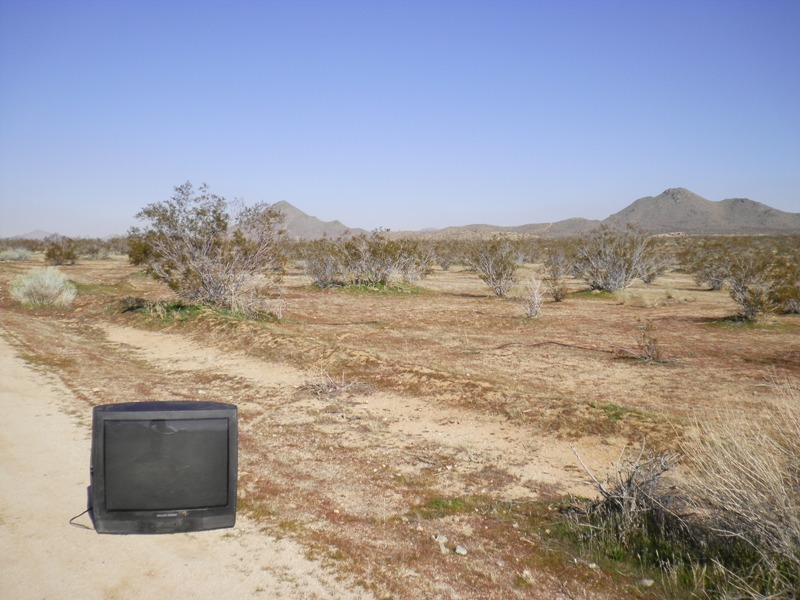
I also have no one to share the small incongruities and ironies of life with. Once walking in the desert, I saw a television on the road. So totally incongruous, it seemed as if it were an art piece in the making, and I had no one to tell about it in passing.  Today I went to the dentist to have him check on a small matter, and he told me to eat lots of sticky candy. The irony of the advice tickled me (I mean, really, when was the last time your dentist told you to eat lots of sticky candy?), and I had no one to tell that to in passing, either.

Come to think of it, there is no “in passing” anymore.

I made it through some of the major traumas of grief. Now I have to try to make it through the nothings.

Where Do I Belong?

My favorite types of books have always been those where the character is out of place, as if she doesn’t belong in the world where she was plopped. By the end of the novel, of course, the character finds where she belongs — often with the one man who appreciates her — but we never hear the end of the character’s story. All stories end where life ends — in death. Authors simply pick the appropriate stopping place for the novel. So, as long as we imagine the character living happily ever after with her beloved, we know she belongs somewhere, but what happens to her when her beloved dies?

One short story I read when I was small affected me so much that I remember it all these decades later. (Though I don’t remember who the author was and, in fact, might not have known it. Back then, an author’s name was only important as a way of identifying the type of story, and I didn’t pay much attention to them otherwise.) The main character in the story was a young woman who had always felt out of place — the world and the people around her were alien to her. It turns out she was an alien stranded here on earth, and at the end, she was rescued and taken home.

It makes sense that such stories spoke to me since I too felt out of place. No matter how I tried to fit in, I never got it quite right, as if I were an alien trying to fit into a human situation. Then one day I stopped by a health food store, met the owner — a wise and radiant man — and all of a sudden the world made sense. If he was in the world, then the world wasn’t such an alien place after all. We never belonged to each other, but we did belong with each other. We thought alike, valued the same things, disvalued the same things. When he died two years ago, the world became alien once more, and I am back where I started, wondering where I belong.

As with many people in this mobile world, my parents left their hometowns, moved west, raised their family, then moved on again, which leaves me without a heritage, without a home. The place where I grew up has itself grown up — no longer a cow town but a world class city, and it is as alien to me as any city in the world. It didn’t matter as long as he was alive since he was my home, but now . . . where do I belong?

I’ve gotten over the hump of my grief. I am no longer in constant physical and emotional agony, though grief still stabs at me (sometimes several times a day), and I still have moments of panic when I remember that he’s not just gone out of my life but that he is dead. (That is still the worst aspect of this whole situation. I can deal with everything but his absence from Earth. How can he be so very gone? Where is he? Is he okay?) I am mostly back to being myself, though I’m not sure who I am, what I’m supposed to be doing, where I belong.

Right now, I’m taking care of my 95-year-old father, but this is not my home. In fact, I’d never even been here until my mother’s dying days. When my father is gone, the house will be sold, and I’ll have to find somewhere to live. But where do you go if you don’t belong anywhere?

How are characters integral to the setting?

I often troll my site statistics, curious as to how people found this blog, and the other day, several people landed here after Googling “How are characters integral to the setting?” It sounds like they were taking the easy way out doing their homework, but still, it’s a very good question. If the setting is simply a place for events to unfold, then the author has missed out on an opportunity to tighten the story by making the characters an integral part of the setting and the setting an integral part of characterization. Everything should be in service to the story, including the setting.

In my novel, A Spark of Heavenly Fire, the setting and characters are intertwined. The setting is Colorado in the midst of an epidemic. The story is driven by the women, all very ordinary, especially Kate. And that was the point — to tell a story of an ordinary woman who struggled during prosperous times when everyone else was doing well, but who managed to prosper in the dark times when everyone else was having difficulties. Without the epidemic, without the quarantine, without the very terrain of Colorado, Kate would have no being. And without Kate and the other characters, the setting would have no meaning.

Eudora Welty said, “Every story would be another story, and unrecognizable if it took up its characters and plot and happened somewhere else.” Most of my books are set in mountain climes, and the mountains create the characters and the characters complete the setting. A stage is empty and lifeless without the characters. You need characters to interact with the setting to make it come alive.

Think of a desolate area, such as a desert road. It evokes a feeling of loneliness, but if you put a character on that road, you personify the loneliness.

The setting/character relationship is not simply a story construct. We are integral to our settings and vice versa. Gardening and lawn care is one very obvious way we are integral to our settings. If not for gardeners, gardens would not exist. But the settings of our lives extend beyond such evident comparisons.

I used to live off a highway on a dead end road bounded by fenced alfalfa fields, so the only place I could walk was by trudging up and down that .3 mile road. This was indicative of my life at the time. My life mate/soul mate was dying, had been dying for a long time, we were stuck in a terribe situation that seemed to be going nowhere.

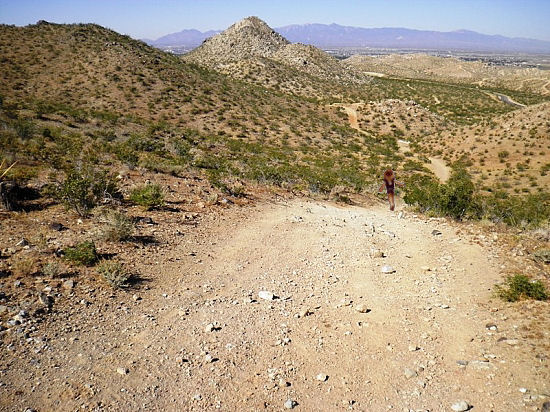
He is gone out of my life now, and so are the interminable laps on the short road. I left that place of constraints and came to this desert community to take care of my 95-year-old father. When I first got here, I walked the long straight roads in the nearby desert. They seemed indicative of my new life — emptiness and desolation and loneliness stretching endlessly before me. More recently, I’ve taken to hiking a narrow path up and over the knolls. This too is indicative of my life. The desolation isn’t as pronounced, but the challenges are becoming greater as it sinks it that I will always live with his absence, that I will be growing old alone. The true challenge, though, is to make room for joy along with the continued sadness.

I’ve come to see that this is the true purpose of grief — to stretch our minds, souls, psyches so that we can encompass all that life has to offer. At first I thought I could get over my grief. Then I thought I could bury it with new activities. Now I see that sorrow will always be a part of me, but that doesn’t mean it will be the only part of me. Nor will I always be here in the desert. There will be new places to walk, places that reflect the changing me at the same time as I reflect the places.

How are your characters (or you) integral to the setting?

“Golly gee what have you done to me?”

As part of my quest to refigure the pathways in my mind and open myself up to more light, I’ve been doing my version of dance therapy — dancing to a peppy song or two every day. I hop a bit, wave my arms around, and surrender to the rhythm. It generally works to lighten my mood, but today, Saturday, my sadder day, the song had the opposite effect and I ended up pummeling the air instead of bopping to the beat.

The song? Buddy Holly’s “It Doesn’t Matter Any More.

Cripes. As if I really needed to hear Buddy singing, “There you go and baby here am I / Well you left me here so I could sit and cry / Golly gee what have you done to me?”

Someone told me that grief over the death of a mate is like a relationship gone bad, and sometimes it does feel that way. I talk to him, and he says nothing in return. I beg for a hug, and he ignores me. I yearn for him, and he remains remote. I ask what happened to us, what did I do that was so terrible he had to leave me, and he doesn’t answer.

And then I remember — he didn’t leave me, he died. Now he is there and I am here with no way to bridge the gap. We don’t even have the opportunity to get together to fight about who gets what — I ended up with everything by default. If he were here, he could have everything. I’d even let him have the silly dishes we argued about that last year. (I received a set of Melmac dishes for Christmas when I was young. It was some sort of giveaway, and my mother got the whole set and saved them for my hope chest — though it wasn’t a chest, just a shelf in the kitchen cabinet. I still use those dishes occasionally — they are a wonderful size, and so very light.)

He and I shared everything during our years together, but for some reason I got very protective of those vintage dishes the last year of his dying. We’d started cutting up beets and other colorful vegetables for salads and I asked him not to use those plates — they were white and the beet juice stained them — but he kept using them anyway. (I should have known something was dreadfully wrong with him — he was the most considerate person I’d ever met.) I don’t know why my frustration over his continued decline focused on those dishes, but it did. I don’t even know why it  mattered. It sure doesn’t matter any more.

The song (“It Doesn’t Matter Anymore” written by Paul Anka) continues, “Now you go your way baby and I’ll go mine / Now and forever till the end of time.” Yeah. A real spirit lightener.

The song ends with the words, “baby / We’ll say we’re through / And you won’t matter any more.”

We might be through — my life mate and I — and I wish I could say he doesn’t matter any more, but he does. And he always will.

Review of Grief: The Great Yearning

What a wonderful author Pat is. I found Grief: The Great Yearning so well written and it shows you, as the reader, the full extent of grief at losing a loved one.

I totally recommend you read this author’s books. She has a way with words and knows how to capture her reader right from the start.

Grief: The Great Yearning is an emotional ride and I promise you, you will need a hankie when reading, but I am so glad I have read it and I wish Pat every success with this book.
— review written by Sylvia Kerslake

***

Excerpt from Grief: The Great Yearning

Day 39, Grief Journal

I detest this roller coaster of emotions, though it’s not a roller coaster since there are no ups, only downs. It’s more of a side-to-side shimmy.

I woke this morning in tears. I am still depressed. Still feel way too much mental and physical pain. Still scream for him.

Someone suggested that I concentrate on the enrichment he brought to my life and less on my loss. It’s too soon for that, though — even good memories bring about a spate of grief. I hate feeling so maimed. I hate feeling that there is no one just for me any more. I hate feeling so damn alone.

At the grief group yesterday a woman said she wished her divorced daughter would find someone to grow old with. As if that’s all that was necessary — to find someone. I did have someone to grow old with, and now I don’t. Even if I come out of this okay, he will still be dead, so how is that okay? Damn it! This is not the way our lives were supposed to be!

I’ve been reading old Reader’s Digests, and boy, are those enough to scare a person half to death — stories of awful diseases, dreadful problems of aging, terrible accidents, all the horrors the world has to offer. And from now on, whatever happens to me, I’ll have to deal with it alone.

We always tried to be safe, to be healthy, and still, he got sick. A mutual acquaintance said to me, “How could he have let himself get sick like that?” What??!! As if he chose to get cancer. Sheesh. A woman at the grief group mentioned that this county has a higher than normal rate of cancer. Could that have been a factor? Even if it is, it doesn’t change anything.

I hope he didn’t suffer too much at the very end.

I miss him. I miss working with him, talking with him, watching movies with him, laughing with him. I miss our shared hopes for a better future. It’s a good thing I have so much to do — getting my car ready for the trip, getting ready for the yard sale—otherwise I’d just sit around feeling even sorrier for myself.

I have to steel myself to go on. I will not molder for the rest of my life. If I’m going to be here on Earth, I want to live, laugh, love. But not yet. I’m not ready to let go of my grief. It’s all I have left of him.

***

Grief: The Great Yearning is available from Amazon (both print and kindle), Second Wind Publishing (at a $2.00 discount!), and Smashwords (download the first 20% free in any ebook format).

The Necessity For Grief

People keep telling me I’m courageous to write about my grief, and perhaps it does take courage to let people see me at my most vulnerable, especially when I remember that the grieving me will be living forever in cyberspace. Even if I find peace or new meaning or happiness, that vulnerable part will still be accessible to anyone with a connection to the internet. But that is a small price to pay to be able to get my message across.

I never had a message to impart, but after the death of my life mate/soul mate, I found I did have something to say, and it is this: it’s okay to grief. Such a simple message, really, and not just meant for the bereft, but also those connected to the bereft. Too often family and friends urge their bereft loved one to “move on,” “get over it,” “stop thinking about it.” And they need to know that it’s okay for the bereft to grieve. If they can’t handle their loved one’s grief, imagine how much harder it is for the bereft to handle the pain.

We live in a society that values cheerfulness at all costs, and sometimes, when it comes to grief, the cost of putting on a cheery mien to make others feel better is simply too high. Despite what people seem to think, happiness and joy are not the only allowable emotions. Grief is important, too. If the bereft shows no danger signs, such as drinking too much, blocking out family and friends for many months, suicidal impulses such as stockpiling pills, then it’s better to let grief take its course.

Grief is how we learn how to adapt to a world without — without our loved ones’ presence, without their friendship, without their support, without their love —and it is possible to learn how adapt well enough so that we can live, laugh, love again. Grief digs deep into our psyche, allowing us to ask the important questions that get lost in the activity of daily life: who am I, why am I here, and what’s it all about? Even more important, perhaps, grief helps us to grow in courage, strength, wisdom. It would be nice if happiness and easy living gave us such attributes, and sometimes they do, but more often growth comes with adversity.

Although we bereft often wish to be done with our grief, we would resist anyone who tried to take it away from us. It is ours. Its lessons are ours to learn. Its power to reshape us into people who can deal with anything is ours to grasp.

Apparently, as I’ve been writing this bloggerie, I’ve amended my message. Not only is it important to grieve, it is necessary.