
Excerpt From “Grief: The Great Yearning” — Day 359

GTGYthmbI’ve come a long way in the three years since I wrote the following journal entry.  I still don’t understand the point of it all, but the questions don’t haunt me quite as much as they did during the first years after Jeff’s death.  I’m learning to live without him, learning even to want to live without him. Sometimes I see his death as freeing us — me — from the horrors of his dying, and I don’t want to waste the sacrifice he made.

I no longer feel as if I am squandering time when I am doing trivial things because I have come to realize there are no trivialities. Everything we do is living, taking part in the great panoply of life. Whatever we do adds to the Eternal Everything.

I still yearn to talk to Jeff, of course. I miss talking to him, miss his insights, miss the conversation that began the day we met and continued for decades until he got too sick to hold up his end of the dialogue. I was truly blessed. He never misunderstood what I said. I could make a simple comment to him, and he understood it was a simple comment. He didn’t make a big issue out of it, just answered back appropriately. It seems now every remark I make to anyone becomes a major deal as I try to explain over and over again what I meant by the first remark. It’s exhausting.

I’m  grateful we met and had so many years together. Grateful for all the words we spoke to each other. Grateful I once had someone to love. Grateful that when my time comes to die, he won’t be here to see me suffer. Grateful he won’t have to grieve for me or be tormented by unaswerable questions.

Excerpt from Grief: The Great Yearning

Day 359, Dear Jeff,

I never felt as if I were wasting time no matter what you and I did—even something trivial like playing a game or watching a movie — so why do I feel I’m wasting time if I do those things alone? Don’t I have just as much worth now that I’m alone as I did when I was with you?

When I was out walking in the desert yesterday, I talked to you. You didn’t answer, of course, or if you did, I didn’t hear. We talked about meaninglessness. If you still exist somewhere, if you still have being, if life doesn’t end with death, then life has an inherent meaning — whatever I do or think or feel, no matter how trivial, has meaning because it adds to the Eternal Everything. If death brings nothing but oblivion, then there is no intrinsic meaning to life. So a search for meaning is meaningless (except on a practical level. We all need to feel we are doing something meaningful so we can get through our days and even thrive). Life either has meaning or it doesn’t. Meaning isn’t something to find but to be. So, I’m going to search for meaninglessness, or at least accept it.

Such thoughts seem as meaningless and as trivial as the rest of life. They get me knowhere. (I’m leaving that error, because . . . wow! So perfect!)

I’ve been watching your Boston Legal tapes again. Nicely meaningless since they put me to sleep. But they make me feel connected to you because we watched them a year ago during your last days at home.

This first year of your being dead is coming to an end, and I still don’t know how to survive the pain of your being gone, but I am surviving. Not thriving, not yet, but I will. There’s still so much to work through — all those years of your being ill, our unhappiness, our shattered dreams. Despite all the bad, we did have a good life, a fulfilling one. We journeyed together as long as we could, now it’s up to me to continue our journey alone. Will it continue to be “our” journey or will it become mine alone? I know who I was when I was with you. Now I need to find out who I am without you. To find worth in being alone.

Adios, compadre. I love you.

Click here to find out more about Grief: The Great Yearning

***

Pat Bertram is the author of the suspense novels Light Bringer, More Deaths Than One, A Spark of Heavenly Fire, and Daughter Am I. Bertram is also the author of Grief: The Great Yearning, “an exquisite book, wrenching to read, and at the same time full of profound truths.” Connect with Pat on Google+. Like Pat on Facebook.
Excerpt From “Grief: The Great Yearning” — Day 288

GTGYthmbI’ve come a long way in the three years since I wrote the following journal entry.  Saturdays have ceased to be difficult, though I still don’t understand the nature of life or death. Still don’t understand the point of it all, but the questions don’t haunt me quite as much as they did during the first years after the death of my life mate/soul mate.  I’m learning to live without him, learning even to want to live without him. Sometimes I see his death as freeing us — me — from the horrors of his dying, and I don’t want to waste the sacrifice he made.

I still yearn to talk to him, though. I miss talking to him, miss his insights, miss the neverending conversation. (“Neverending” is a misnomer — the conversation that began the day we met and continued for decades until he got too sick to hold up his end of the dialogue, did eventually end.) He was easy to talk to. He never misunderstood what I said. I could make a simple comment to him, and he understood it was a simple comment. He didn’t make a big issue out of it, just answered back appropriately. It seems now every remark I make to anyone becomes a major deal as I try to explain over and over again what I meant by the first remark. It’s exhausting.

I’m  grateful we met and had so many years together. Grateful for all the words we spoke to each other. Grateful I once had someone to love. Grateful that when my time comes to die, he won’t be here to see me suffer. Grateful he won’t have to grieve for me or be tormented by unaswerable questions.

Excerpt from Grief: The Great Yearning

Day 288, Grief Journal

Saturday, again. I stayed in bed all morning reading because I did not want to get up and face another Saturday. Friday nights and Saturdays continue to be difficult. I watched movies last night until my private witching hour of 1:40am.

The longer Jeff is gone, the more I see what I’ve lost. When we were together, everything was normal, so I couldn’t see how extraordinary our lives were. We created all our own recipes and fixed all our own meals, built our own business, spent years researching the mysteries of the world. And we had such wonderful marathon talks that lasted for days. We didn’t try to convince the other of our position—we each brought truth and thought to the conversation, and together we created a greater reality. There was no reason to argue—it was never about his opinion versus mine. It was about the truth—the truth as far as we could reconstruct it together.

A woman who lost her mate four months after I lost Jeff asked me the other day if I loved Jeff more now than when he was alive, and in a way I do. The problems of his growing ill health got in the way the last few years, clouding my vision of him. Now that those problems and my reaction to them are no longer a factor, I can see the truth of him again (or at least more of the truth than I did) and the love shines through.

Grief comes and goes, but love stays. And grows.

Click here to find out more about Grief: The Great Yearning

***

Pat Bertram is the author of the suspense novels Light Bringer, More Deaths Than One, A Spark of Heavenly Fire, and Daughter Am I. Bertram is also the author of Grief: The Great Yearning, “an exquisite book, wrenching to read, and at the same time full of profound truths.” Connect with Pat on Google+. Like Pat on Facebook.

A Gift for a Grief-Stricken Friend

Grief: The Great Yearning by Pat BertramI haven’t really promoted my book Grief: the Great Yearning. It seemed crass and insensitive to capitalize on people’s grief, but the book has been a big help to many who have suffered a significant loss such as a husband or a parent. If you need a gift (or a stocking stuffer) for someone who is grieving, please consider giving them a copy of Grief: the Great Yearning. It might help to bring them comfort knowing that someone else has felt what they are feeling.

The print version of Grief: The Great Yearning is available from Second Wind Publishing, Amazon, Barnes and Noble. You can even give the ebook in any format as a gift. Just go to Smashwords and click on “Give as Gift”.

If there are people on your Christmas list who like to read, please check out my other books. I’m sure they’d like at least one of them!

***

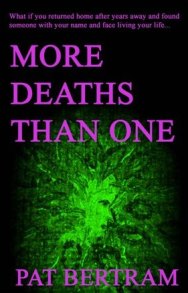
More Deaths Than OneBob Stark returns to Denver after 18 years in SE Asia to discover that the mother he buried before he left is dead again. At her new funeral, he sees . . . himself. Is his other self a hoaxer, or is something more sinister going on?

Click here to read the first chapter: More Deaths Than One

***

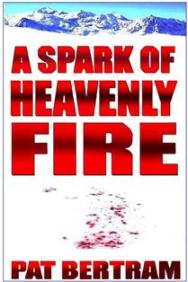
A Spark of Heavenly FireIn quarantined Colorado, where hundreds of thousands of people are dying from an unstoppable, bio-engineered disease, investigative reporter Greg Pullman risks everything to discover the truth: Who unleashed the deadly organism? And why?

Click here to read the first chapter of: A Spark of Heavenly Fire

***

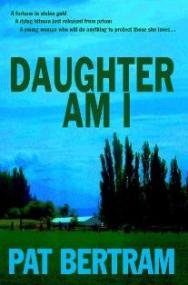
DAIWhen twenty-five-year-old Mary Stuart learns she inherited a farm from her recently murdered grandparents — grandparents her father claimed had died before she was born — she becomes obsessed with finding out who they were and why someone wanted them dead.

Click here to read the first chapter of: Daughter Am I

***

Thirty-seven years after being abandoned on the doorstep of a remote cabin in Colorado, Becka Johnson  returns to try to discover her identity, but she only finds more questions. Who has been looking for her all those years? And why are those same people interested in fellow newcomer Philip Hansen? And what do they have to do with a secret underground laboratory?

Click here to read the first chapter of: Light Bringer

***

Pat Bertram is the author of Light Bringer, More Deaths Than One, A Spark of Heavenly Fire, and Daughter Am I.All Bertram’s books are available both in print and in ebook format. You can get them online at Second Wind Publishing, Amazon, B&N and Smashwords.  At Smashwords, the books are available in all ebook formats including palm reading devices, and you can download the first 20-30% free!

Excerpt From “Grief: The Great Yearning” — Day 214

GTGYthmbI’ve come a long way in the three years since I wrote the following journal entry.  I still don’t understand the nature of life or death. Still don’t understand the point of it all, but the questions don’t haunt me quite as much as they did during the first years after the death of my life mate/soul mate.  I’m learning to live without him, learning even to want to live without him. Sometimes I see his death as freeing us — me — from the horrors of his dying, and I don’t want to waste the sacrifice he made.
I still yearn to talk to him, though. I miss talking to him, miss his insights, miss the neverending conversation. (“Neverending” is a misnomer — the conversation that began the day we met and continued for decades until he got too sick to hold up his end of the dialogue, did eventually end.) He was easy to talk to. He never misunderstood what I said. I could make a simple comment to him, and he understood it was a simple comment. He didn’t make a big issue out of it, just answered back appropriately. It seems now every remark I make to anyone becomes a major deal as I try to explain over and over again what I meant by the first remark. It’s exhausting.

I’m  grateful we met and had so many years together. Grateful for all the words we spoke to each other. Grateful I once had someone to love. Grateful that when my time comes to die, he won’t be here to see me suffer. Grateful he won’t have to grieve for me or be tormented by unaswerable questions.

Excerpt from Grief: The Great Yearning

Day 214, Grief Journal

Life/death has me very confused. I still don’t see that a person lives after they are dead. What survives, if anything? The part of us we never knew—the un-sub-conscious? If so, how would we know who we were after we were dead? Is it just the energy in our bodies that is released? If so, for sure we would not know who we were.

On the other hand, without some sort of afterlife, life simply does not make sense. What’s the point of it all? To survive? For what—more survival until there is no more survival? To help others? Why? So they can survive? For what?

If there is life after death, what do you do with eternity? You have no ears to hear music, no eyes to read or watch a movie, no legs to walk, no hands to caress another, no mouth to talk, no brain to think. Sounds like a horror movie to me. And what will we do if Jeff and I meet again? Bask in each other’s light? That would get boring after a minute or two.

I guess it doesn’t really matter. Whether life ends or continues after death, this is where I am now. So what do I want from the rest of my life? I don’t know. I’ve never really wanted much. I never even wanted happiness—I thought other things were more important, such as truth. But now? I truly do not know what I want, except that which I cannot have. I yearn desperately to talk to Jeff—not about anything in particular, just to talk. It’s like a voice hunger, or a word hunger. A dozen times a day I think of something I want to say to him, to ask him, to marvel at. Sometimes I just want the feeling of connection. I still yearn to put my arms around him and protect him from what will happen, but it’s already happened, and anyway, my touch never had the power to heal.

I know I’m strong enough to handle this—after all, I am handling it—but I DON’T WANT TO!!

Click here to find out more about Grief: The Great Yearning

***

Pat Bertram is the author of the suspense novels Light Bringer, More Deaths Than One, A Spark of Heavenly Fire, and Daughter Am I. Bertram is also the author of Grief: The Great Yearning, “an exquisite book, wrenching to read, and at the same time full of profound truths.” Connect with Pat on Google+. Like Pat on Facebook.

Excerpt From “Grief: The Great Yearning” — Day 197

I’ve come a long way in the three years since I wrote the following letter.  I still don’t understand the nature of life or death. Still don’t understand the point of it all, but I am embracing life, trying to create my own meaning out of small occurrences.  I’m learning to live without him, learning even to want to live without him. Sometimes I see his death as freeing us — me — from the horrors of his dying, and I don’t want to waste the sacrifice he made.
I still wish I could go home to him when my current responsibilities come to an end, but even that desire is waning. It took me a long time to feel the truth — that he is gone from this earth, and I am here. I still miss him, and I probably always will, but I’m learning to be comfortable in my own skin again. When one of “our” things disappears from my life through attrition, it no longer pains me — they are merely things, not “us”.

I’m  grateful we met and had so many years together. Grateful I once had someone to love. Grateful that when my time comes to die, he won’t be here to see me suffer. Grateful he won’t have to grieve for me.

Excerpt from Grief: The Great Yearning

Day 197, Dear Jeff,

It’s been a while since I’ve written, but I’ve been thinking about you. Are you glad you’re dead? You said you were ready to die, to be done with your suffering, yet at the very end you seemed reluctant to go.

I didn’t want to throw you away. Despite all the problems with your restlessness and the disorientation from the drugs, I wasn’t ready for you to leave me. I still am not. Nor do I want to go back to where we were that last year, waiting for you to die. We were both so miserable, but honestly, this is even worse. I can live without you. The problem is, I don’t want to, and I don’t see why I have to.

I want to come home. Please, can I come home? I have a good place to stay, but without you, I feel homeless. Sometimes I watch movies from your collection and imagine you’re watching with me, but that makes me cry because I know you’re not here. Your ashes are, but you’re not.

I broke a cup today, one more thing gone out of the life we shared. Our stuff is going to break, wear out, get used up. I’ll replace some of it, add new things, write new books, and it will dilute what we shared. Is there going to be anything left of “us”? I feel uncomfortable in this new skin, this new life, as if it’s not mine. As if I’m wearing clothes too big and too small all at the same time.

There’s so much I hate about your being gone—hate it for me and hate it for you. It might be easier if I knew you were glad to be dead, but so far you’ve been mum about your situation. Just one more thing to hate—the silence of the grave. (Well, the silence of the funerary urn.)

Adios, compadre. If you get a chance, let me know you’re okay.

***
Click here to find Grief: The Great Yearning in print or on Kindle from Amazon.


***

Pat Bertram is the author of the suspense novels Light Bringer, More Deaths Than One, A Spark of Heavenly Fire, and Daughter Am I. Bertram is also the author of Grief: The Great Yearning, “an exquisite book, wrenching to read, and at the same time full of profound truths.” Connect with Pat on Google+. Like Pat on Facebook.

Being Comfortable With Who I Was And Who I Am

During all these years of pouring my heart out online, I’ve never known anyone offline who checked out my online writings except for an occasional glance by a sibling. Lately, I’ve been meeting people offline, and when the conversation gets around to my telling them about my published books, they come online to check me out.

It’s one thing to meet people because of my grief blogs and grief book, but these people knew me before reading my emotional outpourings. When a couple of these new friends bought Grief: the Great Yearning, I thought I’d find it awkward for them to know so much about me — until the death of my life mate/soul mate, I was reticent about putting myself on shadowdisplay — but oddly, it hasn’t been a problem. Perhaps I’m so used to living wholeheartedly online that being so upfront has become a habit. Perhaps psychologically, I know longer see a difference between online and offline — the two are melding together so that often after an exchange of emails with an online friend, I feel as if we have visited for real. Or perhaps it’s that the woman in the book is no longer me.

When I post excerpts from the book on this blog, sometimes I find myself crying for the woman who had to deal with such trauma, as if the person who wrote the passages were a stranger. And she is a stranger. I’ve come a long way since I wrote those entries — from coupled to uncoupled, from a deep connection to another human being to a solitary connection with the world around me, from a woman who’d lost her identity to someone who is coming to a new realization of who she is.

At the beginning of my grief, I used to bemoan that despite all the trauma, I was always just me, and it’s true — I am always just me. But that “me” has progressed (or at least sidestepped) into a different way of seeing, a different way of being. I used to feel as if everything were over, but now I sometimes feel as if everything is still to come. (Since in many ways I am starting over from scratch, by definition, everything is still to come, though at times it’s hard to maintain such a belief considering that I’m not young anymore.) I can feel the ebb and flow of life a bit better, accept the losses and even the joys that come my way. I still hope for more, of course (though I don’t know what that “more” might be — an even greater wisdom or openness perhaps), but at the moment I am comfortable being me.

And in the end, that’s probably the real reason I’m not uncomfortable with people knowing the truth of me — because I am comfortable with who I was and who I am.

***

Pat Bertram is the author of the suspense novels Light Bringer, More Deaths Than One, A Spark of Heavenly Fire, and Daughter Am I. Bertram is also the author of Grief: The Great Yearning, “an exquisite book, wrenching to read, and at the same time full of profound truths.” Follow Pat on Google+. Like Pat on Facebook.

Excerpt From “Grief: The Great Yearning” — Day 165

During the first year after the death of my life mate/soul mate, I often wrote to him in an effort to bridge the gap between us. The only problem was, he never wrote back and told me how he felt about his dying and our separation. Did he feel as broken as I did? Did he feel as if part of him had been amputated? Or was he simply glad to be shucked of his body, and perhaps even of me?

It’s been three years now since the following letter was written. I still don’t understand the purpose of pain, loss, suffering. Still don’t understand the nature of life or death. Still don’t know how energy can have cognizance, if in fact, consciousness survives death. The main difference is that the wound where he was amputated from me has healed. I don’t worry about him — at least not much — but I still miss him and I probably always will. Most of all, I am learning to get on with my life.

Excerpt from Grief: The Great Yearning

Day 165, Dear Jeff,

People keep telling me that you’re in a better place, but that I have to get on with my life because life is a gift. Huh? If you’re in a better place, why aren’t I there? If life is a gift, why was it taken from you?

I still can’t figure out the point of it all. Is there anything universally important? Love, perhaps, but not everyone loves or is loved. Creativity? But not everyone is creative. Truth? But what is truth? If nothing is universally important, does anything matter? You’re probably tired of this constant questioning, but your death has posed such a conundrum for me that I’m totally lost. I need to find the bedrock of life, a foundation on which to rebuild my life.

I had no idea I had all these tears in me. The drops are huge, like a badly dripping faucet. I am still stunned by the depth and breadth of my grief. I grieve for the good times and the bad. I grieve for what I got from our relationship and what I didn’t. I grieve for me, what I’ve lost, and what I’ll never have. I grieve for you and all you lost, all you never had, all you never will have. I grieve for that young man, that radiant man I met so many years ago because I know the end of his story. And I grieve for the man whose life was cut short.

It can’t be normal, this protracted grief, but people in the grief business keep assuring me I’m doing well.

I hope you’re doing well, too. I love you. I always will.

Click here to find out more about Grief: The Great Yearning

***

Pat Bertram is the author of the suspense novels Light Bringer, More Deaths Than One, A Spark of Heavenly Fire, and Daughter Am I. Bertram is also the author of Grief: The Great Yearning, “an exquisite book, wrenching to read, and at the same time full of profound truths.” Connect with Pat on Google+. Like Pat on Facebook.

Excerpt From “Grief: The Great Yearning” — Day 159

I’ve come a long way in the three years since I wrote the following letter.  I still don’t understand the nature of life or death. Still don’t understand the point of it all, but I am embracing life, trying to create my own meaning out of small occurrences.  The main difference is that the wound where he was amputated from me has healed. I don’t worry about him — at least not much — but I’m still sad and l always miss him.

And oh, yes. I did finally get to the point where sometimes I make his chili when I need to feel the continuity of our shared life — too often now, our life together doesn’t seem real, as if it were but a story in a book. And in a way, it is a story in a book. Grief: The Great Yearning is not simply the story of my grief after his death, but the story of us, our connection, our love.

Excerpt from Grief: The Great Yearning

Day 159, Dear Jeff,

There is such a hole in me, such an inability to grasp the meaning of your absence, that I am totally lost and bewildered. I want—need—something I can never have. It’s like a hunger—a skin hunger, a mind hunger. I cannot comprehend what your death means except that I’m left alone to find my own way.

Damn it! I know we’re not the only people this ever happened to—I’ve heard so many sad tales these past months—but it happened to us.

You worked so hard to be healthy, you deserved to be healthy. You worked so hard to be strong, you deserved to be strong. Even with all the reality we had to face, I believed somewhere, somehow it would all work out for you, for me, for us. I know you were impatient with that belief—you wanted me to face the truth and to understand what was going to happen, but I was naïve in so many ways. I had no idea what death meant—the total end, the line that can never be recrossed, the sheer absence of the dead one. I still don’t know what it means, still can’t comprehend your goneness.

Does anything happen by our choice? In small matters, yes. But in big ones? I don’t see it. I look back at the past few years, trying to figure out what we could have done differently so that everything would have worked out for us, but all our efforts seemed to have led inexorably to your end.

What’s the point of it all? Why do we cling so much to life? In the eternal scheme of things, does it matter how long or short a life is? Does it matter that you only had sixty-three years? It sure matters to me! I want you in my life. I want you to have a life.

I read an article in the paper today that talked about stream-of-consciousness being the brain’s default mode. The journalist said that in depression, the default mode network appears to be overactive, that a depressive brain shows a pattern of balky transitions from introspective thought to work that requires conscious effort, and it frequently slips into the default mode during cognitive tasks. A depressive brain also shows especially weak links between the default mode network and a region of the brain involved in motivation and reward-seeking behavior.

Is this why I so seldom see the point in anything, why it’s hard to find a reason to do things? Is this why stream-of-consciousness writing is easy for me, but fiction is so difficult?

I’m surprised I’m not severely depressed with your being gone. I’m sad and in pain, but not in the black hole of despair. I can cry and be sad, but when the episode passes, I’ll be fine. Or I can be fine until something tilts me over the edge. Taking supplements does that occasionally. I cry as I swallow them, thinking of how you always cared enough for me to make sure I was getting the right nutrients. Other times, taking the supplements brings me comfort for the very same reason.

I still can’t eat the meals we ate together, so mostly I’m snacking. Just what I need, right? I usually have a salad though, so that’s good. I have a craving for your chili, but I’ll probably never eat it again. It won’t taste the same—I never could make it the way you did—and it would make me too sad.

It’s been nice visiting with you here—I wish it were for real and not just in memory. I think often of how brave you were. I need to be brave, too. I thought I’d just need courage to get through the final stages of your illness and the first months of grieving, but now I know I’m going to need courage to live the rest of my life without you.

I love you, Jeff. I hope you’re well. Adios, compadre.

Click here to find out more about Grief: The Great Yearning

***

Pat Bertram is the author of the suspense novels Light Bringer, More Deaths Than One, A Spark of Heavenly Fire, and Daughter Am I. Bertram is also the author of Grief: The Great Yearning, “an exquisite book, wrenching to read, and at the same time full of profound truths.” Connect with Pat on Google+. Like Pat on Facebook.

Excerpt From “Grief: The Great Yearning” — Day 115

I never actually set out to write a book about grief, never planned to make any of my writing public (except for blog posts, of course), but I was so lost, so lonely, so sick with grief and bewildered by all I was experiencing, that the only way I could try to make sense of it all was to put my feelings into words. Whether I was writing letters to Jeff (my deceased life mate/soul mate) or simply pouring out my feelings in a journal, it helped me feel close to him, as if, once again, I was talking things over with him. The only problem was, I only heard my side of the story.  He never told me how he felt about his dying and our separation. Did he feel as broken as I did? Did he feel amputated? Or was he simply glad to be shucked of his body, and perhaps even of me?

It’s been more than three years now since the following piece was written. I still don’t understand the purpose of pain, loss, suffering. Still don’t understand the nature of life or death. Still don’t know how energy can have cognizance, if in fact, consciousness survives death. The main difference is that the wound where he was amputated from me has healed. I don’t worry about him — at least not much — but I still miss him and I probably always will.

Excerpt from Grief: The Great Yearning

Day 115, Dear Jeff,

Did you use the phrase okie-doke one night at the end when you were saying all those jaunty things like “adios, compadre”? You must have. Every time I see or hear the expression, I start crying. Good thing it’s not in common usage any more.

I am hurtling away from you at incredible speeds. Maybe I’ll come full circle and meet with you again when my end arrives? I wish I believed that, but it makes no sense. How do sparks of energy have cognizance, character, memory? How would we know each other? At least I would no longer have to deal with your absence since I’d be absent too.

You came into my life so rapidly. One day you weren’t there, and the next you were. You went out the same way. One day you were there, the next you weren’t.

Yesterday someone told me that life on earth was an illusion and so you still existed. But if life is an illusion, why couldn’t it be a happy figment? A joyful one? What’s the point of pain? Of loss? Of suffering?

You’ve been gone one-hundred and fifteen days, and I still can’t make sense of it.

Adios, compadre. I hope you, at least, are at peace.

Click here to find out more about Grief: The Great Yearning

***

Pat Bertram is the author of the suspense novels Light Bringer, More Deaths Than One, A Spark of Heavenly Fire, and Daughter Am I. Bertram is also the author of Grief: The Great Yearning, “an exquisite book, wrenching to read, and at the same time full of profound truths.” Connect with Pat on Google+. Like Pat on Facebook.

Excerpt From “Grief: The Great Yearning” — Day 112

I never actually set out to write a book about grief, never planned to make any of my writing public (except for the blog posts, of course), but I was so lost, so lonely, so sick with grief and bewildered by all I was experiencing, that the only way I could try to make sense of it all was to put my feelings into words. Whether I was writing letters to Jeff (my deceased life mate/soul mate) or simply pouring out my feelings in a journal, it helped me feel close to him, as if, once again, I was talking things over with him. The only problem was, I only heard my side of the story.  He never told me how he felt about his dying and our separation. Did he feel as broken as I did? Did he feel amputated? Or was he simply glad to be shucked of his body, and perhaps even of me?

It’s been three years now since the following piece was written. The wound where he was amputated from me has healed. I don’t worry about him — at least not much — but I still miss him, still feel as if I’m waiting for my life to begin. And though I don’t feel as scattered,  I understand more than ever that wherever I am, there I am.

Excerpt from Grief: The Great Yearning

Day 112, Grief Journal

I’m going through a numb phase right now. I only cried briefly yesterday. That came after I finished watching the Paul Hogan/Michael Caton movie Jeff taped—Strange Bedfellows—and I realized I’d never watch movies with him again.

Cry, not cry. Feel, not feel. It’s all the same. Just different aspects of grief. One thing they’re right about. This is WORK! I’m tired, have little energy, don’t seem to be able to think or to do anything but the most basic chores. And I can’t make myself believe anything is important. I’m still waiting to get a grip on my grief. Still feeling as if I’m in a transitional stage, waiting for my life to start.

Except that I had a life. We had a life.

People talk about “healing” when it comes to surviving a death, and it’s as good a term as any. It does seem as if the wound where Jeff was amputated from me is still bloody and gaping, though it is “healing” somewhat. It’s not as constantly raw as it was at first.

I always felt scattered when we were apart, worried about something happening to one of us when the other wasn’t there. Well, something did happen. And I was there. Now it’s just me. Wherever I am, there I am, but I still feel scattered. Fragmented. As if parts of me are strewn all over the universe. There’s no reason to worry about him, but I still do.

Click here to find out more about Grief: The Great Yearning

***

Pat Bertram is the author of the suspense novels Light Bringer, More Deaths Than One, A Spark of Heavenly Fire, and Daughter Am I. Bertram is also the author of Grief: The Great Yearning, “an exquisite book, wrenching to read, and at the same time full of profound truths.” Connect with Pat on Google+. Like Pat on Facebook.