Yay! February!

As far as I know, there’s nothing intrinsically important to celebrate about its being February.

Groundhog Day is tomorrow, and it might mean something if we had any groundhogs around here. (Prairie Dog Day just doesn’t have the same ring to it.) But I’m willing to bet that no matter whether a rodent sees its shadow or not, spring will come on the twentieth of March as it often does. Whatever the omens, February does bring us closer to the complaining-about-the-heat season, but that’s still a few months away.

Then there’s Valentine’s Day for those who celebrate whatever that day means to them. (Those of us who are without a romantic partner don’t see much point in it if we ever did, though I am delighted with any Valentine’s gifts I might receive.)

My parents’ birthdays were in February, but they’ve both been gone a long time, so those are now days of reflection rather than celebration.

There are also a couple of federal holidays. Or is it just one holiday now? It’s hard to remember when both Lincoln’s and Washington’s birthdays are hardwired into my internal calendar. I loved February when I was a young schoolgirl — not only was February a short month but we had those two extra days off. I suppose all that’s worth acknowledging if only for the remembrance of childhood glee.

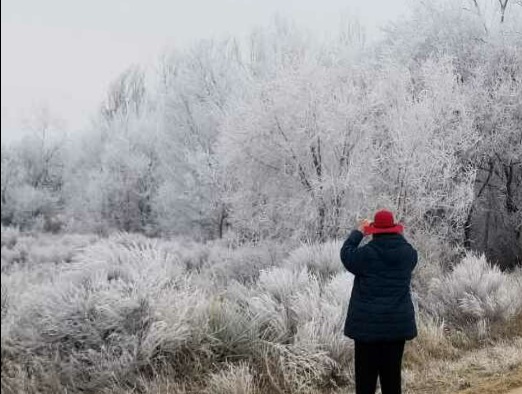
But truly, in my life now, none of that is any reason to celebrate the arrival of February. So what am I “yay”ing about? Well, because it is no longer January!!! That, for sure, is something to celebrate. January felt interminably long, as if several extra days — or even weeks — had been added to that generally quick-moving month.

It wasn’t really a bad month for me. Oh, there were a few frigid days and a night when it got down to seven below zero, and it did snow a couple of times, but for the most part, I’ve been inside reading (and fighting some sort of sinus thing), so it didn’t really matter how cold it was.

No, the only problem with January was that it dragged on way too long. But now the drag is finally over. So, yes — Yay! February!
***

Pat Bertram is the author of Grief: The Inside Story – A Guide to Surviving the Loss of a Loved One.
 

It’s Groundhog Day!

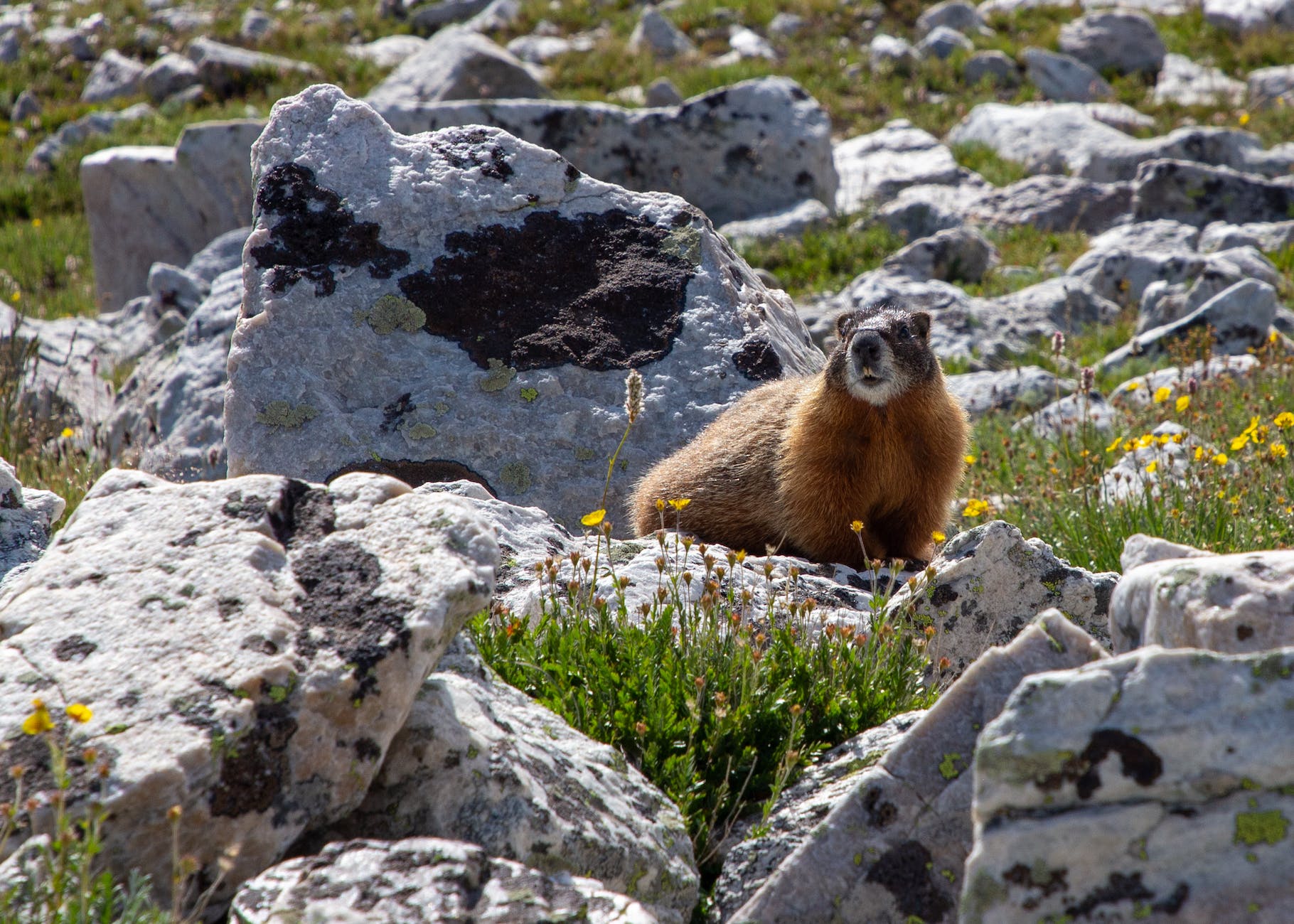
Is it still Groundhog Day when you live in an area where there are no groundhogs? When there is no creature to determine how much of winter is left?

The superstition is that if the groundhog sees its shadow, there will be at least six more weeks of winter, which is a sure bet since this year there are six and a half weeks between February 2 and March 20, the official first day of spring. If the groundhog doesn’t see its shadow, there will still be six and a half weeks until spring, though supposedly, the temperatures will be a bit milder.

But what if there is no groundhog? Will there be six more weeks of winter? It’s still a sure bet!

Groundhogs, also known as woodchucks, are flatlanders and live in the eastern portion of the United States. Here in Colorado, we have yellow-bellied marmots, also known as rock chucks or whistle pigs, and they prefer higher elevations. Although groundhogs and marmots are not the same thing, they are both rodents of the squirrel family. The scientific name of the groundhog is Marmota monax. The name of the yellow-bellied marmot is Marmota flaviventris. So technically, the name of this day should be Marmot Day.

But either way, no matter what sort of creature you use to foretell the demise of winter and the coming of spring, a wood chuck, a rock chuck, or a chuckleheaded weather person, it still comes down to the same thing — six and a half more weeks of winter.

To be honest, here in Colorado, that’s a good thing. Too often we get early spring weather and then — so much fun! — we get a late-season Indian Winter. (Oops. Can’t say that. Indian Summer is now called Second Summer, so Indian Winter would be called Second Winter.) The problem with that upsurge of winter once spring has started to make itself felt is that new buds are “nipped” by the late freeze, damaging crops, preventing fruit trees from producing, and decimating or delaying spring flowers.

Luckily, despite what all those seer of seers, prognosticator of prognosticators say, spring will be here in a matter of 46 days.

Happy Marmot Day!

***

Pat Bertram is the author of Grief: The Inside Story – A Guide to Surviving the Loss of a Loved One. “Grief: The Inside Story is perfect and that is not hyperbole! It is exactly what folk who are grieving need to read.” –Leesa Healy, RN, GDAS GDAT, Emotional/Mental Health Therapist & Educator.

On Writing: A Character’s Emotions

How would you react to the end of your world? In Groundhog Day, each morning was the same and only Phil Connors changed as he lived through the monotony of his new world. Interestingly enough, such monotony would make it easier for you to cope; you would know what each day would bring.

But what if the opposite were true? What if you woke up to a different world every day, where nothing was familiar and nothing made sense? You would learn to cope with the current day as best as you could, but the next day you would have to start coping all over again in an entirely different milieu. Even worse, everyone you know has disappeared. One day they were there, the next day . . . nothing.

In my current work in progress, my hero is struggling with this very problem, but it seems to me as if he’s being a bit too accepting of the situation. Dealing with his neurotic mother all his life could have trained him to be adaptable, which would make him accepting. He could be shell-shocked, which could explain his lack of emotion. He is dealing with the possibility that he’s gone crazy, which could further explain why he’s not emoting all over the place. And, to top it all off, he is in the denial stage regarding the deaths/deletion/disappearance of his mother and his friends.

But the question arises: are his the proper reactions for the situation? Could his restrained emotions be due to my lack of understanding of the human psyche, my inability to write emotional scenes, or perhaps simply my dislike of overly emotional characters?

Emotions are seldom pure and simple; they come mixed, like love and hate, fear and attraction. Sometimes they are inappropriate, such as laughter at funerals, anger at imagined slights. Some people have extreme emotional swings, and other people react unemotionally no matter what happens. And sometimes, the more outrageous the situation, the less emotion it garners.

With such wildly divergent possibilities, in the end, it comes down to what I can make the reader believe, and more importantly, what I can make myself believe. If I believe his reactions are the proper ones, I can write them properly. I like the idea that he is a stoic guy moving through his changing world until one insignificant problem arises to send him over the edge. But if he is that stoic, will he go over the edge? I think not.

And so it goes.




