Gardening is Like Writing

I’ve heard it said that there are two kinds of writers, plotters and pantsters. Plotters outline, so before they sit down to write, they know exactly what they are going to say. Pantsters write by the seat of their pants, so when they sit down to write, they never know what they are going to say.

Me? I’m neither. I start with an idea, then add another idea, and keep adding ideas until I know where I am going to begin and where I am going to end. The middle part is a matter of finding ways to connect all my disparate ideas, so by the time the book is written, the story seems inevitable, as if had been written by a plotter.

As it turns out, I garden the same way. I started with a few lilac suckers from a neighbor’s lilac bush. At the time, I just planted them more or less at random because there was no order to the yard. The fence that was here at the beginning of my tenure enclosed only a small part of the back yard, which to me was a selling point because I didn’t want a huge yard to take care of. Between the fence and the alley was a carport, and next to the carport was a decrepit garage.

I had no plans for anything back then except to shore up the garage, but eventually a sibling talked me into fencing the property, which turned out to be a great idea, even though I ended up with a huge yard. The fence adds a modicum of safety, from marauding dogs if nothing else, and it defines the property. Eventually, old garage and carport were removed and a new garage built.

And during all these projects, I added a few more bushes. Then other plants. Then the pathways. Then the grass. Now I am filling in the gaps in the landscaping, and suddenly, the yard looks inevitable, as if it had been gardened by a plotter.

The truth is, I did everything wrong. The hardscaping is supposed to be done first before the first greenery is planted, but in my case, the hardscaping grew along with landscaping. And I planted by trial and error, which is a gardening faux pax, even though that’s how I do everything. (I’ve heard there are two kinds of geniuses — the early bloomers who are born super intelligent, and the late bloomers who learn a sort of genius through trial and error. I still have a long way to go to reach genius status, but through trial and error, I might get there someday.)

I suppose with gardening, like writing, rules don’t matter as long as what you do works and you end up with cohesive plot, whether a novel plot or a garden plot.

I will be interested to see what it all looks like next spring, though as long as nothing major occurs to destroy the grass and plants, it should be beautiful.

***

What if God decided S/He didn’t like how the world turned out, and turned it over to a development company from the planet Xerxes for re-creation? Would you survive? Could you survive?

A fun book for not-so-fun times.

Click here to buy Bob, The Right Hand of God.
To Mulch or Not to Mulch

I’ve been researching mulches for my garden and yard to keep down the weeds, and I end up doing what I always do when I research such things — nothing.

The information is always too contradictory. For example, use wood chips, but don’t use wood chips. Wood chips are a good mulch, but so many commercial wood chips are created from old treated woods, such as palettes, which is bad. Cedar chips are good, and since they are acidic, you’d think they would be good for alkaline soil, but when the cedar chips break down, they add to the alkalinity of the soil, which is not good because the soil around here is already too alkaline.

Weeds are bad, but then, weeds are good, too, since they form a sort of living mulch, covering the bare ground and keeping it from blowing it away. Some people have good luck growing food in weedy soils, others do not. Some people say that yes, weeds are good, so create a weed patch, but keep them out of the garden. Some people say it’s important to keep the ground covered, that bare soil is not a good thing (though I do like the look of plain old dirt), so if nothing else, plant weeds.

I’d been pulling up the prostrate spurge in my daylily garden, but then it dawned on me that for the most part, the root grows between the plants, so it doesn’t really compete, and at the same time, it branches out to cover the ground. The plants seem to be doing okay, so I’m not really worrying about it.

I don’t really mind the low-lying weeds or the weeds with pretty flowers, like dandelions, but I do have an issue with weeds that have the potential for growing taller than I am. I finally got rid of the weeds along the alley, and there is another patch of weeds along my fence that I would like to get rid of because they are taller than me and are now going to seed, but I can’t get to them because of the construction rubbish piled in front of them.

I’d read that pouring vegetable oil over weeds and around their root will kill them without destroying nearby soil. I also read that some flowers crowd out weed, but if I did that, I’d have to make sure those flowers grow, which isn’t always possible. Still, both of these are possibilities. I also have a bucket of cedar wood chips I gathered when a cedar tree stump was ground out, so I can use those somewhere.

Mostly, I am taking this project one square foot at a time. I figure that the buildings on the property and the rocks around the house as well as the paths will take up about two thirds of my property, but that still leaves a minimum of two thousand square feet of ground to figure out how to cover, whether with grass, bushes, trees, gardens, mulch, wildflowers, or weeds.

Such a big project! But it’s good to have something major to occupy my time, even if I don’t know what I am doing.

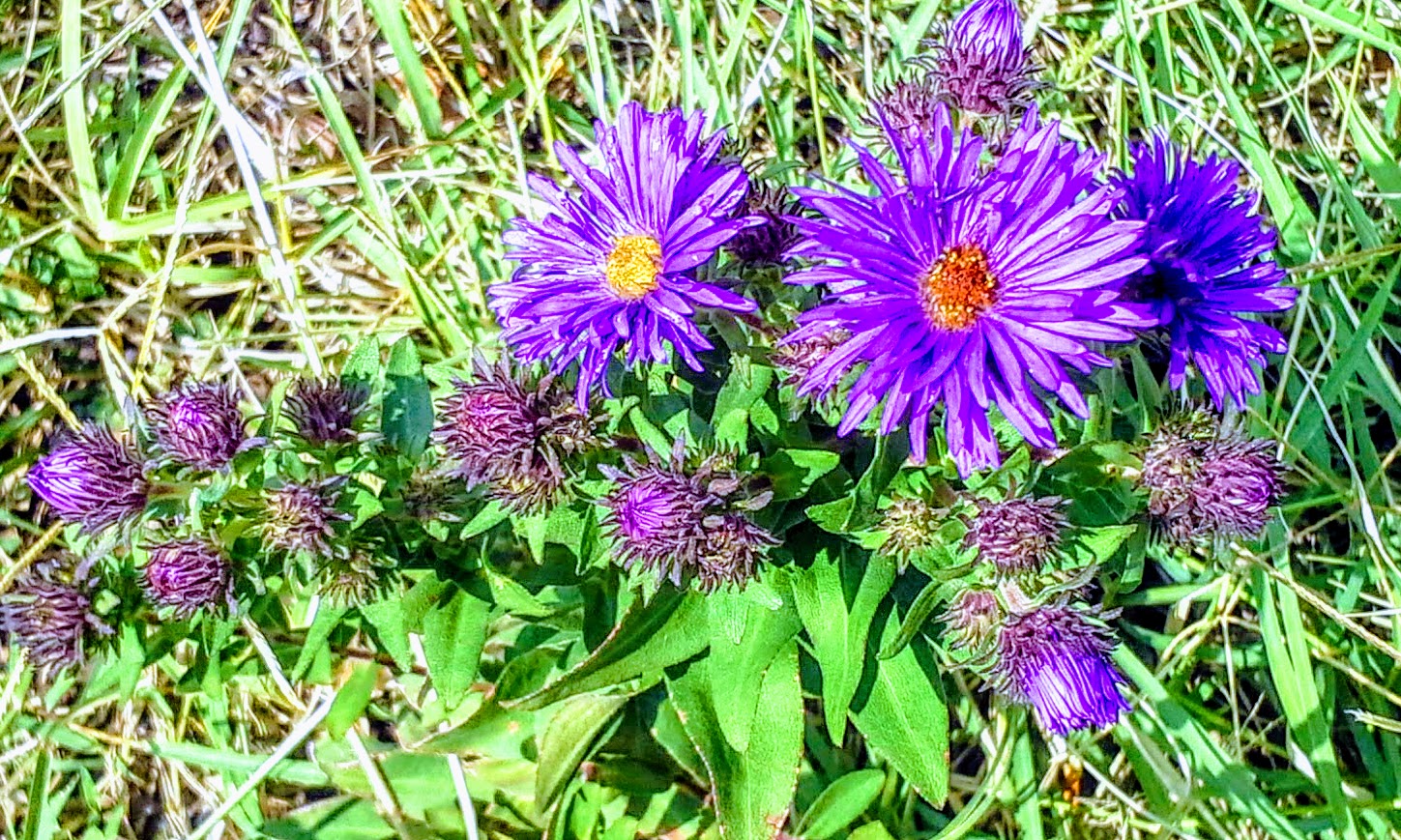
Luckily, the flowers know what they are doing, so there’s always something pretty for me to look at in my yard.

***

What if God decided S/He didn’t like how the world turned out, and turned it over to a development company from the planet Xerxes for re-creation? Would you survive? Could you survive?

A fun book for not-so-fun times.




