On Malcom Campbell’s blog post yesterday, BOOK BITS: ‘Black Beauty,’ Plagiarism, Donna Small, Larry McMurtry’s ‘Custer,’ Book stories for the election, he described “traditional fiction” as the kind of fiction we grew up on before novels started getting whittled down to novella-lengths and forced into marketing categories. Dare I say, literary fiction is what’s left after publishers and booksellers have sliced and diced readers and books into every possible pigeonhole, slot and category they can possibly imagine? We are, I think, so scared of making our own decisions about what we read these days, that we cannot pick up a book without knowing how it’s been tagged, labeled, categorized and genrefied.”
Ah! Now I have a term for the sort of fiction I write, and it’s the perfect term — traditional fiction. My novels are not genre fiction in any way, and those who try to fit the stories into such pigeonholes end up not liking them. There is not enough romance for the romance readers, not enough horror for the apocalyptic crowd, not enough villainry for the thriller lovers, not enough grue for the horror aficionados, not enough science or fantasy for the scifi folks.
Each of those elements has a place in my books, of course, since each aspect is part of the story’s big picture (in the same way those elements make up the big picture of our lives), but none overwhelms the basic intent of my stories, which is to tell a satisfying tale with archetypal characters and classic themes that can last beyond the fads of the day. In other words, a traditional novel.
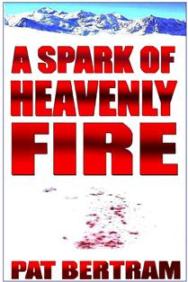 In A Spark of Heavenly Fire, for example, there is plenty of horror, such as the gruesome end of those afflicted with the red death, but generally the horror is more subtle than visceral — empty streets instead of bodies piled everywhere, struggles to maintain a semblance of normality instead of rioting. The experiments done on humans during both the hot wars and the cold wars twentieth century are not experienced first hand by the characters, but the slow reveal of those old horrors affect them deeply nonetheless.
A Spark of Heavenly Fire explores the theme of love in all its guises, not just romance, but friendship, caring, trust. There is love mixed in the villainry, too, because someone had to have lovingly created the organism that caused the red death. Unlike genre stories, there is no hero trying to stop the villain before he can release his “baby.” The deed had been committed before the story even began. We don’t see the story from the villain’s eyes as in a thriller, and it’s only at the end that we realize with what love and glee the villain had set his creation free.
More than horror or history, romance or mystery, A Spark of Heavenly Fire is the story of ordinary women who found only failure in the ordinary world where everyone else seemed to find success, but when the world turned upside down, they found their place and their worth, and they came alive. As Washington Irving wrote, “There is in every true woman’s heart, a spark of heavenly fire, which lies dormant in the broad daylight of prosperity, but which kindles up and beams and blazes in the dark hour of adversity.
This is the kind of fiction I grew up on as a reader, the sort of traditional story that digs deep so that what affects the characters also affects the readers, the sort of ungenrefied story I have always loved. And it’s the kind of fiction I grew up on as a writer. It was halfway through writing A Spark of Heavenly Fire that everything clicked and I became a writer.
***
Pat Bertram is the author of the conspiracy novels Light Bringer, More Deaths Than One, A Spark of Heavenly Fire, and Daughter Am I. Bertram is also the author of Grief: The Great Yearning, “an exquisite book, wrenching to read, and at the same time full of profound truths.” Connect with Pat on Google+









 Bertram's Blog