Impact of Owing A House

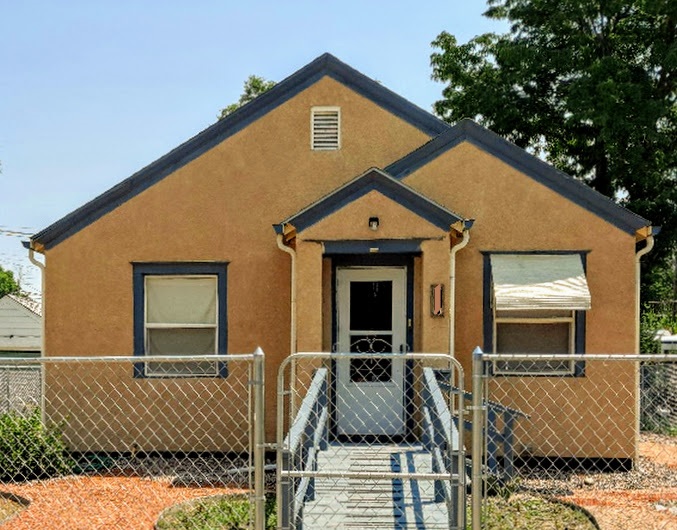
On my way home from the library yesterday, I passed the hardware store and exchanged a few words with the workers who were outside taking a break. When I continued on, it dawned on me that owning a house has had some odd impacts on my life, including this one. I had never before been on a first name basis with any hardware store employee. Nor has any hardware store employee ever known where I lived. One of the workers lives around the corner from me, but that’s just a coincidence. Mostly they know me because of deliveries they have made to my house.

I’m also on a first name basis with contractors and other laborers.

Those aren’t the only impacts on my life because of home ownership, they are just the ones that got me to thinking. Some of the changes to my life since moving here would be the same whether I owned or rented, such as a library within a few blocks, easy access to a grocery store, and nice neighbors. I tend to think the neighbors are a bit nicer to me because I own the house; after all, if I own, I am one of them and will be around for a long time if everything goes as planned. Also, I’ll take care of my property unlike most of the renters around here.

The most basic impact is a feeling of being at home. As long as Jeff and I were together, I always felt at home because as long as we were together, that was my home. After he died, I tried to find a sense of home in myself, and mostly succeeded. Oddly, until now, the feeling of being at home was strongest when I was camping in a national park because to a certain extent, the parks belong to me (to all of us), and when I paid my camping fee, that small plot of land was specifically mine for the nights I stayed there.

Almost as important as a feeling of being at home is peace of mind. For almost the entire decade after Jeff died, I was unsettled and uncertain. I often brooded about what I wanted, where I wanted to move, where I could afford to live, how to start over. That last point was a major one, because truly, how does one start their life from scratch? Well, I’ve done it — started my new life — so I don’t have to think about that anymore. Nor do I have to think about where to go because I’m here. And, since I’m working, I don’t have to worry how to pay for this new life.

Also, for the first time in a decade, I don’t think about what I have to get rid of. I got rid of a huge amount of stuff after Jeff died, and then again before I moved my things into storage after my father died, and yet again before I moved here. Even though the current philosophy seems to be that if you haven’t used something in a year, you should get rid of it, I don’t subscribe to that idea any more. I’ve gotten rid of so many things over the years I needed to repurchase, that as long as I have space, I might as well keep what I have. Obviously, as time goes on and I reach my expiration date, I’ll have to get rid of almost everything so no one will have the huge chore of sorting through my stuff when I’m gone, but until them, everything I own has a place. After the huge increase in possessions when I bought this house and furnished it as well as adding a garage, I’ve made no major additions to my possessions. Well, there are all the outside things I’m doing — the landscaping and plants and such — but those aren’t really possessions, they are simply additions to the property that will remain in place.

Having a permanent address is another benefit of owning my house since I won’t have to change the address until . . . well, until I have to because of age or whatever.

I’m sure there many other ways that home ownership has affected my life but they don’t come to mind at the moment. What does come to mind, however, is the thought — still so surprising to me — of how much I love owning my own home. I can feel it wrap around me like a well-worn and comfortable garment. Any place I’ve lived in the past was simply a place to park myself, but owning a house makes me feel as if I have a partner in life, as if the house and I are in this together. I take care of it, and so far, it has taken care of me.

And yes, I am exceedingly grateful for this blessing.
***

Pat Bertram is the author of Grief: The Inside Story – A Guide to Surviving the Loss of a Loved One. “Grief: The Inside Story is perfect and that is not hyperbole! It is exactly what folk who are grieving need to read.” –Leesa Healy, RN, GDAS GDAT, Emotional/Mental Health Therapist & Educator
Strategic Planning

I attended another strategic planning session at the town hall last night, and I still find the sessions interesting on several accounts. It’s interesting to hear ideas and see the plan form, interesting to see who shows up, interesting to find that, although many of the original attendees have dropped out, I am still going.

Almost every place I have lived has exploded into a growth cycle a couple of years after I moved there. The only exception was the town I stayed when I was in California, but though I was present in the state for several years, I never moved there. (California might have a different slant on the matter, but I figure my point of view is the correct one, otherwise the growth would have been much greater than it was.)

I see that possibility for exponential growth here, too. Several people I have talked to have said the town should market itself as a retirement community, and apparently the mayor agrees, though I tend to think it will happen whether people want it or not.

The town is old, with a lot of cute old houses — cheap houses — crying out for a makeover. These houses are generally small, which makes them perfect for those who are downsizing. At the moment, less than half of the houses in town are owner-occupied, which is the crux of many of the town’s problems — a transient population, absentee ownership, and a general lack of caring about those properties. At the moment, there is a trickle of older people moving to the area because of the ability to buy a house. I am one of them. I never in my wildest dreams expected to be able to own a house. And yet here I am.

Some of the people I know are lifelong residents, others are people who left and came back here to retire, and the rest are like me — people who have moved here to live out our remaining years in homes that we own. We all have a stake in this town, more even than the youth growing up here. We are here to stay. Many of them are not. (And yet, very few of the people I know have been coming to the meetings, even those who have — or think they have — solutions to the stagnant economy.)

The problem with marketing this town as a retirement community is that there are no doctors in town and no urgent care. Though there are a couple of hospitals within a 30-mile radius (and ambulance service), there are no specialists in the whole southeastern part of the state. Most people end up going to the big cities along the front range for specialty care, such as cancer, or liver problems, or whatever.

Still, the southeastern part of Colorado has a fairly mild four-season climate, the mildest in Colorado. It does get cold in the winter and hot in the summer, but there are almost always a few comfortable hours each day for outside activities — early morning and evening in the summer; afternoon in the winter. Add that to a favorable housing market, as well as an active Area Agency on Aging that is trying to improve the lot of older folks, and this place is well set up for a retirement destination.

Whenever I have mentioned my belief that this town could explode in both population and housing costs, people scoff at me. Many of the rural folk have sold their water rights (which makes me wonder how many of them ever watched a classic western movie — most of those films are about water rights, the value of keeping them, and the importance of water to future self-governance), but for now, water is not the issue.

The history of Colorado during the past several decades shows the trend and makes me think I am correct about this place ready to explode in population and, unfortunately, housing costs. Every time California has a huge uptick in property values along with a corresponding downtick in moral values (on a political level, not a personal one), vast numbers of Californians move to Colorado, where property costs aren’t (or weren’t) as high. They generally move to the front range, causing those property prices to escalate, causing people in those cities to sell up and look for a cheaper area. This has happened often enough (there were at least two, probably three of these waves in the past three decades) that property values in most areas of the state have escalated accordingly. Even if I had wanted to, I couldn’t have moved back to the western slope where Jeff and I lived, because those property values increased beyond my means (and way beyond their true value.) I can’t even afford a place to rent there. The place where we lived now rents for three times what we paid.

So that leaves southeastern Colorado. The area i lagging way behind the rest of the state, which is why I like it and why I am here, but I truly don’t see it remaining this way. Any new growth, of course, would bring new problems — on the one hand, property values could rise to the point where the careless landlords will sell to people who will care for the property. But those same increased values will make it not quite as an attractive place to retire.

Hence, the strategic planning committee. The mayor and the council are already looking into the possibility of senior housing. (My concerns aren’t with housing or economic development so much as safety — making sure it’s safe to walk, making sure the crosswalks are accessible, and making sure that the less-than-law-abiding folk are kept in check.)

I don’t know whether my presence at these meetings is needed, but it’s been a good experience. At least, if the growth does come, especially if it comes in a way that doesn’t benefit me, I will have had my say.

***

Pat Bertram is the author of Grief: The Inside Story – A Guide to Surviving the Loss of a Loved One. “Grief: The Inside Story is perfect and that is not hyperbole! It is exactly what folk who are grieving need to read.” –Leesa Healy, RN, GDAS GDAT, Emotional/Mental Health Therapist & Educator.




