Sometimes we have to laugh at ourselves and our conceits. Yesterday I wrote a blog post Whose Book Is It? about readers who saw something different in my books than I intended. I wrote:
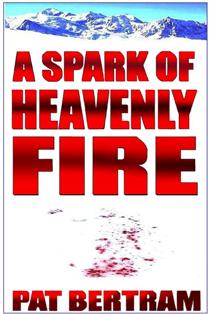 A reader once pointed out that A Spark of Heavenly Fire was about love in all its guises. He was right, that is a major theme, though that hadn’t been my intention. I wanted to write a big book, an important book with ordinary people becoming extraordinary in perilous times. Since I didn’t want to do a war story, I did the next best thing — created an epidemic so deadly that the entire state of Colorado had to be quarantined to prevent the spread of the disease. To “personalize” the catastrophe, I told the story from several points of view, not just character POV, but the various ways the characters viewed the epidemic. And what shone through, by the time all the stories were told, was the theme of love in all its guises.
It wasn’t until this morning that I remembered that I hadn’t intended to write an important book with ordinary people becoming extraordinary in perilous times. Well, the important book part is right — I wanted to write a classic story that most people would be able to identify with. But I never used the phrase about ordinary people becoming ordinary until I received a rejection letter from an agent, in which the agent thanked me for sending them my excerpt since they “were always looking for such stories about ordinary people becoming extraordinary, but . . .”
Oddly, I don’t remember what followed the “but.” There was always a “but.” “We liked the concept of your story but we didn’t fall in love with your characters as we had hoped.” “Your book is excellent, but we only publish literary books and yours is more commercial.” “We loved your book, but we don’t know how to sell it. It has too many science fiction elements to be mainstream fiction and not enough to be science fiction.”
But I digress. The point is, that is where I got the idea of A Spark of Heavenly Fire being a story of ordinary people becoming extraordinary. I figured if I got a personalized rejection letter rather than a badly Xeroxed form letter or even just a “no thanks” scribbled on my query, that maybe I was on to something. So I started using the phrase “ordinary people becoming extraordinary” to describe the book in subsequent query letters. I did it so often that it stuck even after I learned the truth — the rejection letter that had so impressed me had been a form letter after all. (I thought that since they had expressed an interest in my writing, I’d query them about another book and got the exact response as I did the first time.)
The truth of why I wrote A Spark of Heavenly Fire is that I wanted to write about society turned upside down. I wanted to create conditions where the successful folk didn’t have the skills to be successful in the new world, but the unhappy, the failures, and the outcasts were able to find happiness, success, and fulfillment. I mostly achieved that, but one character — a beautiful young woman — turned out to have good coping skills, which gave the book more of a dimension than if she’d ended up in the gutter.
***
Pat Bertram is the author of the suspense novels Light Bringer, More Deaths Than One, A Spark of Heavenly Fire, and Daughter Am I. Bertram is also the author of Grief: The Great Yearning, “an exquisite book, wrenching to read, and at the same time full of profound truths.” All Bertram’s books are published by Second Wind Publishing. Connect with Pat on Google+








 Bertram's Blog