Life’s Confusion

The other night I talked to Jeff’s photo, as I sometimes do. I think it was Christmas night, and I was feeling a bit lost. And confused. So much of what has happened to me in the past twelve or thirteen years (the years of his dying and the years of my grief) still doesn’t make sense, but for the most part, I just go on about my life, concentrating on the day I am living.

Even so, sometimes, the confusion makes itself felt. For example, I really do like my house, my life, having a place to call home, but it all came about because Jeff died. If he hadn’t died, my life would have been completely different. I wouldn’t have missed this current life, of course, because I would never have known it existed, but still, the confusion is there.

I also continue to be confused about life and death, what it is, where we go, and all that, but again, generally I don’t think about it, just take it as a fact that he is gone and I am not.

And I’m still confused about a lot that happened that last year we were together. I don’t worry about it much — after all, it was a long time ago — but there is one episode that still makes me feel ashamed.

When people talk about those who care for their dying spouses, we imagine tender care, patience, and the warm glow of love. After all, that’s how it’s portrayed in movies, and movies are a reflection of real life, right?

Well, no. Many of us endure a love/hate relationship — we want to be with them and savor ever moment we have, yet at times we can’t stand the stress, the turmoil, the pain (theirs and ours), the sleepless nights and all else that goes along with trying to survive while your mate is struggling with death. We can’t always be the person we want to be, and even worse, as the months pass and the exhaustion and numbness take hold, we become someone we’d just as soon pretend never existed.

Even during a year where death hovers, life still reigns. So we live. We get impatient and frantic and frustrated and surly. And, even though sometimes we wish they’d die and get it over with, we never really believe they are going to die. We forget that each day might be the last, and so we forget to be patient and kind.

It’s one of those time that still shames me. He was looking at Google Earth and visiting all the places he once knew. I listened to his stories of old Denver for a while, and then suddenly I couldn’t stand it anymore, and I got impatient and left. I still don’t know why I felt that way, so that adds to the confusion. There wouldn’t have been a problem if not for Death. If there had been another time, I would have made a point of drawing up a chair and soaking in the time together, but there wasn’t another time. And I am left with the knowledge of how I am not always the kind and patient and generous person I wish to be.

And I am left with confusion.

So much of that time is gone, out of mind. Even if I wanted to remember it, I couldn’t. I can’t even, at times, remember being with him, even though he was the most important person in my life for decades. Even after he died, he continued to be important because of the grief I experienced.

I don’t think I will ever truly find my way out of the confusion. Despite all my studies and experience and contemplation of dying, death, and grief, so much can’t be known. Most of the time, I can live with the confusion in the same way I live with the knowledge that one day I will die. It’s there, but doesn’t have any meaning on a day-to-day level.

Until, of course, there comes a day when the confusion wells up, and I end up pretend talking to Jeff.

***

Pat Bertram is the author of Grief: The Inside Story – A Guide to Surviving the Loss of a Loved One. “Grief: The Inside Story is perfect and that is not hyperbole! It is exactly what folk who are grieving need to read.” –Leesa Healy, RN, GDAS GDAT, Emotional/Mental Health Therapist & Educator
Preparing for Grief

An online friend who will soon be experiencing grief due the death of a loved one, asked me which of my books I would suggest she read to help her prepare.

To be honest, there is no way to prepare for such a physical, emotional, and spiritual upheaval. No matter how much we are prepared, the actuality of the experience is more than we could ever imagine because there is nothing that compare. Even people who have suffered comparable losses, such as an undesired divorce, are shocked when they have to contend with death as well as all the painful changes they were expecting.

We simply do not have the capacity for understanding death, what it means to the person dying, what their death means to us. When it happens, all we can do is stand at the abyss, and wonder if our grief will carry us over the edge.

The best way to prepare is to try to keep from falling into the pitfalls of regret and guilt, to try to act in a manner that won’t carry an additional burden into grief. I say “try” because there is no way to prevent such pitfalls. Even though a person might be dying, they are still alive, and life carries with it emotions and actions that that seem reasonable at the time and only in memory prove to be problematic. When one of a couple is struggling to live while the other is preparing to die, emotions run strong. The only time Jeff and I ever got into a verbal altercation was three weeks before he died. The problem is, although we know they are dying, we don’t know it. It seems as if forever after, they will be dying, and so we don’t truly fathom that one day they will be gone from our lives.

All we can do is love the person, do the best we can for them and for ourselves, and try to keep up our strength. A dying vigil is exhausting. Death tasks are exhausting. Grief is exhausting.

All that being said, both my books can help a person get through the lonely years that follow.

Grief: The Great Yearning is a compilation of letters, blog posts, and journal entries I wrote while struggling to survive my first year of grief. As one reviewer said, “This is an exquisite book, wrenching to read, and at the same time full of profound truths.” Many people use this book as well as my blog posts as a checkpoint to see if what they are feeling is normal, because the truth is, such grief feels anything but normal. They need to read my story partly as a validation of their own experience and to see that they are not alone in what they feel. Grief is horrendously isolating. Few of us know anyone who has experienced grief. Few of us know anyone who is willing to let us talk about how we feel without trying to “fix” us. Death is simply not fixable. It’s something that must be assimilated. And grief is how we assimilate such a profound loss.

Although the official consensus is that everyone’s grief is different, I have found the opposite to be true. We may actually grieve differently in that some people cry, some scream, some become ill, some refuse to acknowledge their feelings, but the pattern of grief after the loss of a spouse, life mate, soul mate is more or less the same for most of us. So this is not just my story, but the story of many grievers I have encountered during the years after the death of my life mate/soul mate.

Grief: The Great Yearning is a personal look at grief from the inside out. Grief: The Inside Story is look at grief from the outside in, written eight years after the onset of my grief. It’s more of a guide, an explanation of the various permutations of grief and how it changes us than simply one woman’s story. Although the book is obviously personal since my grief is the grief I am most familiar with, other people have allowed me to use their thoughts and experiences to create this guide, this explanation of grief and what the experience entails.

Coping with the death of a loved one can be the most traumatic and stressful situation most people ever deal with — and the practical and emotional help available to the bereaved is often very poor. As the bereaved struggle to make sense of their new situation they often find that the advice they receive is produced by medical professionals who have never personally experienced grief; and filled with platitudes and clichés, with very little practical help. How long does grief last? What can I do to help myself? Are there really five stages of grief? Why can’t other people understand how I feel? Will I ever be happy again? Grief: The Inside Story debunks many established beliefs about what grief is, how it affects those left behind, and how to adjust to a world that no longer contains your loved one.

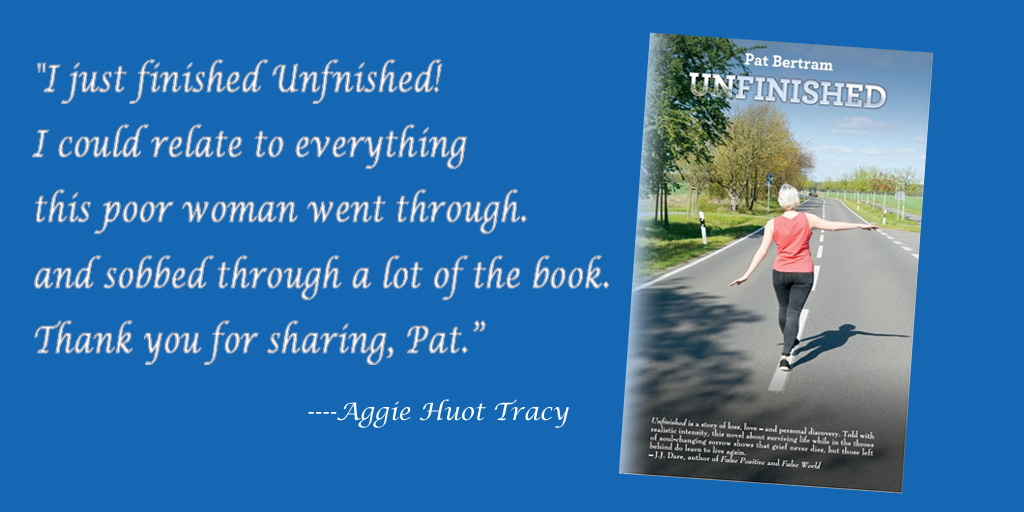
Although I don’t often include it with my grief books because it is fiction, Unfinished is also an important about grief. It shows the emotional instability and practical concerns the woman character experiences while her husband is dying and shows the surreal thinking that she experienced after he was died. One reviewer found it unbelievable that a woman who so loved her husband that she experienced so much mental and physical devastation after he died, would act the way she did, carrying on with another man during that last year. But all that shows me is that she was never there. You truly do not know the skewed way one can think when forced into such an untenable situation.

Would anyone believe, considering all my talk of grief, considering our almost cosmic connection, considering all he had meant to me over the decades we were together, that there were times during that last year of our shared life when I hated him, when I just wished he’d die and get it over with? Many of us have been there, and it is a secret we hold close, seldom admitting it even to ourselves. (Thinking back, I’m sure he knew, and I’m sure he never held it against me, though I did.)

I guess, then, after reviewing all my books, a person who wants to prepare themselves for what is coming, should read Unfinished first, then Grief: The Great Yearning, and finally, Grief: The Inside Story.




