A couple of days ago, I posted a bloggery What is the Price of Creativity, where I lamented the devaluation of books. What everyone believes they can do, no one values, and so readers today expect to get ebooks for a nominal sum, or even free. Mickey Hoffman, author of School of Lies and Deadly Traffic, wrote such an insightful rebuttal to that article that I thought it deserved to be featured here (though truthfully, everyone made important points). Mickey wrote:
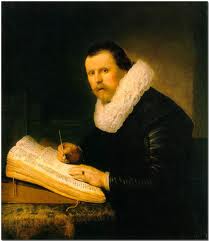 Rembrandt died poor. He’s now regarded as one of the creative geniuses of the art world. This stuff has been going on forever. In ancient times the people who carved the famous statues in Greece didn’t even put their names on their work. Creativity has never been as useful to humans or held as high a value as the ability to make money, to manipulate others, to convince the masses that one is a god, etc.
The ability to write used to be admired only because for centuries most people could not even read or write their own names. And only the Bible was deemed worthy of reading. When reading no longer was such a mysterious process done only by a monk or priest and people realized it wasn’t so difficult to learn to do it for themselves, then they began to read, but still mostly religious tomes. If you look at many countries today, the kids are taught to read only for the purpose of reading the Koran. So it still happens.
In the West, as the ability to read became more common, writing became more common. Letter writing was the rage and those who could write creatively were held in high esteem. But were they actually paid well for it? Not often. Rich people had books but didn’t read them, they used them like trophies to show they were cultured. Writers still struggled to make a living and always have. Only a few have been able to support themselves that way. There have always been trashy publications and well written ones. Just more of both now.
You could argue against public libraries too, and make an argument that the ability to read for free would devalue writing. I don’t think the availablity has much to do with it. What’s changed are two things. One is the cultural idea that’s infected education: Everyone’s a winner. No one can be told they’re not good at something for fear of damaging their self-esteem. Kids aren’t reading well-written books in elementary or high school anymore so they have no means of comparison. They don’t have to learn how to write well either unless it’s on a test. College professors are getting essays with abbreviated text messaging words in them. My brother, a professor, used to read me some of the stuff his students wrote. These things were so unintelligible I didn’t know whether to cry or laugh. Somehow they made it into college anyway.
Second, television and films. Need I say more? I think we’ve all noticed that best sellers read like they’ve been written to be made into an action/thriller movie. And if they are, then they’re actually composed with different elements in mind than a writer puts into a story made for reading only.
So how is the public to know they’re reading garbage? Just throw in a vampire or a ghost or a serial killer or a few sex scenes and that’s enough to find an audience. And the agents and publishers know this. Don’t blame Amazon or anyone else, blame US.








 Bertram's Blog