This is the year of Soylent Green, or rather the year that Soylent Green was supposed to portray. The novel upon which the movie was based, Make Room, Make Room by Harry Harrison, took place in 1999, but the movie makers moved things forward a couple of decades to 2022.
I’ve come across a few articles (one of which was sent to me by a friend) whose authors tried to figure out where the movie got 2022 so wrong, because, of course, we have not devolved to the point where the population is so staggeringly immense, corporate greed so all-consuming, and human life so worthless that the masses are being fed a mystery product called soylent green.
I don’t know why these authors are concerned that the movie got it wrong — after all, most dystopian movies don’t come true. Although some books are burned and banned, the world is awash in books, unlike the society portrayed in Fahrenheit 451. Although Big Sib (have to be politically correct, you know) does seem to be watching us, we have not moved into the extreme totalitarianism of 1984. And although we seem to be living in a society controlled more and more by corporations and technology, we have not yet moved to the robotic social order of Brave New World.
Dystopian literature is about extending what is or what might be into the furthest reaches of imagination. It’s not supposed to predict or preach or even give us a glimpse into a world we are fated to endure. Instead, it’s supposed to expose — perhaps — the truth of humans and what we can or can’t endure, what we can or can’t control, what we can or can’t accept if we wish to retain our humanity. It’s no wonder that in all of these books the authorities, whoever or whatever they might be, show the worst face of us. That lone dissenter, either hero or anti-hero, hopefully shows the best of us. As for the masses — all the rest of us — if the literature tells us anything about ourselves, it’s that we will be corralled somewhere in the middle, just trying to get by.
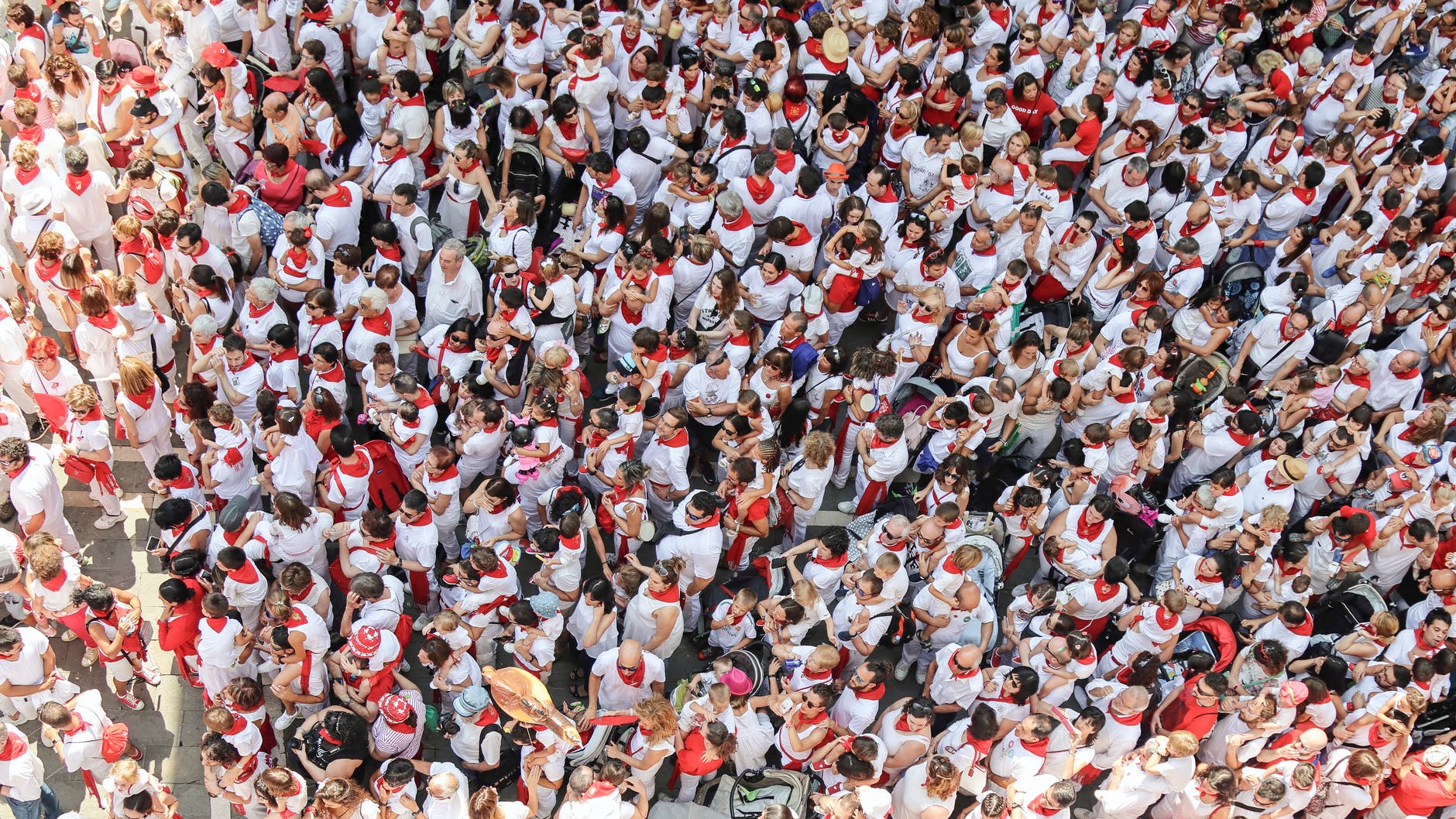
What so many of the dystopian books and movies of the 1950s through the l970s seemed to be trying to show were possible results of an unchecked birthrate, and no wonder. The population increased 5.5 billion from 2.5 billion in 1950 to 8 billion in 2022. Technology and agricultural advances made it possible to feed all those people or a great percentage, anyway. Despite a supposedly adequate food supply, 9 million people starve to death every year, a totally unacceptable number, and untold other millions deal with malnutrition because so much of the food that is available lacks essential nutrients.
Even though the world did not become as insanely crowded as the dystopian authors seemed to prophesy, our population still increased exponentially, though suddenly, any talk of overpopulation, whether in the dystopian literature, the daily media, or think tanks (formal and informal) has become taboo, making stories like Soylent Green seem even more stridently fanatical. Also, despite periodic whispers of a population cleanse or worldwide genocide, it will never happen. Why? There’s no money in it. Big business makes money with growth. No population growth, no profits. (Is it any wonder that any time the USA birth rate dips the immigration rate rises?)
If instead of disregarding the dystopian stories, if instead of creating more dubious agricultural practices and food products, we had been able to curtail the world’s population back in the nineteen fifties and sixties, we wouldn’t be dealing with a so-called climate crisis now. But then, cynical me says that there are fortunes to be made with selling more and more green vehicles and other green technologies to an ever-greater number of people.
So did the dystopian stories of the early and mid-twentieth century get it wrong? Not really — they got it right for the times. They just weren’t cynical enough, relying more on shock tactics of population bombs than critical thought about what effects a slowly decreasing population would have on the world economy.
***

What if God decided S/He didn’t like how the world turned out, and turned it over to a development company from the planet Xerxes for re-creation? Would you survive? Could you survive?
A fun book for not-so-fun times.
Click here to buy Bob, The Right Hand of God.









 Bertram's Blog