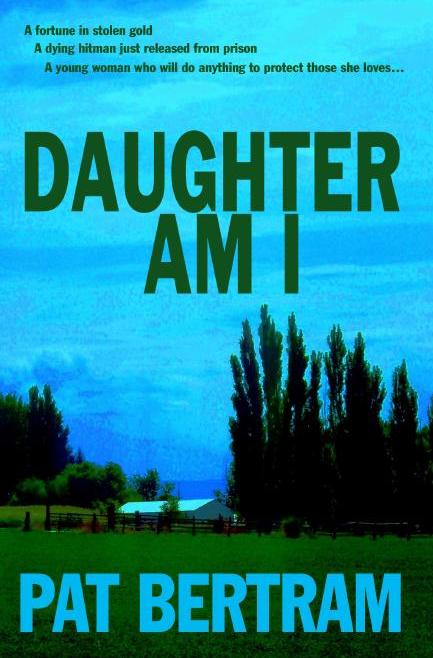
Today is the last day of my Daughter Am I virtual book tour, and what better place to end it than here, at my own blog. Thank you everyone for your support during the past five weeks. It was a wonderful journey!
Daughter Am I was the combination of two different stories I wanted to write. I’d read The Writer’s Journey by Christopher Vogler, and the mythic journey so captured my imagination that I knew I had to write my own quest story. I also liked the idea of telling little-known truths about the mob, and I settled on the story of a young woman — Mary Stuart — going on a journey to learn about her recently murdered grandparents. Accompanying her are six old rogues — gangsters and conmen in their eighties — and one used-to-be nightclub dancer. As Mary listens to stories the old-timers tell, she gradually discovers the truth of her heritage and of herself.
Developing so many characters at one time is difficult under normal circumstances, but the mythic journey archetypes helped me create the characters and keep them focused on their roles. Whether gangster or wizard, hit man or Darth Vader, the archetypes — and the power of the archetypes — are the same.
A hero is the one who grows the most in the story, who gains knowledge and wisdom. Heroism, in the mythic journey sense, is connected to self-sacrifice, risk, and responsibility. The hero must perform the decisive act of the story, though at the beginning, before their transformation, heroes often need to be goaded into action. Mary starts out only wanting to learn about her grandparents, and ends up becoming intensely loyal to the elders in her charge. (If you saw Bed of Roses, you might have met Mary. Mary Stuart Masterson’s character — naïve and intelligent, strong and vulnerable — inspired me to write my Mary.)
A herald gets the hero started on the journey. Kid Rags, a dapper forger forced into retirement by computer technology, eggs Mary on, challenges her to find out more about her grandparents. Kid Rags is also a mentor, giving guidance and gifts, a role he shares with Teach. Teach is a con man who believes everything is a con, and he is not hesitant about sharing his vision. (You’ve met Teach a hundred times. Remember Charles Lane? I’m sure you do. He started acting in 1926 and didn’t stop until 2005. Well, Charles Lane was my inspiration for Teach.)
Every mythic journey needs a trickster, a character who embodies the energies of mischief and a desire for change, and who provides comic relief. The trickster in Daughter Am I is embodied by Happy, an ex-wheelman for the mob. Happy always wants to be on the move, is always urging action, and he peppers his talk with morose and unanswerable pronouncements about death. Did I mention that he carries a gun, but that his hands shake too much to be able to aim it properly? Poor sad Happy.
Tim Olson, Mary’s romantic interest, is the shapeshifter. He doesn’t actually change shape, but he appears to change constantly from Mary’s point of view. He temps, dazzles, confuses her, and makes her question his loyalty. (Tim Daly from The Year of the Comet was my inspiration for Tim Olson. He had some great lines like: “I never said I didn’t go to MIT.”)
I could go through the whole list of characters, talking about which archetype each represented, but I don’t want to bore you by with a long discussion about the underpinnings of the story. The main point is that I wanted to use the same “hero’s path” that worked for such disparate stories as The Wizard of Oz, Star Wars, and Tin Cup, but head out on my own journey.
Click here to find the Daughter Am I Blog Tour Schedule Even though the tour is over, it exists forever in the eternal presence of cyberspace, so stop by any time.
 Click here to buy Daughter Am I from Second Wind Publishing, LLC.
Click here to buy Daughter Am I from Amazon.
 :
:  :
:  :
:  :
:  :
:  :
:  :
:  :
:  :
:  :
: 








 Bertram's Blog