Update

After an early heavy snow, followed by higher than average temperatures, we’re now in a deep freeze. Later in the week, the temperatures will get above freezing, although only fleetingly.

And then all too soon, it will be time to work out in my yard again.

I enjoy these months of respite from the struggle against weeds and sun-dried grass, but I miss the daily gifts — the flowers that come up despite this harsh climate, the volunteer plants that so tenaciously take a stand, the perennials that stretch their territory. I do get a flower fix with paint-by-number kits. It’s not the same as real gardening by any means, but it’s a real boon to someone without an artistic bone in her body.

Oddly, what I don’t miss is writing — about gardening or anything else, for that matter. For almost three decades, writing (and blogging) was my life. It kept me going during the long years of Jeff’s ill health and in the dark times after he died. It gave me a reason to get up in the morning, gave me a focus that I might not otherwise have had. In fact, because of this blog, I went on excursions and attended events I might have passed on, but I figured anything I did gave me a topic to write about.

So did my desire to stay at home squelch my desire to blog? Or did my lack of desire to blog squelch any desire for venturing out? Silly questions. Silly because the answers don’t matter. I’ve become a homebody, and that’s it. My being a homebody is not surprising since I’ve always had reclusive tendencies, but what is surprising is that I have a home. And a garden! It still astonishes me that this place is mine. In my restless years of grief and its aftermath, I spent a lot of mental energy trying to figure out what my unshared future would be like, and never once did I come close to imagining this reality.

I remember back then occasionally thinking that my future should be wonderful, because if the pain of grief was something I never knew existed, then there had to be some joy to come I also never knew existed.

And now here it is. And now here I am.

Of course, that raises a conundrum that I try not to consider: the only reason I’m living this particular good life is that Jeff is not here. Still, the last thing Jeff ever said to me was that everything would work out for me, so I know he’d be pleased for me. And yet, there’s that niggle in the back of my head that I try not to think about.

But those are thoughts for another time.

Today I’ll think good thoughts and be grateful for all I’ve been given.

***

Pat Bertram is the author of Grief: The Inside Story – A Guide to Surviving the Loss of a Loved One. “Grief: The Inside Story is perfect and that is not hyperbole! It is exactly what folk who are grieving need to read.” –Leesa Healy, RN, GDAS GDAT, Emotional/Mental Health Therapist & Educator.
A Princely Pattern

I’ve been reading children’s books published around the turn of the twentieth century, and it surprises me how philosophical and mystical so many are, including two books I remember from my own childhood. One book, The Little Lame Prince, I remember reading several times; I even remember where it was place on the shelf in the public library. Years later, I went looking for the book in that library and couldn’t find it. Back then, I thought that libraries kept all books ad infinitum, but now I know that simply is not feasible. I must have told my mother about the book, because one day when I was in my forties, she handed me a red book and told me, all smiles, “Look what I found at a yard sale.”

Yep. The Little Lame Prince. Not surprisingly, I wasn’t impressed with the book. After all, it was a children’s book and whatever I had gleaned from it when I was young no longer seemed relevant. I don’t know what happened to the book. I’m sure I gave it away as I do with all my books once they’ve been read to saturation, though now I wish I had the book if only because my mother had thought of me when she saw it.

Now, oddly, the book seems relevant again. Or at least interesting from a scholarly point of view. The book is about — ta da! — a little lame prince. The author in no way panders to the child, either the character or the child who is reading the book, but instead instills in him the need to accept what he can’t change, that comfort came by seeing “the plain hard truth in all its hardness, and thus letting him quietly face it.” Such an odd sentiment (without being sentimental) for an old children’s book, but oh, so true! It’s what I’ve been saying about grief: it’s important to face it, to feel what you are feeling, and for others to let you feel the harshness of grief without their trying to cajole you into a better frame of mind.

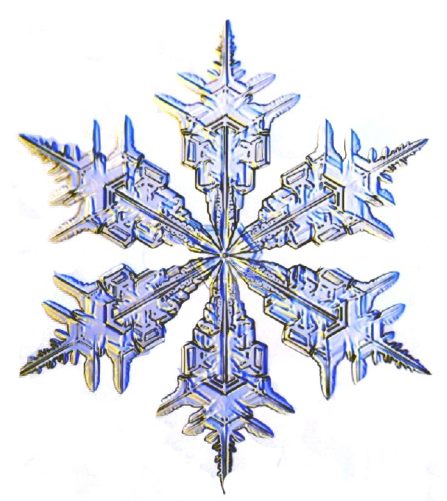
Something else that struck me is the sentence: “The plan of this world is infinite similarity and yet infinite variety.” It’s something we know without actually thinking about. We know all snowflakes are alike and yet all are different. We know all leaves are alike in their leafness, and yet all are different. In such a way, all people are alike, too. I mean, if you see a person, you know immediately it’s a human being and not a starling or a star (of the celestial type). It’s this similarity and variety that makes it seem as if everyone grieves differently, when in fact, there is great similarity in the grief cycles of those suffering from the death of a spouse.

The other children’s book that particularly struck a chord was The Lost Prince. (Hmm. There seems to be a princely pattern here.) This book is very Zen or Buddhist or anyway, not a typical western way of thinking. The lost prince was brought up to think good thoughts, to be good, to find balance and peace in silence so that he can connect to “the Thought that thought the world.”

It shouldn’t surprise me that this sort of thinking didn’t mean anything in particular to me when I was so very young and reading these books for the first time. It’s possible I understood the message, but it seemed no different from any other message I gleaned from a book; when one is new, all ideas are new and all are treated the same. It’s only as we get older and supposedly wiser that we categorize ideas and things and people, which seems a very unwise thing to do.

It’s also possible that a steady diet of such books at a young age helped create my own rather mystical bent, or at least compounded it.

Whatever the truth of me, my mind, or these books, it’s definitely been a interesting experience, rereading these books and seeing in them the philosophies that helped formed my own life.

***

Pat Bertram is the author of Grief: The Inside Story – A Guide to Surviving the Loss of a Loved One. “Grief: The Inside Story is perfect and that is not hyperbole! It is exactly what folk who are grieving need to read.” –Leesa Healy, RN, GDAS GDAT, Emotional/Mental Health Therapist & Educator




