Ever since the death of my life mate/soul mate, I’ve been struggling to find reasons to write. It didn’t seem important to write another book that would languish in the dark alleys of non-bestsellerdom, and it especially didn’t seem important to write if he, my most avid fan, were no longer here to read what I wrote.
Today, though, I had an epiphany. Writing is separate from selling books. Writing is art, a thing of the spirit, eternal. Selling books is merely commerce, and so is everything that goes along with the business — writing to be read, finding readers, trying to make a niche in the publishing world.
Often, we writers are told that we need to write what people want to read. It’s good advice, especially if we want to make a living as an author, but in my case, I can only write the books I can write. Even if I knew what readers wanted, I couldn’t 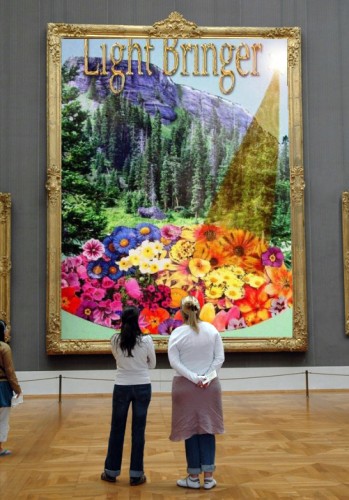 write those books. Someone else is already writing them.
Although it would be nice to make a living off writing, money is not the only reason to write. In fact, contrary to popular belief, money is not the reason behind most of what is worth living for.
Take a smile for example. That curvature of the lips and sparkle in the eye is fleeting and ephemeral, not to be stored or purchased anywhere here on this earth, and yet, a smile from a loved one is precious. I would give anything to see my life mate/soul mate smile at me once more, but now his smiles exist only in my memory.
Smiles aren’t the only valuable thing that has no meaning beyond the moment. We go walking on a cool sunshiny day without ever stopping to think what we will get out of it other than a pleasant interlude. We watch a movie or read a book simply to pass the time, without ever worrying about its importance. We talk with friends, and those words become lost in the eternal spectrum of sound waves. Sometimes we talk to a person who is no longer here, such as I do with my lost mate, and as seemingly meaningless as those conversations might be, they are important.
Is writing any different?
Some writers, of course, are so full of their importance they believe their words are immortal, no matter how trite or uninspiring their writing is, but many of us need the possibility of readers to give our writing importance, or at least purpose.
And yet, there is the side of writing that is often ignored in the business of writing — writing is art, or it can be. Art is the expression or application of human creative skill and imagination. Nowhere in that definition does it say art needs readers or viewers or buyers to be art. Art is merely expression. And that is what writing should be.
In a perfect world, writers would never consider their readers, would never put commerce above inspiration, would never count words or the hours spent creating. They would simply write.
For myself, I can create that perfect world
The past few weeks, I have been working a bit on a novel I started three years ago about a grieving woman. Maybe when the book is finished, I will turn the manuscript over to my publisher, but for now, I’m not even considering the commerce of writing. The book is for me — an expression of my grief, inspired by all I’ve gone through the past few years.
My writing.
My art.
***
Pat Bertram is the author of the suspense novels Light Bringer, More Deaths Than One, A Spark of Heavenly Fire, and Daughter Am I. Bertram is also the author of Grief: The Great Yearning, “an exquisite book, wrenching to read, and at the same time full of profound truths.” Connect with Pat on Google+. Like Pat on Facebook.
 manages to turn the fun into profit. Writing is much the same. Anyone who wants to play can, but only a very small percentage ever makes a living at it.







 Bertram's Blog