My Favorite of the Books I Have Written

A friend asked me if I had a favorite of the books I have written. The truth is, each is a favorite in it’s own way.

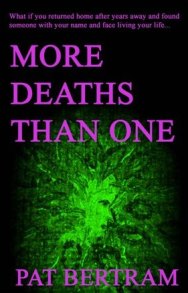
More Deaths Than OneMore Deaths Than One is my favorite because of all the rewrites. I rewrote it four different times, each time making it better, and so I learned to rewrite and to edit. I also liked the ironies that showed up in the book.

Click here to read the first chapter: More Deaths Than One

***

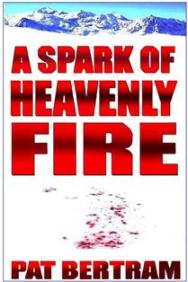
A Spark of Heavenly FireA Spark of Heavenly Fire is my favorite, because halfway through I realized I’d learned how to write, and because it is a solid, classic story of life and love in impossible times.

Click here to read the first chapter of: A Spark of Heavenly Fire

***

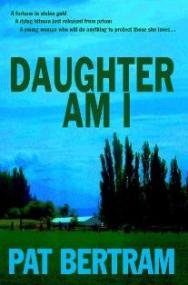
DAIDaughter Am I is my favorite because of the fun we (my mate and I) had coming up with the great characters, and because it was the fulfillment of a desire to write a “hero’s journey” story.

Click here to read the first chapter of: Daughter Am I

***

Light Bringer is my favorite because it’s the culmination of a lifetime of research, combining modern and ancient myths into a plausible whole, and because some of the descriptions were stunningly beautiful.

Click here to read the first chapter of: Light Bringer

***

Grief: The Great Yearning is my favorite because writing it helped me get through the worst year of my life, and because unwittingly, it turned out to be the story I always wanted to write, the story of a love that transcended time and physical bonds, told with wisdom and sensitivity.

***

Pat Bertram is the author of the suspense novels Light Bringer, More Deaths Than One, A Spark of Heavenly Fire, and Daughter Am I. Bertram is also the author of Grief: The Great Yearning, “an exquisite book, wrenching to read, and at the same time full of profound truths.” Connect with Pat on Google+

When Grief Comes Calling

desert roadGrief has been leaving me alone lately, probably because I’ve been keeping myself busy with other matters, but Friday night grief came calling. Sorrow has been with me on and off now for two days, perhaps in recognition of my upcoming three-year anniversary. I didn’t think there would be a problem with this anniversary (which is a bit naïve of me considering that I didn’t think there would be a problem with any of the agonizing stops along this grief journey). I’ve been feeling as if the death of my life mate/soul mate happened long ago, so long that he’s been fading in memory. Yet on Friday night, the memory of his last days was so fresh and new, it was as if we’d only recently parted. I could almost feel his arms around me as we said our final good-byes. Could almost see his smile, could almost hear his voice.

And suddenly, just like that, the yearning to be with him one more time overwhelmed me, and the reality lay heavy on my soul. He’s dead? Really? How is that possible?

I know how it’s possible. He got sick, was sick for years, and finally, the inoperable kidney cancer spread, hijacking his body for its own use. But dead? Part of me doesn’t get it. Part of me (just a vestigial part now) thinks I’ll be going home to him when I am free of my current responsibilities, and the truth — that he is gone forever — is again too much to bear.

I do know enough about grief to understand that this upsurge in sorrow will pass, but there will be other days — at ever-increasing intervals — when grief will again come calling. We get so in the habit of life, of dealing with our small everyday concerns, that our grief gets pushed out of sight, but we never completely get over our sadness. How can we? The person who meant more to us than any other is gone, taking part of us with him.

If that weren’t hard enough to deal with, we can never completely forget that we were helpless to keep him here even one more day, which makes life and death seem an arbitrary business. Perhaps if we knew life’s algorithms, we could see how everything fits together, but without such omniscience, we are left with only questions. Where is he? Is he happy? Is he?

Sometimes what keeps me focused on living is the thought of what he would say if we were to meet again. He’d be disappointed in me if I told him that all I did was mourn for him. I can see almost hear him say, “I died to set you free and you did nothing but cry?” Yeah, well, he no longer has a say in what I do. It’s my life and I’ll cry if I want to.

It’s not so much that I want to cry, but sometimes tears are the only way to relieve the incredible stress of grief. I had no idea stress would still come into play at almost three years, but grief, even aging grief, takes a lot out of us. Despite the upsurge in grief and the accompanying feelings of futility, I am making plans, looking forward, trying to find something to live for.

But dammit! I miss him.

***

Pat Bertram is the author of the suspense novels Light Bringer, More Deaths Than One, A Spark of Heavenly Fire, and Daughter Am I. Bertram is also the author of Grief: The Great Yearning, “an exquisite book, wrenching to read, and at the same time full of profound truths.” Connect with Pat on Google+

Is Blogging Dead? Do You Care?

RIPLately I’ve been seeing a lot of articles that talk about blogging being dead. These are blog articles, mind you, which seems to prove the point that blogging is not dead. I don’t even know what that means: “blogging is dead.” I have a hunch it refers to long form blogging, since Twittering and Facebook status updating are short form blogging, and posting photos or videos is visual blogging. Maintaining a web log is all about making a presence on the internet, keeping a record of one’s progress or ideas or everyday life. The form the log takes is constantly changing, but the need people have to tell the world “I am here and I matter” will always find a voice.

People do seem to be losing interest in reading long form blogs. Supposedly they don’t have the attention span it takes to read five hundred or so words. Supposedly they prefer snippets of information they can scan, photos they can glance at, videos they can watch, especially if those posts are funny. The sort of thing that goes viral is not a lengthy dissertation on why blogging is dead but a short video of cats trying to figure out the meaning of a treadmill, or a humorous caption on a photo of a singing dog.

Me? I have no interest in such things. I don’t like videos — it’s much easier for me to scan an article to pick out the salient points than to watch one or two people discussing something for five minutes only to find the relevant issue buried in bantering, small talk, or hype. I don’t particularly like photos, either, partly because I am verbally rather than visually oriented, and partly because . . . (dare I admit it?) . . . I have no interest in sappy pet photos or photos of people I don’t know doing things I don’t care about.

Perhaps the sky-is-falling attitude about blogging stems from the way mobile devices are changing how people connect with others and the internet. It’s easier on a phone to send in a tweet or a comment on a Facebook status than to write a blog or even to leave a comment on a blog. (Or so people say. The only web-related activity I do on my phone is checking my email, and I want to get out of the habit of doing that.)

I started blogging as a way of promoting my books, and even after I found out how little effect blogging has on my sales, I continued. For me, blogging is a discipline, a way of writing when I don’t have the focus to write a novel, a means of helping me think. It’s possible I’d get more views if I posted silly photos, but views are not all I want. I tend to be a thinker (or maybe “brooder” would be a better description) with a need to talk about the important issues of life and death and finding a place in the world, a need to connect with people on a deeper, truer, and more fundamental way than the simple exchanges that usually take place online. And often, I do find that here in my own corner of the blogosphere.

So, is blogging dead? I don’t know, and I don’t particularly care (as long as WordPress is around, that is. If WordPress becomes defunct, then blogging really would be dead). What’s important to me is that this blog is very much alive, that it continues to satisfy my need for expression, and that sometimes people respond to what I have to say.

***

Pat Bertram is the author of the suspense novels Light Bringer, More Deaths Than One, A Spark of Heavenly Fire, and Daughter Am I. Bertram is also the author of Grief: The Great Yearning, “an exquisite book, wrenching to read, and at the same time full of profound truths.” Connect with Pat on Google+

My Wish List

Wish lists, such as things you want to accomplish before you turn thirty (or forty or fifty) or things you want to do before you kick the bucket (I finally figured out that’s what a bucket list is!!), seem to be perennial favorites as blog topics, so I though I’d share my list:

1.

Yep that’s it. A total blank. Looking back, there are only two things that were ever on my mental list of things I wanted to do with my life when I grew up: read and write. For most of my life, I indulged my habit of reading rather than doing something that might have been more lucrative, such as striving for a high-powered career. I also tried to write a novel when I was young and it was one of the regrets and sadnesses of my life to discover that I had no talent for fiction, yet eventually, I did become an author. (Proof that you don’t need an innate talent for writing but can learn how to tell a story in a compelling way, which in itself is sort of a talent.)

There are things that I would have added to a life list if I had been aware that I would experience them. I would have wanted to be deeply connected to another human being, to have the privilege of being there at the end of his life, though I had never aspired to doing either of those before they happened. I would have chosen to experience for a brief time such disparate places as a mesa in the high plains of Colorado, the edge of the north woods of Wisconsin, the high desert of California, but again, those are not things I would ever have added to any list since I’m not easily uprooted. I would have also wanted to reconnect with my best friend from high school, and now I’ve done that. (The visit was wonderful, by the way, and wonderfully strange considering all the years that have passed since I last saw her.) Besides, now that I’ve done these things, I would have crossed them off any list anyway, and the list would still be blank.
A couple of times I tried to do the creativity stimulation exercises in Julia Cameron’s The Artist’s Way, and I generally stuck with the morning pages (three pages every morning to write whatever came to mind) and the artist’s date (a weekly date with yourself) but always, when I got to the part about making lists, the excercises screamed to a halt. There are various exercises in the book involving lists: What would I try if it weren’t too crazy? What would I do if it weren’t too selfish? What five things would I never personally do that sound like fun? What do I wish for?

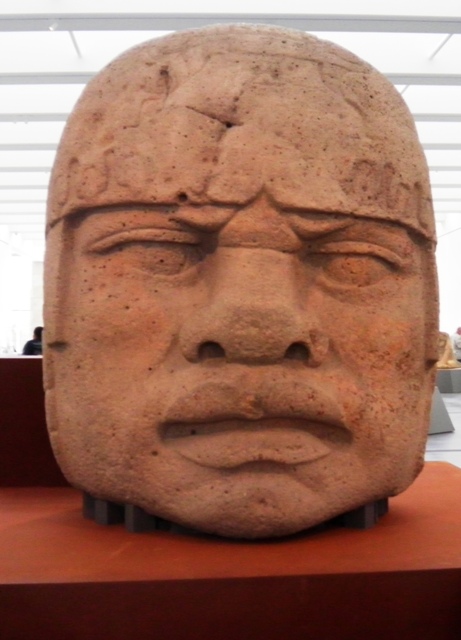
I’d like to be able to make a living with my books, of course, but other than that, no wish comes to mind. I’ve never had any desire to go to Paris or London, never had any desire to travel to exotic locales to see ancient ruins, though I wouldn’t mind seeing such places if I could figure out a way of simply being there without having to make the long trip. I did have a desire to see the Olmec heads, and one came visiting at a museum nearby, so I satisfied that desire.

I’m not sure it’s possible for me to become a wisher. I used to want things, of course, but too often I didn’t get what I wanted, so I learned not to want. I know it’s important for a character to want something — it’s what makes them compelling. But is it important for us to want things? Or is it better for us to be more zen in our approach, to accept what comes our way? This is where I am now, stuck somewhere in the middle of those two questions.

Maybe this could be my list?

1. Find something to wish for.
2. Wish for it.

***

Pat Bertram is the author of the suspense novels Light Bringer, More Deaths Than One, A Spark of Heavenly Fire, and Daughter Am I. Bertram is also the author of Grief: The Great Yearning, “an exquisite book, wrenching to read, and at the same time full of profound truths.” Connect with Pat on Google+
For Now . . . Just Write.

writingbIn an online writing discussion, one writer said that the first nine chapters of her book went through a readers review and most of the readers agreed that the first paragraphs really grabbed their interest, but then her editor suggested placing the opening sequence later in the book to make the beginning more appealing to guys. The writer wanted to know if she should follow the editor’s advice, or go with the original beginning.
To be honest, the question confused me. Why would a writer have an editor if the writer didn’t want to follow the editor’s suggestions? And who are the readers? (And what the heck is a readers review? Do I need one, and if so, where do I get one?) What stake did this “readers review” have in the book? If the readers were family and friends, then it doesn’t make any difference what they say. And, if the readers only read the original beginning and did not have the editor’s suggested revised beginning to compare, it seems to me that the readers’ opinions don’t really account for much.

Even more confusing, why is the writer having someone edit the book when she has only nine chapters? Every writer knows that a novel takes so long to write that by the time it’s finished, either the writer has changed or the focus of the book has changed, sometimes both. It’s entirely possible that by the time the author finishes writing the book, the story would have strayed from the original premise, becoming stronger and more vibrant, in which case that first chapter would be superfluous, and any discussion about keeping the beginning or changing it would have become irrelevant.

To spend any time debating the beginning of a book before the entire thing has been written puts too much emphasis on something that is unimportant for now. The beginning sequence of a work in progress is merely a starting point for the writer, a place to anchor the story while s/he is writing it. In many cases, especially with new writers, a story will be stronger without that first chapter, but no one — not the writer, the editor, or the readers — will know that until the entire book is finished.

All an author has is his or her vision to see the way through to the end of a story. When a book becomes a committee project, then it is no longer the writer’s vision but the vision of anyone who happens to have an opinion. Sometimes new writers seek readers early in the process because they are unsure of themselves, but the way to become sure of yourself is simply to write. And sometimes writers want to make certain they are on the right track, but even the wrong track is sometimes the right track since everything you write helps you become the writer you were meant to be. (I’ve heard it said that you don’t become a master at the craft until after you have written a million words. I’ve also heard that it takes four million words. In other words, you need to write a lot of words!)

If you too are in the middle of your book and are pondering whether to change the beginning — don’t. For now, it is serving its purpose. When the book is finished and you are reviewing every minute detail, then you can decide how to improve the beginning to foreshadow the premise of the book and hook readers into wanting to continue exploring your vision. But for now . . . just write.

***

Pat Bertram is the author of the suspense novels Light Bringer, More Deaths Than One, A Spark of Heavenly Fire, and Daughter Am I. Bertram is also the author of Grief: The Great Yearning, “an exquisite book, wrenching to read, and at the same time full of profound truths.” Connect with Pat on Google+

The Waning of Grief

020bGrief has taken a back seat in my life for now — so much else is going on, including getting used to my father’s increased dependency and having moments of panic about where I’m going to go when he’s gone. I’d just about decided to move to a lovely small town in Colorado, having developed a craving for familiar cool mountain climes (and cool mountain climbs) until I discovered that the town has a very cold humid climate. Eek. I don’t tolerate humidity well. And 87 inches of snow a year? Double eek. So I’m back to zero. I don’t really want to stay here in the desert because my life would be much the same as it is today, sort of like a real life treadmill. Staying is an option, though, and treadmill aside, I do know people here. But it doesn’t feel like home. And right now, I’d like to go home.

The trouble, of course, is that no place would feel like home. Home was with my life mate/soul mate, wherever we happened to be. Like so many women in my stage of grief’s journey — past the tsunami of raw grief and not yet arrived at a new life — I have an itch to be on the move. Being settled — settled alone, that is — seems so much like stagnation.

I crave challenges. Adventure. Travel. The irony is that I don’t particularly like to travel, I hate hotels and motels, and I don’t like being unsettled. But what else am I going to do? Sit alone in an apartment for the rest of my life? If I’m on the move, anything could happen, maybe even something that will revitalize my life.

Four years seems to be a magic number when it comes to grief. Often that fourth anniversary is the turning point where we feel some sort of disconnect to the past, when everything suddenly feels new again, and we feel free to leap toward whatever future awaits us. I am letting go of the past and I do want to experience life to the fullest, but I’ve not yet arrived at the turning point — the future still seems bleak to me. Still, I’m just counting down to the third anniversary of his death, so I have a long way to go before I’ll feel up to taking any sort of leap, but I am holding on to the belief that such a time will come.

And maybe then the problem of where to go and what to do will take care of itself.

***

Pat Bertram is the author of the suspense novels Light Bringer, More Deaths Than One, A Spark of Heavenly Fire, and Daughter Am I. Bertram is also the author of Grief: The Great Yearning, “an exquisite book, wrenching to read, and at the same time full of profound truths.” Connect with Pat on Google+

Countdown to One Hundred and One Adventures

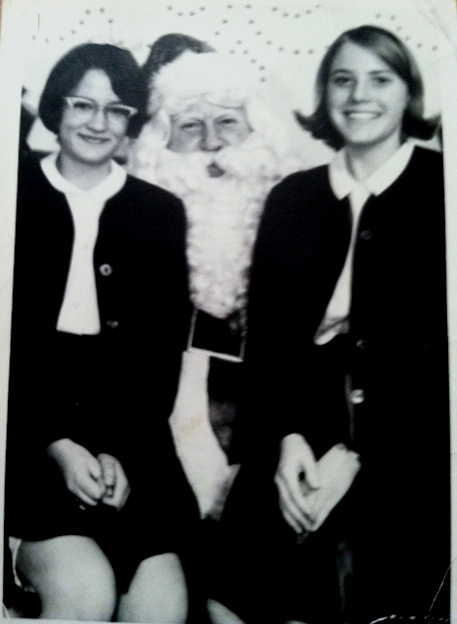
I’m on the left side of the photo

Things are settling down in my life and revving up all at once. My father finally was able to start his breathing treatments and now is more alert, has a bit more energy, and shows more interest in food, so we’re settling back into our quiet life without alarums and excursions. (Hospital excursions, that is.)

My headlong rush into life slowed this past year — I didn’t really do much to embrace life except yoga lessons for a while and walks in the desert. In an effort to revitalize my life, I promised myself to seek one hundred and one adventures, but the promise didn’t give me the push I expected because life got in the way of my embracing life. (I guess, though, as long as I am present even in the unsettling times, I am embracing life, which is an adventure in itself.)

But now I’m on track, at least for this month, with two great adventures planned. Tomorrow night or Thursday morning, depending on when she gets here, I will be meeting my best friend from high school for the first time in decades. The whirlwinds of life flung us in different directions, but now those same winds are bringing us back together. I doubt I will recognize her, but voices seem to be the last things to change, so I should at last recognize the sound of her voice. (Now that I think about it, it seems odd that we’ve only emailed sporadically this past year and never once talked on the phone, so I have an only an assumption that she still sounds the same.) After all this time, will we have anything to say to each other? Will we like each other, or will we take each other in aversion? It should be interesting to find out. (Besides . . . of course she’ll like me. What’s not to like, right?)

Then at the end of the month, I’m heading to Seattle for a gala weekend. My sister and brother-in-law are treating me to a showing of Shen Yun. 5,000 years of Chinese music and dancing, limousines, champagne, a wonderful dinner. Sounds like an adventure fit for Cinderella.

Even if rags and an out of season pumpkin are all that await me at the end of the Seattle trip, well, there is still a matter of the other 99 adventures I promised myself. I wonder what I will do next?

***

Pat Bertram is the author of the suspense novels Light Bringer, More Deaths Than One, A Spark of Heavenly Fire, and Daughter Am I. Bertram is also the author of Grief: The Great Yearning, “an exquisite book, wrenching to read, and at the same time full of profound truths.” Connect with Pat on Google+

Today I Am Officially a Writer

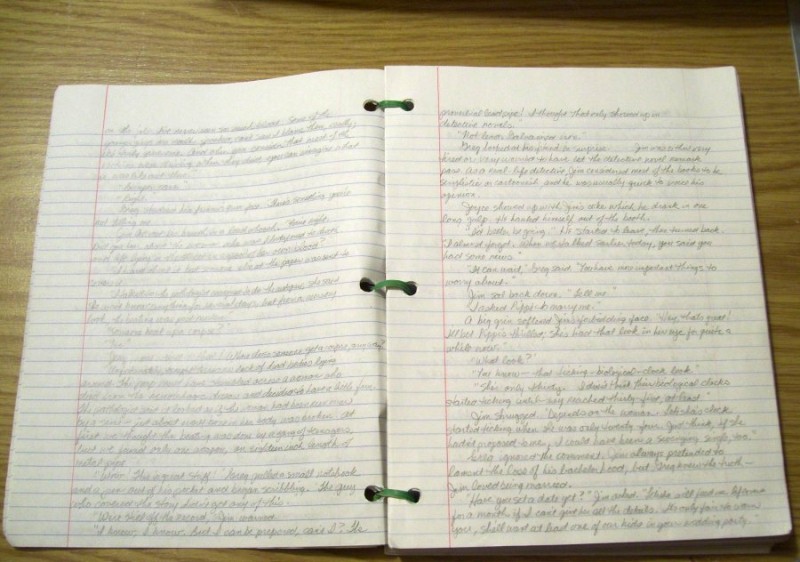
First draft of A Spark of Heavenly Fire

First draft of A Spark of Heavenly Fire

I got serious about writing a little over a decade ago. That’s when I started writing novels as well as researching the craft of writing and the publishing industry. I finished writing my novels about seven or seven years ago, then concentrated on rewriting and polishing the manuscripts to make sure they were as good as I could possibly make them. Meantime, I sent out hundreds of query letters in an effort to find an agent or publisher.

You’d think all those years focused on the craft of writing, rewriting, editing, proofing, querying would qualify me to call myself a writer, but it was just something I did, not something I was, so I never gave myself the title.

Even after my first two books were published by Second Wind Publishing in 2009, I still didn’t identify myself as a writer, except in relation to the books. For example, Pat Bertram, author of More Deaths Than One. I now have five books published — four suspense novels and one book about grief — but I still didn’t call myself a writer. It seems sort of silly and, considering all the millions of writers who have a book listed on Amazon, makes me not the least bit special. And anyway, I don’t make a living off writing, which would, I think, be a major qualification to list “writer” as one’s occupation.

Today, I had to go to the bank to fill out some paperwork, and they asked my occupation. Oddly, the only thing that came to mind was “writer.” I laughed to myself and said sotto voce, “What the heck.” Then, louder, I told the clerk, “I am a writer.” (It’s a good thing they didn’t need to ask what my income was. They’d probably have laughed in my face.) Still, “writer” sounded so much more interesting than shrugging off the question about occupation with a brief comment about taking care of my father.

So now it’s official. I am a writer.

***

Pat Bertram is the author of the suspense novels Light Bringer, More Deaths Than One, A Spark of Heavenly Fire, and Daughter Am I. Bertram is also the author of Grief: The Great Yearning, “an exquisite book, wrenching to read, and at the same time full of profound truths.” Connect with Pat on Google+

Making End of Life Decisions

Some of the hardest decisions to make when taking care of a person who is nearing the end of life are not dire life/death decisions, such as taking him off a respirator, but simple decisions that continue to haunt you long after the person is gone.

The hardest decision I had to make when it came to the end days of my life mate/soul mate was whether to take him to the hospice care center. The nurse suggested the move to give me time to rest (he had what is called “terminal restlessness” and kept getting out of bed; considering how unsteady he was on his feet, I had to get up with him.) He wasn’t ready to go, wasn’t ready to face the ending of his life, and yet knowing the truth of the matter — that he wouldn’t be coming home again — he still agreed to go. I, on the other hand, believed the nurse when she said he would be away just a few days to give me time to rest, but still, I felt horrible about agreeing to take him. Afterward, that decision haunted me. I wished I’d let him stay home one more day, especially since I didn’t sleep anyway.

The decision I face now in taking care of my father is even less dire, but infinitely more complicated. Until about a week ago, my father still answered the phone, eager to talk to anyone who called, but now we’ve unplugged the phone in his room because he doesn’t like to be awakened.

He spends most of his time sleeping, getting up a few times a day to eat something — an egg or a bit of jello or a few canned peach slices. He is willing to talk to his children during those times, so that’s not a problem, but he doesn’t want to see anyone. He is very fragile, and so I have been honoring his wishes. However, some of my siblings want to make sure they see him one last time, and this is where the decision lies.

When is the cut-off point where his wishes become secondary and the wishes of his children come first? When it’s close to the end, I suppose, and I don’t think he’s there quite yet. Although he doesn’t eat much and has developed an aversion to most of his favorite foods, he does still have an interest in eating, which is a good sign. He’s also alert when he’s awake, so he hasn’t quite begun removing himself from life. (He has no interest in reading the newspaper anymore, but I don’t consider the newspaper “life”.)

I hope I’m doing the right thing by continuing to honor my father’s wishes, and that the decision to do so won’t come back to haunt me. I hope, if I make the wrong decision (or make a wrong assessment about how much time my father has left), my siblings will forgive me.

***

Pat Bertram is the author of the suspense novels Light Bringer, More Deaths Than One, A Spark of Heavenly Fire, and Daughter Am I. Bertram is also the author of Grief: The Great Yearning, “an exquisite book, wrenching to read, and at the same time full of profound truths.” Connect with Pat on Google+

Rubicon Ranch ~~ Prepare for Mayhem!

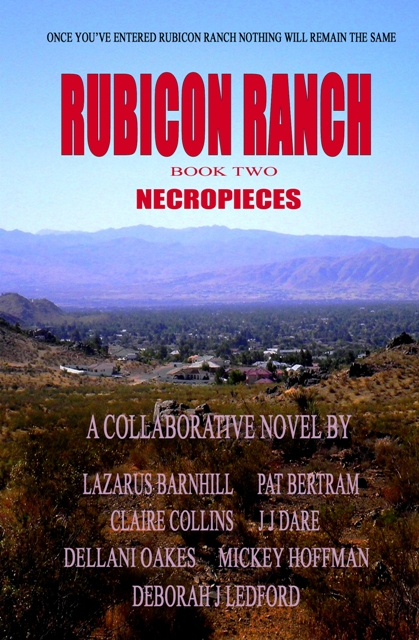
Rubicon Ranch: NecropiecesI enjoy finding out how other writers approach their craft, and especially how they develop their characters. J J Dare, author of False Positive and False World, delights in creating evil characters. As a fellow collaborator in the Second Wind serialization, Rubicon Ranch, J J Dare created the monstrous victim in Rubicon Ranch: Necropieces, the second book of the series, along with a couple of his offspring.  In her blog post Bad Wasps, J J Dare said of her two POV characters:

They’re bad. Bad to the bone. Bad in ninety-five percent of their molecular makeup. If an ice-cream flavor was named after them, it would be “Vinegar and Vinegar” and it would taste just as sour as it sounds.

They are evil, narcissistic, self-centered, selfish and plain mean. Both characters think nothing of climbing over the living and dying bodies of anyone in their way. They are Bad Wasps.

So, why did I write them this way? It’s not a reflection of me. I’m fairly mild, with only a bit of flair once in a while. And I’ve never wanted to murder my parents.

I’m glad she added those last two sentences. Someday J J and I will meet, and I’d hate to have to go to the meeting prepared for mayhem.

Seeing how much fun J J Dare has with her evil characters, I’d considered exchanging my character for a bad wasp (or perhaps revealing a waspish side, which I might someday do), but my character, Melanie Gray still has so much work to do that I can’t just dump the poor woman. She needs to find out who killed her husband and why, and she needs to resolve her feelings for the misogynist sheriff.

J J’s characters might not reflect her, but Melanie Gray is a lot like me. She’s a writer dealing with grief, she wanders in the desert, she’s fairly calm and passive though she can be riled. Even though she started as an alter ego (but younger) she turned out to be a world traveler, which I am not, and she has a penchant for finding dead bodies, which I don’t. Thank heavens for that! Being some sort of human cadaver dog has never been an aspiration of mine.

If you have not yet checked out Rubicon Ranch, now would be a good time. You can download the first book free in the ebook format of your choice here: Rubicon Ranch: Riley’s Story and you can follow the second book as we finish writing it here:  Rubicon Ranch: Necropieces. And you will have to prepare for mayhem!

***

Pat Bertram is the author of the suspense novels Light Bringer, More Deaths Than One, A Spark of Heavenly Fire, and Daughter Am I. Bertram is also the author of Grief: The Great Yearning, “an exquisite book, wrenching to read, and at the same time full of profound truths.” Connect with Pat on Google+