The Truth of Me

Once I saw a plaque that said, “What others think of you is none of your business.” At first, I recoiled in disagreement, then I thought of the various ways that what other people think of us is our business, and now, finally, half a decade later, I have come to agree with the sentiment.

During the past few years, different friends have accused me of various heinous character traits. One accused me of being negative, one often told me I was contradictory, and one, more recently, said I was cruel. And somewhere in there, a relative more than once called me an ungrateful bitch.

I’m sure, along the way, others have called me other not-so-nice things, which luckily, I don’t remember. No one (unless of course, she is a negative, contrary, cruel, ungrateful bitch) can bear thinking she is such a ghastly person. I don’t suppose it will come as any surprise that I seldom have anything to do with any of those people any more — it’s too hard to live down to their expectations.

And truly, what they think of me is none of my business. Those adjectives reflect more their own experiences at the time than mine.

On the other hand, I do tend to believe people when they say I am kind, or special, or very interesting. While I am lapping up the accolades, a small voice in the back of my mind whispers, “if you ignore the bad things people say about you, shouldn’t you also ignore the good?”

Ah, but it is easier to live up to the nice things since I do think I am kind. Or at least, I try to be. And I do want to be special and interesting even if those traits are more of a reflection of the speaker’s specialness and interestingness than mine.

So what’s the truth of me? I was going to list what I thought were my not-so-admirable traits along with the good ones, but decided that maybe what I think of me is none of my business, either.

I’ll just be. And leave the thinking to others.

***
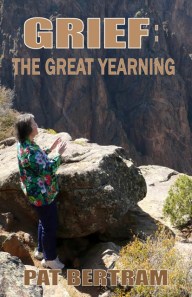
Pat Bertram is the author of the suspense novels UnfinishedMadame ZeeZee’s Nightmare, Light BringerMore Deaths Than OneA Spark of Heavenly Fireand Daughter Am IBertram is also the author of Grief: The Great Yearning, “an exquisite book, wrenching to read, and at the same time full of profound truths.” Connect with Pat on Google+. Like Pat on Facebook.

The Massive Mission of Grief

Now that my own sorrow has considerably lessened, there have been many times when I have felt strange continuing to talk about grief. But despite the long years that have passed since the death of my life mate/soul mate, I am still bound by my grief. What I do, think, hope, even dream or not dream are because he is dead. Interestingly, I am discovering that these latter posts are perhaps as important as the early ones. Friends, relatives, and coworkers of the bereft are a lot more understanding those first months and even that first year of grief, but long before the end of the second year, they get impatient with any signs of continued grief. Most bereft stop talking about what they are feeling long before they are ready (and in way, I did, too. I spewed out my thoughts on this blog and mostly kept my mouth shut in real life).

And yet, grief is a life-long thing. And how can it not be? The pain might diminish, the hole might be filled to an extent with the gold of new relationships and new experiences, but the loved one is still dead. Even for those who believe their mate is in a better place, even for those who believe they will see them again, life is long and lonely without that special person.

If it were only about emotion and loneliness, grief would still be a massive mission, but all the physical, mental, chemical, hormonal upheavals change us and leave us feeling . . . not like us. Like some alien who no longer fits in this earthly environment.

But over the years, we do change and adapt. For this, I am glad to have continued these grief posts — people need to know they are not alone. They need to know that grief isn’t something you get over. They need to know that, unlike what some people believe, grieving long after others think you should stop is not a sign you lack resilience. Although people seldom admit it, there are gradations of grief. The death of a total stranger is not the same as the death of a soul mate. The death of a pet is not the same as the death of a child. (Yes, I understand that one grieves the loss of a beloved pet, but it is not the same, and I will delete any comment that says it is.) It’s easy to get over grief for a person you seldom saw, but grief for a person who shared your every waking moment is something you never get over. Everything that happens reminds you they are gone. Even after the pain has diminished, every moment of their not being with you makes you want to twitch with the feeling that something is not right.

But life — and grief — do go on, just maybe not the way we would prefer.

I am far enough away from those first horrendous years that I can start to see a pattern, and when I get a comment from someone who wails, “when will it be over?” I can give them an estimate. When they ask when life will get back to normal, I can safely say it will never get back to the old normal, but will eventually feel normal, though it will be a lot different from the normalcy of their shared life.

Although there is a pattern to dealing with grief after the death of a long-time spouse (or even a short time partner because you not only grieve what you lost but also what you will never have), all grief is different because all relationships are different.

I can’t, of course, tell people when it is time to find a new love — that is dependent on the person. I do know that those who manage to incorporate their first spouse’s memory into their new marriage are a lot happier than those who marry someone who feels injured by that grief, or who urges you to forget that previous marriage. I know one woman who incorporated her grief for her first husband into her marriage vows. Though she cried as she talked about her first husband, and her voice shook with emotion as she vowed to love the man she was marrying, she radiantly straddled those two worlds. It was beautiful to see.

So, if you know someone who is still grieving the loss of a spouse (or a child), please be kind; the bereft don’t live according to your timetable but according to the timetable of grief. And if you are the one who is still grieving long after others think you should have “moved on,” know that you are doing exactly the right thing, and someday you will get to where you need to be.

***

See also: What Do You Say to Someone Who is Grieving at Christmas? And if by chance you know someone who is grieving, either of my books about grief — Grief: The Great Yearning or the novel Unfinished would make a nice gift.

***
Pat Bertram is the author of the suspense novels UnfinishedMadame ZeeZee’s Nightmare, Light BringerMore Deaths Than OneA Spark of Heavenly Fireand Daughter Am IBertram is also the author of Grief: The Great Yearning, “an exquisite book, wrenching to read, and at the same time full of profound truths.” Connect with Pat on Google+. Like Pat on Facebook.
Dandelion Fluff and Veins of Gold

A friend left this comment on yesterday’s post.  Your blog titled 1000 Days of Grief read: “But now I know freedom was his final gift, though it was as unwanted and as unasked for as the grief. I haven’t learned yet what to do with this freedom. Perhaps if I embrace it as I did my grief, it will also take me where I need to go.” In the grief blogs I have read so far you never apologize for following your grief, actually quite the opposite, you give all of us permission to feel what we feel. I may be wrong but you sound apologetic for your ambiguity now. It strikes me as “OK” you feel two ways, even three, four or more about freedom as you follow it, trusting it will take you where you need to go.

Very astute of her!

A few days ago, I wrote about impossible dreams and how important they might be. I followed up with a post congratulating myself (more or less) on having found a direction to point myself, as if the impossible dream was perhaps not quite so impossible after all. Meantime, in an article about how to get in shape for a backpacking trip, I read that the best way to prepare is to fill your pack with however much weight you were going to carry, add five pounds, then strap a two-and-a-half pound weight to each ankle, and go out and hike five miles.

And so the whole pack of cards came crashing down on me. Not only did I re-realize the impossibility of the impossible dream (with all that weight, I wouldn’t even have been able to stand up, let alone walk a single step) I felt foolish for my on-again/off-again dreaming, as if I were a child pretending to be an adult. And because of my posting all these thoughts, my wishy-washiness was out there for all to see (or at least the “all” who manage to find me in the blogosphere), which seemed . . . well, embarrassing.

It wasn’t until the end of yesterday’s blog (the blog that seemed apologetic) that I connected my ambiguity with grief, because how can any of this have to do with grief? After all, I haven’t had a massive upsurge (or even a mild upsurge) of angst for nine months. It was easy to write unabashedly about grief when I was pouring out my heart along with my sorrow, but it seems less heroic just to . . . waffle. And yet it is all about grief. When you have lost the most important person in your life, no matter what you do, it is always about grief.

And in the world of grief, I am but a child, a child in the eighth year of life.

People talk about grief as if it were merely an emotional aberration and that soon we will be back the way we were. They talk about us going through, moving on, healing, journeying, all different ways of describing the grief process, but the truth is, more than anything else, grief is a matter of being. Of becoming. Of Kintsugi.

Kintsugi is roughly translated as “golden joinery” and is the Japanese art of embracing damage, of mending broken pottery with veins of gold, turning what might have once been a simple ceramic piece into a work of art.

And that is exactly what grief is. When you lose the most important person in your life, a person who seems connected to your very soul, you can never be the same. Oh, sure — you look the same, people still treat you the same (or try to), but you know you’re not the same. What you do, however, is embrace all the shards of your shattered life, and one by one you glue each piece back to the whole with veins of gold, and if a piece is missing, you fill in the void with more gold. As time goes on, you turn your life into something new, a work of art that maybe only you can appreciate because only you know the effort it took to put yourself back together again.

So yes, I am ambiguous. I say one thing one day and another thing on a different day. Sometimes I hold on to dreams, and sometimes I blow dreams away as if they were dandelion fluff. Like a child, I pretend I can do anything, pretend that I can be anything (with no regard for reality). And like a Kintsugi artist, I carefully add one vein of gold at a time.

And so I grow.

And there is no need to ever feel apologetic about that.

***
Pat Bertram is the author of the suspense novels UnfinishedMadame ZeeZee’s Nightmare, Light BringerMore Deaths Than OneA Spark of Heavenly Fireand Daughter Am IBertram is also the author of Grief: The Great Yearning, “an exquisite book, wrenching to read, and at the same time full of profound truths.” Connect with Pat on Google+. Like Pat on Facebook.

Dreams and Dreaming

I’ve been thinking a lot about dreams lately. Not night dreams, so much — I really don’t like dreaming except in the rare case of a dream that seems to mean something but doesn’t really, such as my white dream. But the other kind of dream — cherished aspirations, ambitions, or ideas — that’s what I’ve been thinking about too much lately.

I had a bit of an insight today, though considering my cold, it could be more of a fever dream than a true insight: I wondered if maybe it’s time for me to put away the dreams of the past, impossible or otherwise, and create a new dream, something I’ve never dreamt before. But that assumes a dream is important to have.

Do we need dreams? Dreams seem counter to a life in the now, a life that goes with the flow and accepts what comes.

But we are never just one thing or another. Well, you might be, but I’m not. I often seem to be straddling the line of two opposing ideals.

While the ideal me thinks it’s important to live in the now, just flowing as life unfolds, the pragmatic me thinks and plans.

While the ideal me loves the idea of striving toward an impossible dream, the practical me realizes that impossible means impossible, and there is no reason to waste energy reaching for an unreachable star.

While the ideal me loves the idea of living a completely disciplined life, always eating the right way, exercising and stretching and doing weights almost every day, writing every day, being always kind and thoughtful and caring, and oh, yes, making a living, the realistic me realizes that I can only push so much without getting sick. (That’s what happened this time — I was doing too much and in my weakened state, caught a cold.)

While the ideal me loves the idea of a wildly spontaneous life, whether living in place or setting out on a journey, trusting to the universe and fate that everything will work out, the fearful me thinks I would end up on the streets (and not in a good way). On the other hand, if I did the practical thing and settled down somewhere, the fearful me thinks I would stagnate.

What I end up doing, of course, is always struggling to find a balance, which goes against all my natures. (Not the balance part, that I believe in, but the struggling part.) And thinking too much. I always overthink everything, and blogging every day gives me an opportunity to voice those thoughts.

I still have the strange idea that if I don’t do something spectacular with my life, I will be wasting the freedom Jeff’s death has given me, though part of me realizes that life itself is spectacular. It’s just a matter of paying attention to the spectacle.

For that, do we need dreams? I don’t know. I just know I want . . . something.

Even while writing that last sentence, I find myself thinking, maybe even overthinking, wondering if the wanting is part of my grief cycle. If Jeff were here, would I still be wanting something — wanting to be something — that seems just out of sight? I don’t remember ever having dreams while we were together — apparently, just living our shared life was enough.

Maybe eventually just living, even stagnating, if it comes to that, will be enough, but for now, I still cling to the wondering. And the wandering.

***
Pat Bertram is the author of the suspense novels UnfinishedMadame ZeeZee’s Nightmare, Light BringerMore Deaths Than OneA Spark of Heavenly Fireand Daughter Am IBertram is also the author of Grief: The Great Yearning, “an exquisite book, wrenching to read, and at the same time full of profound truths.” Connect with Pat on Google+. Like Pat on Facebook.

Pointing Myself in a Direction

I reconnected with my once-upon-a-time Yoga teacher the other day. She happened to “like” one of my twitter posts, and I was so pleased to see her name after all these years, that I immediately wrote her a message, and we’ve been “talking.”

I loved her Yoga classes and her philosophy. She was the one who taught me to use my whole sphere. She said we live in a personal sphere, the space taken up by outspread arms and legs. As we age and become more fearful of missteps, we shrink into the center of our spheres, shortening our stride, hunching into ourselves. Ever since, I have striven to open myself not just to my physical sphere, but also beyond what I can encompass.

I was devastated (devastated for myself, not for her) when she left to accept a fabulous job offer. It worked out, in a way, because I went searching for something else to do to give me a respite from looking out for my father, and I found dancing. (This was one of those very rare cases of one door closing and another opening, though I truly hate that platitude. After Jeff died, people frequently said, “When a door closes, a window opens,” but who uses a window in place of a door? And anyway, what good is a window or even a door to a widow who has lost her foundation?)

In one of the recent messages to my erstwhile Yoga instructor, I mentioned my idea of eventually doing some sort of epic hike, and she responded: “Baby steps everyday towards your goal will help you accomplish your dream. We have a Bucket List of walking The Camino de Santiago-we’ve begun working on it-It’s years ahead. Just point yourself in that direction & start!”

So, baby steps.

The first step is to get well. I caught the cold that’s been going around, and I’m stuck inside for the duration. (It’s interesting how the idea of an epic adventure always rears its head when I am housebound. Well, perhaps not interesting. But understandable.)

The second step is to continue working to get my hand/arm/wrist/elbow in as good a shape as possible.

The third step is to . . . well, one and two should be sufficient for now.

I am beginning to see, though, that an epic hike for me would be years in the future, which is one of the things that makes it an impossible dream — by the time I am ready, it’s possible I would be too decrepit or too broke. But it is a direction in which to point myself, and that has been the problem these years after Jeff’s death — I’ve had no direction.

I might be driving up the coast to Seattle in May, which would be a good time for a reconnoitering trip. I am also collecting lists of hikes that are less ambitious than the iconic national trails and that might possibly be good starter long hikes. I just added the Pinhoti Trail to the list. I am sure there are hundreds of trails that would be perfect for a few weeks or even a few days. Or even one night. (If I’m going to do baby steps, a one nighter would be the first trip!)

It’s possible what I like is the impossible dream and that backpacking is more of an ideal than something I ever want to do. (My father had such a dream — for as long as I can remember, he talked about walking the coast of Portugal. I don’t know when he finally gave up on the idea, or when it gave up on him.) And yet I have enjoyed every one of the day hikes I have ever taken, and enjoyed every night I spent camping.

Step three, now that I think of it, should be to get over the idea of chucking it all and just heading out. Considering the dismal state of my finances, it seems silly to pay rent when I am elsewhere, but for now, it would probably be best to have a base. And anyway, there would be the problem of what to do with my car if I were on the trail for months.

So, baby steps all the way.

I do like the idea of doing something every day to prepare, even if it’s only research. (Only research? From what I’ve been able to gather from the research I have already done is that research is one of the most important things a beginner backpacker can do.)

But for now, I’ll point myself in the direction of a nap.

***
Pat Bertram is the author of the suspense novels UnfinishedMadame ZeeZee’s Nightmare, Light BringerMore Deaths Than OneA Spark of Heavenly Fireand Daughter Am IBertram is also the author of Grief: The Great Yearning, “an exquisite book, wrenching to read, and at the same time full of profound truths.” Connect with Pat on Google+. Like Pat on Facebook.

Women With Verve and Nerve

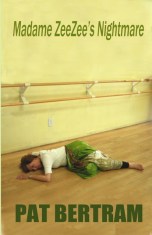
I got a great compliment the other day. A friend I’d named “Jackie” for Madame ZeeZee’s Nightmare (I gave all my classmates aliases to protect the innocent and not so innocent) texted me with the message: My cousin phoned me and called me Jackie when I answered. She had read the whole book, loved it, and said that you really had me perfect. So — in my world, you are a big success.

Such great words to hear! I wanted to show older women living with verve and nerve, and I tried to make the characters sound as close to their real life personas as possible, and it nice to know I succeeded.

I don’t know if you can tell much about Jackie from the following excerpt (it seems to be about me more than her), but this is a fun snippet (and from what I remember, the conversation in real life happened exactly as written here:

Class had started during my musings, and I’d automatically followed along with what my classmates were doing until I heard Madame ZeeZee’s sharp, “Point your toes!”

I knew she meant me, and I sighed. I don’t know what I’d hoped for by taking ballet—maybe grace or strength. Even if I were young and slim, I could never become a ballerina. I don’t have a ballet body, or even ballet feet. I have a hard time pointing my toes, and when I stand on the balls of my feet, my heels barely lift off the ground. Luckily, dancing was like writing. I could practice over and over, trying to get it right.

We did chaine turns across the floor, and most of us stumbled as we tried to keep our balance, but Jackie spun like a top, doing a dizzying number of turns. Jackie McDerr looked like a Buster Brown doll with strong cheekbones, bright eyes, and salt and pepper hair cut straight just beneath her ears. She’d taken ballet classes for decades, and I comforted myself with the thought that maybe ten or twenty years hence, I too, could spin across the floor instead of making the few wobbly turns I now managed.

At lunch after class, most of us drooped wearily onto our chairs, but Jackie sat straight and cheery as always. “So, Pat. Have you started to write the book?”

I thought of lying, meeting her perky question with a perky response of my own, but all I managed was the feeble truth. “Nope. Not a word. There’s still so much I haven’t figured out. Everyone needs to have a secret that’s unveiled in the book, but I don’t want to reveal anyone’s real secrets, so I’d have to make something up. And I’m afraid of hurting people with my fictions.”

I imagined a conversation that might result from an untruth:

Husband: Character B is you, right?
Character B: Yes. Isn’t this great?
Husband: And it’s based on your life.
Character B: Yes, but it’s fictionalized.
Husband: So who is this guy you’re having an affair with?
Character B: I am not having an affair.
Husband: You said Character B is you.
Character B: It is. A fictionalized me.
Husband: And Character B is having an affair.
Character B: Yes, in the book I am having an affair.
Husband: So who is he? Do you want a divorce? Is that what you’re saying?
Character B: No. I’m saying I’m character B.
Husband: Do you want to leave or do you want me to leave?

“It’s a big enough responsibility shaping one’s character’s life,” I said, “and to have the real person influence the character. Having the character influence the real person’s life is more responsibility and guilt than I can handle.”

“Maybe it doesn’t have to be a secret, even a made-up secret.” Jackie took a bite of her vegetarian burrito and chewed it slowly. “Maybe you in the book can find out things about us that you in the real world don’t know.”

I took a second to unravel that convoluted sentence. “But how could my character find out things that I don’t know in real life? And what sort of things? They’d have to be relevant to the story.”

“Well,” Jackie said. “Something you don’t know is that I’m a pilot. Maybe that would have some relevancy.”

“Cool!” Rhett shot a fist in the air. “You can fly me to the Philippines to kill my husband, and no one will know I went there.”

Jackie looked from me to Rhett and back to me as if she couldn’t decide if Rhett were being facetious. I shrugged, unable to guess how far Rhett would go to get her way. Nor did I know how far her frankly-my-dear attitude carried her. Did she really not give a damn, or was the attitude merely a conceit she’d adopted because of her name? Maybe it worked the other way—the attitude came first, and then the name.

The whole murder project suddenly seemed impossible. I thought I knew these women I danced with, but I didn’t know them at all. I didn’t even know if the names I knew them by were their real names or nicknames. Or aliases.

What secrets were they hiding behind their innocuous names?

***

Madame ZeeZee’s Nightmare is the perfect gift for for those who love fun, dance, murder, mystery, older women living with all the verve and nerve of the young, and me! (The main character is named Pat. Coincidence? Perhaps not.)

Click here to read the first chapter of Madame ZeeZee’s Nightmare

Click here to buy Madame ZeeZee’s Nightmare

***
Pat Bertram is the author of the suspense novels UnfinishedMadame ZeeZee’s Nightmare, Light BringerMore Deaths Than OneA Spark of Heavenly Fireand Daughter Am IBertram is also the author of Grief: The Great Yearning, “an exquisite book, wrenching to read, and at the same time full of profound truths.” Connect with Pat on Google+. Like Pat on Facebook.

Puzzling Through the Impossible Dream

I had lunch with a friend today, and she mentioned wanting to walk the Pacific Coast Trail, which was one of the trails I’d researched during my original research for an epic hike. She said the problem is that the trail is still two decades away from being completed, and by then she’d be too old to have any interest in doing it. Since that was also my reaction to the trail, we talked about how to do the trail anyway, such as taking the Greyhound around unfinished places or possibly Ubering.

One big problem of an epic adventure, assuming of course that the other problems such as being able to carry a pack, go the distance, and various other minor matters, is the necessity of hitchhiking to town to replenish supplies and returning to your starting point when you finish the hike, which is not something I would ever do. But Ubering into town? Along the coast? It might be doable, especially on the more populous parts of the trail where there is no camping.

Unlike the Pacific Crest Trail, which is a continuous trail through the three coastal states, there is no real Pacific Coast Trail. There is a California Coastal Trail, which connects various walkways, boardwalks, multiuse trails, and roads all along the coastline (well, except for the places where there is no place to walk) and there is the Oregon Coastal Trail, which as I understand it, is completed. In both cases, tides have to be taken into consideration, because there are many spots that are only traversable during low tide. And the trail is narrow, steep, and rocky in other spots.

I have hiked small parts of both coastal trails (very small) and the beauty is only matched by the difficulty. But still — a wonderful, if impossible dream.

So far, I have not found any map or website for a Washington State Coast Trail for hiking, though there is one for biking. (And you do not want to hear me talk about the problems about walking on cycling trails. Yikes!)

But this gives me something more specific to aim for. Best of all, I don’t have to worry about as many ticks as on other trails (I don’t think I do), and perhaps not as many mosquitoes. Since I am dreaming impossible dreams, starting at the northernmost area and working my way south could be best way of doing it — begin in the summer at the coolest part of the hike, and hike the warmer spots in the fall and winter.

Forgetting for the moment that I lack the necessary physical stamina (which might — might — be offset by frequently Ubering into town for supplies so I don’t have to carry as much), I wonder if I would have the mental stamina to do this. To just throw myself onto the world and see what would happen. (And then, there is the problem of what to do with my car while I’m gone. Unless I park, hike back to where I last parked and then head back to the car? Or walk ahead and Uber back to the car? Or forgot hiking and just drive the coastal road?)

I sometimes (well, all times) think I am foolish for continuing to think of such an epic adventure, and yet, for a person who loves puzzles, this is one of the greatest puzzles I have ever encountered — how to move one sluggish older woman several hundred miles along a trail without destroying her.

***
Pat Bertram is the author of the suspense novels UnfinishedMadame ZeeZee’s Nightmare, Light BringerMore Deaths Than OneA Spark of Heavenly Fireand Daughter Am IBertram is also the author of Grief: The Great Yearning, “an exquisite book, wrenching to read, and at the same time full of profound truths.” Connect with Pat on Google+. Like Pat on Facebook.

Books for Book Lovers

When you are making out your Christmas lists, here are some books for you to consider for your bookish friends, and for yourself too, of course, if you haven’t already read these books.

Madame ZeeZee’s Nightmare for those who love fun, dance, murder, mystery, older women who live with all the verve and nerve of the young, and me! (The main character is named Pat.)

Click here to read the first chapter of Madame ZeeZee’s Nightmare

Click here to buy Madame ZeeZee’s Nightmare

Daughter Am I for those who love road trips, treasure hunts, buried family secrets, mysteries, gangsters, young women coming of age and old folks who refuse to admit their age.

Click here to read the first chapter of Daughter Am I

Click here to buy Daughter Am I

Light Bringer for those who love precocious babies, aliens, conspiracy theories, secret underground laboratories, lost identities, and manipulative international corporations.

Click here to read the first chapter of Light Bringer

Click here to buy Light Bringer

A Spark of Heavenly Fire for those who love conspiracies with a medical twist and for those who wonder what it would be like if the world were to go through another pandemic.

Click here to read the first chapter of A Spark of Heavenly Fire

Click here to buy A Spark of Heavenly Fire

More Deaths Than One for those who like conspiracy theories, mind control experiments, the Vietnam era and its aftermath, and a bit of otherworldly strange midst the horror.

Click here to read the first chapter of More Deaths Than One

Click here to buy More Deaths Than One

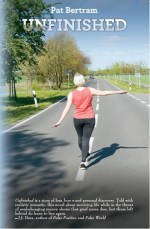
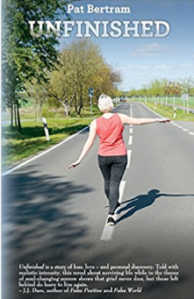
Unfinished for those who love drama, buried secrets, stories that tell the truth about grief, and women who find themselves when they find themselves alone.

Click here to read the first chapter of Unfinished

Click here to buy Unfinished

Grief: The Great Yearning for those who need the comfort of knowing they are not alone in their sorrow and those want to or need to learn more about the mystery of grief.

Click here to read the first chapter of Grief: The Great Yearning

Click here to buy Grief: The Great Yearning

***
Pat Bertram is the author of the suspense novels UnfinishedMadame ZeeZee’s Nightmare, Light BringerMore Deaths Than OneA Spark of Heavenly Fireand Daughter Am IBertram is also the author of Grief: The Great Yearning, “an exquisite book, wrenching to read, and at the same time full of profound truths.” Connect with Pat on Google+. Like Pat on Facebook.

Grief as a Subversive Act

From the beginning of my grief, people urged me to move on, to drop the mantle of grief, to look to the future rather than the past (without their realizing that grief is about the future as much as or even more than the past), but I went my own way. The power of my grief shocked me, and I couldn’t help writing and blogging about it in an effort to understand what was going on with me. (Most novels I’ve read did not touch on the truth of grief, and when they did, the grieving character was portrayed as unstable or half crazy, and I knew I wasn’t crazy. Which is why I wrote Unfinished — I wanted to show a character dealing with grief and all that goes along with it.)

Despite my being long past the wilds of grief, I still occasionally blog about that awful and awe-full state, though sometimes I am a bit embarrassed to do so — I don’t want people to think I am grief mongering for the sake of collecting sympathy. And I especially don’t want people to think that I am still crying myself to sleep at night, because I am not.

I simply don’t want grief to go unrecognized for what it is. Our society has a tendency to cover wild emotions with platitudes and false cheer, and I believe it is important to tell the truth (my truth). I certainly don’t want to participate in the great cover-up, hiding grief from the non-bereft to keep them from being uncomfortable at having to face unpalatable truths.

Death is more a part of life than we acknowledge. Grief is possibly more important than even we grievers can know.

Stephen Jenkinson, a Harvard-trained theologian and the subject of the documentary Griefwalker wrote:

Here’s the revolution: What if grief is a skill, in the same way that love is a skill, something that must be learned and cultivated and taught? What if grief is the natural order of things, a way of loving life anyway? Grief and the love of life are twins, natural human skills that can be learned first by being on the receiving end and feeling worthy of them, later by practicing them when you run short of understanding. In a time like ours, grieving is a subversive act.

Grief is more than that a skill or an emotion, of course. The problem with grief is that it is so physical — affecting hormones, brain chemistry, equilibrium, sleep and eating patterns, and so much more — that it is almost impossible to prepare for it or to even get a handle on it. (Adding in the emotional, spiritual, and mental aspects along with the incredible stress of it all makes grief unbelievably complicated, especially when it comes to the death of a soul mate or a child.)

Still, Jenkinson makes a good point about the necessity of grief. And being the quietly rebellious person that I am, I especially like thinking that by writing about grief, I am not grief or fear mongering, but am participating in a subversive act.

***

See also: What Do You Say to Someone Who is Grieving at Christmas? And if by chance you know someone who is grieving, either of my books about grief — Grief: The Great Yearning or the novel Unfinished would make a nice gift.

***
Pat Bertram is the author of the suspense novels UnfinishedMadame ZeeZee’s Nightmare, Light BringerMore Deaths Than OneA Spark of Heavenly Fireand Daughter Am IBertram is also the author of Grief: The Great Yearning, “an exquisite book, wrenching to read, and at the same time full of profound truths.” Connect with Pat on Google+. Like Pat on Facebook.

Validating Grief

I’ve been corresponding with a fan of my book Grief: The Great Yearning who is dealing with the loss of a life mate/soul mate.

In my last response to an email from this griever I wrote:

I understand. I really do. I remember thinking I’d never make it through . . . well, any of it. His death. Clearing out our home. Going to stay with my father. Jeff’s birthday, then all the holidays. (I was lucky, if there is such a thing when it comes to grief, but I didn’t have to deal with the holidays for several months. You’re getting everything all at once.) The couplehoodness (for lack of a better word) of our society about did me in. Everywhere I went were couples. Couples walking. Couples eating. Couples doing things together. And there I was. Alone. It seemed such an affront. As if grief itself wasn’t enough to bear.

It truly is hard, especially since for every step towards some sort of light (or lightness of being) you fall back two, three, ten steps. There is no other thing you can do when faced with the Sisyphean task of grief but to pause to cry or scream, and then to take a deep breath and keep on going. It takes years longer than you can ever imagine, but eventually, I promise, it does get better. You just have to keep going one minute at a time. There is no way to handle more than that.

After I sent the email, I felt a bit guilty because there was no real comfort, nothing to hang on to, just the bitter truth that grief is hard and lasts a long time. To my surprise, the response I got in return for this harsh email was a warm message telling me how much my words help.

On reflection, it makes sense that those stark words describing the bleak reality of grief would be a help. I think what grievers most want from others is acknowledgement of their pain, maybe even validation of their grief. Oddly, even though everyone dies, not everyone goes through profound grief. (The math explains it — when one of a couple dies, only one is left to experience the grief.) And when you lose a partner at a relatively young age, there aren’t many people around who understand.

At the beginning of my grief, I was offered plenty of platitudes, a lot of blank stares, even some wary looks, as if a mournful woman was a bizarrely alien creature. The most helpful comments were from people who had gone through the same thing, people who told me that even ten years later, they still missed their partner. The least helpful comment came from people who said that grief took as long as it took, which contains an underlying feeling of exaggerated patience or that something is wrong with you if you don’t “get over” grief as quickly as others. (Sort of like telling the unathletic kid to take as long as she needs in order to run around the track even though all the athletic kids finished ages ago.) The most bewildering and least welcome comments were from people who told me they wished they could take away my pain. I didn’t want my pain taken away. It was the only thing connecting me to him, and besides, the pain wasn’t the problem. The problem was that he was dead, and no one could fix that.

If you’re one of the bereft, you know what I’m talking about. If you’ve never experienced the death of a life mate/soul mate, a child, or any other profound loss, I hope you will listen when people tell you of their grief, even if you don’t understand. Don’t try to mitigate their pain with words that make you feel better but don’t address their reality at all.

But then, what do I know. The world has managed to struggle along without advice from me for billions of years. Just know that if you are experiencing any sort of grief, profound or not, I understand.

***

See also: What Do You Say to Someone Who is Grieving at Christmas? And if by chance you know someone who is grieving, either of my books about grief — Grief: The Great Yearning or the novel Unfinished would make a nice gift.

***
Pat Bertram is the author of the suspense novels UnfinishedMadame ZeeZee’s Nightmare, Light BringerMore Deaths Than OneA Spark of Heavenly Fireand Daughter Am IBertram is also the author of Grief: The Great Yearning, “an exquisite book, wrenching to read, and at the same time full of profound truths.” Connect with Pat on Google+. Like Pat on Facebook.