When Life and Writing Overlap

Many writers claim they feel compelled to write. I am not one of them. I either write or don’t write depending on whether there is anything “real” going on in my life or not. Most of the time, real life is going on, so I feel no need to write. (Except for blogging, of course. I do that every day no matter what.)

There is one thing that does compel me to write fiction and that is when a story gets in my head and writing it is the only way to clear it out of my mind.

I’ve been planning to write a story about my exercise group, and I can’t write it until I’ve finished another, non-writerly project. (I am so not a multi-tasker!) Meantime, the story goes round and round in my head as I try to figure out the logistics of the plot. For example, I thought I knew who the murderer is, but he turns out to be a secondary gunman, someone who will writingbe caught up in the police investigation. I did figure out what the victim was doing at the studio, how she got inside, when she was killed, and why she was wearing what she was wearing. The murderer is still up for grabs.

Besides trying to figure out the story, I’ve been researching what will happen to those of us who find the body. Will the cops simply take names and contact information? Will they keep us near the scene? Take us down to the police station? It’s amazing how many mysteries are from the POV of cops or the cozy little old (and sometimes cozy young) woman who is playing amateur detective. Little is written about the moment-to-moment demands on the would-be witnesses. In movies, TV shows, books, you see the witnesses, bystanders, body watchers/catchers/snatchers or whoever already talking to the cops. How did they get to that point?

I know it’s time to write the story to get it out of my head when strange thoughts start ricocheting around in my brain, thoughts like, “I don’t have to do the research to find out what will happen to us witnesses. When the cops come to the studio after the murder, I’ll be able to see first hand what they do to us.”

Yesterday I even heard myself thinking, “I better clean the house. If the cops come here, I don’t want them to know how messy I am.”

I’m sure some of these thoughts are showing up because real life will overlap fiction. The women in my dance class are all part of the story and I . . . well, I am the narrator, a suspect, possibly the amateur detective. (Someone even suggested I should be the killer. It’s a clever twist, but Agatha Christie already used the ploy in The Murder of Roger Akroyd and besides, it felt like a betrayal when she did it, and I don’t like cheating my readers.)

Whatever the reason for the stange thoughts, I’ll be glad when it’s time to start putting the story on paper and out of my head. It’s getting just a bit confusing.

***

Pat Bertram is the author of the suspense novels Light Bringer, More Deaths Than One, A Spark of Heavenly Fire, and Daughter Am I. Bertram is also the author of Grief: The Great Yearning, “an exquisite book, wrenching to read, and at the same time full of profound truths.” Connect with Pat on Google+. Like Pat on Facebook.


A Tale of Two Insects

I watched an old CSI show the other day where Grissom told a story about a guy who found a spider swimming in his toilet. For a couple of mornings the guy watched the spider struggling to survive the maelstrom of flushing. One morning, the guy decided to rescue the spider. He took it out of the water and set it on the floor. The next day, he found thspidere spider dead. “Why,” Grissom asked, “did the spider die? Because one life impinged on another.”

In my case, it’s ants I find, and my tale is about ants in the microwave. At this time of year, ants are an epidemic, so it’s difficult to keep on top of the infestation. (I’m telling you this so you don’t think the microwave is filthy. It isn’t.) I don’t like killing anything, not even insects, but if you don’t keep on top of the little critters, they go home and tell all their friends about a great party house they found, and the next thing you know, you have ants boogieing all over the place, even on your body when you sleep. Not a pleasant way to be awakened, that creepy-crawly sensation. (Cinnamon sprinkled in corners, by doors, and under windows usually keeps ants away, but a few manage to find other ways into the house.)

The same day I watched CSI, I opened the microwave door after heating some food and found a couple of Pharoah ants scurrying around inside. (Pharoah ants are more commonly known as sugar ants because they are attracted to sweets and greasy foods. Sounds like most of us, doesn’t it?)

Obviously, the ants were inside when I started the oven, so they should have been nuked, but they weren’t.

A bit of research explained why they survived. Microwave ovens don’t heat evenly, so ants can hide in the cool corners. Ants have a relatively small amount of water inside their bodies compared to their outside surface, and apparently it’s the water that heats up in a microwave. This large body surface compared to their volume helps cool them down, so if they make a mistake and end up in a hot spot, their heat dissipates quickly.

So here we have a tale of two insects, one whose life was impinged on by another, and one whose life remained unimpinged.

The moral is . . . I don’t know. Perhaps that we have to live our lives the best way we know how, and if we impinge on other lives, so be it. It could even be that impinging is what life is all about.

***

Pat Bertram is the author of the suspense novels Light Bringer, More Deaths Than One, A Spark of Heavenly Fire, and Daughter Am I. Bertram is also the author of Grief: The Great Yearning, “an exquisite book, wrenching to read, and at the same time full of profound truths.” Connect with Pat on Google+. Like Pat on Facebook.
Finding Something to Blog About Every Single Day

Today I celebrate my 1010th consecutive blog post. (I’ve published a total 1,629 posts, but the first 519 were before I started daily blogging.)

When a friend expressed amazement that I’m able to blog so much, I explained that it’s easier to blog if you write every day or at least on a regularly scheduled basis rather than doing it whenever you find something to say. If you blog sporadically, you feel as if your articles need to be important, so you don’t write. If you blog regularly, you relate a significant detail of your day, make your articles important by relating them to you, or find the youseetimmy in your topic.

(In the movie Speechless, Michael Keeton tells rival speechwriter Geena Davis that her speeches lack a youseetimmy. He explained that at the end of every episode of Lassie, Timmy’s father sat him down and explained the lesson of the tale, “You see, Timmy . . .)

Somedays, onumbersf course, it’s hard for me to find a topic — no event of the day and no thought frittering around in my head seems worth focusing on, so I just write something, anything in the hopes of stumbling upon an interesting idea. I fail often, of course, in the interest department, but sometimes what I think is uninteresting captures the attention of the Google gods and I get a lot of views. Since apparently I have no idea what others will find appealing, by blogging every day, I increase my chances of saying something profound or maybe even popular.

Although blog experts stress the necessity for sticking to a single focus for a blog, I’ve not been able to do that since my foci have changed over the years. At first I wrote about finding a publisher, then I wrote about finding readers. For a while I wrote about writing but I quickly gave that up when I realized how pathetic it was for a neophyte author to be giving tips on how to write. Too many writers who haven’t a clue what they are doing tend to parcel out advice as if they were dealing out doughnuts. For example, one self-published author explained how to write a grieving character, and proceeded to show the character going through all the so-called stages of grief in one brief bit of dialogue. Not only was this person dispensing erroneous information about writing, the person was also dispensing erroneous information about grief. Eek. I’m not a neophyte author any more, but still, the idea of publishing writing tips seems pathetic. The only people who would be interested in such posts are other writers, and they are busy publishing their own writing tips.

Finally, I started writing about me — my grief, my life, my dreams, my plans, my activities — so now the focus of this blog is me. You don’t get a narrower focus than that! I mean, out of the 7,237,175,306 people in the world as of today, there is only one of me.

On the days when I have nothing to say or no inclination to say what I do have to say, discipline keeps me going. I’ve been blogging every day without fail for almost three years — 1010 days to be exact. Not to blog would be a significant disruption of the pattern of my days, and hence would give me something to blog about. Ironic, that.

Still, there will come a time when I forget to blog because my mind is elsewhere or a time when I cannot blog because my body is elsewhere.

Until then, here I am — finding something to blog about every single day.

***

Pat Bertram is the author of the suspense novels Light Bringer, More Deaths Than One, A Spark of Heavenly Fire, and Daughter Am I. Bertram is also the author of Grief: The Great Yearning, “an exquisite book, wrenching to read, and at the same time full of profound truths.” Connect with Pat on Google+. Like Pat on Facebook.

Walking and Volkswalking

No wonder I do so much alone. I don’t understand the point of many group activities that people seem to enjoy.

Someone suggested I look into volkswalking since I walk a lot, but it doesn’t really appeal to me. It seems to be organized walking in groups, and I get that with the three-nights-a-week conditioning walk with the Sierra Club and an occasional hike with one of the hiking groups in the area. Volkswalking also supposed to be non-competitive walking, but anyone who completes a walk or a certain amount of mileage gets a badge or a stamp in a book (which they pay for themselves) to show masseswhat they accomplished. To me, anytime you give people “achievement awards” for completing something, it’s competitive, even if there isn’t one so-called “winner.” Why else do you need a badge? You know you did it — a badge can’t give you that. Only you can.

The premiere purported purpose of the various volkswalking clubs is to promote regular physical fitness for overall good health. So if you’re already walking, half of what they have to offer is negated. I suppose if I were in a new area and wanted to meet people, I’d go on one of the walks, but otherwise, if I were interested in the area, I’d just . . . walk.

That’s always been the benefit of walking — if you have two working feet and legs or reasonable facsimiles, that’s all you need. You just put one foot in front of the other, and you’re walking. What can be simpler?

Still, over 400,000 people take part in American volkswalking activities every year, so the bewilderment over the phenomenon is obviously mine alone.

So, if you’re interested in walking and need more incentive than simply going outside and putting one foot in front of the other for as long as you want (or can), then perhaps volkswalking is for you.

***

Pat Bertram is the author of the suspense novels Light Bringer, More Deaths Than One, A Spark of Heavenly Fire, and Daughter Am I. Bertram is also the author of Grief: The Great Yearning, “an exquisite book, wrenching to read, and at the same time full of profound truths.” Connect with Pat on Google+. Like Pat on Facebook.
When Water isn’t Water

I got a bottle of flavored water at the store the other day. At least, that’s what I thought I was buying. I’d occasionally pick up a simple sparkling mineral water with lime and cherry oils added, which I found to be a delightfully refreshing drink that offered the same bite as sodas without the junk ingredients, and I’d indulge myself from time to time.

This time, however, I didn’t notice a change in the label until I got it home. Instead of simply calling it “Sparking Mineral Water” they called it “Sparkling Water Beverage.” When I saw the word “beverage” alarms went off in my head. “Beverage” added to water is like “drink” added to juice. It means it’s not what it says it is. (A juice drink generally is short on juice and waterlong on sugar and artificial flavors.)

The “beverage” turned out to have many different ingredients other than plain old water: carbonated water, citric acid, natural flavor, potassium citrate, aspartame, potassium benzoate, and acesulfame potassium.

If this particular beverage is water, then so is Coca Cola. The ingredients in Coke Zero are carbonated water, caramel color, phosphoric acid, aspartame, potassium benzoate, natural flavors, potassium citrate, potassium benzoate, and acesulfame potassium and caffeine.

The main difference between Coke Zero and “my” Sparkling Water Beverage seems to be the coloring and caffeine. Otherwise, they are basically the same sort of product.

I would never have bought the “water” if I had paid attention to the ingredients since I stay away from aspartame and rarely drink sodas.

I guess this will teach me to read all labels, especially the labels for something as innocuous as water.

***

Pat Bertram is the author of the suspense novels Light Bringer, More Deaths Than One, A Spark of Heavenly Fire, and Daughter Am I. Bertram is also the author of Grief: The Great Yearning, “an exquisite book, wrenching to read, and at the same time full of profound truths.” Connect with Pat on Google+. Like Pat on Facebook.

Interviews with the Police: Who Gets to Lie

I’m still researching what happens after a person or group of persons finds a dead body. A couple of people I know are asking friends and relatives who are in law enforcement what would happen, so I’m hoping I get some good information from them. Meantime, I’ve been researching actual instances of someone finding a body, and the questioning seems to range from nothing more than the cops taking name, age, occupation, and address of each person to five hours of interrogation. That’s a wide spread. It didn’t seem to make any difference if the finder knew the deceased or not — sometimes the stranger was interviewed longer than the relative.

Also, I’ve been researching interviewing techniques, which range from “I’m your best buddy; tell me all” to what amounts to terrorist tactics. (Though such tactics are not at all endorsed by the law, they do exist especially when it comes to interrogating afternoon tea“hardened criminals.”) In the case of my book, I would think the buddy interview with a woman detective would work best since it plays against the stereotypes of both the horrifying interrogation and the woman cop who out-machos the men. (I know just the woman to play the cop, too — a beautiful and very helpful bank employee who was thrilled to let me use her unique name. She was also excited to become a detective, even if just literarily. When I was making changes to an account at the bank, I ended up telling her way more than I intended. I imagine it would be the same if she were a cop.)

It seems as if someone who finds a body can be a bystander, witness, material witness, person of interest, or suspect, so it’s possible that any way I write the interview scene would be okay, but I still need to get the opinion of those who worked such cases. For one thing, it will be more authentic, and for another, the more information I get, the less I have to use my imagination, and that’s the hard part of writing for me. (Well, one of the hard parts. Sitting down and actually writing is the hardest part. I figure if I tell enough people about the book, I’ll shame myself into it so I don’t have to keep offering excuses why the story isn’t being written.)

I did find this article, which should be helpful: 47 Quick Tips for Better Investigation Interviews.

And I found out something very interesting. Russell L Bintliff, in Police Procedural: A Writer’s Guide to the Police and How They Work, says, “A suspect, even when waiving his/her rights and consenting to an interrogation or interview has no obligation under the Fifth amendment to tell the truth if it incriminates him/her. A witness, for example, may be guilty of a crime for lying or giving false information; however, a suspect can legally lie, give deceptive information, or sign false confessions or proclamations of innocence and he/she cannot be charged with a crime for doing these things.”

So I guess, before you lie to the police, find out if you’re a witness or a suspect. And yet, it seems that a witness who lies would soon become a suspect, so then the lies would be okay. (What’s the difference between a witness and a suspect? The Miranda warning? And yet sometimes the cops don’t Mirandize the suspect right away, so that makes the difference all in the cop’s head.)

Making the lie situation even weirder, cops are allowed to lie to obtain evidence. They can lie and tell you you’re free to go when you’re not. They can lie to extract a confession. They can fabricate evidence. The only place they cannot lie is in court. Cops always say that if you’re innocent you have nothing to fear, but it seems to me that if you’re innocent, you have everything to fear because it makes you vulnerable.

When it comes to lying, then, the only person who can be prosecuted for their untruth is a witness. No wonder witnesses lie. They have too much to protect.

I’ll have to see how I can work this information into my book. Could make an interesting twist somewhere along the line.

***

Pat Bertram is the author of the suspense novels Light Bringer, More Deaths Than One, A Spark of Heavenly Fire, and Daughter Am I. Bertram is also the author of Grief: The Great Yearning, “an exquisite book, wrenching to read, and at the same time full of profound truths.” Connect with Pat on Google+. Like Pat on Facebook.

What Happens When You Find a Dead Body?

My dance class suggested I write a book about them. One woman even volunteered to be the victim, though I can’t imagine why anyone would want to kill her. She is lovely, charming, and utterly delightful. Yesterday we discussed what we would do after we found her body on the dance and before the cops showed up, and we decided we’d have dance class anyway. Why not? It was a mostly empty dance floor (except for the body, of course), we’d be dressed for the occasion, and our minds would not yet have processed the information that our classmate was truly gone. The will-be victim’s comment? “I am truly hurt that you would not mourn me.” In real life, of course, we’d mourn her, but a — hopefully — humorous book about aging women dancing despite the deaths they have had to deal with (not their own death, obviously) should be more about dancing than death.

I can never start writing a novel until I have the beginning of the story, and the end, which I do have. I begin with our plans to write the book about the murder, then segue into the “real” murder. I end with our dancing the perpetrator to death. (Well, it is a dance class, after all. Dance should have a significant part in the story.) I even know who the perpetrator is, and I think I know why he killed Ms. Delightful. (He thought she was Ms. Teacher.)

Most of all, I have everyone’s permission to use them in the story. A couple of the women were wary, some were looking forward to what I’d say about them, and most lit up with excitement at the thought of being in a book.

Now comes the hard part. (Well, the second hardest part. The hardest part will be actually sitting down and putting words on paper.) What happens after we discover the body? Who comes to the scene? What do they do with us? How/where do they take our statements if in fact they do take our statements? How/where do they take our fingerprints?

Most of what I know about crime scene handling comes from movies and TV shows, so most of what I know is probably wrong. And anyway, such information is from the point of the cops, and in the book, I won’t be a cop. I’m only one of a half-dozen women who discover the body. So where am I when the cops, the criminalists, the DA, and everyone else are there? Have they taken preliminary reports — perhaps names, addresses, relation to the deceased — and sent us home? If so, when do they take our statements? Do they call us to come in to the police station?

I found information about the review process here: Criminal Defense Witness Interviews & Statements, which answers many of my questions about the interview process but not actually the beginnings of the process.

Some of those questions are answered here: Investigating the Crime Scene. According to this article, the first cops on the scene are supposed to preserve the crime scene, isolate witnesses, take “names, addresses, dates of birth, and telephone numbers, etc.” (Etc? what the heck does that encompass? It’s those etcs I need to know.) According to this article, the patrol supervisor will interview witnesses. The detective will interview witnesses again and arrange transport for witnesses to be sent to headquarters and will take written statements. Another article about searching and examining a major crime scene contains no mention of anyone but various law enforcement folk.

So, are those who find the body considered witnesses? I guess. Oddly, there doesn’t seem to be much online about what happens to those who find a dead body, except for articles about how doing so can mess you up for life. But those people obviously weren’t taking dance classes. Dancing can unmess you up.

I’ve been trying to find out how those who find a body are dealt with by the police, but most answers to that question involve describing what the police do. In my proposed book, I’m not a cop. I’m me. What do I do? Or more to the point, what will they do to me? (I did come across this humorous (at least, I hope it’s supposed to be humorous and not someone’s experience of what actually happened) article about what to do if you find a dead body. Another article I came across is HowTo:Commit the Perfect Murder. Oh, my.

Nor can I find out how long before the crime scene will be released. We want to dance! How can we dance if the studio is barred from us? It also will need to be a quiet little murder, not much smell or gore, because . . . well, that would put a damper on dancing.

Hmm. Maybe I need to think about this a bit more.

***

Pat Bertram is the author of the suspense novels Light Bringer, More Deaths Than One, A Spark of Heavenly Fire, and Daughter Am I. Bertram is also the author of Grief: The Great Yearning, “an exquisite book, wrenching to read, and at the same time full of profound truths.” Connect with Pat on Google+. Like Pat on Facebook.

Today’s Weather

fire

Need I say more? Well, maybe I do. We’re also dealing with 25-mile-an-hour winds that do nothing to cool the scorch. Ouch.

I hope you’re having a cool, calm day.

***

Pat Bertram is the author of the suspense novels Light Bringer, More Deaths Than One, A Spark of Heavenly Fire, and Daughter Am I. Bertram is also the author of Grief: The Great Yearning, “an exquisite book, wrenching to read, and at the same time full of profound truths.” Connect with Pat on Google+. Like Pat on Facebook.

Load Bearing and the Human Body

I know nothing about the mechanics of load bearing or proper ergonomic balance. I don’t even know what ergonomics is. Never really cared. But such topics have been showing up in my research into the best way of carrying loads long distances using only the human body.

I’m considering taking an epic walk, perhaps up the Pacific coast, and I’ve been trying to think outside the envelope, box, and backpack. An envelope, of course, could not contain all I would need to carry; though I do intend to travel light, that is too campinglight even for me. A box would be too awkward. And a backpack — well, for those of us not used to carrying loads on our backs, a back pack can contribute to back and neck problems, gait issues, muscular pain, foot problems, bad posture, and wasted energy.

In my case, even light loads in a backpack are a problem. I recently lost a few pounds, so I figured my body would be able to handle a five-pound backpack load with no difficulty, but that wasn’t the case. After a mere three miles, I ended up with pain on the tops of my feet and in my lower back. Someone suggested that I get orthotics, but why would I need them when I’d been used to carrying more weight without even a hint of discomfort?

I have a short back, and according to Aarne Packs, “With a backpack, the center of gravity of the load is behind the body. The load acts like a lever on your back, increasing the forces acting on the body well above the force of the weight alone. When this lever acts over a shorter distance on a small torso, the forces are magnified. Therefore the reason women with short torsos may not be able to carry such heavy loads is not because they are weaker but because of these increased forces.”

When you carry extra body weight (as opposed to carrying some kind of pack), the weight is distributed all through the body, so no single muscle group or tissue has to deal with the load, which cuts down energy expenditure as well as muscle fatigue, and there is no change in the center of gravity. Ideally, then, an external load-bearing system would need to take those matters into consideration.

Traditionally, humans have used various means of transporting loads on their bodies: a simple hobo pack with a bandanna tied on the end of a stick, a pole balanced on the shoulders with a basket hanging from each end, a trumpline around the head tied to the load hanging down the back (supposedly this allows a person to carry greater loads longer distances than shoulder straps, but . . . ouch; my neck is squealing in pain just thinking about it), and the ever popular balancing the load on top of the head.

Balancing loads on the head, if done right, is supposed to be the best way since there is zero increase in metabolism. It has to do with one’s gait. According to Biomechanics of Locomotion, when we walk, our bodies go “up and down, and faster and slower, within each step. The energy changes associated with these fluctuations in height and speed are out of phase and therefore tend to cancel each other, minimizing the energy required to keep the movements going, much like in a pendulum. But in walking the energy fluctuations are not completely cancelled (as would occur in a perfect pendulum); at most about 65% of the energy fluctuations are cancelled, leaving at least 35% of the energy fluctuations which must be supported by the muscles each step, requiring metabolic energy input. When the African women carry loads on their heads, they are able to increase the amount of energy that is cancelled, reducing the muscular energy required to maintain the walking gait and compensating for any increase in muscular energy required to support the additional load.”

Carrying loads on one’s head might be fine for those who are used to it or even for those trying to improve their posture, but I cannot see me balancing anything on my head (except perhaps a hat) for hundreds, maybe thousands of miles.

I’ve been considering making two shoulder tote bags, one for each side, thinking that might help balance the weight in a more natural way, or perhaps a combination of a light backpack, belly bag, and maybe side bags. Apparently, these are good ideas. In fact, I don’t even have to make these load-bearing packs. Someone already did. One company I found makes a pack with the load balanced on either side of the body, and another company makes a pack with front pockets to balance the weight of the backpack, though the pack itself is much heavier than I would like.

It’s amazing to me all the things one has to consider when going for a simple (well, perhaps not so simple) walk, especially if one doesn’t want to look like the survivor of a wilderness romp.

***

Pat Bertram is the author of the suspense novels Light Bringer, More Deaths Than One, A Spark of Heavenly Fire, and Daughter Am I. Bertram is also the author of Grief: The Great Yearning, “an exquisite book, wrenching to read, and at the same time full of profound truths.” Connect with Pat on Google+. Like Pat on Facebook.

The World of Writing as I Know It

Debra Purdy Kong is an established mystery writer with two published series: The Casey Holland mysteries and the Alex Bellamy mysteries. She has her own blog, and she’s also a co-contributor on The Write Type blog, posting marvelous articles about the state of the publishing industry, such as How Social Media Helps, and Hurts, Are Conferences Losing Attendees? and Interesting Info on the State of Publishing.

When Debra asked me to take part in a blog tour that focuses on the writing process, I jumped at the chance if for no other reason than to introduce this fascinating woman. The arrangement is that I answer four questions about writing, then choose three other writers who will do the same. So I choose . . . you and you and you! All you have to do is answer the following questions on your blog and add a link back to me.

#1) What Am I Currently Working on?

Right now, I’m still concentrating on posting a blog a day, and I’m working on a non-writing project. That project should be finished in about three weeks, and then I will begin writing a new novel, something fun and whimsical. It started when my dance class suggested I write a book about them. One woman even volunteered to be the victim, though I can’t imagine why anyone would want to kill her. She is lovely, charming, and utterly delightful. I wasn’t going to write the story since it seemed a good way to lose a lot of friends, but at the lunch the other day, I almost whacked one of my classmates with my dance bag, and she deadpanned, “I’m not the one who volunteered to be the murder victim.” So I decided to write the book. I mean, how could I not use such a perfect line?

#2) How Does My Work Differ From Others of Its Genre?

Light BringerI don’t really write to a genre. Libraries and bookstores used to be set up with a mystery section, a romance section, a science fiction section, and then all the rest of the novels. That’s what mine are — one of “all the rest.” (When I’m forced to name a genre, I say suspense/mystery because my novels fit better in that category than any other.)

The disheartening aspects of not having a genre are more than offset by the joy of having created four unique visions of the world, dozens of characters who would not have life without me, and vivid word pictures that exist only in my books.

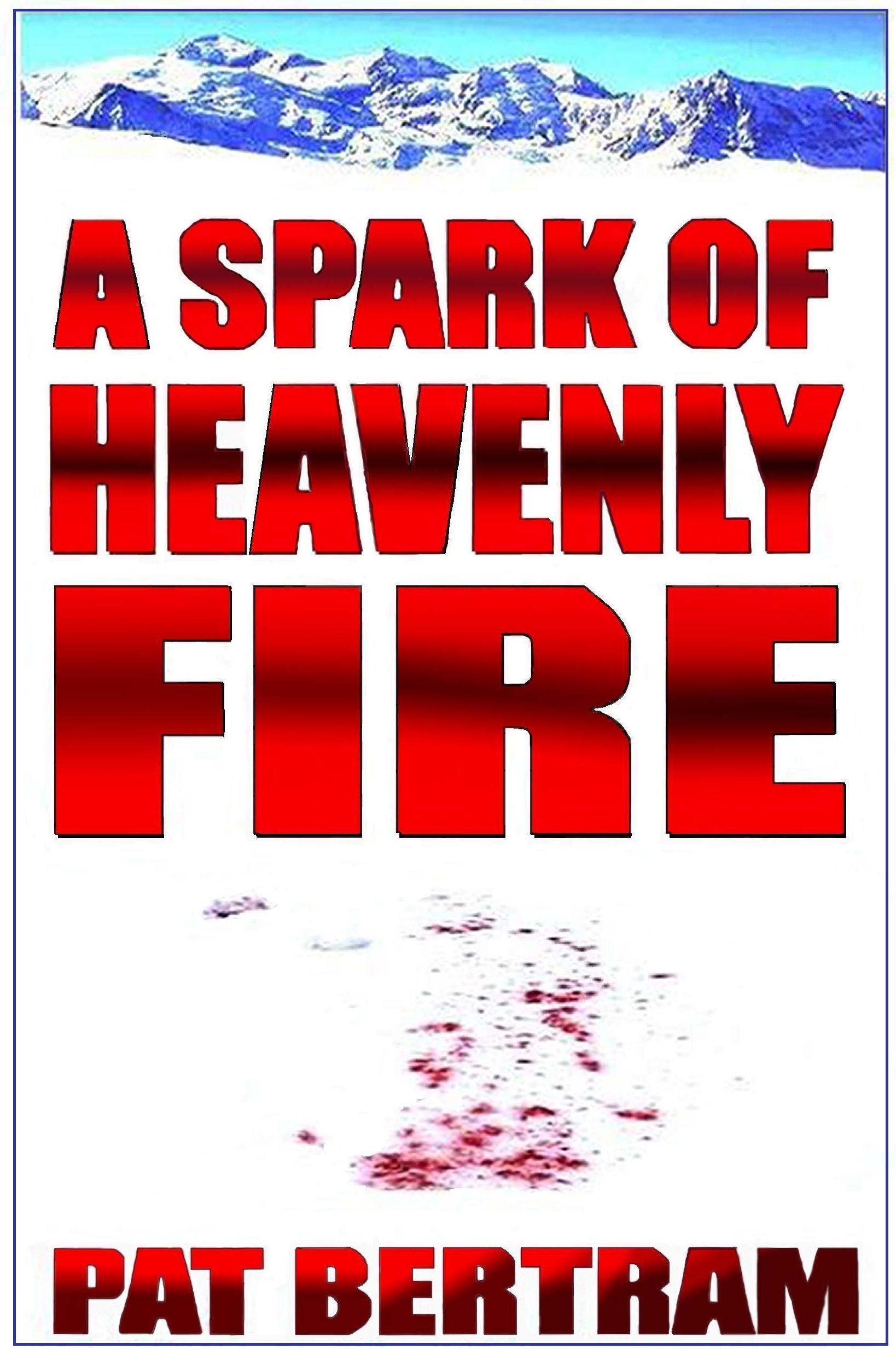
Each of my books shows a particular vision of the world as I know it. A Spark of Heavenly Fire shows the horror of an all-too-possible pandemic, the even more horrific steps the government is ready to take, and the various ways, both heroic and craven, people might react to such an eventuality. More Deaths Than One shows the unthinkable results of mind control experiments, experiments that have actually been perpetrated without our knowledge. Daughter Am I is a more light-hearted romp, a treasure-hunting tale of finding oneself in a most unlikely way. And Light Bringer hints at a world where the Sumerian myth of a tenth planet — a planet of doom — is fact.

#3) Why Do I Write What I Do?

I write what I do because those stories captured my attention and kept it during the long months it takes me to write a novel. I know I’d be better off if I tried to write books that would capture the attention of a large readership, but I can only write what I’m enthusiastic about.

#4) How Does My Writing Process Work?

Seems silly, I know, in this electronic age, but I write fiction in pencil on loose-leaf paper. (I have a better mind/writing connection using pencil and paper than I have with a keyboard; a mechanical pencil is easier on my fingers than pen, and paper is easier on my eyes than a computer screen.)

I don’t know the entire story before I writing, but I do know the beginning, the end, and some of the middle. That way I can have it both ways: planning the book and making room for surprises.

I need to know a bit about the hero, but most of the time I get to know the characters the same way a reader would — by the way the characters act. I also need to write the story in the order it happens — it’s more satisfying for my logical mind and easier to keep track of — but if I get to a place where I know something happens without knowing what, I will skip it and go back later when I know what is missing.

So, there you have it. That’s how I write.

What about you? What are you currently working on? How does your work differ from others of its genre? Why do you write what you do? How does your writing process work?

***

Pat Bertram is the author of the suspense novels Light Bringer, More Deaths Than One, A Spark of Heavenly Fire, and Daughter Am I. Bertram is also the author of Grief: The Great Yearning, “an exquisite book, wrenching to read, and at the same time full of profound truths.” Connect with Pat on Google+. Like Pat on Facebook.



