The Flaw of Flawed Characters

I cringe every time I see authors brag about their “flawed characters” as if that’s a good thing. Apparently, somewhere along the line, writers were told not to write perfect characters but to give them flaws, and so writers everywhere are assiduously flawing their characters. Well, they are wrong.

There is no such thing as a perfect character. If a character can do everything, meet every challenge the first time, and do it all without damaging a single hair on his/her head, the only thing perfect about that character is that it is perfectly boring, which makes it far from a perfect character. Adding flaws to such a character only compounds the problem, making the character not only boring but trite. Aren’t you sick of the cynical detective struggling with a drinking problem? Or the overextended single mother struggling with the rebellious teenager? Or the lonely person struggling to find love but who is too stupid to see the love disguised as a friend or even enemy? Well, you might not be, but I sure am.

The best characters are not flawed characters, but those facing terrible dilemmas who are forced to work against their strengths. If they have a lot of knowledge, they are most compelling when they need to act without being able to use the knowledge, perhaps using logic, intuition, or snap judgments instead. If they have armed services experience or strong physical skills, they are most interesting when forced to use their minds and wits. If they tend to be serious, they are most fun when forced to rely on their humor, or vice versa. Anything else is just cheap.

One thing most people say about my main characters is that they are real. And guess what? There isn’t a flawed character in the bunch. Not a single character drinks too much (okay, Kid Rags in Daughter Am I might tipple, but he never gets drunk or lets his drinking get in the way of business). Not a single character cheats on his or her spouse. Not a single character is mean. Not a single character makes stupid mistakes. Not a single character is self-absorbed. (Well, Jeremy King, the world-renowned actor in A Spark of Heavenly Fire is focused on himself, but that isn’t a flaw but the personality trait that makes him a great actor.) Not a single character gets into fights just for the sake of proving how flawed they are — all the fights are to protect themselves or others. Every character acts to the best of his or her ability at all times, and if the best isn’t good enough, they get better.

Instead of flaws, my characters have character traits. For example, in Daughter Am I, at first the hero Mary Stuart tends be a bit of a pushover, going with the flow because she simply doesn’t care enough about the outcome of any situation to fight over it. When she makes the decision to find out who her grandparents were and why someone wanted them dead, she becomes almost obsessive in her quest, even going so far as arranging a meeting with a notorious hit man and various other shady characters. And when she finds something to care deeply about — the octogenarians who accompanied her on her journey — she becomes steely in her determination to protect them at all costs. Are these traits indications of flaws? Of course not. They are indications of a true-to-life character grabbing her destiny with both hands and going along for the ride. Flaws would only get in the way.

Ah, the Sacrifices We Make for the Sake of Art!

I am writing a short story to be included in the next Second Wind anthology, which is a combination of holiday short stories and recipes. At the end of my story, the wife decides to stop poisoning her husband because she realizes that even though he is not giving her what she wants, he is giving her what she needs. This change in attitude is shown by her change of cookie recipes, from an unhealthy cookie to a healthy one.

The recipes we use are supposed to be uncopyrighted, which means that to be safe, they have to be old family recipes or something we created. Oh, the pressure!!

Well, today, I finally got down to the dirty job of creating my recipe. I dragged out oatmeal, honey, applesauce, walnuts, raisins, chocolate chips, coconut, and a few spices, mixed it all together, spooned the concoction out on a cookie sheet, stuck it in the oven, and waited.

When I took the cookies out twelve minutes later, I let them cool and then . . . drum roll, please . . . I took a bite.

Ah, the sacrifices we make for the sake of art!

As it turns out, it wasn’t such a sacrifice. I got the recipe right on the first try. The cookies actually taste great and the texture isn’t bad.

Now I have an even harder job — not eating all the cookies at once. Maybe I’ll save a few for you.

(Second Wind is running a short story contest, and the winner will be included in the anthology with me and other Second Wind authors. Please click here to Vote For Your Favorite Story!)

Which is more important, character or plot?

Some people think character is most important, others think plot is the most important, but you really can’t separate the two. Plot is what happens to a character, what a character does, or both. You cannot have a character without a plot. To show who or what a character is, you need to show the character acting, and that is plot. You also cannot have a plot without a character. If an unknown planet is coming toward earth, that might be newsworthy, but it’s not a story until you have characters reacting to the coming planet. How is it going to change their lives? What do they do to prepare for the coming cataclysm? What happens to them as a consequence of their actions? That’s what makes a story.

Here are some responses from others authors about whether character or plot is more important. The comments are taken from interviews posted at Pat Bertram Introduces . . .

From an interview with J. Conrad Guest, author of Backstop and One Hot January

For me, the most essential quality of a good story is characters with whom I can connect. Finding a good story to write is easy; but writing about characters the reader cares about is more difficult. Hannibal Lecter is one of the most demented characters ever conceived, yet he was fascinating, a train wreck away from which we want to look but can’t.

From an interview with Joylene Nowell Butler, Author of “Broken but not Dead”

You need good characters your reader can relate to almost immediately. They talk about plot-driven vs. character-driven stories, but honestly you can’t have one without the other. Readers want to live vicariously through your characters, but first they need to trust you, trust that you’ll take them on a journey they’ll connect to with characters they care about. Even if what you’re asking them to believe takes place on a foreign planet with outrageous settings and descriptions, if you do your job correctly, it won’t matter how strange the setting or how weird-looking the residing peoples are, human nature can transcend all that weirdness and endear any reader quickly and for the duration of the story. Think “Dune”, “Harry Potter”, or “Wizard of Oz”.

So, in your opinion, which is more important, character or plot? (You can respond as a reader or a writer.)

(If you’d like me to interview you, please check out my author questionnaire http://patbertram.wordpress.com/author-questionnaire/ and follow the instruction.)

What, in your opinion, are the essential qualities of a good story?

The most important quality of a good story is the ability to take readers somewhere else and make them glad they went. It’s also essential to make the writing easy to read, which means the writing must be grammatically correct. Nothing takes an experienced reader out of a story faster than having to decipher convoluted sentences with improper punctuation. Ideally, a story should leave readers a bit better off than they were before, either because of what they learned about the world and themselves, or because of the respite from their everyday lives.

Here are some responses from others authors about the essential qualities of a good story. The comments are taken from interviews posted at Pat Bertram Introduces . . .

From an interview with J J Dare, Author of False Positive and False World

The hook is the essential part of a story; with a good hook, the reader won’t want to put a book down. I try to draw the reader in immediately with a one-two punch.

From an interview with Mickey Hoffman, author of School of Lies

I want the main characters to have a “quest.” The quest can be a real journey or one in their heads and if there’s mystery involved all the better.

From an interview with Michael Murphy, author of Scorpion Bay

In my opinion a good story has conflict throughout and characters the reader will care about. I don’t believe the story, what happens to the characters is nearly as important has how these events impact the character’s lives, how they’ve evolved and grown, or in some instances, how they’ve stuck to their principles and are not changed by events in the story. An example of this type of story would be the movie High Noon.

From an interview with John Grover, Author of “Feminine Wiles”

A good story is about style, the style it is written in makes it unique and second is to make the reader care about your characters. Without empathy for your characters readers won’t care what happens to them. Once they care, you can really rev things up. I think it is all in the way you tell the story and how the characters come to life. Write about what you know, add in touches from your life and real people and it will come to life.

So, what, in your opinion, are the essential qualities of a good story?

(If you’d like me to interview you, please check out my author questionnaire http://patbertram.wordpress.com/author-questionnaire/ and follow the instruction.)

Trying to Fill The Void Of His Absence With Remembered Joy

All of a sudden, it seems, there have been changes in my life pertaining to my grief for my life mate/soul mate. For about a week after the Fourth of July, I endured a heavy upsurge in sorrow, but in its wake, I have found a semblance of peace midst the sadness.

Saturday was his birthday, and I started out the day feeling almost upbeat, gladder that he’d spent so many years with me than sadder that he is gone from my life. I’d never sung Happy Birthday to him when he was alive, so I sang to him out in the desert, where no one could hear. (Believe me, you do not want to hear me sing!) I planned to get a cake, too, but sometime that afternoon, the sadness returned. Next year, perhaps, I’ll bake a cake to celebrate his life.

I’ve also had some stray thoughts that indicate a shift in my perspective. A couple of days before his birthday, I found myself thinking, “He beat the system. He’s out of it now.” I don’t know where that idea came from because he didn’t beat the system. He didn’t have to grow elderly, but he was sick for so long it seemed as if he’d skipped a couple of decades of middle age and went straight to old age. But still, he is out of this life. He won’t have to worry about the coming changes in medical insurance or any other such foolishness, won’t have to watch himself age further, won’t have to continue suffering. Wherever he is (if he is) he is safe. And free.

To a great extent, our life together now seems unreal. I’ve been trying to live in the moment, and in the moment, he is not here. I’m still sad, still want to go home to him, still yearn to talk to him, but wanting such things seems to speak more of longing than of recollection, as if somewhere in the back of my mind I had conjured up a mate and a life and time of togetherness. But the truth is, if I had conjured up such a fantasy out of nothing but loneliness, I would have created happier memories. Too much of our life together was steeped in sickness and failure. Still, there were joys. The astonishing beginning of our relationship when he was radiant with youth and strength and health, the electricity of our long-lasting discussions, the sweetness of our final hug, the beauty of his smile, his wonderful gift of appreciation, his vast courage, and his determination to accomplish something each day despite his waning health.

I came across these words today from “Remembered Joy,” an Irish prayer:

I could not stay another day,
To love, to laugh, to work or play;
Tasks left undone must stay that way.
And if my parting has left a void,
Then fill it with remembered joy.

He stayed as long as he could, and it would pain him to know that his death brought me so much sorrow. I don’t know if I’ll ever be able to fill the void of his absence with only remembered joy, but I’m continuing with my life, filling it with new experiences, and for now that’s the best I can do.

Death Certificate Error

My mother, far right, on her 60th wedding anniversary

I found out something today that shocked the heck out of me, and after the horrendous shock of my grief after the death of my life mate/soul mate, I’m not very shockable any more.

My mother died of lung cancer four and a half years ago. Her cause of death surprised me a bit since she’d never been a smoker, but at 85, one is susceptible to many forms of cancer, so I mostly found it ironic that a woman who’d never even been around second hand smoke (except for my father’s very occasional cigars) should die in such a manner. However, as I found out today, her death certificate says that she’d contributed to her death because she’d been a smoker for thirty years.

What???? How is that possible? She’d never smoked as long as I knew her, so if she’d been a smoker for thirty years, she would have had to start puffing away a couple of years before she was even a glint in her parents’ eyes, found a way to sneak smokes before she could crawl, and keep up the habit while enduring the privations of growing up in a coal mining town.

I hope this mistake on her death certificate was simply that — a mistake — rather than someone’s agenda to prove that smoking causes lung cancer. My sister doesn’t want to take a chance on upsetting my father during his final years, so she’s waiting until after he’s gone to get the death certificate changed. Until then, it’s a wonder my mother isn’t haunting us. My mother was a very exact and truthful woman, who believed in choosing the right words. (I can’t tell you how often we argued with her about “almost exactly.” She insisted things were either almost or exactly, while we were just as insistent that there were gradations of almost.) And this error on her death certificate is a more grievous transgression than a simple misuse of words.

To be honest, I doubt she cares any more what her death certificate says, but it will be good for the rest of us when the record is set straight. It isn’t only smokers who die of lung cancer. Non-smokers die of the disease, too, and their deaths should not be dismissed because of errors on their death certificates. Nor should non-smokers smugly go on about their lives feeling secure in the belief that they will never get lung cancer. They can, and they do.

Suspense/Thriller Writers Self-Promotion Extravaganza!

Every Saturday, I host a self-promotion extravaganza for my Suspense/Thriller Writers Group on Facebook. You don’t have to belong to the group to join the event and participate in the extravaganza, so if you are an author with a book to promote, I hope you will join us! While you’re there, be sure to check out the books of the other authors. You can find the event here: Suspense/Thriller Writers Self-Promotion Extravaganza! Just click on “join” and tell us about your book.

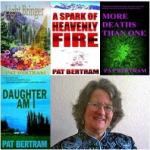
You already know my books, but if you are using Internet Explorer to view this blog, you won’t be able to see the cover images on the sidebar until WordPress fixes a glitch, so I’m listing them here. If you’d like to read the first chapter of any of them, just click on the cover.

Light Bringer: Becka Johnson had been abandoned on the doorstep of a remote cabin in Chalcedony, Colorado when she was a baby. Now, thirty-seven years later, she has returned to Chalcedony to discover her identity, but she only finds more questions. Who has been looking for her all those years? Why are those same people interested in fellow newcomer Philip Hansen? Who is Philip, and why does her body sing in harmony with his? And what do either of them have to do with a shadow corporation that once operated a secret underground installation in the area?

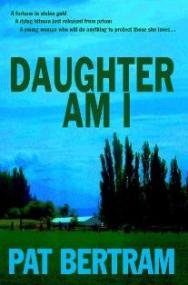
DAIDaughter Am I: When twenty-five-year-old Mary Stuart learns she inherited a farm from her recently murdered grandparents — grandparents her father claimed had died before she was born — she becomes obsessed with finding out who they were and why someone wanted them dead. Along the way she accumulates a crew of feisty octogenarians — former gangsters and friends of her grandfather. She meets and falls in love Tim Olson, whose grandfather shared a deadly secret with her great-grandfather. Now Mary and Tim need to stay one step ahead of the killer who is desperate to dig up that secret.

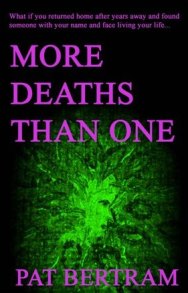
More Deaths Than One: Bob Stark returns to Denver after 18 years in Southeast Asia to discover that the mother he buried before he left is dead again. He attends her new funeral and sees . . . himself. Is his other self a hoaxer, or is something more sinister going on? And why are two men who appear to be government agents hunting for him? With the help of Kerry Casillas, a baffling young woman Bob meets in a coffee shop, he uncovers the unimaginable truth.

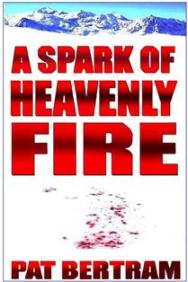
A Spark of Heavenly Fire: In quarantined Colorado, where hundreds of thousands of people are dying from an unstoppable disease called the red death, insomniac Kate Cummings struggles to find the courage to live and to love. Investigative reporter Greg Pullman, is determined to discover who unleashed the deadly organism and why they did it, until the cost — Kate’s life — becomes more than he can pay.

Thursday the 12th — A Day of Bad Luck

After yesterday, Friday the 13th holds no horrors. I started the day at an outdated dentist’s office that seemed like something from the inquisition rather than a modern tool of torture. It wasn’t so bad since I was not the patient, though I did have to be patient to sit through his political diatribes. (He’s British and thinks there are so few USA-born doctors because Americans are lazy, and he thinks our schools should be based on the British model, but he came here to dentistry school because he wanted a first-rate education and stayed because he couldn’t make money in Britain as a dentist.) I’ll stick with my Vietnamese dentist. At least he keeps the torturous chatter to a minimum.

Next, when I went online and checked Facebook, I discovered that someone had plagiarized me. I pointed out the word-for-word passages she used. She apologized, agreed to comply, since I was “so obviously offended.” Offended? You think? Then, after she finally removed the plagiarized bits, she said, “I assure you that this won’t be discussed with anyone.” Why would I need that assurance? I did nothing wrong. I don’t care who knows that she’s a plagiarist. I unfriended her, of course, since obviously, she was no friend. (She’s an author I only knew through Facebook, so I’m not losing a real friend.)

And then the real horror began. Something happened to my blog. The right sidebar with my covers sank to the bottom of the page, and the admin bar, the black bar across the top that takes me from the blog page to the dashboard and back again, stopped working. It turns out WordPress offers support only to those who pay for upgrades, which I don’t, so I spent all day on the WordPress Forums looking for a solution. One person suggested, Go to Settings > Writing and select “ ___ WordPress should correct invalidly nested XHTML automatically” and then scroll down and click “Save Changes.” Now, starting with your latest post, open it in the editor, make one minor change such as adding a space and then deleting it, and then click “Update Post.” Check your blog and see if it is back to normal.

The problem is on all five of my blogs that use the same theme, so the problem couldn’t have stemmed from anything I did. Still, I followed their instructions on the off-chance that it would help. It didn’t help me, but if you have a wordpress blog, I would suggest changing the setting. Any stray bit of html can wreak havoc on your blog.

Another person had me disable “infinite scrolling.” It used to be that you could choose how many posts would be displayed when people came to your blog, but now, when you reach the bottom of the page, you get more blog posts. In other words, there is no bottom of the page. If you want to dismantle infinite scrolling, here are the instructions: http://wpbtips.wordpress.com/2012/06/05/disabling-infinite-scrolling/

Dismantling infinite scrolling did not correct the problem, so the next task they had me do was change all the images in the right sidebar (which of course you can’t see if you are using IE9) to smaller ones that fit the width of the sidebar. Supposedly, IE9 doesn’t make the conversions from larger images to smaller ones very easily, though until yesterday, I never had a problem. But even going through all that trouble didn’t make a difference.

I hoped that things would miraculously be back to normal today, but alas, the blog is still broken. So . . . Friday the 13th? It doesn’t scare me. But Thursday the 12th? Yikes.

Is Facebook Still Cool?

For years now, writers have been told that to promote their books, they need to sign up for Facebook, mostly because when Facebook was new, very few authors used social networking sites to engage with readers so those who did found a goldmine. Ever since then, authors by the hundreds of thousands have joined Facebook to find readers and found only other writers. Why? Unless you are a known writer, readers aren’t searching you out. Writers try to connect with everyone FB suggests or anyone they come in contact with, but readers don’t. They have no reason to connect because they have nothing to gain by it.

Because of the peculiarities of Facebook, I am connected to very few people outside the writer’s community (and those few non-writer connections are mostly family or real life friends). It’s hard to believe that with over 900 million users, I can’t break out of this tight enclave into the mainstream of Facebook, but I have nothing to say to anyone besides what every other author says, “Buy my books,” and even I know that doesn’t sell books. Mostly what I do is use Facebook as a bulletin board to post links to my blog posts. I also scan my feed to see if anything interesting is going on, (so-and-so’s book is being given away free on Amazon, such-and-such a book is on sale for 99¢ . . . yawn) and finally check in with my writing discussion group.

Shouldn’t there be more to such a vast network than a writer’s group? But then, I have made a lot of online friends through Facebook, I keep up with many of my fellow Second Wind authors on Facebook, and I try to get to know the people I am connected with. Considering that joining Facebook used to be a coming-of-age ritual for thirteen-year-olds, it’s amazing I’ve found anything to do on the site! I mean really, what could I possibly have in common with such new and untried persons?

Along with all the other problems Facebook is having (such as not finding enough ways to gouge money out of us via ads), they now have to contend with the loss of their youngest members. Among some young teens, it’s no longer considered cool to join facebook — they prefer to text or to join sites where they are not pressured to connect to everyone in their class. No wonder there are so many offline traumas instigated by online life. The unpopular kids can never get away from their unpopularity. And anyway, why would they join a network that is aging? Facebook is eight years old, which in online years has to be closing in on 57. (Assuming web years are equivalent to dog years.) Even worse, from the point of view of a young teen, is that more than one-fourth of FB users are 50 to 64 years old.

I’m not sure where I’m going with this post. It started out as a light-hearted commentary about the whole Facebook phenomena, and I planned to end up with saying that there are worst things that joining Facebook to connect with readers and finding only writers of a certain age, but I’ve since discovered a fb author friend plagiarized something I posted on Facebook, which is so not cool. So now I have no end to this post. Except maybe to say that I need to stop spending so much time online.

Upsurges in Sadness Are Like Shortness of Breath After Exercise

I’m fine. Truly I am. For all of you who have expressed concern over my current upsurge in grief, I just want to tell you there is nothing to worry about. Upsurges in sadness do not in any way affect my life or my dealings with other people. They are just there, a fact of my life like shortness of breath after exercise. If I didn’t write about my feelings, no one would know about my times of sadness. There is so much bad advice given to people about grief, such as acceptable durations and ways of grieving, that I want to provide a counterpoint, and I wouldn’t do much good if I kept silent about what I happened to be feeling at any given moment.

Many people have told me that after the death of their husband, they never found happiness until they married again. People have told me that even after they got married, they still experienced upsurges in grief, sometimes years afterward. People tell me they never got over grief at the loss of a life mate, it just got different. The death of a cousin or even a brother doesn’t affect us the same way as the loss of a child or a soul mate, so the severity of the loss has to be taken into affect before you start wondering if someone is grieving inappropriately. Some people do fall in a pit of depression and cannot get out without help, but I am not one of them. Nor am I ruining my health by riding out the sadness. That’s what tears are for — to release the stress. Walking, exercising, and blogging also relieve the stress of trying to create a new life for myself out of the embers of the old one.

For me, an upsurge in grief usually comes right before or right after a new level of acceptance or a greater understanding. This latest upsurge began on Independence Day. It’s a day for families to get together, to have fun, to do whatever it is that families do when they get together, and I was alone. I understood that this could be the way holidays will be for the rest of my life, and I found it difficult dealing with the unwelcome understanding. Also, while walking in the desert recently, I’ve had several revelations that are helping me with my search to find a new focus for my life, and such forward motions bring on an upsurge of sadness because they take me further away from the past I shared with my deceased life mate/soul mate.

And anyway, even though I am no longer a child in the world of grief, I’ve not yet achieved full growth, either. Therapists who have studied grief and grievers admit that it takes three to five years to find your way back to life, and I am just past two years. I still have a long way to go. Besides, what’s a few tears among friends?

The truth is, though, I am more exhausted than sad. I’m tired of living in an alien world, tired of having to figure out where to go from here, tired of not feeling like me, but mostly, I’m tired of his being dead. Whether I continue to be sad or find happiness, whether I continue floundering of find new focus, he will still be dead. And absolutely nothing I do or say or feel will ever change that.