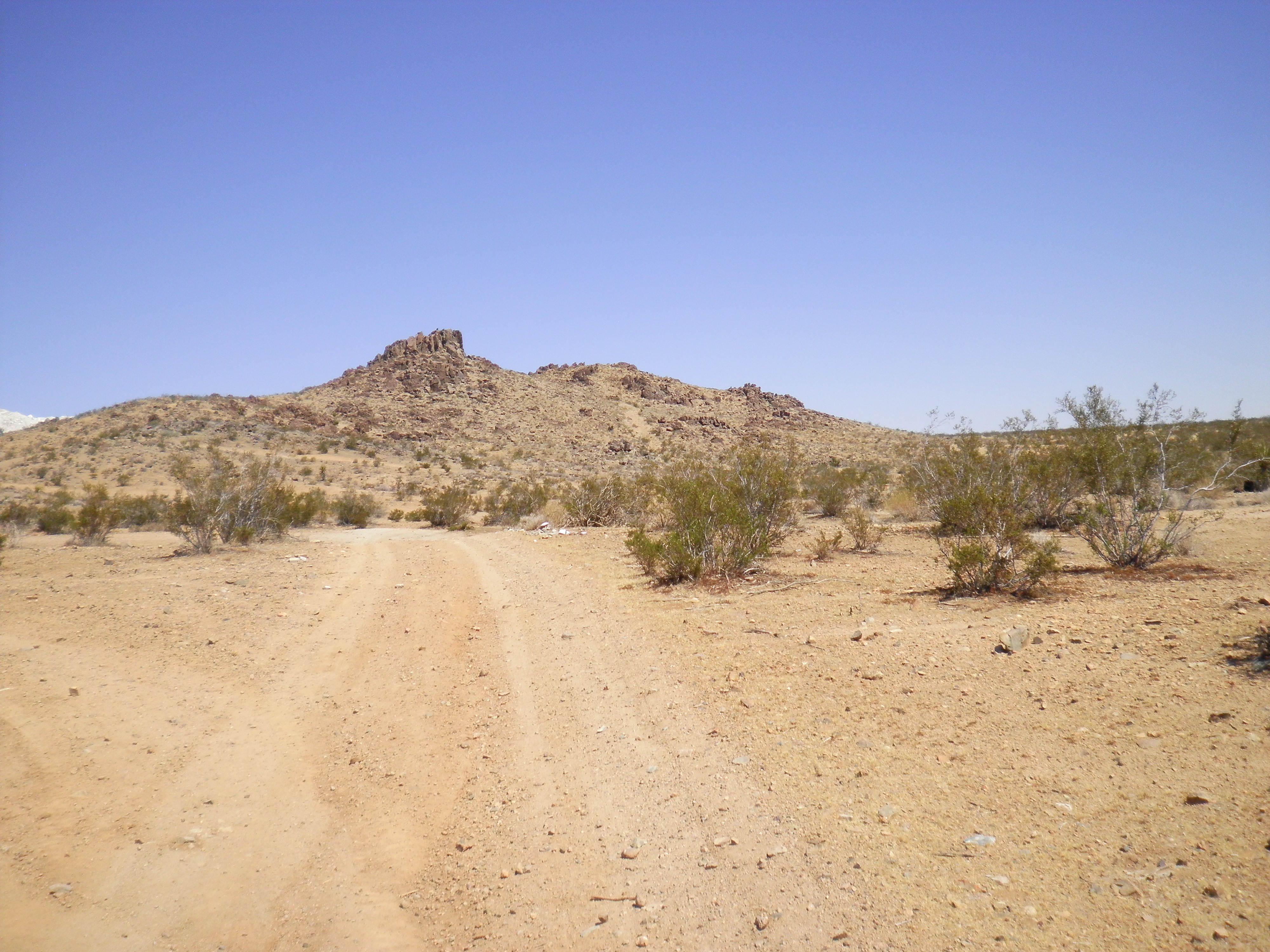
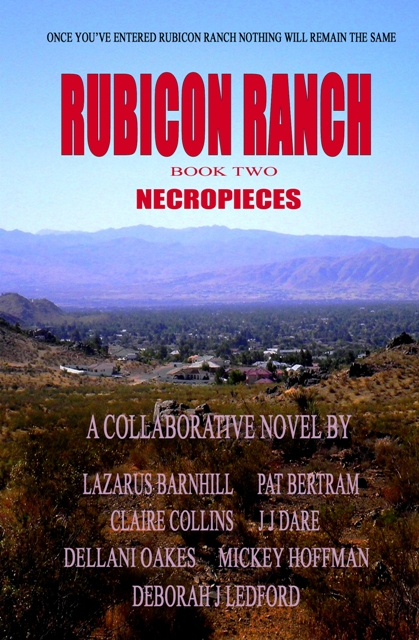
 Rubicon Ranch is a collaborative and innovative crime series set in the desert community of Rubicon Ranch and is being written online by the authors of Second Wind Publishing. Seven authors, including me, are involved in the current story — Rubicon Ranch: Necropieces.
Residents of Rubicon Ranch are finding body parts scattered all over the desert. Who was the victim and why did someone want him so very dead? Everyone in this upscale housing development is hiding something. Everyone has an agenda. Everyone’s life will be different after they have encountered the Rubicon. Rubicon Ranch, that is.
Although some of the characters were introduced in Rubicon Ranch: Riley’s Story, a previous collaboration, Rubicon Ranch: Necropieces is a stand-alone novel. The first chapter will be posted on Monday, June 11, and one chapter will be posted every Monday after that.
We hope you will enjoy seeing the story develop as we write it. Let the mystery begin! Whodunit? No one knows, not even the writers, and we won’t know until the very end!
Chapter 17: Melanie Gray
by Pat Bertram
Melanie stood at the window of her upstairs office, waiting for the photos of Eloy’s dog to finish printing.
Waiting. Always waiting.
Still waiting for Alexander to come home or call, though he had been dead for more than three months. Still waiting for the sheriff to investigate her husband’s accident—if in fact it had been an accident that killed Alexander. Still waiting for her grief to end and her life to begin.
The printer chugged as if deliberating over each line of data. Finally, it spit out the last photo of the puppy. Melanie shook her head at the amateurish product. She’d used high-grade photo copy paper, and the image was a good one, but the picture didn’t have the hard finish of a professionally developed photo.
This was the first place they’d lived where Alexander hadn’t set up a darkroom. She wouldn’t have known how to use the equipment even if she had it, but the absence of the chemical smells underlined the absence of her husband. They were only going to stay in this rental property a short while, just long enough to do the job and move on, and setting up a darkroom wouldn’t be worth the trouble, or so Alexander had claimed. He’d never said where their next job would take them, but he’d seemed anxious about the assignment. And now it didn’t matter. He was dead and she was . . . waiting.
Melanie fanned out the printed photos. Four eight-by-eleven pictures of the puppy, each a different pose, each charming. She printed a fifth page with smaller versions of the images, gathered up the papers, stuffed them in a large Manila envelope, and headed outside.
The cloudless sky was pale blue, and though not particularly hot, the air felt oppressive and humid. The small effort of walking the few steps to Delano Road made Melanie’s skin feel sticky. Normally she would have taken this as a sign that a storm would soon be passing through, but nothing appeared to work normally in Rubicon Ranch.
A curtain in the front window of the Sinclair house twitched. Was someone watching her? Melanie quickened her steps and let out a sigh of relief when she’d passed the house. She hesitated in front of Eloy’s place. The old man’s empty chair stood empty. She’d planned to hand him the photos and slip away before he could get awkwardly avuncular again. So, now what? Wait for him?
Waiting. Always waiting.
Melanie marched to the front door and rang the bell. Silence. Not even a bark or a yip from the puppy. Had something happened to the old man? Maybe he’d meddled in something he shouldn’t have.
In the months she’d lived here, she hadn’t seen Eloy do anything but sit on his front porch and glower at everyone who went by, and the recent change in him seemed suspect. If he’d wanted a dog, a monstrous canine would have better fit his image, but he’d gotten a puppy, for cripe’s sake. And what did he mean when he’d said Morris wouldn’t be bothering her any longer? Why would he make her welfare his concern? Besides, she knew how to take care of herself—Alexander had made sure of that, insisting she take lessons in self-defense and weaponry before they started traveling to dangerous locales. They’d lived in a whole alphabet of perilous countries, from Afghanistan to Zambia, and she’d survived them all. When they’d moved here to Rubicon Ranch, she’d felt safe for the first time in years, but this quiet community had turned out to be the deadliest place of all.
Melanie pressed the doorbell once more on the off chance the old man and young pup were simply napping, but the chimes still elicited no response. Grateful she didn’t have to talk to the old man, she slipped a corner of the envelope beneath the welcome mat to anchor it. Wondering why that most unwelcoming man had a welcome mat on his porch, Melanie trudged to the street.
Moody half walked, half trotted toward her, a hand raised in greeting. “I need to talk to you.”
Melanie waited for her neighbor. “I need to talk to you, too. A couple of weeks ago Morris told me—”
“That Alexander had been taking photos of necropieces for him? I overheard my father talking to you that day. I’m sorry he upset you. He won’t bother you again.”
Anger surged through Melanie, temporarily displacing the sorrow that weighed on her. “Why does everyone think I need protection? I’ve dealt with worse things than a nasty old man who needed to be exterminated.”
Moody held up her hands, palms out. “Sorry. I didn’t realize protection was an issue with you.”
Melanie gritted her teeth to keep from blurting out a denial. She remembered that Moody had once been a psychologist, and any further discussion would give the woman fodder for more assumptions. She pivoted on one foot, getting ready to walk away, then turned back. Her neighbor might be a psychologist and a Sinclair, but she was the only one who could explain why Morris had accused her of killing Alexander.
“Your father mentioned something else that day. He said Riley told you she’d seen me messing with our car.”
Moody blew out a breath. “The bastard lied. Riley only said she’d seen someone messing with the car. That’s all. Never mentioned a name. I didn’t believe her, though. If you knew Riley, you’d know she loved to cause mischief. Even I found it hard to discern when she was telling the truth.”
“But could she have seen someone messing with the car?”
Moody put a finger to her chin and said slowly, “It’s possible. Generally, Riley’s lies were quite detailed—more like stories—but she made the remark about the car in an offhand manner. Are you thinking someone deliberately caused your husband’s accident?”
“Sheriff Bryan told me the accident looked suspicious, but . . .”
“You don’t trust him.”
Melanie focused on the peak of a distant knoll. Did she trust the sheriff? She lowered her gaze to meet Moody’s. “I think he has . . . agendas.”
Moody nodded. “That’s my take on the sheriff, too. I also think he’s on a quest for redemption, whether he’s aware of it yet or not. I’ll let you know if I recall anything else Riley said about your car or Alexander.”
“Thank you.” Melanie turned and started walking up Delano Street toward the desert.
“Wait. Please?”
Melanie stopped.
Waiting. Always waiting.
“I need to warn you about Jake,” Moody said, a new urgency in her voice.
Melanie spun to face the woman. “Are you trying to protect me again? I can take care of myself.”
“Yes. You said. But Jake . . . Jake’s my brother. He wears a cloak of righteousness, but his heart is as black as the rest of the Sinclairs’.”
Melanie frowned at her neighbor. Moody was a Sinclair, too. Could she be warning Melanie that as Morris’s daughter, Moody also had a black heart? A lifetime with Alexander should have prepared her to deal with the Sinclairs, but she sensed nuances of evil in the family next door that made Alexander’s machinations seem like child’s play.
“You don’t believe me,” Moody said flatly.
“Why are you worried about me all of a sudden?”
“I haven’t seen Jake in years, and he just showed up. Supposedly he’s been in the area for several weeks participating in some sort of revival, and he heard about Morris being missing. So now he’s come to . . .”
Interested despite herself, Melanie said, “So now he’s come to—what?”
Moody shrugged, a strange look on her face. Fear, maybe? She glanced toward her house, then fixed an intense gaze on Melanie. “He knows about you. Knows you found the foot yesterday. Don’t believe a word he says. And whatever you do, don’t get yourself in a situation where you are alone with him.”
Melanie watched her neighbor hurry back to Morris’s house. As Moody walked up the driveway, the door opened, and a man walked out.
Melanie gave a start. Morris! Couldn’t be. This man looked younger than the writer. Must be Jake, the son.
Jake glared at Moody, then turned his head toward Melanie. He seemed to study her, the Sinclair dead-fish stare frozen on his face.
And then he smiled.
Melanie fled to the desert. She inhaled the humid, creosote-scented air, trying to remove the stench of the Sinclairs from her nostrils, but no cleansing breath could remove the memory of that evil leer.
Forget the Sinclairs. Focus.
Melanie took a swig of water from her canteen, screwed the cap back on, and reached in her pocket for her little digital camera. Thinking of the last photos she took, the photos of Eloy’s dog, she wondered if her photos would be better if she had professional equipment. She made a mental note to ask the sheriff about her husband’s cameras—Alexander had taken them when he left on that fatal car trip, and they hadn’t been returned to her.
Melanie shot a few photos at random—a jogger in red shorts, a wadded fast food wrapper that looked like a yellow rose nestled in the scrub, a frisky puppy running circles around an old man. Captain and Eloy. Seeing Eloy in the desert again made her shoulders itch. Too much strangeness. Too much change.
She picked her way up the steep rock-strewn track to the top of the knoll, past the place where she’d found Riley’s body stuffed in a television console, past the place where she’d found the foot. She stopped to snap a few shots of the vast desert wilderness spread out before her, a sight that never failed to bring her comfort.
Distant shouts rising above the whine of idling motors caught her attention. She cut to the left until she glimpsed the altercation. Two people, one in red racing gear and one in silver, were standing by a canoe, balancing motor bikes with one hand while gesturing with the other.
“No!” bellowed the red-garbed racer. He hopped on his red bike and sped toward Melanie.
The silver racer got on his bike and chased after his companion. “Someone got chainsaw massacred. We have to call the cops and tell them we found a part of a body.”
“No,” yelled the red racer again. “We can’t. My mom will kill me. I’m supposed to be home looking after my little sister.”
They hurtled past Melanie, still shouting. She took pictures of the two boys, then of the canoe. She’d often seen the abandoned canoe in her treks, but until today, the boat had always been turned upside down. Apparently the boys had found something hidden beneath the canoe. A necropiece.
Could she take a chance that the boys hadn’t seen her, and so pass on calling the sheriff? She hadn’t found the body part, but she felt sure the sheriff would use her presence as an excuse to lay the blame at her feet. She sighed and pulled her phone out of a pocket. Even if the boys didn’t say anything, the sheriff would eventually find out she had been in the vicinity of more death. Not notifying him would seem more suspicious than making the call.
She talked to the dispatcher, explained the situation, described the boys and gave directions on how to find the canoe from Tehachapi Road.
“Wait right there,” the dispatcher said. “Someone will arrive as soon as possible.”
Melanie shoved the phone in her pocket, and shifted from foot to foot.
Waiting. Always waiting.
To hell with that. If the sheriff wanted her, he knew where to find her.
Melanie turned away from the canoe and tramped across the desert expanse, heading toward the storm clouds gathering on the horizon.