Saying Goodbye

A dear friend left town today to go back overseas where she grew up so she can be with family and friends as she lives out her last months. I never got a chance to say goodbye, though I’m not sure that matters. This way I can always think of her the way she was the last time I saw her: happy, contented, glad to be done with pain for a while.

To be honest, I am glad she is going to be with her people. Although she fit in well with our small-town America environment, she’s from a major Asian city with food and shopping and friends on every block, and she missed all the bustle.

To be even more brutally honest, though it might make me seem small, I am glad I won’t have to watch her deteriorate. I’ve watched too many people die, and I simply cannot do it again, especially not when it comes to her.

From the first moment we met, we connected, as if we were long-lost sisters. She was so vital, so charming, so interested in everything, that the news about her being afflicted with cancer came as a shock to me. Even worse was when I found out the cancer had metastasized. And now she is gone from my life, though for a time, at least, we can still connect via email or FB messenger.

Her husband, who’s also become a friend, has already been through this before. I can’t imagine the courage it takes to find a new love and then once again, to lose that love to death. He’s got a hard time ahead, not just watching her fade away, but having to be jolly in the face of it because she doesn’t want anyone to be sad.

After the sorrow of this day, knowing she is journeying far beyond my reach without one last hug, I intend to honor her wishes and think of her at home. Happy. With her husband and family and old friends.

There will be time enough for mourning when her days are finished, but maybe even then I will simply think of her as being home where she belongs, and be happy she came into my life.

***

Pat Bertram is the author of Grief: The Inside Story – A Guide to Surviving the Loss of a Loved One. “Grief: The Inside Story is perfect and that is not hyperbole! It is exactly what folk who are grieving need to read.” –Leesa Healy, RN, GDAS GDAT, Emotional/Mental Health Therapist & Educator
Preventing Frailty

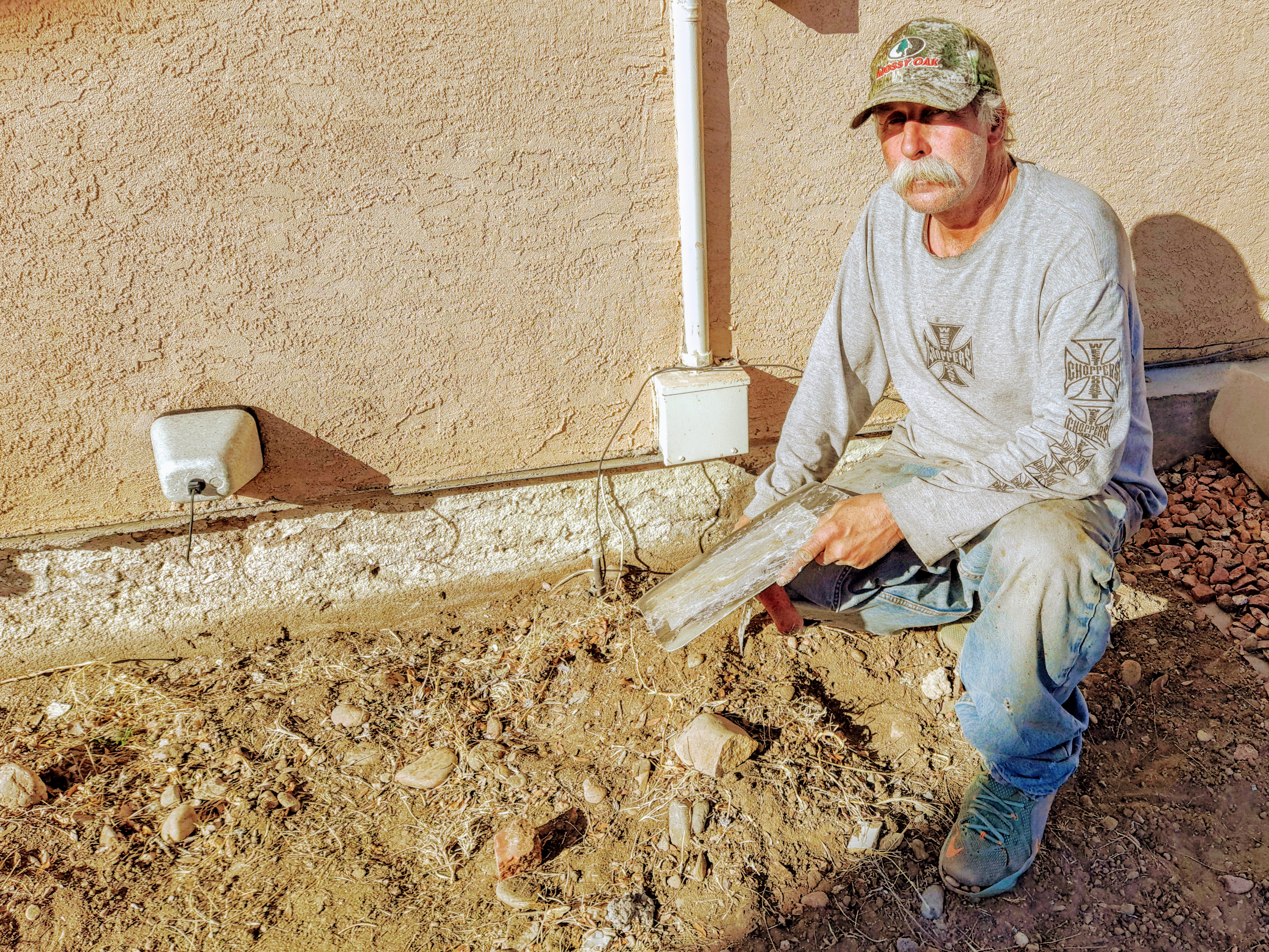
When a worker was here last week to fix the cracks in my foundation, we talked about some of the improvements I want to do outside the house, such as the pathways I want to put in, so that I can be safer in my old age. He commented that I spend too much time thinking about getting older, which might be true, but on the other hand, if I don’t work now to provide a safer “fourth age,” who will? (Old age has now been divided into two categories — the third age from 65 to 80, which used to be called the golden years, and the fourth age, which is from 80 on.) Admittedly, I am still years away from that fourth age, but what I do now will give me the best chance of a) living to that age, and b) living strongly once I have arrived.

I do worry about frailty — I see so many older people who are too frail to navigate under their own power, and I don’t want that for me. Well, no one does wants that for themselves, but since I have no younger family members to take care of me, I have to be particularly careful. I’m also willing (more or less) to do what it takes to keep frailty at bay for as long as possible. To that end, I’ve been researching how to keep from getting frail as I get older, and most of it I already know. Keep moving, for one, such as taking walks and stretching. Do resistance exercises to help build up muscle mass. Eat more protein. Avoid dieting since weight loss leads to more muscle loss than fat loss. And oh, yes, kick the sedentary habit.

It’s that last part that has me flummoxed. I do understand that we as a society are too sedentary, and to be honest, some of my most prevalent activities are sedentary ones, primarily reading books and playing around on the computer. But the suggestion is to do no more than three hours per day of such activities.

Huh? We’re talking about people in the third and fourth age here. What are we supposed to do for all the rest of the time? Let’s say we get eight hours of sleep a night, perhaps another hour for grooming tasks. Perhaps an hour or two for fixing meals and doing chores. Maybe, if we’re being generous with our estimates (or maybe if we’re outright lying), we exercise for an hour.

That adds up to twelve hours. And only three should be sedentary? Heck, if we in the third age could be up and around, doing all sorts of on-foot activities for nine hours, we’d be — oh, I don’t know — still working perhaps. Where are we supposed to get the strength for all that activity? Following the rest of the suggestions — exercise, more protein, etc — can only give a newly elderly person so much energy. All those years we are carrying around are heavy, which adds to desire for sedentariness.

Come to think of it, maybe that worker is right. Maybe I’m overthinking all this. Maybe I should just do what I feel like, even it turns out to be way too much sitting.

***

What if God decided S/He didn’t like how the world turned out, and turned it over to a development company from the planet Xerxes for re-creation? Would you survive? Could you survive?

A fun book for not-so-fun times.

Click here to buy Bob, The Right Hand of God.

Shedding Light on the Dim World of Grief

I happened upon an internet discussion yesterday where people were commenting about those who post bereavement, death, and grief comments on the various social sites. As you can imagine, this got my ire up.

It seems that it’s okay to rant about politics, gossip about celebrities, talk about diet, brag about one’s feeble accomplishments, restyle one’s life so that it seems admirable and exciting rather than as mediocre as everyone else’s, and of course, post copious photos of pets as well as posts about the illnesses and deaths of those animals. But apparently, it’s not okay to mention something as important as grief for a fellow human being.

I realize people would just as soon forget that their lives have an expiration date, would just as soon forget that a person cannot be happy all the time, would just as soon forget that bad things happen to everyone at one time or another, but still, the major problem with grief is that so few people want to even acknowledge that death and grief and ongoing feelings of loss do exist.

If you’re one of those, then if someone posts about death or grief, scroll on by. You’re not obligated to acknowledge someone else’s pain, though perhaps it would be the kind thing to do.

Some people in the discussion thought that those who posted updates about grief were simply looking for sympathy. I suppose it’s possible some grievers do so, but no one of my acquaintance has ever mentioned their grief in a bid for pity. If we are looking for anything, we’re looking for validation of our feelings, looking for an acknowledgment that life after the death of a loved one does not and cannot continue as before, looking for someone to stop and pay attention.

Some people, perhaps, are looking for a sign from their deceased loved one, which, if there is life after death, would be feasible since we, like computers, are an electronic medium.

Mostly, though, if the social sites are about laying out our lives for others to see, then to refrain from mentioning death or grief would be a disservice not just to ourselves and our deceased loved ones, but to the world at large.

The truth is, you cannot pretend such things do not exist, at least not forever. One way or another, you will confront death, if not a loved one’s, then your own. Wouldn’t it be nice to think that after you were gone, people would still remember you with an occasional post online? Or would you expect people to wipe you out of their lives and thoughts?

I’ve come to realize that some people have little sympathy for those who acknowledge their losses because they think when someone dies, that person is not just erased from this world, but is erased retroactively, so that the deceased never existed, never left behind a hole in the fabric of life on Earth. Because of this retroactive erasure, those unsympathetic people tend to think that anyone who still misses their loved one years later is buying into a victim mentality, perhaps is even addicted to grief.

Whenever I think I’ve said all there is to say about grief, I discover a new black hole of ignorance and insensitivity, so apparently, my mission of shedding light on the dim world of grief, is far from over.

***

Pat Bertram is the author of Grief: The Inside Story – A Guide to Surviving the Loss of a Loved One. “Grief: The Inside Story is perfect and that is not hyperbole! It is exactly what folk who are grieving need to read.” –Leesa Healy, RN, GDAS GDAT, Emotional/Mental Health Therapist & Educator

Lovely Lazy Day

It rained most of the day, which was very nice because . . . well, because, for one thing, rain means it was warm enough that we didn’t get the snow so much of the state received, and that means I won’t have to spend this evening or tomorrow morning shoveling snow.

For another thing, rain means I don’t have to water my outside plants. It’s been so dry, I’ve been thinking I need to drag out my hoses to prevent everything from succumbing to the drought, but whew! I won’t have to do that chore quite yet. Even better, because of the rain, tulips from last spring that I thought were dead have managed to resuscitate themselves. I still don’t know whether I will have flowers, but the green tips peeping up from the soil are a welcome sight.

And finally, rain means that I can be lazy without having to offer excuses why I’m not out running errands, or cleaning up the yard in preparation for spring, or taking a walk, or any number of things I could be doing. Not that I would be doing these activities, you understand. It’s that I have an excuse not to do them, rather than having to face the truth of my indolence.

I started the day as I normally do, with a some stretching, picking a tarot card to study, folding a few origami cranes, reading (lots of reading!), playing a game on the computer, fixing myself a bite to eat (several bites, actually — I don’t eat much, but even I need more than a single bite for subsistence), coming up with a new password for online banking (the passwords become defunct every six months), and staring out the window at the miraculous sight of water falling from the sky.

I even caught up with a friend via telephone, and now here I am, posting to this blog.

Listing everything I’ve done suddenly makes it seem as if it wasn’t such a lazy rain day after all. But it certainly was lovely for all that.

***

What if God decided S/He didn’t like how the world turned out, and turned it over to a development company from the planet Xerxes for re-creation? Would you survive? Could you survive?

A fun book for not-so-fun times.

Click here to buy Bob, The Right Hand of God

Truth or Taint

After all these years of living in an e-world, I’m still not comfortable with the penchant for rating everything. Ratings do help, at times, to give me an overview of a product or service, but for the most part, the ratings don’t help me at all. I certainly have no interest in being rated myself, which is why I’ve left the ratings widget off this blog. I figure if people like what I say, they will read. If they don’t, they won’t. I learn more from comments than I would from a rating, though to me, the comments are more about a discussion than whether or not someone likes me or my blog.

Leaving off the widget doesn’t always help, since Facebook has banned my blog from their site, either because of complaints about abuse or because they have deemed it spam — I’m still not clear on what their rational was. Either way, it’s made my life a bit more difficult (though at the same time, it gives me a good excuse to remove myself from that environment).

I do like when people leave book reviews for my books since those are one of the few promotional opportunities most of us writers are given. I even occasionally read reviews, especially if I’m not sure I’d like a book and want to see what it’s about. (In that case I read the bad reviews to see what people hated about the book.)

But generally speaking, I don’t like this ratings world, and I don’t participate. Unfortunately, I recently made a mistake and when a company I had purchased a product from a year ago asked me for my opinion of the product, I sent them a quick comment. But that wasn’t enough for them. They wanted ratings. The ratings weren’t about how satisfied I was with the product, but rather if the product helped with back pain and if it improved my posture. Since I didn’t buy the product for either of those non-existent issues — I bought it for convenience since it was a side-loading pack rather than a backpack — I couldn’t give them the ratings they wanted. So now, I keep getting emails telling me I didn’t finish my review, and would I please finish it. And oh, by the way, would I also please leave a review online so their customers could see it.

I finally had enough and trashed the emails.

So, no more ratings!

All this emphasis on ratings makes me wonder if people reading the ratings are astute enough to know when a rating is legitimate rather than a paid review, and realistic enough to know that sometimes people give low ratings for personal reasons that have nothing to do with the actual product or service. Not to keep harping on the FB thing, but those who got me banned had no real basis for their displeasure since this blog is neither abuse nor spam.

It used to be that people would get mad, say their piece, and the words would dissipate into the atmosphere. Not anymore. Now those words hang around forever, tainting people and products, though admittedly sometimes it’s not a taint but the truth.

***

What if God decided S/He didn’t like how the world turned out, and turned it over to a development company from the planet Xerxes for re-creation? Would you survive? Could you survive?

A fun book for not-so-fun times.

Click here to buy Bob, The Right Hand of God

Grief Is Neither Simple Nor Logical

Most people, when they think of grief, if they think of it at all, tend to believe that grievers go through a series of stages, and once each of those stages have been dealt with, the person goes back to normal. Well, at least as normal as most people are or rather as they assume they are.

But going back to normal is not feasible. The truth is, there are no stages when it comes to grief. In fact, the five stages of grief model is dangerous because it makes grief seem like a checklist, as if grief were logical, but there is no logic to grief. Grief has its own timetable, its own method, and whenever we think we understand the process, grief changes its tactics. For days, weeks, months on end, a dozen emotions will attack us all at the same time making us feel that we can never get a grip. And then, for no fathomable reason, we hit an emotional trough where we feel nothing, and we begin to think that we can handle our grief after all, and then—pow! Out of nowhere, grief returns and slams us in the gut, and we go through the whole gamut of emotional and physical symptoms again. And again. And again.

Sometimes, even years later, someone who survived the death of a spouse or other person intrinsic to their life, will be blindsided by grief. A friend, whose first husband had died more than a decade before, was happily remarried, but when the daughter she had with her first husband got married, she had a full-blown grief attack. This sort of thing makes sense to those who have experienced profound grief because any major life experience reminds us of what we lost, of what the deceased lost, and so, for a short time, we are back at the beginning when grief was new.

I haven’t been blindsided by grief for a long time, though I did have a weird bit of vertigo the other day. I was simply walking down the hall (a very short hall) when I got an awful falling-elevator feeling, and I remembered . . . again . . . that Jeff was dead. I have no idea where either the vertigo or the thought came from, except that the anniversary of his death is coming up in sixteen days, so he — and my memory of that time — are close to the front of my mind, rather in the back where they generally reside.

Perhaps some people can put the deceased entirely out of their heads, but most of us can’t, at least not all the time. They were a big part of our lives for many years, and even after they died, they were a big part of our lives through our grief, our memories, our attempts to find a new life for ourselves. Who I am today exists because he lived. Who I am today exists because he died. I have no idea who I would be if I had never met him; have no idea who I would be if we were still together. But none of that matters. I have to deal with the reality of my days, and the reality is that every once in a while, for no reason at all, grief makes itself felt.

Admittedly, this recent episode lasted only a moment or two, but such moments are important, if only to remind us that our grief is never completely finished. How can it be? No matter how much we get used to the void in our lives where they once were, the void is still there. And they are still gone.

My mission in talking about grief, to the extent I had a mission, has always been to let people know that grief is normal. Even years later, if one breaks down in tears or gets a vertigo attack or whatever manifestation grief happens to take at that moment, it’s still normal.

What isn’t normal is believing that someone’s life can be the same after the death of someone intrinsic to their life. What isn’t normal is believing that grief is simple and logical and fits into a few recognizable stages. What isn’t normal is believing that grief is easily dispatched. Well, actually, all that is normal since that’s what most people believe, but just because most people believe something, it doesn’t make that belief true or right.

***

Pat Bertram is the author of Grief: The Inside Story – A Guide to Surviving the Loss of a Loved One. “Grief: The Inside Story is perfect and that is not hyperbole! It is exactly what folk who are grieving need to read.” –Leesa Healy, RN, GDAS GDAT, Emotional/Mental Health Therapist & Educator

Fixing the Foundation

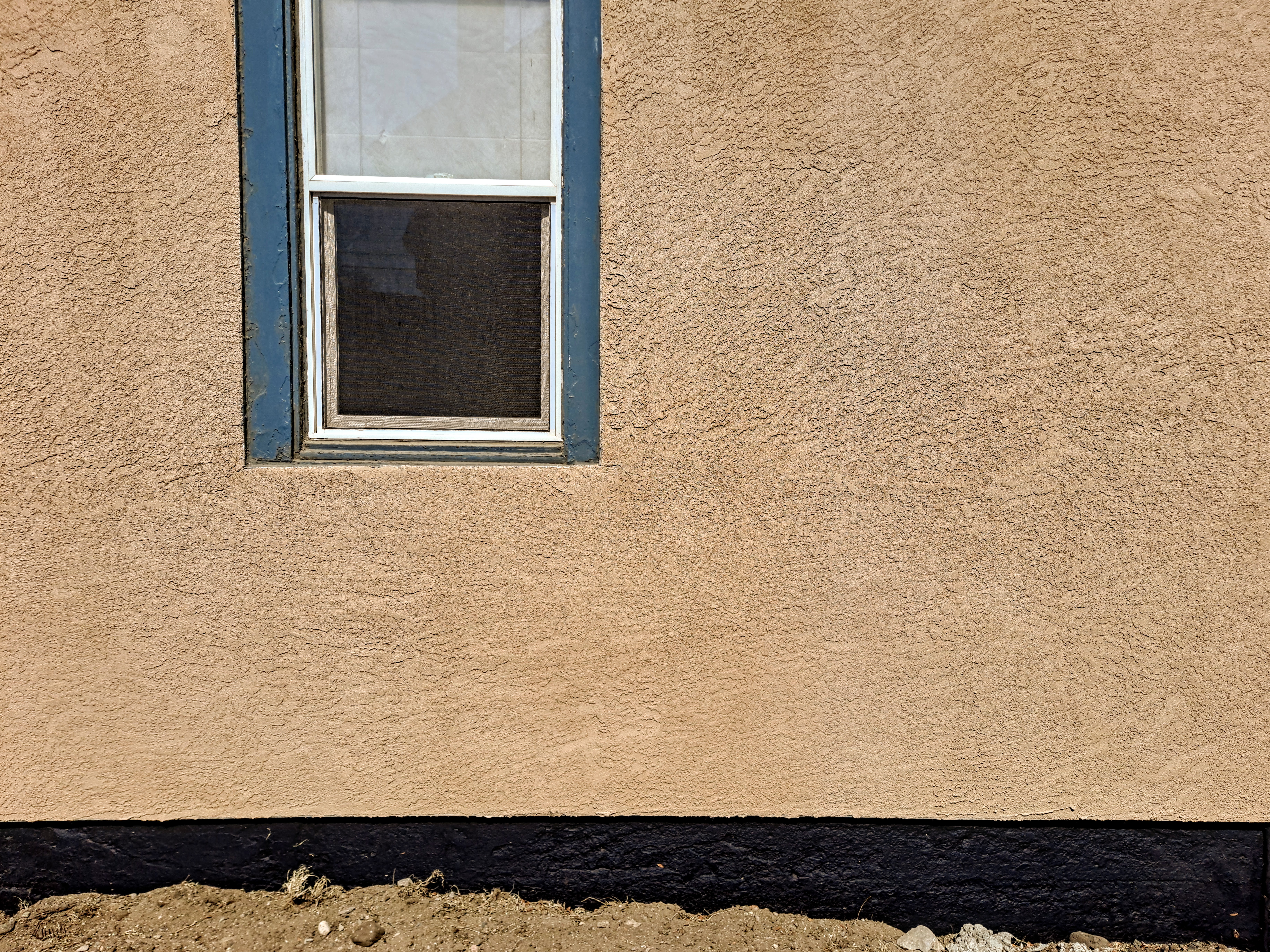
We’re having a spate of warm spring-like weather (complete with high winds!) in between the winter storms, so the people working on and around my house took the opportunity to fix the foundation — fill in the cracks and seal the concrete.

The foundation was white, and now it’s not. Like the original Model-T’s, I could have any color I wanted as long as it’s black. That’s the only color available for the sealer, an asphalt emulsion similar to that used to seal parking lots and roads. I wasn’t sure I’d like the dark foundation, but it really seems to define the house.

It will really look great once the ornamental rock is in place around the house. Not only will the rock be attractive, but it will further protect the foundation.

As usual, though, there is a weird problem. Nothing anyone has done around here has been easy; even a simple job turns out to be an arduous task, such as having to build a garage from scratch, rather than simply being able to fix the foundation of the old garage. (The ground under the garage was too wet to pour a foundation, in even the middle of a drought summer. We never did figure out where the moisture came from, though we did surmise the garage had been built over an old septic system.)

The current problem isn’t as drastic, but it is as mystifying. In one place on the foundation, something ate through the newly applied sealer. It looked like it could have been some sort of alkali, which would be no surprise, since the soil around here is extremely alkaline. On closer inspection, it seemed to resemble a mold. They’re going to try to putty over the mold with the same substance they’ve been using to fill in the cracks and hope that seals off whatever it is that’s eating the asphalt. It wouldn’t matter so much except that the weird spot is in the front rather than on a side where it wouldn’t be noticeable, but if it can’t be fixed, I’ll get used to it. It’s not as if this is a brand-new house (it was built in 1928), or as if the discoloration would bring down the value of the property (and if does, it’s not an issue I will have to deal with because I intend to stay here until my end if at all possible.)

It’s just nice seeing things take shape again, nice seeing work being done. And if it snows or rains later this week, well, that will be nice, too.

***

What if God decided S/He didn’t like how the world turned out, and turned it over to a development company from the planet Xerxes for re-creation? Would you survive? Could you survive?

A fun book for not-so-fun times.

Click here to buy Bob, The Right Hand of God

4,000 Days

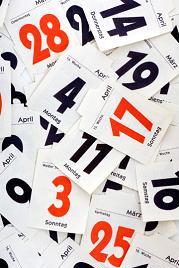
This is the 4,000th day since Jeff died. That’s a lot of days, taken one at a time.

I never used to count days or months or years. Well, my birthday, that’s the one count we all make, though after I reached adulthood, the number of years I’d lived became a curiosity rather than celebration, a number to acknowledge and then move on.

After Jeff died, counting became a part of my life, of my grief. Surprisingly, I’m not the only one who counted the days; most of us who have been left behind count at least for a while.

When we lose a significant person in our life, one whose death rocks us to the very depths of our being and changes us forever, it’s as if we are born into a world of grief, and our internal clocks reset themselves to that moment of birth.

At first, we count the minutes and hours we’ve lived, then after we’ve survived twenty-four or forty-eight interminable and interminably painful hours, we being counting the days. Eventually we move on to counting weeks, months, years, and even decades. To the uninitiated, this counting seems as if we’re dwelling on the past, constantly reminding ourselves of our sorrow, but the truth is, counting is a way of helping us survive this new, alien world.

Grief distorts time. Sometimes it feels as if time stops, but simultaneously it feels as if it speeds up. Seconds seem like hours. Hours can feel like days or pass by in seconds. We lose track of what the date is. The past and future might become so entwined that we can’t always be sure if we’re going forward or backward. A particularly strong flashback to the days before our loved one died can make it seem as they are still alive, in another room perhaps. An especially serene moment between grief upsurges can catapult us to a future world of possibility, a world without pain. Counting the days helps put time back into perspective.

Mentioning that this is the 4,000th day makes it seem as if I am still counting, but the truth is, I stopped counting days, weeks, and months, a long time ago, though I still count the years. (On March 27, it will be eleven years.) During research on another matter, I came across the number 4,000 and I put in on my calendar, otherwise this day would have passed without a comment. And maybe it should have. After all, what difference does it make how many days he’s been gone? He’s gone, and no amount of counting will change that.

Still, I did survive all those days, too many of which were pain-filled and angst-ridden, so that’s something worth acknowledging, I suppose.

***

Pat Bertram is the author of Grief: The Inside Story – A Guide to Surviving the Loss of a Loved One. “Grief: The Inside Story is perfect and that is not hyperbole! It is exactly what folk who are grieving need to read.” –Leesa Healy, RN, GDAS GDAT, Emotional/Mental Health Therapist & Educator

Workers!

I had a lovely surprise today. I heard scrabbling noises around my house, and when I went out to see what was going on, I found a worker preparing the cracks in the foundation so he could fill them in. He’ll have to let the filler harden, and then he’ll come back and paint the foundation with a sealer. The sealer is black, which I’m not sure I’ll like. If not, I can paint over it with a lighter color. Or I could wait until I got used to it.

But that’s an issue for another day. Today, I am delighted to see progress being made.

It’s funny how so often, one job depends upon another, sort of like a reverse of the nursery rhyme “The House that Jack Built.” The workers have rock to put around the house, but they can’t do that until the they put down the weed barrier, and they can’t put down the weed barrier until they build up the dirt around the house, and they can’t build up the dirt around the house until they seal the foundation, and they can’t seal the foundation until they fill in the cracks, and they can’t fill in the cracks until they dig out the dirt that’s around the foundation.

Luckily, I’m not the one having to do all this, and the person who is doing it doesn’t seem to mind the work.

Even luckier, the weather should hold for a few days until the filler has cured. It’s one of those projects that can’t be done in cold weather because the concrete filler would disintegrate, and all that work would go for naught.

[An interesting aside; interesting to me, anyway. Seeing the word “naught” made me wonder how it was related to the word naughty, since the two words don’t have much in common, and it turns out that “naughty” does come from “naught.” Apparently, in the fourteenth century, naughty referred to a person lacking in wealth, and over the years, came to mean someone lacking in morals. Does that mean back then that the poor were considered bad, perhaps poor because they were bad, as people so often surmise even today?]

But, neither naught or naughty have anything to do with the matter at hand, which is . . . workers (at least one, anyway) are here working!

***

What if God decided S/He didn’t like how the world turned out, and turned it over to a development company from the planet Xerxes for re-creation? Would you survive? Could you survive?

A fun book for not-so-fun times.

Click here to buy Bob, The Right Hand of God

Happy House Anniversary to Me!

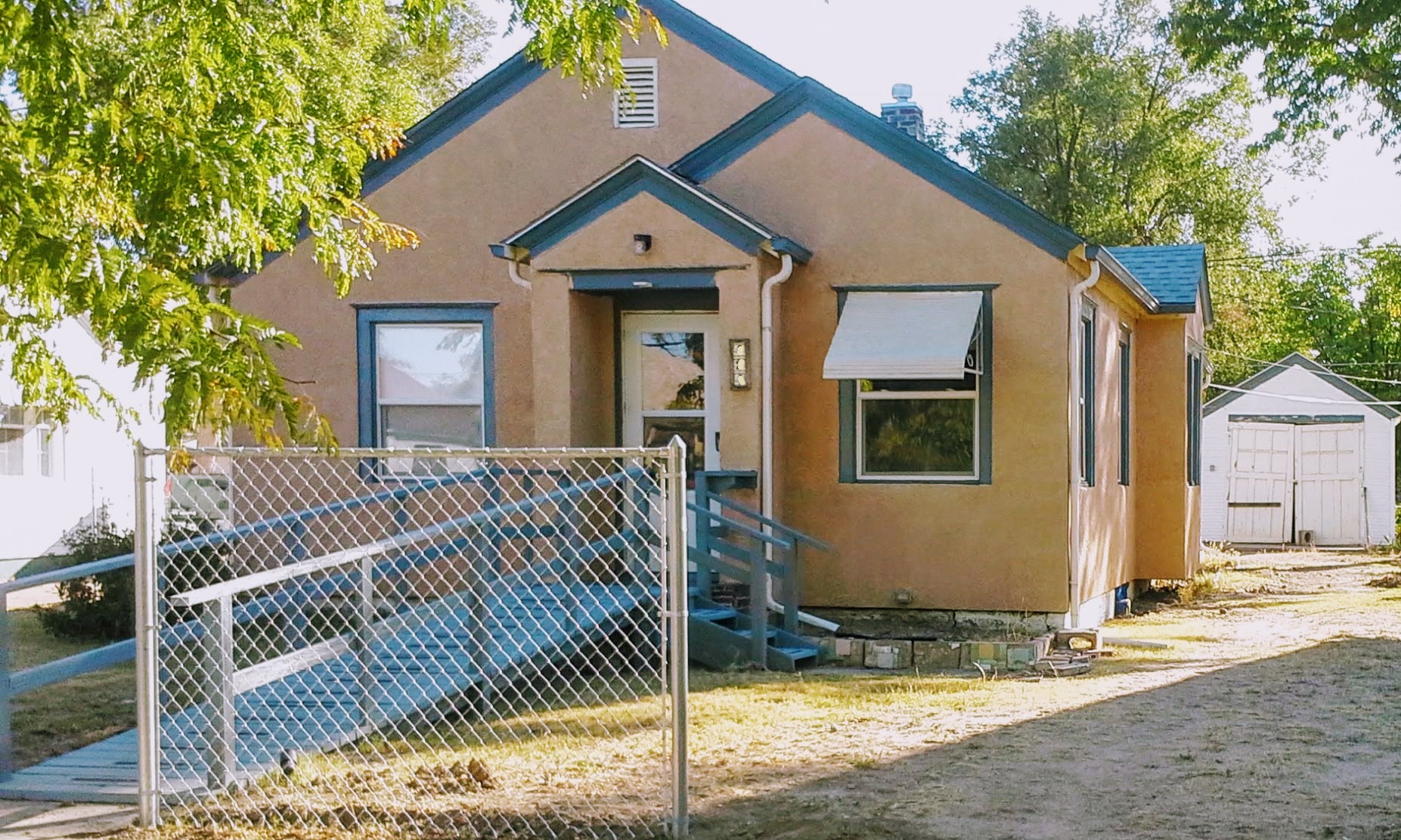
Today is the second anniversary of my being a home owner. The anniversary of when I first saw the house won’t be for another couple of days and will require yet another celebration. Today, though, is about the house.

I bought the house sight unseen, though I had viewed photos online. Oddly, I didn’t particularly care one way or the other about the outside of the house, though people who saw the photos all told me how cute it was and how it looked like me. I was more interested in the new kitchen, the walk-in shower with hand bars, the plethora of windows. Despite that, I have been eminently pleased with the house itself — the spooky basement and the now defunct garage not so much, but both those disappointments have been turned into . . . whatever the opposite of disappointment is. It should be “appointment,” shouldn’t it? Since it’s not, I’ll have to go with “satisfaction.”

Though the basement still needs some work, mostly cosmetic, such as paint, it’s not the spooky place it was at the beginning. If I had known I would only go down those stairs a few times a year to replace the furnace filter, I might not have gone to the expense, but it still makes me feel good to know it’s just a basement, not a horror show.

And the new garage, of course, is wonderful, functional, and attractive. It certainly adds to the joy of home ownership.

I never wanted to own a house. It seemed too much of a responsibility. The first time I ever saw the possibilities in owning a place was when I visited my sister a few years ago. Her house is a delight, with art and artifacts and artful displays wherever I would look. But even so, I didn’t want to own, which was good since there was no way I could ever have afforded to buy a place. At least, not then. The years passed and, as luck would have it, a house showed up in my life.

It has all worked out so much better than I could ever have imagined. Not only do I love my house, I love owning it. It makes me feel good, as if I were wearing a warm cloak on a cold day.

Adding to the luck, the town that came with the house has been a good place for me, complete with a nearby library . . . and friends.

There were several very long years where I thought I would never be happy again. There were other times I knew something wonderful would be in my future — since the universe is balance, I figured only something really special could offset the pain of losing Jeff and the horror of grief.

In twenty days, it will be eleven years that he’s been gone, and not only did I find happiness again, I found the “something wonderful.”

Last year, on the first anniversary, a friend wrote, “Happy house anniversary, Pat. And happy Pat anniversary, house. You make a great couple! Perfect together.” And we are perfect together. Other people sometimes suffer a bout of buyer’s remorse, but not me. I knew this was my house from the first time I saw photos of the place on the real estate site.

So today, I celebrate me and the house. Together.

***

Pat Bertram is the author of Grief: The Inside Story – A Guide to Surviving the Loss of a Loved One. “Grief: The Inside Story is perfect and that is not hyperbole! It is exactly what folk who are grieving need to read.” –Leesa Healy, RN, GDAS GDAT, Emotional/Mental Health Therapist & Educator