There Are Those

The words “There are those” from a song of that name keep playing in my head. I had to look it up to find out where those words came from because I only remembered the refrain:

There are those
There are those
I suppose
There are those

Those and suppose — a witty rhyme, right?

The song is from the musical The Happiest Millionaire — a cute song in a cute movie — but I only hear the first three words in my head, mostly because they came to mind when I think of neighbors.

Yesterday I mentioned the awful neighbor we had when Jeff and I lived on the western slope of Colorado, who plowed snow off the lane in front of our houses, and dumped it in our driveway.

And then there are those (see? The song!) like my current neighbors. I went out yesterday to shovel my walkways, and when I’d shoveled my way down the ramp to the public walkway, I discovered that a wide path had already been cleared away.

I felt grateful and blessed, of course, to have such neighbors, but I was also amused since I had just moments before posted my blog mentioning those previous neighbors.

Apparently, there are those who dump snow in one’s driveway, and there are those who clear off one’s walkway.

Yep, like the song, there are those . . .

***

My novel of a quarantine predated this real life experience by a decade. You can read the first chapter online here:  http://patbertram.com/A_Spark_of_Heavenly_Fire.html

Buy it on Amazon here: https://www.amazon.com/gp/product/B0024FB5H6/

Download the first 30% free on Smashwords: https://www.smashwords.com/books/view/1842

Snow Story

It’s snowing again, new snow piling old, and all I can do is marvel. I haven’t seen this much snow since about a month before Jeff died.

We got snow on the western slope of Colorado, of course, but nowhere near the amount people got in the mountains or in the big cities on the front range. That month, though, we got dumped on. Normally Jeff and I would have worked together to clean out the circular drive, but he was too ill to do much of anything, especially not anything so labor intensive as shoveling snow. I wouldn’t have worried about the snow, knowing it would eventually melt, but I was concerned that we wouldn’t be able to get out in case of emergency.

So I shoveled. And shoveled. And shoveled.

Making matters worse, the idiot neighbor down the road who hated us for no reason that I can fathom (except perhaps that we were strangers and city folk at that), plowed the lane in front of our house, and let the snow pile up in front of our driveway. I couldn’t even manage to get over that snow hill to ask him politely (or maybe not so politely — understandably, I was rather on edge those days) to remove the snow he had dumped there. Not that he would have done anything about the blockage anyway.

So I shoveled. And shoveled. And shoveled.

After Jeff died and I went to the high desert of California to look after my father, I experienced a snow shower now and again, but most years there wasn’t any snow at all.

One winter, after a snowfall in the nearby mountains, an acquaintance wanted to see some snow, so we drove up to Big Bear. She threw a snowball, we trudged around a bit, then went into town to get something to eat. And boy, was that town packed full of people! It seemed as if half of southern California had a yen to look at snow.

It seemed strange to me then, and still does, actually, that snow was a tourist attraction in that part of the world. I mean, anywhere I’ve lived, except for there, if you waited long enough, snow just happened. I suppose the benefit of visiting snow as a tourist is that you don’t have to shovel the stuff, but even shoveling is not that much of a hardship if one takes it slowly.

Well, it looks as if the snow has mostly stopped. So guess what I’m going to do?

Aww. You guessed it.

Yep, I’m going out to shovel snow.

***

Pat Bertram is the author of Grief: The Inside Story – A Guide to Surviving the Loss of a Loved One. “Grief: The Inside Story is perfect and that is not hyperbole! It is exactly what folk who are grieving need to read.” –Leesa Healy, RN, GDAS GDAT, Emotional/Mental Health Therapist & Educator

Preparing for Grief

An online friend who will soon be experiencing grief due the death of a loved one, asked me which of my books I would suggest she read to help her prepare.

To be honest, there is no way to prepare for such a physical, emotional, and spiritual upheaval. No matter how much we are prepared, the actuality of the experience is more than we could ever imagine because there is nothing that compare. Even people who have suffered comparable losses, such as an undesired divorce, are shocked when they have to contend with death as well as all the painful changes they were expecting.

We simply do not have the capacity for understanding death, what it means to the person dying, what their death means to us. When it happens, all we can do is stand at the abyss, and wonder if our grief will carry us over the edge.

The best way to prepare is to try to keep from falling into the pitfalls of regret and guilt, to try to act in a manner that won’t carry an additional burden into grief. I say “try” because there is no way to prevent such pitfalls. Even though a person might be dying, they are still alive, and life carries with it emotions and actions that that seem reasonable at the time and only in memory prove to be problematic. When one of a couple is struggling to live while the other is preparing to die, emotions run strong. The only time Jeff and I ever got into a verbal altercation was three weeks before he died. The problem is, although we know they are dying, we don’t know it. It seems as if forever after, they will be dying, and so we don’t truly fathom that one day they will be gone from our lives.

All we can do is love the person, do the best we can for them and for ourselves, and try to keep up our strength. A dying vigil is exhausting. Death tasks are exhausting. Grief is exhausting.

All that being said, both my books can help a person get through the lonely years that follow.

Grief: The Great Yearning is a compilation of letters, blog posts, and journal entries I wrote while struggling to survive my first year of grief. As one reviewer said, “This is an exquisite book, wrenching to read, and at the same time full of profound truths.” Many people use this book as well as my blog posts as a checkpoint to see if what they are feeling is normal, because the truth is, such grief feels anything but normal. They need to read my story partly as a validation of their own experience and to see that they are not alone in what they feel. Grief is horrendously isolating. Few of us know anyone who has experienced grief. Few of us know anyone who is willing to let us talk about how we feel without trying to “fix” us. Death is simply not fixable. It’s something that must be assimilated. And grief is how we assimilate such a profound loss.

Although the official consensus is that everyone’s grief is different, I have found the opposite to be true. We may actually grieve differently in that some people cry, some scream, some become ill, some refuse to acknowledge their feelings, but the pattern of grief after the loss of a spouse, life mate, soul mate is more or less the same for most of us. So this is not just my story, but the story of many grievers I have encountered during the years after the death of my life mate/soul mate.

Grief: The Great Yearning is a personal look at grief from the inside out. Grief: The Inside Story is look at grief from the outside in, written eight years after the onset of my grief. It’s more of a guide, an explanation of the various permutations of grief and how it changes us than simply one woman’s story. Although the book is obviously personal since my grief is the grief I am most familiar with, other people have allowed me to use their thoughts and experiences to create this guide, this explanation of grief and what the experience entails.

Coping with the death of a loved one can be the most traumatic and stressful situation most people ever deal with — and the practical and emotional help available to the bereaved is often very poor. As the bereaved struggle to make sense of their new situation they often find that the advice they receive is produced by medical professionals who have never personally experienced grief; and filled with platitudes and clichés, with very little practical help. How long does grief last? What can I do to help myself? Are there really five stages of grief? Why can’t other people understand how I feel? Will I ever be happy again? Grief: The Inside Story debunks many established beliefs about what grief is, how it affects those left behind, and how to adjust to a world that no longer contains your loved one.

Although I don’t often include it with my grief books because it is fiction, Unfinished is also an important about grief. It shows the emotional instability and practical concerns the woman character experiences while her husband is dying and shows the surreal thinking that she experienced after he was died. One reviewer found it unbelievable that a woman who so loved her husband that she experienced so much mental and physical devastation after he died, would act the way she did, carrying on with another man during that last year. But all that shows me is that she was never there. You truly do not know the skewed way one can think when forced into such an untenable situation.

Would anyone believe, considering all my talk of grief, considering our almost cosmic connection, considering all he had meant to me over the decades we were together, that there were times during that last year of our shared life when I hated him, when I just wished he’d die and get it over with? Many of us have been there, and it is a secret we hold close, seldom admitting it even to ourselves. (Thinking back, I’m sure he knew, and I’m sure he never held it against me, though I did.)

I guess, then, after reviewing all my books, a person who wants to prepare themselves for what is coming, should read Unfinished first, then Grief: The Great Yearning, and finally, Grief: The Inside Story.

No Regrets

We were under a winter advisory watch from late yesterday afternoon until this morning because of all the snow we were supposed to get — three to six inches, they said. And boy, did we get snow — the full six inches that were forecast.

You’d think this is the sort of day that would make me regret moving back to Colorado, but rather to my surprise, it made me especially glad to be back here. I’ve never lived anywhere else where the aftermath of a winter storm (even though technically it was an autumn snowfall rather than a winter storm) is so invigorating, almost electric, with absolutely still air, blindingly blue skies, hot sun. Of course, there is the chill factor, but that was easy enough to alleviate with proper clothing, and pleasant enough for all that.

Even shoveling all that snow wasn’t a problem — it was hard work, but that work also gave me an excuse to be outside to experience the day. I suppose by the end of winter — if we get many snows like this, that is — it might be a different story, but for today, even the shoveling was a joy.

A Colorado friend who is now living in a mostly snow-free area wanted me to make a snow angel, but I had to turn her down. I can just see that — lying there with snow wings on either side of me, freezing to death because I couldn’t get up. My becoming an angel for real is not the sort of angel she wanted to see, I’m almost certain. Besides, the snow is so powdery, I doubt the image of an angel would remain even if I could still play around like that. I couldn’t even form a snowball to make a tiny snowperson.

As I was writing this, I got a call from a local friend, asking if he and his wife could stop by. I said yes, and asked when. He said, “Open your door.” So I did, and there they were, just pulling up in front of my house. What a lovely surprise, and another reason to not regret being here.

Apparently, they had made a dish to take to church for a meal afterward, as they always did, but no one else showed up. So they thought of me.

We had a good meal and a great visit.

And a good day got even better.

***

“I am Bob, the Right Hand of God. As part of the galactic renewal program, God has accepted an offer from a development company on the planet Xerxes to turn Earth into a theme park. Not even God can stop progress, but to tell the truth, He’s glad of the change. He’s never been satisfied with Earth. For one thing, there are too many humans on it. He’s decided to eliminate anyone who isn’t nice, and because He’s God, He knows who you are; you can’t talk your way out of it as you humans normally do.”

Click here to buy Bob, The Right Hand of God

Moving On

The first time I’d heard the phrase “moving on” was a few months after Jeff died, and thereafter I heard it frequently.

Although people often think they are helping by urging grievers to get over it and move on with their life, they are merely showing that they themselves can’t handle the griever’s grief; showing that they can’t handle the new person the griever is becoming. Friends and family want grievers to be the way they were before their loss, and the griever can’t be. Loss changes you. Grief changes you.

Sometimes when people urge grievers to move on, they are not expressing insensitivity so much as a misplaced understanding of the nature of grief. (Which is why my book Grief: The Inside Story – A Guide to Surviving the Loss of a Loved One was written both for grievers and for anyone who wants to understand this thing we call “grief.”)

The truth is, grieving is how we “move on.” Grieving for a spouse is a process, a process of change from a person with a mate and shared life to someone who can deal with the absence, loss, aloneness.

“Moving on” or “moving forward” isn’t just used about grief. It’s used for almost everything, and one of these phrases frequently shows up in tarot card interpretations, such as the card I picked today that is supposed to be about overcoming fears and boldly moving forward. The phrase also appears frequently in novels and in discussions about writing, such as moving the plot forward, or the characters moving on from . . . whatever.

All of sudden today it struck me that I don’t even know what that means. “Moving forward” seems to connote a linear path, which might work for writing, given that the plot has to go from beginning to a satisfying end, but in life, there truly is no forward movement except that which we impose on our lives, such as time or age or career success or even traveling. We feel like we’re moving forward when we walk or drive somewhere, but that’s mostly an illusion. Unless we are permanently moving to a new house or new property, we eventually return to where we started, so that turns out not to be a forward motion at all.

The universe seems to be built more on circular motion, atomic particles and heavenly bodies are always in motion, orbiting around each other, making their way around empty space, but not really going anywhere because if there is not really a “here,” there can’t be a “there” to move on to. It seems as if motion is important, but not necessarily forward motion. For all I know, we could be moving backward, and it is just the way our brain interprets things to make it seem as if we are moving forward.

A kaleidoscope comes to mind. If all the energy that ever was exists today, then a turn of the scope brings us to what seems a different place, but is really all the same place. Karma and the idea that what goes around comes around also connotes a circular life. As does a gyroscope.

A tarot card I randomly picked twice in the past three days was about fluctuation and change. It suggested that a person who is in harmony with her life is one who can adapt to all the changes that comes her way, and keep on moving, Like a gyroscope that only holds its position when it is spinning,

But not “moving on”. Just “moving”.

Assuming we are supposed to be moving on, moving forward, moving toward something, where are we supposed to be going? Well, death, we are all moving inexorably toward death, since death is our end on this earth, but is that really a forward movement? After a certain age, it seems more as we are being pushed rather than moving on our own initiative. But other than that, what are we supposed to be moving toward? Enlightenment, maybe, though that brings up the issue of what is enlightenment.

In the case of grief, even though I am not actively grieving and haven’t been for a long time — I seldom even feel nostalgic anymore — I never actually “moved on,” never “got over” it. It’s more that the loss became subsumed into the very fabric of my life.

Admittedly, I might simply be sensitive to the phraseology because of all the people who used these words or variations of them to urge me to get over my grief, but they still seem to be rather meaningless terms no matter how they are used.

***

Pat Bertram is the author of Grief: The Inside Story – A Guide to Surviving the Loss of a Loved One. “Grief: The Inside Story is perfect and that is not hyperbole! It is exactly what folk who are grieving need to read.” –Leesa Healy, RN, GDAS GDAT, Emotional/Mental Health Therapist & Educator

Another Special Day

It’s exceedingly cold today, but I took this opportunity to give my car a short workout because this is the warmest it will be for a while. Eek!

It really wasn’t that bad out, but of course, I was inside my car, and even without a heating system I wasn’t too cold. Outside, there was a chill wind and a sparse bit of sleeting snow. Despite the weather, it was another example of a perfect small-town day. No matter where I went, I saw people I knew. We stopped to chat a few minutes, which was really nice, and then went on our way.

What interests me is how often I see people I know at the stores or wherever. I’ve lived in smaller places and larger places, and have gone years without ever seeing anyone I know unless I made a point of seeing them.

It wasn’t just the people I visited with that made this day special, but a field full of cranes.

I don’t like to drive just a few blocks. The engine doesn’t even heat up, and it doesn’t give the car much of a workout, so after my errands, I took a short drive down the highway, and I saw what looked like snowdrifts in a field. I didn’t think anyone around here had gotten more than a few flakes of snow, so I gave a second look, and realized the field, as far as I could see, was dotted with what I think are sandhill cranes, stopping to rest on their way to a more beneficial winter habitat.

Because I was on a narrow shoulder of the highway, I wasn’t able to get out of my car to take a photo, so I pulled over, rolled the window down, and took a picture with my phone. (I’d planned to get a birding camera when I moved here, but so far, haven’t done that. Knowing me, if I did see a bird I’d like a photo of, the camera would have been left at home, anyway.)

I sat and watched the birds for a while. Warmed by the sight, it suddenly didn’t feel so fiercely cold after all.

***

My novel of a quarantine predated this real life experience by a decade. You can read the first chapter online here:  http://patbertram.com/A_Spark_of_Heavenly_Fire.html

Buy it on Amazon here: https://www.amazon.com/gp/product/B0024FB5H6/

Download the first 30% free on Smashwords: https://www.smashwords.com/books/view/1842

Fifty Shades of Greed

I recently read Fifty Shades of Black & WhiteThe Anatomy of the Lawsuit behind a Publishing Phenomenon, written by Mike Farris and Jennifer Pedroza, and published by Stairway Press. As I’m sure you can guess from the title, the publishing phenomenon in question is the Fifty Shades trilogy. As I mentioned in a previous post, Fifty Shades of Grey and its sequels were originally published by a small independent publishing company that seemed to specialize in fan fiction, and when The Shades went big, this small publishing company sold the rights to a major publisher. They ended up getting around $35,000,000 just for the rights. The major publisher, of course, earned way more than that, as did the author.

It truly mystifies me why 125,000,000 people bought the book. All I can think is that the world is vastly different — baser and less literate — than I ever imagined it to be. But that’s not what I want to talk about.

This book, Fifty Shades of Black & White, has all the elements of a blockbuster novel because of all those millions of dollars as well as the greed of one of the publishing partners who managed to snag all that cash for herself. The major conflict, too, is a catchy one — the naïve and trusting vs the scheming and manipulative. But what really sticks in my mind and tickles me is the irony.

(What follows in no way gives away the story if you don’t already know it from the news. It’s all in the first chapters.)

Apparently, one of the clauses the greedy partner stuck in the contract she had her trusting friends sign was a non-compete clause. Any time the defrauded woman tried to do anything in the publishing world, she got a cease-and-desist letter from the greedy woman’s greedy lawyer. So she and a fellow refugee from the original business decided to do something different — make soap. They did well, but when some authors they knew wanted to buy soap and put the images of their covers on the soap wrapper for giveaways, the greedy woman got even greedier and threatened to sue if they didn’t stop.

Realizing the greedy woman would never leave them alone, the two refugees finally got a lawyer, not to sue but to try to keep from being sued. Things escalated from there, and the only redress they had was to be proactive and start a suit themselves.

And it’s this irony — more than the millions and the catchy conflict — that makes the story so compelling. If the greedy woman had been satisfied with what she had already absconded with, if she had left the others alone, she would never have been sued.

It just goes to show that one shouldn’t get so greedy that one’s greed gets in the way of one’s own best interests. Or maybe it shows karma at work. Or maybe it shows the necessity of leaving well enough alone. Or something.

It makes me wonder if the greedy woman and her husband are still married. To hide the millions she grabbed, she turned them over to her husband to put into his name and his businesses. Depending on the law of where they lived, if he divorced her, he’d end up with it all. Instant retribution!

Still, I’m satisfied with and amused by ironic twist to the story.

***

If you haven’t already, please check out my new book.

“I am Bob, the Right Hand of God. As part of the galactic renewal program, God has accepted an offer from a development company on the planet Xerxes to turn Earth into a theme park. Not even God can stop progress, but to tell the truth, He’s glad of the change. He’s never been satisfied with Earth. For one thing, there are too many humans on it. He’s decided to eliminate anyone who isn’t nice, and because He’s God, He knows who you are; you can’t talk your way out of it as you humans normally do.”

Click here to buy Bob, The Right Hand of God

Breaking Bread

I’m feeling proud of myself lately, and for a rather trivial reason. I try to eat right, or at least not to eat too many things I know are bad for me (not necessarily bad for you, but definitely for me), but it’s always hard for me to say no to gifts of food, to invitations to meals, to social occasions that involve food (and they almost always do).

Some people can sit with a group and not eat anything if they are on a voluntarily restrictive diet, but I’ve never been able to do that. It always seemed . . . I don’t know . . . unsociable or even self-righteous, as if I were subconsciously condemning them for eating less than healthy foods. At the very least, it makes people uncomfortable to eat if they are the only one eating, and I am always cognizant of trying to make people around me feel comfortable. Beyond that, though, so much of being with friends is “breaking bread together,” a simple phrase that used to literally mean sharing a loaf of bread, but is now mostly used as the name of religious rite. Even when the phrase is used in a secular manner, to mean sharing a meaningful connection over a meal, it’s still a spiritual rite. I’ve always intuitively understood the need of sharing a meal (one friend and I literally used to share a meal — every time we went out, we’d get one order of whatever and split it) and all that went along with the meal. Because of course, you don’t just share a meal, you share a space, an exchange of energy, a sense of camaraderie — a connection, in other words.

A shared meal feeds the soul, so this ritual of breaking bread has always been more important to me than the need to stick to my self-imposed food restrictions (sugar-filled desserts, baked goods, fried foods to name a few), so it was always a struggle to maintain any sort of food routine. I’m one of those who does well as long as I don’t ingest any of my verboten foods, but one reason I try to stay away from them is that they set up cravings for more of the same. My only hope of not gaining weight (I seldom lose, but I gain easily) is to remain true to my diet.

The first year I was here, I gained a lot of weight because of all the sociability. Every time I got together with people, it was over food. And there always seemed to be such occasions. And the food was always on my proscribed list. Still, I broke bread with my new friends.

Even before The Bob, I’d started backing away from social occasions. Although I enjoyed being with people, I didn’t particularly enjoy the meals, and didn’t like the way I felt after eating them. The isolation because of The Bob has helped me get into my “groove,” so now I don’t even want any of the foods I shouldn’t eat. And because of it, I can finally say “no” when it comes to eating with people.

For example, I always fix a snack for the woman I sit with a few hours a week, and she wants me to eat with her. So I scrounge, and if there is something in her refrigerator I can eat, I will. If not, I just smile at her, then turn aside to give her privacy so she doesn’t feel like a prize exhibit in a one-person eating contest.

When it comes time to socialize again — if it ever comes time — I hope I remember this and remain firm to my own self-interest. I know I will be giving up something by not being able to break bread with people, but I gain, too. The last time I decided it was okay to eat anything put in front of me (actually, I didn’t decide, I just did it), it took years to get back on my regime. Suffice to say that at the moment, I am feel good about being able to stick to doing what is right for my body.

And that is what I am proud about. See? A trivial thing, but important to me.

***

If you haven’t yet read A Spark of Heavenly Fire, my novel of a quarantine that inspired me to call this current disease The Bob, you can read the first chapter online here:  http://patbertram.com/A_Spark_of_Heavenly_Fire.html

Buy it on Amazon here: https://www.amazon.com/gp/product/B0024FB5H6/

Download the first 30% free on Smashwords: https://www.smashwords.com/books/view/1842

Waste Paper

I was ripping my name off a slew of catalogs I got in the mail when I remembered a talk some man gave my class when I was in the eighth grade. This was decades before the internet, decades even before computers were commonplace. In fact, back then, a computer occupied almost two thousand square feet and weighed fifty tons. Any cell phone today has 1,300 times more power than those computers did, but those computers fueled the imagination. And what that man talked about was simply his imaginative extrapolation of what the world would be like in the future.

He talked of personal phones we could carry with us, though I don’t think he mentioned the multiple functions those phones now have. He talked about computers running the world, about how menial jobs would be a thing of the past since computers would do all the work, and how we’d all have more free time, though the truth is, working folks today have less free time than people did back then.

What he did say, what many people have said over the years, and what stuck with me and inspired this blog, is that we would be a paperless society in the not-too-distant future. Well, that talk was in my distant past, and as far as I know, there has been no reduction in paper. Some statistics say we use more per capita, some say we use less, so I don’t know what the truth is. But considering the number of catalogs I receive and the amount of junk mail, my personal consumption of paper is way up.

I do get a couple of bills via email and pay online, but the elimination of those few pieces of paper is offset a hundred times by the avalanche of catalogs. If I request no catalogs, they sell my name to someone who will send me catalogs.

Yep, here we are, way beyond that not-too-distant future, and paper use is astronomical.

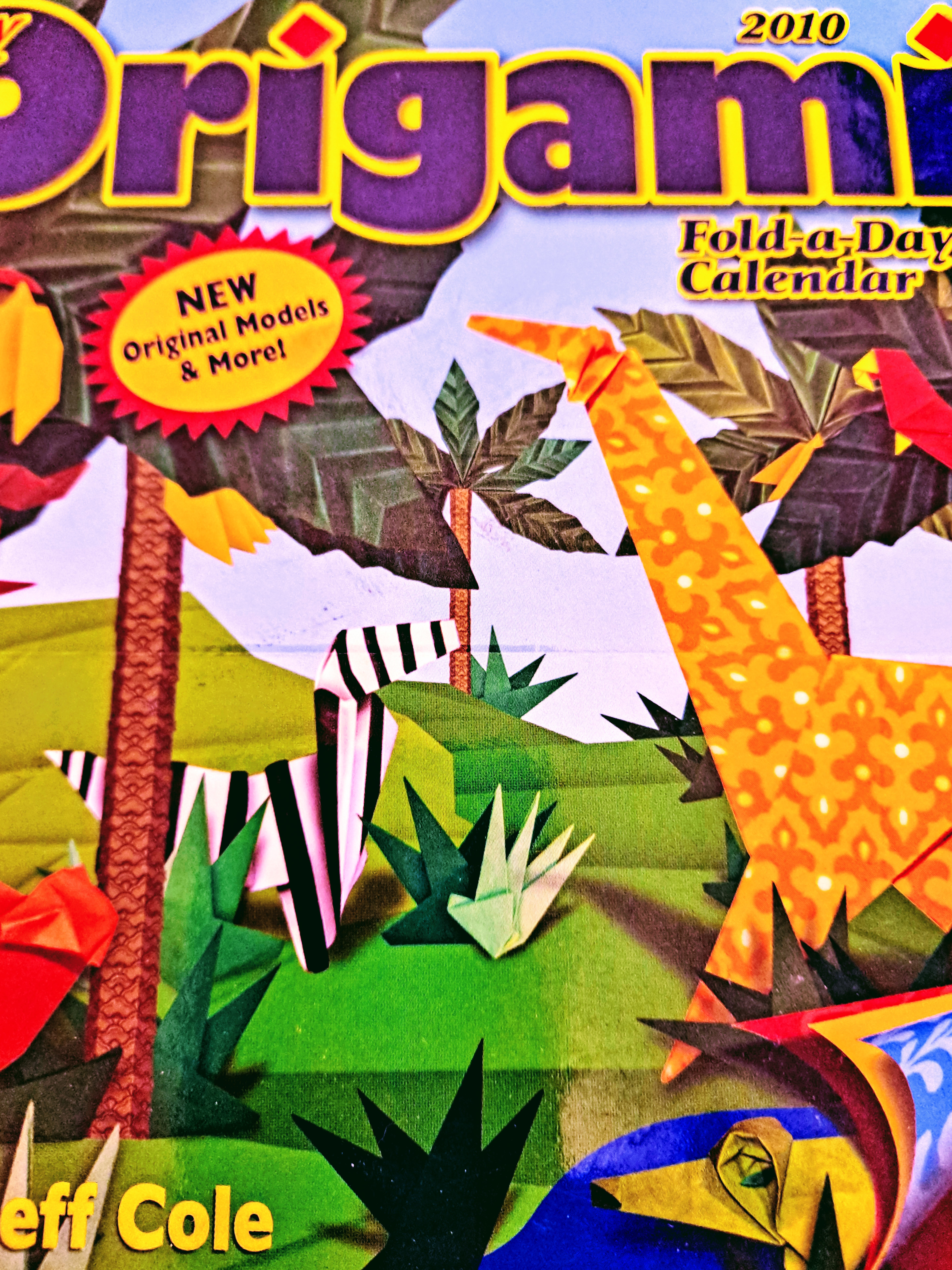
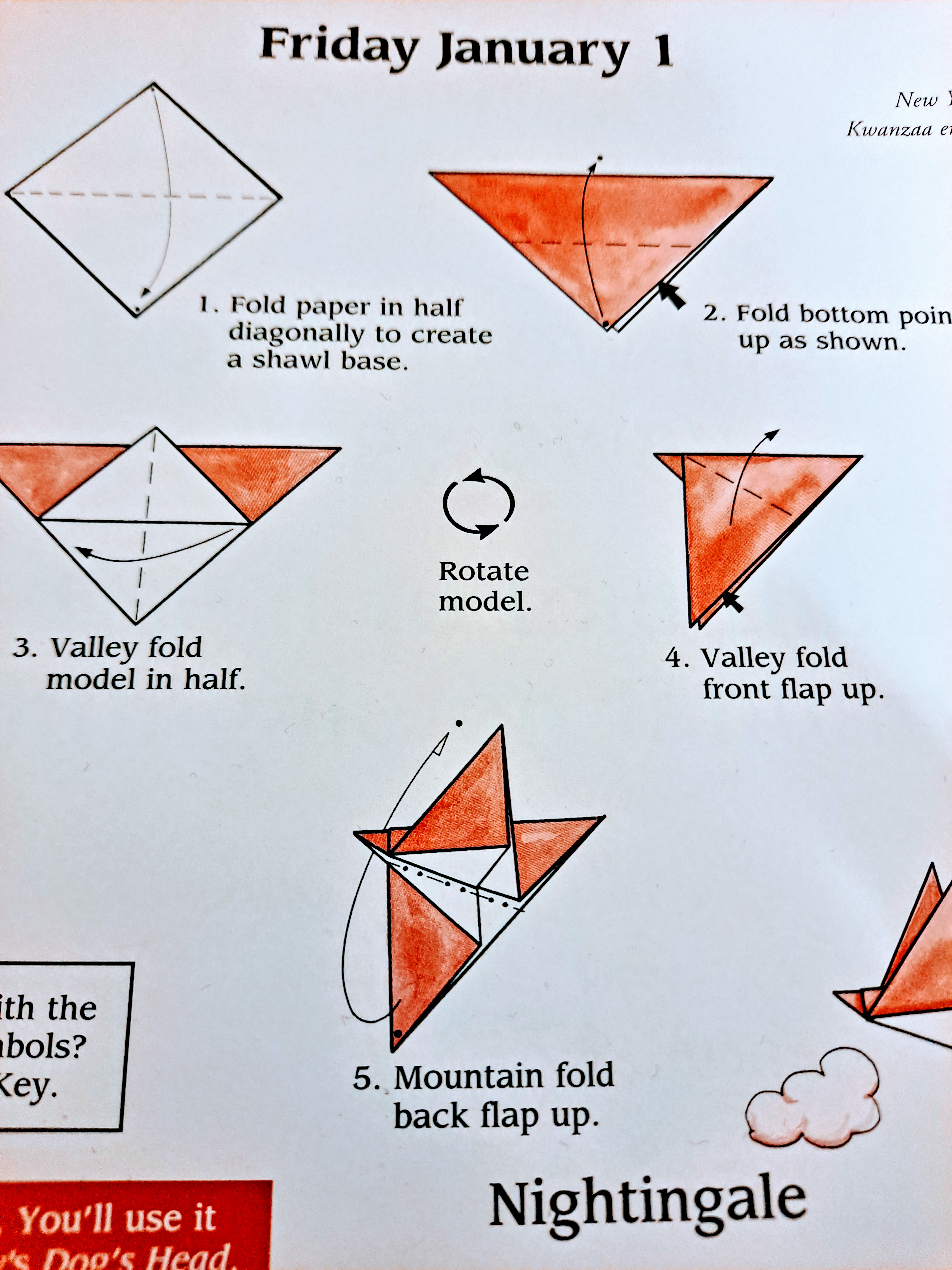
Don’t get me wrong — I love paper. Plain white paper. Colored paper. Wrapping paper. Note paper. Lined paper. Notebook paper. Origami paper. All kinds and thicknesses of paper. It’s an amazing and versatile product that brightens my day, especially when I get a greeting card or read a book or jot down possible topics for this blog. I am especially grateful that the tarot cards I’m trying to learn are just that — cards — and not some electronic device that will shuffle and deal the non-existent cards for me. (There are such programs, and I do check one out occasionally, but that’s different than my getting a feel for the cards.)

Although I’m now in the habit of writing using a keyboard, my first books were all written longhand because I have much better brain/hand coordination than I do brain/keyboard. And although I do read ebooks, I am still old-fashioned enough to like physical printed books.

As you can see, it’s not paper as a valuable commodity I would like to see less of, just a lot less waste paper.

***

“I am Bob, the Right Hand of God. As part of the galactic renewal program, God has accepted an offer from a development company on the planet Xerxes to turn Earth into a theme park. Not even God can stop progress, but to tell the truth, He’s glad of the change. He’s never been satisfied with Earth. For one thing, there are too many humans on it. He’s decided to eliminate anyone who isn’t nice, and because He’s God, He knows who you are; you can’t talk your way out of it as you humans normally do.”

Click here to buy Bob, The Right Hand of God

A Perfect Small-Town Day

Today was one of those perfect small-town days you see in romantic movies, old television shows, or sentimental paintings. To start off, the weather was perfect — sunny, deep blue skies, the air cool enough to require a light jacket, and best of all, no wind.

Although I’ve been lazy lately, apparently I decided this was the day to package up a couple of gifts to mail. To that end, I took a walk to the post office to pick up a couple of flat-rate boxes, then came home and started wrapping and packing.

This took the better part of the day’s middle because I had to drag out all the paraphernalia — tape, scissors, wrapping paper, package fill, etc. Oddly, for a person who doesn’t really celebrate Christmas except for sending a couple of gifts when finances allow, I have a LOT of Christmas stuff.

To start off, I have two small trees and two tiny trees —- one small tree was a gift when I was laid up with my almost-destroyed arm, another was a gift to my father that I ended up keeping. One tiny tree was supposed to be a gift that somehow didn’t work out, and one was a recent gift from a local craftsy friend. (Craftsy because to use “crafty” connotes something other than I wanted to say.) Then I have wreaths — one that started off as a hat decoration, and another I made at an Art Guild meeting last year. (Yes, I do have a red wall! Not my choice since it was here when I came, but I’ve come to appreciate it.)

I also somehow ended up with a small snowman collection, as well as boxes of ornaments and bowls of lights. So, lots of Christmas stuff strewn around!

I kind of digressed for a minute, but now back to my story. I did get the packages ready in plenty of time to get to the post office in case it was keeping shorter hours. (Because of The Bob, we’re on “red” alert, whatever that means.)

As I was getting the packages out of the car, the husband of a friend I used to play dominoes with came down the post office stairs. I said hello and asked after his wife. A fellow of few words, he simply opened the passenger door of his vehicle. And there his wife was. It’s a shame this isn’t a hugging time (and it would have been awkward because of her being in the car), but it was truly good to see her.

After they left, I gathered up my packages and climbed the stairs into the post office. (Yes! I was actually able to climb the stairs!) There was only one woman waiting, the person I most wanted to see. One of my first and dearest new friends. Her being there helped keep me from gagging when the clerk added up the postage. (It seems only last year the flat rate price for priority mail was $2.50, but apparently, that “last year” was a few decades ago.)

We chatted until both of us completed our business. (She’s been waiting for a package for a couple of weeks now that seems to be stalled in Denver, and I told her the last package I got from the eastern part of the country was stalled in Denver for three weeks, so not to worry. Then the postmaster came out with her tracking information, and told her the same thing. Denver seems to hate us out here.)

While continuing to talk outside, we happened to notice a mutual friend — another of those dearest friends. So we chatted with her, met her new great-grandbaby (at a suitable distance of course) and then we all went our separate ways.

My way took me to the grocery store where I encountered a neighbor, and even better, I got one of the friendly checkout clerks.

Truly a perfect small-town day.

Even coming home to a mess (the first time I actually left a mess behind when I headed out to run errands) didn’t present a problem. In fact, it helped solidify the perfection as I puttered around putting things away. I still have a mess because all those Christmas decorations are piled up in the living room, but that will be sorted out in the next couple of days.

***

If you haven’t yet read A Spark of Heavenly Fire, my novel of a quarantine that predated this pandemic by more than ten years, you can read the first chapter online here: http://patbertram.com/A_Spark_of_Heavenly_Fire.html

Buy it on Amazon here: https://www.amazon.com/gp/product/B0024FB5H6/

Download the first 30% free on Smashwords: https://www.smashwords.com/books/view/1842