Today Is a Good Day and I Am Feeling Fine

On the advice of a friend, I have been doing a daily affirmation, telling myself I am happy, but it doesn’t work for me because I’m not sure I want to be happy. Un-unhappy, yes. Unsad, yes. Contented, of course. At peace, for sure. But happy? It’s not a state I’ve ever aspired to. I’ve always believed other things are much more important, things such as love, truth, purpose, freedom, kindness, integrity. Happiness means many different things to many people, but to me, happiness has an element of giddiness, of being glad to be alive, of effervescence, maybe. I prefer being centered, not tipping toward happiness or sadness, but unafraid of my tomorrows, satisfied with my yesterdays, at peace with my todays.

To that end, I have changed my daily affirmation to “This is a good day and I am feeling fine.” This affirmation was gift from my yoga instructor, a short meditation to help us get through the holidays. She suggested we sit quietly, breathe in thinking “This is a good day,” and exhale thinking “I am feeling fine.” And it works for me. Of course, it helps that my days now are good, no real traumas, no sock-to-the stomach bouts of grief, just a slow gentle roll into sadness now and again, and a slow gentle roll back to center. The few tears, when they come, seem more nostalgic than debilitating.

The past couple of days have been especially good — lovely weather, clear skies, warm sun, breezes no stronger than a breath. And I am feeling fine. No overwhelming aches and pains, no worry or stress to weigh down my shoulders. I’m standing tall, breathing deep, opening myself up the world and the future.

I’m still not sure where I am going, what I am looking for, what I expect to find. For now, it’s enough that I am continuing to open myself to possibilities, continuing to believe that today is a good day and I am feeling fine.

***

Pat Bertram is the author of the conspiracy novels Light Bringer, More Deaths Than One, A Spark of Heavenly Fire, and Daughter Am I. Bertram is also the author of Grief: The Great Yearning, “an exquisite book, wrenching to read, and at the same time full of profound truths.” Connect with Pat on Google+
Double Whammy of Grief

For more two and a half years, Saturday was a sadder day for me. My life mate/soul mate died late Friday night or early Saturday morning, depending on how you look at it, and often my mind/body saw it both ways, with an upswing of grief on Friday that grew to a crescendo on Saturday and didn’t dissipate until dawn on Sunday. Even if I paid no attention to the calendar, grief surged, which always mystified me — how could my body know when I didn’t?

Today is a double whammy — not only is it Saturday, but it is the 27th, the date of his death — but there doesn’t seem to be a great upsurge of sorrow on these days and dates anymore. My sadness is like an underground river running beneath my consciousness, and it doesn’t profoundly affect the hard-won peace of my days, though it does ripple and churn at times, most notably when I remember why he is out of my life. Death is too big for me to understand, and the thought of his being dead always brings tears to my eyes. Even now, after thirty-one months, I cannot bear that he is dead. Perhaps he doesn’t mind, but since he has yet to communicate with me in any way that I can comprehend, I don’t know how he is doing or even if he “is.” (Many people see butterflies or experience things that seem out of place or out of time, but I never have.)

Lately I’ve been posting articles about looking forward, about being me, about trying to open myself to surprises and the power of the universe, and sometimes I wonder if I’m just fooling myself (and you) with this pretense of being okay with my current state of affairs. I’m not okay with it, but I can’t undo death — not just his, but death in general — and so I try to act as if the universe is unfolding the way it should. And perhaps, in the final analysis, that’s all any of us can do — fake it until we make it. (Whatever “it” is.)

Maybe there is a special destiny waiting for me and that is why I am still here, even though I somehow always assumed death would pull me out of this world when it took him. Maybe my being here is nothing but a trick of genetics or a roll of destiny’s dice, but whatever the reason, I am still here. And he is not. It doesn’t seem fair, though I still don’t know which of us got the worst of the deal and which of us got the best. Could it be there is no worst or best? I don’t know, and probably will never know while I’m here on this earth. I can only act as if this is the best for me and go from here to wherever life might lead me.

***

Pat Bertram is the author of the conspiracy novels Light Bringer, More Deaths Than One, A Spark of Heavenly Fire, and Daughter Am I. Bertram is also the author of Grief: The Great Yearning, “an exquisite book, wrenching to read, and at the same time full of profound truths.” Connect with Pat on Google+

If You Don’t Have a Dream, How You Gonna Have a Dream Come True?

Do we need to have a dream? It seems to be the consensus that yes, we do. As Harper’s Bizarre once sang, “You gotta have a dream. If you don’t have a dream, how you gonna have a dream come true?”

A friend is close to achieving her dream of living by the sea and writing the livelong day. She just needs to wait a bit to make sure her sales will remain steady before she quits her day job. She attributes her dream coming true to talking about it, planning it, visualizing it. This is the way many people make their dreams come true, and it seems to work, but what if, like me, you only have vague longings rather than a concrete dream?

I would like to have a dream, to work toward something I am passionate about, but so far such passions elude me. I’d like to make a living off my books, of course. Do you notice I said “off my books” rather than “from writing”? Almost anyone can make a living by writing nowadays if they write sexy romances or mystery series and churn out two to four books a year, but I am a slow writer with few ideas. I average one book every two years, and to increase my output, I’d have to write all day every day and far into the night. Even if I could dredge up all the necessary words, I’d have to contend with the physical hardship of sitting in one place for hours on end. Besides, I don’t like romances or series of any kind. And, unlike my friend, I have no interest in spending all my time writing. There is still real-world living I have to do before I can totally immerse myself in fictional worlds.

Outside of wanting to make a living off my books, I have no real dreams. Never have had. I want, of course, but I want something greater than my imaginings. Something so wonderful or awesome that my life becomes transformed.

As a child, I loved the mystique of presents. There was the possibility of getting the gift I always wanted but didn’t know I wanted. Oddly, the most disappointing gifts were when I received what I asked for. As an adult, I don’t want to limit my dreams to what I know to ask for. I want the perfect dream — the life I always wanted but didn’t know I wanted. The problem is, if I don’t know what that dream is, if I can’t imagine it, how can I make it come true?

All I know is that I need to find a way to open myself up to the possibility of surprises. So far, I’m doing this by exploring my inner and outer worlds — searching for ways to connect more deeply to life, being present here in the now, being me. Perhaps one day, as I continue to grow and develop, I will find the surprises and unknown wonders that I have to believe are waiting for me.

***

Pat Bertram is the author of the conspiracy novels Light Bringer, More Deaths Than One, A Spark of Heavenly Fire, and Daughter Am I. Bertram is also the author of Grief: The Great Yearning, “an exquisite book, wrenching to read, and at the same time full of profound truths.” Connect with Pat on Google+

Opening Myself to the Power of the Universe

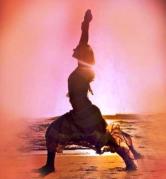
I’ve never had an interest in yoga, though as it turns out, several of my morning stretching exercises are yoga poses. But now I’m hooked and mostly because of a single pose called Warrior. (I can’t even pronounce the Sanskrit name: Virabhadrasana.)

The pose seems to open me up to the universe and myself, makes me feel strong and potentially invincible, as if I’m tapping into hidden sources of power. I have no idea why the pose has this effect on me since the others in the class don’t have the same affinity for the pose that I do. All I know is the effect it has on me. I feel the power even more when I am out in the desert, alone with the sun, facing the mountains.

“Warrior 1” is shown here, with the arms extended over head. In “Warrior 2”, the right leg is foremost, the right arm is extended straight out in front and the left arm is stretched out behind in line with the legs, and the head pointing toward the right thumbs (You can find images of the pose by Googling “Warrior 2.”) You also do the pose in reverse, with the left leg foremost.

It will be interesting to find out what happens over the course of the months by doing this exercise. If the effect isn’t an illusion, and I’m really gathering power, then watch out! Who knows what I will become.


Twisting Time is Here: The Power of Saying Yes

A few years ago I developed a new philosophy: say yes. When people ask me to do something or invite me somewhere or suggest a course of action that I would not normally have considered, I try to say yes instead of immediately dismissing the idea as I once would have done. I’d hoped that by opening myself to diverse activities, I would spark new interests, maybe even twist off my usual path onto a new path of living. So, far, that hasn’t happened. I still don’t have much life in my life or spring in my step, though I don’t know whether these are lingering effects of grief or simply a sign that I haven’t yet found something to be passionate about.

One of my most recent yeses lead to yoga classes, something I had absolutely no interest in, especially since I had no interest in twisting myself into uncomfortable positions. The point of these particular classes is to open oneself up, to breathe, to be, which falls right in line with my latest outlook, which I found interesting. I’ve been pausing in my desert walks to do a few of the breathing exercises (the standing ones), opening myself to the universe, and then saying my affirmation: “I am happy. I am being me. I am where I am supposed to be.” And for a while, I am happy, or at least at peace.

Another yes landed me at twist party for Chubby Checker’s 71st birthday. It was actually a concert, but everyone danced in the aisles, and a couple of times Chubby Checker came down off the stage and joined us. We also sang happy birthday to him, and I found singing to a singer corny enough to be amusing. (Amazing — 71 and still able to perform for 75 minutes and more.)

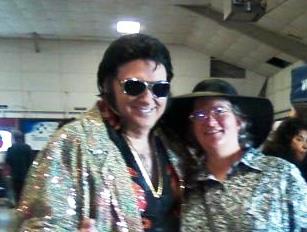
Other recent yeses took me to see the top-rated Elvis tribute artist in the world and a war dance demonstration.

None of these yeses twisted my life around, changed my thinking, or added anything besides an hour or so of diversion, but still, I’ll keep saying yes. Anything can happen, and perhaps that possibility is the real value of saying yes.

***

Pat Bertram is the author of the conspiracy novels Light Bringer, More Deaths Than One, A Spark of Heavenly Fire, and Daughter Am I. Bertram is also the author of Grief: The Great Yearning, “an exquisite book, wrenching to read, and at the same time full of profound truths.”

Being is Reason Enough for Living

I saw the 1993 movie Indian Summer the other day, and one scene still haunts me. Alan Arkin takes Diane Lane, whose husband has been dead a year, to see a house on the lake. He tells her the owner died fifteen years previously and, abiding by the old guy’s wishes, he dropped the guy’s body in the center of the lake. The guy’s wife continued to live in the house, and fifteen years later, when she died, Arkin “buried” her next to her husband. Arkin say he should simply have dropped the wife in the lake when the husband died as a not very subtle way of telling Lane to get on with her life.

Oddly, the reinforcement of the idea that after a year we bereft are supposed to set aside our grief and get on with our life (get a guy, in other words) didn’t bother me as much as the implication that the old woman wasted her life by living at the lake alone.

Is living alone a waste? Not everyone gets to be with someone, and even those who do get to be with someone for a while don’t always get to live out their life with that person. So does that mean their lives are a waste? Not everyone is gifted with friends or has the gift of making friends. Does that mean the lives of the friendless are a waste? We’re told repeatedly in songs, movies, stories, poems, greeting cards, that love makes the world go round. But if love doesn’t come to you, does that mean you should just get off the world and let it go round without you?

If living alone is a waste, does that mean every minute you’re not with someone, anyone, you’re wasting your life? Of course not. So what is the break off point? It’s okay to be alone for a day or two? A week? A year? Is it better to be with someone you hate just so that you’re not alone? I don’t believe that, and I hope you don’t either.

Maybe Arkin’s character thought that being isolated made the old woman’s life a waste. As long as her husband was alive, apparently living by the lake was okay, but when he died, what was she supposed to do — give up her cherished home, the clean air, closeness to nature for a dubious life in the city? And if she did move, what would keep her from being even more isolated? Some of the loneliest people are those who live in the midst of others.

Or maybe Arkin’s character assumed the woman was unhappy, though sadness isn’t a reason to think her life was worthless. Happiness itself doesn’t make life worthwhile — it only feels that way.

I don’t suppose this scene would have bothered me so much if I weren’t struggling with these questions in my own life. There is a good chance I will live out the rest of my life alone. That doesn’t mean — can’t mean — my life has no worth. It would be a pathetic state of affairs if being with someone is the only thing that makes life worthwhile.

Being is reason enough for living (which Alan Arkin’s character, the supposedly wise old Unca Lou should have known). Even if we are blessed with love and friendship, the truth still remains: our only obligation to life is to live the best we can for as long as we can — to simply “be.”

***

Pat Bertram is the author of the conspiracy novels Light Bringer, More Deaths Than One, A Spark of Heavenly Fire, and Daughter Am I. Bertram is also the author of Grief: The Great Yearning, “an exquisite book, wrenching to read, and at the same time full of profound truths.”

Why I Write About My Grief

I started writing about grief not only to make sense of my own feelings, but also as a rebellion against a society that reveres happiness at all costs. I’d never heard of the sort of all-consuming grief that I experienced except for those who were considered unstable, but I knew I was completely well adjusted, so anything I felt had to be normal.

To be honest, I never had any intention of getting personal in this blog. I launched it to establish an online presence for when I got published. (After starting this blog, it took a year to find a publisher, although I’d already been on the quest for several years. After acceptance, it took another six months for my books to be published, but I made it!) Those first years of blogging, I wrote about my efforts to get published, what I learned about improving my writing, the novels I read and what I learned about writing from their inadequacies.

After my life mate/soul mate died, everything changed. I’d intended to keep my grief to myself and continue writing innocuous little posts, but I kept stumbling over people’s ignorance of grief. I found this ignorance in people I knew. (I will never forget those blank looks of incomprehension in people’s eyes when, sobbing, I told them about my loss. Sometimes they looked at me as if I were an alien species, or some kind of strange bug.)

And I found this ignorance in books I read.

One novelist dismissed her character’s grief at the death of his wife with a single sentence, “He went through all the five stages of grief.” Anyone who has gone through the multi-faceted grief of losing a soul mate knows that there are dozens of stages of grief (or none at all). You spiral round and round, in a dizzying whirl of emotions, not just shock and anger and sadness, but frustration, bitterness, yearning, hope, helplessness, confusion, loneliness, despair, guilt, questioning, angst over loss of faith, and you keep revisiting each of these emotions, hanging on the best you can, until ideally, you reach a place of peace and life opens up again.

Another novelist had her widow cry for a night then put aside her grief and get on with her life. Believe me, you can’t put aside such grief. It’s not just emotional but also physical, a ripping away of his presence from your soul, a deep-seated panic when your lizard brain realizes that half of your survival unit is gone, a body/mind bewilderment so great you can barely breathe. You don’t control raw grief. Grief controls you.

Not only did I discover that few people had any idea of the scope of such grief, most people selfishly urged the bereft to get on with their lives because they couldn’t bear to see their mother/sister/friend’s sadness.

There is something dreadfully wrong with a society that expects the bereft to hide their grief after a couple of months simply because it makes people uncomfortable to see outward shows of mourning. Seeing grief makes people realize how ephemeral their lives really are, and they can’t handle it (which leaves the bereft, who already feel isolated, totally alone with their sorrow.) It also cracks the facade of our relentlessly glass-half-full society.

Although I am a private person, not given to airing my problems in public, I thought it wrong to continue the charade that life goes on as normal after losing the one person who makes life worth living. So, over the past two-and-a-half years, I have made it my mission to tell the truth about grief. Even though I have mostly reached the stage of peace, and life is opening up again, at least a little bit, grief is still a part of my life. There is a void in my world — an absence — where he once was, and that void shadows me and probably always will. Although his death changed the circumstances of my life, thrusting me into an alien world, grief — living with it, dealing with it, accepting it — changed me . . . forever. It has made me who I am today and who I will become tomorrow — strong, confident, and able to handle anything that comes my way.

Would I prefer to have him in my life? Absolutely. But that is not an option. All I can do, all any of us can do, is deal with what lies before us, regardless of a society that frowns on mourning. It takes three to five years to find a renewed interest in life after such a grievous loss, so the next time you see your mother, father, sister, daughter crying for her/his spouse, deal with it. Just because you’re no longer tearful, be aware that even though you have lost the same person, you have not lost the same connection. If it makes you sad to see her mourning, think how much sadder it is for her to experience that sorrow. Hug her, be there for her. Don’t hurry her through grief. She’ll find her way back to happiness in her own time.

***

Pat Bertram is the author of the conspiracy novels Light Bringer, More Deaths Than One, A Spark of Heavenly Fire, and Daughter Am I. Bertram is also the author of Grief: The Great Yearning, “an exquisite book, wrenching to read, and at the same time full of profound truths.” All Bertram’s books are available both in print and in ebook format. You can get them online at Second Wind Publishing, Amazon, B&N and Smashwords. At Smashwords, the books are available in all ebook formats including palm reading devices, and you can download the first 20-30% free. Print books can be ordered from your favorite bookstore.

Grief Update — Thirty Months of Survival

My life mate/soul mate/best friend died two and a half years ago today. Thirty months. Written out like that, thirty months seems like a very long time, but looking back, it’s no time at all. It takes three to five years to find renewed life after such a grievous loss, or so I’ve been told, and I am only halfway there. It might seem to you as if this talk of grief means I do nothing but cry for him, but the truth is, I do quite well, with only a few unshed tears stinging my eyes now and again.

Feelings other than sadness are beginning to arise, though.

Throughout all these months, I’ve tried not to use the word “loss” when referring to my deceased mate because he isn’t misplaced, he is dead. But now, sometimes out of the blue, I’ll get that dropping elevator feeling of having misplaced something — something of untold value or something I desperately need — and I don’t know where or how I lost it. This sensation is not connected to any memory of him, and is not the same as the feeling of bereftness or yearning I so often had during the first couple of years, but still it makes the world seem precarious and alien at times.

Most things are getting better — I do not have the unimaginable pain I experienced in the beginning. Nor does the yearning for him claw at me, though I still miss him, still long for one more smile, still wish for one more word. But something is getting worse, something akin to a soul thirst or a soul hunger. For many years, being with him satisfied a need in me that I wasn’t aware of. Perhaps a recharging of my energy after a long day or maybe a regeneration of spirit. (For someone who writes and thinks as much as I do, I should be able to come up with a word to describe this need, but I only know it as a void, as something I once had but am no longer getting.) When I am hungry and do not eat, I get hungrier. When I am thirsty and do not drink, I get thirstier. And when this particular soul need is not slaked, I get needier.

I am finding other ways of fulfilling the roles he played in my life. Wherever he was, there was my home, and now I’m learning to find home wherever I might be. He was my playmate for many years before he got too ill, and now I have friends to do things with — have lunch, go to festivals and fairs, take yoga classes (and maybe Tai Chi — something I’ve always wanted to do). There is no one with whom I can talk to about all the things he and I used to discuss, but I can spread those topics around, discussing each with a different friend.

But so far I have not found a way around the role he filled for electrifying my spirit, (for lack of a better word). Walking in the desert helps, being with friends helps, but neither of those things sustains me once they are over. Perhaps a new love — another person or a passion — would help, but I am too new for another relationship (I’m still learning how to be me), and so far something to care passionately about remains beyond my reach.

I hope you understand that I am merely chronicling yet another step on my journey and not feeling sorry for myself or asking for pity. I once had something that few people get to experience — a soul connection with another human being. It was not always a happy or comfortable connection — at various times we both railed against it — but through it all, the good times and the bad, we were together.

I saw a plaque today: We can do anything as long as we’re together. I really believed that when he and I were together, we could do anything, though it turned out not to be true. We couldn’t make him well. We couldn’t keep him from dying. And now, we are not together, have not been together for thirty months, and will not be together for the rest of my life.

A person can get used to anything, so eventually I will get used to plodding along without that galvanizing connection with him, but for now, I’m still trying to find my way.

Can We Be Whoever We Want to Be?

There is a fallacy that dogs us our whole lives, instilled in us by our parents, teachers, preachers, writers, and everyone else who has influence over young minds. We are told over and over again that we can be whoever we want to be, but this simply is not true. We can never be anyone other than ourselves, no matter how hard we try, and anyone who has ever taken a vacation to get away from it all knows this. No matter where you go, there you are.

We can participate in the creation of ourselves, trying on new styles of dressing and living, for example, but that does not change the essence of our being. We go through many metamorphoses during the course of our lives, from infant to adolescent, from adolescent to adult, from adult to . . . whatever one is called in the last stage of life. (Odd that there isn’t a noun to denote such a person. There are words to describe all the other stages of life, but not that one.) We also go through traumas and grief and come out the other side feeling like a different person, but that person is just another facet of our being, not a completely new entity.

Often when we are told we can be whoever we want to be, the speaker is referring to our occupation or vocation, not our essence, but even this variation of the saying is a fallacy, because we cannot always be whoever we want to be. For example, a short, fifty-year-old man with small hands and an inability to handle a basketball will never be a professional basketball player, garning millions of dollars and fans, no matter how much he desires it. Not every girl who dreams of being romanced by the love of her life and living happily ever after achieves her dream. Too often the frogs she kisses are simply frogs. Or the love of her life dies before the relationship can come to full flower, leaving her alone and grieving, which happens way more than we ever imagine.

Even worse than being made to believe we can be whoever we want is being made to believe that we cannot be who we want to be.

When I was in high school, my sophomore English teacher told me that she saved papers from all the students she thought would make it as a writer but that she never saved any of mine. It was sort of a strange and very cruel thing to say, particularly since she knew I planned to write. I never thought of her as cruel, so her words puzzled me, but other than that, the slur never really mattered. I had no burning desire to be a writer — my saying so was more of a statement of my love of words, and I have kept that love throughout all my life.

I never really had dreams, though I often wanted not to be me, which is why my current commitment to being me is so important. But now I wonder if I need to find (or create) a dream, too. Are impossible dreams important, helping us through the traumas of our lives? Or does the unfilfillment of those dreams cause other traumas? Sometimes a miracle does happen, and the impossible suddenly becomes possible, but a dependence on miracles seems a rather inept way of planning for one’s future, no matter what our age. So maybe the fallacy that we can be whoever we want to be isn’t important. Perhaps it’s the instillation of dreams that is important.

Writing My Life

I’m writing a short story for the Second Wind Publishing holiday anthology, and it just occurred to me that the main character is the first one I have created since the death of my life mate/soul mate who isn’t a grieving widow.

I started a novel a couple of years ago, wanting to capture what it felt like to lose a spouse while my feelings were fresh, but I haven’t finished the book. The pain that seeps into the story is too raw for me to handle yet, and besides, I still don’t know what the point of the story is. Is it primarily to show what it feels like to grieve? Is it primarily the mystery of why her minister husband would get out of his deathbed to kill a neighbor? Is it primarily the mystery of who she is now that she is no longer a minister’s wife? Is it a story of renewal, love, acceptance? Unless I figure it out, that poor widow is doomed to grieve forever in the pages of that unfinished manuscript.

The next piece of fiction I attempted was in Rubicon Ranch, a collaborative mystery series I’m writing online with other Second Wind authors. My character is Melanie Gray, a writer whose husband died in a car accident, but certain inconsistencies are showing up in the investigation, pointing to something other than an accident. Melanie’s attempts to come to terms with her life and to find the truth of his death are a couple of the unifying themes in the series, though they are not the focus of the stories.

The third piece of fiction I wrote was “The Willow,” a short story I did for Change is in the Wind, a previous Second Wind anthology. My character in that story is a woman who found renewal in the spring of her second year of grief.

My fourth project is a steampunk collaboration I am doing with several authors I met online. It should come as no surprise that my character is grieving woman. The deaths of her husband and his mother are the catalyst for the story, since her father-in-law goes back in time to try to save them. This sentence hints that maybe her grief (and mine) is waning: Flo stood motionless and stared at her husband. She wanted to run to him, to embrace him, but he looked different somehow. Unapproachable. There seemed to be a bit of flabbiness around his middle, a discontented tilt to his head, a defeated slump to his shoulders. What had happened to the radiant young man she remembered? Had her vision of him changed over the past year, become idealized? Or had she stopped seeing the truth of him even before he died?

In the story I am currently writing, the character’s boyfriend doesn’t die. He leaves her. She doesn’t go into paroxysms of grief, at least not much, but she does cut her hair in an entirely unconscious symbol of mourning (so biblical!). I had her lopping off her long tresses more out rebellion than out of sorrow, since he had always demanded that she didn’t change.

It is strange to see such a pattern show up in my writing. From stark grief, to sustained grief, to a semblance of peace, to seeing the deceased as not so perfect, to easing the focus on grief. Apparently, no matter what I write, I am somehow writing my life (though oddly, the characters are getting progressively younger).

I’ll be interested to see what I write next.