Safe and Well and At Peace

I am very grateful to be safe and well and at peace today, with only minor irritations to plague me, such as smoky air and wind. It doesn’t seem right to be grateful on my own behalf when there are so many problems in the world right now, not just internationally, but locally. Wildfires on either end of town pretty much isolated us yesterday because the highway had to be closed. (Not that the closure itself is a problem for me since I wasn’t planning on going anywhere, and even if I wanted to, I can’t drive until my brakes get fixed.) Some friends were evacuated, though most were allowed back home today. (The smoke is so bad in town, I can only imagine what it’s like out there near the burn zone even if they are so lucky as to be able to return home.) Others are still homeless, and from what I understand, a couple of houses did burn.

Then there are all the people I know who are still suffering long term affects from The Bob, as well as those with new and old cancer diagnoses.

I don’t even want to get into the whole war thing, except to say, doesn’t such a hot war seem out of place in the world today? Don’t we call ourselves homo sapiens sapiens? Not just wise man, but wise, wise man. Yeah, right.

On the other hand, even though it feels wrong to be grateful that I am safe and well and at peace, as if I were indulging in a bit of smugness (though truly, I am not), wouldn’t it be worse if I were not grateful? As if I took my good fortune for granted?

You grievers of all people know how little I take my good fortune for granted. We all have suffered such great losses and because of that, we are grateful for whatever peace and safety and wellness we manage to find. We also know how quickly fortunes change — health disappears in an instant, death comes between one breath and the next, what is given can be taken away.

I guess I’m answering my own question. Not the one about war, because that is unanswerable, but the one about it being worse if I were not grateful. Yes, it would be worse to take whatever good comes my way (even if it’s only good in relation to other people’s ill fortune) as if it were my due.

So, today — as every day — I am grateful to be well and safe and at peace. And I wish the same for you.

***

Pat Bertram is the author of Grief: The Inside Story – A Guide to Surviving the Loss of a Loved One. “Grief: The Inside Story is perfect and that is not hyperbole! It is exactly what folk who are grieving need to read.” –Leesa Healy, RN, GDAS GDAT, Emotional/Mental Health Therapist & Educator.
Small Town Girl

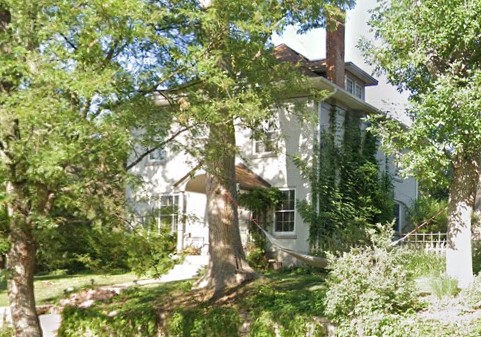
A friend asked me if I missed Denver, and I didn’t even have to stop to think to be able to answer that no, I didn’t. In fact, although I was born and raised in Denver and lived there during my early adult years, I was done the city long before I left it.

This (my leaving) was back in the “imagine a great city” era, where the first Hispanic mayor (a transplant from Texas because Texas already had an Hispanic mayor and Colorado didn’t) bought a name for himself with the promise of growth. And grow, Denver did, but so did graft and crime and various boondoggles such as the whole mess with Denver International Airport and the Silverado criminal activity. (I’m not saying that mayor was directly responsible, but it is interesting to me that two of the major players in the destruction of the Denver that I knew and loved were both Texans.)

I definitely don’t miss the city Denver was growing into back when I left. I don’t even miss the Denver of my childhood, though back then, it was a good place to grow up. The air was clear, traffic was light, there was no skyline to speak of, and almost everywhere you went, you could see the mountains. (Oddly, the ubiquitous mountain views masked my lack of innate orientation because although I can’t feel the compass directions as some people do, I always knew where I was in relation to the mountains.)

If there would be any things I miss, those are the very things I have found in my new town, such as the feel of the air, being able to walk everywhere (especially the library), knowing people, not having to deal with traffic, and the lack of megalithic stores. (My trip a few days ago through three of the major front range cities in Colorado left me feeling exceedingly claustrophobic. There was just too much of everything; too many people, too much traffic, too many too-tall buildings, too much pollution, just . . . too much.)

Oddly, I don’t miss the mountains, which formed the backdrop to most of my life, not just in Denver, but on the western slope where Jeff and I spent most of our years together, and the high desert of California where I lived for almost a decade after Jeff died. Admittedly, it would be nice to have a distant mountain view to keep me oriented, but it doesn’t really matter. I’m gradually building a map in my head of the area I now live, and can mentally turn it around to match what I am seeing, but even that doesn’t really matter. I just follow the streets, and they take me where I need to go. One thing I have here that I never had before was a next-door friend. The neighborhood I grew up in was mostly inhabited with older folks, and there weren’t any girls my age on the block. The neighborhood I now live in is also mostly inhabited by older folks, but it makes a huge difference that I am one of them.

A major reason for my not missing Denver has nothing to do with geography or politics or population or anything else outside of me. It’s that I am not that person who grew up in Denver. Sometimes it seems as if the woman I am sprang up full grown sometime after Jeff died, but I know (as do you), that any peace I have attained, that any growth — mental, emotional, spiritual — was hard won.

I am exceedingly grateful, actually, that I don’t have to live in Denver. Somehow, despite having grown up in a large-but-not-yet-great city, I turned out to be a small-town girl at heart. And metro Denver is anything but a small town.

***

Pat Bertram is the author of Grief: The Inside Story – A Guide to Surviving the Loss of a Loved One. “Grief: The Inside Story is perfect and that is not hyperbole! It is exactly what folk who are grieving need to read.” –Leesa Healy, RN, GDAS GDAT, Emotional/Mental Health Therapist & Educator.
Twelve Years. Unbelievable.

Today is the twelfth anniversary of Jeff’s death. If I hadn’t made a note of the anniversary on my calendar, I might have forgotten to commemorate the day. I remember the date he died, of course, but I lost track of time and didn’t realize today was the 27th. It used to be I couldn’t forget even if I wanted to because the day was written in my bones, in my soul, and I could feel it with every breath I took. But now, not so much. I still miss him, still feel the void, still have the date emblazoned in my mind, but my body has forgotten.

It’s an odd — and confusing — experience, this thing called grief. I am long past the mourning stage. When rare tears do come, they barely spill over, not like the early days when tears were so copious, they chapped my cheeks. In fact, the emotion of it all is so distant, my life with Jeff and my grief after his death seem almost mythic, a half-remembered dream that dissipates in the bright light of daily activity. (Come to think of it, when I speak to him — or rather, to his photo — it’s generally at night, just a few words mentioning my day, words that really mean “I am here, I am alive, I matter.”)

It’s hard now, in my settled, peaceful, and generally pleasant life to believe I was that shattered woman who screamed her pain to the uncaring winds. That sort of wild grief seems so out of character for me. Until then I believed I was a rather placid, stoic, and resilient person, and I believe that of myself again today, but during those first years of grief? I was anything but placid and stoic. And no wonder — the very foundation of my life, my identity, my hopes for the future, everything that anchored me to the earth had disappeared in an instant leaving me teetering at the edge of the abyss.

I’m surprised I survived that feral time. Apparently, though, at rock bottom, I really am mostly placid, stoic, and resilient. It just took a while for those characteristics to rise to the surface after I was hit with the tsunami of grief, but I learned to go with the flow, to take whatever came, to feel whatever I felt, to deal with the pain however I could, and to wait for a more peaceful time. I also learned that such all-encompassing and savage grief has a strong physical component that supersedes any character trait or emotional response. Hormones go nuts, our brain chemistry changes, and often we suffer from stress-related issues. Losing a life mate ranks at the very top of stressful situations, and that stress itself causes physiological changes.

But I came through all that. And now it is twelve years later. I am different. My life is different. My expectations are different. It’s confusing when I remember what my life once was — my years with Jeff and my years of grief — and compare it to what my life is now. It simply doesn’t compute. (Which is where that mythic feeling comes in. I know it happened, I know I was that person who lived that life, but it doesn’t seem real.) I cope with the confusion over this dichotomy the same way I coped with my years of numbness during Jeff’s illnessness and my years of grief after his death — try not to think of the past, try not to think too far ahead, try to accept that each day is sufficient in itself.

Still . . . twelve years. Unbelievable.

***

Pat Bertram is the author of Grief: The Inside Story – A Guide to Surviving the Loss of a Loved One. “Grief: The Inside Story is perfect and that is not hyperbole! It is exactly what folk who are grieving need to read.” –Leesa Healy, RN, GDAS GDAT, Emotional/Mental Health Therapist & Educator.
Too Concerned with Age?

People tell me I’m too concerned with age, and perhaps that’s true, but I don’t necessarily see such concern as a bad thing. It keeps me focused on what I can do now to protect myself later. For example, I do balance exercises, stretching, walking, knee exercises to strengthen my knees, and various other activities. There might come a time when I can’t do these things anymore, and so I do them now when I can, and when it counts. Exercise always counts, of course, but it’s a lot easier to maintain one’s muscles than to redevelop them after they have atrophied.

I am also cognizant of where I am and where I place my feet. I hear over and over again (and I see the proof in people I have known) that if you want to live to a vital old age, don’t fall. In fact, the last advice the orthopedic surgeon gave me during my final appointment after he’d done what he could to fix the wrist, arm, and elbow I’d destroyed in a fall, was, “Don’t fall.”

I have fallen since then, though luckily, I didn’t even bruise myself any of those times. I am aware, however, that such luck might not always hold. After all, it deserted me back when I took that horrible fall after a dance performance. (I was heading back to my car and when I walked between two cars, the motion-activated parking lot lights went off, and in the darkness, I tripped over a misplaced parking berm. Actually, the berm wasn’t misplaced. The idiots who maintained the parking lot repainted the lines for the parking spaces so that cars were parked in the open spaces between two berms.) Come to think of it, I was lucky back then, too. With all the damage, I could have lost the arm, but I didn’t, and I even managed to gain normal usage

I come by my wariness of falling through experience rather than advancing years, but I am still aware of how necessarily it is for a healthy old age to refrain at all possible from falling. Surprisingly, this awareness of a need for not falling doesn’t set me up for a fall, though you’d think it would. Like if you’re trying not to think of a pink elephant, that’s all you can think of. (I bet you thought of a pink elephant, didn’t you?) Because of this, I use my hiking poles, even though at times it makes me feel old, as if I were so feeble, I needed two canes. But better to use them when I can rather than when I have to.

To be honest, I don’t think I’d be so concerned with age if I weren’t a caregiver. When one is young, you never equate yourself with the elderly. You simply know that in the division of life, you are young, and they are old. But now that I am getting older, I see myself in these nonagenarians, and I wonder what I will be like at that age (assuming I live that old. Both my mother and her mother died in their middle eighties). Some problems are inevitable, but are all of them? I don’t know. But the question arises every day, and so I do what I can to hold back the growing tsunami of my years.

All things considered, I am doing well for my age. Doing well for a younger age, actually. A lot of that “doing well” is because of my concern with growing older, because despite what people might think, I don’t sit and stew. I do.

***

Pat Bertram is the author of Grief: The Inside Story – A Guide to Surviving the Loss of a Loved One. “Grief: The Inside Story is perfect and that is not hyperbole! It is exactly what folk who are grieving need to read.” –Leesa Healy, RN, GDAS GDAT, Emotional/Mental Health Therapist & Educator.
A Small Life

It’s amazing how many hours there are in a day when one gets up early, like way too early, before the sun is even a hint in the sky. Already I’ve read, played on the computer, cleaned house, went for a walk, fixed a meal, and now here I am, trying to put together today’s blog.

For a change, I have plenty of time to write; it’s just a shame I don’t have anything exciting to write about. There’s just me, and that for sure is not exciting. I am not one of those folks who live large. I’m certainly not lavish or extravagant (though I did recently splurge on a winter coat that was marked down for clearance). Nor am I living in what is considered luxury by other people’s standards.

The truth is, I live small. I spend most of my time alone. Even before the whole Bob mess, I stopped going to restaurants or any place groups of people hang out. (Groups were never really my thing, anyway.)

And yet, my life seems luxurious to me. I have a lovely small house and a comfortable home. (Although in today’s world, “house” and “home” are synonymous, I don’t consider them so because you can have a house that’s not a home and a home that’s not a house.) I have a small job so I can afford luxuries like eating. I drive a small car that was paid for decades ago. I have all the books I want to read a small walk away. So, yes, luxurious!

Still, luxury in my eyes is not exciting to others by any means. And even though I mention such things as my house out of gratitude at this still-surprising upturn in my life, I fear sounding braggadocious if I expound too much. But basically, this is my life. A small life.

And yet, I do wish I had something more exciting to write about than me.

Maybe someday . . .

***

Pat Bertram is the author of intriguing fiction and insightful works of grief.

Talking Ourselves Out of Things

When talking with a friend the other day, I happened to mention the supplements I was taking for immune system support, but then I had to admit that I don’t always take them. She said, “It’s easy to talk ourselves out of things.” And boy, isn’t that the truth! She and I both try to stretch every day, but we find it easy to talk ourselves out of doing it. Too tired. Not enough time. Too lazy. I tell myself it doesn’t matter, that a day or two won’t make any difference, and it’s true. A day or two won’t make any difference, either in the case of the supplements or the exercise, but a day or two tends to become three or four or even more.

Even that wouldn’t be a problem — many people go their whole lives without exercising or taking supplements — but I’m to the age where if I let these things go too long, I might not get back to them, and then there would be a problem. The exercises particularly are helping since so many are geared toward strengthening knees and back, and when these go, you end up with a whole mess of problems. When you’re young, you can slide for years, but there comes a time when there might not be years, and if you don’t do it now, you might never be able to. (And if you don’t do it now, you will guarantee that you will never be able to.)

I’ve spent a lot of time the past couple of decades around the elderly, and I see how their lives changed because of injuries or illness or lack of exercise. Many times, of course, the changes came no matter what they did, but other times, life got to be too much, and they just gave up and gave in. Gave up on trying to better themselves on their own; gave in to the doctors and all the medications the doctors prescribed, as well as all the medications the doctors prescribed to offset the side effects of the original medications.

Obviously, I have no idea what the future holds for me. But I do know if I take care of myself now as well as get into the habit of making an effort when that’s the last thing I want to do, the future could be a bit healthier for me.

To that end, I’m trying to force myself into accountability. Not force myself to exercise (stretching and walking) or take the supplements, or eschew sugar, or get off the computer early enough so that it doesn’t affect my sleep. Just the accountability. Keep a record of when I do the things I should do for my health and well-being. That way, maybe I will stop talking myself out of doing those things, and just do them.

Admittedly, some of these things, such as taking a walk every day, are affected by my crazy work schedule, but for right now, I just want to get into the habit of accountability. Though chances are, in a couple days or so, I’ll talk myself out of doing that, too, because it really is easy to talk ourselves out of doing things.

***

What if God decided S/He didn’t like how the world turned out, and turned it over to a development company from the planet Xerxes for re-creation? Would you survive? Could you survive?

A fun book for not-so-fun times.

Click here to buy Bob, The Right Hand of God.

Life is a Grand Adventure

I don’t like dreaming. I don’t like the feeling of weird and inexplicable things happening; I don’t like the feeling of being out of control, and mostly I don’t like having to deal with any nightmarishness. I read once that if you wanted to remember your dreams, to take Vitamin B6 before bed, so I immediately stopped taking any B vitamins before bed, and that certainly aided my ability not to recall dreams.

That being said, there are a few dreams that seeped through the B block, dreams that I recall even decades later. In one such dream, I was being led from one elevator to another. When I got out of each elevator, I had to ascend few stairs, so although I was descending deeper into the earth, it seemed as if I were actually going up. I came out of the final elevator to the top floor of a round arena. At the bottom of this round room, a woman stood at what looked like an altar, and through a loudspeaker, I could hear someone saying, “You are now 6,000 feet beneath Death Valley.” At the time, I took that to mean I would be soon dying, but apparently not, because I am still here.

I seldom dream about Jeff specifically, though I have the impression he is a constant companion in my dreams as he was in life. A handful of dreams during the first years after he died were about him specifically. In one such dream, he came into my room, stood at the foot of the bed and touched my blanket-covered feet. He then climbed onto the bed, on top of the covers, and cuddled up to me. He was in his underwear, and in the dream, I knew he’d come from where he’d been sleeping, though I had the impression he’d been with someone, as if he had another life. He said, “I miss you.” When I woke, I felt as if he’d come to see me one last time, though I have no idea what is true when it comes to life, death, and especially dreams.

In another epic dream, I was walking in the desert under a clouded white sky. The sand was pure white and windswept. No vegetation grew in that desert. No dark rocks relieved the hilly expanse of white. It was all just . . . white. As I walked, three white horses sped across my path, then four white bunnies in a bunch, then one at a time, two small white squarish creatures I could not identify, and then finally, one immense white owl. I thought, “I must be dreaming because such magical and mystical things don’t happen in real life,” but that world and my feelings of reality were so solid, it didn’t feel like a dreamscape. Still, I tried to peel back the veneer of the dream and wake myself up, and when I didn’t wake, my dreaming self figured that what I had seen was no dream.

Last night’s dreams, though vivid, weren’t as epic as any of these, but still memorable for the insights they offered me. The first one was brief, just a walk on part. Literally, a walk on. I was walking with an indistinct person when that person stopped abruptly and said to me, “Boy you sure do take short steps.” In the dream, I made a mental note to take longer steps, and when I took my walk today, I made sure not to take baby steps as apparently I have been doing.

In the other dream, I was young, perhaps in my twenties. An old man, a friend of sorts (who wasn’t anyone I know in real life), told me to save my money so that when I was old I could go on a grand adventure, that everyone needed one grand adventure in life. The “me” in the dream thought, “Even if I never go, I’ll still have my adventure. Life is a grand adventure.” For just a minute, after I woke up, I retained the sense of being young with most of my life ahead of me. When the truth dawned, that I was old, and that I’d already gone on a grand adventure, I just shrugged it off, but I did remember what I’d thought in the dream, that life is a grand adventure.

It made me smile, this reminder that whatever else it is, with all its ups and downs, triumphs and traumas, life really is a grand adventure.

Despite these two dreams seeming to be my own subconscious speaking to me of things I should be aware of, I will still make sure to take my B vitamins early enough today so that I don’t dream again tonight.

***

Pat Bertram is the author of Grief: The Inside Story – A Guide to Surviving the Loss of a Loved One. “Grief: The Inside Story is perfect and that is not hyperbole! It is exactly what folk who are grieving need to read.” –Leesa Healy, RN, GDAS GDAT, Emotional/Mental Health Therapist & Educator.
Tired of Being Nice

I’ve been mulling over a rather strange concept recently. The other day, I was helping someone, and I heard myself think, “I’m tired of being nice.” That rather shocked me because I don’t often have stray thoughts hijacking my mind, and besides, being nice is sort of my defining characteristic. I am unfailingly pleasant and agreeable, not overly effusive or extravagantly generous, just . . . nice.

I wouldn’t even know how to be not nice, assuming I could figure out what that would be. Rude? Selfish? Unpleasant? Disagreeable? I couldn’t be those things — I am too empathic, too aware of other people’s feelings to purposely upset anyone even if they don’t deserve my consideration. (Like people who are rude to me.)

Even when I border on being not nice, I am still nice. For example, a few weeks ago I had to visit the house I’m taking care for an absent friend and fire the fellow who was working for him because the friend needed the money for an emergency. The fellow was distraught, pulling his hair, wandering in circles, frantic about what he was going to do because they had no food to eat and he wouldn’t be able to buy the phone card he needed.

I felt bad for him, but I also got tired of listening to his problems, so I gave him money for his phone card and some food. I also gave him ten dollars to do a couple of small jobs for me (paint a doorframe and a part of the railing leading up to the house). It does sound like much pay for the jobs, but they should only have taken him about fifteen minutes. I know because he never showed up and I had to do the work myself, and that’s how long it took: fifteen minutes.

The point of the story is that yes, I was nice, but not for a particularly nice reason. Still, he got his phone card and some groceries, so that was good. Unfortunately, it didn’t solve any of his problems. I saw him a few days ago, and he had another slew of problems to lay on me. This time, I just listened and said I was sorry for his troubles. When he said he intended to pay me back, I told him to forget the money and went about my business. There was nothing else I could do; his problems went way beyond anything my niceness could solve.

After cogitating about this whole “tired of being nice thing,” I still have no clue what I meant, except to pay attention to the first three words. “I am tired.” I’d read once a long time ago that when people said they were tired of such and such, it often simply meant they were tired, and I think that’s true in this case because I fell asleep reading and slept most of this afternoon.

Some part of me might still be tired of being nice, but at least I’m not tired.

***

What if God decided S/He didn’t like how the world turned out, and turned it over to a development company from the planet Xerxes for re-creation? Would you survive? Could you survive?

A fun book for not-so-fun times.

Click here to buy Bob, The Right Hand of God.

Lost in Time

Last evening, for just a minute, I mentally lost track of the days. I normally don’t keep track if I go for long periods with nothing planned, so I frequently don’t know what day it is, but I generally have a sense of where I am in the week, whether it is at the beginning, middle, or end. But yesterday, I hadn’t a clue.

It was a bit disorienting, sort of like being on the verge of waking up from a deep sleep and thinking you have to go to school then you remember it’s Saturday and anyway, you’ve been out of school for decades. I couldn’t immediately go check my phone to find out the day of the week, so I tried to think of something I did during the day to give me an idea of where I was.

I finally remembered I emailed my time sheet that morning, something I do only on Thursdays, so I was able to reorient myself. But yikes. What a strange feeling that was, being lost in time.

It makes me wonder how important time is for our well-being.

[I had to pause here to look up the spelling of well-being. I wanted to use two words without a hyphen, but spellcheck insisted it was one, unhyphenated word. It turns out that the hyphen is correct because when you combine an adjective and a verb, the hyphen is necessary for the words to become one. It used to be that the hyphenated version was correct in the USA and Canada, and the non-hyphenated version prevalent in other English-speaking countries, but the word has started to lose its hyphen in North America now.]

Whether knowing where I am in time is important for my well-being, obviously, being grammatically correct is.

Before there were days of the week to keep track of, maybe it didn’t matter. People were always where they were supposed to be, in their family or clan or tribe or whatever, so it didn’t really matter what day it was. Until increasing populations and civilization made days of the week and calendars imperative, I imagine there were no days but today and yesterday and perhaps tomorrow.

[Why isn’t it tomorrowday? I had to stop to find out this vital fact. “Morrow” is an archaic word meaning “the following day,” so tomorrowday would be redundant. Tomorrow used to be hyphenated — to-morrow — until the fifteenth century when it became one word, so losing hyphens isn’t simply a sign of modern laziness.]

I seem to have strayed far from my topic, which is . . . me. Well, me being lost in time. So far today, I know exactly where I am. Saturday, perhaps. Or maybe it’s Sunday. I’m joking; actually, it’s Friday. I think.

***

Pat Bertram is the author of intriguing fiction and insightful works of grief.

Pretending

The theme of the book I finished read last night was about lies, both ancient and not so ancient, and how those lies changed people and places even decades later. A secondary theme was about what makes a home a home. It wasn’t a particularly enthralling book; in fact, the story was rather predictable.

At the end, the female character was walking down the aisle, to “her friend. Her groom. Her home.” And suddenly, I was sobbing. I hadn’t been emotionally invested in the story, so my reaction to the ending surprised me, though perhaps it shouldn’t have. It was a reminder of what I have lost and that I am alone. Even worse, that I am alone at Christmas. Jeff and I never celebrated Christmas except by default, sort of like my Jewish friends who watch movies and eat Chinese food since there’s nothing much else to do, but it’s still an emotional time of year for those of us who are alone.

I don’t have to be alone, of course. It’s my own choice not to try to shoehorn myself into other people’s family gatherings despite their kind invitations, but whatever the reason, I will be alone while others are celebrating with their loved ones.

The upsurge of grief didn’t last long, not more than a few minutes, but it did make me wonder how much I’ve been lying to myself, merely pretending to be happy in my new life. I focus so much on the good things and the things I can do, such as having a house and friends, creating a home and a garden, and that focus blocks out the unpleasant truths, such as Jeff being dead and me being alone (and lonelier than I admit even to myself).

But those sad thoughts disappeared in the bright light of morning. Today I’m fine with no lingering aftereffects of that reminder of my loss. I also have no lingering afterthoughts about my contentment being a pretense. It might, in fact, be a pretense, like a kid playing house, but I don’t see what difference it makes. As I keep saying, what it comes down to is taking each day as it comes, being grateful for what comes, and letting go of old hopes and dreams to concentrate on creating new ones.

Which is what I am doing. There is a certain amount of pretense to hoping, dreaming, and recreating a life for oneself, and that pretense is what helps bring forth the reality. So if I am pretending, it’s all to the good.

***

Pat Bertram is the author of Grief: The Inside Story – A Guide to Surviving the Loss of a Loved One. “Grief: The Inside Story is perfect and that is not hyperbole! It is exactly what folk who are grieving need to read.” –Leesa Healy, RN, GDAS GDAT, Emotional/Mental Health Therapist & Educator.