Tips For Writing a Short Story

Second Wind Publishing is putting together an anthology of mystery/crime stories, and my publisher told me that my fans expect a story from me. My fans? All two of them? I doubt they’d care. Still, I considered writing a handful of 100-word stories, but to be honest, it’s hard to write a mystery in so few words. By the time I kill someone off, drop some clues, create a dectective to figure out who did the dastardly deed and why, I’ll have used up 100 words several times over.

Thinking perhaps it’s time to expand my literary horizons — all I’ve been writing lately are blogs, comments, and emails — I decided to give a short story some thought. But how does one write a short story? I went looking for tips, and found this great list at Happy Woman Magazine:

Never write about what you know, that would be boring. Instead think of an interesting skinny person that you know and try to imagine their life.

Use the word therefore a lot. It gives the impression that you have thought things through and therefore gives you an air of authority. (See what we mean?)

If you have trouble coming up with an ending or tying up loose ends pretend it was all a dream.

Your hero (or heroine) should have an interesting quirk or a dark mysterious past. They should also have blazing eyes when they are angry.

Don’t worry about spelling or grammar, that is what an editor is paid to do. You are an artist.

Though these suggestions are supposed to be funny, it did help me. I don’t want to write a mystery story, but I could write a spoof of one, or if not a spoof, something silly. Should be fun. Still, I’d have to follow the real tips for writing a short story, which are:

Have a clear theme.

Use only a few characters, and give them the characteristics they need to help develop the theme.

Make sure you have an arresting beginning, a solid middle that builds to a crisis, and a plot twist at the end.

Keep focused within a narrow time span, and make every word count.

You can find a good study on how to write short stories here: Short Stories: Ten Tips for Novice Creative Writers.

Now that you know how to write a short story, why don’t you write one and submit it to the Second Wind Publishing Mystery Contest? It could be your chance to get published!

add to del.icio.us : Add to Blinkslist : add to furl : Digg it: Stumble It! : add to simpy : seed the vine : : : TailRank : post to facebook

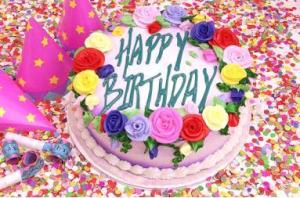
Pat Bertram Is Two Years Old Today!

cake2

On May 17, 2007, I — or rather, Pat Bertram — signed gift4up for the Internet, and it was love at first byte. The entire world opened up to me, and I was reborn. I’d already written four books, but until I went online, I hadn’t started creating the author of those books. Who should I be? What name should I use? I considered using a male pseudonym, Cole Black, perhaps, since men with hard C’s and K’s do well in the public arena. Anyone heard of Steven King? Dean Koontz? Tom Clancy? Kevin Costner? Clint Eastwood?

In the end I decided to stick with a version of my own name, one that I didn’t use in my offline life. It’s a good name for an author with enough hard consonants to sound authoritative. And it has the whole androgynous “It’s Pat” thing going for it; I can be whoever I want. Besides, p’s and b’s and t’s and r’s didn’t hurt Brad Pitt any.

I signed up for my domain, set up a website at patbertram.com, then fished around for another way to create myself, and discovered blogging. I didn’t even know what a blog was, didn’t think it was something I would ever be able to do (my diaries as a kidgift3 never lasted more than a day or two), but I’d discovered that an author needed a blog. Since I was intent on creating myself as an author, I signed up for WordPress, and oh! What a joy! I could write whatever I wanted, say what I wanted, be what I wanted, and people would read what I wrote. Okay, only a couple of people read Bertram’s Blog at the beginning, but I am still friends with one of them. How cool is that? I’m too embarrassed to admit how many blogs I now have — some of which I keep up with on a regular basis, soballoons1me I don’t — but blogging remains one of my favorite online activities.

From blogging, I went to Gather.com to enter a crime writing contest, and through a series of incredibly serendipitous encounters, I found a publisher. And more friends. After that, of course, I had to start promoting, so I started social networking. I’d heard from so many authors how much they hated promoting, but me? I think it’s great fun. It’s all about making friends, and what’s more fun than that?

So, friends, please join me in celebrating this very special birthday. You don’t even have to bring me a present. I have presents for you! Click on either package to open.  I hope you have fun.

I know I will.

“Where Do You Get Your Ideas?” Silly Question, or Not?

“Where do your stories come from?” A couple of people had a problem with this question in a discussion on Facebook today. One woman thought it was the worst discussion question ever. She said that our ideas come from our heads, and that it was the kind of question asked by an interviewer who hasn’t read the book. Another person agreed, saying that he expected the question from someone who knew nothing about fiction; that it had no single answer.

Whenever a guest on this blog talks about how he or she got his ideas, I get a huge response from readers, so I know it is a good topic — and one I never get tired of discussing — so I was surprised by the responses on the Facebook forum. I truly never understood why writers hate to be asked where they get their ideas, where their stories came from, or how their stories got started. I always thought it was a perfectly sensible question, and now that I am a writer (and published) I know that it’s a perfectly sensible question. Sure, ideas come from our heads, but how? And why does one particular idea take hold when others don’t?

Of course there is no one answer to the question — that’s the beauty of it. Your answer tells who you are as a writer. If you can’t answer it, there is a chance you are one of those writers who can sit down and write without thinking — just let the story flow. If you can answer it, you are probably a writer who needs to know the story before you can write. Either way, it does not negate the validity of the question.

For me, a story usually begins with a series of ideas or a combination of events. For example, after reading Albert Zuckerman’s book about how to create the blockbusting novel, I decided I wanted to write such a book. But stories of major ideas and ideals, personal upheavals and changes generally take place during times of great strife, and so I needed an extraordinary setting for my story of women with “a spark of heavenly fire, which lies dormant in the broad daylight of prosperity, but which kindles up, and beams and blares in the dark hour of adversity.” Not wanting to write a war story, I searched about in my mind and finally settled upon an epidemic so severe that the entire state of Colorado had to be quarantined.

There is no way anyone can have learned that simply by reading my novel A Spark of Heavenly Fire. The evolution of a story is completely separate from the story itself,  and the evolution begins with an idea. And where did my idea come from? I created it from the wild stretches of my imagination, reasearch, and lots of hard work.

So, where do your stories come from?

add to del.icio.us : Add to Blinkslist : add to furl : Digg it : add to ma.gnolia : Stumble It! : add to simpy : seed the vine : : : TailRank : post to facebook

Puzzling Out Promotion

Writing means many things to many people. It is like a mythic journey into self, other lands, other minds. It is like archeology, like exorcising demons, like channeling, like performance, like a faucet. It is like having an adventure. It is uniquely human, and it brings out the divine in us. It is breathing, a compulsion, a necessity, a reason for living, an obsession, a fun pastime. It is exhilarating and frustrating. It is liberating. And it is like comfort food, chocolate, and cherries. It is like magic.

Because of this mystic connection to their words, other writers don’t seem to understand why I can stop writing to promote my newly published books. For me, writing is like the world’s longest crossword puzzle, one that takes a year to complete. I like playing with words, finding their rhythm, and getting them to behave the way I want. I like being able to take those words and create ideas, characters, and emotions. Amazing when you think about it, how we can juggle twenty-six symbols in different ways to create words, sentences, paragraphs, worlds. And what one person writes, another can read.  (more . . . )

(This article was originally published and is published in full on Vince Gotera’s blog, The Man With the Blue Guitar.)

On Writing: Perseverance

My guest today, Steven Clark Bradley, has been to or lived in 34 countries, including Pakistan, Iraq and Turkey. He has a master’s degree in liberal studies from Indiana University. He speaks French and Turkish. He has been an assistant to a prosecutor, a university instructor and a freelance journalist. Bradley is the author of four novels, including Patriot Acts. Bradley says:

I have always been a storyteller. It seems to have been something I was born with. It was actually my son who challenged to stop writing as a hobby and to start publishing my several manuscripts I had written. As a child, I started writing dreams and ideas and it was all part of the process of learning how to paint a tableau with words. Probably the hardest thing was learning to get over what I call ‘the middle of the book’ syndrome. Perseverance is one word that best describes the main character trait that all dedicated writers possess. I can attest to that as I developed the characters, setting, atmosphere and all the million things that go into holding a story together.

Winston Churchill said, “The Pessimist sees problems in every opportunity, but the Optimist sees opportunities in every problem” Once we get into the middle of a novel, we need to get over the hump of taking the story to the next level by pouring ourselves into it. Sometimes, when we find ourselves wanting to quit something, we feel pulled in two directions. Have you ever heard these voices in your head? “There’s no use in continuing!” or perhaps “I have failed and I give up!” These feelings are almost always untrue and are usually caused by depression, fatigue or loneliness. There are so many other personal things in our lives that cause such feelings of hopelessness. We are also drawn by voices in our heads that tell us not to give up. “Think of all the time you’ve invested!” or “Think how hard you have worked!” It’s that second voice that helps you continue on and is what I call “Wise Perseverance.”

To wisely persevere, you need to see the costs or difficulties and benefits or positives of what you are doing. An honest and good decision requires honest and good information. The more you understand yourself, the more certain you will be about your decisions and the more likely you will find the strength to persevere until the story starts to write itself. Some call that this “Literary Critical Mass” when the story becomes a living thing and logic flows and literary inertia seem to take over. Actually, this drive makes all of the characters come alive so that eventual readers will become one with the story until you accomplish your task! All of this serves to develop your own writing style and makes you unique and singular in your message. You’ll probably find that you’re having more fun than you actually thought you would!

I can say that each novel feels like another one of my literary children was born. All the hard work, all the revisions, the TLC that goes into making it powerful and readable and clear, expressive and addictive to the reader comes together when it sits in my hand. The greatest thing is to finally read it in book form and I forget that I am the writer and loving it. It is one of the greatest feelings I have ever had. My novel, Nimrod Rising represented more than 12 years of hard work. There is no feeling like that.

See also:
Interview with Steven Clark Bradley
Steven Clark Bradley reviews Pat Bertram’s novel More Deaths Than One

Negative Reviews: Are they Always Negative?

My Suspense/Thriller Writers group on Facebook is discussing the postive aspects of negative reviews this week, and Roni Gehlke left a comment that’s worth passing along.  Roni wrote:
 
As a reviewer and a writer I have to say that there are all kinds of ways people can give you a negative review. As a writer I don’t mind hearing people give me constructive criticism, especially if they know what they are taking about. After ten years I’ve developed a thick skin, at least I hope I have. I still get disappointed when I hear someone didn’t like what I wrote, but as long as there are others who do, I push forward.

I cannot abide by people who just appear to be mean spirited, though.

For example, I have a favorite author who is constantly getting bashed on Amazon. It isn’t that she is a bad writer, obviously l like her and she’s been around for over 30 years writing novels. I believe there are some people who don’t like her style because they don’t hold the same values she does and because of that they criticize everything she writes. Sometimes I have to ask whether these people have even read the book or are just writing a bad review to be mean.

This particular author writes contemporary western cowboy romance novels, about strong alpha men and virginal women. Just because one believes that there are no longer virgins in the world and strong alpha males are bruits doesn’t mean that the stories are bad.

Because you don’t agree with the author’s topic of writing is no reason to give a bad review. If you don’t like gay books or ménage books, don’t read them and don’t force you’re values on those who enjoy them. When bad reviews are written for this reason it is unfair to the author and unfair to those who may wish to read the book but then follow the advise of the reviewer and don’t.

Since I started reviewing books I work carefully to check out all angles of a novel. If the subject matter offends me, and little usually does, I won’t read it or review it. Why waste my time or the readers who may follow my advice.

If the book has fatal flaws like grammar errors, even I as a novice can find, then I might mention it and shave off a few points of the end score, but it doesn’t mean it will get a bad review either. If the story has a good theme, well thought out characters and in the case of suspense and thrillers, keeps me reading until the very last page it will get high scores from me.

One final note: I read an author’s blog a few months back where she was very upset that she had received bad reviews on one of her books. This is a tough industry. People give bad reviews in ignorance, in spite and just because they can. Authors spend a lot of time and put a lot of themselves into their work. The first few bad reviews may sting, but keep in mind that you will always get bad reviews before you will get good ones. More people will complain then praise. It is just a fact of life. Try to look at the bad reviews as a learning experience of what people don’t want to see, balance it with the good reviews of what people do want to see and get right back in front of that computer and start again. If you are lucky enough to get published, that says everything right there.

Happy writing.

If you are a fan of romance and happy endings, check out Roni’s Blog: Romance Books Scene.

A Stranger on My Own Blog

Sometimes I get to feeling like a stranger on my own blog. I know I’ve told you several times before that I’m going to reclaim it for myself, but I keep meeting fascinating people who have more interesting things to say than I do, so I invite them to write a guest post. Sometimes I don’t even know how fascinating the people are! I met Vince Gotera on Facebook when I added my Suspense/Thriller Writers group to his index of Creative Writing Sites on Facebook, and we struck up a sporadic conversation. (Actually, I think sporadic is being generous.) The upshot of the deal was that he would write an article for me about an editor’s pet peeves. How was I to know that Vince is the editor of  the prestigious North American Review, the longest literary magazine in the U.S.? Actually, I should have known the magazine was a big deal — with Google, there is no excuse not do one’s homework. Still, it makes me seem as if I’m way more savvy than I really am. If you haven’t already, be sure to check out Vince’s bloggery, “Submitting to Literary Magazines 101: Professionalism.” And don’t forget to read the comments. Vince was a perfect guest, responding to everyone who commented. Even more thrilling, this is just the first installment of a three-part series.

I’m doing it again — aren’t I? — talking about other people instead of myself. But I don’t know what to say anymore. When I first began this blog, I gave writing tips and suggestions, then somewhere along the way it began to seem presumptuous. Who was I to tell anyone how to write? Two hundred rejections is not an indication of a great writer! At least it’s not an indication of a writer who follows the rules she’s propagating. Then I got the idea that I should write that which only I can write. Again, a presumptuous idea. But I did talk of my WIP (poor stalled creature that it is) until I found a publisher who loved my books More Deaths Than One and A Spark of Heavenly Fire. Then I started promoting. Or at least talking about it. I don’t have a clue how to get from here to selling the thousands of books I should be/could be selling.

Which leaves me to talk about . . .

I don’t know. At least I don’t have to figure it out for a while. Joan De La Haye is going to be stopping by here on May 5th as part of her blog tour. Then Steven Clark Bradley will be here shortly after that talking about the importance of perseverance in writing.

Meantime, I started a new blog — one just for me. I liked the idea of the WordPress P2 theme, (sort of a Twittery thing) and had to try it out. Stop  by and say hi! Talking about presumptuous — I call my new blog The Mind of Pat Bertram. Sheesh. As if anyone cares what goes on inside my head.

add to del.icio.us : Add to Blinkslist : add to furl : Digg it : add to ma.gnolia : Stumble It! : add to simpy : seed the vine : : : TailRank : post to facebook

I Enjoy Keeping Men Up Late at Night!

A couple of days ago I received an email from Aaron Lazar, author of Tremolo: Cry of the Loon. He said: “I started A Spark of Heavenly Fire last night and am HOOKED, big time! I read 100 pages (usually I fall asleep when reading in bed after a few pages) and dreamed about it all night. Wonderful! Can’t wait to read more, Pat. You’ve got a winner here.” Today he wrote: “Read another hundred pages last night. I’m mad with you! I didn’t get enough shut eye! HAAAAA!”

I do enjoy keeping men up late at night! I like keeping women up late at night, too. During all these years of wondering what it would be like to have people read my published novels, this is one aspect I never took into consideration — how wonderful it would feel to know that I am keeping people up past their bedtime so they could read a few more pages. Such an awesome power!

In November, I posted a bloggery, “What If People Like My Books?” I had been so focused on getting published, that for some reason until then it never occurred to me to wonder what it would be like if people actually enjoyed my novels. After 200 rejections, I was poised to deal with more of the same, but so far I have received only positive feedback. It’s an incredibly affirming experience to have people peek into your mind, to become intimately involved with your creation, and to get what you’re saying. So much of me is in the books that I thought I would feel exposed, but I don’t for the simple reason that the books no longer belong to me. They belong to anyone who reads and enjoys them.

Wanda H. wrote:  “I’ve now read both books! They were both spellbinding and kept me engrossed until I finished. It was hard to put them down to sleep and not to pick them up again in the morning and instead go and do things.

My favorite is A Spark of Heavenly Fire. I love the characters and the action and the . . .  well, everything. But it only edges out More Deaths Than One by a bit.

I now see what you mean about an unnamed genre. Kind of a big picture conspiracy, behind the scenes machinations and how that affects the little guy (or gal) on the street. You did such a terrific job. I know you’re going to enjoy tremendous success not only with these books but also with the books you’ve yet to write.

Anyway, just to gush a little more…. I love your work! You rock!”

Sheila Deeth, who won the first autographed copy of my book because of her wonderfully imaginative entry for my More Deaths Than One Contest, wrote an incredible review of the book.  She starts out: The first three pages of “More Deaths than One” have to constitute a serious contender for the best opening scene of a novel. Two main characters are introduced, a garrulous waitress and a taciturn hot-chocolate customer. They meet. She talks, a lot. He reads the paper. “And Lydia Loretta Stark was dead. Again.” With two such immediately real and appealing characters, and a line like that, I’d challenge anyone not to want to keep turning the pages. more  . . .

So . . . what if people like my books? I feel honored, and if truth be told, a bit humbled.

add to del.icio.us : Add to Blinkslist : add to furl : Digg it : add to ma.gnolia : Stumble It! : add to simpy : seed the vine : : : TailRank : post to facebook

My First Review!!!!!!!

Steven Clark  Bradley, author of Patriot Acts, has written such a marvelous review of my novel More Deaths Than One, that I can’t keep it to myself. I want to shout it to the world! I knew it would be a good review, because several days ago he messaged me on Facebook. This is a transcript of our conversation:

Steven: (4/19/09 10:37 pm) Hi Pat, I wanted to let you know that I am deeply into your book and it is fantastic. You have a great hook, at least it certainly hooked me! You have a natural talent. I usually read a book really quickly when I am going to post it and review it, but your book has my total attention and it reads very well. If you can get a large number of people to know of it, I know you could have a best seller there. Once again, free of flattery, you are one of the smartest writers I have met. I promise, you’ll love what I write about More Deaths Than One.

Pat: (4/20/09 11:51 am) What a wonderful thing to say! I am thrilled you like More Deaths Than One. You’re one of the very few people who have started reading it, so your encouragement is much appreciated.

The question that has haunted me for months is how do I get a large number of people to know of the book. Perhaps someday I will find the answer. Your review will help, that’s for sure!

Steven: (4/20/09 12:14 pm) The only word that comes to mind is Superb! I read until 1:00 Am last night and forced myself to go to bed! Great work!

I think your characters are so interesting and human. I feel I know them well now. Could we call it “What about Bob?” ;>) you’re a really great writer and no reason why you cannot sell thousands of books.

Steven: (4/22/09 1:21 am) Hi Pat, Sorry I have not written, but I have been busy finishing one great novel . . . written by you! I have already posted a review for your novel. I have not read a book that enjoyable in a very long time. You are a natural. I hope you like what I wrote and every word is the truth. I am happy to be your first posted review on Amazon. That gave me great pleasure. Have a great night and thank you for allowing me to share in the mind of Pat Bertram.

Pat: (4/22/09 12:17 pm) Steven, I am sitting here trying to figure out how to thank you for the fantastic review and the wonderful presentation on your blog, but  am touched beyond words. Still, you deserve the words: thank you. Your review was so well done that even I am now anxious to read More Deaths Than One!

Steven’s review: More Death’s Than One

add to del.icio.us : Add to Blinkslist : add to furl : Digg it : add to ma.gnolia : Stumble It! : add to simpy : seed the vine : : : TailRank : post to facebook

Titles: What Makes a Good One

My guest today is Marshall Karp, an award winning former advertising executive, a playwright, a screenwriter, and a novelist. He has also written, produced, and executive produced TV shows for all the major networks. Karp tells us what makes a good title:

1. Short.

That’s my first thought.  Why?  Because your title is not just words.  It’s a major design element on your cover – often even more than the illustration.  And given the space limitations, the designer can do a lot more with one, two, or three words, than with ten.  Also, picture your cover reduced to a thumbnail on Amazon.  Too many words become unreadable.  That said, I think my title HOW TO EARN MILLIONS, LOSE WEIGHT, AND DEVELOP KILLER ABS WITHOUT WORKING, DIETING OR EXERCISING would sell a ton.  I just have to write the book.

2. Intriguing. 

I think it helps if your title makes prospective buyers wonder what that book might actually be about.  My first title, THE RABBIT FACTORY, is probably my best.  It just seemed to grab people.  And the chalk outline of a six-foot rabbit on the cover added to the mystery.  Note: a year before publication another author used the same title.  I was crushed, but my publisher told me that titles are copyrighted, and there are lots of duplicate titles. THE RABBIT FACTORY, he said, was too good to change. He was right.  The title definitely helped sell the book, both to the trade and to readers.

3. Not generic. 

My second book, BLOODTHIRSTY, is about murder by exsanguination.  I was so excited when I came up with a title that described the plot in one word that I never thought twice about it.  In hindsight, I should have.  Blood is a little — make that a lot — overused.  But the designer loved having a word that was loaded with visual possibilities.

4. It’s a title. It’s not the book.

The title does not have to communicate what the book is about.  It has to make the reader want to buy the book to find out what the book is about.  Sorry if that sounds like I’m talking down to you, but it’s a basic fact that I was late in learning, and still have trouble dealing with.

5. If you’re lucky, the title will keep on changing.

English is not the universal language.  So while THE RABBIT FACTORY is called THE RABBIT FACTORY in the UK and literally translated to IL MISTERO DEL CONIGLIO SCOMPARSO in Italy, it’s CARTOON in France, and in Dutch it’s loosely translated as FATAL ATTRACTION. 

My latest book is about a group of cop wives who are getting murdered.  They also have a house flipping business together, and my US publisher is very happy with the title FLIPPING OUT.  But my UK publisher said the Flipping part wouldn’t resonate.  I got in touch with my inner Agatha Christie and reluctantly offered up THE DEAD WIVES CLUB.  They loved it.

But months before either book was ready for market there was a lot of confusion among readers, booksellers, and reviewers.  Even when I tried to make it perfectly clear on my website that it was the same book, going by two different titles, people kept asking me how two different books could have the same synopsis?

Finally, my UK publisher agreed, and now, FLIPPING OUT is called FLIPPING OUT in the US and the UK.

6. The Airport Test.

Titles are very personal and intensely subjective.  It’s hard for an author to subtract his or her own investment in a title when making the final decision.  So try putting your prospective title to this test.

Narrow down your titles to a small handful.  Then find someone whose opinion you value and say this:  You’re in an airport. You have 30 seconds to buy a book.  If you saw this title, does it (a) intrigue you to want to learn more, or does it (b) just grab you?

You want a title where the respondent says (b).  Because the best thing a title can do is grab a reader in a way that makes her want to grab the book.

See also:
Review of Flipping Out
Conversation With Marshall Karp, Author of Flipping Out
How To Do a Blog Tour by Marshall Karp

One lucky commenter, chosen at random, will win a free copy of Flipping Out. If you do not win, click here for your consolation prize:
flipping cover[2] - online jigsaw puzzle - 40 pieces

add to del.icio.us : Add to Blinkslist : add to furl : Digg it : add to ma.gnolia : Stumble It! : add to simpy : seed the vine : : : TailRank : post to facebook