Sanctioned Con Men

I came across an interesting line in a book so uninteresting I don’t even remember the title or what the story was about. I wouldn’t have remembered the line, either, except that I was so taken with it (and so untaken with the story) that I set the book aside to jot down the words: Beyond the reach of thought police and sanctioned con men . . .

What came after those few words, I don’t remember. And it doesn’t matter. Those last three words explain so much — to me, anyway — about the world we are living in.

Most of us are familiar with the thought police — we encounter it every day in places like Twitter and Facebook, where anything posted that goes beyond their “guidelines” is censored. You can still think whatever you want, but if goes against “groupthink,” then you darn well better keep it to yourself or suffer the consequences. As of right now, the only consequences are being censured by fellow users or by being put in FB jail and banned from posting anything for a certain number of days. (Unless, of course, one of their bots label your blog as spam — which is what happened to me — in which case it is banned for all time with no recourse and no possibility of a review by a real person.)

But “sanctioned con men”? That is a new one on me, though I know exactly what is meant by the term. I feel the effects of their con all the way down to my belly and sometimes back up again. The con is so insidious, few people call it a con, and yet it is. And not just con men, but also con women. I think the women are worse because they are better at portraying not just sincerity but also sympath.

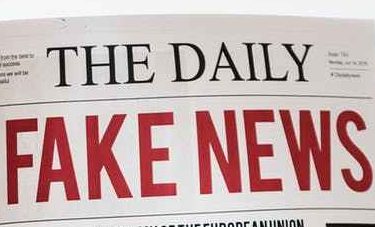
In case you haven’t figured it out, I’m talking about the news we are fed on television. The sanctioned news. The “legitimate” press as it is called. The non-fake news (which is actually faker than the fakest fake news.) I’m sure it’s the same in the print news, but I haven’t seen a real newspaper in ages, and the only reason I am aware of broadcast news is that the woman I help care for likes to watch it.

Does anyone really believe they are being told the truth when they watch the news? Do they really believe they are being given a glimpse of the truth that lies in the dark underbelly of national or international politics? If so, it’s understandable because it’s hard not to believe that what we are being told is the truth when we see photos of unvaccinated people sick with The Bob; medical personnel sobbing about unnecessary deaths; cities being bombed by evil emperors; pretty and personable people telling us horrific tales with oh, so much compassion.

I’ve spent too many years of my life studying the truth behind the old headlines to believe any headline that I now read or hear. I can’t even begin to guess what is truly going on anywhere in the world, nor do I care to delve as deep as I would need to in order to find out the truth (though a few articles by alternate presses elsewhere in the world paint a different picture from what the sanctioned con men and women are portraying). All I know is that somehow, some way, we are being conned about all sorts of different things, and that current events fit someone’s agenda. Because what I learned during all those decades of study is that history doesn’t just happen. Someone (or a group of someone’s) make it happen.

I have no idea what got me on my soap opera tonight, especially since I realize few people agree with me (the best cons convince people the con is not a con), but I’m going to post this commentary about sanctioned con men anyway (nonspecific though it might be) because I spent so much time writing it that I now have no time to write something different.
***

Pat Bertram is the author of intriguing fiction and insightful works of grief.

A Small Life

It’s amazing how many hours there are in a day when one gets up early, like way too early, before the sun is even a hint in the sky. Already I’ve read, played on the computer, cleaned house, went for a walk, fixed a meal, and now here I am, trying to put together today’s blog.

For a change, I have plenty of time to write; it’s just a shame I don’t have anything exciting to write about. There’s just me, and that for sure is not exciting. I am not one of those folks who live large. I’m certainly not lavish or extravagant (though I did recently splurge on a winter coat that was marked down for clearance). Nor am I living in what is considered luxury by other people’s standards.

The truth is, I live small. I spend most of my time alone. Even before the whole Bob mess, I stopped going to restaurants or any place groups of people hang out. (Groups were never really my thing, anyway.)

And yet, my life seems luxurious to me. I have a lovely small house and a comfortable home. (Although in today’s world, “house” and “home” are synonymous, I don’t consider them so because you can have a house that’s not a home and a home that’s not a house.) I have a small job so I can afford luxuries like eating. I drive a small car that was paid for decades ago. I have all the books I want to read a small walk away. So, yes, luxurious!

Still, luxury in my eyes is not exciting to others by any means. And even though I mention such things as my house out of gratitude at this still-surprising upturn in my life, I fear sounding braggadocious if I expound too much. But basically, this is my life. A small life.

And yet, I do wish I had something more exciting to write about than me.

Maybe someday . . .

***

Pat Bertram is the author of intriguing fiction and insightful works of grief.
Things I Don’t Want to Write About

I’m sitting here mentally sifting through possible blog topics to expound on for today’s posts, but there’s so much I don’t want to write about, I’ve already written about, or don’t know enough to write about and don’t care to delve deeper into the matter.

I don’t want to write about is the advertisement that appears on top of the page when I have opened a document in Word. I bought the program, so I shouldn’t have to deal with further encroachments from Microsoft, but as discreet as the ad is, it still appears and there’s nothing much I can do about it. Well, I can click on the X to remove it, but it appears again the next time I open Word. So, there’s no real point in talking about something I have no control over.

I also don’t want to write about the “nothings” that are exchanged with a spouse. I had lunch with a friend yesterday (she brought a picnic to my house, which was a real treat) and we got to talking about all the nothings we say to a spouse in passing. Her example was walking by her husband when he was watching the news, catching what someone was saying, and commenting, “Oh, she’s such a liar,” as she passed on by. These nothings aren’t anything you can really call and talk to a friend about when you live alone because then the nothings become a something. You’d have to explain the situation, explain why you think the person is a liar, explain why you’re telling your friend, and a passing comment becomes a huge discussion that quickly gets out of control. It’s an interesting topic, these nothings, but I’ve already written about it, already written about talking to the photo of Jeff, just asides — the nothings — as I make the bed when I get up in the morning or unmake it when I get ready for bed at night.

I still don’t want to write about The Bob. Despite everyone thinking they know what is going on because of whatever “research” they have done, so often the research is at odds with what people experience. I know people who got the jab and then died of The Bob, but that sort of thing is shoved under the carpet because it doesn’t fit the narrative. I suppose The Bob has been around long enough that the truth might be out there somewhere, but this is an example of something I don’t care to delve deeper into. Nor does it matter. Whatever truth I would find (assuming there is such a thing) wouldn’t change anything, and since it wouldn’t make any difference, I just let it go.

Something else I really don’t want to write about, at least not in a whole post, are all the death dates in my head. Or that were in my head. A couple of blog readers are coming up on the anniversary of their spouse’s deaths, and I remember the dates, but soon those dates will be gone from my memory, which is good. Otherwise, practically every single day I’d be reminded of someone who lost a child or a spouse, and it’s too much for one person to handle. It’s enough for me to remember my own dates (Jeff, parents, brothers) without heaping other people’s sorrow on top of my own. Though, to be honest, I do remember everyone I’ve spoken or written to about their grief over the death of their loved one, just not the exact day of their loss.

Well, what do you know! It turns out that I ended up writing about all the things I didn’t want to write about after all. Just goes to show . . . hmm. I don’t know what it shows other than that I have something to post for today’s blog.

***

Pat Bertram is the author of intriguing fiction and insightful works of grief.

Facebook Troubles

I don’t believe in ill-wishing anyone or anything, but if I were that sort of person, FB is the one entity I would ill-wish for all the trouble they’ve caused me. Luckily, if the rumor is true, they are doing it to themselves without any help from me. (What I heard is that they are having financial troubles.) I don’t care enough to check on the rumor to see if it’s true, but it makes sense. They have a terrible business sense, embracing those who do harm and all but destroying some who are totally innocuous. Like me.

First they banned my blog. They have labeled it spam, which is totally unfounded as well as totally nuts, and there is absolutely no recourse. Next, they banned any URL stemming from my blog. For a while, I let it go, just stayed away from FB altogether, but several friends I’m connected to only on FB told me how much they miss seeing my blog in their feed. And besides, my absence from FB killed all book sales. (That was the only platform that worked for me to sell books.) So I got around their stupid block by reblogging my blog onto another blog, and then posting that link. It wasn’t a total workaround, because very few people saw it, and of those who saw it, very few people bothered to click on both links (the link to the reblog and then to the original blog). Some people did comment on the photo, so at least that was good.

I have the reblog blog set to post automatically to FB, but now, FB won’t accept the automatic post. I have to reblog, then manually cut and paste the reblog intro onto FB (can’t post the whole thing because of the aforementioned URL is included) along with the reblog URL. Then I have to change profiles from my author page profile to my personal profile so I can share the blank space with the URL to an URL.

If you’re confused by now, I don’t blame you. I know what I’m doing, and it confuses the heck out of me! And that wasn’t the end of it.

The photo that from the original blog post stopped showing up on FB because of that devilish URL of mine. I’d post the photo separately for a while, and so did a friend, but that got to be a pain. So now what shows up on FB is a post with a big blank space where the photo should be.

To add insult to their injury, FB keeps sending me notifications of what other authors are doing on their FB pages, and asking why aren’t I? Sheesh.

So, views to my blog are down, limited now to those who go to my blog directly. And book sales never picked up again, and in fact are non-existent.

So, do I care that FB is having problems? A resounding NO!

***

What if God decided S/He didn’t like how the world turned out, and turned it over to a development company from the planet Xerxes for re-creation? Would you survive? Could you survive?

A fun book for not-so-fun times.

Click here to buy Bob, The Right Hand of God.

Unresolved Issues

I tend to worry about things, especially those I can’t do anything about, which makes sense because if I can do something about an issue, I would do it and not have to worry. A case in point: this current situation with the water meter showing that I am using water at the rate of 1000 gallons a day. I’ve already set things in motion to find out what is going on, but I can’t follow through. It snowed for almost twenty-four hours straight, and we’ve been dealing with below zero temperatures, so there’s not a whole lot of probing for outside water leaks that can be done. Nor can anything be done about the meter until it’s been shown there is a problem with the meter itself (which the water company vehemently denies.)

So I worry, but not the anxious or frantic or agitated or feeling mental distress sort of worry. The worrying I do is the more insidious kind — pushing thoughts around in my head, continually going back to them to see if there is a different way of looking at them, and touching the thoughts the way one probes a sore tooth. When I do manage to put the thought out of my head, I feel it in my body, a sense of forgotten things left done.

But nothing changes. Nothing can change until the snow melts at least partway ant the ground warms up a bit.

Because of this tendency to worry, I’ve always been one to charge at problems. I don’t like unfinished things, the sense of having forgotten things, or feeling as if things are hanging over my head, so I try to do whatever I can to resolve these things. I don’t know if any of this — the worrying at things or the charging in to fix problems is good or bad, and I doubt it matters. Life goes on either way. (Well, life goes on until it doesn’t, but that’s a completely different discussion.)

I’ve been doing well keeping things out of my head and learning to deal with unfinished things since there are so many unfinished things to be done around the house and the yard, but this water meter thing has me flummoxed.

In the end, I’m sure, it will all work out. Meantime, it’s just one more unresolved issue in my life.

In a way I should be glad of such issues — it gives me something to blog about. Otherwise, all I’d be discussing is shoveling the snow and it’s bad enough having to do the work without having to talk about it.

***

What if God decided S/He didn’t like how the world turned out, and turned it over to a development company from the planet Xerxes for re-creation? Would you survive? Could you survive?

A fun book for not-so-fun times.

Click here to buy Bob, The Right Hand of God.

Living Alone

As I was leaving the house this morning to walk to the library (in nineteen-degree weather!) it suddenly struck me as strange that no one cares when I leave. No one cares when I get home. No one cares if I stay home or stay away. Obviously, I care, at least to an extent, but for the most part it doesn’t matter because wherever I am, there I am.

A lot of people care, not just about me but also that I am safe and well and that we can visit occasionally, but for the daily comings and goings? No one.

I’m surprised it took me this long to realize the strangeness of this situation, though it really shouldn’t have been a surprise. The first couple of months after Jeff died, being alone didn’t seem strange, just so very, very sad. I couldn’t stand coming home to an empty house, not because it was empty, but because I forgot it was empty. I’d unlock the door as always, ready with an “I’m home!” and then it would strike me . . . again . . . that he was gone, and full-on grief would slam into me.

For the next few years, I took care of my aged father, and when he was gone, I was so busy clearing out the house and getting it ready for sale that I didn’t really notice that no one cared whether I came or went. When the work was done, that huge house was so empty that I noticed the echoes but not much else. Also, by then, I was involved with dance classes, so my dad’s house was mostly a place to spend the night.

The years after I left my father’s house were spent traveling or renting rooms in other people’s houses, and I was blogging about my activities, so I didn’t notice that no one was around to pay attention to my comings and goings.

When I bought this house, it was such a new and wonderful experience — both owning a house and making a home in a new place — it didn’t really strike me that no one particularly cared about when I left the house.

But now, it’s been almost three years since I bought the house. Although the thrill and the feeling of being blessed isn’t gone, I am more aware of being alone. (Not lonely. Just aware of aloneness.) That awareness could be why I talk to Jeff’s picture, and why I tell the photo when I am leaving, but a photo doesn’t care.

Now, almost twelve years after his death and all the moves I’ve made and all the things I’ve done, I’ve suddenly realized how strange this living alone is. It’s nice, of course, being able to do what I want and go where I want without regard to anyone else. But it’s also . . . not sad, exactly, but . . . strange.

***

Pat Bertram is the author of Grief: The Inside Story – A Guide to Surviving the Loss of a Loved One. “Grief: The Inside Story is perfect and that is not hyperbole! It is exactly what folk who are grieving need to read.” –Leesa Healy, RN, GDAS GDAT, Emotional/Mental Health Therapist & Educator.

The Unexamined Life

Sometimes I can only shake my head at myself. I used to think it silly when people wrote about such things as the weather or the mundane tasks of their day, and yet lately, I am writing about those very things. It used to be that I could justify such trite topics by trying to find a moral to my day’s tale or meaning in my activities, but I’ve noticed that I seldom do that anymore. Perhaps I no longer need to search for meaning in the mundane. Perhaps the mundane — the minutiae that make up most of our lives — is enough in itself. Perhaps living is enough.

We humans always seem to want more — more meaning, more money, more material goods — but whatever we have, whatever we do, should be enough because it’s all part of living.

I used to agree with Socrates that the unexamined life is not worth living, but now I don’t know how important such scrutiny really is. It is important to the person who wishes to live an examined life, as I used to, but obviously, it’s not important to those who simply live without questioning their motives and morals. (Whew! I sure am using a lot of “m” words in this post!)

But examined or not, every life is worth living, or at least it should be. Admittedly, this is easy for me to say because at the moment, there is nothing wrong with my life. In the years to come, I might change my mind about the worthwhileness of it all as I get feeble or wracked with pain or incur financial difficulties, but that’s straying from the topic of an examined vs an unexamined life. The more I think about it, it can’t matter except to those of us who do like to examine ourselves and our surroundings. After all, small children simply live. They have no need to examine their lives. For them, what is, is. There’s nothing beyond the moment. And no one would ever say that a child’s life — unexamined though it is — is not worth living.

It seems like I’m spending a lot of words to justify my blog posts that present the weather as well as my doings with regards to the weather (shoveling snow, watering grass, planting seeds) without delving into deeper meanings. I guess what I am saying is that I am okay with whatever ends up on the page, whether my words explore my inner worlds or my outer world or simply lay out the experiences of the day. No more shaking my head at my own inanity.

Oh, yes . . . the weather. I almost forgot! It was cold today and will be even colder tomorrow.

***

Pat Bertram is the author of Grief: The Inside Story – A Guide to Surviving the Loss of a Loved One. “Grief: The Inside Story is perfect and that is not hyperbole! It is exactly what folk who are grieving need to read.” –Leesa Healy, RN, GDAS GDAT, Emotional/Mental Health Therapist & Educator.

Dedusted

I actually felt like playing house today and had the energy to do it, so I dry mopped then wet mopped the floor and dedusted all hard surfaces.

Yes, I know — dedusted is not a word, but it should be. The way the word stands, “dust” as a verb is the opposite of itself. For example, when snow dusts the ground, it means that a light coating of snow was deposited on the ground. Some cookie recipes require you to dust the finished cookie with powdered sugar, which means to putting a light coating of sugar on the cookie. I dusted today, but I did not leave a coating of dust on the ground. In fact, the rooms were already dusted with a powdering of dirt particles. So, see? When I cleaned off that dusting, I dedusted. If I had redusted, then I could say I dusted the room, but I didn’t add another layer of dust; I removed what was there.

Look at it a different way: if you bug a room, you place electronic bugs in the room. If you debug the room, you remove the bugs. If you code a text, you put that text into code. If you decode it, then you remove the code to reveal the plain text. If you clutter a room . . . You see where I am going with this.

It is interesting to me though, that a whole slew of words mean the opposite of themselves, not just “dust,” as I pointed out here, but “cleave,” which means both to cling and to unite and “trim” which means to add something or remove something. In fact, there are so many such autoantonyms, they have their own category name: contranyms.

I just realized that spell checker didn’t underline dedust, so I looked it up, and lo and behold, it is a word, and means exactly what I said it should — to remove fine particles and to free something of dust. Who knew? Not me, obviously, because I thought I was being so very clever and whimsical. The truth sort of puts the kibosh on this whole essay, but I’m posting it anyway because whether I dusted or dedusted, the house is clean.

***

Pat Bertram is the author of intriguing fiction and insightful works of grief.

Dark and Dreary

It wasn’t a dark and stormy night, but it was a dark and dreary day, which is almost as bad. I’d planned to clean today, but in the gloom, the dust wasn’t visible, so I put it off. As a friend said, the dust will still be there when I’m ready.

I did go for a walk, but it was just a walk. A grey walk. Skies were gray, streets were gray, the buildings I passed, despite their color, all seemed gray, too. You’d think with all this talk of gray, my perceptions were gray, too, but no. It was truly the lowering clouds that created the gloom. I’m fine, though come to think of it, I am dressed in a gray jacket to help stave off the chill. The house does keep its temperature, but there’s always that spell when the temperature drops and before the heater kicks in to remind me of the cold.

The only thing in my mind of interest — to me, anyway — is my ongoing study of the tarot. (If a few minutes a day can be called a “study.”)

The card I picked today to represent my situation was the 11 of Trumps. In some decks, this card is called Justice, while the 8 of Trumps is called Fortitude. In some decks, the 11 of Trumps is called Fortitude or Lust, while the 8 of Trumps is called Justice. In this deck, the card is called Lust for Life, because supposedly Aleister Crowley, the occult scholar, who updated the tarot at the beginning of the last century, thought that naming the card either Strength or Lust would limit its function in the eyes of many to the material plane. In essence, though, the card is about spiritual strength (linking up with spiritual roots), mental strength (courage and fortitude in the face of difficulties), and physical strength (stamina, resistance to ailments, and applying effort with joyful purpose — hence, Lust for Life).

To me, all this shows the rather arbitrary nature of the tarot. It seems as if most people are okay with the shifting sands upon which the tarot is built, but I need more of a foundation. Without a foundation, one can only blindly follow those who have gone before, who have blindly followed those who have gone before, who have . . . etc, etc. Then you get to people like Crowley who don’t blindly follow, but recreate everything according to his own mystical and “magickal” (the word he used to describe himself) inclinations.

If, as so many books about the Tarot say, that they are a help for mediation, then shouldn’t any stack of cards help? Christmas cards, birthday cards, get well cards — I bet there are enough out there to create a “Hallmark” version of the tarot.

And for those who use the simple explanations of the cards, such as justice or fortitude or strength, when doing a reading, then shouldn’t a plain deck of cards with just those words on them mean the same as the “official” picture/symbol cards?

And if the cards are about getting in touch with our own spiritual roots, then . . . I don’t know. I’m obviously missing a big part of the big picture when it comes to the tarot. I suppose if I stick with it long enough, something will click, and I’ll suddenly get the whole tarot thing, but so far, that’s not happening. Maybe when I find the deck that speaks to me (this particular deck definitely is not it) and stick with it for a while, I might start sensing some of what I am supposed to sense. Meantime, it’s a good daily discipline, as is writing this blog even when (like today!) I have nothing to say.

I do have one thing to add to the “nothing to say.” Not about the tarot but about the gloom. There’s no more gray to this day, no more dreary. Night fell while I was writing this post, and now it’s dark, or as dark as it can be with all the outdoor (and indoor) lighting.

***

Pat Bertram is the author of intriguing fiction and insightful works of grief.

Happy New Year’s Eve Eve!

Happy New Year’s Eve Eve! That sounds redundant, but it’s the truth — tonight is the eve of New Year’s Eve. One night, one day, one evening, and then this year will be finished. I don’t know how to feel about that, to be honest. All things considered, it was a good year, but it seems unreal that this year is done for and another year is beginning so soon.

I have no real plans for the new year, just the same plans I’ve had all along — take care of my house and hope that more of my landscaping gets finished by and by, take care of myself and hope that my health holds up, take care of all the little things that arise and hope I have the stamina to deal with them. That’s a lot of taking care and hoping, enough to fill a year — and a lifetime — that’s for sure.

As for the remainder of this year, I expect to fulfill the last two days of my 100-day blog challenge. But that’s a given — not a special plan for these days — as is the continuation of my daily blogging for no other reason than if I took a day or two off now and again, I’d get in the habit of not blogging, and since it’s the only writing I do, I’m not ready to give it up yet. But blogging is all that’s on my schedule for the next two days.

Because this area is going to be subject to fierce winds followed by a huge temperature drop off from a windy high of 60 (degrees Fahrenheit) tomorrow afternoon to a bitter low of 9 tomorrow night (and a high of 19 on Saturday with a low of 0 Saturday night), today I went to the library and stocked up on books, then did one last bit of lawn watering. So for the rest of the year my time is my own with no responsibilities except to stay warm.

I don’t have any plans for tomorrow night, either. There’s no reason to stay up until midnight to toast the new year, though I imagine I will be awakened by all the fireworks set off by witless neighbors. (Witless because they ignore the law prohibiting fireworks in Colorado as well as discounting the fire danger inherent in high winds and low humidity.)

I hope your year end and your year beginning will be as pleasant as mine. Meantime, have a Happy New Year’s Eve Eve!

***

Pat Bertram is the author of intriguing fiction and insightful works of grief.