Cold War Spy Story

I’m reading a spy novel from the early eighties. Back then, the story would have been straight from the news and a real nail biter. Many decades later, I would have thought it would be more of a curiosity than a compelling novel. After all, there was that whole glasnost and perestroika thing in the late eighties, which should have relegated all these old cold war era book obsolete, but here we are, once again, in a competition with the Russians.

And so this old book is, for the second time, straight from the news.

I’m still rather mystified by the whole thing. I mean, there we were in the nineties and aughts, one big happy family, with only the middle eastern terrorists spiking our Kool-Aid. Makes me wonder what the heck is really going on now.

To be honest, the cold war conflict wasn’t much of a war. Oh, we were told it was, and the newspapers did their job of riling up folks, but behind it all, if you dig deep enough, you can find western countries (most notably the USA), parceling out technology to both sides. Apparently, Eisenhower’s “military industrial complex” was too complex to willingly let go of all the power they’d garnered during WWII and then Korea. And so they kept us frantic about the possibility of a wide-scale nuclear conflict. (Nu-clee-ar, not nuc-u-lar!) [If you’re curious, Anthony C. Sutton, a British-American economist, historian, professor, and writer, was one of the incredibly knowledgeable researchers who tended to find out the truth of such matters.]

Still, the cold war hostilities did come to an end for whatever reason. Probably because nuclear power became old hat. Other means of annihilation are so much more efficient. Just think what would happen if some erstwhile favored country didn’t like the USA’s new economics policy that tried to even out the trade deficit, and instead of unleashing their nuclear weapons in a great show of force, they gradually let out a lethal bio-weapon that killed off the old and feeble rather than the young and healthy as the old way of war did. A lot of people would become causalities of a war they didn’t even know was being so stealthily fought.

Of course, that could never happen to such news savvy people as we are.

And anyway, we are back to the old days where Russia is once again the enemy. I have no idea what happened to glasnost and perestroika. Apparently, I was so busy reading about the past, I neglected to keep up with the present, so it came as a shock to find that Russia is once again up to their old anti-American spy tricks. (Or perhaps being put up to their old tricks?)

The end of the movie Blast from the Past was supposed to be humorous, with good old Christopher Walken unable to believe the truth that the Russians were no longer the enemy. Knowing how wily they were, he immediately began planning a new bomb shelter to protect his family from them. And what do you know — the ending of the movie turns out to be less than simply humorous and a lot more prescient.

***

If you haven’t yet read A Spark of Heavenly Fire, my novel of a quarantine that predated this pandemic by more than ten years, you can read the first chapter online here: http://patbertram.com/A_Spark_of_Heavenly_Fire.html

Buy it on Amazon here: https://www.amazon.com/gp/product/B0024FB5H6/

Download the first 30% free on Smashwords: https://www.smashwords.com/books/view/1842

Disdaining Improper English

A character in an older book I just finished reading was a stickler for proper English. Many of his objections were constructions I had no idea were improper, such as the use of “due to unforeseen circumstance” rather than “owing to unforeseen circumstances.” Since I didn’t know it was improper, I’ve always said “due to” rather than “owing to,” though now I will make sure I say it properly.

It made me wonder what other phrases I have been using improperly all my life, which led to the realization that my own disdain of improper English is probably misplaced. If improper phrases such as “due to unforeseen circumstances” are so prevalent as to seem proper, then today’s ridiculous constructions that I abhor will become (in some cases have already become) the preferred usage among the populace. “Veggies,” for example. I despise the cutesy word, suitable only for small children who have to be enticed to eat food they don’t particularly like. It isn’t at all a grown-up word, and yet everyone uses it. I can’t remember the last time anyone but me used the proper word, “vegetables.”

“Intestinal fortitude” is a phrase used in place of courage and the strength of mind to bear adversity, which is utterly silly. “Fortitude” alone means exactly that. I imagine somewhere along the line, someone thought they were being cute, using an erudite-sounding construction instead of saying “guts,” but eek. The phrase “intestinal fortitude” irks me as much as “veggies” does.

“Supposably” instead of “supposedly” has become so common, it no longer grates on my poor ears, though I will lop off my tongue if I ever hear myself say it.

An “executive decision” is one made by a person or group of persons who have executive power, so a person who decides something for a group of people is making an executive decision, but a person making a decision for himself alone, one that affects no one but himself, is not making an executive decision, but going by what I read and hear, everyone nowadays must be an executive because they are all making what they claim to be executive decisions. A decision is a decision. It needs no qualifier.

As for “get out of Dodge.” I can’t believe how often I read that phrase in books. Characters no longer get out of town, they always “get out of Dodge,” even if they are living in a major metropolitan area that in no way could be compared to Dodge. Luckily, so far, it is only a common phrase in fiction; I don’t hear many people saying it in real life.

Did you see what I did here? I said that my disdain of improper English is probably misplaced, and yet here I am, being disdainful. At least I kept the list of words and phrases I abhor short. Be thankful I didn’t go on a diatribe about the president of the United States being called the leader of the free world. Does anyone in France consider POTUS their leader? Does anyone in England? Or Germany? Or Canada? And what is the free world anyway?

Oops. I almost went on a diatribe after all.

***

What if God decided S/He didn’t like how the world turned out, and turned it over to a development company from the planet Xerxes for re-creation? Would you survive? Could you survive?

Click here to buy Bob, The Right Hand of God

Contemplating ESP

One benefit of being an eclectic reader is that once the cover of the novel about the sabotage of the electric grid system in the US was closed, the emergency was over. Not in real life perhaps, but as one reader pointed out, there are a million ways the universe is out to get us (since, after all, the end result of our lives on this planet is our death); 999,999 of those ways won’t get us, so why worry about them.

Now I’m on to another book-induced worry. Well, not “worry” exactly, more like a train of thought. This time about psychic powers, artifacts infused with psychic powers, and the ways these artifacts can be used for good or ill.

When I was young, I thought the various forms of extra sensory perception were an indication of a more enlightened being. I felt bad that I wasn’t one of the chosen, and I hated the thought of being just like everyone else. Now, I am exceedingly grateful for my normalcy. It’s hard enough dealing with life with the tinge of intuition I do have. Apparently, I have a built-in lie, manipulation, and insincerity detector, though it manifests as confusion in the case of lies and manipulation, and nausea in the face of insincerity. (Which is why I cannot watch any news, cannot listen to any politician.) The problem with such low-level perception is that often I don’t know what the lie is, just that it is. Which, of course, adds to the confusion. Even more confusing, it took me most of my life to realize what was going on.

I also have a bit of an ability to pick up vibes. For example, back when dancing with my class, I could feel the energy flowing in sync from all of us, as if it were lifting our arms and feet at the same time. I thought it was a universal feeling, that all the other dancers could feel the same thing, but that wasn’t the case.

Also, sometimes I sense an affinity with people I just met. Of course, we all have that sense of affinity at times. It’s just a matter of learning to trust it.

But to actually be able to read someone’s mind? To be able to move things with mental energy? To be able to see auras? To have visions, whether of the future or of things that have already happened? To be able to view things remotely? I don’t think so. If my life is steeped in confusion now, I can’t imagine the sort of extreme confusion I’d be afflicted with if I had such powers.

As long as I am reading the novel, I will be aware of such things and contemplate the possibility of extra-sensory perception, but I’ll be glad when the book is closed and I can go on to something more mundane.

Like a serial killer, maybe. Or perhaps covert activities. Or, even worse, a romance!

What about you? Would you like to have some sort of ESP? Do you think it would enhance your life or make it even more complicated?

***

If you haven’t yet read A Spark of Heavenly Fire, my novel of a quarantine that predated this pandemic by more than ten years, you can read the first chapter online here: http://patbertram.com/A_Spark_of_Heavenly_Fire.html

Buy it on Amazon here: https://www.amazon.com/gp/product/B0024FB5H6/

Download the first 30% free on Smashwords: https://www.smashwords.com/books/view/1842

Feeling Vulnerable

I’ve been doing a good job the past year or so trying to keep focused on the day rather than what might happen in the future, especially when it comes to my precarious financial situation and my advancing years, but the exorbitant increase in house insurance shocked me out of my complacency, and I’ve been feeling unsettled and vulnerable.

Knowing so many people who are getting The Bob adds to the feeling of things being out of kilter. It certainly doesn’t help that one of the library books I got was about electric grid of the entire United States being destroyed, which reminds me how vulnerable we really are. If the electricity goes out, so will heat, plumbing, communication, and transportation. Which means after a few weeks, people will be dying en masse of dehydration and disease and starvation since water won’t be coming into the house, wastes won’t be going out, and food won’t be distributed to the stores. Just what I do not need to be reading when I am feeling vulnerable to begin with!

I’m not sure how I would handle such a calamity as the book portrays, but I did buy some bottled water today to have just in case. I have camping equipment, including a little stove that works with twigs and other readily available bio-fuel, and a solar powered charger, so I could charge a phone, assuming there would be anyone to call. I have learned from camping that one can keep a whole lot warmer at night if you sleep in a tiny tent inside a larger tent, and I could set up the double tents inside the house, so my tiny sleeping area would be warmed by whatever body heat I could engender.

I also have solar lights outside my house, which, if necessary, could be brought inside.

It seems surprising that a book written in the past year or so didn’t mention the ubiquitous nature of such lights. The author just talked about it being totally dark at night. Around here, when the electricity goes out, there are still quite a few lights on because of solar lighting. But then, this is a relatively sunny area; maybe other areas aren’t as accessible to solar power.

For my own peace of mind, I’ll have to ignore the vulnerable feelings of the past few days and go back to believing (all evidence to the contrary) that I will be fine. Even if it’s an illusion, it’s still important for me to act as if everything will work out. Because who knows — things could continue working out for me, and it’s possible (at least according to some theories) the belief itself will make things come true.

And if all else fails, there are all those origami cranes I am folding to ensure my good fortune.

***

What if God decided S/He didn’t like how the world turned out, and turned it over to a development company from the planet Xerxes for re-creation? Would you survive? Could you survive?

Click here to buy Bob, The Right Hand of God

As The World Turns

Yesterday was not a good day. Leaving out the national scene and only dealing with my life for now, things were . . . unsettling. Not only did my house insurance rate skyrocket (and this area already is dealing with rates that are way above average), but my Nook died, along with the myriad books I did not purchase from Barnes and Noble. The e-book reader is out of warranty, so there’s not much I can do about. Allergy headaches, tiredness, and crankiness all added to the frustration of the day. (If folding origami cranes is supposed to be restful and meditative, I am here to tell you that so far it only adds to the frustration, but hopefully, as I get more proficient, serenity will come.) With all that, I certainly didn’t need today’s Tarot card (The Moon) to warn me not to be “deceived by apparent security.” I got plenty of real-life reminders!

But that was yesterday.

The tarot, as well almost every other philosophy, teaches that nothing is static. What goes down must also come up. (Physics says that what goes up must come down, though it doesn’t say anything about things that are already down.) The moon card certainly seems fitting today because (at least from a human perspective), the moon goes down, but inevitably, as the world turns, it will come up again. (That’s not to say that one day the earth will stand still; to the best of my knowledge, that has only happened once or twice — according to legend — and eons before my lifetime.)

Though my personal moon is rising, I can’t say much has changed today — the insurance rate remains the same, though my agent will try to find a better rate for me. We’re just at the beginning of the national changes, so the effects of the new regime haven’t struck here yet. I’m still dealing with allergies and my Nook is still retired from service.

There have been changes, however, including the delivery of a small package that had been swallowed up the black hole of the postal system in Denver (they do not like to deliver anything but letters here; everything else seems to be held until for several weeks until the mass of the mail equals the mass of the black hole.)

Most importantly, I went to the library! I recently heard that the library is open by appointment, so today I made an appointment and headed out to search for books. What a pleasure! I was the only one in the place except the librarians, so no other patrons got in my way, and I had my choice of books. (Take that, Nook!)

The sun is out, which also helps. Winter weather returns this weekend, with a possibility of snow, but I don’t put that on the negative side of the scorecard because the moisture is a plus.

And so the world turns . . .

***

“I am Bob, the Right Hand of God. As part of the galactic renewal program, God has accepted an offer from a development company on the planet Xerxes to turn Earth into a theme park. Not even God can stop progress, but to tell the truth, He’s glad of the change. He’s never been satisfied with Earth. For one thing, there are too many humans on it. He’s decided to eliminate anyone who isn’t nice, and because He’s God, He knows who you are; you can’t talk your way out of it as you humans normally do.”

Click here to buy Bob, The Right Hand of God

A Princely Pattern

I’ve been reading children’s books published around the turn of the twentieth century, and it surprises me how philosophical and mystical so many are, including two books I remember from my own childhood. One book, The Little Lame Prince, I remember reading several times; I even remember where it was place on the shelf in the public library. Years later, I went looking for the book in that library and couldn’t find it. Back then, I thought that libraries kept all books ad infinitum, but now I know that simply is not feasible. I must have told my mother about the book, because one day when I was in my forties, she handed me a red book and told me, all smiles, “Look what I found at a yard sale.”

Yep. The Little Lame Prince. Not surprisingly, I wasn’t impressed with the book. After all, it was a children’s book and whatever I had gleaned from it when I was young no longer seemed relevant. I don’t know what happened to the book. I’m sure I gave it away as I do with all my books once they’ve been read to saturation, though now I wish I had the book if only because my mother had thought of me when she saw it.

Now, oddly, the book seems relevant again. Or at least interesting from a scholarly point of view. The book is about — ta da! — a little lame prince. The author in no way panders to the child, either the character or the child who is reading the book, but instead instills in him the need to accept what he can’t change, that comfort came by seeing “the plain hard truth in all its hardness, and thus letting him quietly face it.” Such an odd sentiment (without being sentimental) for an old children’s book, but oh, so true! It’s what I’ve been saying about grief: it’s important to face it, to feel what you are feeling, and for others to let you feel the harshness of grief without their trying to cajole you into a better frame of mind.

Something else that struck me is the sentence: “The plan of this world is infinite similarity and yet infinite variety.” It’s something we know without actually thinking about. We know all snowflakes are alike and yet all are different. We know all leaves are alike in their leafness, and yet all are different. In such a way, all people are alike, too. I mean, if you see a person, you know immediately it’s a human being and not a starling or a star (of the celestial type). It’s this similarity and variety that makes it seem as if everyone grieves differently, when in fact, there is great similarity in the grief cycles of those suffering from the death of a spouse.

The other children’s book that particularly struck a chord was The Lost Prince. (Hmm. There seems to be a princely pattern here.) This book is very Zen or Buddhist or anyway, not a typical western way of thinking. The lost prince was brought up to think good thoughts, to be good, to find balance and peace in silence so that he can connect to “the Thought that thought the world.”

It shouldn’t surprise me that this sort of thinking didn’t mean anything in particular to me when I was so very young and reading these books for the first time. It’s possible I understood the message, but it seemed no different from any other message I gleaned from a book; when one is new, all ideas are new and all are treated the same. It’s only as we get older and supposedly wiser that we categorize ideas and things and people, which seems a very unwise thing to do.

It’s also possible that a steady diet of such books at a young age helped create my own rather mystical bent, or at least compounded it.

Whatever the truth of me, my mind, or these books, it’s definitely been a interesting experience, rereading these books and seeing in them the philosophies that helped formed my own life.

***

Pat Bertram is the author of Grief: The Inside Story – A Guide to Surviving the Loss of a Loved One. “Grief: The Inside Story is perfect and that is not hyperbole! It is exactly what folk who are grieving need to read.” –Leesa Healy, RN, GDAS GDAT, Emotional/Mental Health Therapist & Educator
Free Samples!

If you’ve been wondering about my novels but have been afraid to take a chance on buying a book, below are the links to all the first chapters.

I hope you will take a peek.

Bob, The Right Hand of God (Absurdist, Urban fantasy)

Unfinished (Drama, mystery)

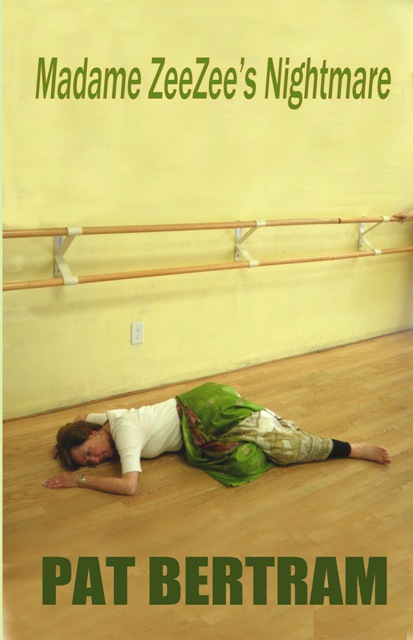
Madame ZeeZee’s Nightmare  (Mystery, Dance)

Light Bringer (Suspense, Science Fiction)

Daughter Am I (Mystery, Road Trip,)

A Spark of Heavenly Fire (Drama, Suspense)

More Deaths Than One  (Thriller)

All books are available on Amazon: https://www.amazon.com/Pat-Bertram/e/B002BLUHUY/

Searching for a Tagline

I’ve been struggling with my new website, and I’ve mostly learned how to use the website builder, or at least as much as I need to know for right now. I’ve pretty much set up the bones of the site; now it needs to be fleshed out with information about me and my books. The book part, while time-consuming, is easy. It’s just a matter of coping and pasting the blurbs and such that were on the old website.

The “about” needs to be updated. I can no longer brag about being a nomad as I did in the previous bio since I am as unnomadish as a person can get — the furthest I’ve been from home in the past few months is a mere handful of miles. But the bio is really just a matter of finding something to say about me. Whatever it is, it won’t be on the homepage; people will have to go looking for it, so it doesn’t have to be as catchy as some of the other parts of the website, such as the tagline.

Taglines are hard. You have to give the essence of your books or yourself in a matter of a few words. This morning I woke up thinking that “Author of provocative fiction and profound works of grief” would be good, but a few hours later that tagline seemed as if it would be too off putting for people who are simply looking for a bit of information about grief. Of course, search engines wouldn’t be sending them to my website for such information — they’d send grievers to one of the grief posts on my blog. Chances are, the only people who would end up at the website would be those who were specifically looking for information about me.

More importantly (to me anyway), I’m trying not to second guess myself too much and to stick with the first ideas that come to mind. Still, I want to hook people into staying, not push them away with pedantry.

So, what about “Author of intriguing fiction and insightful works about grief”?

Originally, I just used, “Author of fiction and non-fiction,” but that is boring and uninspiring to say the least.

If you have any suggestions for a tagline, I’d be glad to hear it.

***

Pat Bertram is the author of Grief: The Inside Story – A Guide to Surviving the Loss of a Loved One. “Grief: The Inside Story is perfect and that is not hyperbole! It is exactly what folk who are grieving need to read.” –Leesa Healy, RN, GDAS GDAT, Emotional/Mental Health Therapist & Educator

Connecting to the Past

I grew up with a hand-me-down life — most of the clothes I wore were hand-me-downs from a much older, much shorter, and much thinner cousin, which, as you can imagine, gave me a bad body image way before such things were fashionable. (It’s funny to think that people don’t do that anymore — hand down clothes — except perhaps for baby clothes. Instead, we donate garments that no longer please us to the various world-wide thrift stores, and end up destroying the cloth and clothing industries in the very areas that need such industry.) I probably sound ungrateful, but truly, back then I was glad for such “new” clothes, even if they had to be altered to fit me.

I also got my cousin’s outgrown books, which did a lot to counter whatever harmful connotations her clothes might have had. Then, as now, I read in the same way I breathe — inhaling without thinking. It’s just what I do, what I have done from the moment I learned how to read. (I know there must have been a time when I didn’t know how to read, but I don’t remember such a time, nor do I remember learning to read. It’s as if I truly have always read.)

Those books from my cousin were the staple of my early life. I went to the library often during the winter and every day during the summer, but during the times I couldn’t get library books, such as when I was sick, I reread my hand-me-down books. I also read my parents’ books they kept on the bookhselves in the room we called the library. This library was a separate room from the living room, and had shelves for books, my mother’s desk, and the chiming clock that formed part of the soundtrack of my early life. (I even read some of my mother’s old nursing textbooks, and will never forget the garish photos of various organs and diseases. I still have nightmares about the smallpox picture.)

I had most of the Judy Bolton series back then. I don’t remember getting rid of them, but I must have cleared them out during a move at some point. Still, I remember those books with the mottled pink cover (the Nancy Drew covers were the same, only they were blue) as if I’d seen them just the other day.

The point of all this nostalgia is that I found a few of the books on the Gutenberg Project website. I certainly hope the site is as they claim, that these books are in the public domain, because I downloaded the few Judy Bolton’s that I could. And now I am reading them.

I’ve always known that books connect us to the others who have read them, a much deeper connection than from writer to reader. I’ve known that certain books connect us to the ages — to the people long dead who also read those very stories.

What I didn’t realize until rereading these Judy Bolton books is how books can connect us to our past selves.

Although I don’t remember the stories so much, I remember the characters, the feel of the stories, and the feel of the books themselves. And I remember reading them.

I’m holding a Nook in my hand instead of the hard back book, but the words are the same. And I feel . . . timeless. The person I am today is reading the same book I last read fifty years ago. It seems miraculous. The older person who lived so much during the intervening years — loving, sharing, grieving — is, through these familiar words, connected to that girl child who could only dream and hope of a life that was to come.

I imagine there will come a time, perhaps fifteen to twenty years from now when I am elderly and frail and rereading these books, that I will look back to me on this day and think the same of this me as I think of that little girl me — that I was young and still full of hopes and dreams.

I imagine I will think back to all that has connected me to myself through the years, and I will be grateful for all breaths I took and all the books I have inhaled.

***

Pat Bertram is the author of Grief: The Inside Story – A Guide to Surviving the Loss of a Loved One. “Grief: The Inside Story is perfect and that is not hyperbole! It is exactly what folk who are grieving need to read.” –Leesa Healy, RN, GDAS GDAT, Emotional/Mental Health Therapist & Educator
Web Building

I spent a good part of the day working on my website. It had to be updated anyway because of my new book, Bob, The Right Hand of God, but this is more than a simple update. Because of Adobe Flash being discontinued, my ancient website is becoming defunct (even though my site was a plain old non-flash site, with stationary photos and text), I have to learn a new website builder and redo the entire site.

It’s not really all that complicated; it’s more of a matter of learning how to find what I need and to decide what I want to say. To that end, I looked at various examples of author websites, and though it didn’t really help much, it made me feel as if I were doing something to further my “author-ity.”

One of the problems I have that other authors don’t is the variety of genres I work with. Most authors stick with fiction or non-fiction. If fiction, they write one sort of novel, such as romances or mystery or fantasy. If non-fiction, they stick to a certain topic. Although I do stick to one topic with my non-fiction books — grief — my novels span multiple genres.

Back when I was learning to write, all the books said to write in a recognizable genre. You can put romance elements in mystery, or mystery elements in romance, but basically, you need to brand yourself by making sure your stories are predominately one thing. Well, I didn’t do that — I can only write the books that are in my head, after all, and those books ramble all over the genre spectrum. But now I know why it’s important to do what the others said to do and not what I did — it makes it a whole lot easier to figure out what to focus on when promoting yourself, and especially in figuring out what to focus on for a website.

Do I focus on grief? After all, my grief books sell more than the others.

Do I focus on the fiction? After all, most of my books are novels.

For now, I’m doing what a lot of authors do — put up a photo of myself and a gallery of my book covers on the home page, and then feature each book on a separate page.

The hardest part is to find the site in progress. If I go to the web builder page, they don’t seem to recognize what I’ve already done, so I have to click the link in the email they sent when they informed me of the pending changes. (From what one of the tech people I talked to said, I gather there are two distinct builders on my site — a free one that they gave me in exchange for the defunct one, and one I will have to pay for after an introductory period. And it’s the free one that’s hard to find.)

Mostly though, it’s just a matter of doing the work. Luckily, the old site is still up, so I have time to figure it all out and then to do what I need to do to build my website.

***

Pat Bertram is the author of Grief: The Inside Story – A Guide to Surviving the Loss of a Loved One. “Grief: The Inside Story is perfect and that is not hyperbole! It is exactly what folk who are grieving need to read.” –Leesa Healy, RN, GDAS GDAT, Emotional/Mental Health Therapist & Educator