MS. CICY’S NIGHTMARE — Chapter 1d

Ms. Cicy's NighmareMs. Cicy’s Nightmare is a fictional work in progress set at a dance studio where I take classes. All the characters have real life counterparts (except perhaps me as the narrator. I’m not sure how real I am). I have everyone’s permission to use their names. Here’s hoping I end up with as many friends at the end of the project as I have now. If you’ve missed any of the story to date, you can find it here: Ms. Cicy’s Nightmare

***

Although I took six classes from Ms. Cicy, I shared only one class with Jan, Arabic dancing. On Tuesday ballet class came first at 10:00am, and Arabic followed immediately after. While some of us were taking ballet, Jan had a different class with a different teacher, and she arrived at Ms. Cicy’s studio right after her other class, already dressed in her belly dance skirt.

Samm usually took ballet, but she missed class occasionally due to other obligations, and the morning I shot Jan’s photo was one of those occasions. A few others whom you have not yet met (I’m trying not to commit the unforgivable authorly sin of introducing too many characters at once, and I am failing miserably) came when their schedules permitted, but I’d never missed a Tuesday class. I don’t know what I hoped for — maybe grace or strength. I was too old to ever become a ballerina and I didn’t have a ballet body or even ballet feet. Ms. Cicy had to keep reminding me to point my toes, and when I stood on the balls of my feet, my heels barely lifted off the ground. Regardless of my shortcomings as a ballerina, I approached the class with all the dedication I could muster. I’d even made myself a black ballet skirt to put myself in the proper frame of mind and body.

After stowing my camera in my dance bag, I unwrapped my ballet skirt from around my waist and donned my orange and turquoise Arabic practice skirt. I stood at the barre and waited for class to begin. Samm found her place at the barre behind me.

“When did all this happen?” she asked.

I turned to face her. “When did what happen?”

“I don’t know how it all started with Jan. Was it your idea?”

Corkey had been silent during the picture taking and the between-class bustle, but now she spoke, sounding surprised at Samm’s question. “You were there. It started a couple of months ago when we all went to see the Trocks.” By “Trocks” she meant Les Ballets Trockadero de Monte Carlo, a glorious and gloriously funny all male ballet troupe. “When we were at lunch before the show, someone mentioned that Pat was a writer. Jan suggested she write a book about us and even volunteered to be the victim.”

“Oh.” Samm slid one slim leg behind her in a deep lunge and stretched her body forward. “I sat at the other end of the table that day, so I didn’t know.”

“I didn’t know either,” Marilyn said. Marilyn was a quietly cheerful woman who seemed to take everything in stride despite the major losses she had suffered. Or maybe the loss of her husband and best friend had taught her to take things as they came. Either way, she was easy to talk to and easy to be around. “My son and grandson met me that day, and I ate with them.” Her greenish eyes twinkled with pixyish delight. “Maybe we should all tell Pat a secret that will come out during the story.”

Samm continued to stretch, and Corkey drew tendus on the floor with her properly pointed feet. Their so obvious non-response to Marilyn’s suggestion made me wonder what secrets they were hiding. Was it my obligation as a writer to pry out those secrets, or did my obligation as a friend demand that I leave them alone?

To be continued here: Chapter 1e

***

Pat Bertram is the author of the suspense novels Light Bringer, More Deaths Than One, A Spark of Heavenly Fire, and Daughter Am I. Bertram is also the author of Grief: The Great Yearning, “an exquisite book, wrenching to read, and at the same time full of profound truths.” Connect with Pat on Google+. Like Pat on Facebook.


MS. CICY’S NIGHTMARE — Chapter 1c

Ms. Cicy's NighmareMs. Cicy’s Nightmare is a fictional work in progress set at a dance studio where I take classes. All the characters have real life counterparts (except perhaps me as the narrator. I’m not sure how real I am). I have everyone’s permission to use their names. Here’s hoping I end up with as many friends at the end of the project as I have now. If you’ve missed any of the story to date, you can find it here: Ms. Cicy’s Nightmare

***

Samm, a lithe woman of unknown years (unknown to me, that is) with wonderfully flawless dark skin, entered the dance studio. She was the type of woman who could randomly pull two or three unmatched items out of her closet and look as if she’d spent hours dressing herself for a Vogue photo shoot. That day she wore her purple practice skirt, which wrapped twice around her hips (mine barely wrapped once, if you must know), a maroon scarf tied into a turban-like affair, and a bluish-purple long-sleeved shirt with the tails tied at her waist. It wasn’t only her age Samm was quiet about, but her earlier years, too. Perhaps she had been a model at one time. Or maybe she had reason to be secretive — a woman with a sordid past.

Samm watched me take the photo of Jan in her death pose below the barre, then asked, “how are you going to get Jan into that exact position when she’s killed?”

“I hadn’t thought of that,” I admitted.

“Maybe she was trying to reach the barre so she could die dancing,” Samm said.

Jan gave a little laugh. “That’s too true to be funny.” Then, more seriously, she added, “Dying while dancing is how I’d like to go out. I just wouldn’t want to die on stage with all those people watching like a friend of mine did.”

Dying to Dance would be a good name for the book,” I said. “Or maybe Sashaying with Death. Or Death en Croix.

“Why does it have to be death.” Cicy said with a moue of distaste. Ms. Cicy is our teacher, a 77-year-old with the body of a woman half her age and the legs of a teenager. When she dances, you can almost see the years melt away, and she is young again.

“Maybe we could call it Ms. Cicy’s something,” I said

Ms. Cicy’s Nightmare.” Cicy giggled, sounding about seventeen. “Maybe you don’t really kill Jan. Maybe I wake up and find that I dreamt the whole thing.”

“Great title,” I said, hoping the teacher wouldn’t notice I didn’t comment on her idea about Jan’s death being a dream. It’s a time honored ending, of course, but I thought if I were going to go through the trouble of killing Jan, it should be for real.

Glee lit Cicy’s beautiful dark eyes. “I could be the murderess. I have experience.”

I felt my jaw drop. Cicy had experience with murder? It seemed impossible that anyone who danced with such expressive moves — moves that spoke of life — could have a history of violence.

“It was a murder weekend,” Cicy explained. “I was the murderess, a princess from a foreign country. I even wore a tiara.”

I blew out a breath of relief, glad I didn’t have to alter my impression of the dance teacher, at least not yet. “But why would you want to murder Jan?”

Cicy exchanged glances with Jan, who had risen and was smoothing her skirt. “Maybe she stole my choreography.”

I understood the need to protect one’s work any way one could, yet in truth, Cicy routinely gave us her choreography. Every step she taught gifted us with her work.

Still, such an irrational theft, as minor as it might seem to the danceless, could be a killing offense, especially if Jan were to give Cicy’s work to a rival instructor. (I’ve lost track of how many dance classes Jan took. Three or four from Ms. Cicy, and at least a couple more from other teachers. In the dance world, such promiscuousness could be motive enough for wanting someone dead.)

I am new to dance, but even I had experienced the deep emotions dredged up by dancing. In just a few short months, dancing had become a need, a pilgrimage, a soul quest.

“Do you know how long it will be before the cops get here,” I asked Jan, thinking how disappointed I would feel if class had to be cancelled.

“A long time. Maybe a couple of hours.”

That seemed excessive to me, but I figured Jan should know since her husband is a retired criminalist.

I looked around the dance studio. The place wasn’t large, perhaps fifteen feet wide by sixty feet long. Mirrors lined one long wall and a barre stretched across the opposite wall. A small nook at the back of the studio had been furnished as a miniscule waiting room, and a corner had been cordoned off with a counter and cabinet for an office. Pictures and posters hung on the walls, but other than that, the studio was empty.

“If we have to stay here for a couple of hours waiting for the cops, we might as well have a class,” I said. “The floor will be mostly bare since Jan’s body won’t take up much room, we’d be dressed for the occasion, and our minds would not yet have processed the truth. I like the idea of a group of aging women dancing in the face of death.”

By this time, the rest of the class had arrived. All eight women stared at me with various shades of disbelief, but I shrugged off their attitude. This was my story, my murder, and I could choreograph it any way I wished.

Jan shook her head with mock sadness. “I am truly hurt that no one will mourn me.”

“Of course, we’ll mourn you,” I told her. “But it will have to wait until after class.”

Jan smiled, but I don’t think she thought my comment funny.

To be continued here: Chapter 1d

***

Pat Bertram is the author of the suspense novels Light Bringer, More Deaths Than One, A Spark of Heavenly Fire, and Daughter Am I. Bertram is also the author of Grief: The Great Yearning, “an exquisite book, wrenching to read, and at the same time full of profound truths.” Connect with Pat on Google+. Like Pat on Facebook.

MS. CICY’S NIGHTMARE — Chapter 1b

Ms. Cicy's NighmareMs. Cicy’s Nightmare is a fictional work in progress. All the characters have real life counterparts (except perhaps me as the narrator. I’m not sure how real I am). I have everyone’s permission to use their names. Here’s hoping I end up with as many friends at the end of the project as I have now. If you’ve missed any of the story to date, you can find it here: Ms. Cicy’s Nightmare

***

Before belly dance class the next week, I asked Jan how she wanted to be killed. Since she’d initiated this lethal game, I thought it only right that she got to choose the means of her demise. So much fairer than the way life works, wouldn’t you say? I mean, few among us get to choose our own end. Life, the greatest murderer of all times, chooses how we expire, whether we will it or not.

Jan laughed at my question and said she didn’t care.

Death is often messy — and smelly — with blood and body wastes polluting the scene, and I did not feel like dealing with such realities. Besides, the murder was to take place at Ms. Cicy’s dance studio, and I didn’t want to be haunted forever after by the scent of a gruesome end for Jan. It would put a damper on the pure joy of dancing, and I couldn’t allow that to happen.

So . . . no blood, body wastes, smells, or any unpleasantness. It would be a nice gentle murder befitting our nice, gentle victim. Poison, perhaps, or a blow on the head. Neither of those means of murder would be particularly gentle on Jan, of course, but then it’s not her sensibilities I’m worried about. After all, she’d be dead and beyond such matters.

I continued to fret over motives. It seemed inconceivable that anyone would want Jan dead, but I kept on with my preparations for her murder. One day I brought my camera to class so I could take a photo of her would-be corpse lying on the studio’s wooden dance floor. When Jan walked into the studio, dressed in her green and beige silk belly dance practice skirt, I asked if she’d play dead for me. I expected to have to take several shots to get the pose I wanted, but she sank to the floor as gracefully as she did everything else, and lay in the ideal pose.

Right then I knew I could kill Jan. She was just too damn perfect.

To be continued here: Chapter 1c

***

Pat Bertram is the author of the suspense novels Light Bringer, More Deaths Than One, A Spark of Heavenly Fire, and Daughter Am I. Bertram is also the author of Grief: The Great Yearning, “an exquisite book, wrenching to read, and at the same time full of profound truths.” Connect with Pat on Google+. Like Pat on Facebook.

MS. CICY’S NIGHTMARE — Chapter 1a

Ms. Cicy's NighmareMs. Cicy’s Nightmare is a fictional work in progress. All the characters have real life counterparts (except perhaps me as the narrator. I’m not sure how real I am). I have everyone’s permission to use their names. Here’s hoping I end up with as many friends at the end of the project as I have now.

***

I didn’t want to kill Jan — it was her idea. I’ve literarily killed hundreds of thousands of people, so it shouldn’t have been difficult to murder one dainty older woman, but the truth is I couldn’t think of a single reason to kill her. She is charming, kind, with a smile for everyone, and the ghost of her youthful beauty is still apparent on her lovely face.

It’s not that I object to killing, you understand. I could easily kill my verbally abusive alcoholic brother, and as a matter of fact, I almost did so today. He broke my bedroom window and screamed obscenities at me while I cleaned up the glass. At one point, I hefted a platter-sized piece of glass and considered Frisbeeing it at his neck, but it seemed like too much trouble. There would not only be the glass to clean up, but all the blood and his dead carcass. So not worth it!

Besides, there’d be no mystery to his death — anyone who heard that relentless verbal assault would understand my need to kill him. The only mystery would be if I could get away with the crime.

Killing someone no one would ever have a reason to kill, like Jan — now, that would be a true mystery. And a challenge.

I blogged about the possibility of murdering Jan, of course. I blog about everything — blogging is my outlet, my support, my discipline. Readers expressed the opinion that killing off one’s friends is a good way of losing those friends, and I had to agree. Alive, Jan is so much sweeter — and sweeter smelling — than she ever would be dead. Besides, I enjoy dancing with Jan, both in the classroom and onstage. (Okay, so our class danced together on stage only once, but it was special for all that.)

The day after I decided not to kill Jan, several of us dancing classmates went to lunch together. When we turned to leave the restaurant after munching on salads and sandwiches, I accidentally swung my dance bag and narrowly missed hitting Corkey, a tanned, elegant blonde a couple of years older and a couple of inches shorter than me.

Corkey deadpanned, “I’m not the one who volunteered to be the murder victim.”

That cracked me up, and right then I decided I had to follow through with the project. I mean, really — how could I not use such a perfect line?

To be continued here: Chapter 1b

***

Pat Bertram is the author of the suspense novels Light Bringer, More Deaths Than One, A Spark of Heavenly Fire, and Daughter Am I. Bertram is also the author of Grief: The Great Yearning, “an exquisite book, wrenching to read, and at the same time full of profound truths.” Connect with Pat on Google+. Like Pat on Facebook.

Doing Things Backward

For all my other books, the story came first, and the cover was a bit of an afterthought, but for my soon-to-be-started writing project — a story of a murder that takes place at a dance studio with all my real life dancing classmates as the characters — I decided I needed the inspiration of seeing the cover. A big thank you to our victim Jan for her so elegant pose (she just sank down to the floor and there she lay in the perfect pose) and to Ms. Cicy for contributing the “Nightmare.”

Ms. Cicy's Nightmare

***

Pat Bertram is the author of the suspense novels Light Bringer, More Deaths Than One, A Spark of Heavenly Fire, and Daughter Am I. Bertram is also the author of Grief: The Great Yearning, “an exquisite book, wrenching to read, and at the same time full of profound truths.” Connect with Pat on Google+. Like Pat on Facebook.

The World of Writing as I Know It

Debra Purdy Kong is an established mystery writer with two published series: The Casey Holland mysteries and the Alex Bellamy mysteries. She has her own blog, and she’s also a co-contributor on The Write Type blog, posting marvelous articles about the state of the publishing industry, such as How Social Media Helps, and Hurts, Are Conferences Losing Attendees? and Interesting Info on the State of Publishing.

When Debra asked me to take part in a blog tour that focuses on the writing process, I jumped at the chance if for no other reason than to introduce this fascinating woman. The arrangement is that I answer four questions about writing, then choose three other writers who will do the same. So I choose . . . you and you and you! All you have to do is answer the following questions on your blog and add a link back to me.

#1) What Am I Currently Working on?

Right now, I’m still concentrating on posting a blog a day, and I’m working on a non-writing project. That project should be finished in about three weeks, and then I will begin writing a new novel, something fun and whimsical. It started when my dance class suggested I write a book about them. One woman even volunteered to be the victim, though I can’t imagine why anyone would want to kill her. She is lovely, charming, and utterly delightful. I wasn’t going to write the story since it seemed a good way to lose a lot of friends, but at the lunch the other day, I almost whacked one of my classmates with my dance bag, and she deadpanned, “I’m not the one who volunteered to be the murder victim.” So I decided to write the book. I mean, how could I not use such a perfect line?

#2) How Does My Work Differ From Others of Its Genre?

Light BringerI don’t really write to a genre. Libraries and bookstores used to be set up with a mystery section, a romance section, a science fiction section, and then all the rest of the novels. That’s what mine are — one of “all the rest.” (When I’m forced to name a genre, I say suspense/mystery because my novels fit better in that category than any other.)
The disheartening aspects of not having a genre are more than offset by the joy of having created four unique visions of the world, dozens of characters who would not have life without me, and vivid word pictures that exist only in my books.

Each of my books shows a particular vision of the world as I know it. A Spark of Heavenly Fire shows the horror of an all-too-possible pandemic, the even more horrific steps the government is ready to take, and the various ways, both heroic and craven, people might react to such an eventuality. More Deaths Than One shows the unthinkable results of mind control experiments, experiments that have actually been perpetrated without our knowledge. Daughter Am I is a more light-hearted romp, a treasure-hunting tale of finding oneself in a most unlikely way. And Light Bringer hints at a world where the Sumerian myth of a tenth planet — a planet of doom — is fact.

#3) Why Do I Write What I Do?

I write what I do because those stories captured my attention and kept it during the long months it takes me to write a novel. I know I’d be better off if I tried to write books that would capture the attention of a large readership, but I can only write what I’m enthusiastic about.

#4) How Does My Writing Process Work?

Seems silly, I know, in this electronic age, but I write fiction in pencil on loose-leaf paper. (I have a better mind/writing connection using pencil and paper than I have with a keyboard; a mechanical pencil is easier on my fingers than pen, and paper is easier on my eyes than a computer screen.)

I don’t know the entire story before I writing, but I do know the beginning, the end, and some of the middle. That way I can have it both ways: planning the book and making room for surprises.

I need to know a bit about the hero, but most of the time I get to know the characters the same way a reader would — by the way the characters act. I also need to write the story in the order it happens — it’s more satisfying for my logical mind and easier to keep track of — but if I get to a place where I know something happens without knowing what, I will skip it and go back later when I know what is missing.

So, there you have it. That’s how I write.

What about you? What are you currently working on? How does your work differ from others of its genre? Why do you write what you do? How does your writing process work?

***

Pat Bertram is the author of the suspense novels Light Bringer, More Deaths Than One, A Spark of Heavenly Fire, and Daughter Am I. Bertram is also the author of Grief: The Great Yearning, “an exquisite book, wrenching to read, and at the same time full of profound truths.” Connect with Pat on Google+. Like Pat on Facebook.

On Writing: The Importance of Setting

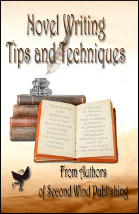
Novel WritingDeborah J Ledford, in “Captivating Settings,” a section from Novel Writing Tips and Techniques From Authors of Second Wind Publishing, stresses the importance of setting, of putting readers at ease and giving them a visual at the beginning of each chapter, especially the first time the location is presented. As the author of the popular Deputy Hawk/Inola Walela thriller series, Deborah J Ledford knows what she is talking about. We do need to be aware of our surroundings.  In real life, if we were to awaken in an empty room — or heaven forbid, hanging in empty space — with no indication of where we are, even the most equanimous would be uncomfortable. The rest of us, of course, would be panicked out of our minds.

Although being unacquainted with where we are in a story wouldn’t panic us, it would prevent us from settling into the novel. We’d be searching the pages warily wondering where we are and even worse, wondering if we want to continue reading.

In the past couple of days I had the dubious honor of reading the first chapters of two new books on the market, and combined, they show the importance of setting a scene and doing it properly.

The first book had absolutely no setting. It was as if the characters were hanging in the air, held to the page only by the thin strings of their words. There was no “there” there, and I had no desire to keep reading. If the writer didn’t care enough about me as a reader to let me know where I was, I certainly didn’t care about the story.

The second book had too much setting, describing the initial scene at great length with lots of awkward constructions using “had”s and “you”s, and meanderings into the past, that I had no interest whatsoever in the story, even though I did know where I was. Instead of describing the setting using vague and anecdotal constructions, she could have used the setting in a more dynamic way, evoking mood, atmosphere, making the setting part of the action. Most importantly, she should have searched for a couple of telling details — the sights, sounds, smells, feel, tastes that evoke the entire feeling of the setting.

In the 1980s, bookracks in grocery stores were full of gothic romances. Perhaps you remember seeing those covers: a brooding mansion in the background, a woman in a diaphanous gown running away from the house, looking back at it in fear. Despite their triteness, those were dynamic covers: the pictorial description of the house, the effect on the character (fear), and how the character reacted (running away.) Written description can be as vibrant as those covers; it just means taking the description a step further and filtering it through the senses of a character.

In this example from my novel More Deaths Than One, we already know that Bob and Kerry are in a hotel in Bangkok, but now we get an impression of the hotel room from Kerry’s reaction.

Bob opened his eyes, then squeezed them shut against the light. From the heaviness of the air and the brightness of the day, he presumed it was mid-morning. He opened his eyes again and this time managed to keep them open.

He turned his head toward Kerry. She lay on her back, hands behind her head, eyes focused on the ceiling. Following her gaze, he realized she was staring at one of the ubiquitous green lizards. Her body vibrated with excitement.

He smiled to himself. Leave it to Kerry to be thrilled with this small reminder they were no longer in Colorado.

“Isn’t this great?” she said in a hushed voice. “We have our own private watch lizard.”

Bob brushed away a fly buzzing around his head. “We could use a few more.”

Later, the description of the hotel becomes an integral part of the Bob’s worry.

The hotel was built around a courtyard accessible from all the rooms. Bob took his breakfast out to the courtyard, but couldn’t enjoy the fountain, the bushes, the flowers. He kept stealing glances at the windows, wondering if anyone was watching him.

When dark clouds rolled across the sky, pushing a stifling humidity before them, he took refuge in his room. It did not have air-conditioning, but the slowly revolving ceiling fan offered a modicum of relief.

He paced the floor, feeling as if he were a stranger in this land. It didn’t matter that he had lived here for sixteen years, he realized; any place would seem alien when he wasn’t with Kerry. She was his home.

He tried not to worry about her all alone on the streets, but as time passed, the worry grew too strong to ignore.

Then the rains fell. There was no light spattering gradually increasing in intensity as in Colorado, but an abrupt opening of the skies as if someone had turned on a spigot.

Because of the emotions evoked, the brief descriptions in no way stop the forward movement of the story.

Other posts you might be interested in:

Describing a Scene in an Interesting Way
Describing a Winter Scene
Describing a Winter Scene — Again
Describing a Winter Scene — Again. And Yet Again.
Describing the Nondescript

***

Pat Bertram is the author of the suspense novels Light Bringer, More Deaths Than One, A Spark of Heavenly Fire, and Daughter Am I. Bertram is also the author of Grief: The Great Yearning, “an exquisite book, wrenching to read, and at the same time full of profound truths.” Follow Pat on Google+. Like Pat on Facebook.

Stale Plot Devices

I’m still researching mystery clichés to use for the novel I’m planning to write, probably because researching is easier than actually sitting down and writing. To be honest, though, I don’t need to research clichés. I’ve read thousands of mysteries of all kinds — suspense, gothics, detective stories, cozies, police procedural, legal thrillers, medical thrillers, crime fiction — which certainly qualifies me as an expert on stale plot devices. In fact, when I started writing, I thought these devices were a necessary part of the genre because they were so common. It was a real joy to discover that I could write whatever I wanted — I didn’t have to follow in the fingerprints (I’m trying unsuccessfully to be non-clichéd here, using “fingerprints” rather than “footprints”) of those who have gone before.

Besides, mystery clichés seem to be everywhere. I’ve been watching tapes of “Mystery Woman,” TV movies originally released by Hallmark Channel, and these are the absolute most cliché-ridden mysteries I’ve ever had the misfortune to watch. The only reason I have the tapes is that Jeff (my life mate/soul mate) taped them before he died. (Well, obviously he taped them before he died. As far as I know, there aren’t any VCRs where he is. Come to think of it, there aren’t that many here anymore, either.) The movies are so bad they were funny when we watched them together, but somehobadgew the humor escapes me when I watch them alone. If the clichés were presented in a whimsical manner, as I hope to do in my story, then the movies would have been redeemable, but presented as they are in all seriousness, oh, my. So not fun!

For example, though the location doesn’t seem to be specified in the scripts, the movies were filmed in Simi Valley, and the real bookshop is in Pasadena. Big areas. And yet every mystery the mystery woman gets involved with, the police chief himself shows up. No underlings. Just the police chief. He is such a bumbling idiot that he doesn’t know the first thing about law, doesn’t know when it is acceptable to arrest someone, doesn’t know how to interpret the evidence. He needs the assistance of a DA to keep him on the right track legally, and the assistance of the mystery woman to interpret the evidence. How the heck did he ever become police chief if he’s so ignorant, to say nothing of being rude, cocky, and boorish?

Not only does the police chief show up for every murder in the city where the bookshop is located, when the mystery woman discovers a dead body at a spa sixty miles away, the police chief shows up there too. This silliness makes it seem as if there is only one person employed in law enforcement for sixty miles around. Even if he were the police chief of a one-cop town, he would not be investigating a murder so far from his base. That privilege would fall to the county sheriff.

Worse yet, when he threatened to arrest someone (the wrong person, of course) he said he’d take them “downtown.” What cop talks like that? “Downtown.” Sheesh. When cops arrest someone, they take them to the police station. Or to jail. Not “downtown,” whatever that means. I tried to find the origin of this cliché and couldn’t, but my guess it is that it could have come from either Ed McBain’s 87th Precinct series or perhaps Dell Shannon’s Luis Mendoza mysteries.

Just as bad, in the movie the people who owned the spa sixty miles away had hired the mystery woman to film a brochure, which is why she was on the site to find the body. And yet it had never been established that she was a photographer. So why didn’t the people at the spa hire a real photographer? How did they hear about her? And why would they hire someone who was notorious for solving mysteries since they had something to hide?

Worst of all, the mystery woman has a caretaker for her shop, an enigmatic character who can do anything, and if he can’t, he knows someone who can. He can find any bit of information, hack into any computer, has access to the DMV, IRS, CIA. In itself, this is a bit of a cheat. Anything she wants to know just falls into her lap without effort. Well, almost anything. In one episode, where the mystery woman’s DA friend won’t let her see a will even though wills are public record, the mystery woman had to break into the deceased’s house to steal the will. Apparently, her caretaker can find out anything except things that are public record.

Maybe I’m going to have to rethink the whole idea of spoofing mystery stories for my book. After watching these movies, clichés no longer seem fun.

***

(Pat Bertram is the author of the suspense novels Light Bringer, More Deaths Than One, A Spark of Heavenly Fire, and Daughter Am I. Bertram is also the author of Grief: The Great Yearning, “an exquisite book, wrenching to read, and at the same time full of profound truths.”) Connect with Pat on Google+. Like Pat on Facebook.

Break Time Now Available on Amazon!

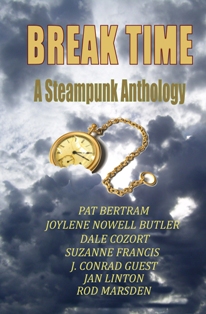
Break TimeBreak Time, the steampunk anthology I’ve been collaborating on with six other authors has now been published. You can find the kindle edition here:  Break Time on Kindle And the print edition here: Break Time in print. Soon it will be available on Smashwords and on Barnes and Noble.

To whet your appetite for the story, here is an excerpt from Break Time:

***

(Interim) Florence Giston, 1966 by Pat Bertram

Five minutes after the time machine winked out in a rainbow of light and harmonious sounds, it still hadn’t returned. Flo had watched the machine leave and arrive back within minutes during Al’s journeys to their shared past, so she thought she knew what to expect, but she hadn’t experienced this lag time before. Maybe something had gone wrong?

She waited another minute, then slowly turned around in a circle, hoping that the machine had somehow appeared behind her, but the black pyramid remained absent.

She’d felt helpless after the death of her husband, knowing there was nothing she could do to bring him back to her, but even that feeling of powerlessness paled in comparison to this new conundrum. Death, despite its awesome mysteriousness, was still somehow ordinary. Except for those alive today, everyone who had ever been born was now dead.

Could Al be dead? Her father-in-law had said he was going to kill steam, but could someone have killed him before he could accomplish his task? Could the time machine have somehow gone off course, or crashed? If Al was lost somewhere in the break in time, how would she ever find him?

She took a deep breath. No matter how long Al might have been traveling in time—misplaced or not— he’d only been gone a few minutes.

No need to panic.

Just wait. See what happens. Believe he will return.

***

Pat Bertram is the author of the suspense novels Light Bringer, More Deaths Than One, A Spark of Heavenly Fire, and Daughter Am I. Bertram is also the author of Grief: The Great Yearning, “an exquisite book, wrenching to read, and at the same time full of profound truths.” Connect with Pat on Google+. Like Pat on Facebook.

Promotional Absurdities

Promotion gets absurd at times. Every day, almost, I get an email from Twitter telling me I can promote my books on Twitter. All I have to do to optimize my presence on Twitter is to buy Twitter ads. Yep. That’s what they say. But here’s my question. If those ads are so effective, why isn’t Twitter using Twitter ads to promote their promotional services instead of spamming me? Apparently, as annoying as spam is, it works better than anything else. At least for Twitter. Me? I unsubscribed from their emails.

A couple of years ago I got an external drive for my computer. It’s a great way to back up files. The program automatically updates the drive, so I never have to think about it. Well, that’s the way it’s supposed to work. In reality, it uses so much memory and CPUs that my computer runs slower than . . . me. (I sat here for a moment trying to think of a clever simile, and that’s the best I could come up with. Sheesh. At least the simile has the merit of being true. I do run slowly when I run, which is as seldom as possible.) Still, I’ve managed to make the drive work for my needs. The strange thing is, every few days I get an email from the company trying to get me to buy another external drive. If the drive worked thsmileye way it’s supposed to, I’d never need another drive since files are simply updated, not rewritten. So why the constant barrage of promotion? Perhaps they know they sold me a crappy drive?

Today someone posted a link on one of my Facebook groups promoting their promotional services. The promotional article began with things you should not do to promote. All of my FB groups are promotion-free zones, so here’s a tip — before you promote in certain groups, be sure to check that such promotions are acceptable. And if promotion is not allowed, do not promote. I deleted not only the link but the person who posted the link. Problem solved . . . for me, anyway.

Every day I get dozens of requests to download someone’s ebook for free. These authors seem to think that because the book is free that their telling me about it isn’t promotion, that they are doing me a favor by allowing me the opportunity to read their less than immortal prose. To me, such promotion is every bit as bad as the authors who scream at every opportunity, “Buy my book.” I suppose commando tactics work, but not for me. A lot of these authors are on Facebook, and I have no qualms about unfriending such unfriendly folk. Who needs the aggravation?

Maybe I’m too picky. Maybe these are all reasonable ways of doing business. But I would never resort to such tactics.

Well, almost never.

Buy my books. Please.

***

Pat Bertram is the author of the suspense novels Light Bringer, More Deaths Than One, A Spark of Heavenly Fire, and Daughter Am I. Bertram is also the author of Grief: The Great Yearning, “an exquisite book, wrenching to read, and at the same time full of profound truths.” Connect with Pat on Google+. Like Pat on Facebook.




