For Now . . . Just Write.

writingbIn an online writing discussion, one writer said that the first nine chapters of her book went through a readers review and most of the readers agreed that the first paragraphs really grabbed their interest, but then her editor suggested placing the opening sequence later in the book to make the beginning more appealing to guys. The writer wanted to know if she should follow the editor’s advice, or go with the original beginning.

To be honest, the question confused me. Why would a writer have an editor if the writer didn’t want to follow the editor’s suggestions? And who are the readers? (And what the heck is a readers review? Do I need one, and if so, where do I get one?) What stake did this “readers review” have in the book? If the readers were family and friends, then it doesn’t make any difference what they say. And, if the readers only read the original beginning and did not have the editor’s suggested revised beginning to compare, it seems to me that the readers’ opinions don’t really account for much.

Even more confusing, why is the writer having someone edit the book when she has only nine chapters? Every writer knows that a novel takes so long to write that by the time it’s finished, either the writer has changed or the focus of the book has changed, sometimes both. It’s entirely possible that by the time the author finishes writing the book, the story would have strayed from the original premise, becoming stronger and more vibrant, in which case that first chapter would be superfluous, and any discussion about keeping the beginning or changing it would have become irrelevant.

To spend any time debating the beginning of a book before the entire thing has been written puts too much emphasis on something that is unimportant for now. The beginning sequence of a work in progress is merely a starting point for the writer, a place to anchor the story while s/he is writing it. In many cases, especially with new writers, a story will be stronger without that first chapter, but no one — not the writer, the editor, or the readers — will know that until the entire book is finished.

All an author has is his or her vision to see the way through to the end of a story. When a book becomes a committee project, then it is no longer the writer’s vision but the vision of anyone who happens to have an opinion. Sometimes new writers seek readers early in the process because they are unsure of themselves, but the way to become sure of yourself is simply to write. And sometimes writers want to make certain they are on the right track, but even the wrong track is sometimes the right track since everything you write helps you become the writer you were meant to be. (I’ve heard it said that you don’t become a master at the craft until after you have written a million words. I’ve also heard that it takes four million words. In other words, you need to write a lot of words!)

If you too are in the middle of your book and are pondering whether to change the beginning — don’t. For now, it is serving its purpose. When the book is finished and you are reviewing every minute detail, then you can decide how to improve the beginning to foreshadow the premise of the book and hook readers into wanting to continue exploring your vision. But for now . . . just write.

***

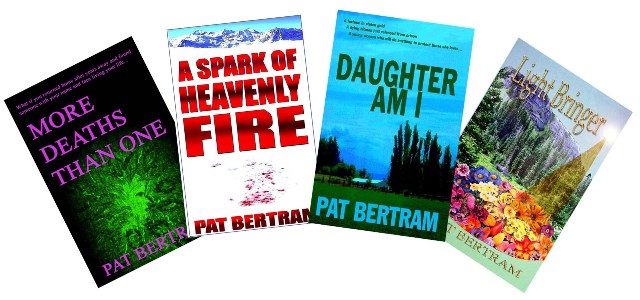
Pat Bertram is the author of the suspense novels Light Bringer, More Deaths Than One, A Spark of Heavenly Fire, and Daughter Am I. Bertram is also the author of Grief: The Great Yearning, “an exquisite book, wrenching to read, and at the same time full of profound truths.” Connect with Pat on Google+
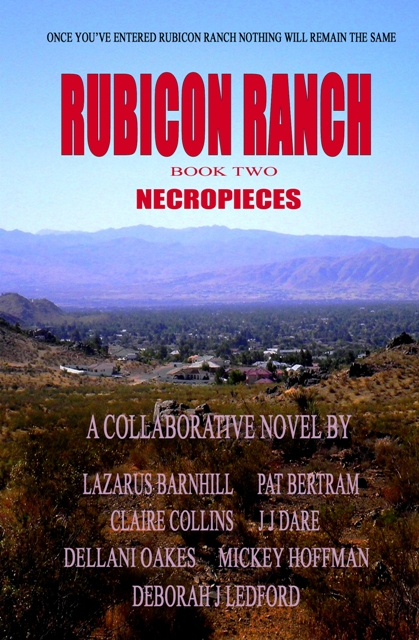
Rubicon Ranch ~~ Prepare for Mayhem!

Rubicon Ranch: NecropiecesI enjoy finding out how other writers approach their craft, and especially how they develop their characters. J J Dare, author of False Positive and False World, delights in creating evil characters. As a fellow collaborator in the Second Wind serialization, Rubicon Ranch, J J Dare created the monstrous victim in Rubicon Ranch: Necropieces, the second book of the series, along with a couple of his offspring.  In her blog post Bad Wasps, J J Dare said of her two POV characters:

They’re bad. Bad to the bone. Bad in ninety-five percent of their molecular makeup. If an ice-cream flavor was named after them, it would be “Vinegar and Vinegar” and it would taste just as sour as it sounds.

They are evil, narcissistic, self-centered, selfish and plain mean. Both characters think nothing of climbing over the living and dying bodies of anyone in their way. They are Bad Wasps.

So, why did I write them this way? It’s not a reflection of me. I’m fairly mild, with only a bit of flair once in a while. And I’ve never wanted to murder my parents.

I’m glad she added those last two sentences. Someday J J and I will meet, and I’d hate to have to go to the meeting prepared for mayhem.

Seeing how much fun J J Dare has with her evil characters, I’d considered exchanging my character for a bad wasp (or perhaps revealing a waspish side, which I might someday do), but my character, Melanie Gray still has so much work to do that I can’t just dump the poor woman. She needs to find out who killed her husband and why, and she needs to resolve her feelings for the misogynist sheriff.

J J’s characters might not reflect her, but Melanie Gray is a lot like me. She’s a writer dealing with grief, she wanders in the desert, she’s fairly calm and passive though she can be riled. Even though she started as an alter ego (but younger) she turned out to be a world traveler, which I am not, and she has a penchant for finding dead bodies, which I don’t. Thank heavens for that! Being some sort of human cadaver dog has never been an aspiration of mine.

If you have not yet checked out Rubicon Ranch, now would be a good time. You can download the first book free in the ebook format of your choice here: Rubicon Ranch: Riley’s Story and you can follow the second book as we finish writing it here:  Rubicon Ranch: Necropieces. And you will have to prepare for mayhem!

***

Pat Bertram is the author of the suspense novels Light Bringer, More Deaths Than One, A Spark of Heavenly Fire, and Daughter Am I. Bertram is also the author of Grief: The Great Yearning, “an exquisite book, wrenching to read, and at the same time full of profound truths.” Connect with Pat on Google+

Striving For Clarity in Writing

stageThere seem to be two vociferous groups of writers nowadays:

1. Self-published writers who insist that they can do everything their way without regard to grammar rules, publishing conventions, and even readers.

2. Writers who want to be published by the major publishing houses, and who scrupulously follow every dictate in the hopes it will bring them the acclaim they strive for.

The first group of writers often strive for originality at the expense of readability. They take the easy way out by choosing limp words that demand to be propped up with adverbs and adjectives. Or they throw out grammar rules, which comes across not so much as being creative but as being too lazy to learn the right way. Grammar is not a straightjacket but a garment that flows softly around readers, keeping their attention on the story rather than the structure. If readers have to read and reread a paragraph to try to make sense of it, then the author has not done her job.

Some of these authors believe that readers should have to work to make sense of their story, that it’s okay if readers are pulled out of the story to look up an unfamiliar word, or to admire a particularly well-turned phrase, but readers for the most part want to be immersed in a story. If you’re watching a play, you want to see the characters, the action, the set. You do not want to be shown the backstage bickering or the ugly scaffolding. You simply want to be immersed in the play. (Unless, of course, the play is Noises Off, in which case all the bickering and scaffolding are part of the story.) And the same goes for books.

The second group of writers strives for perfection at the cost of originality, especially originality of style or voice. These writers are often too assiduous in their dislike of “was”,  “it”, “ly” adverbs, adjectives, or any number of words that make our writing seem amateurish. Yes, an abundance of such words does make our writing seem amateurish and even hard to read, but removing every single was or it or modifier makes for a stilted style.

The truth of good writing lies somewhere in the middle of those two groups.

As I read in an old book called The Practical Stylist by Sheridan Baker: “Clarity is the first aim; economy the second; grace the third; dignity the fourth. Our writing should be a little strange, a little out of the ordinary, a little beautiful with words and phrases not met everyday, but seeming as right and natural as grass.”

***

Pat Bertram is the author of the suspense novels Light Bringer, More Deaths Than One, A Spark of Heavenly Fire, and Daughter Am I. Bertram is also the author of Grief: The Great Yearning, “an exquisite book, wrenching to read, and at the same time full of profound truths.” Connect with Pat on Google+

Are Book Trailers a Good Idea?

rainbowSomeone asked me for advice on how to get people to see his book trailer and then called me negative when I explained how difficult it would be. I admit I’m burned out when it comes to promotion. I’ve spent the past five years researching book promotion in all its many facets, tried hundreds of different things, and I still don’t know how to turn a sleepy seller into a best seller, though I know a lot about what doesn’t work, or at least what doesn’t work for me. Other people do the same sorts of things I’ve been doing and find a pot of gold at the end of the promotion rainbow, but I’m still searching for the rainbow.

Book promotion is a lot like the house that Jack built. You have a book you want to sell, so you create a video trailer to promote it. Then you have to promote the video that promotes the book you want to sell. Then, you join Facebook to get more viewers for your video, so now you have to promote your FB page that promotes the video that promotes the book you want to sell. And on and on and on.

Some people can just throw a book out there and make a fortune on Amazon, but the rest of us have to promote. Have to find a way to get people interested in us and then in our books. As I said in What Works When It Comes to Book Promotion?, the first authors to blog or use the various social networking sites to promote their books found a strong readership, but now all of those means of promotion are so common that they are simply an expected part of being an author.

It’s the same with book trailers. The first people who created book trailers to promote their books did well, but now video promos are just an expected part of being an author. Even if the video is great, the problem is getting people to see the video.

Sometimes people will stumble across a book trailer when they are surfing Utube, but it’s not as if people by the thousands will be searching for his book trailer. I wanted to hear Madonna’s “Playground” the other day, so I used the search function to find it since I knew what I wanted to listen to, but what if I didn’t know there was a song out there I’d like to hear? How do I find it?

The problem is, you have to promote the book trailer as assiduously as you promote the book. If I knew how to get people to see his trailers, I’d be good enough at promotion that I’d be selling millions of books.

Still, book trailers are a good idea, and the better they are made, the better they will do. I don’t want to discourage him from making his video because . . . who knows? His might catch people’s attention and go viral. At the very least, it will give him something other than the book itself to promote.

***

Pat Bertram is the author of the suspense novels Light Bringer, More Deaths Than One, A Spark of Heavenly Fire, and Daughter Am I. Bertram is also the author of Grief: The Great Yearning, “an exquisite book, wrenching to read, and at the same time full of profound truths.” Connect with Pat on Google+

Excerpt from LIGHT BRINGER by Pat Bertram

Description of Light Bringer:

Becka Johnson had been abandoned on the doorstep of a remote cabin in Chalcedony, Colorado when she was a baby. Now, thirty-seven years later, she has returned to Chalcedony to discover her identity, but she only finds more questions. Who has been looking for her all those years? Why are those same people interested in fellow newcomer Philip Hansen? Who is Philip, and why does her body sing in harmony with his? And what do either of them have to do with a shadow corporation that once operated a secret underground installation in the area?

Excerpt from Light Bringer:

Where am I? A new foster home?

Philip supported his throbbing head in his hands and wondered if he’d live to adulthood.

Tamping down the pang of self-pity, he raised his head, and everything came clear. Or almost everything.

He knew who he was: the thirty-eight-year-old Philip, dressed in yesterday’s clothes. He knew where he was: the foldout bed in Emery Hill’s den. But he didn’t know how he got there. He remembered being in the car with the creature, flinging himself against the door—no wonder he felt so bruised—and the icy touch on his neck. Had it brought him back here?

He stood, rocking until he caught his balance, then staggered off in search of the coffee he could smell brewing.

When he entered the kitchen, Emery started and dropped the mug he had been removing from a cabinet. It came to rest at Philip’s feet. Wincing, Philip bent to pick it up.

“Jeeminy Christmas!” Emery exclaimed. “You about scared the intellect out of me. What are you doing here? I thought you went back to Denver. See what you’ve done? I’m already turning into a blithering idiot.”

Philip laughed, then cut it off and clutched his head.

“What’s wrong? Hangover?”

“Feels like it, but I haven’t been drinking.” Getting a mug for himself and pouring a cup of coffee, he wondered if he’d been drugged. He took a sip of the brew, which seemed strong enough to soften a stone, and barely refrained from spitting it out. “Tomorrow I make the coffee.”

“Fine,” Emery said absently, regarding Philip with narrowed eyes. “I always know when one of my students is in trouble. It’s time you told me what’s going on.”

“I was never one of your students.”

Emery waved away the remark. “Between the two of us we should be able to solve your predicament.”

“I’m not sure there is a solution. Right before I came here, two NSA agents came to my apartment.”

Emery shook his head as if to clear it. “I must have misunderstood. I thought I heard you say NSA agents.”

***

Where to buy Light Bringer:

Second Wind Publishing

Amazon

Barnes & Noble Nook

iStore (on iTunes)

Palm Doc (PDB) (for Palm reading devices)

Epub (Apple iPad/iBooks, Nook, Sony Reader, Kobo)

Daughter Am I and The Hero’s Journey

DAIthumbI fell in love with the concept of the mythic quest when I read Christopher Vogler’s book The Writer’s Journey, so much so that I knew I had to write my own quest story. I’m not one for fantasy, either in real life or genre fiction, so I decided to use the hero’s journey structure for Daughter Am I, my contemporary novel of a young woman — Mary Stuart — who goes on a journey to learn about her recently murdered grandparents. Accompanying her are six old rogues — gangsters and con men in their eighties —  and one used-to-be nightclub dancer.

Developing so many characters at one time is difficult under normal circumstances, but the mythic journey archetypes helped me create the characters and keep them focused on their roles. Whether gangster or wizard, hit man or Darth Vader, the archetypes — and the power of the archetypes — are the same.

The hero is the one who grows the most in the story, who gains knowledge and wisdom. Heroism, in the mythic journey sense, is connected to self-sacrifice, risk, and responsibility. The hero must perform the decisive act of the story, though at the beginning, before their transformation, heroes often need to be goaded into action. Mary starts out only wanting to learn about her grandparents, and ends up becoming intensely loyal to the elders in her charge, which changes all of their lives.

A herald gets the hero started on the journey. Kid Rags, a dapper forger forced into retirement by computer technology, eggs Mary on, challenges her to find out more about her grandparents. Kid Rags is also a mentor, giving guidance and gifts, a role he shares with Teach. Teach is a con man who believes everything is a con, and he is not hesitant about sharing his vision.

Every mythic journey needs a trickster, a character who embodies the energies of mischief and a desire for change, and who provides comic relief. The trickster in Daughter Am I is played by Happy, an ex-wheelman for the mob. Happy wants to be on the move, is always urging action, and he peppers his talk with morose and unanswerable pronouncements about death. Did I mention that he carries a gun, but that his hands shake too much to be able to aim it properly? Poor sad Happy.

The shapeshifter is Tim Olson, Mary’s romantic interest. He doesn’t actually change shape, but he appears to change constantly from Mary’s point of view. He tempts, dazzles, confuses her, and makes her question his loyalty.

The shadow represents the energy of the dark side, the villain, and in the case of Daughter Am I, the villain truly is a shadow — Mary and her band of feisty octogenarians never even get a glimpse of him until the very end. Iron Sam, a dying hitman, is also a shadow. Although he is not a villain who has to be vanquished, he represents the dark side of Mary, a sinister balance to her guilelessness.

The story of Daughter Am I lightly follows the stages of the mythic journey, from a glimpse into Mary’s ordinary world, to the call for adventure (her own curiosity as to who her grandparents were and why they were murdered), her reluctance to commit to the journey, meeting her mentors, deciding to take a chance and just head out to talk to others who might have known her grandparents, undergoing tests and ordeals, and ultimately returning home, knowing who she is and what she wants to do.

Although Daughter Am I takes the same “hero’s path” that worked for such disparate stories as The Wizard of Oz, Star Wars, and Tin Cup, the journey is Mary’s own, not a rehash of any of any other quest story.  That is the beauty of the hero’s journey — the structure is infinitely malleable, giving any story a mythic undertone without overshadowing the story itself or confining it into a strict formula.

***

Pat Bertram is the author of the suspense novels Light Bringer, More Deaths Than One, A Spark of Heavenly Fire, and Daughter Am I. Bertram is also the author of Grief: The Great Yearning, “an exquisite book, wrenching to read, and at the same time full of profound truths.” Connect with Pat on Google+

Giving Readers a Stake in Your Story

jockeyI don’t like stories about gambling. They set my teeth on edge because of the inevitable slough of despair the character falls into when the addiction gets the better of him. Despite that, Let It Ride is one of my favorite movies, probably because although the story takes place at Hialeah amid the horse racing culture, it is not a movie about gambling. It’s the story of how the forces of the universe align to give Jay Trotter (Richard Dreyfuss) one perfect day, and how he had the courage to accept the gift.


My favorite lines are when Pam (Teri Garr) says, “I don’t know why people have to gamble. Why can’t they just watch the horses run?” Trotter responds, “Without gambling, there is no horse racing.”

I’m with Pam — someday I’d like to go to a racecourse and watch the horses run, but I can also see why there is no horseracing without gambling. First, there would be no income, and second, no one but those directly involved — racecourse owners, horse owners, trainers, and jockeys — would have any stake in the matter. Gambling gives anyone who has the price of a bet a stake in the outcome of the race.

This is similar to writing — if an author doesn’t give readers a stake in the outcome of the story, then there is no reason for anyone to read the book. Since there is no gamble when it comes to a book (well, except for the gamble of whether the reader will enjoy it or whether they will feel cheated for having wasted the money) the stake has to be an emotional one. For example, Kendra, the main character in Mickey Hoffman’s mystery, School of Lies, is a special education teacher in an inner city school. The book’s true-to-life atmosphere is appealing to anyone who enjoys mystery and mayhem, but it’s especially appealing to special education teachers. Special education teachers — or any teacher — who have been in similar schools and situations perhaps wish they could have said the same things or done the same things Kendra did, which gives them a stake in the outcome of her dilemma. Of course, anyone who ever went to high school would also have a stake in the story, if for no other reason than to see the truth of what they suspected — that much intrigue was going on behind the scenes.

For this same reason, a popular main character in many books is a mother juggling home life and career, which immediately gives a large section of the population a stake in the story. You see the same thing dozens of times a day in your sidebar ads — “mother in (the name of your city, which supposedly gives you an added stake in the matter) gets skinny”; “mother discovers secret to youthful skin”; “mother earns a fortune working at home.”

Your choice of characters and their predicament are not the only ways to give readers a stake in the outcome of your story. You can make readers a part of the story by giving your characters characteristics that people can identify. You make readers involved by stirring up their emotions. You show them what is happening instead of explaining every detail, and let their own reactions to the action become part of the story.

Giving people a stake in your story is not exactly the same thing as getting them to bet a bit of cash on a horse race, but getting them to pony up a bit of emotion while reading your story will give them greater winnings in the long run.

***

Pat Bertram is the author of the suspense novels Light Bringer, More Deaths Than One, A Spark of Heavenly Fire, and Daughter Am I. Bertram is also the author of Grief: The Great Yearning, “an exquisite book, wrenching to read, and at the same time full of profound truths.” Connect with Pat on Google+

What Works When It Comes to Book Promotion?

lbmugA new author asked me if I ever found a series of steps to take that have at least a small chance of working when it comes to book promotion.

That is a very good question, one I have been pondering for a long time. I have been doing various promos online for more than five years (I started with my blog in September 2007), and I don’t sell very many books, though my publisher assures me that ultimately I will sell many thousands of copies of each of my titles. I have come to the conclusion that promotion is what we do until luck finds us. If you don’t write erotic romances, horrifyingly violent thrillers, or vampire stories (or whatever the current fad is) that can catapult you into bestsellerdom, you will need luck to get your book discovered.  Many authors who have found success will tell you they did it on their own through hard work, but almost every time, a bit of luck played into the equation. And it’s always possible to get discovered — the media (which includes online and offline means of communication) has a fickle and roving eye, and it’s anyone’s guess where that glittering gaze will fall.

It used to be that you could do giveaways and contests to get attention, but there are tens of thousands of books being given away every day, so it’s almost as hard to give a book away now as it once was to sell it. And unless a contest somehow captures the imagination of people, they will pass on taking a chance (even if it’s a sure thing that they will win something) because they are inundated with hundreds of such promos every day.

It used to be that blogging would bring you a readership, but now blogging is so common that it is simply an expected part of being an author. Blogging can be a satisfactory and fulfilling means of writing and communicating, and it does help to create an online presence, but by itself blogging doesn’t sell books.

It used to be that MySpace was a good way to find a readership — the first authors who promoted on MySpace became instant successes, but when other authors signed up for the site by the thousands, hoping for similar results, no one paid attention to them.

It used to be that Facebook was the best place to find and connect with readers. The first authors who used Facebook to promote made a fortune. One guy became a best selling author by maxing out Facebook accounts (5000 friends is all you are allowed, so he had several accounts), and he will sell you a book telling you how he did it, but recently it came out that he also paid for reviews, so who knows what the truth of his success is. One thing I do know is that most authors are not selling tons of books via Facebook because Facebook continually changes their algorithms to keep that from happening. Where once I’d get hundreds of people seeing what I posted, I get maybe thirty now if I’m lucky. And of that thirty, maybe one or two respond. (Respond to the post, I mean.)

The first authors on Twitter, Pinterest, and all the other sites also made a name for themselves, but the rest of us? Not so much.

As for offline: authors who do book signings and festivals and such do well to a certain extent, but you have to be careful — I know several authors who sold thousands of books that way, but when it came time to figure out profits and losses, it turns out they didn’t make enough to pay for all their expenses. They’d have been better off just standing on a busy corner and giving the books away.

So, what do you do until luck comes calling? The best advice I can give you is to do three things to promote every day. It can be something as simple as signing up for Facebook if you haven’t already done so, adding a few friends if you have signed up, posting a photo on the site, or commenting on someone else’s photo. You could do a blog post on your blog or ask someone if they will let you be a guest on their blog. You can comment on the posts of other bloggers so that everyone who reads those posts will also read your words. You could sign up for Twitter, Pinterest, LinkedIn or any of the other currently popular social networking sites.

You can get bookmarks printed up with your book cover, a brief blurb, and an online address or website where people can contact you or buy your books, then pass the bookmarks out to everyone you see. You can get business cards printed up with your book cover on the front side and information on the back where they can find you and your book. You can get addicted to Vistaprint — once you are on their emailing list, you will receive sales notices, and over time you can get all sorts of great stuff such as t-shirts and mugs, stickers and posters, for free or for a nominal fee. Then give those out or offer them as incentives for people to buy your books.

You can do book signings and other events such as fairs, festivals, and craft shows. You can offer your services as a speaker.

The best promotion is one that captures people’s imaginations, so maybe one of your promos for the day could be nothing more than brainstorming with someone to come up with a totally unique idea. Or you can check out my Book Marketing Floozy blog for tips from other authors. Book Marketing Floozy is an indexed blog of sixty-five different articles by various authors about book marketing.

I don’t think it really matters what you do. Just do three things to promote your book every day.

My final suggestion — keep writing. The more books you have, the greater the chance of having sales snowball, but you also have to keep improving your craft. Just throwing out any old thing in the hopes of making it big won’t help you stand out from the crowd.

And that’s all promotion is — trying to find a way to stand out from the crowd.

***

Pat Bertram is the author of the suspense novels Light Bringer, More Deaths Than One, A Spark of Heavenly Fire, and Daughter Am I. Bertram is also the author of Grief: The Great Yearning, “an exquisite book, wrenching to read, and at the same time full of profound truths.” Connect with Pat on Google+

What writer influenced you the most?

I’ve spent my life reading, so from a young age, “story” seeped into my conscious mind and steeped there until I began writing. In that way, all of the writers whose books I have ever read have influenced me, but if I had to pick a single author, it would be Taylor Caldwell. Caldwell told wonderful stories that showed history in the context of fiction, and I’ve tried to do the same. She also used a hundred words when a single sentence would have sufficed, and I’ve tried to do the opposite. And she overused words. In one novel, she used the word “inexorable” about a hundred times, and a couple of times I used the word in my own writings as an homage to her and a reminder to myself not to repeat unusual words. Such echoes resound in readers minds, as “inexorable” did in mine, and detract from the overall impression of the book.

Here are some responses from other authors about the writers who influenced them the most. The comments are taken from interviews posted at Pat Bertram Introduces . . .

From an interview with Rami Ungar, Author of “The Quiet Game: Five Tales To Chill Your Bones”

I’d have to say Anne Rice, Stephen King, and James Patterson. I discovered the first two when I was in junior high and high school, and they blew my mind. I knew after reading them, horror was what I wanted to focus on. I discovered James Patterson shortly before graduating high school, and I think he was the one who taught me how to write thrillers. To this day, I think of Alex Cross and James Patterson when I think about how I was able to write my thriller novel “Snake”.

From an interview with Juliet Waldron, Author of “Roan Rose”

At the moment, I’d say Cecelia Holland.

From an interview with Sherrie Hansen, Author of “Love Notes”

Maud Hart Lovelace, author of the Betsy Tacy books, set in fictional Deep Valley, Minnesota, my home state, greatly impacted my life as a young person. (Think Little House on the Prairie but set during the Victorian era.) Maud’s main character, Betsy Ray, longed to be a writer, and set the stage – really formed the expectation in my mind – that I would write a novel one day. The Betsy Tacy books are wonderful (and back in print thanks to Harper Collins). One of the guest rooms at my B&B is named “Heaven to Betsy” in honor of the tomes.

From an interview with Noah Baird, Author of Donations to Clarity

I picked up Still Life with Woodpecker by Tom Robbins when I was about 21. It was the book which really spoke to me. I’d always enjoyed reading, but it was the first book I felt like it was written to me. I loved Steinbeck, Twain, etc, but they were from another generation. Woodpecker was the literary equivalent of hearing Nirvana’s Smells Like Teen Spirit or Don McLean’s American Pie for the first time. I felt like someone else out there saw the world like I did. Christopher Moore, Tim Dorsey, and Carl Hiaasen are larger influences on me now, but Tom Robbins was the first to knock me down the rabbit hole.

What about you? What writer influenced you the most?

(If you’d like me to interview you, please check out my author questionnaire http://patbertram.wordpress.com/author-questionnaire/ and follow the instruction.)

Rubicon Ranch: Necropieces — The Story Continues

Rubicon Ranch is a collaborative and innovative crime series set in the desert community of Rubicon Ranch and is being written online by the authors of Second Wind Publishing. Seven authors, including me, are involved in the current story — Rubicon Ranch: Necropieces.

Residents of Rubicon Ranch are finding body parts scattered all over the desert. Who was the victim and why did someone want him so very dead? Everyone in this upscale housing development is hiding something. Everyone has an agenda. Everyone’s life will be different after they have encountered the Rubicon. Rubicon Ranch, that is.

Although some of the characters were introduced in Rubicon Ranch: Riley’s Story, a previous collaboration, Rubicon Ranch: Necropieces is a stand-alone novel.

We hope you will enjoy seeing the story develop as we write it. Let the mystery continue! Whodunit? No one knows, not even the writers, and we won’t know until the very end!

Chapter 34: Melanie Gray
by Pat Bertram

Sheriff Bryan turned off the highway onto Tehachapi Road and wound through Rubicon Ranch. Melanie gazed out the Navigator’s window at the beautiful houses. Although the buildings were typical California housing development architecture—stucco with tile roofs—many of the dwellings were custom-built, so none of the houses looked exactly like any other. Spanish, Moorish, and Mediterranean styles dominated, but Cape Cod designs, Greek revival porticos, and ranch-style houses were also prevalent.

It seemed strange, Melanie thought, that the lovely facades hid such horror—death, murder, dismemberment.

“When I took this job,” the sheriff said, “I figured Rubicon Ranch would be the least of my troubles. It seemed such a quiet place.” He shot a glance at her. “You find that funny?”

It had been so long since Melanie had smiled that it took a moment for her to realize her lips had quirked up in acknowledgment of their synchronized thoughts.

“Not funny, no. It’s just that the area does seem quiet and innocent, as if nothing bad could happen here. And from what I can tell, nothing bad happened until I came. First Alexander was killed, then Riley, then her father and her kidnappers, and now Morris. I know it’s foolish, but I can’t help feeling as if it’s all my fault.”

“Is it?” Bryan asked without a trace of friendliness.

“Note to self,” Melanie muttered. “Never confide in a cop.”

“What about if the cop confides in you? All hell is breaking loose in Rubicon Ranch, and I’d like to tell you what’s going on if that’s okay.”

“Ah, back to the nice cop. It’s amazing how you can do the good cop/bad cop routine all by yourself.”

“Bad cop?” He flashed a smile that could only be called a leer, but then he seemed to think better of it, and straightened his mouth into its normally stern lines. “Have you met Eyana Saleh? Egypt Hayes?”

“Haven’t met either of them.”

“It’s the same person. Petit woman, mixed heritage, new to Rubicon Ranch.”

“Oh! I’ve seen her. She’s always wandering around taking photos of the neighborhood. She’s beautiful and has such lovely skin. Eyana Saleh? That’s her name? It fits her. What has she done?”

“Right at the moment she’s in the hospital. Been beaten pretty bad. She’s not saying much, but one of her assistants found her and described the man she saw running from the house, and the description fits Jake Sinclair.”

“Have you arrested him yet?”

“He’s not going anywhere. He’s in the hospital too, just down the hall from Eyana. His arm was chewed almost to the bone.”

Melanie gaped at the sheriff. “Eyana ate him?”

“A coyote did, or so he says. Apparently, after he beat up Eyana, he ran off to the desert. That’s where the medivac helicopter picked him up. He’s not saying anything, either, though maybe when he finds out how unpleasant those rabies shots are, he’ll come clean. The doctor says it’s definitely a canine bite though he guesses it’s a domesticated creature. The only dog in the area that I know of that’s big enough to do so much damage so quickly is the bull mastiff Tara Windsor owns, but she’s keeping mum, too.”

“Tara Windsor is in Cabo with her pool boy.”

“What? How do you know?”

“My agent. She’s a celebrity hound.”

Sheriff Bryan tapped a long, well-shaped finger on the steering wheel. “So, a woman comes to town looking like Tara, telling everyone her name is Leia Menendez, wink, wink, leading everyone to believe that she’s the actress but is really Leia? Whoa. If Tara could act that good, she’d be a shoo-in for an Oscar. Playing Lizzy Borden, maybe. An axe was found in the Sinclair house under Jake’s bed. We think Leia put it there, but our witness is a bit unreliable since she was having hysterics at the time.”

“And here I thought the life of a cop was boring,” Melanie said. “All routine and paperwork.”

“Not boring enough. The witness is Nancy Garcetti, a real estate agent. She found Morris’s head in the Peterson house and went flying down the street, screaming all the way. She says while she waited for my deputies to arrive, she saw Tara Windsor sneaking around the side of the Sinclair’s house, and Tara was carrying something that looked like an axe. We can’t find any other witnesses, and Tara or Leia or whatever her name is, isn’t admitting anything.”

“Is it the axe that killed Morris?”

Bryan shook his head. “The ME says not. He says it’s animal blood, thin blood, like from a roast. Then, as if this isn’t enough of a circus, we have electric boy. Ward Preminger.”

“I know who you mean,” Melanie said. “He’s also new to the neighborhood. Seems to crackle with static electricity. Has a fixation with the Morris house.”

The sheriff turned onto Delano Road. “As near as we can figure it, Ward blamed Morris for his condition, though apparently his brain got rewired when he was zapped by lightning while trapped in a tornado. He—” The chirping of a cell phone interrupted him. Bryan pulled the device out of a sheath on his belt and held it up to his ear. “Yes,” he said. “Yes . . . Okay . . . Sure . . . Thanks . . . Be right there.”

He sheathed his phone. “I have to go. We got the preliminary autopsy reports.” He made a quick u-turn and pulled up in front of Melanie’s rented house.

Melanie climbed out of the vehicle and stood on the curb until the Navigator sped out of sight, then she trudged to her front door, unlocked it, and entered the silent house.

***

Pat Bertram is the author of the suspense novels Light Bringer, More Deaths Than One, A Spark of Heavenly Fire, and Daughter Am I. Bertram is also the author of Grief: The Great Yearning, “an exquisite book, wrenching to read, and at the same time full of profound truths.” Connect with Pat on Google+



