Rubicon Ranch: Necropieces — The Story Continues

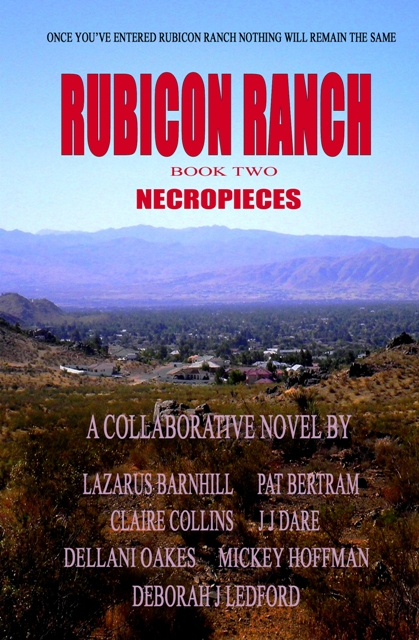
Rubicon Ranch is a collaborative and innovative crime series set in the desert community of Rubicon Ranch and is being written online by the authors of Second Wind Publishing. Seven authors, including me, are involved in the current story — Rubicon Ranch: Necropieces.

Residents of Rubicon Ranch are finding body parts scattered all over the desert. Who was the victim and why did someone want him so very dead? Everyone in this upscale housing development is hiding something. Everyone has an agenda. Everyone’s life will be different after they have encountered the Rubicon. Rubicon Ranch, that is.

Although some of the characters were introduced in Rubicon Ranch: Riley’s Story, a previous collaboration, Rubicon Ranch: Necropieces is a stand-alone novel. The first chapter will be posted on Monday, June 11, and one chapter will be posted every Monday after that.

We hope you will enjoy seeing the story develop as we write it. Let the mystery continue! Whodunit? No one knows, not even the writers, and we won’t know until the very end!

Chapter 33: Melanie Gray
by Pat Bertram

Morris. Melanie shuddered, remembering her encounter with the famous author and his request for photos of necropieces. Well, now the evil old man was just a bunch of dead body parts himself.

The sheriff seemed to be focused on his driving, but a bird-like tilt of his head gave her the impression he was trying to hear her thoughts. Well, whatever other abilities Seth Bryan might have, she doubted he was clairvoyant. He never seemed to understand her or her point of view.

“I don’t know anything about Morris,” Melanie said. “And I’m not sure there’s much to know. Of all the people I’ve encountered in Rubicon Ranch, he seems the least opaque.”

The sheriff made a small noise that could have been a choke of laughter or a grunt of derision, but other than that, he remained silent.

“I mean, he is a despicable human being,” Melanie continued, “and whoever killed him should probably be given a medal for something . . . saving the earth, perhaps. But Morris doesn’t really hide what he is. He might have feigned Alzheimer’s, but that was simply because he felt like it. All that matters to him are his wants, and since he has the money to indulge himself in his evil fantasies, there is nothing to stop him.”

“Nothing?” Sheriff Bryan said quietly.

Was nothing to stop him.” Melanie stole a look at the sheriff. Did her simple error in syntax make her seem guilty to him? She had no idea how his mind worked, and his eyes hidden behind those silly mirrored sunglasses gave her no clue.

She considered asking him if he knew who killed Morris, but he’d probably use that as an excuse to interrogate her about her neighbors, and she had nothing to say. She didn’t want to tell him about seeing the supposedly decrepit and curmudgeonly old Eloy Franklin laughing and frolicking with his dog as if he were a man half the age he pretended to be. Nor did she want to talk about the new people she’d seen wandering around the neighborhood as if it were a theme park—Murder World, or some such.

And she certainly didn’t want to talk about herself. She wouldn’t like to give the sheriff any hint of her true strength or deadliness, or he might decide to use the knowledge against her.

She stared out the window at the empty desert they were passing and wondered what he would think if she were to tell him about wrestling a boa constrictor in Costa Rica. The pale tan snake with its brown markings had been almost invisible hidden in the undergrowth, and she had tripped over it. Boas were tree-dwellers, so she wasn’t on the lookout for such a creature on the ground. She had since learned to be aware of everything in her surroundings, but back then, she was still unused to seeing danger lurking in innocent places. She figured out later the boa must have been sick or old or weak, otherwise she’d have been squeezed to death before she could unwrap the beast from around her torso. Still, it had taken all her considerable strength to save herself. And Alexander hadn’t lifted a hand to help. He had simply photographed the episode. Not exactly a knight in shining armor.

What would the sheriff have done in that situation? Kill the poor creature in an attempt to rescue the damsel in distress?

A low rumble that Melanie interpreted as a chuckle came from the man beside her. “I can hear your mental wheels spinning,” Bryan said. “Care to share what you’re thinking?”

“What are you, the thought police?” Realizing that perhaps she’d sounded too harsh for what could conceivably have been a guileless query on his part, she softened her tone. “I was just wondering if you were the knight in shining armor type, is all.”

Seth Bryan tapped the badge pinned to his left shirt pocket. “This is all the armor I need.” Then he smiled at her—a real smile that showed dazzling white teeth and a hint of a dimple. “Well, this badge and a bullet-proof vest.”

***

Pat Bertram is the author of the suspense novels Light Bringer, More Deaths Than One, A Spark of Heavenly Fire, and Daughter Am I. Bertram is also the author of Grief: The Great Yearning, “an exquisite book, wrenching to read, and at the same time full of profound truths.” Connect with Pat on Google+
Sharp Writ Book Awards Winner!

GTGYthmbLast night I was notified that Grief: The Great Yearning has been awarded 2nd Place in the 2012 Sharp Writ Book Awards Memoirs / Biography category. They said I’ll be getting a Certificate of Achievement and gold foil ribbon labels stating “Sharp Writ Book Awards Winner” that can be affixed to book covers, but today I got an email telling me it was a mistake, and I’ve been awarded 3rd place, which leaves me feeling ambivalent about the whole thing.

To be honest, I was already feeling ambivalent about winning an award for a book that I wish I’d never had occasion to write in the first place. Still, it’s an important book, and I’m pleased to see it getting any sort of recognition. More than that, I hope the increased visibility for Grief: The Great Yearning will help people find it when they need it. Grief is such an isolating experience, we need to know that whatever we feel, others have felt. Whatever seemingly crazy thing we do to bring ourselves comfort, others have done. And, as impossible as it is to imagine at the beginning, we do survive.

A fellow author and sister in sadness wrote: “Grief: The Great Yearning by Pat Bertram is a book of empathic understanding. How many recently bereft have looked to society’s guidelines for grieving and found these “norms” did not correspond to what they were feeling? How many were left confused and even more depressed because they were not “progressing” like the experts said they should? Bertram’s book is a comfort to those of us tossed into the grief whirlwind of disbelief and agony. The entire book is raw and real. Grief: The Great Yearning is a companion guide from someone who has already been there. It is a forever love letter.” —J J Dare, author of False Positive and False World.

A staunch supporter who works with the bereft wrote: “The grief journey is one of unbelievable pain to the psyche, to every part of our being. It’s a journey of missing the individual; spewing at the injustice of death, our powerlessness over death, our absolute lack of knowing what exists beyond death (despite claims to the contrary); replaying over and over our relationship with the deceased. All the while trying desperately to function in a world forever changed.

“If people were to ask me for an example of how grief can be faced in order for the healthiest outcome I would refer them to Grief: The Great Yearning, which should be the grief process bible. Pat Bertram’s willingness to confront grief head on combined with her openness to change is the epitome of good mental health.” —Leesa Healy, Consultant in Emotional-Mental Health.

***

Pat Bertram is the author of the suspense novels Light Bringer, More Deaths Than One, A Spark of Heavenly Fire, and Daughter Am I. Bertram is also the author of Grief: The Great Yearning, “an exquisite book, wrenching to read, and at the same time full of profound truths.” All Bertram’s books are published by Second Wind Publishing. Connect with Pat on Google+

Rubicon Ranch: Necropieces — The Story Continues

Rubicon Ranch is a collaborative and innovative crime series set in the desert community of Rubicon Ranch and is being written online by the authors of Second Wind Publishing. Seven authors, including me, are involved in the current story — Rubicon Ranch: Necropieces.

Residents of Rubicon Ranch are finding body parts scattered all over the desert. Who was the victim and why did someone want him so very dead? Everyone in this upscale housing development is hiding something. Everyone has an agenda. Everyone’s life will be different after they have encountered the Rubicon. Rubicon Ranch, that is.

Although some of the characters were introduced in Rubicon Ranch: Riley’s Story, a previous collaboration, Rubicon Ranch: Necropieces is a stand-alone novel. The first chapter will be posted on Monday, June 11, and one chapter will be posted every Monday after that.

We hope you will enjoy seeing the story develop as we write it. Let the mystery continue! Whodunit? No one knows, not even the writers, and we won’t know until the very end!

Chapter 32: Melanie Gray
by Pat Bertram

Melanie trudged along the left side of the highway, facing traffic, the blister on her heel burning with every step. The sun had come out, and the road was now dry, but her shoes and socks remained wet from slogging through the flooded gutters back in Rojo Duro.

After Sheriff Bryan dropped his bombshell—Why did you do it, Melanie?—he had been called away, leaving the question hanging in the air. Two hours later, he still hadn’t returned, but a kid who looked as if he were straight out of the police academy brought her coffee. She had demanded the use of a toilet, and the young deputy ushered her to the lavatory. He wasn’t waiting for her when she finished, so she had simply walked out of the sheriff’s department. No one stopped her.

She’d now been walking for hours, but was still far from Rubicon Ranch. Maybe she should have returned to the interrogation room and waited for the sheriff, but if he still wanted her, he knew where to find her—at home in about seven more hours.

“See what you’ve done to me, Alexander,” she murmured, tears stinging her eyes. “Not only have you left me alone with only a ghost to talk to, you’ve turned me into an escaped prisoner.” Wearily, she scrubbed away the tears. She was sick of crying, sick of Alexander being gone, sick of the way her life was turning out. Once she’d felt strong, like a warrior, capable of anything. And now? Just a tired widow, at the mercy of her emotions.

A vehicle veered off the right lane, and pulled up alongside her.

“Get in,” Sheriff Bryan commanded.

Melanie wanted to refuse, but oncoming traffic gave her little opportunity to assess the matter, and besides, her blistered heel was throbbing with pain.

She scurried around the tan Navigator and slipped into the front seat. The sheriff stomped on the accelerator. The vehicle shot back into the right lane, narrowly averting a head-on collision with a white Subaru.

“Are you always so reckless?” Melanie asked.

“Are you always so reckless? What do you think you’re doing, walking along the highway like that?”

“Going home, where I would have been all day if your thugs hadn’t arrested me.”

“You weren’t under arrest. I just needed to talk to you, and I couldn’t get away.”

She gave him a narrow-eyed look. “So I’m not a suspect? Then why did you tell my publisher I was?”

He grinned. “It got you a bigger advance, didn’t it?”

She slumped in the seat as much as she could against the restraints of the seat belt, and folded her arms across her chest.

“You have to admit,” Sheriff Bryan said in a softer tone than any she had yet heard issuing from his mouth, “you need help.”

Melanie sat up straight and glared at him. “Help? Help? Who says I need help? Is that why you arrested me? To help me?”

“Now that’s the Melanie I know and love.” He must have sensed the indignant response she was about to hurl at him, because he added quickly, “It’s just an expression.”

Melanie dropped her head into her hands. Why did this man keep her so off balance? Was it that her grief made her vulnerable and any attention would send her reeling, or was there something more going on? Either way, she had to get a grip on her emotions. Warrior, she reminded herself.

She took a deep breath and blew it out slowly. “Why did I do . . . what?”

As cryptic as her comment sounded, he didn’t pretend to misunderstand her reference to the question he had asked in the interrogation room.

He sighed as he had done then. “Why did you shut me out when I poured out my heart to you? I was more open to you than I’ve ever been to any other woman. You could have at least told me you understood, even if you weren’t interested.”

She stared at him in total non-comprehension, and though he glanced at her, she couldn’t pick up any clues as to what he was thinking. She could only see herself in the mirrors of his sunglasses. And then all at once she understood.

During the investigation into little Riley’s murder, the sheriff had taken her to lunch and told her his story. How he’d been the fair-haired boy. President of his class in high school. Pledged the best fraternity in college. Dated a cheerleader and married her after graduation. Went into law enforcement. Hired on at the Greene City Police Department. Became a detective. Got his masters. Went up through the ranks like a shot. Became the youngest captain in the history of the force. Was on the fast track to becoming Chief of Police when he had an affair with a junior officer on the force.

He’d said that his wife knew about the other woman, that she stayed with him because he was the favorite son of Greene City, but when the affair came to light, he lost his job, his status, and his wife—at least temporarily. He claimed that though he was through with her, she wouldn’t give him a divorce because she still believed that one day he was going to be a major police chief, maybe in LA, and she was waiting to get a piece of that large salary in alimony payments.

What Melanie had taken to be a come-on—his letting her know that even though he was married, he was available—he’d apparently meant as a way of opening up to her. And she had run out on him.

But not because of the supposed come-on. Because of Alexander.

“You lied to me,” she said. “You told me you went to the scene where my husband died and came to the conclusion that it had not been an accident. The cops told me it was a hit and run, that someone had rear-ended the car with such force that Alexander crashed head-on into a concrete abutment, but when I went out the scene right afterwards, I didn’t see anything to indicate that another car was involved, so how could you have seen anything weeks later? It’s possible someone had tampered with the car as Riley said, but the only way to find that out was to investigate the vehicle itself. And you didn’t care enough to check it out.”

“Repeat that.”

“You lied to me,” Melanie said.

The sheriff held up a hand. “Not that. Riley.”

“It’s hearsay.”

“This isn’t a court of law. Just tell me.”

“Supposedly, Riley told Moody that she’d seen someone messing with our car.”

“Did she say who?”

“No. Morris accused me of killing Alexander. He said that Riley told Moody she’d seen me messing with our car. When I asked Moody about it, she told me Riley hadn’t mentioned any name, just that she had seen someone. Moody said she didn’t believe that Riley really saw anyone. But she believed it enough to mention it to her father.”

Melanie waited for the sheriff to say, “Aha! So you’re the one who murdered Morris!” But he didn’t say anything. Just rubbed his chin thoughtfully.

“And since we’re talking about Alexander,” Melanie said, “You never returned his cameras to me. I want them back.”

The sheriff turned his mirrored stare toward Melanie. “Cameras?”

“Yes. All of his cameras were in the car. Six of them. I want them back.”

“There were no cameras.”

“Where are they? They were in the car when he left that day. I put them there myself.”

“Ms. Gray, no matter what else you might think of me, I am a great law officer. I know my job. There was no indication in the report of any officers seeing cameras in the vehicle. And the report does not state that Alexander was rear-ended. It was a merely a surmise by one of the state troopers, and he had no business telling you that. Riley was right. Someone did tamper with your car. Someone very knowledgeable and very skillful. The brake lines were cut and the steering wheel loosened. I suspected that when I checked out the scene of the accident and found no skid marks. The car simply plowed into the abutment at a high speed.”

“Maybe the flex lines were worn through. That happened to me once.”

“The car was new. We sent the vehicle to a lab down the hill since we don’t have an automotive lab up here in the high desert, and I just got the results, which is why I wanted to talk to you today. All four metal brake lines were cut so precisely that when Alexander slammed on the brakes, he instantly lost hydraulic pressure in both the front and rear brakes at the same time. With today’s vehicles, cutting the brakes like that is almost impossible for a professional to do, and completely impossible for an amateur.

Melanie clutched her stomach, feeling the same sort of visceral grief as when she heard that Alexander was dead. Alexander . . . murdered? By a professional killer? An assassin?

“It’s not possible,” she said aloud.

“Alexander must have traveled a long way after his brakes failed—the closest brake fluid stain I found was about a mile and a half from where Alexander went off the road.”

“But supposedly when he died, he was texting a woman he was having an affair with. How could he have been texting her if his brakes broke more than a mile away from where he crashed? Wouldn’t he have dropped the phone and tried to control the car?”

“Yeah. I’m having a problem with that scenario, too. We need to talk to the woman, but the number Alexander was texting is out of service. It feels to me as if the phone with the texts was a plant to make everyone think exactly what the official report said—that Alexander lost control because he was texting while driving.”

Melanie put her hands on her head, trying to still the roiling thoughts. “I can’t deal with this right now. Take me home. Please.”

“I’m sorry,” the sheriff said in a soothing tone that might have been practiced but still managed to sound sincere.

For just a second Melanie wished he would stop the vehicle, put his arms around her, and hold her. “There’s just so much death. Alexander. Riley. Riley’s father. The Petersons. Morris.”

“That’s the other thing I need to talk to you about,” Sheriff Bryan said in his official voice. “Morris.”

***

Pat Bertram is the author of the suspense novels Light Bringer, More Deaths Than One, A Spark of Heavenly Fire, and Daughter Am I. Bertram is also the author of Grief: The Great Yearning, “an exquisite book, wrenching to read, and at the same time full of profound truths.” Connect with Pat on Google+

30 Second Book Trailer For GRIEF: THE GREAT YEARNING

Grief: The Great Yearning is a finalist in the memoir category for the Sharp Writ Book Awards, and they asked me for a 30 second introduction to the book for their “awards ceremony” video. A couple of days ago I posted a draft of this video and here’s the finished video blurb.

After I put this video together, I realized an interesting coincidence: All the photos were taken in August, around the 15th.

The first photo might look like the desert, but it’s a photo of him in Colorado at the Black Canyon of the Gunnison, a few months before he died. I didn’t even know I had the photo, but I found it in a computer file after he was gone, and it shattered what was left of my heart. It looked as if he’d already been moving away from me toward eternity. Oddly, though I didn’t plan it, the three photos I used in the video were all taken within a few minutes of each other on that excursion. The gnarled tree with the stormy clouds, the profound depth of the canyon, the photo of him looking to eternity all now seem to be signs of my unconscious grief.

The photo on the cover of the book is taken in the very same place, exactly a year earlier. The photo of the two of us together (the only photo ever taken of the two of us together) was taken exactly thirteen years earlier than the three photos. And we met exactly thirty-two years before that last trip to the Black Canyon. I had no idea August was such a significant month for me.

***

Pat Bertram is the author of the suspense novels Light Bringer, More Deaths Than One, A Spark of Heavenly Fire, and Daughter Am I. Bertram is also the author of Grief: The Great Yearning, “an exquisite book, wrenching to read, and at the same time full of profound truths.” Connect with Pat on Google+

Making a Video Blurb

Grief: The Great Yearning is a finalist in the memoir category for the Sharp Writ Book Awards, and I need to put together a 30 second book trailer for their “awards ceremony” video. Thirty seconds isn’t long enough to do a real book trailer, so I’m doing a few photos and text pages — more like a video blurb. I found a thirty second piece of Beethoven’s music — since it’s the last completed piano piece Beethoven ever wrote, it seems fitting — and I have been working on the pages. Do you think these will work?  Is it a bit over the top with the title on each page? Do the photos fit with the theme? Any suggestions for improvement?

video[1]

video[2]

video[3]

video[4]

video[5]

video[6]

video[7]

video[8]

video[9]

Close Encounters of the Coyote Kind

SANYO DIGITAL CAMERAIn A Spark of Heavenly Fire, I had a character meeting up with a coyote as a way of showing that the character was becoming “untamed,” that she was finding her inner savage.  She went from searching for self-affirmation from the men in her life to finding affirmation in herself. But more than that, she overcame her squeamish nature to do whatever she needed to do to survive.

Although her communion with the coyote seemed a bit trite or maybe just too pointedly mystical, I couldn’t think of a better way to show the change in her. And perhaps it only seemed trite because such things do happen. Yesterday, while walking in the desert, I came across not one but three coyotes. They were far enough away that I was never in danger, but they all stopped and stared at me. I stared back. We stood there for a minute or two, then I got distracted by a noise, and when I looked for them a second later, they were gone.

Perhaps this encounter was symoblic, a way of showing me that like my character, I am becoming untamed, embracing my inner savage, willing to do whatever I need to do to survive. More probably, the coyotes had come close to civilization in an attempt to find food. Either way, it was an interesting synchronicity of life imitating art.

***

Here is the coyote excerpt from A Spark of Heavenly Fire:

She had traveled only a mile or two when she felt a presence. Someone. Something. The awareness vibrated in her body, jangled her nerve endings. She stopped. Looked around. Although she didn’t see anyone, she knew she was no longer alone.

On full alert, she walked farther, and suddenly, there he stood, silhouetted on a hill.

A coyote.

Pippi froze, afraid that if she made a single move, he would spring on her. She thought of the knife, but it didn’t give her any comfort; the knife was so small and the coyote so large.

She tried to remember what you were supposed to do in a situation like this. Look the animal in the eyes? Look past it? Look at the ground?

Too late. Her eyes locked onto the coyote’s.

As she looked into him and he looked into her, she could feel her fear draining away.

They stood motionless, staring at each other for a long time — eons. Then the coyote’s ears pricked up. He cocked his head as if listening to something in the distance.

Pippi cocked her head, too, but all she heard was a quickening breeze.

Casually, as if he had more important things to do than to stare at this insignificant human, the coyote trotted off.

He turned to give her one last look, then he was gone.

***

Pat Bertram is the author of the suspense novels Light Bringer, More Deaths Than One, A Spark of Heavenly Fire, and Daughter Am I. Bertram is also the author of Grief: The Great Yearning, “an exquisite book, wrenching to read, and at the same time full of profound truths.” Connect with Pat on Google+

iTunes, Anyone?

I just discovered that all of my books are available on iTunes, so if you receive a new iPhone, an iPod or any other iProduct this gift-giving season (or if you already have such a product), think of me! If you don’t have such a device, you can download a free  iTunes app for your computer — just click on any of my titles, and at the top of the page is a button to click for a free iTunes app.

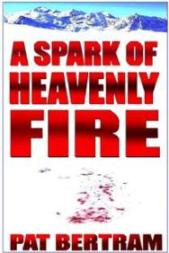
A SPARK OF HEAVENLY FIRE Embodies the Essence of Christmas

Washington Irving wrote: “There is in every true woman’s heart a spark of heavenly fire, which lies dormant in the broad daylight of prosperity; but which kindles up, and beams and blazes in the dark hour of adversity.” As I read these words several years ago, I could see her, a drab woman, defeated by life, dragging herself through her days in the normal world, but in an abnormal world of strife and danger, she would come alive and inspire others. And so Kate Cummings, the hero of my novel A Spark of Heavenly Fire was born. But born into what world?

I didn’t want to write a book about war, which is a common setting for such a character-driven story, so I created the red death, an unstoppable, bio-engineered disease that ravages Colorado. Martial law is declared, rationing is put into effect, and the entire state is quarantined. During this time when so many are dying, Kate comes alive and gradually pulls others into her sphere of kindness and generosity. First enters Dee Allenby, another woman defeated by normal life, then enter the homeless — the group hardest hit by the militated restrictions. Finally, enters Greg Pullman, a movie-star-handsome reporter who is determined to find out who created the red death and why they did it.

Kate and her friends build a new world, a new normal, to help one another survive, but other characters, such as Jeremy King, a world-class actor who gets caught in the quarantine, and Pippi O’Brien, a local weather girl, think of only of their own survival, and they are determined to leave the state even if it kills them.

The world of the red death brings out the worst in some characters while bringing out the best in others. Most of all, the prism of death and survival reflects what each values most. Kate values love. Dee values purpose. Greg values truth. Jeremy values freedom. Pippi, who values nothing, learns to value herself.

Though this book has been classified by some readers as a thriller — and there are plenty of thrills and lots of danger — A Spark of Heavenly Fire is fundamentally a Christmas book. The story begins on December 2, builds to a climax on Christmas, and ends with renewal in the Spring. There are no Santas, no elves, no shopping malls or presents, nothing that resembles a Christmas card holiday, but the story — especially Kate’s story — embodies the essence of Christmas: generosity of spirit.

(Why does A Spark of Heavenly Fire begin on December 2 instead of December 1? Glad you asked that. All through the writing of the book, I kept thinking: if only people could get through the first fifty pages, I know they will like this book. So finally came my duh moment. Get rid of the first fifty pages!! With all the deletions and rewriting, I couldn’t make the story start on December 1 as I’d originally intended, but that’s okay since it didn’t end on December 25 as I had hoped. The story overgrew it’s bounds, but the symbolism still held since it ends around Easter.)

ASHFiTunes: https://itunes.apple.com/us/book/a-spark-of-heavenly-fire/id407886976?mt=11

Second Wind Publishing: http://www.secondwindpublishing.com/product_info.php?manufacturers_id=17&products_id=47&osCsid=de3fad213c6baa1c6fa9982f221c8c74

Amazon: http://www.amazon.com/Spark-Heavenly-Fire-Pat-Bertram/dp/1935171232/ref=ntt_at_ep_dpt_4

Barnes and Noble:http://www.barnesandnoble.com/w/spark-of-heavenly-fire-pat-bertram/1100632312?ean=2940015574395

Smashwords: http://www.smashwords.com/books/view/1842 (You can download the book in any ebook format, including a format for palm held reading devices!! Even better, you can download 30% absolutely free to see if you like the story.)

***

Pat Bertram is the author of the suspense novels Light Bringer, More Deaths Than One, A Spark of Heavenly Fire, and Daughter Am I. Bertram is also the author of Grief: The Great Yearning, “an exquisite book, wrenching to read, and at the same time full of profound truths.” Connect with Pat on Google+

Going with the Flow of the Story

SWhen I write fiction, whether a short story or a novel, I always need to know who the main characters are, what they want, who is trying to keep them from getting what they want, and if they are successful in their quest. In fact, the ending is so important to me, that I often write the ending somewhere in the middle of the project. By then, the characters have been developed, most of the story has been laid out, and I can see how the pieces fit and know exactly where I am going. (I just thought of something — my unfinished novel has been paused for several years now. Only part of that is a loss of focus due to the changes in my circumstance. The rest comes from a lack of inclination to continue. It is the first novel I worked on that I did not write the ending in middle. I wonder doing so would get me back on track?)
The one project I am involved with that turns this need to know the ending on its head, is the Rubicon Ranch serial I am writing with other Second Wind authors. In the first book, we postulated a murder, then each of us created a character who might have reason to want to kill the little girl. That is all we had of the story when we began to write it. We knew, of course, that the killer would be found, but we didn’t know who did it, why it was done, or how the story would be resolved. We simply took turns writing our chapters in round robin fashion, and hoped readers would forgive us if all those different POVs made the story seem disjointed at times. (Normally, when you write a novel, you get to go back and fix any problems during rewrites, but when you write a novel online, you are stuck with what you wrote.)

My character Melanie Gray is a grieving woman. We started the project just a few months after the death of my life mate/soul mate, and I couldn’t conceive of any other sort of character — at the time, grief was all I knew. To make her a widow, I had to get rid of her husband, so I killed him in an accident before the story began. That was the sole point of the accident, yet in a later chapter, the sheriff seemed to insinuate that there could be a connection between Melanie’s husband and the little girl — perhaps they had both seen something and been killed to protect it.

Well, it turned out that the two deaths were unrelated, but later the sheriff (as written by Lazarus Barnhill) told Melanie he concluded that the accident had been deliberate.

Now, during the second book, even more information about Alexander is being revealed — he had, in fact, been murdered, and the car tampered with in such a way that it had to have been done by a skilled professional.

I find that development interesting since when I created the character of the dead husband, he had a single role — to make Melanie a widow — but because of the flow of the story, the husband is developing into a character in his own right, and a nefarious one at that.

Melanie, too, is developing in response to the needs of the story, or at least to the needs of her backstory. She and her husband were the authors of a successful series of coffee table books. They’d traveled the world, he taking photos, she writing the text, so obviously she isn’t the weakling her grief makes her seem. One of the ironies of her life is that while living in places where human rights weren’t respected, she never had a problem, yet now, in the safest place she’d lived in her adult life, she is steeped in death and in trouble with the authorities. (If you’ve read any of my books, you will know that I like ironies.)

It’s a refreshing change of pace being involved in the Rubicon Ranch project. All I need to do is write my chapter when it is my turn; make sure it is consistent with what I know of the character, her background, and what has already been written; and not worry about what is coming next — just go with the flow.

***

Pat Bertram is the author of the suspense novels Light Bringer, More Deaths Than One, A Spark of Heavenly Fire, and Daughter Am I. Bertram is also the author of Grief: The Great Yearning, “an exquisite book, wrenching to read, and at the same time full of profound truths.” Connect with Pat on Google+

Desensitizing People to Violence

Clint Eastwood posted a status update on his FB profile today. No, I’m not a “friend” or a fan, don’t “like” him or “subscribe” to him, but his comment is making the rounds of FB, and it ended up on in my news feed. Several times. I found the comment interesting because of my research for More Deaths Than One, a book about mind control, and what I learned about how the military desensitized recruits to killing.

Eastwood wrote: With a lot of thought on this in light of all the shootings in the past few weeks I am very concerned that the left is now going to hit hard on pushing the 2nd Amendment over the cliff.

This is the only amendment that the ‘O’ can attack with any chance of repealing. If this, and God help us if he does, will lead to a barrage of attacks on all the amendments and socialism will be a forgone conclusion.

If anything should be shut down it should be the violent video games. Really, and I know everyone likes their electronics but these are the things that are taking kids and young people out of interacting with society and their peers.

I know I will probably take a lot of flack for that last observation but I’ve taken the flack before.

Have a great Sunday and hug your family.

I’ve written about this before, most recently in If Everyone Wants Peace, Why are there Wars? As I said, many of today’s — and yesterday’s — video games were developed by the military because studies had shown that repeated images of violence and death inured people to killing. During World War Two, as many as 85% of soldiers fired over enemies’ heads or did not fire at all. After World War Two, there was a concerted effort by the military to overcome this natural reluctance to kill, and apparently they succeeded because during close combat in Vietnam, only about 5% of soldiers failed to aim to kill. These same desensitizing “games” were later released as toys for children. Is it any wonder that many people — teens and adults — now seem desensitized to violence? They are playing games that were purposely created to foster killing.

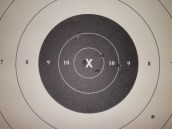
I am not a fan of guns, though I have attended a couple of shooting clinics sponsored by a local gun club. As an author, I thought it important to know how it felt to shoot a weapon at a target. The targets we used were the round kind rather than a silhouette of a human. (Not so incidentally, those human-like targets were also created by the military to get soldiers used to firing at people.) I enjoyed learning how to shoot, but handling the pistols, revolvers, shotguns and rifles did not create in me any desire to shoot at another human being. Guns by themselves do not encourage violence or a desire to kill. Certain video games do. Sociopathic tendencies do. Psychotic characteristics do. Military think tanks do.

Author Lee Child says that we don’t write what we know, we write what we fear, and that certainly is true in my case. I fear the machinations of the powerful, deadly, and calculating men and women who control our lives behind the scenes. And I fear politicians and celebrities who use tragedies to further their own ends.

***

Pat Bertram is the author of the suspense novels Light Bringer, More Deaths Than One, A Spark of Heavenly Fire, and Daughter Am I. Bertram is also the author of Grief: The Great Yearning, “an exquisite book, wrenching to read, and at the same time full of profound truths.” Connect with Pat on Google+