Where Do I Belong?

My favorite types of books have always been those where the character is out of place, as if she doesn’t belong in the world where she was plopped. By the end of the novel, of course, the character finds where she belongs — often with the one man who appreciates her — but we never hear the end of the character’s story. All stories end where life ends — in death. Authors simply pick the appropriate stopping place for the novel. So, as long as we imagine the character living happily ever after with her beloved, we know she belongs somewhere, but what happens to her when her beloved dies?

One short story I read when I was small affected me so much that I remember it all these decades later. (Though I don’t remember who the author was and, in fact, might not have known it. Back then, an author’s name was only important as a way of identifying the type of story, and I didn’t pay much attention to them otherwise.) The main character in the story was a young woman who had always felt out of place — the world and the people around her were alien to her. It turns out she was an alien stranded here on earth, and at the end, she was rescued and taken home.

It makes sense that such stories spoke to me since I too felt out of place. No matter how I tried to fit in, I never got it quite right, as if I were an alien trying to fit into a human situation. Then one day I stopped by a health food store, met the owner — a wise and radiant man — and all of a sudden the world made sense. If he was in the world, then the world wasn’t such an alien place after all. We never belonged to each other, but we did belong with each other. We thought alike, valued the same things, disvalued the same things. When he died two years ago, the world became alien once more, and I am back where I started, wondering where I belong.

As with many people in this mobile world, my parents left their hometowns, moved west, raised their family, then moved on again, which leaves me without a heritage, without a home. The place where I grew up has itself grown up — no longer a cow town but a world class city, and it is as alien to me as any city in the world. It didn’t matter as long as he was alive since he was my home, but now . . . where do I belong?

I’ve gotten over the hump of my grief. I am no longer in constant physical and emotional agony, though grief still stabs at me (sometimes several times a day), and I still have moments of panic when I remember that he’s not just gone out of my life but that he is dead. (That is still the worst aspect of this whole situation. I can deal with everything but his absence from Earth. How can he be so very gone? Where is he? Is he okay?) I am mostly back to being myself, though I’m not sure who I am, what I’m supposed to be doing, where I belong.

Right now, I’m taking care of my 95-year-old father, but this is not my home. In fact, I’d never even been here until my mother’s dying days. When my father is gone, the house will be sold, and I’ll have to find somewhere to live. But where do you go if you don’t belong anywhere?

Why “Grief: The Great Yearning” is Important

Yesterday I was on Blog Talk Radio discussing my new non-fiction book Grief: The Great Yearning and explaining why it is important.

I’ve written four novels, all published by Second Wind Publishing, and although I thought the subject matter of each book important enough to spend a year of my life writing and another year editing (to say nothing of the years on the arduous road to publication), I have a hard time telling people the novels are important.

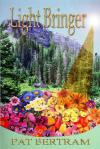
The basic theme of all my novels is conspiracy, focusing on the horrors ordinary citizens have been subjected to by those in power. Most people who have read the books seem to like them (though a few who didn’t like them seemed befuddled by what I was trying to accomplish). Light Bringer in particular seems to arouse a difference of opinion. Written to be the granddaddy of all conspiracy theories, Light Bringer traces the push toward a one-world government back 12,000 years. Based on myths, both modern conspiracy myths and ancient cosmology myths, Light Bringer is a thriller, or mythic fiction perhaps (if there is such a thing). I never intended it to be science fiction since the science is gleaned from ancient records rather than futuristic imaginings, but that is how it is perceived. Still, despite the scope of the book, despite it being my magnum opus and the result of twenty years of research, I can’t in all honesty say it is important to anyone except me. It probably won’t change anyone’s life or anyone’s thinking. For the most part, we bring to books what we believe, and so those who believe in conspiracies see the importance of my novels, while those who don’t have even a smattering of belief that there are machinations we are not privy to might even think them far-fetched.

On the other hand, Grief: The Great Yearning is an important book. It is composed of journal entries, blog posts, and letters to my dead life mate/soul mate, all pieces written while I was trying to deal with the unbearable tsunami of emotions, hormones, physical symptoms, psychological and spiritual torments, identity crisis and the thousand other occurrences we lump under the heading “grief.” Because of this, the emotion in Grief: The Great Yearing is immediate, the experience palpable. This is a comfort to those having to deal with a grievous loss because they can see they are not alone. (One of the side effects of grief is a horrendous feeling of isolation.) They can see that whatever they feel, others have felt, and that whatever seemingly crazy thing they do to bring themselves comfort, others have done.

This book is also important for the families of someone who has suffered a grievous loss. Too often the bereft are told to move on, get over it, perhaps because their families don’t understand what it is the survivor has to deal with. Well, now they can get a glimpse into grief and ideally, be more patient and considerate of their bereft loved ones.

This book is especially important for writers. I’ve mostly given up reading for now because of the unrealness I keep coming across in fiction. So many novels are steeped in death, with bodies piling up like cordwood, yet no one grieves. The surviving spouses think as clearly as they did before the death. They have no magical thinking, holding two disparate thoughts in their minds at once. (For example: I know he will never need his eyeglasses, but I can’t throw them away because how will he see without them?) The characters have no physical symptoms or bouts of tears that are beyond their control. There is no great yearning to see the dead once more (and this yearning is what drives our grief, not the so-called stages). In other words, we are continually conditioned to downplay the very real presence of grief in our lives. If we don’t see people grieve in real life, in movies, in books, where are we to get a blueprint for grief?

As Leesa Healy, Consultant in Emotional-Mental Health wrote, “If people were to ask me for an example of how grief can be faced in order for the healthiest outcome, I would refer them to Grief: The Great Yearning, which should be the grief process bible. Pat Bertram’s willingness to confront grief head on combined with her openness to change is the epitome of good mental health.”

So, yes, Grief the Great Yearning is important, and it was good to have a chance to talk about the book and to spread my message: It is okay to grieve. It is important to grieve. And as impossible as it is to imagine now, you will survive.

If you’d like to listen to me talk (and laugh) and discover that I really am okay despite my continued sadness and occasional upsurges of grief, you can find the show here: Talk Radio Network with Friend and Author Pat Bertram

Click here to find out more about Grief: The Great Yearning

Review of Grief: The Great Yearning

What a wonderful author Pat is. I found Grief: The Great Yearning so well written and it shows you, as the reader, the full extent of grief at losing a loved one.

I totally recommend you read this author’s books. She has a way with words and knows how to capture her reader right from the start.

Grief: The Great Yearning is an emotional ride and I promise you, you will need a hankie when reading, but I am so glad I have read it and I wish Pat every success with this book.
— review written by Sylvia Kerslake

***

Excerpt from Grief: The Great Yearning

Day 39, Grief Journal

I detest this roller coaster of emotions, though it’s not a roller coaster since there are no ups, only downs. It’s more of a side-to-side shimmy.

I woke this morning in tears. I am still depressed. Still feel way too much mental and physical pain. Still scream for him.

Someone suggested that I concentrate on the enrichment he brought to my life and less on my loss. It’s too soon for that, though — even good memories bring about a spate of grief. I hate feeling so maimed. I hate feeling that there is no one just for me any more. I hate feeling so damn alone.

At the grief group yesterday a woman said she wished her divorced daughter would find someone to grow old with. As if that’s all that was necessary — to find someone. I did have someone to grow old with, and now I don’t. Even if I come out of this okay, he will still be dead, so how is that okay? Damn it! This is not the way our lives were supposed to be!

I’ve been reading old Reader’s Digests, and boy, are those enough to scare a person half to death — stories of awful diseases, dreadful problems of aging, terrible accidents, all the horrors the world has to offer. And from now on, whatever happens to me, I’ll have to deal with it alone.

We always tried to be safe, to be healthy, and still, he got sick. A mutual acquaintance said to me, “How could he have let himself get sick like that?” What??!! As if he chose to get cancer. Sheesh. A woman at the grief group mentioned that this county has a higher than normal rate of cancer. Could that have been a factor? Even if it is, it doesn’t change anything.

I hope he didn’t suffer too much at the very end.

I miss him. I miss working with him, talking with him, watching movies with him, laughing with him. I miss our shared hopes for a better future. It’s a good thing I have so much to do — getting my car ready for the trip, getting ready for the yard sale—otherwise I’d just sit around feeling even sorrier for myself.

I have to steel myself to go on. I will not molder for the rest of my life. If I’m going to be here on Earth, I want to live, laugh, love. But not yet. I’m not ready to let go of my grief. It’s all I have left of him.

***

Grief: The Great Yearning is available from Amazon (both print and kindle), Second Wind Publishing (at a $2.00 discount!), and Smashwords (download the first 20% free in any ebook format).

Rubicon Ranch — The Saga Continues

More than a year and a half ago, nine authors from Second Wind Publishing got together to write a novel online. We knew nothing more than that a little girl’s body had been found in the wilderness near the desert community of Rubicon Ranch. Was it an accident? Or . . . murder! But who would want to kill little Riley? Everyone in this upscale housing development is hiding something. Everyone has an agenda. Everyone’s life will be different after they have encountered the Rubicon. Rubicon Ranch, that is.

From that short proposal grew a novel with intriguing and nefarious characters, each completely different because each was created by a different author.

Jeff and Kourtney Peterson are Riley’s “adoptive” parents who didn’t go through legal channels to get the child they so desperately wanted. Would they kill to protect their secret?

Moody Sinclair had once killed an eight-year-old boy. Has she killed again?

Fifteen-year-old Dylan McKenzie is a straight A honor student. By day. Did Riley discover the other Dylan, the one who prowls at night?

Cooper Dahlsing does strange things while sleepwalking. Could he have killed and not known it?

Mark and Jamie Westbrook, self-styled private investigators, show up to help solve the murder, but perhaps they had a hand in creating the crime?

Eighty-two-year-old Eloy Franklin sits on his porch and watches. But does he do more than watch?

Forty-three-year-old Melanie Gray found Riley’s body stuffed in a television console that had been dumped in the desert. But is she as innocent as she seems?

Sheriff Seth Bryan is bitter and cynical at having lost everything he values. Is he manufacturing crimes to bring him the notoriety he craves?

***

Life sometimes got in the way of this collaboration, so instead of posting a chapter every week, we went through a long hiatus where the authors suffered variously from cancer, death of a family member, house flooding, job loss, but we picked right up where we left off, and now this experimental novel is finished!

The book will be published during the next couple of months, but you can read the entire story online here: Rubicon Ranch, Book One: Riley’s Story

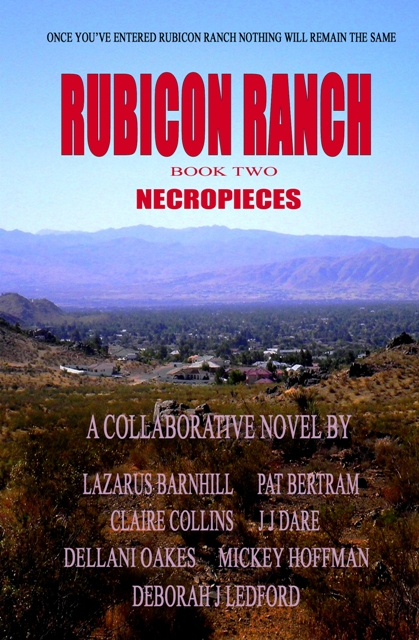
But that is not the end!!! Next week, we will begin posting chapters to a book in the series, Rubicon Ranch, Book Two: Necropieces — Residents of Rubicon Ranch find body parts scattered all over the desert. Who was the victim and why did someone want him so very dead? Eight Second Wind authors are collaborating to create another innovative crime novel set in the desert community of Rubicon Ranch.

Again, we will be posting a new chapter every week. I hope you will join us as the Rubicon Ranch saga continues.

Do you think writing your book changed your life?

I wish I could say writing my latest novel Light Bringer changed my life, it would make a good story, but the fact is, it made little difference outside of bringing to a close a lifetime of research. It was the fourth novel I wrote. I’d already experienced the joy and sense of accomplishment completing a novel gives one, and I’d already experienced the disappointment that comes from having a novel rejected. I’d already experienced the joy of getting published and the disappointment of lackluster sales. Now, if Light Bringer would go viral, that would change my life!

Writing Grief: The Great Yearning, my non-fiction book about surviving grief, didn’t change my life, either. In fact, my life had changed first. Writing was how I coped with the changes.

Here are some responses from fellow Second Wind Publishing authors about how writing their book changed their lives. The comments are taken from interviews posted at Pat Bertram Introduces . . .

From an interview with: J J Dare, Author of False Positive and False World

Writing my first book a few years ago gave me confidence. I believe it was an exercise to prepare me for the challenges I would shortly face in my personal life.

From an interview with: Noah Baird, Author of Donations to Clarity

I think people thought I was pretty weird before the book. They still think I’m weird, but I think I get a pass now because I’m a writer.

From an interview with: Calvin Davis, Author of The Phantom Lady of Paris

After penning the Phantom Lady, I was not the same person. The actual writing of the novel took about five and a half years. During that period, I wrote and rewrote again and again, etc. That said, the truth is, it took me all my life to write the Phantom Lady. The penning of my two other novels was preparing me to write TPLOP. The production of my countless short stories was also tutoring me on how to create the Phantom Lady. And during all this time of schooling, “the lady” was inside me clamoring to be liberated, as I was clamoring to liberate her. “Free me…free me,” she screamed. When I completed the last sentence of the novel, the lady was finally liberated. “Thank you, Calvin,” she said. “Thank you.” Finally, she was free…and so was I.

From an interview with: Sherrie Hansen, Author of Merry Go Round

I think each book that I’ve written has changed my life. I remember an episode of Star Trek, Next Generation, when Jean Luc Picard was swept away to live out his life on another planet. He eventually fell in love, married, had children, and learned to play a musical instrument. When his new world came to an end, he learned that he had never left the Enterprise, and that the whole alternate life experience had occurred only in his mind, in a few days time. I feel like that every time I finish a book. It’s like I’ve visited some alternate reality and lived the life of my character from start to finish, feeling what they feel and experiencing what they experience, when in reality, I’ve just been sitting at my desk, typing away. In a very real way, I think each book makes me a richer, more multi-faceted, more understanding person because I’ve walked a mile (or a hundred) in my character’s shoes.

From an interview with: Coco Ihle, author of She Had to Know

Absolutely. In a couple of ways. My sister and I talked in detail about our lives before we met, and how we felt about all the things that happened and didn’t happen through the years. Our talks created a stronger bond between us.

Another way my life changed was, my adopted mother used to accuse me of starting projects and losing interest before finishing them. Well, I took that criticism to heart.  I know she’s up there smiling down at me, because I finish projects now.

So, do you think writing your book changed your life?

How Many Books Are Going to be Published in 2012? (Prepare for a Shock)

I hadn’t planned to write any more about the book world. For one, it’s too depressing, and for another, I’m getting to where I’m okay with it. I’ve never had much use for 99.99% of books published anyway, so it doesn’t really matter if the world is being overrun with terrible books. It always has been. And, truth be told, I don’t enjoy reading much any more. After having read more than 20,000 books, I’m way past the first flush of enthusiasm when it comes to new books. (Okay, I admit it, I’m jaded.) When people start writing before they have read thousands of books, they don’t know that the story they are telling has been written a zillion times before. Nor do their equally unread readers know or care. It’s new and fresh to them. So, perhaps I should leave the book world to those who still embrace it.

So why am I writing about the book world again? I came across a statistic tonight that totally staggered me (All information comes from Bowkers, the company in the U.S. who issues ISBN numbers).

300,000 books were published in the U.S. 2003.

411,422 books were published in the U.S. in 2007.

1,052,803 books were published in the U.S. 2009.

Approximately 3,000,000 books were published in the U.S. in 2011.

And . . . drum roll, please . . . in an online interview, Seth Godin suggests that 15,000, 000 books will be published in 2012.

15,000,000. Yikes.

Google estimates that as of August 2010, there were 129,864,880 books in existence. Which means that the total number of books that could be published in 2012 is more than 1/10 of all the books in existence. That is an unfathomable jump, a 500% increase in a single year. (That is correct, right? 3,000,000 times 500% = 15,000,000.) Unbelievable.

I got an email from a book marketer today, wanting me to write an article about what the publishing landscape will look like in 2016. I cannot imagine what it will look like. Even if the number of books published returns to the more typical 200% increase per year, by the year 2016, we will have doubled all the books that were in existence in 2011.

Who is going to read all those books? Who is going to buy them?

Creativity Has No Price

A couple of days ago, I posted a bloggery What is the Price of Creativity, where I lamented the devaluation of books. What everyone believes they can do, no one values, and so readers today expect to get ebooks for a nominal sum, or even free.  Mickey Hoffman, author of School of Lies and Deadly Traffic, wrote such an insightful rebuttal to that article that I thought it deserved to be featured here (though truthfully, everyone made important  points). Mickey wrote:

Rembrandt died poor. He’s now regarded as one of the creative geniuses of the art world. This stuff has been going on forever. In ancient times the people who carved the famous statues in Greece didn’t even put their names on their work. Creativity has never been as useful to humans or held as high a value as the ability to make money, to manipulate others, to convince the masses that one is a god, etc.

The ability to write used to be admired only because for centuries most people could not even read or write their own names. And only the Bible was deemed worthy of reading. When reading no longer was such a mysterious process done only by a monk or priest and people realized it wasn’t so difficult to learn to do it for themselves, then they began to read, but still mostly religious tomes. If you look at many countries today, the kids are taught to read only for the purpose of reading the Koran. So it still happens.

In the West, as the ability to read became more common, writing became more common. Letter writing was the rage and those who could write creatively were held in high esteem. But were they actually paid well for it? Not often. Rich people had books but didn’t read them, they used them like trophies to show they were cultured. Writers still struggled to make a living and always have. Only a few have been able to support themselves that way. There have always been trashy publications and well written ones. Just more of both now.

You could argue against public libraries too, and make an argument that the ability to read for free would devalue writing. I don’t think the availablity has much to do with it. What’s changed are two things. One is the cultural idea that’s infected education: Everyone’s a winner. No one can be told they’re not good at something for fear of damaging their self-esteem. Kids aren’t reading well-written books in elementary or high school anymore so they have no means of comparison. They don’t have to learn how to write well either unless it’s on a test. College professors are getting essays with abbreviated text messaging words in them. My brother, a professor, used to read me some of the stuff his students wrote. These things were so unintelligible I didn’t know whether to cry or laugh. Somehow they made it into college anyway.

Second, television and films. Need I say more? I think we’ve all noticed that best sellers read like they’ve been written to be made into an action/thriller movie. And if they are, then they’re actually composed with different elements in mind than a writer puts into a story made for reading only.

So how is the public to know they’re reading garbage? Just throw in a vampire or a ghost or a serial killer or a few sex scenes and that’s enough to find an audience. And the agents and publishers know this. Don’t blame Amazon or anyone else, blame US.

What is the Price of Creativity?

The book business continues to dishearten me. The recent pursuit by the government against the major publishers and Apple on antitrust charges gives Amazon a virtual monopoly with the ability to charge whatever prices they want, eternally undercutting the competition. This also gives Amazon control of the royalties the authors earn, which is little enough to begin with, and makes self-publishing on Amazon an even more attractive option. Which gives Amazon even more control.

Perhaps the publishers were charging more than people would have liked, but frankly, as much as I hate the major publishers, there is more at stake here than simple manufacturing costs. Admittedly, it doesn’t cost anything beyond an initial investment to produce an ebook, but what about the value of the contents, the creative output, the artistry of the writing itself? No one complains that the painting they bought for $100,000 is overpriced even though it merely cost the artist a few dollars worth of paint and canvas, so why do readers begrudge writers compensation for their creativity? What didn’t exist now does. Shouldn’t there be value to that?

And that is the real issue here. Value.

Readers don’t seem to care that the art of writing no longer has any value. They can get an endless supply of books free or close to free. They seem to believe that good writing will rise to the top, that bad writing will simply fade away, but that is not true. What sells is adequate writing, writing that is just good enough to get the job done. Some good books might find a readership, but if they don’t, it does not negate the inherent value of the book. Nor does a barely adequate book become a good book simply because it sells.

Huge numbers of people shrug and say, “Ebooks are here, get over it.” They are thrilled at the disappearance of any “elitism” that might once have been conferred upon published authors. Anyone can write. Anyone can publish. What everyone believes they can do, no one values. People are reading more now because of the low cost and ease of ebooks, but are they reading anything of value, are they becoming better human beings because of the books, or are they simply passing time?

I was shocked the first time I heard that books are considered entertainment, that books compete with movies and video games for entertainment dollars. Books are more than entertainment. Or they should be. The written word becomes part of us. What was conceived in one mind comes to life in another. It’s a connection between two human beings who have never met. Isn’t that of greater consideration than a fight over entertainment dollars? Through books you can travel to other places in the world, and you can travel to other places in your own mind. You can experience feelings, ideas, philosophies that you never knew you had. Isn’t that more than mere entertainment?

I’m not sure I want to participate in a book world that places such a small value on the written word. I’ve been trying to find a reason to write again, but frankly, I don’t I see the point.

My Short Story “The Willow” Has Been Anthologized!

My short story, “The Willow,” has been published in the Second Wind anthology Change is in the Wind. Reviewer Sheila Deeth says:  “Pat Bertram’s ‘The Willow’ haunts with its beautiful portrayal of love and loss.”

I hope you will read this story. It did what I wanted, capturing the essence of timeless love and the new life that comes from loss. You don’t even have to buy the book. I’ll let you download the anthology this week for free! To download the ebook, go to https://www.smashwords.com/books/view/146269, pick the format of your choice, and then use coupon code HG57Y when you purchase the book. Your cost should be $0.00 (Offer expires April 17, 2012)

Excerpt from “The Willow”:

One summer day, shortly after their twenty-fifth wedding anniversary, Gracie was curled on the couch, proofing the catalog for an exhibit of the new modernists, when Scott trudged into the room. Gladness at the sight of him sparked a smile as always, but something in his manner . . .  a hesitation . . . made her smile fade.

“Do we have any plant food?” he asked, his words slurred.

“There should be some in the garage.” She peered at him. “Are you okay?”

“I think I’m dying.”

Gracie bolted upright, heart pounding so hard it shook her body. “What?”

“A little plant food should help.” Scott started to walk away.

“Wait! Just wait a minute, Scott.”

He glanced over his shoulder, a questioning furrow between his brows.

“You can’t just drop a bomb like that and then leave as if nothing happened,” she said.

“What bomb?”

She stared at him for a second, unable to speak, but finally managed to croak out the words. “You said, ‘I think I’m dying.’”

“I didn’t say you were dying.”

“Not me. You. You said you were dying.”

“I said the tree was dying. You never listen, do you?”

The chill in his voice froze her. All she could do was sit immobile on the suddenly uncomfortable couch and watch him. He stumbled as he left the room, and his shoulder hit the doorjamb.

Fear, like fury, flashed through her body. Something was wrong with Scott. Terribly wrong. In all their years together, he’d never spoken to her in such a tone. She hadn’t even known he had such a tone. And that stumble? He was the most graceful man she’d ever met, walking on the high beams of his buildings as if they were earth-bound sidewalks.

She chased after Scott and found him staring up at the canopy of the globe willow. Golden leaves sprinkled down on him as if it were fall instead of just beyond spring.

“Do we have any plant food?” he asked, warmth and worry in his voice.

Gracie put a hand to her mouth to hold back a dry sob. Didn’t he remember that he’d already asked her about the plant food? “Maybe it’s time for you to get a check-up,” she said.

“Me? I feel good.” He grinned at her and held out his arms. “How about a little stress release, love? That’s all I need to make me feel great.”

Blurb from Change is in the Wind:

The assignment was simple: submit a short story dealing with change. The results were astonishing, engaging, and incredibly varied. The stories compiled in this volume range from taut action drama, to stealthy intrigue, to enthralling spirituality, to tangled relationships, to timeless love renewed—or lost, to angelic second chances.  No two of the tales are remotely similar, and yet they are linked in remarkable ways. Each story is tied it to all the others in the anthology with two exquisite threads. The first constant theme is redemption; in each case there is a transformation, often painful, that brings new beginnings, new possibilities and revitalized life. The second theme is love—timeless and true—expressed in a multitude of ways, but unfailing in bringing hope and newness. Change in the Wind is an extraordinary collection of marvelous stories from gifted, eclectic writers who draw us into their worlds and leave us wanting more.

Second Wind Publishing is starting a new short story contest. Perhaps you will be included in the next anthology! For information about this new contest, click here: Holiday short story contest

Virtual Book Tours

Virtual book tours became prevalent very quickly. I’ve heard how great they are — mostly from the major publishers who don’t want to spend the money to send their authors on an unvirtual tour — that I wonder how worthwhile blog tours really are. I know the most popular book blogs do help get the word out, but it’s hard to get a guest spot on those blogs unless you have a publicity department behind you. Some people who have done tours think the tour helped with sales, other says not. Me? I’m still not sure. I did two tours, and neither seemed to make any difference in sales.

I’ve read that for most authors, the real benefit of doing a book signing in an offline store is the connection one makes with the bookseller, and perhaps the same holds true with a virtual book tour. I’ve made connections with other bloggers, introduced my books to people who would not otherwise have discovered them, and talked about my books with those who have read them.

Setting up a blog tour is easy, though time-consuming. You need to research blogs to find the best fit, and then you need to query the blogger. If you are invited to be a guest on the blog, you need to find out what is expected of you — an article, an interview, a giveaway — and you need make sure that every article you write, every response in an interview is different and appealing.

People will not follow your blog tour if you keep recycling the same article. Make sure you send your guest post, a bio, a photo of you, a photo of your cover days in advance. Then on the day the article is posted, you need to visit the blog several times and respond to comments.

A disconcerting aspects of my tours was how few bloggers did anything beyond posting the article. No mention on Facebook, no Twitter, no promotion of any kind. So, the main thing is, make sure you do what you can yourself to promote. Which meant, for me, two blog articles a day, one for the host, and one for my blog to promote the host. Plus Facebook status updates, posting the link on my profile, and Twittering.

The tours were fun and challenging, and I’ve certainly did what I could to launch my last two novels, but will I do it again? Possibly. I have a hunch the benefits of a tour are long term, and the more one does to get their name out there, the better the chance of getting known, but I’m still not convinced they were worth all the effort.