Getting My Kicks on Route 66

Each year,  the California Historic Route 66 Association selects one of the eight states through which Route 66 runs to host the Route 66 International Festival. This year, the festival will be held from August 9-12, 2012 at the San Bernardino County Fairgrounds in Victorville, CA. Making it an even more historic event, the fairgrounds are on old Route 66!  With the theme “California Dreamin’ on Route 66”, the Route 66 International Festival 2012 will attract thousands of Route 66 enthusiasts, historians, fans and custodians of the “Mother Road” from across the country; including international visitors from 17 different countries, as well as local residents. And me.

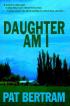
I’ve been accepted as a participant in the festival, and I’ll be there signing my books on August 10th and 11th. Except for Daughter Am I, the story of a road trip from Colorado to Chicago, my books don’t have anything to do with Route 66, but I’ve had little luck with writer’s conferences and library presentations, so I’m going to try something completely different. It should be interesting. I’ll have to stay for the two days rather than do what I normally do at festivals — walk around for a few minutes then leave. (I never did know how to have fun. At least not what other people consider fun.)

So, if you’re going to be in Victorville on August 10 and 11th, be sure to stop by the fairgrounds and look me up. I’ll be waiting for you.

The Story Behind Rubicon Ranch

Almost a year ago, I got the idea to write a collaborative novel online. I broached Second Wind Publishing authors with the concept, and I found eight other writers willing to participate in the experiment. It took a few months to hammer out the details, which seemed an endless task back then, but now I see as incredibly swift. The story was, after all, a committee production.

We started out with what we considered the most heinous of crimes — the death of a little girl. In the first chapter: Chapter 1: Melanie Gray — by Pat Bertram, which was posted on October 24, 2010, Melanie found the girl’s body stuffed in an abandoned television console when she was wandering in the desert, trying to come to terms with the death of her husband. Poor Melanie. So much death!

Each author created a character who might have a reason to kill little Riley. And each character was hiding something.

Could Kourtney and Jeff Peterson have killed their daughter, mischievous nine-year-old Riley, to protect their secret?

Moody Sinclair had once killed an eight-year-old boy. Has she killed again?

Fifteen-year-old Dylan McKenzie is a straight A honor student. By day. Did Riley discover the other Dylan, the one who prowls at night?

Cooper Dahlsing does strange things while sleepwalking. Could he have killed and not known it?

Mark and Jamie Westbrook, self-styled private investigators, show up to help solve the murder, but perhaps they had a hand in creating the crime?

Eighty-two-year-old Eloy Franklin sits on his porch and watches. But does he do more than watch?

Forty-three-year-old Melanie Gray found Riley’s body stuffed in a television console that had been dumped in the desert. But is she as innocent as she seems?

Sheriff Seth Bryan is bitter and cynical at having lost everything he values. Is he manufacturing crimes to bring him the notoriety he craves?

So many villainous characters! And until the very end, no one knew who committed the dastardly deed, not even the writers.

The novel was supposed to be a promotion stunt, but halfway through, it got derailed by life. One author had to deal with colon cancer, including three debilitating operations. Another author had to deal with a flooded house that was uninhabitable for six months. Still other authors had to deal with grief after the loss of significant people in their lives or heavy job pressures. When we started in again, we’d lost all our readers, so there was no longer any promotional value, but still we persevered.

And now the book is finished. You can read the entire novel online for free. If you prefer to read the book on an ereading device, Rubicon Ranch: Riley’s Story is available as a Kindle or in the ebook format of your choice from Smashwords. It’s also available in print from Amazon and Second Wind Publishing.

But . . .

That is not the end of Rubicon Ranch! Though some of the authors went on to other projects, enough wanted to continue the Rubicon Ranch saga, so we lassoed a few additional authors into creating characters. And now we have a new story.

Three months after finding the body of the little girl, poor Melanie is again wandering in the desert, still having a hard time dealing with her husband’s death, when she sees a congress of ravens pecking at a dismembered foot. Who was the victim and why did someone want him so very dead? Everyone in this upscale housing development is hiding something. Everyone has an agenda. Everyone’s life will be different after they have encountered the Rubicon. Rubicon Ranch, that is.

Although some of the characters from the previous collaboration are featured in the new story, Rubicon Ranch: Necropieces is a stand-alone novel. The first chapter will be posted Monday, June 11, 2012 on the Rubicon Ranch blog, and a new chapter will be posted every Monday after that.

I hope you will join us in this new serial adventure. It should be a devious tale.

Map of Rubicon Ranch.
A) Melanie Gray
B) Moody Sinclair
C) Eloy Franklin
D) Leia Menendez
E) Ward Preminger
F) Egypt Hayes
G) the Peterson house

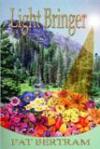
Great Reviews for Light Bringer

I got a great review for Light Bringer yesterday from S.M Senden. “Pat Bertram has woven a wonderful story that weaves together imagination with history, science fiction, love, power and so much more, and it works so well. If you are looking for a good story, well written, then read this book. I hope you will love it as much as I did!”

I am thrilled when readers love any of my books, but especially Light Bringer.

First, it is very difficult to classify, even for reviewers. As Aaron Lazar wrote, “Light Bringer is something completely new and surprising . . . surprising in its freshness, originality, its genre bending brilliance. Part thriller, part fantasy, part sci fi, part mystery . . . its plots were large and complex, encompassing themes that plague us every day; offering social and world commentary blended with weather trend observations (where ARE all those tornadoes and tsunamis coming from??) I do believe Bertram has defined a new genre, and it is a pure delight. Fresh. Original. Riveting. The characters are real and engaging.”

Second, it is the result of twenty years of research into conspiracy theories and myth. Many researchers have traced the drive toward a one-world government conspiracy back 7000 years. Others believe that the black death was a man-made epidemic, created in an effort to “dumb down” the inhabitants of Earth. (William Bramley, author of Gods of Eden, wrote: “Strange men in black, demons, and other terrifying figures were observed in other European communities carrying ‘brooms’ or ‘scythes’ or ‘swords’ that were used to sweep or knock at people’s doors. The inhabitants of these houses fell ill with plague afterwards. It is from these reports that people created the popular image of death as a skeleton, a demon, a man in a black robe carrying a scythe.” This is the origin of the grim reaper) In fact, myths all over the world speak of the gods giving and the gods taking away. According to the Popul Vuh, the gods created the first humans exactly like the gods themselves. Displeased that the simple creatures of their making were also gods, the creators took some of the god-like abilities away from them, and we are the result. And from all that research came the idea for Light Bringer.

Third, the lyricism of the book seems to bring out a corresponding lyricism in reviewers. Sheila Deeth called Light Bringer “mysteriously beautiful and musical,” and then added, “Pat Bertram’s novel soars in her descriptions of mystery and scenery. The song of the rainbow flows through the characters, binding them together, while the silence of the great unknown drives them and pulls them apart.” Tracy Fabre wrote, “This novel is color and sound and more color, described as it’s never been described before. Part sci-fi, part small town life, part intrigue, part romance, part rainbow explosion, this is a tale of two people who are not like other people yet end up in a little out-of-the-way community where a lot of strange things have happened and continue to happen. It’s a multi-layered story she should be very proud of, and incidentally will make you crave muffins. Consider yourself warned.”

***

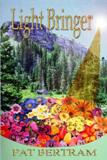
Light Bringer: Becka Johnson had been abandoned on the doorstep of a remote cabin in Chalcedony, Colorado when she was a baby. Now, thirty-seven years later, she has returned to Chalcedony to discover her identity, but she only finds more questions. Who has been looking for her all those years? Why are those same people interested in fellow newcomer Philip Hansen? Who is Philip, and why does her body sing in harmony with his? And what do either of them have to do with a shadow corporation that once operated a secret underground installation in the area?

Click here to read the first chapter of Light Bringer by Pat Bertram

Click here to buy Light Bringer from Second Wind Publishing, LLC

Click here to download 20% free at Smashwords or to buy any ebook format, including Kindle.

(Also available from Amazon and B&N)

Conflict Opens a Door and a Story Begins

Sometimes it seems as if most books and movies today are glorified comic books, epic battles between the dubiously good and the impossibly evil. Conflicts in which there are no shades of gray must be satisfying for many people, but I like a little more subtlety in my conflicts, a little more reality.

In a world that is run by major corporations, stories where a lone hero takes on a megalithic corporation, brings down the owner of the company, and saves the world just are not plausible. Though I’m sure presidents of the major corporations think they are indispensable, they are not. If they are eliminated, there will always be others to take their place, and the corporations will go on doing whatever it is that they do.

Because I know this and cannot escape it even in a world of my own creation, conflicts in my books tend to be less clearly defined. Of course I have heroes and villains, but the villains are not always dastardly ones, though my other characters may perceive them as such. The villains are the heroes of their own story, and though a corporation is often the villains’ vehicle, my heroes don’t bring it down.

I like my heroes to find a romantic partner, a co-protagonist. It seems to dissipate the energy of the story if the two are always in conflict, so I prefer it when they bond together in their struggle against fate (or an employee of a corporation as the personification of fate). To me, the biggest villain around is fate. What is more unfair, more murderous, more disastrous than fate?

My heroes never bring on their fate. Perhaps my books would be more dramatic if they did, but I cannot sympathize with characters who cause their own problems. And why do they have to cause problems for themselves when other people or even life itself is always ready to cause problems for them?

When fate comes knocking on the door, everything changes. And that’s when a real story, not a comic book, begins.

In my novel Light Bringer, “fate knocking at the door” is a one of the unintended themes. In the prologue, baby Rena is found at the door of a remote Colorado cabin. In the first chapter, fate comes with an actual knock when men proclaiming to be NSA agents show up at Philip Hansen’s door. Fate finds Jane Keeler when she shows up at her sister’s door and finds the house empty. Fate knocks even harder when she opens the door of a local coffee shop and meets the man of her dreams, and poor Jane’s fate is sealed when she is abducted and shoved through the door of car.

So many doors! Philip knocks on Rena’s door, and later the two are carried uncocnscious through the door to an underground facility, where Jane is also being held behind a locked door. Philip and Rena find out that between them they can open doors without a key, and when they do, they find secrets behind even more doors. And then there is the ghost cat Wisdom and the invisible watcher who seem to need no doors, but are more than willing to open them for Philip and Rena. Each time a character goes through a door, things change, and they find more conflict.

Fate doesn’t have to come with an actual knock, but it’s been said there are only two stories — a character goes on a trip and a stranger knocks on the door, so doors are an important symbol of conflict and change.

How do doors enter into your story?

Have You Ever Wondered How Amazon’s Algorithms Work?

Amazon has always mystified me, not just how they rank books but how some people who seldom promote manage to sell thousands of copies of their books, and others who seem to promote just as much languish at the bottom of the sales ranks. Today I learned two things.

1) Studies have shown that the number of reviews a book has on Amazon makes a difference, but their worth is still debatable, especially since so many people have found a way around Amazon’s rules. Not only are reviews for sale, but a single Amazon reviewer posted over 23,000 reviews in a single year.  It’s taken me a lifetime to read almost that many books!!

A fellow author sent me the link to a new Harvard Study with a note that the study shows customer reviews have just as much weight as professional reviews, but the study does not say that. According to an article at The Big River Review, “Though reporting in newspapers and blogs seems to present the work as a vindication of the current Amazon review environment, the study is not about, nor does it present itself as being about, the relative veracity or reliability of the two forms of reviews in the present day. It is about editorial favoritism related to the top 100 books from 2004-2007.” If you are interested in learning more about the dangers of Amazon’s review policy, please check out this website. Very interesting! http://www.thebigriverreview.com/

2) Amazon has two lists, a bestsellers list and a popularity list. The bestseller list reflects the number of sales in the past 24 hours, while the popularity list reflects the number of sales plus the price of the book for the past 30 days. Which is why giving away books might put you high on the bestseller lists but keep you off the popularity lists. Being high on the popularity lists can account for thirty to forty book sales a day. (You can find the entire article here: Updates to Amazon’s Book Ranking Algorithms: The Death of 99-Cent Ebooks? An End to KDP Select Perks?)

I still haven’t learned how to get on the lists, though. Obviously, selling a ton books helps, but that skill eludes me.

On the chance that reviews will help, I will be glad to send a coupon for a free ebook to anyone willing to review one of my books. Just let me know which one you would like.

Are You Envious of Other Authors?

A few years ago, I read the entire oeuvre of a bestselling author, trying to figure out the secret of her success, and I never found it. Perhaps it was hidden beneath her appalling writing style, but her poor writing dimed any possibility of my enlightenment.

Even a neophyte writer knows that any action a character undertakes must be motivated. Although in life we often act on a whim or a hunch, when a character in a novel does it, it comes across as too slick, too much author convenience, as if the writer couldn’t be bothered to take the time to come up with a plausible motive for the action.

For example, in one book, the writer had someone searching the character’s house for a set of papers, which weren’t there because the character had removed them on a hunch. You and I could never get away with that! We’d have to come up with a motive, and it’s not that difficult. The character could have taken the papers to a diner to peruse them during lunch. Or maybe taken them to a safe deposit box. Or any reason other than a hunch.

Even worse, when the character found out her house had been searched, she was stunned. Then why the hunch to remove the papers? Maybe she was expecting rats to eat them.

In a roundabout way, I suppose I did learn something: write intelligently, at least until you become a bestselling author. Bestselling authors seem to get away with increasingly shoddy writing (since I read this author’s books in sequence it was very obvious how lackadaisical her craft had become in her later books), and yet we are supposed to continue to treat them and their books with respect.

In a discussion on Facebook, a writer posed the following question: Seems nearly every day I hear a writer complain that Grisham has become a hack, or King should go back to drinking, or Clancy wouldn’t recognize POV if he tripped over it. When you’re struggling with getting recognition, how do you deal with jealousy of successful authors?

Before I was a writer, I was a reader, and as a reader, I have every right to complain that such writers have become hacks. In fact, it’s because the writers I used to like started turning out substandard work and I couldn’t find new authors that I like, that I started writing. I figured if I couldn’t read the books I liked, I could write them.

Apparently, though, once you become an author yourself, you are supposed to give up your critical capacity. If you say anything against another author, it comes across as jealousy, as if you’re envious of the other writer’s success.

In the particular case of the bestselling author I critiqued above, I am not envious of her success, I am not envious of her fans, I am not certainly not envious of her writing style. Though I’m mystified by her ability to write so copiously since writing comes hard for me, but I’m not envious of that ability, either.

I am, however, jealous of the time and money I spent on her books, and I’d like them back.

What challenges did you face when writing your novel?

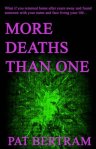
For More Deaths Than One, my first finished novel, the biggest challenge was learning how to write. Yikes. The original draft was laughably terrible. But I kept reading books on how to write, and I kept rewriting my novel, and eventually I got it right.

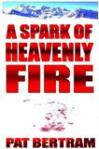
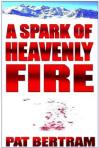
For A Spark of Heavenly Fire, my biggest challenge was finding the beginning of the story. I liked the story, and I kept telling myself that if people could just get through the first fifty pages they would like the story, too. Then one day it dawned on me that the solution of getting readers to see the story beyond the less than sparkling beginning was to get rid of the first fifty pages. So I junked those early chapters, wrote a new beginning, and then the real challenge began — getting it published. After two hundred rejections, I finally found a publisher, Second Wind Publishing, who loved the book.

For Daughter Am I, I had one great obstacle — me! The story came to me all in one day. Even the biggest story problem — why the gold was buried — was resolved that very night when I read a book about the war on gold. Still, even though I knew the story, it took me eleven months to write the first draft. Words come slowly to me. I’m not one who can sit down and just write what comes to mind. I have to dredge the words from somewhere deep inside.

For Light Bringer, my biggest challenge was figuring out who my not-quite-human characters were and where they came from. It was the first of my published novels to be started and the last to be finished. It took that long to discover the truth of the characters.

Here are some responses from others authors about the challenges they faced when writing their book. The comments are taken from interviews posted at Pat Bertram Introduces . . .

From an interview with: Jeffrey Siger, Author of “Target: Tinos”

I always like to immerse my characters in what I see as significant looming issues, but  the book originally planned for a 2012 release was scooped by world events thereby requiring me to scrap it and write an entirely new one. That experience left me a bit gun shy about picking another issue to wrap my story line around. But as I’m sure happens to so many writers, when you relax and just let the keyboard pull you up, voila, magic happens.

From an interview with: Anne Lyken-Garner, Author of “Sunday’s Child”

The obvious challenge was exposing my life story. It’s not and will never be a comfortable thing to do. Once it’s out there, it can be perused by anyone and be open to mockery, disdain etc. People can judge you because they think they can analyse you now that they know so much about your life – even if they’ve never judged you in the past.

From an interview with: Sherrie Hansen, Author of Merry Go Round

The only struggle I seem to face with my writing these days is finding enough hours in the day to sit down and write. I own and operate a bed and breakfast and tea house and am a pastor’s wife. I maintain four houses. It’s a good, but very busy life, and when the day is done, I am often too exhausted to think.

From an interview with: T. C. Isbell, Author of “Southern Cross”

I’m a retired engineer. My first challenge was to learn how to not write like an engineer. My second challenge was to learn everything I missed while staring out the window during my high school English classes.

From an interview with: Linda Nance, Author of “Journey Home”

Life got in the way. When you are raising a family there are many things that make writing the book less of a priority. An almost fatal accident made existance difficult and the idea of finishing the book only a distant dream. I did not give up but when I had the story completed I could see it was still not finished. It needed more. It needed more than I could give.

I enrolled in a class at Arkansas State University and doors opened giving me a new enthusiasm I had never felt with the feeling that I could . . . I could do it. They taught me so much and they helped me to learn to learn. I have always believed that we should learn in everyday and all that we do. The class helped me to view things in more than one way and to use that in what I was working on.

So, what challenges did you face when writing your novel?

(If you’d like me to interview you, please check out my author questionnaire http://patbertram.wordpress.com/author-questionnaire/ and follow the instruction.)

Making an Impact With Our Writing

In Practical Tips for Writing Popular Fiction, Robyn Carr writes, “It is important to know what type of book you are writing, what it is mostly. Different types of novels are meant to accomplish different things. Some are meant to scare, others to thrill or provide vicarious adventure, some should fill the reader with desire. The impact of the story is consistent with its genre. To write a superior novel, the novelist needs a course to follow, a map to lead the way. You must know where you are headed, and what you are doing, and why this works.”

The impact I’ve always hoped for with my novels is shock that such things happen, perhaps fear that they such things could happen to any of us, and a dash of cogitation or at least a soupcon of second thoughts about how one views the current state of affairs. The irony, of course, is that we seldom can change anyone else’s views, so those who are aware of the truth will not be shocked because it’s nothing they haven’t heard before, and those who are not aware of the truth will not be shocked because they will assume the books are entirely fictitious.

Still, I add cupfuls of history to the cauldron when I am stirring up a story, in hopes that some people will see a bit more of the truth, yet I’m not sure what, if anything, that will accomplish. If we truly are living in a controlled society, there isn’t much we can do whether we know the truth or remain blissfully naive.

In case you aren’t familiar with my novels they all fall under the heading of “conspiracy fiction.” I wrote what I knew (from studying secret histories, not from first hand experience), partly to create the impact as stated above, and partly because it would have been a shame to let all that research go to waste.

So, what are you trying to accomplish with your novel? What is the impact you are hoping to make?

Is a Salinger-Like Reclusiveness a Viable Option in Today’s Book World?

Here’s an interesting dichotomy — there are so many books being published today that most will never sell more that 100 or 150 copies in a lifetime, yet an article in the New York Times says that in the e-reader era, writing one book a year is slacking. Name brand authors who once wrote one book a year are now writing two, and those who are sticking to a one-a-year schedule are also writing short stories and novellas to keep their names in view. To quote Lisa Scottoline from the NYT article, “the culture is a great big hungry maw, and you have to feed it.” And it’s not just name brand authors. Self-published authors are feeding the maw, too, sometimes with three or four or even six books a year.

Seems silly to me — authors scrambling to write extra books while many worthwhile books from small independent presses are going unread. There should be a way of evening things out, but people obviously prefer to stay with authors they are comfortable with. How else to explain the James Patterson phenomenon? Twelve books in twelve months? Yikes. Granted, some seem to be ghost written (or should I say guest written?), but still that is an incredible output considering that most people don’t read that many books in a year.

I’ve always loved books — in fact, as a child all I ever wanted when I grew up was time to lose myself in books — but now I’ve mostly lost my taste for reading. Too many books are shallow, even the well-written ones, and no wonder — authors who once had the time to write thoughtful books have to spend more time racking up the words and less time thinking. For me, a story isn’t enough. I want to be tantalized with insights, new ideas, different ways of viewing the world. I realize this is not the wave of the future. How deep can the ideas in a novel be if they are intended to be read on a phone or as an interactive ebook that’s enhanced with video, author interviews and social-networking applications?

I’ve never been one to follow the crowd. Sometimes I don’t even know where the crowd is. So it should come as no surprise that I don’t intend to increase my output of writing. (Though, come to think of it, any writing other than blogs would increase my output.) I couldn’t write more even if I wanted to. I am a slow writer. Even at my fastest, I can only write one book a year, and that doesn’t include editing and copyediting.

I am getting an interest in writing again, though. Sometimes I think about the books I’ve started and wonder what will happen to the characters, and just today I figured out how to develop my grieving woman book, the one I started for NaNoWriMo in 2010. It should be not so much a book about grief but about a woman’s journey into self-discovery, and so I should start the story before her husband dies, because it is during his long dying that she first loses herself.

This could be one of those books that takes a lifetime to write, since perhaps I will have to live the character’s life first. Or maybe I need to write the book as if I am writing my own future, and see what I can make of myself. Either way, the book would not be written in a month or even a year. It would take longer than that to glean the necessary insights.

According to the NYT article, “Publishers also believe that Salinger-like reclusiveness, which once created an aura of intrigue around an author, is not a viable option in the age of interconnectivity.” Luckily, I am neither self-published nor published by a major publisher, so I have the luxury of being as reclusive as I need to be in order to write whatever books might be in my future. (Shhh. It’s our secret. Don’t tell my publisher, Second Wind Publishing, I said that.)

Getting Grief Right in Writing

Long before I knew the truth of grief and its power, I wrote A Spark of Heavenly Fire. The story begins thirteen months after the death of Kate Cummings’ husband, and she is still haunted by her small unkindnesses during his long illness. It surprises me that I got that part right because so much of the grief journey has been a shock to me, including how much I regret my own small undkindnesses toward my life mate/soul mate. I didn’t do anything bad, just lacked generosity of spirit at times during his last year. If he had lived, of course, these lapses would have passed unnoticed in the commotion of daily life, but with his death, they loomed like vultures over my spirit, waiting to tear me to shreds. If I had known how close to death he was, I would have been more patient, more understanding of his dying ways, but I didn’t know. I’ve come to realize that we were under such stress those last years that both of us did the best we could in the untenable situation. Dying is an unpleasant business for both parties.

Here are a couple of excerpts from A Spark of Heavenly Fire that show Kate’s torment. I wasn’t as feisty as Kate. I didn’t kick furniture or slam doors (well, maybe just once), and I didn’t give in to my anger until after he was dead, but otherwise, these passages show how much we bereft regret the small things we did:

Kate hauled herself upright and groped for her eyeglasses. After sitting on the edge of the bed for a moment, gathering her strength, she dressed and wandered through the house. She hesitated by the closed door of the second bedroom where her husband had lived during the last years of his protracted illness, touched the knob with her fingertips. Yanked her hand away.

This is ridiculous. Joe’s been gone for thirteen months.

Taking a deep breath, she grasped the knob, but could not force herself to turn it. She rested her forehead on the door for a minute, wondering if she’d ever be able to face the ghosts of sorrow and regret locked inside, then squared her shoulders and headed for the front closet to grab a coat and hat.

[Later in the book, Kate explains this inability to open the door to her new friend, journalist Greg Pullman.]

“A little over a year ago, during one of Joe’s rare remissions,” Kate said. “I mentioned we were coming up on our fifteenth wedding anniversary. When he ignored me, I asked, ‘Would it kill you to be nice to me once in a while?’

“He didn’t answer.

“I went out for a walk. When I returned, he was gone.”

“Dead?” Greg asked.

“No. Not then. He’d taken our car, an old Volvo, and left. I didn’t know he felt strong enough to drive. He could barely walk and had a hard time gripping so much as a glass of water.

“When the state patrol called to tell me Joe had been in an accident, that he’d driven off a cliff in the mountains and had died instantly, I wasn’t surprised. It did surprise me when they ruled it an accident. It seemed so obvious to me he’d taken his own life that I was sure everyone else could see it, too.”

Kate gave an unamused laugh. “I never did buy another car.”

Greg looked at her, a frown wrinkling his brow. “I don’t see that you did anything shameful.”

Kate toyed with her empty cup. “I’m not proud of what I said, and I hate knowing those were the last words I ever spoke to my husband, but I don’t think it had anything to do with his suicide. I doubt he even heard me.

“About two weeks after the funeral, I decided to clean Joe’s room. I didn’t feel up to sorting out his things, but I thought I should dust and vacuum in there. I cracked opened the door, as if expecting Joe, or at least his spirit, to inhabit the room. I stepped inside, but seconds later I scrambled out again and slammed the door.

“Memories of all the shameful, petty, inconsiderate things I had done over the years haunted the room, and I couldn’t bear to face my own mean spirit. Too many times I snapped at him or purposely waited a few minutes before going to see what he wanted when he called out. Other times I felt so angry at the way life had treated us, I stomped around the house, slamming doors and kicking furniture. Usually, though, I pounded my pillow, or cried. I’m embarrassed to admit how many times I cried, wishing I had a normal life with healthy children to take care of instead of an uncommunicative and disabled man. Sometimes I even hated him for what he had become, as if he chose to get sick. Can you believe that?”

She didn’t pause for a response, but hurried on, wanting to get it all out. “Worst of all, I realized I was not a strong woman who had shouldered her burden with courage, but a weak woman who lacked generosity of spirit.”

Greg reached across the table and put a hand over hers. “We are a sad pair, aren’t we?”

She gave him a wistful smile.

A full minute went by without either of them speaking, then she asked, “Would you like some more hot chocolate?”