How Did You Do the Research for Your Novel?

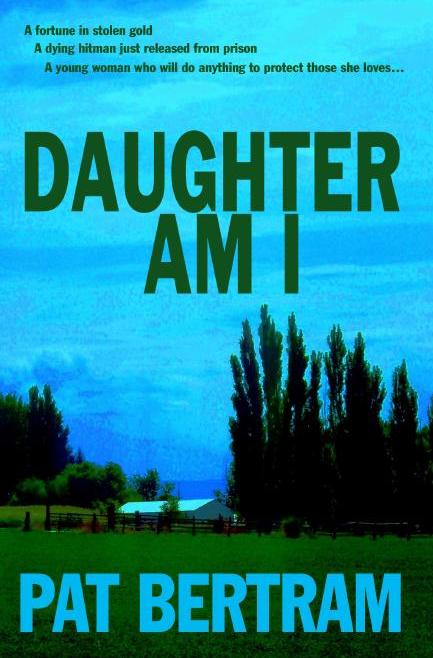
I researched my novel Daughter Am I for two years, but I also had help from a historian friend, and in fact, he was the one who inspired me to write the book. He used to regale me with tales of gangsters. It got to the point where I couldn’t watch a gangster film with him because he’d keep up a running commentary about all the things the filmmaker got wrong, and I’d miss half the story. I did a lot of research myself, though, and it was a special joy when I discovered something he didn’t know! Most of the information isn’t on the internet, but resides in . . . gasp! . . . books.

Here are a few ways other authors did research for their books. The comments are taken from interviews posted at Pat Bertram Introduces . . .

From an interview by Deborah J Ledford, Author of Snare and Staccato

I’m part Eastern Band Cherokee and knew that I wanted the Native American element to be instrumental for SNARE. Once I decided on the Tribe to focus on I came into contact with the communications director on the Taos Pueblo in New Mexico. Floyd “Mountain Walking Cane” Gomez read every word of the manuscript as I composed each draft. He either approved scenes, characters and elements, or told me flat out “No, you cannot use this.” (he told me this quite often!) Elements Floyd wasn’t sure about were cleared by elders and the Taos Pueblo Tribal Council.

From an interview by T. C. Isbell, Author of “Southern Cross”

I spent a great deal of time researching my book. I used period magazines like Post, Life, and National Geographic. Some research was accomplished using old books and the Internet. However, information on the Internet has to be approached with a grain of salt.

From an interview by Polly Iyer, Author of “Hooked”

You’d be surprised how many upscale women write about their adventures as a call girl. Like Tawny, these are smart women who think why not get paid for something they’re giving away free. The top women go places with exciting, rich men and make big bucks to do it. Just click on Google, and there they are, telling all.

From an interview with Bonnie Toews, Author of “The Consummate Traitor”

I do intense research so that my facts are as realistic as can be in a fictional setting. I scour libraries, Google, read travelogues of areas I have not visited so that my descriptions are as true to life as possible, either today or in the time of the book’s setting. For that I interview people who lived and endured during the period. One interview for The Consummate Traitor was with an actual German aerocraft designer Canada protected so he could work on our Avro jet. He began as a fanatical NAZI with access to Hitler’s inner circle (He hated Goring) but by the end of the war, was so disillusioned that he ended up with a disassociated personality. During our interview he split from one to the other depending on what I described that triggered him to relive the past. I gained amazing insight from that interview and gave his hands to my NAZI villain. I have never seen hands like his — his finger tips were square, not rounded, and his shoulders were so slumped that his arms seem to hang too long for his body. I could picture him in an SS uniform with the shoulder paddings squaring off his body. He died a few years ago. He had Parkinson’s.

What about you? How did you do the research for your novel?

What inspires you to write a particular story?

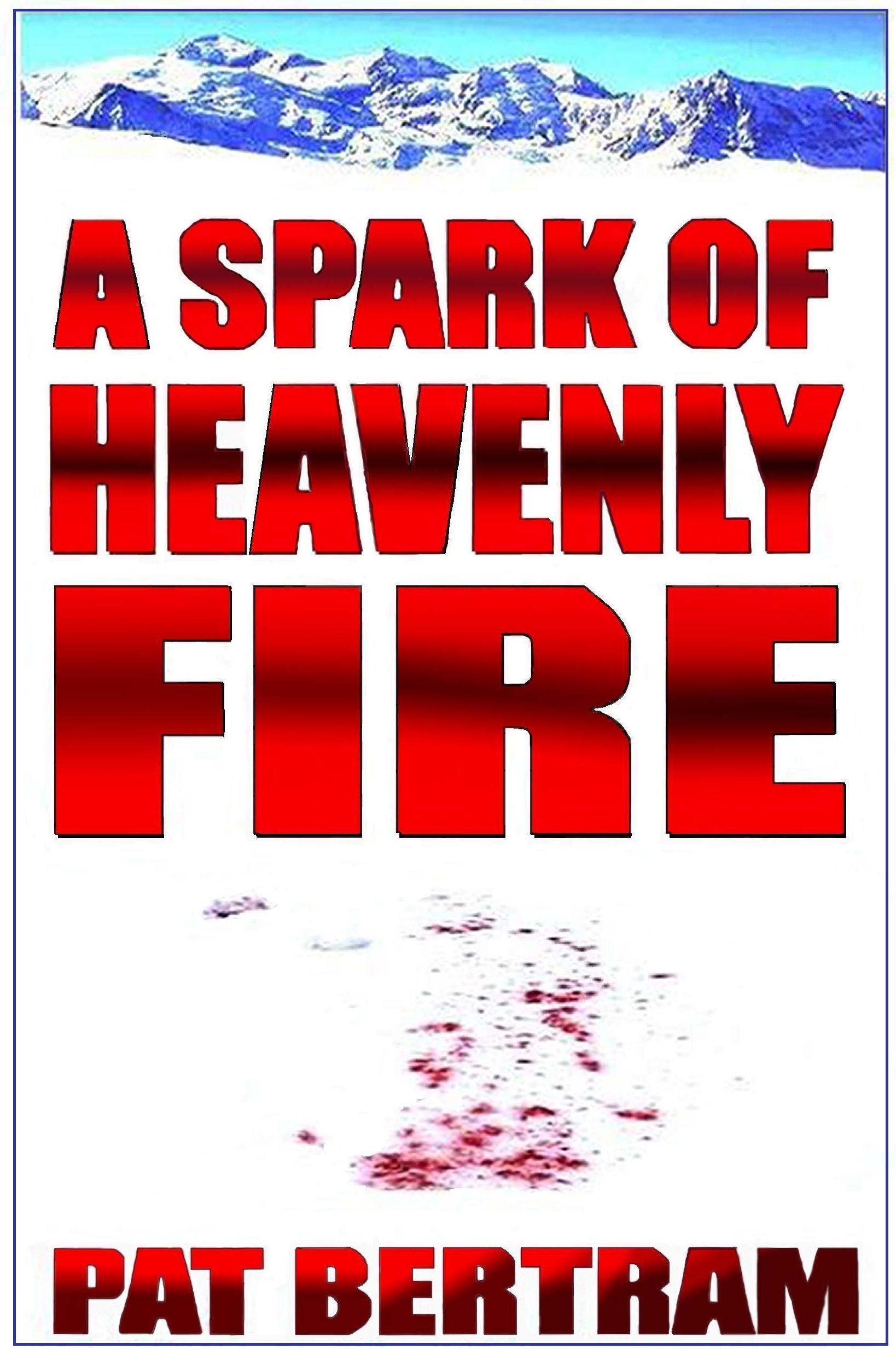
Like most writers, I’ve written the beginnings of a few books that have gone nowhere. I have zero interest in pursuing them. On the other hand, for various reasons, the books I did write took hold of my imagination and didn’t let go until they were completed. For example, A Spark of Heavenly Fire came about because of a Washington Irving quote: “There is in every true woman’s heart a spark of heavenly fire, which lies dormant in the broad daylight of prosperity, but which kindles up, and beams and blazes in the dark hour of adversity.” I loved the idea of a woman who felt half-dead when everyone else was doing well, but in a time of dying, she came to life. Since I didn’t want to do a war story, I created a plague — the red death. I had fun with that, and the story so captured my imagination that I had no choice but to pursue it.

Here are a few inspirations other authors. The comments are taken from interviews posted at Pat Bertram Introduces . . .

I was inspired to write Disco Evil because I believe everyone deserves a fair go and that people who go out of their way to be nasty to others really do build up bad karma for themselves. I happen to like quest/adventures stories so that’s how Ghost Dance came about. Two of the women in Ghost Dance are based on certain stand up and be counted sort of ladies I know and love in real life.

From an interview of Malcolm R. Campbell, Author of “Sarabande”

“The Sun Singer” is about a young man’s solar journey. I wanted to look at the other side of the coin, so to speak, and write about the lunar-oriented ordeals of a young woman. Sarabande, my protagonist first appeared in “The Sun Singer.” However, I have written her story so that it can be read as a standalone novel, a woman’s story that could be whole in and of itself.

From an interview of J J Dare, Author of False Positive and False World

I was inspired to write about hidden government agendas and their devastating aftereffects when I thought about why we, as a nation, involve our resources in other nations’ conflicts. My biggest inspiration: the eternal, What if?

From an interview of Joylene Nowell Butler, Author of “Broken but not Dead”

Honestly, one day it occurred to me that there weren’t enough stories about fantastic 50-year-old women. I wasn’t quite 50, but decided that while it might be nice to be young and beautiful like Cheryl Ladd and all those other famous ladies from my era, there’s nothing quite like the wisdom and empowerment that comes with age.

I was inspired to write the book after reading some nonfiction books about contemporary domestic slavery and human trafficking.

From an interview of Sheila Deeth, Author of “Flower Child”

Actually it was a writing competition at our local writing group. The prompt was to write a short piece inspired by music, and I had John Denver’s Rhymes and Reasons spinning around in my head — For the children and the flowers / Are my sisters and my brothers… I found myself putting a childhood misunderstanding together with my adult experience.

If you’re a writer, what inspired you to write a particular story? If you’re a reader, what inspires you to read a particular story?

Is There a Message in Your Writing You Want Readers to Grasp?

Most writers claim they write only to entertain, and yet messages do creep into our books whether we will it or not. I don’t write to entertain but to write the stories I want to read, stories that no one else has written. And still, the messages are there: nothing is as it seems, we are not necessarily who we think we are, history did not necessarily happen the way we think it did, and what we see is not necessarily the truth. But all that was more of a side effect. Mostly I just wanted to write good stories with good characters that I would have loved to read.

Here are some messages that crept into other authors’ books. The comments are taken from interviews posted at Pat Bertram Introduces . . .

From an interview with Dale Cozort, Author of “Exchange

I’m not big on putting messages in fiction, but one snuck into Exchange. We live in what my daughter calls a ‘bubble-wrap’ society, one that is obsessed with reducing risk to the point of keeping us from doing a lot of things we want to do and/or need to do. How does that kind of society react to suddenly being in a world that is wilder and more dangerous than the Wild West ever was? A lot of us take the benefits of the bubble-wrapping for granted, but dream about getting away from the restrictions. Unfortunately, the risk reduction and the restrictions are often a package deal. I try not to hit people over the head with that message and you can read and enjoy Exchange without ever noticing it, but it is there.

From an interview with Stephen Prosapio, Author of “Ghosts of Rosewood Asylum”

Typically I like to have lessons and character growth. I like to show how characters make either correct or incorrect choices. Sometimes the difference between good and evil is simply taking the right or wrong action. I’ll let the readers take what morals they want from the story.

From an interview with J. Conrad Guest, Author of “January’s Thaw”

The January books are composed of a number of messages. In January’s Paradigm the reader learns that there are people in the world—men and women alike—who are not very nice, and that men don’t have a corner on the mean market. Men, too, can be hurt through a woman’s infidelity. One Hot January shows that no government is benign and that we must care about a world we will not see. While January’s Thaw is largely about redemption, that it’s never too late to close the door on the past and to live in the moment, for tomorrow.

From an interview with Benjamin Cheah, author of Eventual Revolutions

The real world is complicated. Don’t seek simple answers. Seek instead complete answers. Don’t be satisfied with what people tell you. Always look for the full picture, and discard everything that does not meet the test of logic and reason. Always strive towards a greater understanding of the world, without settling for dogma or over-simplicity. Every action has a consequence. And always remember that you are free – and with this freedom comes the necessity, burden and power of choice.

From an interview with Bonnie Toews, Author of “The Consummate Traitor”

Yes, I do demonstrate a message in all three of the novels in this trilogy. What I have observed at the crossroads of humanity is that victims of atrocities can never forget what they have endured, and their resulting bitterness perpetuates revenge. This convinces me that as long as victim and perpetuator seek retribution against the other, true peace can never be achieved. But, there is an answer: the ACT OF FORGIVENESS. We understand the idea of God’s forgiveness, but the act of forgiveness becomes meaningless if we cannot first forgive ourselves and then one another. To make a difference in world peace, victims and their perpetrators must forgive themselves before they can forgive one another and live in harmony.

Is there a message in your writing you want readers to grasp?

Balm to a Writer’s Bruised Psyche

Not only do I not understand this new publish-anything world, I don’t understand this everyone-is-a-reviewer world.

It used to be that professional reviewers (I am including reviewers employed by newspapers and magazines in this category) pretty much decided what were considered worthwhile books, and readers either paid attention to those recommendations and bought the books or ignored the recommendations and bought whatever they felt like. Today, anyone is a reviewer, whether s/he is qualified or not. All it takes is an opinion. The thing is, readers who see those reviews don’t take them as an opinion. They give them the same credence they gave the professional reviewers.

To be honest, I don’t know if it’s better to have a certain literary elite passing judgment on the books or if it’s better to have casual readers doing it. Either way, people are “grading” books based on nothing more than a whim. And those whims can destroy a writer’s career, or at least keep people from buying her books.

Light Bringer is my magnum opus, the result of twenty years of research into myths, both ancient and modern. I created an entirely new worldview based on these myths, one that could very well be true if the Sumerian cosmology and today’s conspiracy theories are true. According to the editors and agents who rejected the manuscript, it was unsellable. It had too many science fiction elements to be commercial and not enough science fiction elements to be science fiction. Because of this, I purposely did not send Light Bringer out for review. People generally hate books they can not categorize, and at best, Light Bringer has a narrow niche. Still, a few readers have given the book glowing reviews, so when a reviewer contacted me recently asking for a copy of the book to review, I sent it to her.

I don’t know why she wanted to review Light Bringer.  As it turns out, she’s a romance reviewer, and Light Bringer is not a romance and was never promoted as such. Even worse, she hadn’t a clue what the book was about. To be fair, she is used to paranormal romances she can quickly skim through, but I don’t want to be fair to her since she wasn’t fair to me. She wrote a terrible review and posted it on the review site. Why? What’s the point of posting a terrible review of a book you don’t understand? It’s not as if I asked her to review the book. She asked me. Adding to the insult, the review doesn’t even make sense. If it didn’t have the name of my book on it, I would never have recognized it as my story.

On the other hand, some people do understand Light Bringer and they honor the book with their poetic descriptions.

Sheila Deeth wrote:

Pat Bertram’s novel soars in her descriptions of mystery and scenery. The song of the rainbow flows through the characters, binding them together, while the silence of the great unknown drives them and pulls them apart.

The unknown, when finally revealed, is satisfyingly strange, though, unlike many of the characters, I maintain a healthy respect for the integrity of scientists and science. Romantic subplots are simultaneously lyrical and down-to-earth; dialog is natural and sometimes laugh-out-loud fun; secrets of history and astronomy are intriguing; and the whole is a fascinating read — a touch of old-fashioned sci-fi, blended with modern magic and corporate greed, shaken, stirred and conspired against, then woven into beautiful words.

Aaron Paul Lazar wrote:

I’m already a fan of Pat Bertram’s books. I’ve read them all and loved them deeply. But LIGHT BRINGER was something completely new and surprising… surprising in its freshness, originality, its genre bending brilliance. Part thriller, part fantasy, part sci fi, part mystery…its plots were large and complex, encompassing themes that plague us every day; offering social and world commentary blended with weather trend observations (where ARE all those tornadoes and tsunamis coming from??) I do believe Bertram has defined a new genre, and it is a pure delight. Fresh. Original. Riveting. The characters are real and engaging. I particularly enjoyed the bit of romance between Luke and Jane — yes, another subplot. I couldn’t put it down and extend my highest compliments to Ms. Bertram for her supremely smooth writing — there are no hiccups in this book. Very highly recommended.

Ah, balm to a writer’s bruised psyche.

Three Things Television Tells Us About The Future of Writing by Dale Cozort

Please welcome Dale Cozort, the author of Exchange, published by Stairway Press. I met Dale during a contest on Gather.com before either of us was published, and we still hang out at The Writin’ Wombats, a writers’ discussion/support group on the site. Dale writes science fiction; time-blending, mind-bending, brain-teasing novels and essays. These mashups of alternate history, science fiction and mystery realistically reshape the past and create new worlds that never were. Dale is one of the smartest people I have ever encountered — a real thinker — and I am honored that he is a guest here on Bertram’s Blog today.

_

Three Things Television Tells Us About The Future of Writing
By: Dale Cozort

Book publishing is going through a transition with an uncertain endpoint. The trends of the last few years in television may give us insights on the future of books, in three areas. As in TV, the transition will involve flattening the pyramid, writers and audiences franticly searching for one another, and increased competition with the past.

I’m showing my age a little when I say this, but when I was very young we had three television networks, each with about three hours of prime-time programming per night. I watched cable television turn those three channels into ten channels and then fifty and then over five hundred. I looked forward to each expansion, thinking that it would free up huge amounts of latent creativity and give me the freedom to watch programs I really liked instead of generic programs intended for a wide audience. That sort of happened, but with some downsides that can help us predict how a similar but even bigger expansion in the number of ways to get a book to the public will play out.

Expanding the ways to market will flatten the pyramid. In the old days of three network channels, TV writers, actors, directors and other creative types formed a steep pyramid. At the top were the stars, directors and writers in hit shows. Below that were the less successful actors, writers and directors who were actually on television or had a show on TV. Below that were a mass of people aspiring to get there, combining bit parts and day jobs to keep up the dream. Aspiring actress often meant waitress. Aspiring screen writer often meant administrative assistant.

The opening up of television meant that while most of those aspiring television types still couldn’t quit their day jobs, more of them could, a lot more. More TV channels meant a flatter pyramid, with more people making a living or coming close to it at the bottom end. That also had a downside of sorts: the top of the pyramid wasn’t quite as high. As the major networks lost market share, few programs reached the kind of audiences that programs routinely reached in the heyday of the three networks. Smaller markets made it more difficult for the networks to justify the kinds of expenses and production values that they could routinely use earlier.

Until recently, the major New York publishers have played somewhat the same role as the three networks, though they’ve never had as complete a control of the market for books as the networks had over television. Funneling writing through the major publishers resulted in the same kind of income pyramid we saw in television, though with much lower incomes throughout the pyramid. In terms of income and exposure, there are a very few rich and successful writers at the top, a few more writers who earn a moderate to upper-middle class income, and a huge number of people who never come close to earning an income from writing.

Opening up the publishing process will probably flatten the pyramid for writing, just as it did for television. As in TV, the base should grow; should make it possible for more people to make money writing. At the same time, more publishing venues fighting over a static or declining audience will make it more difficult for people who aren’t already at the top of the pyramid to reach the kind of audience size and financial security that existing big name authors enjoy. In other words, it will get easier to earn a few hundred or a few thousand dollars a year writing, but it will be more difficult to be the next Steven King, or even the next moderately successful writer earning a living wage, simply because there will be more competition for reader attention.

Frantically searching for your audience: Television also gives us a preview of the challenge most writers will face in a world with more publishing channels: finding your audience. If I turn on my TV and flip through the channels, I find very little of interest. A lot of times I end up turning off the TV because there not only isn’t anything on I want to watch, but there isn’t even anything on that I can stand to watch, not even as background. At the same time, I come across quite a few shows that I would have loved, but they came and went before I found them. Finding new programs to watch among five hundred channels is a challenge. Finding new authors to read is already challenging. It will get more challenging as the publishing channels broaden. Finding the people who love would love to read what you write is going to be the biggest problem new writers face as they try to establish themselves.

Competing with the past: If you flip through the five hundred television channels on your cable, you’ll notice that an awful lot of them are reruns, with whole networks devoted to bringing you the best TV shows of past decades. E-books especially bring somewhat the same theme to book publishing. There are decades worth of out-of-copyright books out there that can easily go on a Nook or a Kindle. Readers can go directly to Gutenberg Project, or pay a dollar or two to get collections with better organization and extras. Old television competes with new shows for TV-watching audiences. Old books also compete with new ones for reader audiences, and the easy availability of those books on e-readers makes the competition more direct.

As writers who aren’t at the top of the pyramid, most of us want to get at least far enough up it to make a living writing. E-books and the ease of self-publishing give us new routes to that, but there are downsides, as we’ve seen. The new routes to publication mean more competition, readers having more difficulty finding compatible writers and vice versa. The changes aren’t all good or all bad, but they are inevitable and writers need to try to understand and adapt to them.

See also:

Click here to read: Excerpt From “Exchange” by Dale Cozort

Click here for an interview with: Dale Cozort, Author of “Exchange

As a Reader, What Would You Like to Ask a Publisher?

My interview blog Pat Bertram Introduces . . . is really taking off. I post author interviews and character interviews, and someone suggested I post publisher interviews, too. Sounds like an interesting idea, especially since I’d like to do more to support small independent royalty-paying presses that publish books by a variety of authors. (Like Second Wind Publishing, the company that publishes my books.)

Before I can do the interviews, I have to compile a list of questions such as my author questionnaire or my character questionnaire. Some of the author questions might be applicable, but I’m more interested in getting behind the scenes of the publishing companies to help readers learn more about small presses. And I don’t want to ask writer-oriented questions such as submission policies and what royalties they pay because I’m trying to steer readers their way.

So, as a reader, what would you like to ask a publisher? What genres they publish, of course, and the criteria they use to choose the books they decide to publish. How they decided to become a publisher might be a good question. What else?

[If you are a publisher who would like to be interviewed, please leave your name as a comment/reply. If you are an author who would like to do an interview for me or have your character do an interview with me, please go to either the  author questionnaire or character questionnaire (or both!) and follow the directions.]

My Grief Book is One Step Closer to Publication

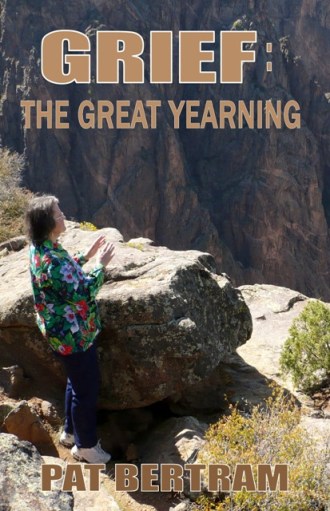
Grief: The Great Yearning is one step closer to publication. Today I received what might be the final copyedits. One of my fellow bereft volunteered to proof the book for me (actually, a mutual friend volunteered him, and he was kind enough to go along with the suggestion), and he turned out to be a phenomenal copyeditor. Found mistakes that all the rest of us missed. We don’t even have the excuse that we couldn’t see the words for the tears, since he had the same problem.

Very few people have managed to get through the book dry-eyed. Even though each person’s grief is different, there are enough similarities that this book speaks to everyone. It’s been called powerful, profound, exquisite, wrenching, raw, real. One woman wrote me, “I really like your book. When my husband died I devoured books about loss of spouse…maybe 30-40. The ones that were most helpful were similar to yours in that they recounted the journey. NONE were as complete as yours and that is what I wanted.”

Some people think the book will be best as a companion to those who are grieving. Some people think it will be best as a book to give their friends and relatives to help their loved ones understand what the bereft is going through. Some people think it should be required reading in classes for would-be therapists. Some people think it should be handed out to everyone whose spouse signs up with hospice so they are not shocked and bewildered when grief hits.

I never set out to write a book about grief. I merely cried out to an unfeeling void, looking for whatever comfort I could, trying to understand what had happened to him and me and our shared life. Apparently all that chaotic feeling ended up on paper, and now those emotions are tidily packed away into a book. Well, packed away until someone opens the book; then emotion explodes out of the binding.

Writing fiction comes hard to me. I have to drag every word out of my depths, but the words in this book came gushing forth. Of course, I was writing for me, not for others, and I didn’t have to create emotion out of nothing. I had emotion to spare.

Perhaps the time is right for this book. Perhaps it won’t mosey along like my novels, but will burn up the atmosphere when it takes off. Perhaps I really did write an important book. What a strange thought.

First Look at the Cover for My Grief Book!

It seems odd to be pleased over the imminent release of my grief book, as if I’m trying to capitalize on grief, but the grief is a done deal. That particular sadness is here whether the book gets published or not. I do think it’s something to be pleased about, though. It will be a helpful book, both as a companion for people who are dealing with a grief that few of their family or friends understand, and for people who want to understand what their bereft loved one is going through.  It also seems odd to be a cover girl — That certainly was never one of my ambitions! — but I couldn’t imagine a better photo for the cover than this one of me at the Black Canyon of the Gunnison. It was a completely spontaneous photo. My hands were supposed to be on the rock, but I started turning at the last minute. (Much to the chagrin of my brother who took the photo. He made me do it over, but the do-over wasn’t as evocative as this one.)

Perplexed by the Anything-Goes Publishing World (Part II)

Yesterday I wrote about how this new wild frontier, this stampede to publish and be damned (or not) of the new publishing world and how it could be lowering literacy standards because of the almost blythe acceptance of errors in books. The prevailing attitude is that as long as the writer is satisfied with the book, that’s all that matters. Neither they nor their readers seem to care if their story is derivative, if the editing is slipshod, if typos litter the pages.

To add to the confusion of this anything-goes publishing world, books that do well are seldom the best. Often, these successful books are the result of a very aggressive promotion campaign or the result of luck — by being chosen by Amazon for an aggressive promotion campaign or by hitting the right market at the right time.

It seems as if the world is a poorer place if good books are destined to remain undiscovered simply because the author is a wonderful writer and a mediocre promoter. Since we reward wonderful promoters who are mediocre writers with huge numbers of sales, the whole book business becomes even more skewed than it already is. People think that good books will rise to the top, that such books will automatically find a readership, but that is not always the case. And shrugging off the conundrum as “survival of the fittest” doesn’t help matters.

Some people think readers are screaming for quality, that readers are lost in the stampede, but when you consider the vast number of sales made by a few mediocre but bestselling traditionally published authors, most people are not screaming for quality. They are screaming for . . . comfort, perhaps. Predictability. A community of like-minded readers.

To make the situation even more complicated, publishers are not taking responsibility for marketing the books they publish. They want their authors to do that.

I recently read an article by a publisher who said that a publisher’s role was simply to prepare a book for market and to make it available. That’s it. Learning how to promote, navigating the insanely competitive book market, marketing one’s book, paying for book tours and conferences — all of that is the responsibility of the author. So then why does an author need a publisher at all? With Create Space, Lulu, Smashwords, and now Goodreads getting into the epublishing business, authors can prepare their own books for market. And what they can’t do, they can hire done, and keep all the profits. And authors by the millions are doing that very thing.

Maybe the problem I’m having coming to terms with this new wild frontier stems from a life-long respect for books, a sense that books are somehow sacred. Maybe it’s time for me to give up that old-fashioned attitude and treat books like any other temporary reading commodity, such as a blog post or a cereal box.

Perplexed by the Anything-Goes Publishing World (Part I)

In a recent discussion on Facebook, someone mentioned the case of a self-published story that was being offered for sale on Amazon. A woman posted a review, stating her opinion that the work was far from ready for publishing, and she gave the writer several examples of how to improve, but the writer took these comments as insults. What ensued was a protracted argument between the writer and the reviewer.

The Facebooker who brought this exchange to our attention asked who was right and who was wrong. I thought the reviewer brought up some excellent points, gave wonderful suggestions for redoing the story without getting disrespectful about it. (And the reviewer could have gotten nasty. The story really was atrocious.)

I can’t imagine arguing with a reviewer as the author did, though. A couple of times I have privately asked a reviewer to remove a spoiler that gave away the ending (and the reviewers graciously complied) but the writer in this case had a terribly unprofessional and arrogant attitude. She more or less said she could publish whatever she wanted, it didn’t have to be perfect, and too bad if people didn’t like it. Unfortunately, there are millions like her, which leaves me continually perplexed by the entire book business today.

The major publishers have had control of publishing standards for way too long. I certainly have no love for conglomerates or corporate thinking, so I don’t object to a lessening of their control. On the other hand, many writers now think they don’t need any standards at all. They say they can write whatever they wish, however they wish. The prevailing attitude is that as long as the writer is satisfied with the book, that’s all that matters. They don’t care if their story is derivative, if the editing is slipshod, if typos litter the pages.

Some of these writers even manage to sell a significant number of copies of their books.

Self-published writers seem to be a militant lot, demanding the same respect as authors whose books are published by a traditional or an independent press, yet self-published authors adhere to no one’s standards but their own, while a book that was accepted by and released by a publishing company has had to live up to at least the publisher’s standards. But some self-published writers do adhere to a high standard of literacy while some bestsellers released by the major publishers have an appallingly low standard of literacy.

Does any of this matter? With texting and twittering, leaving out letters of words to shorten them or using number for letters is standard. (AFAIK, u cn rd this. Me 2. LOL) Eek. Whole novels have been written in such shorthand.

Do kids today learn grammar in school? Do they need to know grammar? With spell check and grammar check on their computers, probably not. So, if books today have grammar mistakes, punctuation mistakes, typos, do most people even notice? Those of us who have spent a lifetime reading do notice, but do we count? We value language, but is language important? Language is an evolving organism, so perhaps those of us who quail at poorly written and poorly copy written books are running a race that has already been lost. A new generation grows into adulthood every year along with a new generation of electronic toys and tools and together they spawn a new generation of idioms. A new language.

I don’t know why this new anything-goes publishing world perplexes me. Most writers seem thrilled with the new order of doing book business. They don’t have to take the time to research the business, finding out which agents will accept their genre and which publishers they can submit to without an agent. They don’t have to learn how to write query letters or learn how to write a description and a hook. They don’t need to learn to deal with rejection. And especially, they don’t need to learn how to improve their work to make it as near perfect as possible. They simply decide to publish. That’s all it takes.

And most readers seem thrilled to find myriad books to download to their new ereaders.

So perhaps it’s just me who worries about a lessening of standards. Perhaps this new frontier, this stampede to publish and be damned (or not) is what everyone else wants. It’s certainly not the first time in my life the world didn’t act in accord with what I thought was the right direction for it to take, and it certainly won’t be the last.

See also: Perplexed by the Anything-Goes Publishing World (Part II)