What Do You Do With A Bad Review?

I’ve been getting mostly good reviews for my books, so it came as a shock when I noticed that one woman on Goodreads downrated them. She rated more than 100 books, giving all of them five stars except for a couple of 4-star ratings and three 3-star ratings. And guess whose books were all rated three stars? Mine. I couldn’t understand it — first, because most people who have read my books like at least one of them, and second (and the point that really bothered me), if she didn’t like my writing, why read all three? Why not stop after one or two?

I’d never met the woman, only know of her because we have an acquaintance  in common — someone I met because of my books, not a pre-publication friend. “I doubt she read the books,” this acquaintance told me, “she couldn’t possibly have read them and not liked them; your books are fabulous,” which made the whole thing even more incomprehensible. 

Until . . .

I got a really bad 2-star review for A Spark of Heavenly Fire, which made those three stars seem benign:

Not a bad story…but but but. I love post-apocolyptic stories – but a common mistake authors fall into with it is to immediately lose the sense of horror – their characters hardly react to dead bodies piling up around them – Bertram did this from the get-go. And this book was so badly edited that it is astonishing. Someone made the author chop this up without any concern for the reader’s ability to follow the story and understand the characters…fortunately, I didn’t care enough about any of them to worry about it.
  
Made me doubt myself.  Did I lose the sense of horror? But I never intended there to be a sense of horror (or at least not a sense of ghoulish horror). Nor did I intend to write a postapocalyptic story, which shows you the danger of genre expectations. The whole point was the lack of  bodies. After the first dying, when people died in their cars causing a city-wide traffic jam, people stayed in their houses, so that is where they succumbed to the red death. The only way my characters knew of the continued dying were the orange fluorescent markings appearing on the doors of houses where people had died. To me, that was even more horrible than bodies piling up — just this one simple reminder that people were still dying. Even more horrific was the silent city with soldiers patrolling the streets. That would spook the hell out of me! And no, people would not continue to react to the horror. They would become inured to it. It would become the new normal. And how could the reviewer have missed the hellish scene when two of my characters discovered what was being done with the dead human bodies . . . and the bodies of beloved pets?

Besides, the story was seen through the eyes of a soul-dead nurse, a gung-ho reporter, a self-centered, world-famous actor, and a woman who had that star in her eyes. Would any of them have continued to react to the dying? I doubt it. Still, I did wonder. Should I have shown more bodies piling up?

Then . . .

I was out walking along a residential street yesterday, and there was not a single other person in sight. Not a single vehicle on the road. And I knew I was right. No one would see the bodies if all the people in those houses suddenly died. And maybe they had expired — I had no way of knowing.

So, what does one do with a bad review? Blog about it, of course!! 

Will Traditional Ways of Selling Books be Effective in the Ebook Era?

I participated in a discussion with several authors the other night concerning ways of promoting our books. For once, I didn’t say much, just sat back and listened to their suggestions for getting book reviews, getting the publishing company recognized by RWA and MWA, getting their books in stores. What struck me was that these were all traditional ways of promoting books. There was not a single mention of online promotion, of alternate means of promoting.

I’m the first to admit that online promotion doesn’t sell many books if you’re an unknown, but to be honest, I never said that it did. For me, online promotion has always been about establishing an internet presence. What I know about marketing books can fit on the head of a pin and still leave room for a host of dancing angels, but I figured that once my books reached a certain critical mass of reviews, sales, and readers (fans?), momentum (via the linked nature of the internet) would cause sales to mushroom. Hasn’t happened, but that’s the theory, anyway.

On the other hand, do the traditional ways work? Or, more importantly, will the traditional ways of promotion continue to work as ebooks supplant print books? I never thought that would happen —  too many of us prefer the comfort of a print book —  but recently two bits of information made me rethink my bias. First, the day after Christmas, Barnes and Noble sold a million ebooks. Second, a recent poll found that college students don’t read books. I’m not sure all those people filling up their ebook readers are actually going to read the books they download, but the fact is, ebooks are selling.

Does it matter that our books aren’t in stores if people are going to buy ebooks? Does it matter that we don’t have offline reviews if people will have to go online to buy the books? Does it matter that we don’t have book signings if there are no print books to sign? Perhaps I’m looking too far ahead. Perhaps print books won’t disappear until long after we’re moldering in our graves, but the ebook era is approaching faster than we imagined. We need to find news ways of promoting to meet the challenge. Oddly enough, blog tours are already so prevalent as to be almost useless. But what’s beyond book signings, reviews in magazines, bookstores? What’s beyond blogging, Twittering, Facebooking? That’s what we need to be considering.

Free Ebook! No Strings (Or Pages) Attached

Light Bringer, my fourth novel will be released this spring. To make way room for my new book, Second Wind Publishing is clearing out the ebook inventory of my previous three novels by giving away a free copy to everyone who leaves a comment on this blog post. That’s a joke, sort of — there is no such thing as ebook inventory clearance. Since ebooks exist only in the infinite reaches of cyber space, there is no inventory to clear. What is not a joke is that Second Wind is giving away free ebooks — that part is true.

All you have to do to receive a free ebook is to leave a comment mentioning which of my books you want to read. (Descriptions of  all three are listed on the right sidebar.) We will send you a coupon code to use at Smashwords.com where you can download your free book in whatever format you choose.

So, which book do you want to read? More Deaths Than One?  A Spark of Heavenly Fire? Daughter Am I? Now’s your chance!

This offer expires on February 15, 2011.

Authors Who Reject Publishers

There’s been a lot of talk recently about traditionally published novelists rejecting their publishers and releasing their books themselves. I can see that these novelists don’t like making a pittance on their books, but it seems churlish to dump the very people that made them a success. Without the publicity departments of those publishing houses behind them, there is little chance that these authors would have ever attained their current popularity. If you are one among millions of unknown writers trying to sell your book to an unaware reading public, it doesn’t matter if your book is stellar. It cannot shine without readers.

Many authors have the idea that wonderful books will always find a readership. Once that might have been true, but in today’s book world, where anyone with a computer and bit of time on their hands can write a novel (sometimes in only a few weeks, including editing — yikes) the sheer numbers of available books can keep even a great book from rising above the flotsam.

Interestingly enough, only a couple of these once traditionally published authors wrote truly original novels. If the rest had to make their own way in the ocean of ebooks and self-published books, they would have not have found much of a readership. The major publishers want what I call blue-jeans books — books that are made from the same fabric as all the others in a genre but with a slightly different styling. They don’t want anything too original because it is hard to sell. (I had several editors tell me they loved Light Bringer, my latest novel, which will be released by Second Wind Publishing this March, but they turned it down because they didn’t know how to sell it.) The blue jeans quality that makes books acceptable to editors of major publishing houses is the very quality that makes them unremarkable in the self-publishing or independent publishing world.

I don’t have much use for the traditional publishers, so I don’t really care that these authors are shunning them, but it does give new writers a false idea of can be accomplished by going it alone. The very fact that these authors are dumping their publishers is news. Publicity, in other words. And it’s only newsworthy because readers know their names. And readers know their names because the authors had the benefit of a big corporation’s publicity department.

I might have been unaware of the situation, but one of these authors contacted me via Goodreads, asking me to be part of a promotional effort. He wrote that he’d send me (along with hundreds of others) an ebook if I promised to write a review and post it on a given date. I turned him down. I don’t like his books, and I don’t like being told when to post a review. Not that I would — I still have not learned the art of reviewing books. And if I did do reviews, I’d post reviews of books released by small, independent publishers. The point is, he sent me the ebook anyway. A story about vampires. Sheesh. Still doing the old blue-jeans dance.

I purposely did not mention any names in this bloggery since I don’t want to help promote the authors. And anyway, it doesn’t matter who they are. I certainly don’t care, and there’s a chance in the not-too-distant future no one else will either.

Win Free Books For A Year!

Everyone who leaves a comment on this post will be entered in Second Wind Publishing’s best contest ever — a chance to win a copy of every title Second Wind will publish in 2011.  (People outside of the United States will win ebooks. Those inside the United States can choose and either ebooks or print books.) This will include a copy of my upcoming novel Light Bringer, which is scheduled to be released in the spring of 2011. (Suzanne Francis, author of The Song of the Arkafina Series, and first person ever to read my new book said Light Bringer is “brilliant.” My favorite word!)

Light Bringer tells the story of  Becka Johnson, who had been abandoned on the doorstep of a remote cabin in Chalcedony, Colorado when she was a baby. Now, thirty-seven years later, she has returned to Chalcedony to discover her identity, but she only finds more questions. Who has been looking for her all those years? Why are those same people interested in fellow newcomer Philip Hansen? Who is Philip, and why does her body sing in harmony with his? And what do either of them have to do with a shadow corporation that once operated a secret underground installation in the area?

So be sure to leave a comment. If you don’t want to receive mailings from Second Wind about other promotions and new releases, let me know. You will still be entered into the contest. Also, three people chosen at random will win an ecopy of one of my published books — your choice! (Pick from the three on the right sidebar of this blog.) Both contests end at midnight on December 30, 2010.

Best of luck to all of you.

Excerpt from Light Bringer by Pat Bertram

Light Bringer is my latest novel, scheduled for release by Second Wind Publishing in March, 2011.

Description of Light Bringer:

Becka Johnson had been abandoned on the doorstep of a remote cabin in Chalcedony, Colorado when she was a baby. Now, thirty-seven years later, she has returned to Chalcedony to discover her identity, but she only finds more questions. Who has been looking for her all those years? Why are those same people interested in fellow newcomer Philip Hansen? Who is Philip, and why does her body sing in harmony with his? And what do either of them have to do with a shadow corporation that once operated a secret underground installation in the area?

Excerpt (Prologue):

Helen Jenks gripped the steering wheel and squinted into the darkness beyond the beam of the Volkswagen’s headlights. Nothing looked familiar. Was she almost home? The snow had stopped falling, but in these hills so far from town, the county didn’t bother to plow. She didn’t know if she drove on the right road, or any road at all. There were no other cars, no tire tracks.

Where was everyone?

She sighed. Home in bed, probably, where she would be if she hadn’t pulled a double shift at the hospital.

Hearing an odd drone, she cupped a hand behind an ear and tried to isolate the sound from the rumble of the Volkswagen engine. Was something wrong with the bug? Oh, please, no.

All at once the sky lit up. She leaned forward for a better view and caught sight of a brilliant star that seemed to throb in time with her heartbeat, growing brighter with each pulsation.

She sat back and rotated her head around her stiff neck. Maybe it was Venus. Hadn’t she read that at certain times of the year, under certain conditions, Venus could be as big and as bright as the moon?

Leaning forward again, she saw the star pulse one last time, then wink out. As she became used to the darkness it left behind, it reappeared, darted toward the horizon, and vanished. So, not Venus. Perhaps a meteor or two.

She listened for the drone, but no longer heard it. Good.

Ten minutes later, she noticed a pin prick of light in the distance: her porch light. Her car slid to the side, and she gripped the steering wheel harder. Be careful, she cautioned herself. You’re not safe at home yet.

When at last she parked in front of her old frame house, she pried her fingers off the steering wheel and stumbled out of the car. Except for the dings and pops of the cooling engine, the world was silent, appearing so new and un-touched, she hesitated to mar the opalescent expanse with her footprints. Then her eyebrows drew together. The snow wasn’t untrodden after all. Tracks led to the house where a small gray creature huddled against the door.

She clapped her hands. “Shoo. Shoo.”

The creature did not stir.

“Go on. Get,” she shouted.

The creature still didn’t move. Was it dead? This wouldn’t be the first time a dying animal had been attracted to the warmth seeping from beneath the front door.

She approached gingerly, relaxing when she saw what appeared to be an old gray blanket that had somehow ended up on the stoop. She bent over to collect the wad of fabric, then straightened. Bad idea. Who knew what vermin had taken refuge in the folds.

Before she could figure out what to do, the blanket moved. She jumped back and stared at it. The blanket moved again, giving her a glimpse of a coppery curl.

She lifted the bundle, cradled it in her arms, and drew back the blanket. Two dark eyes, shining with intelligence, gazed at her.

She sucked in a breath. An infant, no more than nine months old.

As the infant continued to gaze at her, its eyes brightened to gleaming amber. Then it beamed at her—a welcoming smile, both joyous and knowing, as if it had recognized a dear friend.

Helen’s face felt tight. “Who are you?”

The baby chortled in response.

“And who left you here?” She glanced at the tracks. They led in only one direction—toward the house.

Feeling dizzy, she crouched to examine the tracks more closely.

They were footprints. Tiny footprints in the snow.
Finding Inspiration From Uninspiring Sources

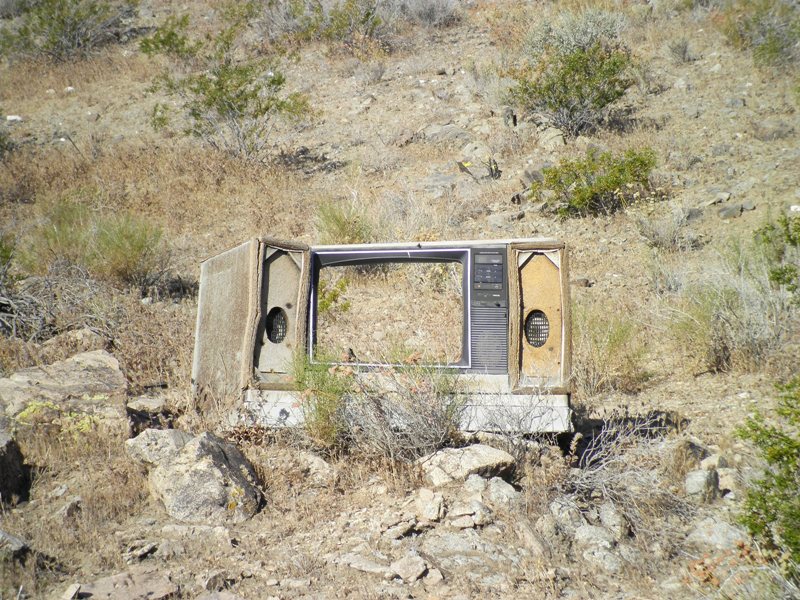
Deserts have traditionally been mystical places where one goes to find inspiration, themselves, the meaning of life, but nowadays people use the desert as a park, a place of recreation rather than re-creation. They whiz by on dirt bikes and all-terrain vehicles, they honk their dogs (let the dogs out of the vehicle and and follow along behind, honking whenever the creatures go to far astray), they have drunken parties, and they dump trash, including old furniture.

I used all of these bits to set the scene for the first chapter of Rubicon Ranch: A Collaborative Novel, a novel being written online by me and eight other Second Wind authors, especially the discarded furniture. I do believe I have seen enough old furniture in my walks to furnish a living room, but the piece that most captured my imagination was the television sitting out in the middle of nowhere. No road led to the television, just a footpath. Yet there it was. And so it appears in my chapter:

She turned around to get shots of the trail she’d just climbed and saw a glint of metal reflecting the sun. She squinted. What was that? A television? She found herself smiling—her first smile since Alexander died. She scrambled back down the trail. The television had been dumped a long time ago judging by the creosote bushes that had grown up around it, but footprints leading to the box suggested it had been visited recently. She took several shots from the trail, about fifteen yards from the television, then moved closer. The television had no screen, and she could see that something had been stuffed inside. A doll? She crept closer. Ten feet away, she stopped to take another photo, and the truth washed over her. Not a doll. Crammed inside the console was a child, a girl, her eyes half-eaten by some desert predator.

We’ve now posted the first six chapters of Rubicon Ranch, the latest one by Christine Husom, author of the Winnebago Mystery Series.  The most fun of a project such as this is that we do not yet know who killed the little girl (if in fact, she was killed) and we won’t know until all but the final chapter has been written. I hope you will enjoy following our story as we write it.

  • Chapter 1: Melanie Gray — by Pat Bertram
  • Chapter 2: Seth Bryan — by Lazarus Barnhill
  • Chapter 3: Jeff and Kourtney Peterson — by J B Kohl and Eric Beetner
  • Chapter 4: Dylan McKenzie — by Nancy A. Niles
  • Chapter 5: Mary “Moody” Sinclair — by JJ Dare
  • Chapter 6: Cooper Dahling — by Christine Husom
  • Tomorrow is Blog Jog Day!

    Blog Jog is a trot around the blogosphere, each blog linked to the next so that you can explore new blogs with a simple click on the link to the next blog. Many participants will be offering giveaways and contests, and so will I. Or rather, my publisher will. Anyone who leaves a comment on my Blog Jog post tomorrow will be entered into a contest to win a copy of every title Second Wind Publishing releases in 2011, which will include my book Light Bringer, scheduled to be published in the spring of 2011. So be sure to stop by tomorrow and leave a comment!

    Malcolm Campbell, author of  Garden of Heaven,  Jock Stewart and the Missing Sea of Fire,  The Sun Singer, and  Worst of Jock Stewart had this to say about my upcoming book: Light Bringer is TYPICAL BERTRAM: plots within plots, multiple characters with multiple agendas, fast moving, more than enough mystery and intrigue for everyone, satisfying conclusion. I really enjoyed Light Bringer and feel privileged seeing a pre-publication copy.

    Light Bringer tells the story of  Becka Johnson, who had been abandoned on the doorstep of a remote cabin in Chalcedony, Colorado when she was a baby. Now, thirty-seven years later, she has returned to Chalcedony to discover her identity, but she only finds more questions. Who has been looking for her all those years? Why are those same people interested in fellow newcomer Philip Hansen? Who is Philip, and why does her body sing in harmony with his? And what do either of them have to do with a shadow corporation that once operated a secret underground installation in the area?

    Recording Your Character’s Voice by Aaron Paul Lazar

    Please welcome my guest, Aaron Paul Lazar, author of the LeGarde mysteries and  Healey’s Cave, the first book in the Moore paranormal mysteries. Lazar says:

    I’m wondering if every author needs to take voice-over training. Especially if they want to record their works in audio formats. 

    Readers like hearing the author read. Right? They know that only the author really understands the nuances of each sentence, the way it was supposed to be said aloud. I do believe this, and wish I could download books read by Dean Koontz himself, or that John D. MacDonald could come down from Heaven for a while to record his Travis MacGee series for us. Wouldn’t that be cool? 

    When you’re reading from your own character’s point of view, you really have to get inside his head. You have to feel his pain, suffer his humiliations, and share in his joy. 

    Could you do that? If so, it’s a good sign that you really know your characters.

    And what do you do if your character is of the opposite sex? I guess unless you’re a woman with a very deep voice, or a man who does a reasonable falsetto, you’ve got to find someone who fits that mold, a friend who can sound like your character and really get inside his or her brain. 

    Would you like to get to know a character, even before you read his book?

    Well, I never took acting lessons, but I sat in the back of the auditorium while my daughter performed in fifteen musicals and plays. Maybe a little of the training rubbed off on me. I don’t know. 

    Regardless, I figured it was a good idea to help create a little buzz for my debut book in my new green marble series by writing a letter from Sam Moore to his future readers. Would you like to hear it? See what you think and please let me know, below. 

    Sam Moore’s most intimate and tortured thoughts are in this video. It’s not really a normal video, but the only way to get audio on YouTube or other sites is to put a jpeg image behind it and save it as a movie file. ;o) Took me all day to figure that out – shows you how bright I am. And I didn’t want to make it into a book trailer, for Heaven’s sake. I already have one of those!

    Sam Moore is a retired country doctor in the new paranormal mystery series, Moore Mysteries. The first book just came out via Twilight Times Books, and you can read the first few chapters here: Healey’s Cave .

    ***

    Aaron Paul Lazar writes to soothe his soul. The author of LeGarde Mysteries and Moore Mysteries enjoys the Genesee Valley countryside in upstate New York, where his characters embrace life, play with their dogs and grandkids, grow sumptuous gardens, and chase bad guys. Visit his websites at www.legardemysteries.com and www.mooremysteries.com and watch for his upcoming release, FIRESONG, coming Winter, 2010.


    Making Sure Our Novels Are Worth Reading

    I’ve been reading a lot lately. It’s what I do when I am convalescing or when I feel like pampering myself, and right now I feel like I’m doing both. I haven’t read anything particularly good or particularly bad, but reading is like breathing to me, so it doesn’t really matter.

    One of the books captured my interest, though, mostly because it reminded me of my novel, More Deaths Than One. It had many of the same elements as my story: both books dealt with people who’d been given false memories, both had a theme of human experimentation (in fact, this other book used some of the very same examples of past experimentation that I did), and both were, at least obliquely, about assassins. The set-up in this other book was even more elaborate than mine, and much more gruesome. I don’t understand why the experimenters had to “deglove” the victim/hero’s face to get to his brain and implant the controlling device (in other words, they pulled off his face — yuck.)

    Like many such elaboriate thrillers, the end did not justify the long and convoluted way of getting there. For example, people with machinery lived in the next apartment, controlling him, which is what the implant should have done.

    It turns out that the whole reason for the mind control was so that the victim/hero could — all unkowingly — turn another character into an assassin. The experimenters were killing off all the world leaders they didn’t like. Ho-hum. As I said, the end did not justify the set-up. If they wanted to kill those leaders, all they had to do was hire an assassin and then kill the assassin afterward, which is the way it’s been done for thousands of years. It’s simple, cheap, effective. (We’re not talking morality here, just story.)

    I try to make sure the endings of my novels are satisfying — even if readers guess the story, there is still a pay-off that comes as a surprise. In More Deaths Than One, his reaction to what happened to him is vastly more important than the deed itself.

    Oddly enough, the book I read right before this assassin one also had a similar plot to another of my novels — A Spark of Heavenly Fire. Both of these books were (loosely) about women finding happiness during an epidemic. Her disease was called the Phoenix Flu, mine was the Colorado Flu. Or at least that’s what people outside of Colorado called it. Those in Colorado called it the Red Death.

    So what’s the point of this bloggery? Perhaps that we need to make sure we tell our stories with our own particular slant so that if by chance others have a similar idea, our novels are still worth reading. Perhaps that we need to make sure our endings fit the set-up. An elaborate set-up with a cliched ending could be just as ridiculous as a cliched story with an elaborate ending. (I’ve read a couple of books lately where the ending came out of nowhere without even a hint of foreshadowing.) Or perhaps the point of this bloggery is that I need to read less and write more.