An Itch to Write

I can feel an itch to write coming on — not just to do my daily blogging stint, or to write about grief, but to immerse myself in a story.

I’m not there yet. Too many things are calling for my attention to allow me to let “real life” take a back seat to a fictional life. “Real life” is in quotation marks because no one knows to what extent this life is real. It might be just a figment of our collective imaginations, a fiction that we create together. At least that’s what both the quantum physicists and the tarot seem to preach.

In my tarot readings this month, I’ve been getting the moon card rather frequently. The moon stands for imagination as a force. It also warns against the pitfalls of believing too much in what we perceive as reality, because what we observe can only reflect what is real the way that the moon reflects the light of the sun. This card might be echoing my interest in writing, or it might be that the card is creating that interest in me. It’s hard to tell with the tarot. Either way, it does seem to indicate a time of illusion.

Not that any of this has to do with writing specifically. It’s just that when I am focused on the outward life I see, I cannot focus on the inner life I might perceive.

As time goes on, my focus will change. As the hardscape of my yard becomes more fixed and my gardens become more viable, I will have a lot more free time (mental free time, that is), especially in the winter. My job will be coming to an end at some point. I originally agreed to a year and then contracted for another six months, but as I get even older, I’m not sure if anyone will trust me with their elders. My senzaburu (1000 origami cranes) will be done by the end of the year. And the hidden object game I have been fascinated by for the past year is becoming less fascinating now that I’ve opened all the locations. There is a new location every month, which revs up my interest, but even that might not be enough to overcome my creeping boredom with the game.

As my current areas of focus gradually become blurred, that’s when one of the stories rattling around in my brain will take root.

I’ll be interested in seeing which idea plants itself. (If you have a preference for any of these story ideas let me know.)

1) A sequel to Bob, The Right Hand of God, perhaps? If you end up with two characters named Adam and Eve, it seems almost an obligation to write their story. 2) A sequel to Madame ZeeZee’s Nightmare? After all, the main character (me!) is alive and well in Colorado, and seems to be calling out for a new episode in her fictional (and oh so murderous) life. 3) A ghost story? The only ghost I ever created is a ghost cat in Light Bringer, so it might be interesting to bring a different sort of ghost to life. It’s possible 2 and 3 could be the same story. 4) A novel of psychological terror where the poor protagonist isn’t sure if she is going crazy or if she is seeing ghosts? It’s possible 2, 3, and 4 could be the same story. 5) A story based on a tarot reading, with each twist and turn dictated by the cards? It’s possible 2, 3, 4, and 5 could all be the same story, a combination of any two or three or each could be a separate tale. 6) A completely different story, one that hasn’t made itself known to me yet.

All that is in the future. My current foci — my house, my yard, my job, the hidden object game, the tarot, the senazburu, my daily blog offering — are still with me.

But someday . . .

***

What if God decided S/He didn’t like how the world turned out, and turned it over to a development company from the planet Xerxes for re-creation? Would you survive? Could you survive?

A fun book for not-so-fun times

Cheap Writing

I’m reading a book by an author I can generally tolerate despite his obviously manipulative style, but this particular book irritated me from the first page.

One of the characters is a teenager. And like almost all teenagers in adult books, this one is rebellious, insolent, arrogant, and downright nasty. And those are her good qualities. Well, her only qualities.

Since this author is so manipulative, it’s possible he chose the character as one who would be, with only a few strokes of his keyboard, instantly recognizable to his readership, but if so, why? Why do so many teenagers in books have to be like this? The character has ruined more stories for me than even the serial killers who so lovingly demonstrate every single cut and cherish every single drop of blood. It’s as if no one will believe that a teenager can be other than appalling, especially since the parent’s inability to deal with the inexcusable behavior often serves as a subplot. If the teenager is as nice as many I have met (and as placid as I once was), then bang, there goes that subplot, and the author would have to think of another one.

It’s also a cheap subplot (sometimes even the entire plot) because the more terrible you make the teenager, the more obvious the character arc when the kid grows up. Whatever happened to subltety?

I suppose, since this author tends to play with such archetypes rather than breathing life into a creature of his own, it makes sense he’d build a story on such a flimsy pretext. Unfortunately, as bad as things are at the beginning of the book, things promise to get a whole lot worse by the end. Assuming, of course, I stay to the end. I might consign the kid to the fires of unreadable books long before it gets to that point.

What I would really like to see is the opposite (and occasionally, an author does present such a change) where the parent is rebellious (without being abusive) and the teenager has to deal with the moodiness. Or even better — no teenagers at all.

I used to read young adult books way into my adulthood because I enjoyed the theme of a misfit standing up to the world and its conventions, finding a fit, and becoming their own person, but I seldom come across such a storyline any more. (That also used to be plot of the Regency romances I read in my youth — the main character was always a societal misfit who ended up finding a fit. But that storyline has been suffocated under the current fad for stories that skirt the edges of porn.)

Obviously, I can’t do anything about books with horrid teenagers except not read them, and if I had time to go to the library, or if I had other book to read, I wouldn’t give this one another minute of my time.

What I can do, though, is eschew such cheapness and triteness in my own writing.

And yes, I will write another novel one day.

Perhaps.

***

Pat Bertram is the author of Grief: The Inside Story – A Guide to Surviving the Loss of a Loved One. “Grief: The Inside Story is perfect and that is not hyperbole! It is exactly what folk who are grieving need to read.” –Leesa Healy, RN, GDAS GDAT, Emotional/Mental Health Therapist & Educator

Living In Fear

Almost all new books mention, in some way, “The Bob.” Of course, the authors don’t know enough to call it “The Bob,” so they call the virus by other names that don’t really mean much. It was bad enough living through the upheaval; it’s a whole lot worse having to relive it in books. Sometimes, the reference is simply a placeholder, to give people an idea of when the story takes place, which is never a good idea because it dates the book, and readers in the next few years who prefer only current books won’t be interested. Other times The Bob is a major plot point. Either way, it doesn’t interest me. It seems perhaps sacrilegious to say this, considering the trauma so many people suffered during the past year and a half, but whether The Bob is mentioned merely to set the time or is an intricate part of the plot, it seems . . . trite. And even worse than trite — a cheap shot to get people personally involved in the story instead of using good writing to get engage readers.

I could be wrong, of course. Others might like to see their “Bob” experiences from a different point of view, to gain a bit of perspective.

The author of the book I am currently reading talks about how worn down people are from more than a year of worrying about their families and themselves; how weary they are of having to wear masks and keep their distance from others; how exhausted they are from isolation and loneliness and grief; and especially, how tired they are of living in fear.

I do understand that many people got deathly sick, that loved ones died, that some people suffered tremendously from isolation, but those things alone, I would think, would preclude people from reading about the horrors they lived through.

Notice I say, “the horrors they lived through.” Despite what I wrote in the first paragraph, that it was “bad enough living through the upheaval,” the truth is, for me, it wasn’t bad at all. In fact, it made no difference to my life. Well, except for the mask, but since I was seldom around people and seldom went into a store, I rarely had to wear it.

I never worried about myself, never was afraid, never was lonely (except for a few times that had nothing to do with The Bob). Most of the people I cared about were already dead, and those still alive were taking care of themselves. I didn’t have any travel plans to call off, and as for local events, I’d mostly stopped going to those before they got cancelled. (I’d gained too much weight for one thing; the food was generally something I shouldn’t eat, for another.)

So I stayed home and read. I did see a few people, but always the same ones — the woman I worked for as well as an occasional friend or two. And that is exactly the life I would have lived even if The Bob had never made itself known.

I’m not denigrating anyone’s experience. I know it was a rough time for a lot of people, but it does seem strange to me that in this, as in so much else, what might be good for one person is terrible for another. Still, we each have our own nemeses.

I don’t know if it’s true, but I read that women with O positive blood got The Bob less frequently and not as bad as people with other blood types (it has to do with the protein coating on the cells). Unfortunately, it is definitely true that women with O positive blood are especially tasty to mosquitoes that carry various deadly viruses.

It just goes to show, if one thing doesn’t get us, something else will, though with the mosquitoes as with The Bob, I do the best I can. I won’t live in fear.

***

What if God decided S/He didn’t like how the world turned out, and turned it over to a development company from the planet Xerxes for re-creation? Would you survive? Could you survive?

A fun book for not-so-fun times.

Plots and Plots

I’m reading a book with four subplots — or rather four co-plots since none of the plotlines seem to have more importance than any other. That’s not a problem. I can keep four different plots in my head. The problem is that all four subplots are exactly the same, only with different names, though too many of the names are similar, making it even harder to distinguish the various plots. Each subplot has a bad-guy group and a good-guy group chasing each other with frequent pauses for a fight. The good guys want something the bad guys don’t want them to have — some sort of knowledge about a plague originating in ancient Egypt. At least, that’s what I think they want. Just as I sort of figure out what one group is actually after, the author switches to a different group. I have a hunch he thinks this keeps up the suspense, but all it does is put me to sleep.

Generally, when I get a book that bores the heck out of me, I skip to the end to find out what happened, and then forget it. With this book, I’m afraid that if I skipped to the end, I won’t know what happened. There’s also the possibility that if I don’t skip to the end and continue to plod through four plotlines that echo each other, I still won’t know what happened.

Is it any wonder I am weeding instead of reading?

Today I dug up more weeds, way more than I planned to. The ground had just enough dampness left from the last rain to be crumbly, so it was much easier to dig into than when the ground was sodden (and incredibly easier than when it was dry), so I continued working until that plot of ground was finished.

Hey! Plots and plots! Although I didn’t plan to wrap this blog around the theme of plots — story plots and garden plots — it tickles me that it happened.

I hope I finish the book soon so I can find something fun to read to allow me to sit still long enough to rest up from my outside labors. I did set aside the multiple-plot book for a while and read a single-plot book; unfortunately, that one was just as boring.

Even if the next book doesn’t keep my interest, it won’t matter. We’re returning to 100-degree temperatures (or close enough) for a while, and even a boring book won’t send me outside when it’s that hot.

Besides, I really do need to rest up. Starting next week, the plants and bulbs I ordered will be arriving, and I’ll have to be doing a lot more digging. I’m hoping digging to put plants in the soil will be easier than digging to pull things out, but I have a hunch digging is digging, whether it’s digging into the plot of a boring book or digging into a plot of weed-infested land.

***

What if God decided S/He didn’t like how the world turned out, and turned it over to a development company from the planet Xerxes for re-creation? Would you survive? Could you survive?

A fun book for not-so-fun times.

Putting the Brakes to Monday

It seems as if it’s been only a couple of days since I wrote about the pattern of my Mondays, yet here it is, Monday again. And the pattern remains the same: I got up, did my knee exercises, made my bed, folded my quota of origami cranes, dealt two cards for a simple tarot reading, checked a few things on the computer, then drove to the mechanic’s shop.

The difference between this Monday and the previous three or four is that instead of chatting with the mechanic for a few minutes while we rescheduled the appointment for the following Monday is that he wasn’t there to chat with. The shop was closed, which didn’t surprise me. The poor fellow is dealing with some post-Bob issues, and even all these months later, isn’t back to his normal healthy self. In fact, the last time I talked to him, he hadn’t been doing well at all.

I’ll check back with him in a few days to see how he is doing and to reschedule an appointment to get my brakes fixed. They seem to work okay, but the brake warning light comes on when I depress the brake pedal. The problem could be one of the brake cylinders. Three were replaced, but the VW parts place sent the wrong part in the right box, so that fourth cylinder has to be replaced as well as — perhaps — the master cylinder. Because my brakes seem to work for the light driving I currently do — a few miles out and back on the four-lane highway outside of town — I can wait a while longer. But eventually, the brake work will have to be done.

As on previous Mondays, after I left the mechanic’s shop, I stopped by the library and got a stack of books. It’s really nice not having to lug a satchel full of books on foot, so I indulge myself on Monday and get plenty to read.

I hope these books are better than the last batch I got. Those were all recently published books, and the good guys weren’t readily distinguishable from the bad guys. I’m all for a bit of ambiguity in books, but a couple of the authors went so far as to make the story so ambiguous that I had no idea if the good guy was the bad guy or the bad guy was the good guy or if both were reprehensible. A couple of the books used the cliché of multiple personalities (Dissociative Identity Disorder). In one book, the good guy was also the bad guy. In the other book, we never find out.

I don’t need truly heroic characters, though I do like them, nor do I need characters I can identify with, though it does make a book more personal, but I do need characters that I don’t mind spending a few hours with.

I’m hoping at least a couple of characters in this current batch of books will be worth getting to know, but if not, well, the library is just a few blocks away. I don’t have to wait until Monday to replenish my stock, I can go any time.

Besides, one of these days, I will be putting the brakes to my Monday pattern because the car will be fixed.

At least, that’s the plan.

***

Pat Bertram is the author of Grief: The Inside Story – A Guide to Surviving the Loss of a Loved One. “Grief: The Inside Story is perfect and that is not hyperbole! It is exactly what folk who are grieving need to read.” –Leesa Healy, RN, GDAS GDAT, Emotional/Mental Health Therapist & Educator

Odd Thoughts

Today is following the pattern of my previous two or three Mondays. I got up, did my knee exercises, made my bed, folded my quota of origami cranes, dealt two cards for a simple tarot reading, checked a few things on the computer, then drove to the mechanic’s shop.

As on the previous Mondays, I talked to the mechanic for a few minutes, then drove away. He’s dealing with some post-Bob issues, and even all these months later, isn’t back to his normal healthy self. He’s been closed the past week, and even though he’s way behind in his work, he planned to work on my car today. I didn’t want to put more pressure on him, so I made an appointment for next Monday instead.

The problem is one of the brake cylinders. Three were replaced, but the VW parts place sent the wrong part in the right box, so that fourth cylinder has to be replaced as well as — perhaps — the master cylinder. Because my brakes seem to work for the light driving I do — a few miles out and back on the four-lane highway outside of town — I can wait a while longer.

I did have an odd thought as I was driving that road — it was once part of the Santa Fe Trail, and it occurred to me that the brief journey I took today would have been an arduous, all-day trek for those folks. (Well, I did say it was an odd thought, not a deep thought.)

Once back in town, I went to the library and got a few extra books than I normally do because I wasn’t on foot. (Luckily, being a loyal and constant patron has its privileges, so they don’t hold me to the normal limit.)

And then, as I have done after coming home from a library visit ever since I was a child, I immediately grabbed a book and plopped down to read.

In the book I chose, the crime scene investigators used a CrimeScope — some sort of blue light — to check for fibers and stains, of which there were a lot. Afterward, they used Luminol to check for blood.

That’s when another odd thought popped up. I wondered what we would see if someone checked for those things in my house. After all, it’s almost one-hundred years old, and has probably seen a lot of living and maybe even some dying.

Except for purposes of this blog, I put the thought out of my mind. I don’t want to know where the invisible stains are, and I definitely don’t want to know what they are, especially since one over-night visitor claimed to have seen a ghost in my guest bedroom/office.

Which leads me to another odd thought. Why do people who think they see a ghost think they are seeing ghosts rather than that they are hallucinating? I mean, if I saw a ghost in my house, I wouldn’t get scared and think to myself, “Oh, no. A ghost.” I’d get scared and think, “What the heck is wrong with me?”

That’s enough odd thoughts for the day, though who knows. The day isn’t even half over, so there is plenty of room for more odd thoughts.

***

What if God decided S/He didn’t like how the world turned out, and turned it over to a development company from the planet Xerxes for re-creation? Would you survive? Could you survive?

A fun book for not-so-fun times.

Click here to buy Bob, The Right Hand of God

Black as Ink

A phrase in the book I’m reading slapped me in the face. It wasn’t a literal slap, of course, but the phrase was so incongruous that it took me out of the story as surely as a slap would have done. What was this brutal simile? It wasn’t anything special, to be honest. In fact, it’s so common as to seem almost invisible, but I noticed it.

As black as ink.

That’s it. Not a big deal, right? And yet, when was the last time you saw pure black ink? For me, it was decades ago, when I bought some calligraphy supplies with the thought of learning how to do fancy lettering. That ink truly was black, totally opaque, without a hint of light or any other color. Even back then, black wasn’t the only ink available for calligraphic needs, or any needs. My mother used a fountain pen for many years, and that ink was blue. When I was in school, perhaps middle-school age, cartridge pens were all the rage, and I used the peacock ink. Such a gorgeous color! And not black.

Nowadays any ink we see is generally in ballpoint pens, and although black used to be the prevalent color, blue now seems to be preferred for official documents, which is odd to me. Doesn’t blue tend to fade into the “blue nowhere” of computer screens? And yet, any bank document or other official paper I’ve had to sign recently required a blue signature.

I once had a multitude of pens with bright non-black colors. I just checked my ballpoint pen stash, and I have a red ink pen as well as a green one, though the green is dried up. So, since I tossed it out, I guess I can’t count green among ink colors. Nor can I count purple, though once I had a ballpoint pen with that color ink that I used up.

There are still a lot of pens around with black ink, though none of those inks are truly black. Some are charcoal, some are rather translucent with a tinge of blue or red, others are a muddy black, and some are licorice color (which is a very, very dark brown unless one is talking about red licorice).

Some printers do use ink instead of toner, and again, there are more colors available — and necessary — than black. My printer uses cyan, magenta, and yellow, which along with the black, can create just about any shade or hue of any color.

If the book had kept my interest, this rather inoffensive though clichéd simile would have passed unnoticed, so that’s two strikes against the author — ill-chosen words and a less than compelling story.

I’m just glad that people who read my books are kinder than I am, and refrain from pointing out my own literary faux pas. I do try to remove anything I would not like to see in a book, but some phrases are so common as to be invisible — such as “black as ink” — so who knows what cringeworthy phrases are buried in all my rhetoric.

***

What if God decided S/He didn’t like how the world turned out, and turned it over to a development company from the planet Xerxes for re-creation? Would you survive? Could you survive?

A fun book for not-so-fun times.

Click here to buy Bob, The Right Hand of God

The Powers That Be

In almost every book I read lately, the author mentions, at least once, “the powers that be.” The expression irritates me because . . . well, because it’s irritating. It’s a cliché, and like so many clichés, it’s too general. If “the powers that be” refer to the people who decide what is allowed or acceptable in a group or organization or government, then in any given situation, the powers that be are different. For example, if the author is referring to the board in charge of a homeowner’s association, then those powers that be are completely different from those governing a country.

So to use the phrase “the powers that be” is not just a cliché, but it’s also pure laziness on the author’s part. If “the powers that be” in a book are important enough to be mentioned in such a haphazard way, then they are important enough to be mentioned more specifically, by occupation if nothing else.

Sometimes the author puts those words in a character’s mouth, which is even worse because truly, no one ever uses that phrase in everyday conversation. They say, “the cops” or “the governor” or the “president’ or they mention the person by name or title.

I took time out of from this diatribe to see where the phrase came from, and it’s an old one. Many centuries-old phrases come from Shakespeare or the bible, and this one is no different. Do you care to hazard a guess before I tell you?

If you guessed the bible, you’re right. The first time the phrase showed up in print was in William Tyndale’s 1526 translation of the New Testament: “Let every soul submit himself unto the authority of the higher powers. There is no power but of God. The powers that be, are ordained of God.”

The King James version is: “Let every soul be subject unto the higher powers. For there is no power but of God: The powers that be are ordained of God.” (Romans 13:1)

It seems to me the common literary usage has come to mean something, if not completely different, then a sideways skew, because in no usage I’ve ever read do “the powers that be” have anything to do with getting their authority from God. Generally, they are given their power by other (secular) powers that be or they take upon themselves whatever power they have.

Another phrase I frequently come across in books are “the authorities,” which basically means the same thing — that the author is too lazy to figure out who those authorities are. I have to confess, I think I might have used “the authorities” once for that very reason: I didn’t know who my particular authorities would be, so I copped out.

Now that I got that off my chest, I can go back to reading the book, though I imagine I will still grit my teeth whenever I come across either “the authorities” or “the powers that be” just as I grit my teeth and bear it whenever I come across authorities or powers that be in real life.

***

What if God decided S/He didn’t like how the world turned out, and turned it over to a development company from the planet Xerxes for re-creation? Would you survive? Could you survive?

A fun book for not-so-fun times.

Click here to buy Bob, The Right Hand of God

Books for Book Lovers

When you are making out your Christmas list (because of course, you are making out a list even though it’s only August), here are some books for you to consider for your bookish friends, and for yourself too, of course, if you haven’t already read these books.

Bob: The Right Hand of God for those who love whimsical and satirical apocalyptic stories, rebellious loners, six-foot millipedes, baby volcanoes, and cities that suddenly turn into oceans. 

Click here to read the first chapter of Bob: The Right Hand of God

Click here to buy Bob: The Right Hand of God

Unfinished for those who love drama, buried secrets, stories that tell the truth about grief, and women who find themselves when they find themselves alone.

Click here to read the first chapter of Unfinished

Click here to buy Unfinished

Madame ZeeZee’s Nightmare for those who love fun, dance, murder, mystery, older women who live with all the verve and nerve of the young, and perhaps me. (The main character is named Pat. Coincidence? You be the judge!)

Click here to read the first chapter of Madame ZeeZee’s Nightmare

Click here to buy Madame ZeeZee’s Nightmare

Daughter Am I for those who love road trips, treasure hunts, buried family secrets, mysteries, gangsters, young women coming of age and old folks who refuse to admit their age.

Click here to read the first chapter of Daughter Am I

Click here to buy Daughter Am I

Light Bringer for those who love precocious babies, aliens, conspiracy theories, secret underground laboratories, lost identities, and manipulative international corporations.

Click here to read the first chapter of Light Bringer

Click here to buy Light Bringer

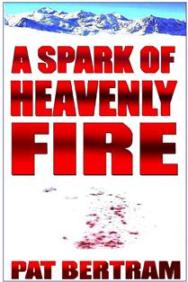
A Spark of Heavenly Fire for those who love conspiracies with a medical twist and for those who wonder what it would be like if the world were to go through another pandemic.

Click here to read the first chapter of A Spark of Heavenly Fire

Click here to buy A Spark of Heavenly Fire

More Deaths Than One for those who like conspiracy theories, mind control experiments, the Vietnam era and its aftermath, and a bit of otherworldly strange midst the horror.

Click here to read the first chapter of More Deaths Than One

Click here to buy More Deaths Than One

Grief: The Great Yearning for those who need the comfort of knowing they are not alone in their sorrow especially during the first year of grief.

Click here to read the first chapter of Grief: The Great Yearning

Click here to buy Grief: The Great Yearning

Grief: The Inside Story — A Guide to Surviving the Loss of a Loved One for those who need to learn more about the mystery of grief either because they are grieving a person who had been intrinsic to their life or because they know someone who is grieving and want to understand more about what the griever is experiencing.

Click here to buy Grief: The Inside Story — A Guide to Surviving the Loss of a Loved One

Wasting My Author Mind

I’m reading a book that was published a couple of years before The Bob mess, and it gives me the willies since it could so easily reflect what’s happening today with the vaccine.

In the novel, a super-secret organization that is not government sanctioned but that uses the various alphabet agencies as cover for their dastardly deeds is trying to create a new hierarchy. In an effort to control the population, they are injecting people who rebel against this new hierarchy with nanotech implants that assemble themselves in their bodies and brains and turn the injected people into willing robots who will do anything in response to their handlers, even kill themselves.

Not that I think that’s happening in the real world today, but the point is that it could. As in the novel, some of the major players in The Bob mess are a multi-billionaire software mogul with a god complex, a whole stratum of the population that seems to want to remake the world in a way that is inimical to another swathe of the population, and way too many ways of spying on ordinary citizens (satellites, traffic cameras, phones in everyone’s hands).

What is missing in the fictional story is a pandemic and people who are trying to inoculate the whole world with a dubious vaccine. The vaccine might be dubious only in my own mind, but truly, who among us knows for absolute certain what all is in the injection they are so obviously foisting on us? And why, if they want everyone to get the vaccine, do they show commercials of people having needles stuck in their arms? So not a way to convince the needle-phobic to get the shot! Besides which, although they want us to believe that the vaccine protects us against delta and lambda and any other variation, vaccinated people are still getting sick from those as well as the original organism. Lambda is the scariest since it’s said to be able to work around the vaccine’s antibodies.

But what do I know? None of us know the truth of The Bob, the vaccine, the variants. All we know are what we are told by news organizations and political hacks, which might be the true truth, a semblance of the truth, or a wholly manufactured truth. All any of us can do is pick our truth. Although it might seem like it, in this essay, I’m not trying to peddle any brand of truth. Basically, I’m just playing author, combining the two stories — the novel I am reading and the story we’re being told about The Bob — and extending the scenario beyond the original premises as all good authors do.

There are certainly enough wild surmises out there to add plot twists to the story: The Bob being a result of “gain of function” experimentation gone wrong; the whole mess being instigated by a prominent population-reduction activist; the entire scenario being enacted for the purpose of inoculating the world’s population with some sort of chip or nanoconstruct; a dress rehearsal for some future nefarious plot to see what it takes to get us to do what they want us to do.

Instead of wasting my “author mind” on such far-out scenarios as these, I’d be better off trying to figure out some sort of world or a bunch of characters to play with that would carry me from book to book. Because if I were to write this story that’s currently writing itself in my mind, people would yawn at the very thought and put the book down (assuming they picked it up in the first place) with a “Bo-o-o-o-ring. Been there.”

***

What if God decided S/He didn’t like how the world turned out, and turned it over to a development company from the planet Xerxes for re-creation? Would you survive? Could you survive?

A fun book for not-so-fun times.

Click here to buy Bob, The Right Hand of God