Waiting for My New Life to Begin

I never had much of a yen for travel; I’m too much of a homebody. I wouldn’t mind seeing exotic places, but it takes too much time to get there, and plane travel is simply no fun. Still, the only way I’ve been able to make sense of the death of my life mate/soul mate and my ensuing grief is to do things that I wouldn’t have done if he had lived. Since he had been sick so long, we hadn’t been doing much, so it leaves the whole world open to me. I’ve visited museums and art galleries, taken day trips and plane trips, gone to county fairs and other festivals.

I’ve even done less edifying things such as putting together jigsaw puzzles. I’ve always hated jigsaw puzzles. They seem so pointless, but in a world where everything now seems pointless, they make as much sense as anything else. And, oddly, for such a structured activity, jigsaw puzzles seem to be stimulating my creativity. I’ve been trying to do whatever I can to create new pathways in my brain, to get out of the cerebral ruts I’ve gouged for myself, and the puzzles are doing the trick. Maybe it’s because of the pattern recognition skills? For whatever reason, I’m getting interested in writing again. I even printed out my WIP (which has been stalled for so long, I call it my work-in-pause) so I can read it and see where I am. It’s a silly story (was meant to be silly) and I haven’t been in the mood for silliness for a very long time, but poor Chet has been incarcerated in the human zoo long enough. It’s time for me to let him move on.

One day, I’ll be moving on, too. Right now, I’m taking care of my 95-year-old father, but when he’s gone, I’m going to have to figure out where to go next, both geographically and mentally. Where do I want to be? Who do I want to be? Tough questions, both of them.

I’ll be in a unique position, though, free of responsibility — except for myself, of course. I’ll be continuing my quest to try experience new things, to do that which I wouldn’t have done if my mate were still alive, and so far, such plans entail travel (and a means of making money to pay for the trips).

I’ll taking a cross-country road trip with a bereft author friend, perhaps to check out book stores and do signings, but mostly to run away from our sadness and look for fun. She wants to visit Times Square and other such populated areas. I’m more interested in bucolic spots.  Should be an exciting and eclectic trip.

Another friend wants to take a bus trip. Greyhound offers a pass for unlimited travel, so we would go wherever we wished, get off the bus whenever we wanted. Her desire is to see Washington DC and Cape Cod. Sounds good to me. I would never have chosen either of those destinations, which is the beauty of such a trip. I want to do things and go places I would never before have considered.

And still another friend, my first ever online friend, wants me to visit her in New Zealand. The thought of such a long plane trip makes me cringe. Besides, last year I flew to St. Simons Island and Seattle, so air travel holds no novelty. But . . .! She told me I could go by freighter. I had no idea such travel was still possible. It takes approximately two weeks to get to New Zealand by water. Just think of it — two weeks on the open sea (well, four if I return by freighter). A real voyage. And perhaps a voyage of self-discovery?

That pretty much covers all methods of travel except train. So, of course, I’ll take a train trip. A long one. And go first class — rent a room. Where will I go? I don’t know, but it will be somewhere I’ve never been before.

It sounds exciting when I tell people of such things, and yet these experiences don’t make up for a second of my mate’s being gone. But still, I have to do something, so I might as well experience life to the fullest. Or, at least plan to experience life. I’m still waiting for my new life to begin.
New Steps on the Journey Through Grief

I’ve reached a new level of grief. I’m still sad, but I can barely remember why. I still feel the absence of my life mate/soul mate, who died two years and two months ago, yet I can barely remember the living man. The life I shared with him is receding, as if it happened to someone else. There is still a hole in my life and a decided lack of “life” — no sparks kindling new ideas, no electricity of excitement, no radiance — but I no longer have anything with which to compare that lack of life. It’s as if these sad and lonely days are the way it has always been for me.

During those years when we were together, I had someone to talk to, someone who could help put life into a different perspective, and now there is just me. To tell the truth, I still talk to him, but he never offers a different perspective. I used to feel a tenuous connection to him (or at least to our shared past) when I talked to him, but now I have no idea if I’m even talking to him or simply talking aloud.

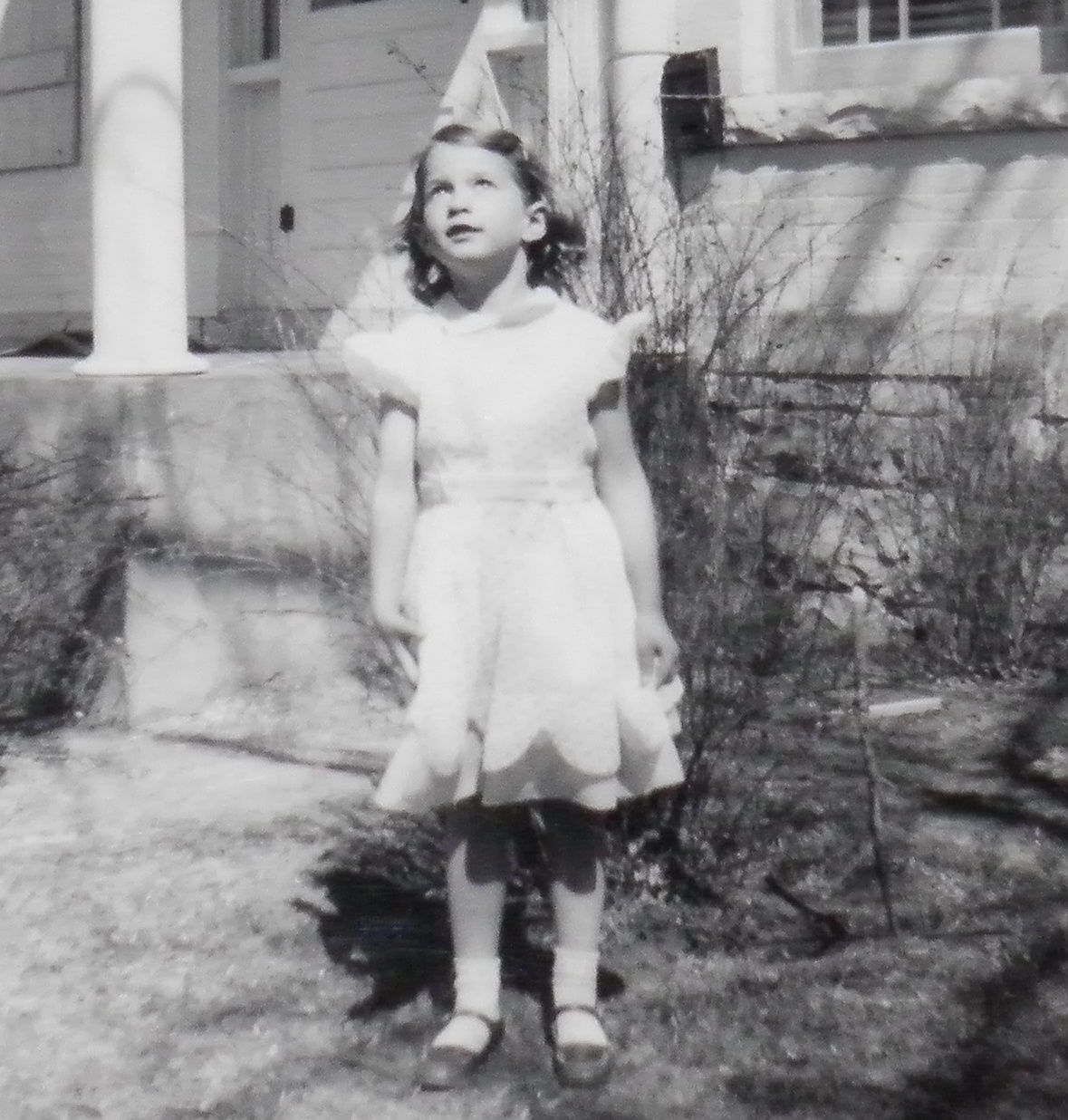
With our shared life moving further into the dim past and my memories of him fading, I worry that I will forget him. I know I’ll forget the person I was when I was with him. No matter how I change, I’m always just me, and yet, (for example) I cannot remember this little girl, cannot remember being her. She has receded far into my past. Or perhaps she’s become subsumed into my current persona? Either way, she no longer exists even in memory. And so will the person I was with him disappear as I move further into the future without him.

The irony is that I was in such pain after his death that I made a special point to experience new things so I could create new memories. I thought new memories would help cushion the severity of the break between our shared life and my life alone, yet those very memories are taking me further away from him.

I might not completely forget him. I have moments when I flash onto a vivid image of him, and as heartbreaking as those moments are (because I am reminded once again that he is dead), they are all I have left of him except for some of his things. It seems cruel that their things outlive the dead. Shouldn’t people live longer than things? Or else, shouldn’t the things disappear when our loved ones do? And yet, as my memories fade, the things I kept of his and the things I kept of ours, such as our household goods, will be all I have to remember him by.

Every new step on the journey through grief brings its own grief. It saddens me that he is forever receding from me. Yet I am still here, and I must live. I can’t cocoon myself in memories of him and our life together. I can only go on doing what I have been doing — experiencing new things and making new memories, even if they take me further away from him.

The Cloth of Sloth

We live in a strange society where the names of clothing matter more than the yardage used to create the garments. We don’t wear “underwear” out in public, not even if it is made of thick cotton and covers most of our torsos, but call something a “swimsuit” and no matter if it barely covers the salient issues, it is acceptable. (Well, maybe not acceptable in church, but depending on where you live, it could be acceptable almost everywhere else.)

If you live in the United States and you wear something called “pajamas,” which used to be the standard of clothing in certain countries and which covers you neck-to-ankle, that is not acceptable. But if you wear tiny shorts and an even tinier crop top, that is acceptable. There are all sorts of wonderful pajamas on the market now that are made of soft cotton and look like jeans and a casual shirt, but if you wear the clothing out in public, that is so not acceptable. In fact, I’ve lost count of the number of blogs I’ve read where bloggers turn up their nose at those who dare to be comfortable and wear such clothing anywhere but in the privacy of their own bedrooms.

If you wear a “slip,” that is not acceptable, even though many cocktail dresses are created using that same basic pattern. But if you wear skintight clothing that leaves absolutely nothing to the imagination, well, that is acceptable to most people, though if you aren’t as thin as a model, you do run the risk of having people look askance at you.

The same double standard goes for footwear. If you wear slippers out in public, even the kind that cover your whole foot, you are considered slovenly, but flip-flops and even bare feet are acceptable.

And worst of all is if you were to wear your bathrobe outside!! Think of it. You’re in a grocery story line and you see someone in a soft fleecy robe belted over clothes, what do you do? You edge away from her, wondering if she is in his right mind. And if she is wearing pajamas beneath the robe, oh, my. How terrible. But why is it terrible? Simply because of the name of the garments.

In “The Time for Bathrobes,” Barbara Holland wrote: “America has never been a nation of bathrobe wearers. If the mailman catches us in our bathrobes, we mumble and blush. It has nothing to do with modesty. It is the shame of being thought inactive. Bathrobe’s the cloth of sloth.”

Little by little, my solitary life is beginning to nudge my consciousness out of its established groove, and ironies such as those I mentioned here seem to stand out in high relief. Perhaps I’m spending too much time in my own head? I’ll be careful, though, and not go to the store in my bathrobe. I wouldn’t want to get arrested for decent exposure.

The point of writing is simply . . . writing

The book statistics continue to dishearten me. A recent study of 1,007 self-published authors shows that romance authors earned 170% more than the average, while science-fiction writers earned 38% of the average, fantasy writers 32%, and literary fiction authors just 20%. Even though I’m not self-published, these figures matter because they show the trend. Most of the books that are selling are romances, and most of the selling romances are written by well-educated women in their forties. Typically, 75% of the total sales were made by 10% of the authors.

That’s good news for women who write romances, but what about the rest of us? I don’t want to write to make money — I want to make money from what I write, which is something completely different. Considering that my books are genre-benders and that most readers seem to stick with recognizable genres and story lines, it’s not surprising that my books are slow sellers. Even if I wanted to write to sell, I’m not sure I could. Chances are, if I were to start out writing a romance, it would end up being something completely different after I filtered it through my writing voice. (Whatever voice that might be.) We can only write the books that are in us. And romance novels are nothing I have any interest in, either to read or to write.

Oddly, despite what I see as a dismal book climate, I am getting interested in writing again. My work-in-pause — a tongue in cheek apocalyptic novel — is so far out of the realm of any recognizable genre that it would probably be impossible to sell. (Even my father admits that it’s weird, and he likes my books.). But I’ve concluded that selling isn’t the point of writing, at least not for me. Nor is communicating with others. (That’s what this blog is for — to communicate with others.) The point of writing is simply . . . writing. Using my brain. Creating a world that didn’t exist before. (Could that be the point of life? The creation of a world that didn’t exist before? Hmmm. I wonder if there’s a book in that idea.)

I suppose my renewed interest in writing is inevitable. I’ve been spending less time online and more time in the real world. And for me, writing takes place in the real world. Or at least the real world of my mind.

Learning to Deal With the Real World

It seems strange to have to learn to deal with the real world at my age, but for more than half of my life, I didn’t have to deal with the world as it is. My life mate/soul mate and I created our own world of peace and accord. We always wanted the best for each other without ever a hint of envy or resentment. We helped each other. We listened to each other. We cared for each other and took care of each other. We shared values, income, responsibilities without counting the cost or worrying about who got more than their share. In fact, we often worried that we were taking more than we gave.

It wasn’t like that at the end, of course. Long-term illness skews things, so during his last years, there was often tension and frustration as our lives started to diverge — he to death, me to life alone. We could feel the disruption of our world, and though we were under tremendous stress and occasionally gave in to fits of pettiness, we mostly managed to deal peaceably with each other. To others, however, we appeared to be in perfect accord. During one of their visits, the hospice nurse turned to the social worker and said, “I don’t think they have any idea how much they love each other.”

What we had didn’t feel like love, and yet, what else could it be, this creation of a world where we each gave whatever we could without stopping to count the cost? We didn’t have an easy time of it — so often life took disastrous turns, but still, we were always there for each other.

And now we’re not.

He’s . . . somewhere (or nowhere) and I? I’m here, muddling along as best as I can in this alien world. The world is alien in part because his absence has created a black hole into which so much light has disappeared; in part because I am alone without someone listening, caring, helping; in part because it truly is alien. Though people often say, “We’re all in this world together,” they don’t mean it. People want things and they pursue those things with a passion. Isn’t that what most people think life is about? Finding someone or something to be passionate about? But here is the conundrum — passion takes what it wants and doesn’t count the cost to others. (That is why passion is such a great story driver.)

He and I used to play games where the goal was not to win or lose, but to come out evenly matched. We hated games where one person won everything and the other lost everything. It seemed too cruel. Neither of us wanted to lose, but we didn’t want the other to lose, either, because we knew how much losing hurt. (It probably won’t come as any surprise if I tell you we created our own games.)

We never argued. Well, there was that once, six weeks before he died, but I hate thinking of that. I understand now the horrendous pressure of our lives, but for so long all I could think of was how horrible I was for having my first fight with my mate six weeks before his death. (I understand it now, but I still can’t think of it without tearing up. I never wanted to be that woman.) But for more than three decades, if we disagreed, he’d state his position and I’d state mine (or vice versa). If we couldn’t come to a resolution, we’d walk away (sometimes in a huff, sometimes in frustration). The next day, he’d bring up the subject again, conceding that I was right. Of course, by then I’d have mulled over what he said, and I’d concede that he was right. So we were back where we started. The best thing about it is I knew he’d thought about what I said, he hadn’t just blown me off by walking away.

When he died, my world of accord died, too, and now I live in the world everyone else does — a world where some have way too much and some have way too little. A world where passions tear people apart as often as they bring them together. A world where competition is rampant, where it’s not enough just to win, but also to make sure others lose. A world where small disagreements escalate into battles. Admittedly, this is what the world has always been like, but I didn’t have to deal with it.

And now I do.

It Was a Dark and Stormy Night

I have to write a short story for Second Helpings, an anthology to be released later this year from Second Wind Publishing, and I’m trying to come up with a witty or evocative first line, something that will immediately catapult me into a story, but all I can think of is Billy Crystal in Throw Mama From the Train. I remember watching him struggle for the perfect first line, the perfect word until I wanted to scream “Skip the first line! Start anywhere! Or use a thesaurus.” But that was before I started to write, and now I find myself doing the same thing.

Odd that first lines are so important, yet few set the mood or do anything else they’re supposed to. And fewer still are memorable. Probably the best known line is “It was a dark and stormy night,” but it’s also considered to be the worst first line in history, mostly because of what comes after the initial phrase. The entire first sentence by Edward Bulwer-Lytton for his novel Paul Clifford is: It was a dark and stormy night; the rain fell in torrents — except at occasional intervals, when it was checked by a violent gust of wind which swept up the streets (for it is in London that our scene lies), rattling along the housetops, and fiercely agitating the scanty flame of the lamps that struggled against the darkness. That sure is an eyeful!

As it turns out, Bulwer-Lytton was not the first to use “It was a dark and stormy night.” Washington Irving used the phrase twenty years earlier on page 282 of The History of New York.

Still, memorable or not, plagiarism or not, I stole the line for a short story I wrote for Murder in the Wind, a previous Second Wind anthology. Here’s how my story “The Stygian Night” began:

***

It was a dark and stormy night.

Silas Slovotsky leaned back in his chair and studied the words he’d typed into his computer.

He grinned. Perfect. The very words he needed to set the scene. And they had the added benefit of being true. It was a dark and stormy night. Except for his porch light, of course. And the thunder and lightning—

He leaned forward and peered at the computer screen. Did the sentence seem a bit trite? Maybe he needed to spiffy it up. He opened his thesaurus to the word “dark” and ran a finger down the page. “Stygian”. That might work.

He cleared his computer screen and typed: It was a stygian night.

Nope. Didn’t have the euphoniousness of the original sentence. Perhaps if he reread what he’d already written he could figure out how to proceed.

He printed out the manuscript he’d been working on for the past four months and read the single page. Dark as Night by Jack Kemp.

A thrill ran up his spine. He could see it on the shelf in the bookstore. Kemp, King, Koontz. He’d chosen his pseudonym specifically so the reviewers could call them the unhallowed trinity. And he deserved the accolade.

A knock on the door startled him out of his dream.

Who could that be? His friends—all two of them—knew he didn’t like to be disturbed when he was writing.

***

I loved that story. So out of character for me! And I loved my story for the latest anthology. Apparently, although I dig in my heels and scream (silently), “I don’t wanna!” I do enjoy my short stories.

How about this for a first line? As the ax descended toward her head, the young mother struggled in vain to free her hands from the nylon rope. It might work if I took out “in vain” because headless characters are hard to write about, but come to think of it, Washington Irving managed to do it. He wrote about a headless horseman.

But this is supposed to be a holiday story. Thanksgiving, Chanukah, Christmas, New Years. And it has to involve food because a recipe will accompany each story. It seems as if I am far from a festive mood — all I can think of is poisoned cookies. Maybe someone left poisoned cookies for Santa? Or gave them to a neighbor who always went overboard with the Christmas lights, making it impossible to sleep? Or couldn’t bear one more holiday dinner with her overbearing brother-in-law?

Perhaps not, but still . . . murder, mayhem, and family get-togethers somehow seem to go together.

What about one of these for a first line? Now is the winter of our discontent, or It was the best of times, it was the worst of times. Maybe for another Silas Slovotsky story?

Hey! Why should I have all the fun? You can write your own holiday story (any genre) and maybe you will be published in the same anthology. Rules for the contest are here: Invitation to Submit an Entry to Our Short Story Contest.

Two Years and Two Months of Grief

I never expected to feel so sad two years and two months after the death of my life mate/soul mate, and I never expected to still be so easily brought to tears. But then, I never expected most of what I’ve experienced with grief, especially since I tend to be more contemplative and stoic than emotional. As I’ve learned, though, grief might manifest as emotion, but it is so much more than that — it’s a restructuring of the world as we know it, a reconfiguring of reality. And that takes a lot of energy, both mental and physical. And it takes time. A person who was a major part of our life is gone, ripping a hole in our reality, and our brains are struggling to patch the hole (or at least to figure a way around it), which causes an incredible amount of stress.

Part of that restructuring is a new consciousness of death. We all know we are going to die, but after the death of someone we are profoundly connected with, we KNOW deep within our psyches. This knowledge makes life on Earth seem at once more significant and less vital (or do I mean more vital and less significant?), which is why so many of us bereft struggle for meaning. Some of us will eventually settle back into every day life, but for the rest of us, life will always seem a bit off, as if a part of us knows we are aliens in an alien land.

Mostly, I’m doing okay. If we were to meet, you’d have no idea of my ongoing sadness. I don’t try to hide it, it’s just that the sadness has become such a part of me that it doesn’t impede my living. I can smile and laugh and chat as if everything were fine, and it is, for that moment. But when I am alone and not focused on a task, sorrow percolates to the surface. Sometimes our life together seems very far away, as if it were only a dream born of loneliness, but this ongoing sadness reminds me of the truth — I once was with someone I loved deeply, and now I’m not.

I never feel his presence, but his absence hovers beside me as if it were a living thing. When I make a salad, I am aware that he is not washing the vegetables for me. When I am at the grocery store, I am aware that he is not helping pick out what we need. When I am exercising, I am aware he is not in the room. When I need someone to talk to, I am aware he cannot respond. When I watch one of his many video tapes, I am aware he is not sitting next to me. Every time I use something of ours, even something as inconsequential as a spoon, I am aware that he has no need of the article.

I don’t purposely think of such things. In fact, the awareness is not a thought. It’s just that everything I do and everything I own echoes with his absence. Maybe someday even the echo will die away and all I’ll have of our shared life are fading memories. But no matter how I feel or what I forget, I’ll always be grateful that an extraordinary man shared his life with me.

***

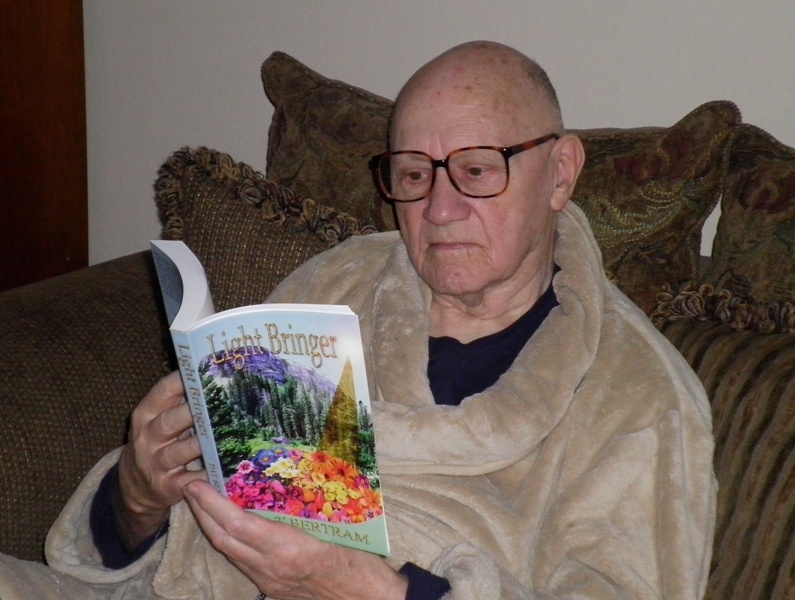
Pat Bertram is the author of the suspense novels Light Bringer, More Deaths Than One, A Spark of Heavenly Fire, and Daughter Am I. Bertram is also the author of Grief: The Great Yearning, “an exquisite book, wrenching to read, and at the same time full of profound truths.” Connect with Pat on Google+. Like Pat on Facebook.

Are You Envious of Other Authors?

A few years ago, I read the entire oeuvre of a bestselling author, trying to figure out the secret of her success, and I never found it. Perhaps it was hidden beneath her appalling writing style, but her poor writing dimed any possibility of my enlightenment.

Even a neophyte writer knows that any action a character undertakes must be motivated. Although in life we often act on a whim or a hunch, when a character in a novel does it, it comes across as too slick, too much author convenience, as if the writer couldn’t be bothered to take the time to come up with a plausible motive for the action.

For example, in one book, the writer had someone searching the character’s house for a set of papers, which weren’t there because the character had removed them on a hunch. You and I could never get away with that! We’d have to come up with a motive, and it’s not that difficult. The character could have taken the papers to a diner to peruse them during lunch. Or maybe taken them to a safe deposit box. Or any reason other than a hunch.

Even worse, when the character found out her house had been searched, she was stunned. Then why the hunch to remove the papers? Maybe she was expecting rats to eat them.

In a roundabout way, I suppose I did learn something: write intelligently, at least until you become a bestselling author. Bestselling authors seem to get away with increasingly shoddy writing (since I read this author’s books in sequence it was very obvious how lackadaisical her craft had become in her later books), and yet we are supposed to continue to treat them and their books with respect.

In a discussion on Facebook, a writer posed the following question: Seems nearly every day I hear a writer complain that Grisham has become a hack, or King should go back to drinking, or Clancy wouldn’t recognize POV if he tripped over it. When you’re struggling with getting recognition, how do you deal with jealousy of successful authors?

Before I was a writer, I was a reader, and as a reader, I have every right to complain that such writers have become hacks. In fact, it’s because the writers I used to like started turning out substandard work and I couldn’t find new authors that I like, that I started writing. I figured if I couldn’t read the books I liked, I could write them.

Apparently, though, once you become an author yourself, you are supposed to give up your critical capacity. If you say anything against another author, it comes across as jealousy, as if you’re envious of the other writer’s success.

In the particular case of the bestselling author I critiqued above, I am not envious of her success, I am not envious of her fans, I am not certainly not envious of her writing style. Though I’m mystified by her ability to write so copiously since writing comes hard for me, but I’m not envious of that ability, either.

I am, however, jealous of the time and money I spent on her books, and I’d like them back.

Grief: Haunted by the Hard Questions

One of the more confusing aspects of grief after the loss of a life mate, a child, or someone we were deeply connected to is that we are haunted by the hard questions. Who are we? Why are here? Is this all there is? Where did our loved ones go? Will we see them again? What is the meaning of life, and probably most haunting of all, what is the meaning of death?

Many of my fellow bereft read everything they can find about such matters of the spirit, but I didn’t — I’d spent years on a quest for truth and reality, and I’d come to believe that God is the spirit of creativity that fuels the universe, and we are each a part of that creativity. I was content believing that our spirit/energy returned to the whole . . . until my life mate/soul mate died. Then all of a sudden, I didn’t want that to be the truth. I wanted him to continue existing as him, as the man he was.

I do think there is a deeper reality, I’m just not sure our conscious selves are a part of it. We are a product of our genetics, our hormones, our brains (anyone who has had to cope with an Alzheimer’s sufferer or a loved one who had cancer in their brains, and found a stranger in that familiar body, knows how much the brain controls who we are). So what  survives, if anything? The part of us we never knew — the un-sub-conscious? If so, how would we know who we were after we were dead? Is it just the energy in our bodies that is released? If so, for sure we would not know who we were.

On the other hand, without some sort of afterlife, life simply does not make sense. What’s the point of it all? To survive? For what — more survival until there is no more survival? To help others? Why? So they can survive? For what?

If there is life after death, what do you do with eternity? You have no ears to hear music, no eyes to read or watch a movie, no legs to walk, no hands to caress another, no mouth to talk, no brain to think. Sounds like a horror movie to me. And what will we do if we meet again? Bask in each other’s light? That would get boring after a minute or two.

When we met — my soul mate and I — I still believed in a cosmic plan, and I had the feeling that he was a higher being come to help me on my quest to the truth. But now? I no longer believe there is a universal truth, and I don’t think he’s waiting for me, though I act as if he is. It’s better than believing that he is gone forever.

And perhaps he does still exist in some form. What do I know? One thing I have learned from my grief is that a human life is a spectrum. You don’t notice it so much when you are both alive, because you are both in the moment, both always the people you have become and not yet the people you are becoming. But when one of you dies, his becoming ceases, and you see his life as a whole. The person he was when you met is every bit as alive in memory as the person he was the minute before he died. The youthful man, the middle-aged one, the healthy one, the sick one are all merely spaces on the spectrum of his life.

It’s possible the spectrum of a human life is the same sort of spectrum as light — beginning long before the visible part appears and ending long after the visible part disappears. Of course, the non-visible parts of the electromagnetic spectrum aren’t light but sound and radiation and other invisible waves, so whatever exists outside of the visible human spectrum might be something completely different from we can ever imagine.

It’s also possible that our bodies are like television channels, receptors for certain wavelengths, so that our “souls” actually reside outside our bodies, but still, the selves that we know are defined by life in our bodies. So, again, we come back to the same question, what of us survives?

Grief is an isolating experience, made more so by our spiritual quest. While our family and friends continue on their same daily path, we find ourselves going in a completely different direction. There are no answers to our questions, but still, they haunt us, and we try to figure out a way for it all to make sense.

But life will never make sense because we are still here and our loved ones are gone. Where is the sense in that?

The Two-Year Anniversary of the Worst Day of My Life

The worst day of my life was not the day my life mate/soul mate died. That particular day was sadly inevitable, one I actually had looked forward to. He’d been sick for so long and in such pain, that I was glad he finally let go and drifted away. After he died, I kissed him goodbye then went to get the nurse, who confirmed that he was gone. She called the funeral home, and I sat there in the room with him for two hours until they finally came for him. (They came in an SUV, not a hearse. And they used a red plush coverlet, not a body bag.) I might have cried. I might have been numb. I don’t really remember. All I know is that I sat there with him until almost dawn. I couldn’t even see his face — they had cleaned him and wrapped him in a blanket — so I just sat there, thinking nothing.

The worst day of my life came fifty-five days later, exactly two years ago. I spent all day cleaning out his closet and drawers, and going through boxes of his “effects.” He had planned to do it himself, but right before he could get started, he was stricken with debilitating pain that lasted to the end of his life, and so he left it for me to do. I would not have undertaken the task so early in my grief, but I had to leave the house where we’d lived for two decades and go stay with my 95-year-old father, who could no longer live alone.

I knew what to do with most things because my mate had rallied enough to tell me, but still, a few items blindsided me, such as photos and business cards from his store To Your Health (where we met). Every single item he owned was emotionally laden, both with his feelings and mine. The day was like a protracted memorial service, a remembrance of his life, a eulogy for “us”.

How do you dismantle someone’s life? How do you dismantle a shared life? With care and tears, apparently. I cried the entire day, huge tears dripping unchecked. I have never felt such soul-wrenching agony. I’ll never be able to do anything else for him, so the work and my pain was my final gift to him. I was glad I could do that one last service, but I sure don’t want to ever go through anything like that again.

The only good thing about living the worst day of your life is that every day afterward, no matter how bad, will be better than that day.

I’m not particularly sad today — the sadness came yesterday. Despite it being Saturday, my sadder day, and a day of sporadic tears, I woke with a smile. I’d dreamt we were cleaning out the house (which is odd considering that I did not remember until afterward that today was the anniversary of when I went through his effects). In the midst of the usual chaotic dream images, there was one short clear moment. We were sitting side-by-side. He smiled at me, kissed me gently, and I rested my head on his shoulder.

This was the first time in almost two years that I’d dreamt about him. It was lovely seeing him again, if only in my dreams.