The Power of Grief

Even though grief has been with me on and off for twenty-one months, I still don’t understand where it comes from or where it gets its power.

Like most people, I used to assume that grief was merely the deep sadness we feel after the death of someone we loved, and that any feelings beyond that came from an innate weakness, an inability to cope, self-pity, or a desire to create drama and importance in one’s life. When my brother died, and then a year later when my mother died, I felt what I expected to — deep sadness but nothing more, which enforced my idea of what grief is.

But all deaths do not affect us the same. During my life mate/soul mate’s long illness, I thought I’d become inured to the idea of his death. I’d even looked forward to the end of his suffering. I knew I’d feel sad and lonely, but I had no concerns about being able to continue my life. I’m strong and independent, and have never minded being alone.

And then he died.

At first, I was glad his suffering was over. I just sat there numb, waiting for the funeral director to come and collect his body. But then, like an ever-growing tsunami, grief washed over me — grief such as I never knew existed. The continuous onslaught of intense emotions, physical reactions, and psychological torments, along with the inability to understand how totally gone he was made it impossible to sort out any one feeling from the global trauma.

I started blogging about grief when I realized most novelists got it wrong. (I can’t tell you how many times writers have dismissed the grief of their characters with a simple: He went through the five stages of grief. Sheesh. For most of us, the Kübler-Ross grief model doesn’t even begin to explain what we are going through.) I continued blogging about grief when I realized how important it was for me and my fellow bereft to try to understand what we are experiencing and why.

None of us are weak. None of us lack the ability to cope. None of us are self-pitying. None of us are self-indulgent, wallowing in grief for the sake of making ourselves feel important. None of us are drama queens, wanting to draw attention to ourselves or make people feel sorry for us. (We don’t feel sorry for ourselves, at least not often, so why should anyone feel sorry for us?) Nor have any of us chosen our grief. It was thrust on us with such power that we still reel from it months and perhaps even years later. We aren’t dwelling on our grief. It’s dwelling on us. Or in us.

Although everyone’s grief is different, grief does follow patterns of ebb and flow. For many of us in our second year, the eighteen month mark came with a huge upsurge in grief. And now the end of this year — the end of the first full year without our loved ones — is causing another upsurge. I do not know why this is so, I just know that it’s the latest manifestation of the process.

I’ve passed many (maybe most) of grief’s milestones, though I’m sure future milestones will surprise me as I continue this journey through grief. I can deal with these milestones. They come. They go. But no matter how I feel — sad or unsad — he is still and will always be dead. I can understand that he is out of my life, but I cannot understand his total goneness from this earth. Perhaps that unknowableness is where grief comes from. Perhaps that unknowableness is where grief gets its power.

***

Pat Bertram is the author of the suspense novels Light Bringer, More Deaths Than One, A Spark of Heavenly Fire, and Daughter Am I. Bertram is also the author of Grief: The Great Yearning, “an exquisite book, wrenching to read, and at the same time full of profound truths.” Connect with Pat on Google+. Like Pat on Facebook.
The Gift of the Bonsai

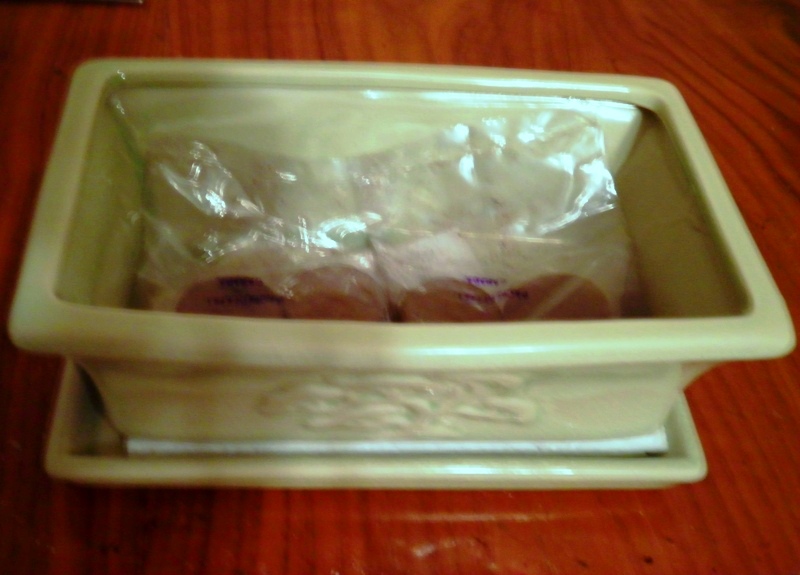
My brother gave me a bonsai kit, which was a wonderful and thoughtful gift because I’ve always been fascinated with the little potted trees (that’s what bonsai means — a potted tree). But  . . . (there’s always a “but” somewhere, isn’t there?) I have a brown thumb. Have never been able to keep a houseplant alive. Never.

Still, I’m game for anything new right now, so I decided to plant my tree and see what happens. I got as far as opening the box and reading the “complete” instructions. They said to cover with the seeds “with a light sprinkling of soil, moisten the soil, and cover the pot with plastic wrap. This will create a mini greenhouse and no further watering will be necessary until the seeds sprout. Once the seeds have sprouted, remove the plastic wrap from the pot.” End of instructions.

And then what? These complete instructions are missing the “complete” part. How does one care for the seedlings? What do you do with the plants as they grow? The kit includes four cakes of “growing medium,” but what does one do with this medium? The cakes don’t break up easily, and you can’t exactly sprinkle these chocolate mint-sized cakes over the seeds. And anyway, even if I pulverized the cakes, they would barely cover the bottom of the planter.

So, I began googling.  Bonsai kit.  Garden at Home (the brand) bonsai kit. Black pine bonsai seeds. I found a query about a bonsai kit that sounded like like mine. She didn’t know what to do with the cakes, either. The response that woman was given? Buy a ready grown bonsai and maintain it since growing a black pine bonsai will take years.

Years? How many years? My life is in a state of flux. I can’t count on next week let alone next year or the year after.

More googling. On  the site: Training Black Pine for Bonsai I found this by Brent Walston: I consider the training of black pines, Pinus thunbergii, to be one of the most difficult aspects of bonsai, as well as one of the slowest goals to achieve. After over fifteen years of playing with them, I am only now beginning to get to the ramification stage, and I emphasize ‘beginning’. Of course I am not talking about one inch trunk Shohin here, but full blown three inch trunk monsters like you see in the books. Most of the finest ones I have had the privilege to see have been in training for approximately fifty years or more. This seems to be the general minimum age for really fine trees.

Fifty years to grow a single plant!!!! Ouch. I think the longest I ever kept a house plant alive was one month.

In another article, Brent Walston said: I discourage beginners from working with Black Pine, Pinus thunbergii, because it takes so long, and you need to know so much just to begin. I started with Black Pine, ignorant of this fact and massacred a lot of plants learning how, even with John Naka’s book, Bonsai Techniques I. I bought about 100 of them in one gallon cans, old root bound plants that appeared to have potential. Some of them have turned out to be really nice trees, but ten years later, the best are still several years away from being finished bonsai. Not a subject for the impatient. So when beginners ask me what to do with this seedling pine they just bought, I just roll my eyes and try to talk them into a nice deciduous tree.

And my black pine isn’t even a seedling. It’s merely a seed.

So, I decided I need to find out how to grow a black pine from a seed, and this is what I found at http://www.bonsai4me.com: Though seed is very cheap and easy to obtain, it does have some drawbacks when propagating plants. It is a very slow process; seeds can take many months to germinate, some species can take a number of seasons for their seed to germinate and many species need exacting conditions to begin the process of germination. Many types of seed require periods of cold or mild temperatures or wet weather before they will begin the process of germination.

It might take many months just to germinate my seed? Eek.

A ready-grown Bonsai, or at least one that’s had a few years under its skin, started to look like a fine idea. I found a few, but they cost more than my car is worth. $6,750.00. $5,400.00. $3,700.00. Yikes. Even the cheapest ones cost hundreds of dollars. Did I mention my brown thumb? Inability to keep a plant alive?

Maybe what I need is an artificial bonsai for my planter. Sprinkle it with pine oil. Do you think my brother would notice?

Grieving the End of This Year

I’ve been doing well, continuing on with my life after the death of my life mate/soul mate, and then suddenly, here I am, awash in tears again. I had no idea why this would be so, until I found out that so many others in my grief age group — those whose mates died in 2010 — are also going through an upsurge of grief. And now I know what triggered the tears, though I don’t know why.

The body/mind/soul remembers dates, anniversaries, emotional occasions long after the conscious mind has forgotten, which is why I know when Saturday (the day of his death) is coming around again — I can feel the sadness creeping up on me the day before. He died late Friday night or early Saturday morning depending on how you look at it, and my body seems to look at it both ways. But this upsurge in sadness has nothing to do with Friday or Saturday, or even with Christmas.

For those in my grief age group, this was our second Christmas without our loved ones. It was harder this year for some of us than our first Christmas without, perhaps because the truth is settling into our souls, and we know there will never be another Christmas with them no matter how much we yearn for it. (For this very reason, the second year of grief is sometimes harder than the first. The physical and psychical pain isn’t as great, but the emotional shock that protected us has worn off and the truth that they are never coming back has taken root along with a great clawing yearning to see them one more time.)

We’ve survived most of our firsts — the first birthday without, the first summer, the first Halloween, the first Thanksgiving, the first anniversary of their death — and now one more first is almost upon us. We are coming to the end of the first full calendar year without them.

Why would this ending be an occasion for an upsurge of grief? I don’t know. It’s particularly strange for me since I don’t see anything special about a new year — it’s such an arbitrary date — but apparently my internal datekeeper has made a note of it. And now I am grieving the end of this year, this first full calendar year without him.

Grief Update: Twenty-one Months

Twenty-one months ago, my life mate/soul mate died. How much is a month in grief time? A year? If that’s the case, then today I have reached my 21st birthday in the world of grief. Sometimes it feels as if twenty-one years have passed since his death, our shared life so distant that it could be a dream conceived in present-day loneliness. Other times, it seems as if a mere twenty-one days have passed, as if he recently left — or I did — and soon I will be going home to resume my life with him. Sometimes the pain of separation feels old, as if it is a long-faded scar, other times it feels fresh and raw. Sometimes I see him as clearly as if we’d just parted, other times I have to struggle to remember what he looked like.

During the first year after he died, I was focused on getting through the pain so I could start a new and wonderful life. Somewhere deep inside, beneath thought, resided the feeling that only a great good could offset such a trauma, and I wanted to be ready to embrace my new life. Perhaps something wonderful will happen, but so far, I’m still struggling with the same old life, still struggling with a vast and unending loneliness.

I’ve been making friends, trying to assuage my loneliness, but always I feel his absence. He was the only person who ever truly listened to me, listened beyond my words to the truth of what I was saying, and no matter what I said, he never filtered it through his own  prejudices, opinions, and emotions, but could talk dispassionately and intelligently about even the most passionate subjects. Electric energy crackled between us when we went on one of our ping-ponging conversational excursions from history to music to movies to philosophy to books to science and back again to history.  I know I should be grateful for having him as long as I did, and I am grateful. I should be glad we were able to converse the way we did since that is something so few people have. And I am glad. But still, life is bleak without his being here to pong my pings, conversationally speaking.

I’m trying not to think about where to go from here, trying to trust in the rightness of my path wherever it will take me, but to do so somehow makes me complicitous in his death, as if I’m agreeing it was right that he died. Oddly, back then, I was glad he died. He’d suffered enough, and death was the only way to end his agony. The further away I get from his death, the worse it gets because I only remember that he died. How can he be dead? I don’t even know what “dead” means, just that he is gone from this earth, and has been gone for twenty-one months.

Are You Playing The Kindle Game?

People keep saying that Kindle, even more than other reading devices, has revitalized the book industry, making books affordable and reading more accessible. They say the market is expanding, that people who never read are now interested in books. But is this true? Are they interested in reading, or are they interested in playing the Kindle game, downloading books as fast as possible to fill their new toy?

One reason people always gave for not reading is that they don’t have time. Do people suddenly have huge extra blocks of time to read, to get into a book, to explore new ways of thinking and experience new ways of being? I think not. It seems that reading is now part of the multi-tasking generation, where you read while doing something else. Is this reading? People say that reading is not a solitary activity any more, that new enhanced reading apps make it social. If so, is this really reading?

The other half of the Kindle game is the author game, where selling as many books as possible, is all that matters. Whether people actually read the book is immaterial. Of course, the major publishers started this game a long time ago, this game of sales records, and now it’s been taken to the people where anyone can play. But that doesn’t mean the books being sold then or now are worth reading.

When I mentioned in a comment to a fellow blogger that Amazon was a major publisher, she corrected me and said it was a sales platform, like using WordPress. It’s a perfect analogy, and it explains an unusual phenomenon — my rapidly increasing blog rating. It always used to hang around 3,500,000 on Alexa.com, but suddenly, for no reason I could see (my readership is growing, but not enough to explain a leap in rankings), my blog began increasing in rank, and now it’s at 929,990 (out of 346 million sites). Are blogs disappearing (or falling off the scale) because people are now uploading things for Kindle that they once posted on their blogs? If so, then books are being devalued to the level of a bloggerie.

Makes me wonder if I’ll ever take up writing again.

But for now, if you are playing the Kindle game, all my books are available both in print and in ebook format. You can get them online at Second Wind Publishing, Amazon, B&N and Smashwords. Smashwords is great! The books are available in all ebook formats, including palm reading devices, and you can download the first 20-30% free.

This is the third post where I’ve been mulling over the current state of the book business. The other two are: Is the Book Business Dying? and First the Bread Wars, Now the Book Wars.

You’ve Got Mail!!!

Mail’s here! Just click on the mailbox to see what you received:

Christmas and Grief: Creating New Traditions

This will be my second Christmas without my life mate/soul mate. I didn’t expect it to be a problem since we never celebrated Christmas as such. But, since it was a day with no mail, no open stores, no reason to do any of our daily activites, we’d fix plates of finger foods — meat, cheese, crackers, apples, carrots — and watch movies all day. It wasn’t until after he died that I realized our non-celebration had become a traditon.

I don’t like watching movies by myself. Without his enjoyment sparking mine, the movies seem flat and uninspired. Apparently whatever energy we generated between us brightened the story and made it personal, as if we were part of it or it was part of us. Now he is gone. That extra energy is gone. The tradition is gone. And I am all that’s left of our shared Christmases.

I never understood the point of traditions. Traditions seemed to be customs people blindly followed long after they’d forgotten the reason for the rituals and, since I have a very hard time dealing with pointlessness, I seldom followed traditions. (Hence my surprise at discovering that we had created a Christmas tradition after all.) Now, however, I do see the point. The point is continuity, connection, comfort. Life can be cold and cruel and desperately lonely. We need something to hold on to, and tradition gives us something to grasp when everything we hold dear has disappeared. Somehow, I will need to create new traditions, if only for myself.

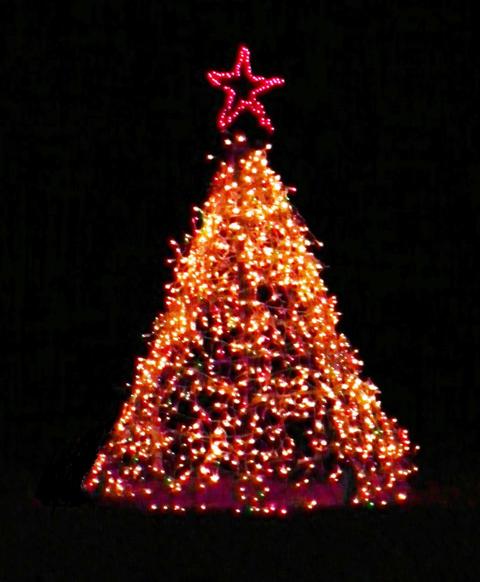
My life mate/soul mate always loved Christmas lights, so last Christmas Eve, I took him for a walk. (He still lives in my heart, and that is the “him” I took walking.) I walked around the neighborhood viewing the lights, not just taking a cursory look as is my wont, but appreciating every scene, every effort the neighbors had put into their vignettes as he would have done. (He was an appreciator. I’d never known anyone who could appreciate every nuance the way he used to.) And tonight — Christmas Eve — I did it again. Walked around the neighborhood. Appreciated the artificial lights and the natural lights above. (Lots of stars tonight!) From such simple beginnings, new traditions are created.

Merry Christmas, compadre, wherever you are.

First the Bread Wars, Now the Book Wars

Before a certain well-known bread was manufactured, people bought their bread fresh every day from a local bakery. When bread was first mass-produced and packaged in a colorful wrapping, people were hesitant to buy because they didn’t believe it could be fresh since it hadn’t been baked that very morning. So, what did the bread manufacturer do? They had people drive up and down the streets handing out loaves of their bread to everyone they saw. Who could pass up a free loaf of bread? Not many people, that’s for sure. One free loaf wouldn’t have made an impact. That brand of bread would have become just one choice among many. But . . . the company kept giving away the bread, day after day after day. Soon people began to expect free bread. They stopped buying bread from their local bakers, and eventually, those bakers went out of business. The manufactured bread became the only choice in town, a price was attached, and the price went up and up and up. And people had no idea this coup d’état had taken place or that they had been pawns in a major cultural revolution.

That story might sound like a fairy tale, but it happened. And it’s happening again, though this time it’s about books. There is a war going on between Amazon and the major publishers to determine the course of the book business, and we are all pawns. People laugh at the entrenched publishers, saying they don’t have a clue where the book business is going, but the truth is, they do know, and they are fighting back. It’s a war of price — what to charge readers to buy an ebook (most people who own kindles seem to believe they paid their price of admission by buying the kindle and that anything they download should be free or pretty close to it). And it’s a war of literary value. Dinner and a movie costs a small fortune now, and the pleasure is fleeting. The movie is forgotten, but even before that, the food becomes waste. Why should a book, especially a thoughtful, well-written book be valued less than human waste?

Make no mistake about it. Books are being devalued at this very minute. People think they are in the vanguard of a fight for the people’s right to write and publish whatever they wish without having to kowtow to the old publshing standards. But who are they working for? Amazon. With all the free books people are uploading onto Amazon, Amazon doesn’t even have to manufacture a product like the bread company did. People are standing in line, begging to give them product, hoping to be one of the chosen few who makes a mint selling books. And Amazon is playing them like a violin, choosing certain books to promote, showing everyone that yes, it is possible. But only if you give Amazon the keys to your literary kingdom.

Perhaps people do have the right to write and publish whatever they like, good or bad. The major publishers certainly didn’t do a good job of it, shoving crap down our throats and expecting us to like it, but once upon a time, there were standards. Sure, some good books were rejected out of hand, but others were published, polished, promoted. It was a golden age of reading, but it came to an end because of corporate greed and the first devaluation of books. Bottom line became important, quality was slashed, books were chosen not so much on merit but what a person standing in a grocery story line would be apt to throw in their cart. People didn’t seem to care since there were so many other entertainment choices vying for their spare change.

So now, books are being devalued even more. Amazon is spewing out bestsellers as fast as the major book publishers are. It sounds nice, doesn’t it: let readers decide what they want to read. But it doesn’t happen that way. Readers are inundated with constant demands to “buy my book!” Dross is being over-promoted at both ends of the spectrum — the traditionally published books and the self-published kindle books. The books that come to the general reader’s attention are those the various book publishing companies choose to push (and make no mistake about it — Amazon is a publisher in a major way), and the books that the relentless and shameful marketers are bringing to your attention. Of course there are good books at both ends of the spectrum. But the vast majority are books that any discerning reader couldn’t stomach.

There is a third player in this war, though so far they seem to be standing by, bewildered by the onslaught. These are the small, independent, royalty paying publishing companies who follow the traditional publishing model to the extent that they accept submissions but choose to publish only the best.

People assume I am a kindle author because I am so visible in various places on the internet, but I am not. My books were chosen out of a slushpile, and were accepted by Second Wind Publishing. It would be nice if, after the gunsmoke clears away, that we few, we chosen few, are still left standing.

What Grief Taught Me About Love

It always amuses me when I see “biographies” of young celebrities. “Biography” connotes more than a simple depiction of the facts of a life. It should tell us the person’s early influences, their failures and successes, their growth through adversity and grace during prosperity, and most of all,  how they ended up where they ended up. What does any of that have to do with an eighteen-, twenty-, or even thirty-year old celebrity? Sure we can see what their childhood influences are, but how do those early years affect their later ones? How do they carry themselves throughout a lifetime of success and failure? What did they learn? (Quite frankly, what is there to say about a person who acheives success at an early age and who maintains that success? So they struggled for a few years. So what? Many people struggle a lifetime and achieve nothing but old age.)

In fiction, the starting point of the story is when the character first encounters a major change that ruptures the status quo of his or her life, and it ends when s/he has established a new normal, a new status quo. In non-fiction, biographies especially, you expect the sweep of years, not merely a fraction of the life. (But then, who am I to say that biographies are non-fiction.)

When a person dies, you can begin to see the sweep of his life. It exists entire and whole in itself, without possibility of change. It is only then that you can make sense of that life, at least as it pertains to you. (I’m not sure we can ever truly make sense of another’s life, since so much of one’s life is internal and hidden from view.) So it is with me and my life mate/soul mate. I can see more clearly what we were to each other and why I still grieve his death.

What we had didn’t feel like love. After a few brief years of hope and happiness, our love was sublimated by the constraints of his growing ill health. It seemed that our cosmic love devolved into the prosaic things of life: cooking meals, doing errands, struggling to keep our retail business alive. And then it devolved further into simply surviving. Getting through the days as best as we could. We always knew we had a deep connection, though we never understood it and at times we both railed against it in our struggle to maintain our own identities, but we took that connection for granted. And what is that connection if not love?

It’s only when the story is ended that you can see the truth of it. And the truth is that love is not what you feel, but what you do. Love is being together, sharing good times and bad. It’s about not being afraid to explore who you are and what you will become. It’s about being together however you can for however long you can.

My wish for you, during this season of giving, is that you find enough love to last a lifetime.

Is the Book Business Dying?

Is the preponderance of self-published books killing the book business? I’ve been reading articles about how Amazon is promoting self-published ebooks — a few people have been picked by Amazon arbitrarily, and Amazon promoted these books constantly for a week and made them best-sellers. I’ve seen a couple of these best-selling self-published ebooks, and they are so poorly written, I can’t see why anyone would buy them, but since people do buy them, it must mean readers don’t care about good writing or good story-telling. I’ve also seen books go viral for absolutely no reason I can fathom. (And often, the writer has no clue, either.) Most often, these books go viral only on Amazon, with no bleed-over into other ebook formats, which means Amazon has an amazing control of the book business.

There seems to be a movement going on to erode the traditional means of determining a worthwhile book, with vast numbers of people saying book standards are dead and they can write however they choose, without regard to grammar or story-writing skills. Which apparently is true, since such books find a market. (And often, these books get 5-star reviews, which says more about the reviewer than the book.) There is also a growing militancy among self-publishers. If you say anything against the practice, there is a huge backlash of disapproval.

I’m not saying all self-published books are poor quality — some are well written and well-edited and deserve their acclaim. Nor am I saying that traditionally published books are good quality — most are not worth reading. But with books on both ends of the spectrum selling millions of copies, is there any place for those with well written, unique, and perhaps thoughtful books who aren’t self-published and who don’t have a major publisher behind them to push the books? Or have the people spoken and said they have no use for such books?

When books are so prevalent, especially when vast numbers of readers seem to have no ability to determine what is worthwhile, books become devalued. Albert Nock, in the 1930s, disagreed with universal literacy. He contended that when everyone can read, books will be written to appeal to the least common denominator, and there is no doubt that during the subsequent decades, books were published based on their ability to appeal to the most readers possible. If there is any truth that book quality declined with universal literacy, wouldn’t it be even more true if there is universal publishing?

Historically, whenever one product or category of products dominated the market, it presaged the end of that product. If you are old enough, you remember when the streets were clogged with VW Beetles, and now you seldom see one. Is the preponderance of books on the market today the beginning of the end?