Wish Culture

As someone who grew up reading fairy tales, I’ve never been one for wishing. The wishes so often turned out to be dross rather than the gold the wisher wished for. For example, a person who wished for enough income to live comfortably for the rest of his life might end up drowning. Or a person who wished for someone to know their heart might end up on the operating table of a heart surgeon. Of course, those examples are modern ones, just what I could think of off the top of my head. Back in fairy tale lands, there were no heart surgeons, and there was not talk of income, either.

People who did get a wish or three in fairy tales often ended up worse than they were, and I learned that lesson well, so I have no idea why all of a sudden I am interested in the culture of wishes. I made a wish box as a repository for the new year’s wishes people sent me as well as a couple of well-worded ones of my own. I’ve also become enamored of the idea of a senbazuru, which is 1000 origami cranes. The legend says that anyone who folds 1000 paper cranes will be granted one wish or happiness and eternal good luck.

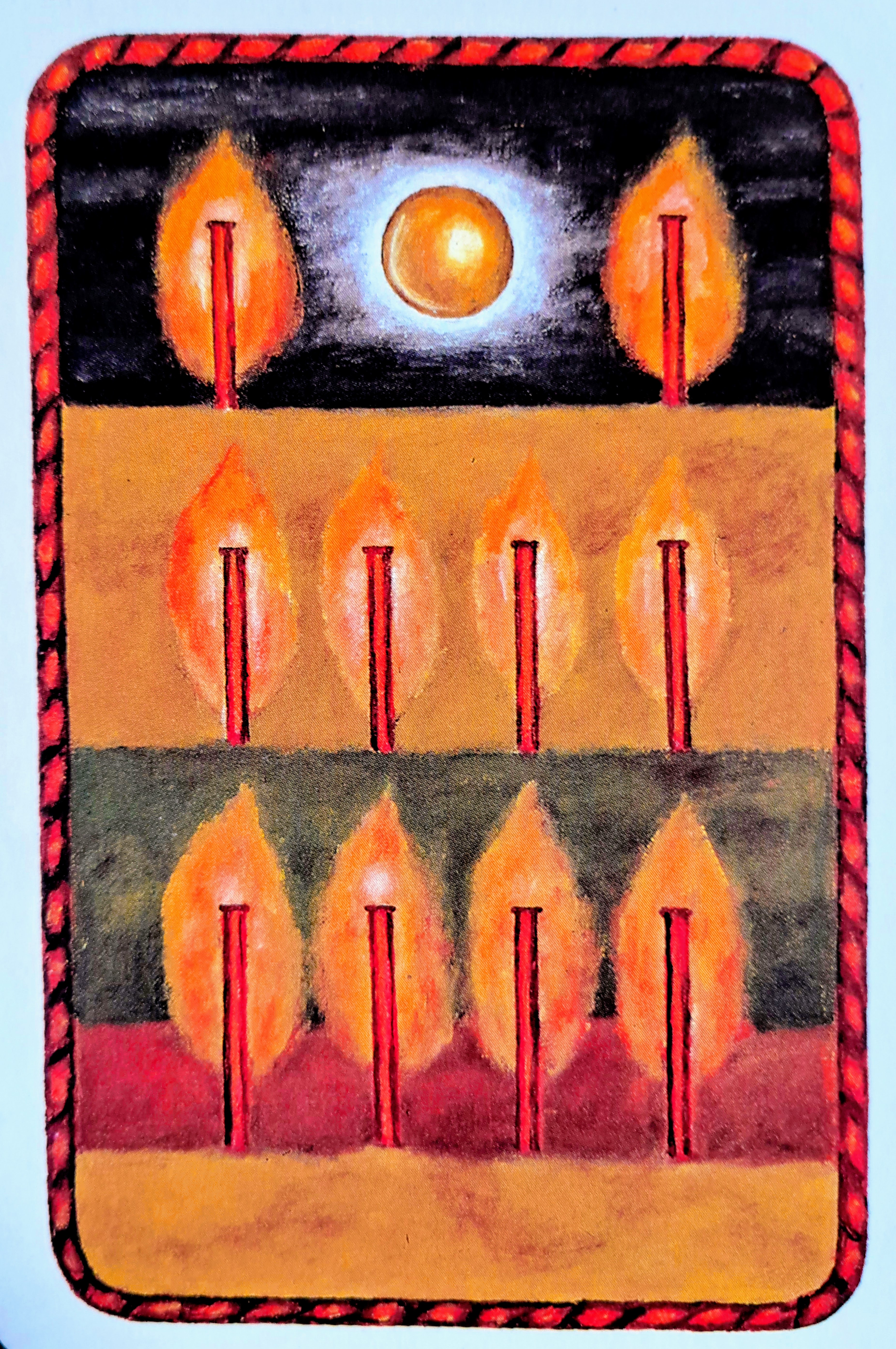
And the explanation that came with the tarot deck I am currently using, said that today’s tarot card, the nine of cups, is the wish card.

So, lots of wishes and wishing!

Whether the cranes or the wish box or the tarot card will actually make all my wishes come true, however scant those wishes might be, it’s all about the doing.

I have a hunch it’s in the folding that one’s crane wish comes true — once a person has mastered the art of folding the crane, it becomes a mindless or maybe mindful activity, and that alone should bring peace and happiness of a sort. (Because deep down, no matter what one wishes for, isn’t it all about peace and happiness?)

So what does one do with 1000 cranes when they are all made? Pass them out so others can share in one’s good fortune? Leave them in strategic places for people to find? (But what an irony that would be, to be arrested for littering when one is only trying to spread a bit of happiness.)

One of the wishes I added to my wish box was selling thousands of copies of Bob, The Right Hand of God, though I have no idea how to get there except by wishing. It could happen.

Meantime, keep on wishing. As long, of course, as you word your wish so that it cannot be misinterpreted.

***

“I am Bob, the Right Hand of God. As part of the galactic renewal program, God has accepted an offer from a development company on the planet Xerxes to turn Earth into a theme park. Not even God can stop progress, but to tell the truth, He’s glad of the change. He’s never been satisfied with Earth. For one thing, there are too many humans on it. He’s decided to eliminate anyone who isn’t nice, and because He’s God, He knows who you are; you can’t talk your way out of it as you humans normally do.”

Click here to buy Bob, The Right Hand of God

A Princely Pattern

I’ve been reading children’s books published around the turn of the twentieth century, and it surprises me how philosophical and mystical so many are, including two books I remember from my own childhood. One book, The Little Lame Prince, I remember reading several times; I even remember where it was place on the shelf in the public library. Years later, I went looking for the book in that library and couldn’t find it. Back then, I thought that libraries kept all books ad infinitum, but now I know that simply is not feasible. I must have told my mother about the book, because one day when I was in my forties, she handed me a red book and told me, all smiles, “Look what I found at a yard sale.”

Yep. The Little Lame Prince. Not surprisingly, I wasn’t impressed with the book. After all, it was a children’s book and whatever I had gleaned from it when I was young no longer seemed relevant. I don’t know what happened to the book. I’m sure I gave it away as I do with all my books once they’ve been read to saturation, though now I wish I had the book if only because my mother had thought of me when she saw it.

Now, oddly, the book seems relevant again. Or at least interesting from a scholarly point of view. The book is about — ta da! — a little lame prince. The author in no way panders to the child, either the character or the child who is reading the book, but instead instills in him the need to accept what he can’t change, that comfort came by seeing “the plain hard truth in all its hardness, and thus letting him quietly face it.” Such an odd sentiment (without being sentimental) for an old children’s book, but oh, so true! It’s what I’ve been saying about grief: it’s important to face it, to feel what you are feeling, and for others to let you feel the harshness of grief without their trying to cajole you into a better frame of mind.

Something else that struck me is the sentence: “The plan of this world is infinite similarity and yet infinite variety.” It’s something we know without actually thinking about. We know all snowflakes are alike and yet all are different. We know all leaves are alike in their leafness, and yet all are different. In such a way, all people are alike, too. I mean, if you see a person, you know immediately it’s a human being and not a starling or a star (of the celestial type). It’s this similarity and variety that makes it seem as if everyone grieves differently, when in fact, there is great similarity in the grief cycles of those suffering from the death of a spouse.

The other children’s book that particularly struck a chord was The Lost Prince. (Hmm. There seems to be a princely pattern here.) This book is very Zen or Buddhist or anyway, not a typical western way of thinking. The lost prince was brought up to think good thoughts, to be good, to find balance and peace in silence so that he can connect to “the Thought that thought the world.”

It shouldn’t surprise me that this sort of thinking didn’t mean anything in particular to me when I was so very young and reading these books for the first time. It’s possible I understood the message, but it seemed no different from any other message I gleaned from a book; when one is new, all ideas are new and all are treated the same. It’s only as we get older and supposedly wiser that we categorize ideas and things and people, which seems a very unwise thing to do.

It’s also possible that a steady diet of such books at a young age helped create my own rather mystical bent, or at least compounded it.

Whatever the truth of me, my mind, or these books, it’s definitely been a interesting experience, rereading these books and seeing in them the philosophies that helped formed my own life.

***

Pat Bertram is the author of Grief: The Inside Story – A Guide to Surviving the Loss of a Loved One. “Grief: The Inside Story is perfect and that is not hyperbole! It is exactly what folk who are grieving need to read.” –Leesa Healy, RN, GDAS GDAT, Emotional/Mental Health Therapist & Educator

Wishful Thinking

I’ve never been one for wishful thinking. It seemed more important to deal with what is rather than what I wished it to be, but lately, I’ve been thinking a lot about wishes.

It all started with a box that needed something to cover up a label I didn’t like, and I found a birthday card someone had sent me last year telling me to make a wish. Into this wish box, I put all the New Year’s wishes people sent me and the Neil Gaiman quote a friend made me pinky promise to follow (“May your coming year be filled with magic and dreams and good madness. I hope you read some fine books and kiss someone who thinks you’re wonderful, and don’t forget to make some art — write or draw or build or sing or live as only you can. And I hope, somewhere in the next year, you surprise yourself). I also included a few of my own wishes, such as “selling thousands of copies of Bob, The Right Hand of God,” and a fabulous wish I found in a an old novel, “Something that I can be, but haven’t thought of yet.”

As I think of other wishes, and as other people send me wishes, I’ll add them to the box. It somehow seems that everyone should have a box of wishes, not necessarily to do anything with, but to put aside and save.

The old origami calendar I have that miraculously has become current, has reawakened in me an interest in origami, which also pertains to the whole wish thing. Supposedly, there is a Japanese legend that if a person folds a thousand origami cranes, either one wish will come true, or the person will have eternal good luck. (A single crane is called an orizuru; 1000 cranes is a senbazuru.)

It makes sense, actually — all that folding and concentrating one’s thoughts on the crane and the wish would seem a form of meditation, though traditionally, folding the crane was art, not so much meditation. It’s only in modern times that the two have been connected into what is known as mind-fold-ness. (Cute, huh?) It’s also makes sense that the origami crane is a symbol of peace and harmony, because if you are folding 1000 cranes, you are not out and about creating mayhem.

I’m thinking of doing a senbazuru — after all, that is only one crane a day for 1000 days. I’m already doing a one-card tarot study every day and writing a blog every day. It’s certainly no hardship to add another quick one-a-day project. The main problem comes in what to do with all those cranes. Is it the creation of them that creates the good luck or is the preponderance of the cranes themselves that draws luck to the folder? If the former, I could send them to an organization that is trying to do a senbazuru for a special intention (such as a cure for cancer). If not, I’ll just pack them away and then, figure it out three years from now.

Meantime, I’ll share one of my wishes with you: Wishing you peace and joy and all the good things of life.

***

“I am Bob, the Right Hand of God. As part of the galactic renewal program, God has accepted an offer from a development company on the planet Xerxes to turn Earth into a theme park. Not even God can stop progress, but to tell the truth, He’s glad of the change. He’s never been satisfied with Earth. For one thing, there are too many humans on it. He’s decided to eliminate anyone who isn’t nice, and because He’s God, He knows who you are; you can’t talk your way out of it as you humans normally do.”

Click here to buy Bob, The Right Hand of God

The Forgotten Americans

Because of the almost universal experience of grief, I’ve met people from all over the world. Well, “met” might not be the proper word since we’ve never met in person, but over the years, you get to know people as well as if you had met in person. In fact, the people I have had occasion to visit, are exactly the same, and our relationship exactly the same as it was online. We simply continued the conversation we’d started via the internet.

People elsewhere sometimes don’t really know what life is like here in the United States. The news media is only interested in sensationalism, and the quiet lives most people lead have no interest to anyone beyond their communities. For example, the governing body of Colorado has no interest in my corner of the state, and in fact, often enacts legislation to our detriment. Admittedly, we are scant in numbers compared to the nearby big cities, so what happens here makes no difference to the rest of the state, and our voice is seldom heard. We are the forgotten.

It’s the big cities that people are familiar with worldwide, but even in big cities, there are large neighborhoods where people quietly go about their business. They don’t start fights, don’t shoot each other, don’t do much of anything except work so they can afford to live in those peaceful neighborhoods.

I might be exaggerating here because I am as ignorant as the rest of the world when it comes to current big cities. I grew up in Denver and spend my early adulthood there, but back then, the once-upon-a-time governor (who came from Texas, not Colorado) had yet to “imagine a great city.” The president’s son had not yet helped destroy the savings and loans business. The Denver International Airport fiasco had yet to be perpetrated on the taxpayers. And the Californication of Colorado had not yet begun. And so Denver was a great city. A great city to grow up in, that is. It was more of a cow town than the major player on the world stage that it has become.

Although the USA has a reputation for being a war-loving country, generally only Washington DC and the military-industrial complex are gung-ho for war. (Even people who join the military are often shocked when they find out they actually have to fight. The recruiting officers tend to focus on career and education opportunities.) Traditionally, going way back to the Civil War, Americans have to be coerced to fight. We are peace-lovers. Most of us have no objection to helping others in need, but mostly, we want to stay home and take care of our own. Most of us don’t understand why Washington sends money to countries that hate us.

We are often vilified for spreading American culture, but those so-called American businesses that are supposedly spreading American consumerism around the world are no-longer American businesses and haven’t been for a very long time. They are global corporations. Many of us here have no money invested in those businesses (many of us have no money invested anywhere; it’s all we can do to survive from paycheck to paycheck). Some of us don’t even patronize those businesses.

Most of us are not racist, which is why the media and academics need to keep changing the definition of racism to include more and more of us.

The international policies Washington puts in force are their policies, not necessarily the policies of we the people. And the most annoying thing of all is that these same politicians apologize to the world for us citizens, as if we personally chose to start wars or changed the immigration laws, or whatever, when in fact, they should be apologizing to us not for us.

This ended up being much more of a rant than I intended. Mostly I wanted to show that there is life in the United States beyond the horrors the news media project, that even though we are forgotten, we are still here. But then, if you’ve been reading my blog for anything length of time, you already know that some of us, me especially, lead peaceful, considerate, thinking lives.

***

“I am Bob, the Right Hand of God. As part of the galactic renewal program, God has accepted an offer from a development company on the planet Xerxes to turn Earth into a theme park. Not even God can stop progress, but to tell the truth, He’s glad of the change. He’s never been satisfied with Earth. For one thing, there are too many humans on it. He’s decided to eliminate anyone who isn’t nice, and because He’s God, He knows who you are; you can’t talk your way out of it as you humans normally do.”

Click here to buy Bob, The Right Hand of God

Death and the Death Penalty

I’m reading a book about an innocent guy who was executed by the state after spending nine years on death row. The story was supposed to show the horrors of death row as well as the immorality of the death penalty, but it made me think beyond moral issues to the whole death thing.

When Jeff died, people told me that he was in a better place, that God needed him more than I did, that he at been taken home.

So, according to all these comments, death is a good thing, right? Then how can death be a punishment? Of course, people justify the dichotomy by talk of heaven vs. hell, but when someone dies, no one brings up the possibility that the deceased might not be in a better place.

Although, to my way of thinking, if God created an evil person (ie: if the person was born evil rather than being created through torment and abuse) then it’s not exactly fair for that person to be consigned to hell. (I’m only being a trifle facetious here because it is a real conundrum.)

Sometimes death is a good thing, especially when the person has suffered longer than is humane, for no other reason than death puts them out of their misery. My take on that has always been that the poor benighted folks shouldn’t have suffered in the first place. And there are other ways of relieving suffering besides death if we but knew them, such as . . .  oh, I don’t know . . . finding a cure, perhaps.

Also, if there is life after death, then killing a killer doesn’t actually remove that person. It just puts them in a different place. (That better place so many people assured me exists?) It seems to me if people are really bent on vengeance, it would be better to keep the evildoer alive as long as possible.

I truly don’t know what the answer is, and it’s not one I have to decide. Other people decide such things as retribution and punishment.

Luckily, I am in the last phase of the book where all those who conspired to put the innocent guy on death row get their comeuppance. And then I’ll be done and will be able to stop thinking about all this.

***

Pat Bertram is the author of Grief: The Inside Story – A Guide to Surviving the Loss of a Loved One. “Grief: The Inside Story is perfect and that is not hyperbole! It is exactly what folk who are grieving need to read.” –Leesa Healy, RN, GDAS GDAT, Emotional/Mental Health Therapist & Educator

Good Girls

I’m reading a book about a dying rapist/killer who is remorseful for what he did and wants to atone before the end. Is this plausible? Or are such folk unable to see that they did anything wrong? Could they change so much at the end? I suppose anything is possible, but mostly I’m looking at this from my life and so the truth of the character doesn’t really matter.

I am very glad I didn’t do anything terrible in my life, at least, not that I know. We all do things that affect others, and somewhere down the line, our innocent actions might have dire consequences, but since we don’t know what those consequences might be, we have no reason to feel remorse.

I was always the “good girl,” though I didn’t want to wear a halo. I just didn’t want to be punished. I remember as a teenager and how some of the kids got into trouble with drinks or drugs or sex, but I never did. Even then, I understood the long-term effects of alcoholism, drug addiction, and teenage pregnancy, and could see no viable reason for flirting with disaster.

When you’re young, being considered a goody-two-shoes or whatever the current phrase might be, is a terrible fate, and although I railed against such names, I never gave in. My logical mind always stood in the way of peer pressure. Of course, as time went on, people just crossed me off without hassling me, but the name stuck.

Now that I am far beyond those younger years, I can be glad for that lack of “bad girl” behavior. I have a hard enough time with remorse for my small unkindnesses, petty transgressions, and lapses in generosity of spirit. I can’t imagine trying to deal with the crushing remorse of actually having done something that got someone killed or maimed or sent to prison.

I don’t even have to worry about my lungs, or at least not much. Like me, my mother never smoked, yet she died of lung cancer, and her death certificate erroneously called her a life-long smoker. So, I might not have smoke-damaged lungs, but that doesn’t mean I don’t have damaged lungs from other causes, like breathing, perhaps.

I do find it interesting that people who started smoking after the sixties can still blame their habit on ignorance. The information was available when I was a kid, which is why I stayed away from such things. Well, that, and a distaste for the activity as well as an allergy to smoke.

I don’t mean to sound smug and judgmental, especially since some of you might have succumbed to some habit or other. I’m just glad I never got talked into being a getaway driver, or heard voices telling me to kill someone, or became so angry, I fatally lashed out. It makes these last years so much more peaceful than they could have been if I had been other than that scorned “good girl.”

***

“I am Bob, the Right Hand of God. As part of the galactic renewal program, God has accepted an offer from a development company on the planet Xerxes to turn Earth into a theme park. Not even God can stop progress, but to tell the truth, He’s glad of the change. He’s never been satisfied with Earth. For one thing, there are too many humans on it. He’s decided to eliminate anyone who isn’t nice, and because He’s God, He knows who you are; you can’t talk your way out of it as you humans normally do.”

Click here to buy Bob, The Right Hand of God

More of Life’s Confusion

Yesterday I mentioned how much of life, dying, death, grief still confuse me, though now I am usually able to store such things in the back of my mind rather than dwell on them. Writing about that confusion made me remember how often I’ve been confused in life.

When I was very young, almost everything confused me. People always seemed to know things I didn’t, and I didn’t know how they learned such things. For example, everyone knew the names of the streets, and even though I knew the streets around where I lived, once we got out of the neighborhood, I hadn’t a clue what the streets were, and yet everyone else did. It wasn’t until after I got glasses in fourth grade that the confusion cleared. So that’s how everyone knew what the streets were! There were signs, and they could read them.

I came from parents who never used slang and who wouldn’t let any of us use it in their presence, who wouldn’t buy a television or let us listen to the radio unsupervised, so when I went to school, I didn’t understand what most of the insults meant. I remember asking a friend once what “fart” meant, and she turned bright red, and could barely stammer out the meaning.

There were many other episodes, such as the day a group of girls on the school bus were giggling about double-barreled slingshots, and when I asked what those were, they just laughed harder and made fun of me for being such a baby.

Many years later, I saw a Beverly Hillbillies show where the once-poor country girl who knew nothing of women’s underwear, called a bra a double-barreled slingshot. And suddenly it all made sense. I hadn’t been “such a baby.” I simply didn’t have the same cultural references than they did. I read. They watched television.

Although I liked my school classes, mostly because it was cut and dried (1+1=2) so there was no confusion, I still got confused at times. Years later, when I researched those confusing subjects, I learned that the reason I was confused was that the lesson — whatever it had been — was not the truth, or not the whole truth.

And then even later, listening to politicians, I’d get confused until it finally dawned on me that this particular brand of confusion acted as my own particular lie detector. It still works, though now I recognize it for what it is. (Oddly, during this past election, the only person who did not set off a spate of confusion was the one person most people were convinced was a liar.)

Such a lot of confusion! No wonder I spent my life reading and researching. All that not knowing set up a craving in me to know. I do know some things, but mostly what I learned is that just because everyone else knows something, it doesn’t make it true. And I learned to live with not knowing. Although some things we can know, such as the names of the streets and what a double-barreled slingshot is, there are other things we cannot know.

Perhaps this acceptance of not knowing is part of maturity. Maybe it’s just an excuse for being mentally lazy or some other not-quite admirable trait, but I am comfortable (usually) with confusion.

If nothing else, it keeps me from being arrogant. At least, I think it does.

***

“I am Bob, the Right Hand of God. As part of the galactic renewal program, God has accepted an offer from a development company on the planet Xerxes to turn Earth into a theme park. Not even God can stop progress, but to tell the truth, He’s glad of the change. He’s never been satisfied with Earth. For one thing, there are too many humans on it. He’s decided to eliminate anyone who isn’t nice, and because He’s God, He knows who you are; you can’t talk your way out of it as you humans normally do.”

Click here to buy Bob, The Right Hand of God

Wishes for You

Merry Christmas, Happy Holidays, Season’s Greetings, Peace and Joy, Warmest Wishes, Happy Solstice, Good Yule, Noel, Good Cheer, Good Tidings, Merry Xmas, Happy Holy Holidays, Warm Greetings, Holly Jolly Holidays, Let it Snow, Ho Ho Ho, Feliz Navidad, Joyeux Noel, Mele Kalikimaka, Buon Natale, Buone Feste Natalizie, Feliz Natal, Nollaig Shona, Fröhliche Weihnachten, God Jul, Wesołych Świąt, as well as any other greeting you use to acknowledge this special day.

***

Feeling the Feelings

Sometimes when I speak or write, a truth comes out that I didn’t know I knew, but I’ve come to trust those words as if they were . . . well, true.

A few days ago, I was talking to a friend about emotions that are considered negative, such as sorrow and anger and loneliness. She said she didn’t have anyone but me to talk about such things with because other people want her to feel more positive.

I heard myself saying, “There are no positive or negative feelings. There are simply feelings.” And I realized that’s true. What we do with those feelings — such as take out our anger on our families — could be construed as negative, but the feelings themselves have no positive or negative connotations. Like in physics. Protons have what is called positive charge while electrons have what is called a negative charge, but there is no good/bad connotation for those names. As far as I can understand, they are more about push/pull than what we think of as positive and negative. Batteries have a positive and negative side, but again, but sides work together as a whole rather than one side being good and the bad, or one being right and the other wrong.

It’s the yin/yang of life — the cosmic duality, the two opposing and complementing principles that guide the universe and all things in it.

And so it is with feelings. We feel happiness and sadness, anger and fear, pride and shame — sometimes both sides of the feeling at the same time. Other humans are always trying to categorize us in some way, not just by our vocation or avocation (writer, scientist, teacher, parent) but also what sort of personality we have (optimistic, pessimistic, melancholic) as well as our political and religious beliefs, but we are not any one thing.

The truth is, we are not one-dimensional creatures; we are each a universe unto ourselves and have an infinite number of sides. We aren’t limited to the so-called “positive” feelings; we have a wide-range of feelings that we can — and should — feel.

It’s not important what we feel at any given moment. It’s only important that we feel. (Even if we’re not actively feeling anything, we’re feeling something — serenity, perhaps.)

Even the less compelling emotions, the less admirable ones such as envy or loathing are important to feel if we’re feeling them, if for no other reason than to figure out why we feel such things. Do we want to be more like those people we envy or loathe? Do we see ourselves in them? It’s only after identifying the reason for the feeling that we can take action to neutralize the effect of the feeling. But the feeling itself is merely a feeling. It is not a judgement call.

On a more personal level, grief for a life mate/soul mate might be uncomfortable for others to witness, but that grief belongs to us. We need to feel it; it’s how we become what we need to become to continue living in this world without our mates. We don’t need to figure out why we are feeling the chaotic mix of emotions that comprise grief. We know what caused it — the death of a person dear to us. We just need to feel what it is we are feeling.

Feeling a whole range of emotions teaches us to be compassionate and understanding of others. It allows us to accept compassion and understanding from others. It helps us understand (and perhaps even create) ourselves. It help us take action when necessary. It helps us survive in the wilderness of human interactions.

So, whatever I am feeling, I let myself feel it. Whatever you are feeling, just feel it. Don’t let anyone try to squelch your feelings.

Feeling the feelings is better for all of us in the long run.

***

Pat Bertram is the author of Grief: The Inside Story – A Guide to Surviving the Loss of a Loved One. “Grief: The Inside Story is perfect and that is not hyperbole! It is exactly what folk who are grieving need to read.” –Leesa Healy, RN, GDAS GDAT, Emotional/Mental Health Therapist & Educator

Happy End of the Creeping Darkness!

The creeping darkness ended this morning at 3:02 am MT. “Creeping darkness” is a phrase I created, which is probably why you haven’t heard of it before (unless, of course, you are a reader of this blog).  I have a hard time with this time of year and the way the darkness comes earlier and earlier, stealing light from my days, and so “end of the creeping darkness” seems a perfect name for this particular event. The correct term, of course, is “winter solstice.”

“Solstice” comes from two Latin words, sol meaning “sun” and sistere meaning “stationary” because on this day, in the northern hemisphere, the sun seems to stand still, as if garnering it’s strength to fight back the darkness.

Technically, the winter solstice marks the moment when there is a 23.5-degree tilt in Earth’s axis and the North Pole is at its furthest point from the sun — from here on, the days will get longer, gaining us an additional 6 and 1/2 hours of sunlight per day by June 21st when the days begin to get shorter again. (This is reversed in the southern hemisphere, so today those down under will be celebrating their summer solstice.)

Though neo-pagans have claimed the solstice for their own, this is one of those natural holidays (holy days) that we all should be celebrating. The end of the lengthening nights. The triumph of light over darkness. We don’t even need the metaphors of light=good and dark=bad to find reason to celebrate this day. It’s simply a day of stillness, of hope. A day to give thanks for the promise that even in our darkest hour, light will return.

My celebration was simple. I turned on my bowls of light and went outside to toast the winter sun with a splash of Bailey’s Irish Cream in my coffee. The sun shone brilliantly in the pale blue sky, and spoke of hope and good will to all of us.

Wishing you a bright and hopeful end of the creeping darkness.

***

Pat Bertram is the author of the suspense novels Light BringerMore Deaths Than OneA Spark of Heavenly Fireand Daughter Am IBertram is also the author of Grief: The Great Yearning, “an exquisite book, wrenching to read, and at the same time full of profound truths.” Connect with Pat on Google+. Like Pat on Facebook.