It’s Weird Being the Same Age as Old People

I saw a saying on a tee shirt that made me laugh: It’s weird being the same age as old people. Because . . . oh, how true that is!

So often now when a character in a book is described as old, the character’s acquaintances go on and on about being worried about the old person, or the character’s children wonder how they are going to take care of their aged parent, or the detectives discount what an old witness might have seen because of the unreliability of an elderly person’s eyesight or hearing. I find myself nodding in agreement, because elderly people can be frail, fraught with ailments, have the beginnings of age-related dementia, or any number of issues.

Then, like a static electricity shock directly to my brain, it hits me that I’m the same age or even older than the character. When did “elderly” characters in books get so young? Or maybe they have always been young. (At least from the point of view of someone my age.) For example, although Miss Marple’s age is never stated in any of Agatha Christie’s stories, various clues make her out to be in her mid-seventies, so that’s the age she’s generally portrayed in movies. But Agatha Christie’s great-grandson thinks the “elderly spinster” was meant to be much younger — perhaps in her 60s.

Either way, these “elderly” characters are a lot younger than I imagine them to be, so perhaps a better question than “when did elderly characters get so young?” is “when did I get so old?” Either way, it really is weird being the same age as old people.

Although I have often written about getting older and have mentioned some of my age-related debilities, such as my wonky knees, for the most part, I don’t see myself as old. I don’t see myself as young, either. I’m just . . . me. Admittedly, I do worry about growing old alone, but even that shows my age ambiguity — “getting old,” you see, rather than “being old.” I have a hunch if Jeff and I were still together, age wouldn’t be a factor at all — we’d continue to deal with whatever life hands us without putting labels on it, but since I’m alone, and have only myself to rely on, it’s important for me to prepare now as much as possible for whatever old age might bring.

And it’s not just me. Other people in my situation — women who lost their mates and have been left to live alone — also think about the same things. One friend told me she had to be careful because what if she fell and knocked herself out and no one knew? This happened to one woman I know, but luckily for her, it was her cleaning lady’s day to work. I try not to think about such things, because there’s not much I can do about it but be as careful as I can (and I do have a neighbor who pays attention to my window shades and gets concerned if I don’t raise them each morning, so that’s a comfort) but this is simply concern for the coming elderliness, not for now. Still, if I were a character in a book, I’d be worried.

In real life, though, I don’t have to worry about being elderly. From what I’ve been able to gather, most of us consider an elderly person to be anyone who is ten or more years older than we are, so from that standpoint, none of us is ever really elderly until there’s no one that much older than us left alive.

So perhaps it’s not being the same age as old people that’s weird. Maybe it’s just age in general that’s weird.

***

Pat Bertram is the author of Grief: The Inside Story – A Guide to Surviving the Loss of a Loved One. “Grief: The Inside Story is perfect and that is not hyperbole! It is exactly what folk who are grieving need to read.” –Leesa Healy, RN, GDAS GDAT, Emotional/Mental Health Therapist & Educator.

Happy Turkey Day!

Thanksgiving is becoming like all other holidays, a time for people to trot out their favorite “racisms.” I understand their point, but the myth of the origins of the holiday in no way takes away from the benefits of having one day set aside to be grateful. Of course, that doesn’t mean we can’t be grateful at other times, but Thanksgiving is a group effort, not just a personal one.

Adding to the claims of racism against indigenous people are now claims of African racism, focused on the name of a traditional Thanksgiving food. Yams, that is. Apparently, a real “yam” is an African staple, a fibrous starchy root that can grow up to 45 feet. What we call yams aren’t yams, but sweet potatoes, even though those “orange sweet potatoes” have as much in common with a classic potato as the so-called yam has with a . . . well, with a yam. In fact, those orange “sweet potatoes” have more in common with a morning glory than with a classic potato. Yams, potatoes, and sweet potatoes all belong to different classifications; real yams are related to lilies, potatoes are part of the nightshade family, and sweet potatoes are part of the morning glory family.

Originally, there was a hard tuber that stayed firm even when cooked that was called a sweet potato. It vaguely resembled the yams of Africa, so the slaves called it a yam, and it became one of the “transfer” foods that helped captive Africans keep some of their own traditions. A staple of the southern diet for generations, it was considered an inferior food by rich whites. Later, when a new, softer, sweet potato was cultivated (the orange tuber we are familiar with), marketers needed a different name for the sweet potato, so they called it a yam. (A sort of racial theft.)

But it’s not a yam. Not a potato. Not even a traditional sweet potato. So who knows what it is. All I know is I cooked up a couple. (Unlike most people, I find the tubers sweet enough without the addition of sugar or marshmallows or whatever, and nibble on them without adornment as a treat.)

What does all this have to do with Turkey Day? Not much, really. These are just things I’m thinking and reading about as my turkey cooks. Yep. You heard it right. I’m cooking a turkey today. I was in the grocery store recently and having a hard time deciding what I’d like to eat. When I saw the turkey on sale, I thought, “Why not?”

Who says a turkey has to be cooked on Thanksgiving? Why can’t it be just . . . food?

So, that’s what I’m doing, cooking a turkey right now, which makes today a happy turkey day.

***

Pat Bertram is the author of Grief: The Inside Story – A Guide to Surviving the Loss of a Loved One. “Grief: The Inside Story is perfect and that is not hyperbole! It is exactly what folk who are grieving need to read.” –Leesa Healy, RN, GDAS GDAT, Emotional/Mental Health Therapist & Educator.

Something Scary for Halloween

Real life can be a whole lot scarier than the fictional monsters and situations that are created to entertain us. For example, a scold’s bridle. Admittedly, such torture devices aren’t part of our everyday life unless you’re into the furthest reaches of sado-masochistic games, and since I’m not, I’d never heard of them. Or more probably, I’d forgotten what I knew since that’s not the sort of thing I want to remember.

Anyway, if you don’t know, a scold’s bridle is an iron facemask with a bit for the mouth, often with a spike that rests on the tongue so that any mouth movement causes terrible pain. (Some even had a spike on both the bottom and the top of the mouthpiece, which pierced the tongue.) Theses iron masks were created to tame shrews and to punish “scolds,” women who had a vicious tongue or nagged their husbands or were a general nuisance, especially to authority. The bridles were illegal in many places, but still commonly used for hundreds of years to humiliate and control rebellious women (the last known public punishment using such a device was about 1840). When bridled, the women were often subject to jeering, lewd comments, and even sexual assault, apparently because the perceived immodesty of those women titillated the people they encountered.

Women who rebelled against any of the strictures of their life were subject to laws of a scold and punished by this medieval device, as were woman who spoke out against abuse, religious woman who preached in public, women who wanted a say in their own lives, women accused of witchcraft, and women who didn’t act demurely. Even widows and poverty-stricken women were punished with the scold’s bridle, not because they were unruly or did anything wrong but simply because they weren’t under the control of a man and so were considered a threat.

Yikes. How’s that for scary?

It’s amazing to me that with all that’s been done to women (as well as to anyone considered inferior), that docility wasn’t bred out of women. Or maybe it’s because of the torture women endured that it wasn’t bred out; perhaps the torture created even more rebellion. I don’t really know. I do know that things like this — the way so-called moral people acted against those they feared (and apparently a woman not under the strict control of a man was someone to be feared greatly) — scare me more than any made-up Halloween monster.

***

Pat Bertram is the author of Grief: The Inside Story – A Guide to Surviving the Loss of a Loved One. “Grief: The Inside Story is perfect and that is not hyperbole! It is exactly what folk who are grieving need to read.” –Leesa Healy, RN, GDAS GDAT, Emotional/Mental Health Therapist & Educator.

Real Life Beach Read

The term “beach read” started out as an advertising gimmick for books published in the summer for the beach-going crowd. They were non-challenging books, a bit frothy and fun, and could be almost any genre as long as the story was good enough to keep one’s attention but not so serious it would spoil one’s vacation. Nowadays “beach read” seems to be an actual genre, generally a romance or woman’s story that takes place at the beach. In a typical beach story, three sisters who are all at a crossroad in their lives end up at the family’s beach house, often to figure out what to do with house they jointly inherited in the hope that a sale will help solve their various issues. The book ends up with all their problems being resolved as well as the three disparate and far-flung sisters reconnecting and reestablishing their sisterhood.

My sisters recently came to visit, and I couldn’t help thinking I was living in a real life “beach read.” They weren’t here to help resolve the issue of our parents’ house because that had been taken care of eight years before. (Oddly, they just happened to be here on the eighth anniversary of our father’s death, but it was our mother we toasted with her favorite Bailey’s Irish Cream.) And anyway, this house is a done deal — it’s mine and mine alone.

We had no serious issues to resolve, and no true crossroads, though both sisters are dealing with a change in their circumstances, and the visit allowed them a respite from their respective issues. We had reconnected as sisters during our first “three sisters” weekend, but we haven’t all been together in the intervening four-and-a-half years. And rather surprisingly, this was the first time ever the three of us spent the night alone under the same roof.

To be honest, I was a bit nervous about hosting this gathering (three women and one bathroom seemed an untenable equation), and I didn’t know how generous I’d be about sharing my house. But it all worked out well, perhaps because they didn’t stay long, just a couple of nights. It was fun being with people who had known me most of my life (I say “most” because one sister is eight years younger and one is twelve years younger). And it was especially nice solidifying our sisterhood.

Even though I live in a town way out on the prairie, we even managed to spend some time at a beach!

The body of water — a reservoir — is huge, 30 square miles, and is adjacent to a 13,100-acre state park. Obviously, there wasn’t a whole lot of the place we could explore in one afternoon, but we managed to see several beautiful areas and take some stunning photos.

Unlike the characters in a beach read, I don’t suppose any of our lives were changed by the visit, but it definitely was a special time for all of us.

***

Pat Bertram is the author of Grief: The Inside Story – A Guide to Surviving the Loss of a Loved One. “Grief: The Inside Story is perfect and that is not hyperbole! It is exactly what folk who are grieving need to read.” –Leesa Healy, RN, GDAS GDAT, Emotional/Mental Health Therapist & Educator.

Things That Fall from the Sky

Yesterday was a perfect fall day. Today, not so much. In fact, this cold and dreary day feels like a harbinger of winter, and I am so not ready. Luckily, it will warm up a bit the next few days, and with this chill reminder that autumn around here is a relatively short season (at least weather-wise; technically, it’s the same length as any other season), I will make an even greater point of enjoying the coming warmth.

The long-range forecast is for a warmer than usual October and November, but I have lost all belief in current forecasting ability. Not that I had much faith in forecasters to begin with, but at least they used to give a hint of what the day’s weather would be. Now, despite all their advanced tools, the meteorologists seem to get it wrong more often than seems . . . seemly. Of course, that’s probably just the prejudice of hindsight, with me remembering the days when they said it would rain and instead the sun came out but not the days they got it right.

[I had to look up the word “meteorologist” because suddenly it looked wrong, as if it should be a study of meteors rather than weather, but yes, that’s the right spelling. The word comes from Meteorologica, a book about weather and climate change written by Aristotle in 340 BC. He gave the book that name because it dealt with things that fall from the sky, like meteors. And because weather forecasters also deal with things that fall from the sky such as snow and rain and sunshine, they have become known as meteorologists.]

If the professionals have no idea what the long-range forecast will be (and even if they do know), then obviously, all I can do is what I always do — deal with whatever each day brings. And today brought such a chill that I wimped out and turned on the heat.

Luckily, the autumn flowers don’t seem to mind the cold; they are as bright and cheerful as they were yesterday.

***

Pat Bertram is the author of Grief: The Inside Story – A Guide to Surviving the Loss of a Loved One. “Grief: The Inside Story is perfect and that is not hyperbole! It is exactly what folk who are grieving need to read.” –Leesa Healy, RN, GDAS GDAT, Emotional/Mental Health Therapist & Educator.

A Dream of the Future

I came across a Buddhist quote this morning: “Do not dwell on the past, do not dream of the future, concentrate the mind on the present moment.”

Normally I would agree that this is a good philosophy (one, moreover, that worked well for me while I was dealing with grief), especially since all we have is the present moment, an eternal now. Though come to think of it, I’m not sure that’s true. By the time you’ve said or thought “now,” that particular now — that moment — is already in the past. I suppose the secret is to forget “now.” To just be. Though I wouldn’t know either the truth of that or how to do it now that I’m identifying as a gardener. Or landscaper. Or whatever.

For example, this morning when I was out digging up Bermuda grass and other weedy vegetation, I also tried to figure out what else I need to do now to prepare for the garden I hope to have next spring. Prepare the ground, of course, to extend a grassy area into the garden area so I can more easily get to the back of the garden to take care of those distant plants. Decide what to plant in areas denuded by the removal of dead annuals, or perhaps decide not to plant and simply wait until next spring and see if any of those annuals reseed themselves. Also decide where to move plants that need to be divided, such as the New England aster, which are growing rapidly this year. (I started out with one stalk three years ago. It grew to seven stalks last year, so I divided them and thought I was set for another couple of years, but now each of those seven stalks has spawned at least an additional seven stalks.) Since the asters won’t divide and replant themselves, I have to decide where to put them.

Admittedly, this transplanting won’t need to happen for another month or so, but meantime, I need to get an idea of where to put them and to prepare the ground if they are to be planted in what are now uncultivated areas.

All of this takes planning because all of this takes a lot of work, and I have to pace myself to make sure I can do the work despite an aging body and diminishing reserves.

So, is planning part of the present moment? Obviously, one can only think in the present moment because you can’t think today’s thoughts yesterday or yesterday’s thoughts tomorrow, but all that planning is for the future.

And a garden is, almost by definition, a dream of the future.

Dwelling on the past is also something that is necessary when it comes to a garden. You have to pay attention to what thrived and what didn’t, what you did that you might not want to do again, what you didn’t do that you should have done. (I’m still trying to figure out what I could have done differently to keep swaths of my newly sodded lawn from dying, because until I can figure that out, any reseeded grass would surely end up with the same fate.)

There are, of course, those times in the garden that one does what one does — planting, weeding, watering — without thinking of . . . well, without thinking of anything. Much of gardening is mindless work where nothing exists beyond the work itself. So that part might live up to the Buddhist ideal, but the rest of it? Not so much.

It’s a good thing, then, that I’m not Buddhist.

***

Pat Bertram is the author of Grief: The Inside Story – A Guide to Surviving the Loss of a Loved One. “Grief: The Inside Story is perfect and that is not hyperbole! It is exactly what folk who are grieving need to read.” –Leesa Healy, RN, GDAS GDAT, Emotional/Mental Health Therapist & Educator.

Thinking Things into Futility

I’ve spent an interesting hour or so online looking for a word to describe one who tends to think things into futility. I started with “fatalist,” which sounds like it should be a word for a “futilist,” but only the end result of the philosophy is the same. Fatalists believe all is fated, all is destined to happen, which can leave them feeling resigned about life since they believe they are powerless to change anything, and in the end, that powerless can lead to feelings of life being futile.

Fatalism led me to nihilism, because apparently, the two are intertwined on the internet if nowhere else.

Nihilists believe there is no underlying grand meaning (or grand being) behind life and human existence, and that belief, too, can lead to feeling of life being futile since many nihilists believe that in the absence of inherent meaning, human existence has no particular value.

So although both fatalism and nihilism can lead to a feeling of futility, they start from completely different points of view.

Mostly, a search for a name for someone who tends to think things into futility led me to a plethora of mental health sites, as if a person who tends to think about meaning and meaninglessness has a mental health issue when in fact, such people (according to a different plethora of sites) tend to be intelligent and realistic.

The best thing I found about a person thinking things into futility is a quote from Alan Watts, a writer and speaker who translated Asian wisdom into plain English. He said, “A person who thinks all the time has nothing to think about except thoughts. So, he loses touch with reality and lives in a world of illusions.”

He makes an interesting point, though I’m not sure if it fits the premise I’m developing for this blog post. In my case, I tend to think that by thinking about thoughts, I get pulled out of the world of illusions, and that by not thinking, I am lulled into a world of illusion.

But this isn’t supposed to be an essay about illusion; it’s about my tendency toward “futilism”.

I’ve recently mentioned that I’ve been trying to look at gardening as a game, which helps me keep on doing the best I can with my yard, otherwise, I tend to think to much about what I am doing, and the work begins to seem futile. Which, in the grand scheme of things, it is . . . futile, I mean. A hundred years from now (heck ten years from now!) who will even care? The land will be here no matter what is on it and how much work was done.

Even on a daily basis, gardening seems futile (if I think about it). Life so often does what it wants. Some plants that shouldn’t live in this climate do well; others that should do well don’t. Sometimes watering is the right thing; sometimes, it isn’t. Which means, that if I want to keep up with my yard, to continue my creative endeavors on such a large scale, I have to stop thinking so much about what I am doing and why I am doing it, and just play the “game.” Thinking about what works and doesn’t work in the garden — strategy — is all part of the game. Wondering about the purpose of it all is not part of the game, and in fact, is an unnecessary complication because a game is its own reason for being.

This tendency of mine to think things into futility is not just about gardening, but about almost anything. To keep up with this blog and to write a blog post a day, I have to focus on what I am going to say and then say it, because when I start thinking too much about what I am doing here on this blog and why I’m doing it — other than as a writing discipline — the concept of blogging turns to dust in my hands, and it seems futile to continue.

I read the same way I breathe — I just do it without thinking. But when an author makes a serious mistake, it thrusts me out of the story and makes me think, which is not a good thing. In the book I just started reading, for example, the character got a phone call from a call box, the last old-fashioned coin-operated phone left in town. Okay, as unrealistic as that may be, I can accept it. But when the author goes on to explain that the phone booth is outside the drugstore, in the alley by the dumpster — that did me in. For decades that phone has been hanging on a wall in an alley, and no one ever vandalized it? How am I supposed to believe that? So, since there can’t be a phone, there can’t be a call, and if there can’t be a call, there can be no story and continuing to read the book becomes futile.

Yep — thinking my way into futility again.

It does make me wonder, though: if “not thinking” seems to give me a sense of meaningfulness and “thinking” seems to give me a sense of meaninglessness, of futility, what does that say about me? Or thinking? Or meaning? Or anything, for that matter.

Hmmm. I think I just proved my point.

***

What if God decided S/He didn’t like how the world turned out, and turned it over to a development company from the planet Xerxes for re-creation? Would you survive? Could you survive?

A fun book for not-so-fun times.

Click here to buy Bob, The Right Hand of God.

Before and After

Lately I’ve been seeing a lot of before and after pictures in advertisements for diet aids that will melt away the fat practically overnight. This sort of ad has been around my whole life, but now they seem extreme. The before picture is always a very large ordinary-looking person, and the after picture is a skinny, sloe-eyed sexy creature dressed to advertise (apparently) their new wares.

There are so many things wrong with these ads, that I have a hard time finding any the truth in what I am seeing. It seems impossible that a single gummy supplement taken every night would get rid of so much fat so quickly. I can understand wanting to lose weight, wanting to show off one’s new figure and lifestyle, but it seems impossible that beneath every hefty woman is a streetwalker (movie-version) waiting to get out.

Even more, it seems impossible that anyone who drops a lot of weight that quickly doesn’t have skin issues. I remember reading an expose once about an obese woman who fell for such an ad, though from what I remember, the ad she fell for was for bariatric surgery. She did lose the fat, but not the excess skin. Rolls and rolls of skin remained (perhaps ten pounds worth) that she had to tuck under ace bandages and girdles and shapewear. Although her insurance company paid for the initial surgery, they refused to pay for body sculpting surgery to remove the excess skin because they deemed all those folds not life threatening. But apparently, when one takes a “keto” gummy, the skin adjusts immediately.

Or maybe the before and after photos are of different people? Sometimes it seems so, though I suppose it’s possible that extreme weight loss can also affect the bone structure as well as the muscle composition and distribution.

If the before and after photos from the ads are of the same people, how did they get to be part of the ad? Were they chosen beforehand by the ad agency? Or did they choose themselves simply by taking the before photo, and then, when things worked out as the ad said, took the after photo and submitted them to . . . well, whoever they submitted them to.

I suppose it is possible that some people can lose huge amounts of weight with only those gummies and no change to diet or activity, can completely change their look and demeanor, can shrink their skin while the fat melts away. I even suppose it’s possible that all those people were so convinced of the efficacy of the pills that not only did they take a before picture, but they saved their fat clothes to dress up in for the after photo. Well, one of the after photos. The main after photo is always the pseudo sexy one.

All that is just nitpicking. My real question about all of this, the question that prompted this post, is what about all those women who took the before photo with such hope (and a tinge of desperation), paid the extortion rates for the gummies, ingested them as directed, but nothing happened.

On second thought, maybe I don’t want to know. I’ve dealt with my own diet failures too often to want to dwell on the subject, but apparently, since the question niggles at me, the subject wants to dwell on me.

On a lighter note: the first New England aster bloomed today. Apparently, it’s been cool enough the plant thinks (to the extent a plant can think) that it’s fall.

***

What if God decided S/He didn’t like how the world turned out, and turned it over to a development company from the planet Xerxes for re-creation? Would you survive? Could you survive?

A fun book for not-so-fun times.

Click here to buy Bob, The Right Hand of God.

The Cosquer Caves

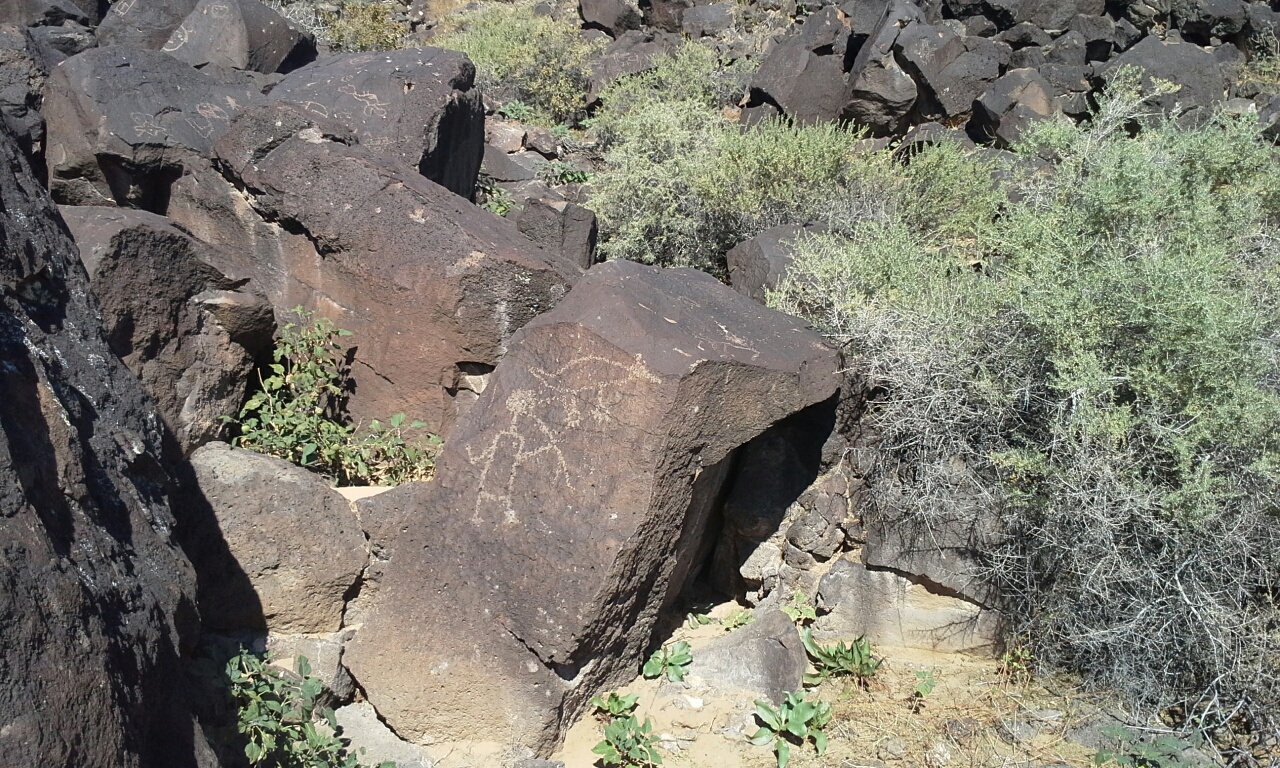
In a book I’m reading, the prehistoric art in the Cosquer Caves plays a major part, which is fun since I’d never heard of them, though in my defense, my last research into cave paintings preceded the discovery of the caves.

The Cosquer Caves are an underground — and undersea — treasure of cave art. Carbon dating shows two distinct timeframes for the art — around 19,000 BP and 27,000 BP.

[I looked up the definition of BP so you don’t have to. It means “Before the Present,” but since the date of the “present” changes every year, they have chosen the rather arbitrary-seeming date of 1950 to mean the present, which seems silly to me because they exchanged one rather arbitrary date for another. I understand why people don’t like the previous designation of BC because of the mention of Christ, but since he was not born in the year 0, the year itself didn’t mean anything. “They” did try to change the BC to BCE — Before the Common Era — but apparently, 1950 makes better sense to them for a starting date, even though it doesn’t to me.]

The caves weren’t discovered until 1985 when Henri Cosquer, a diver who was exploring the Calanques (a series of cliffs and bays not far from Marseilles), happened to notice a hole in the side of a cliff wall, 36 meters (118 feet) below the surface. And so he discovered the caves, which soon bore his name. Although the caves were made known almost immediately, the first mention of the cave art (all sorts of animals as well as hand tracings) came in 1991 when three divers got lost in the cave and subsequently died.

Before the sea began to rise after the last ice age ended, the Cosquer Caves were located several miles inland. The waters are still rising, slowly submerging the caves, and now the entrance to the caves has been closed off. If you wish to experience the caves, you don’t need to make the dangerous journey under water and through perilous tunnels (even if they were still open) — a replica of the caves has been recreated. Oddly, they have been recreated as they were found — underwater — rather than on land where they originated.

I find this story interesting for several reasons.

One: that such an important discovery wasn’t made public until the three divers died. I’m not exactly sure what that says about us as a species, but it does seem rather true to form.

Two: That the cave paintings came from two such distant eras. Generally, the art found in paleolithic sites seems to be done all in the same era and then is forgotten or just left alone as people move on. It’s been postulated that this was a site visited by nomadic peoples or world travelers, which could be true or just a guess to explain the diversity.

Three: Proof of how climates always change.

There are many terms that really get on my nerves: veggies, 110%, intestinal fortitude, to name a few. But my current most unfavorite is “climate change” because it’s redundant. Climate is change. Climate is always changing. We tend to think we live in a bubble, where what is always was, but this long period of rather temperate weather we’ve been experiencing since the little ice age, is a rather a rarity in the vast history of the earth. (The little ice age was a cold interval from the mid-fourteenth century through the mid nineteenth century. There were even colder intervals of cold between the main interval, the final one from 1840 to 1880.)

Although I am not disagreeing that humans have an effect of the climate, and in a bubble where outside things don’t affect what is in the bubble and where the bubble itself never changes, what we are seeing would definitely be human-caused. But other factors could be at work — sun spots and solar discharges are one hypothesis to account for some of the current climate. Others hypothesize that we are still coming out of the last ice age, and that our activities may or may not be aggravating that warming trend. Or it could be something completely different, perhaps even another planet in our solar system as the Sumerians believed (a belief I made use of in my novel Light Bringer), and the planet’s return from its remote journey into space is playing havoc with our climate.

We tend to think we know all there is to know about the earth and climate and human history, but the rather recent discovery of these caves and the art that was so important to humans back in those far distant days, shows us that we don’t know everything, shows us that we don’t live in a bubble, shows us that there are still surprises.

***

Pat Bertram is the author of intriguing fiction and insightful works of grief.

Ice Cold Blog

On hot days, an “ice cold” anything sounds good, so how about an ice-cold blog? Not that this blog itself will be ice cold, because the blog can only be as cool as the running temperature of whatever device you are using to read this, but the topic is, for certain, “ice cold.”

In a book I skimmed through, the woman character ordered an ice-cold beer, which always seemed silly to me. Wouldn’t an ice-cold beer be a frozen one? As I found out, after wasting way too much time googling various “ice cold” themes, beer can be ice cold without being frozen.

The temperature of ice is 32 degrees Fahrenheit or below. Water freezes at thirty-two degrees, but the temperature of the ice cools to the ambient temperature of wherever it is stored, so it can get down to 0 degrees or minus twenty, or whatever temperature at which the freezer is set.

Beer, on the other hand, freezes at 28 degrees Fahrenheit, so technically, you can have an ice-cold beer at 32 degrees, but why would you want to? If you like beer, that is. The colder the temperature, the less the flavor — good or bad — of beer is discerned, which is why it is suggested that lite beers be served ice cold. The optimum temperature for good beers to be poured at a bar or restaurant is 38 degrees, so that when it gets to the imbiber’s table, it will have reached its optimum drinking temperature of 48 degrees — cold enough to be refreshing, warm enough so that all the flavor (and the odor, which is a part of what we discern as flavor) is apparent.

After the woman in the book drank her ice-cold beer, she went home to her ice-cold apartment, because supposedly, that was the temperature that her ancient dog preferred. Really? That old dog who was near to dying preferred the house temperature to be set at 32 degrees? I think not. The ideal inside summer temperature for dogs is between 75 and 78 degrees, but for small dogs (as the story dog was) such a temperature is too cold, so for them, between 78 and 80 degrees is a better temperature. A comfortable winter temperature for most dogs is 68 to 72 degrees. So that gives us a comfort range for dogs from 68 to 80 degrees. That is a far cry from an ice-cold 32 degrees.

Such ridiculousness from authors who should know better leaves me cold (though not ice cold), so I skimmed through the rest book to make sure I wasn’t missing anything and tossed it aside.

I did learn something, though it wasn’t from the book but from my research into optimum temperatures. Unlike what I used to believe, it is possible to drink an ice-cold beer, and has been possible as long as ice has been a commercial product. In fact, the term “ice-cold beer” has been around since 1887 when the Wild White Elephant Saloon in Fort Worth apparently coined the phrase.

So now, after reading this ice-cold blog, do you feel a bit cooler?

***

What if God decided S/He didn’t like how the world turned out, and turned it over to a development company from the planet Xerxes for re-creation? Would you survive? Could you survive?

A fun book for not-so-fun times.

Click here to buy Bob, The Right Hand of God.