Colonel Mustard in the Library with a Candlestick

I’ve blogged several times lately about the mystery I wrote for a family night in the local historical museum. Yesterday I posted the scenario, so if you want to try your hand at figuring out who did it, you can find the list of suspects and their alibis here: Spur of the Moment Murder Mystery.

(For history buffs, the historical allusions in the game are correct — Clay Allison did kill Deputy Faber. Rutherford B. Hayes had just been publicly inaugurated as the nineteenth president of the United States, and he’d lost the popular vote but won the most electoral college votes after a ferociously disputed ruling by a Congressional committee. The suffragette referendum in Colorado had just been defeated. Clay Allison had surrendered after the Civil War, and some accounts say he escaped the firing squad the night before he was to be killed; other accounts say he was pardoned. In real life, he died ten years after this fictional murder — he was thrown from a freight wagon and a wheel rolled over his head. I am sure he would have preferred my scenario to the ignominy of his actual death.)

So, in our little game, who did kill desperado Clay Allison?

Well, Colonel Mustard didn’t do it, and he didn’t have a candlestick, and he wasn’t in the library. He was, in fact, in the bar at the time of the murder. The bartender attests to that.

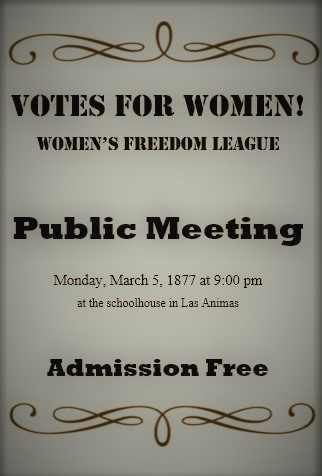
Mrs. White did not kill Clay. She was, as she claimed, hosting a suffragette meeting in the schoolhouse. Flyers and posters attest to the meeting.

Professor Plum did not kill Clay. His birth date, clearly stated on the suspect list shows that he could not have shown up in town until decades after Clay was killed since he was not born until after the murder.

Miss Scarlet did not kill Clay. She was, as she claimed, with Mr. Green.

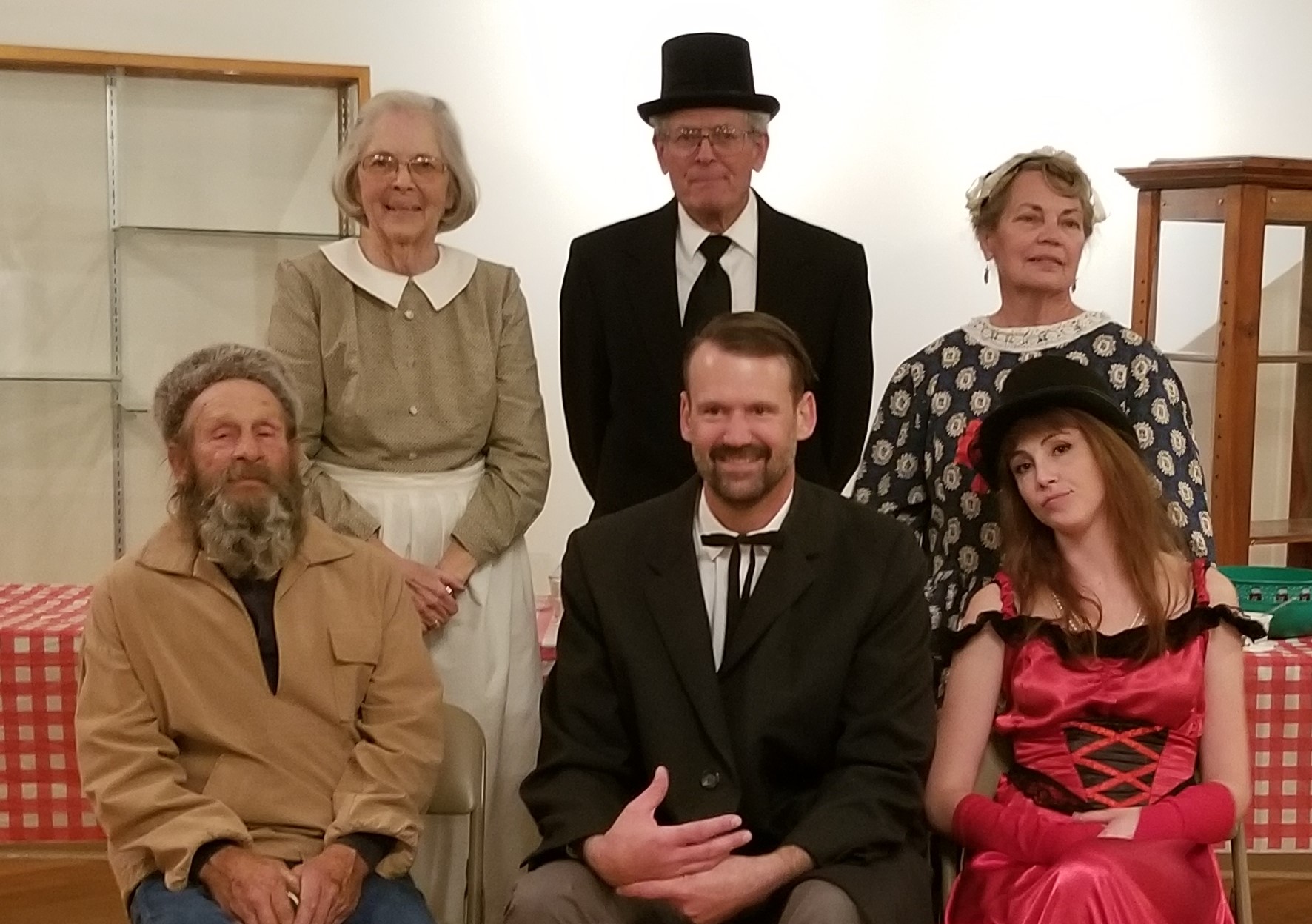
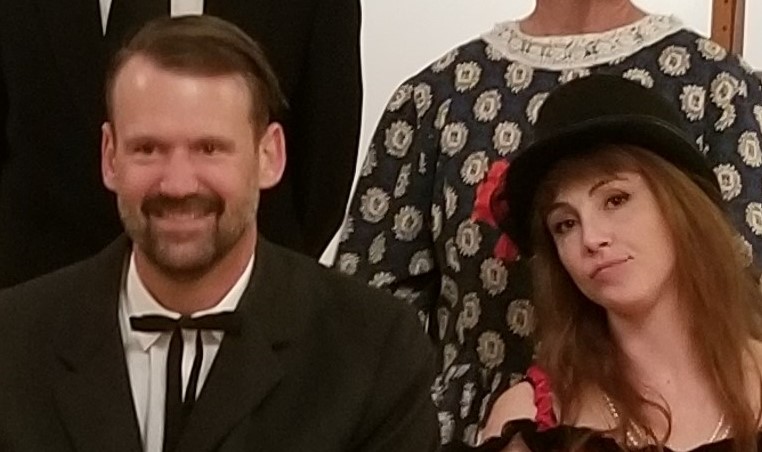
Mr. Green did not kill Clay, because although he denies knowing Miss Scarlet, it is apparent he is lying. A photo shows the two of them together, and the bartender can attest to their relationship. So, since he is a proven liar and Miss Scarlet is a proven truth teller, we have to believe that the two were together when Clay was killed.

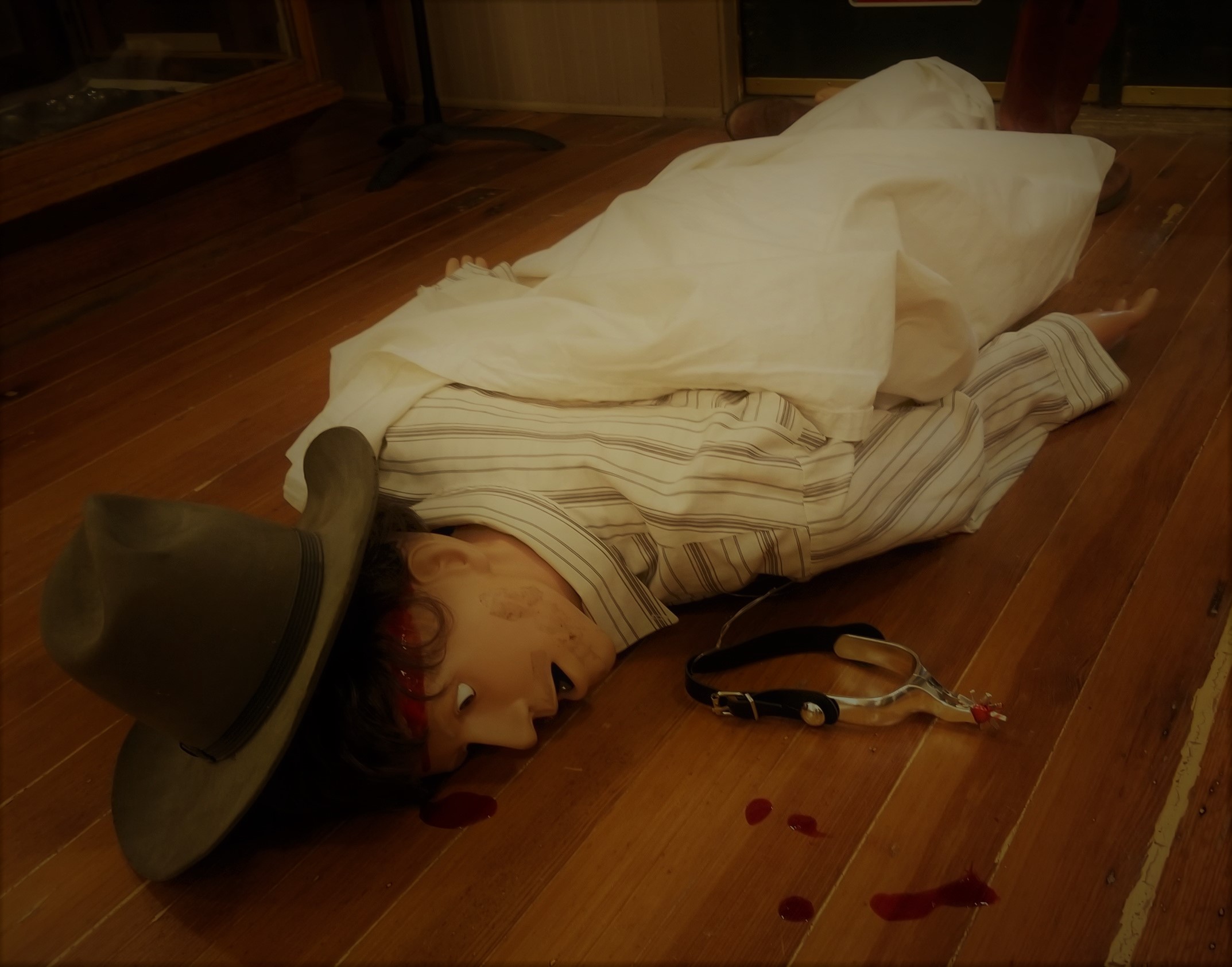
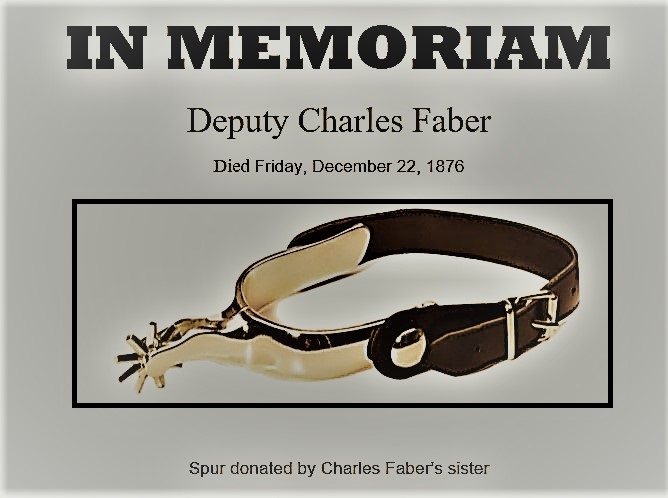
So that leaves Mrs. Peacock. Mrs. Peacock killed Clay. She was furious that Clay went free after the judge ruled that Clay Allison’s actions in killing her brother Deputy Farber were self-defense. Apparently, after donating one of the deputy’s spur to the sheriff’s department, she continued to carry the other one around. We don’t know if she’d planned to kill Clay or if she did it on the SPUR OF THE MOMENT!
***

Pat Bertram is the author of Grief: The Inside Story – A Guide to Surviving the Loss of a Loved One. “Grief: The Inside Story is perfect and that is not hyperbole! It is exactly what folk who are grieving need to read.” –Leesa Healy, RN, GDAS GDAT, Emotional/Mental Health Therapist & Educator.
Spur of the Moment Murder Mystery

I missed the murder I created for the museum because I still haven’t gotten over my cough, so I’m reprising the mystery here. This is the scenario I wrote:

It is Monday, March 5, 1877. Rutherford B. Hayes has just been publicly inaugurated as the nineteenth president of the United States. Hayes lost the popular vote but won the most electoral college votes after a ferociously disputed ruling by a Congressional committee. People are out late, some celebrating the victory, some drowning their sorrows at having a Republican in office.

At 9:10, Clay Allison was killed outside the jewelry store, and at 9:15 pm, revelers discovered the body.

There are many suspects.

Colonel Mustard, the blacksmith, born in 1832, was at the garrison in Gainesville, Alabama when Clay and his Confederate unit surrendered at the end of the Civil War. Mustard swears that Clay had escaped the night before he was to go before a firing squad, and this does not sit right with the Colonel. The Colonel says he was in the saloon when Clay was killed.

Mrs. White, schoolmarm, born in 1824, says Clay deserved to be shot for mangling the English language. Clay had bragged that he was a shootist, and Mrs. White says there is no such word. She also says she was at a suffragette meeting that evening at the schoolhouse. The suffrage referendum had just been defeated in Colorado, and she and other women in town were determined to get suffrage for women in Colorado.

Mrs. Peacock, candy-shop lady, born in 1842, is the married sister of Deputy Charles Faber. Clay had gunned down the deputy after the deputy had demanded Clay and his brother relinquish their guns. Mrs. Peacock is not only grieving the loss of her brother, but is fuming that Allison went free after the judge ruled Clay Allison’s actions self-defense. She claims to have been home alone.

Professor Plum, a professor at Colorado College in Colorado Springs, born in 1878, is writing a book about Clay Allison. He came to town to learn more about what actually happened between Clay and Deputy Faber. Plum claims that Clay was long dead by the time he arrived in Las Animas to do his research.

Miss Scarlet, dance hall girl, born in 1860, hated Clay Allison for promising her marriage and a life of respectability and then reneging on the deal. She claims to have been with Mr. Green when the incident occurred.

Mr. Green, bank teller, born in 1847, says he was not with Miss Scarlet, had never even met her. He claims to be an upstanding citizen with pretentions to being bank president one day, though he does admit that Clay Allison tended to play fast as loose with the ladies in town, and should be shot on general principles.

Rules:

Look for clues in the above suspect list and in the photographs provided. FYI: the bartender corroborates the alibies of anyone who said they were in the saloon.

Check off the characters as you learn they didn’t do the dirty deed. When you sort out the truth from the lies, whoever is left, then, must be the killer. Keep in mind, not everyone will tell the truth.

o Colonel Mustard
o Mrs. White
o Mrs. Peacock.
o Professor Plum
o Miss Scarlett
o Mr. Green

***

Mr. Green and Miss Scarlet

___________________________________________________________________________

So, who dunnit? Who killed Clay Allison?

In case anyone wants to figure out who the killer is, I’ll wait until tomorrow to post the solution.

***

Pat Bertram is the author of Grief: The Inside Story – A Guide to Surviving the Loss of a Loved One. “Grief: The Inside Story is perfect and that is not hyperbole! It is exactly what folk who are grieving need to read.” –Leesa Healy, RN, GDAS GDAT, Emotional/Mental Health Therapist & Educator.
Generally Considered Safe

After seven months of living in my new community, yesterday I got friend requests on Facebook from a slew of people I’ve met here. It’s lovely, of course, being connected in myriad ways to people, especially when once has hermit tendencies as I do, but . . . (You knew there was a but coming, didn’t you? With me, there always is.)

But . . . once people I know in offline life start seeing me in online life, I have to be more circumspect in what I blog about lest I inadvertently hurt someone by a thoughtless word, or alienate with an ill-advised observation.

This is especially true in a small community where most of the people have known one another their entire lives. I learned that lesson shortly after I moved here. Someone asked me about an activity I had participated in, and I said it was nice except that one particular person monopolized the conversation. It turns out that the monopolizer was a good friend of the woman I was talking to. Oops.

So I try to be careful even in my thoughts because I am one of those people who, if I’m comfortable, will say whatever comes to mind. And after having opened up about my grief and other private matters the past ten years, I tend to be comfortable almost everywhere and with almost everyone.

The solution, until I get comfortable with my posts being available to new friends as well as old, is to be careful what I write.

Local weather is generally considered safe to write about and in fact is something I’ve been thinking about of late. For weeks, I checked the forecast, and the forecast was always the same — high temperatures until about October 21, followed by weeks of temperatures in the 60s. The first day the temperatures slid down the 60s, I planted my bulbs, and it’s a good thing. I don’t know what happened to all those weeks of 60 degree weather, but somehow they evaporated. The current forecast shows frigid temperatures for a long time to come.

Today was a gorgeous day — deep blue skies and warm temperatures. By Monday we might have snow, and by Wednesday, we’ll be down to a low of 2 degrees. Nope. That’s not a typo. 2 degrees. Almost 0. Brrrrr!

I’d hoped to have my garage foundation finished by now to give me a protected place for my vintage VW, but with this forecast, who knows when the contractor will get to it. I just hope he manages to stop by to insulate my kitchen pipes before the freeze hits.

Thanks to everyone who takes a peek at my blogs. I appreciate all of you, even if I do have to be especially nice on this blog for a while.

***

Pat Bertram is the author of Grief: The Inside Story – A Guide to Surviving the Loss of a Loved One. “Grief: The Inside Story is perfect and that is not hyperbole! It is exactly what folk who are grieving need to read.” –Leesa Healy, RN, GDAS GDAT, Emotional/Mental Health Therapist & Educator.
What Did You Do When You Were Dead?

I saw an appalling movie last night — the 2004 film Birth with Nicole Kidman.

The premise is a perennially interesting one: a reincarnated soul remembers who he’d been and tries to reconnect with his old life. In this case, though, the premise is the only thing that was interesting. The movie tried to be a thriller (I think), and to the extent that it was a perfect example of a folie a deux (where two people share a delusion, and in the end they make each other crazier), it succeeded. It also tried to be uber mysterious and only managed to be annoying, especially with the long, long, long close-ups of alternately Kidman and the kid. The movie might have been fun if the kid had been charming, but he came across as an incipient serial killer. Which, I’m sure, was intended.

But none of that is important to this blog except as an introduction to the question the movie poses: what would happen if a ten-year-old boy showed up at your door and claimed to be your dead husband?

What struck me is that the kid, even if he were the husband reincarnated, would not still be the husband. Do the words, “To death do us part” ring a bell? And he’s a ten-year old kid. He might have memories of being someone else, but in the end, he’s only ten, and still needs his mommy.

If this kid came to my door claiming to be Jeff, I’d probably be interested, but in no way would we be able to continue the relationship we once had. He’d be ten years old, for cripes sake. He might have the memories of being Jeff, but he wouldn’t be the man I loved — wouldn’t have the same mind, the same smile, the same thoughts and inclinations. He wouldn’t be the mature, even-tempered man I knew. He wouldn’t be an adult, and by the time he was, I’d probably know first hand what it was like to be dead.

For sure, he wouldn’t be someone I could be the old “me” with. He might be resurrected, but the part of me that died with him would still be dead.

If he truly was Jeff, we would sit down and reminisce a bit, maybe catch up on what we’ve been doing the past ten years. “Hey, Jeff. What did you do when you were dead? How did death treat you? How did it feel? Did you have fun? Did you learn anything? Did my grief bother you?” But, wait — he’s ten years old, which means he’d have been immediately reincarnated. He wouldn’t have had a whole lot of experience being dead, which wouldn’t leave us much to talk about since I wouldn’t particularly care about his experiences in the womb or being a small child, or his problems as a young boy (except to hope that this childhood was more pleasant than his previous one).

If he were Jeff, he’d be glad to know I was doing okay, but he wouldn’t put me in the position of being responsible for him. He wouldn’t stalk me. Or make me crazy. There’d be no thriller, no chiller, no folie a deux in our reunion. Definitely there’d be no creepy bathtub scene. I don’t have a bathtub, and even if I did, it wouldn’t matter. Taking off his clothes and getting in the tub with me would be the last thing on his mind.

We’d just talk, and when we finished our chat, he’d wish me well, tell me he loved me, and then he’d let me go.

***

Pat Bertram is the author of Grief: The Inside Story – A Guide to Surviving the Loss of a Loved One. “Grief: The Inside Story is perfect and that is not hyperbole! It is exactly what folk who are grieving need to read.” –Leesa Healy, RN, GDAS GDAT, Emotional/Mental Health Therapist & Educator.
Light Entertainment and Heavy Thoughts

I went to lunch and the movies with friends today. Good food, good people, and a good movie — Downton Abbey. Although I thoroughly enjoyed the outing and admired the film as a period piece, I must confess I am a bit too much of an egalitarian to truly appreciate the nuances of the film.

I do realize the movie portrays the end days of an outdated class system, with everyone knowing their place, ingratiating themselves with those who rank above them and condescending to those below: the lowest servants giving way to the higher servants, the lowborn currying favor with the highborn, the highborn doing the bidding of the highest in the land.

There was no merit in any of the folk portrayed in the movie — the highborn were highborn for the simple reason they were highborn or married someone of the upper classes. They didn’t earn their exalted status. The lowborn, though perhaps good at their jobs, were actually no better — adopting, as well as they could considering their positions, the petty ways of those they served.

Admittedly, the movie is geared for lovers of the series, and I’d only seen a couple of episodes somewhere along the line. (Don’t know where because although I do have a television or two, I don’t prescribe to any television programming.) The plot was thin, a mere veneer, probably because the movie is more a showcase for the characters people had come to know and love.

Despite the hype of having to know who the characters are to understand the movie, it wasn’t difficult to figure out what was going on. Every character wanted something. Every character believed they are special. The idle rich believed they deserve their good fortune. The lowborn believed they are somehow enriched by serving these folks.

Even worse, for me, none of the characters were admirable or even charming. In fact, most were appalling. Well, except for Maggie Smith, whose appallingness was part of her charm

If I’m really honest, what we have in the USA today is rather a reflection of that same world, though we all believe we are as good as those who think they are better than we are, and that with a bit of luck, the riches will even out. (Which is why it is so hard to get people to vote for special taxes for the richest folk — most of us believe that one day we will be rich and so to tax the rich is to tax our future selves; the rest of us are afraid that one day we will be bag ladies.)

Still, such a world as depicted in the movie seems utterly wrong and phony to these eyes. Maybe it would even have seemed phony back in those days — it’s hard for me to believe that people entrenched in the system truly believed that the aristocracy was better than they were and so deserved their adulation and servility.

In the end, this is what makes Downton Abbey a good movie: a couple of hours of light entertainment, followed by a couple of hours of heavy thought.

***

Pat Bertram is the author of Grief: The Inside Story – A Guide to Surviving the Loss of a Loved One. “Grief: The Inside Story is perfect and that is not hyperbole! It is exactly what folk who are grieving need to read.” –Leesa Healy, RN, GDAS GDAT, Emotional/Mental Health Therapist & Educator.

Social Calendar

It seems odd to have a social calendar. For many years, the only social activities I participated in were my dance classes, and from week to week, those classes were generally at the same time and on the same days. If I went to lunch with anyone, it was usually after class. Any other activity was easy to remember because it was such a rarity.

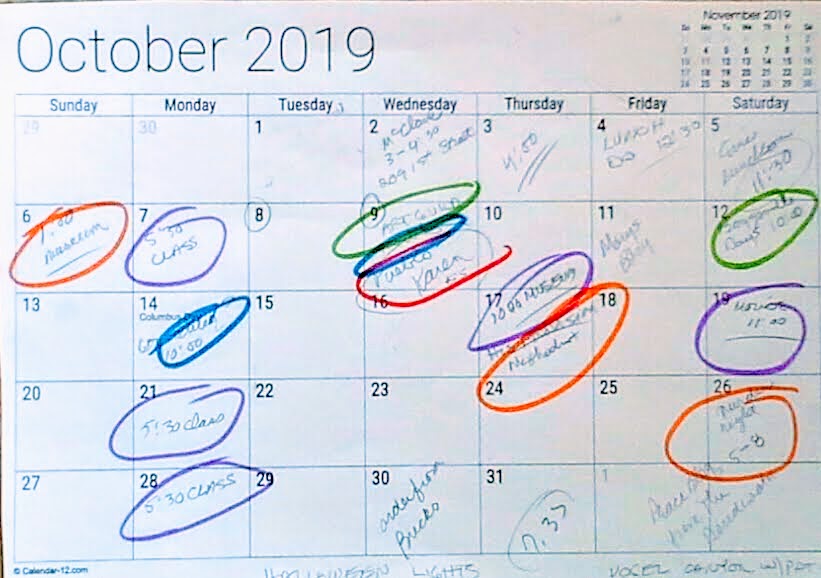
But now? After only seven months, I’m so entrenched in the community that without my calendar, I’d be lost. There’s always something coming up, such as a movie (Downton Abbey) and lunch with friends this Saturday, a meeting at the museum tomorrow to set out clues for the Murder at the Museum Night that will take place next week, porcelain painting classes, and a special note to remind me about Blogging for Peace next month.

It bewilders me, all of this. But then, much of my life bewilders me.

Was I really that woman? That woman who watched a man slowly die, who wanted the suffering to end, yet whose love was so ineffectual she couldn’t make him well or take away a single moment of his pain? That woman so connected to another human being she felt broken — and lost — years after his death? That woman who screamed the pain of her loss to the winds?

And am I really this woman? A homeowner? A part of a community? A person with a social calendar?

Apparently so, because there I was and now here I am.

It’s possible life will always bewilder me. I might never know the truth of any of it — life, death, purpose . . . me.

But that’s the beauty of a having social calendar. At least on those particular days, there are no questions or bewilderment. I know what I am supposed to do, where I am supposed to be. I even know who I am supposed to be — a pleasant companion, a kind friend, a generous volunteer.

The rest of the time? Well, if it’s not on the calendar, perhaps it’s not important.

***

Pat Bertram is the author of Grief: The Inside Story – A Guide to Surviving the Loss of a Loved One. “Grief: The Inside Story is perfect and that is not hyperbole! It is exactly what folk who are grieving need to read.” –Leesa Healy, RN, GDAS GDAT, Emotional/Mental Health Therapist & Educator.

Apple Season

Jonathan apple season used to be my favorite time of year. The apples — crisp and juicy, tart and sweet — were not year-rounders like the appalling “delicious” varieties, which are anything but delicious. The delectable Jonathans came once a year in the fall, and every year, I looked forward to seeing them.

But no more.

I can’t remember the last time I had a Jonathan apple. Ten years ago, perhaps. I do remember it was a surprise — and a joy — to see them piled in the produce section because even then, the apples were hard to find. It must have been a bumper crop that year since those Michigan Jonathans managed to find their way to Colorado.

The apples were wonderful that year, and that, too, was a surprise because when the apples are good, they are very, very good, but when they are bad, they are truly horrid — mealy and tasteless.

Jonagolds — a combination of golden delicious and Jonathan apples — are the fall staple now, and though they appeal to me better than most apples on the market, they fall vastly short of the true Jonathans.

So I’ll eat the Jonagolds I bought today and pretend I don’t remember better apple days.

***

Pat Bertram is the author of Grief: The Inside Story – A Guide to Surviving the Loss of a Loved One. “Grief: The Inside Story is perfect and that is not hyperbole! It is exactly what folk who are grieving need to read.” –Leesa Healy, RN, GDAS GDAT, Emotional/Mental Health Therapist & Educator.

Grateful for Peace

Peace. Even if we aren’t beauty pageant contestants, most of us at one time or another have professed to want world peace. We march for peace. We blog for peace. We pray for peace. When we see photos of war in far away places, our hearts go out to the victims. And yet, and yet . . .

All this stated desire for peace makes it seem as if we live in an uneasy world, but according to researchers Bethany Lacina and Nils Petter Gleditsch of the Peace Research Institute Oslo, deaths caused directly by war-related violence in the 21st century have averaged about 55,000 per year worldwide. Compare that to 1.2 million traffic fatalities per year worldwide. Or 295,000 deaths from natural catastrophes worldwide in  2010. Or compare it to 300,000 USA deaths from obesity per year. Or 30,000 USA suicides per year. Lots of dying going on, and very little of it from a lack of world peace. (Though it seems as if we could use more inner peace.)

Still, even with all the “we want world peace” rhetoric and all the war talk and heart-rending photos in the media, we take peace for granted. Most of go to sleep at night secure in the knowledge that unless we were to have a health crisis or get hit by a natural disaster or have a car drive through our bedroom, we will wake up in the morning and be able to go about our daily lives without soldiers sniping at us.

So today (and every day) I will be grateful the peace that is. Which is why I blog for peace every year with Mimi Lenox. She started the Blog Blast for Peace because words are powerful, so blogging for peace is important. If you’re interested in joining us this November 4th, you can read all about it here: I’m going to Blog for Peace. Will You?

***

Pat Bertram is the author of Grief: The Inside Story – A Guide to Surviving the Loss of a Loved One. “Grief: The Inside Story is perfect and that is not hyperbole! It is exactly what folk who are grieving need to read.” –Leesa Healy, RN, GDAS GDAT, Emotional/Mental Health Therapist & Educator.

More Murder Mystery in the Museum

Thanks to everyone who has contributed ideas to the murder mystery game we have planned for the local museum. Although I was able to use only one or two of your ideas for the game, I will keep the rest to help me with the book. (I’m thinking that my next book should be based on this museum experience, though instead of a fake body, we find a real body.) The book will be in the present, so I should be able to make use your ideas such as time zone variances and medical conditions; unknown twins, seamen, and parrots.

Meantime, I’ve been researching Clay Allison, and I found suspects in the history of the times. (After all, it is an historical museum event.) I’ve figured out how to present the clues for everyone except Colonel Mustard and Mrs. Peacock, but if I don’t, I don’t suppose it matters. In the end, it could come down to a guessing game. This, then, is what I have written so far:


Spur of the Moment Murder Mystery

It is Monday, March 5, 1877. Rutherford B. Hayes has just been publicly inaugurated as the nineteenth president of the United States. Hayes lost the popular vote but won the most electoral college votes after a ferociously disputed ruling by a Congressional committee. Citizens of the town are out late, some celebrating the victory, some drowning their sorrows at having a Republican in office.

Revelers discovered the body of Clay Allison outside the jewelry store at 9:00pm. There is no lack of people who want Clay Allison dead.

Mrs. Peacock, born in 1842, is the married sister of Deputy Charles Faber. Clay had gunned down the deputy after the deputy had demanded Clay and his brother relinquish their guns. Mrs. Peacock is not only grieving the loss of her brother, but is fuming that Allison went free after the judge ruled Clay Allison’s actions self-defense. She claims to have been home alone with her husband.

Colonel Mustard, the blacksmith, born in 1832, was at the garrison at Gainesville Alabama when Clay and the others in his Confederate unit surrendered at the end of the Civil War. Clay claimed he’d been pardoned, though Colonel Mustard maintains that Clay had escaped the night before he was to go before a firing squad. Twice Clay had escaped justice, and that does not sit right with the Colonel.

Mrs. White, schoolteacher, born in 1824, was overheard telling a friend that Clay Allison deserves to be shot for mangling the English language. Clay had bragged that he was a shootist. “Shootist?” said Mrs. White. “He just made up that word.” Mrs. White claims to have been at a suffragette meeting that evening at the schoolhouse. The suffrage referendum had just been defeated in Colorado, and she and other women in town knew they’d have to form a political coalition to work on getting suffrage for women in Colorado.

Professor Plum, a professor at Colorado College in Colorado Springs, born in 1878, is writing a book about Clay Allison. He came to town to talk to Clay, though Clay seemed disinclined to tell him the truth of his life, which enraged the Professor. Professor Plum was seen in the vicinity of the jewelry store around the time of the murder, though this seems to have been a nebulous sighting at best.

Miss Scarlet, dance hall girl, born in 1860, hated Clay Allison for promising her marriage and a life of respectability and then reneging on the deal. She claims to have been with Mr. Green when the incident occurred.

Mr. Green, bank teller, born in 1847, says he was not with Miss Scarlett, had never even met her. He claims to be an upstanding citizen with pretentions to being bank president one day, though he does admit that Clay Allison tended to play fast as loose with the ladies in town, and should be shot on general principles.

Rules:

Look for clues in the above history, in the various exhibits, by talking to the characters. Check off the characters as you learn they didn’t do the dirty deed. Whoever is left, then, must be the killer.

o Mrs. Peacock.
o Colonel Mustard
o Mrs. White
o Professor Plum
o Miss Scarlett
o Mr. Green

So who killed Clay Allison? How was he killed? Why was he killed?


And there you have it (as of right now anyway), my murder in the museum scenario. It’s subject to change of course, if I come up with more history or better ideas.

***

Pat Bertram is the author of Grief: The Inside Story – A Guide to Surviving the Loss of a Loved One. “Grief: The Inside Story is perfect and that is not hyperbole! It is exactly what folk who are grieving need to read.” –Leesa Healy, RN, GDAS GDAT, Emotional/Mental Health Therapist & Educator.