We’ve Got Spunk

This was not just a girls’ night out, but a girls’ weekend away. A friend and I went to a town near the state line of Nevada. We ate, drank, gambled, and were merry. Well, as merry as two quiet women who imbibe tea, cranberry juice, and water can be.

Friday evening was mostly spent standing in line for tickets to the Isley Brother’s concert (the purported reason we were there). Well, she stood in line. I wandered around, checking out the décor, though periodically, I would return to see how she was doing. I got rousted a few times by the security guards at the ticket booth — one barred my way and refused to let me pass, one wouldn’t let me in the door to get back in line, and another wouldn’t let me out again. Not exactly Thelma and Louise, but one takes one’s rebellious moments however they come.

On one of my forays around the casino, I discovered Zoltar, a celebrity from a Tom Hanks movie. Zoltar kept telling me he’d grant a wish, but I figured I’d just as soon grant my own wishes. That way, I’d have less chance of screwing things up and getting Big. Or little. Or some silly thing like that.

Tucked away in a corner, I found Pat’s Saloon. Dirty Pat’s Saloon, but who’s going to read the small print? It’s my kind of place — quiet, even moribund, and the drinks are dry. Literally dry. Not dry as in wine, but dry as in no drinking. Dry as in no liquid.
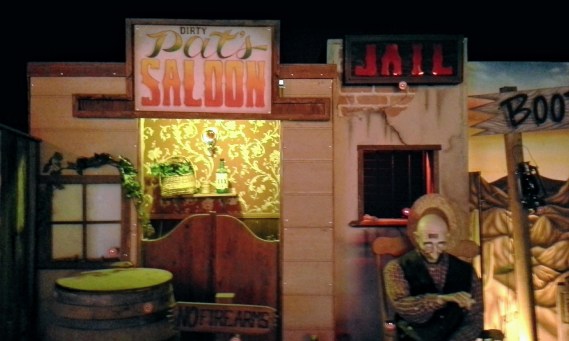
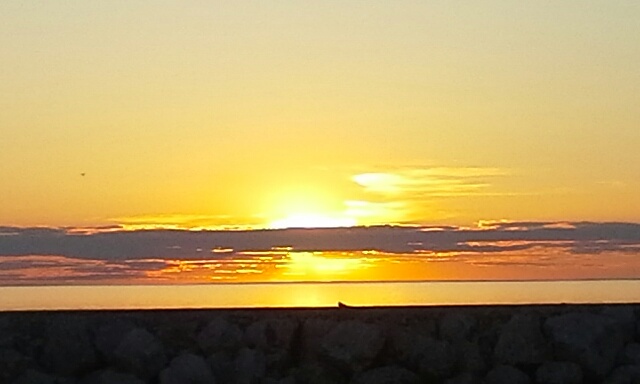
20180216_182609.jpg

After breakfast on Saturday, we visited the outlet mall. The stores hadn’t yet opened, but it didn’t matter — I find shopping to be only slightly more appealing than stepping on Mojave green rattlers. Still, it was fun to do something I haven’t done in a very long time — wander around a mall.

The rest of the time, we spent gambling. (That, and eating.)

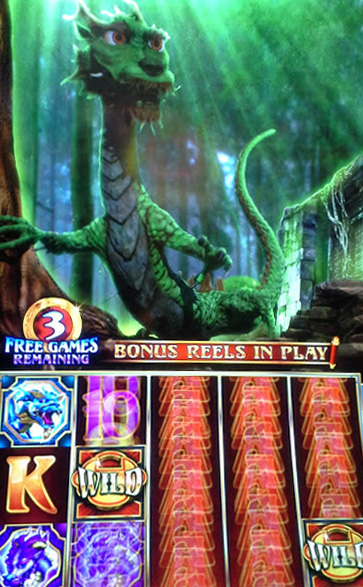
Playing the slots is not something on my list of things to do, not something I ever think of doing, but the two times I specifically went to Nevada to gamble, this state line trip and my Laughlin Adventure, I got into it. Yesterday, I sampled many different machines, but the Dragon Spin game was the most fun because it was the most active — lots of noisy wins, even more quiet losses. But all things considered, a cheap, and at times riveting, entertainment.
The Isley Brother’s concert was disappointing. I don’t know why it never occurred to me that an old timey band would play in a modern way, but they did — strobe lights, insanely loud volume, heart-stopping bass, skinny dancers that my friend and I (neophyte dancers though we might be) could outdance any day. The worst, though, were the fans. The much younger female in front of me kept standing up to dance, so much of my view was of her back end. Eek. And the very large fellow beside me had an extremely loud whistle he kept blowing. Even worse, he kept dancing in his seat, and with every move, his elbow slammed into me. Luckily, the seat next to her was empty, so we were able to move down a seat (and even more luckily, I remembered to bring ear plugs, which cut down the bass reverberation so I could actually hear the sung words.) Not surprisingly, a large percentage of the audience watched the performance on their phones as they taped the show. It almost seems that nowadays nothing is real unless it is seen on a screen or is recreated in a form that can easily be posted online. (I won’t even mention the vast parade of cleavage visible on so much of the female audience. Whoops. See how I am? I did mention it!)

But the disappointment was a mere blip in the quiet thrill of the weekend. My friend is pleasant to be around, generous, and a good sport. (She’s the first person ever to join me on any of my desert rambles.) That, coupled with a weekend that was far from my normal weekends, made this a perfect vacation for me.

I’d told her about my travel journal, and on the way back, she asked if I’d put our trip into the journal. I said yes, of course — although the journal was given to me for my May trip, I’d already planned to use it for all my 2018 adventures. Of which this was one.

The first thing that will go in the book is the birthday card she gave me: Who needs estrogen when we’ve got spunk? (It’s not my birthday, but we celebrated it anyway.) What an absolutely perfect sentiment for the beginning of my yearly adventures!

Since the card and the record of this adventure would be the first entry into the journal, it made me wonder if I’d forgotten anything, so I checked my web log (this blog) to see what adventures I’d had so far this year, and the only vaguely advendurous thing I’ve been doing is my faux backpacking trips on the weekends.

How boring can one person be?!

Apparently, I need more adventures, especially pleasant ones like this state line trip.

***

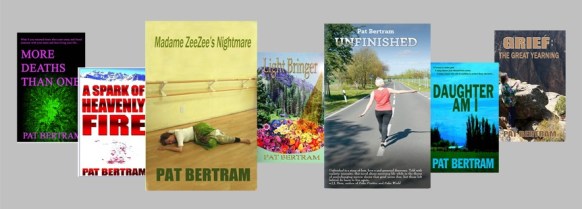
Pat Bertram is the author of the suspense novels UnfinishedMadame ZeeZee’s Nightmare, Light BringerMore Deaths Than OneA Spark of Heavenly Fireand Daughter Am IBertram is also the author of Grief: The Great Yearning, “an exquisite book, wrenching to read, and at the same time full of profound truths.” Connect with Pat on Google+. Like Pat on Facebook.

Having Fun Would be Fun

Lately, I seem to have problems getting along with people. It seems that I’ve gone from attracting people to actually repelling them. Or it could be me needing to get away from life in the slow lane and moving into an even slower lane.

I still have a couple of months before I take off on my Pacific Northwest trip to see my sisters. I’ll be camping along the way — and hiking — so I should have plenty of time to deal with no one but me. Until then? I don’t know. Bite my tongue, I guess.

Luckily, I will be able to get away for a while this weekend. It’s not much of a getaway, actually — just a concert, shopping, and gambling. (Big gambler that I am, I might even spend five whole dollars!) But it is a change. I’ll miss my faux backpacking trips, but it’s probably a good idea to give my body a rest.

One thing I’m hoping from this change of pace is a mental reset. When I came back from my cross-country trip, I’d planned to finish all my works in progress. I did finish two, but the third one sits moribund. In my defense, after I finished the first two books, I fell and pulverized my wrist, destroyed my elbow, and broke my arm in dozens of places. The resulting surgeries, drugs, and continuing recuperation have taken a toll on my creativity.

Despite what I wrote yesterday about still being a writer whether I finish that last work in progress or not, I really would like to finish it. It would be good not to have it in the back of my mind (not that it’s much of an inconvenience, because if it were truly nagging at me, I’d be writing it).

Unfortunately, when it’s done, I’ll have to decide what to do with it, which could be a large part of my motivation for not writing. I’d like to find a publisher who would actually help me promote, but that seems to be a dying breed. And to me, just posting a book on Amazon is not my idea of being published. (Besides, I truly do not like how much control they have of the book market.) Nowadays, though, there is no way around dealing with them unless I register the book with the copyright office and then just give it away as a download on my website.

But first, I have to finish writing the book, and to do that, I have to get my creativity switched on.

It seems like a lot to ask from one quick weekend getaway — reset my life so I can a) stop repelling people: b) get back into the discipline of writing; and c) find the sweet spot of creativity.

But even if all that doesn’t happen, just having fun would be fun.

addiction-bet-betting-casino.jpg

***

Pat Bertram is the author of the suspense novels UnfinishedMadame ZeeZee’s Nightmare, Light BringerMore Deaths Than OneA Spark of Heavenly Fireand Daughter Am IBertram is also the author of Grief: The Great Yearning, “an exquisite book, wrenching to read, and at the same time full of profound truths.” Connect with Pat on Google+. Like Pat on Facebook.
Presenting . . . Me!

I attended a book club meeting yesterday evening. The women had read Madame ZeeZee’s Nightmare, and they invited me to give a presentation. “Presentation” sounds grandiose when in fact the only thing I present is me. My book club presentations are no more than sitting around chatting with the members. It’s always pleasant (and rare!) for me to get a chance to talk about myself and my books, and I had a great time.

It wasn’t until this morning that I realized how often I mentioned Jeff and grief, and for just a moment I felt bad about that. Not that I was maudlin last night, but it’s hard for me to talk about my life and my blog and especially my books without referring to either of those influences. Two of my books (Grief: The Great Yearning and Unfinished) are specifically about grief, and Madame ZeeZee’s Nightmare delves more into how the women in Madame ZeeZee’s dance class feel about the murder than most mysteries do. (It’s hard for me to let even fictional deaths go unhonered. Death is such a life-changing event for all concerned, and too often in fiction death becomes an almost casual — and causal — plot point.

Still, I think I presented myself in a pleasant manner. There were only a couple of times I fumbled for words. (Note to self: next time you are asked to speak about your books, memorize the quote that inspired you to write A Spark of Heavenly Fire!)

The most disheartening moment was meeting a woman who hiked with a local group. (Although I know many of the people in that group and had often been invited to hike with them, I have dance class the day they hike and never managed to get to a single one of their outings). Meeting the woman wasn’t disheartening, of course, since she was quite nice. It’s that she destroyed an ankle on one of the hikes and will never be able to hike again, though she does seem to be able to walk okay. (I think it was this very same group where several years ago a man died on the trail.)

I have to admit, her predicament gave me pause. What if I fall out in the wilderness while on a hike? Being with a group does not prevent such a mishap, nor does it make it easier to extract the injured hiker. But I cannot let fear keep me from my mission. Once fear takes hold, it becomes easier to give in to other fears and harder to do anything that involves the slightest bit of risk, which would be paralyzing since simply living (and even living simply) carries an element of risk.

And anyway, of the three major injuries in my life, two were when I was with others, and one — my arm mishap — happened in the city within fifty feet of hundreds of peoples, not one of whom heard me scream.

In light of this hiker’s situation, the women seemed appalled when they found out about my plans for a solo adventure. Not that I blame them considering my own reaction, but I said “Who is there to go with me?” They all looked away because there is no response to that.

I better stop thinking about this experience. The more I reconsider, the more of a downer it seems for that poor book club. I can only hope my bright smile offset some of the unpleasant truths about my life that I foisted on them.

***

Pat Bertram is the author of the suspense novels UnfinishedMadame ZeeZee’s Nightmare, Light BringerMore Deaths Than OneA Spark of Heavenly Fireand Daughter Am IBertram is also the author of Grief: The Great Yearning, “an exquisite book, wrenching to read, and at the same time full of profound truths.” Connect with Pat on Google+. Like Pat on Facebook.
Weight Shaming

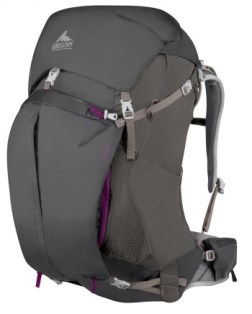
I’ve read a lot about ultra lightweight backpacking, and it makes sense — the less weight you have to carry, the easier it will be. Sounds good, right? But ultra lightweight gear is generally absurdly expensive, and in some cases, those who desire to go ultra light end up with gear that seems counterproductive. For example, some ultra lightweight backpacks are ultra lightweight because they leave off the hipbelt (making the shoulders take all the weight) or making the pack a lot smaller. (Small ultra lightweight packs hold as little as 35 liters, which makes me laugh, thinking about the fellow at REI who refused to sell me a 38 liter pack because it wouldn’t hold enough for a long trek.) And some people don’t carry important emergency items in order to make their packs lighter because they don’t think they will ever need them.

The real issue is the weight shaming that so many of these elitist backpackers indulge in. They look down on, and make fun of people who carry a heavier pack. Some go in for body shaming, too, mentioning the absurdity of heavy people trying to cut back the weight of their pack rather than their body weight, but most shaming goes toward the pack base weight. (Pack base weight is the total weight you carry including the pack but minus food, water, and fuel.)

Apparently, the motive for the ultra lightweight hikers is to chew up the miles. Their method is hike, eat, sleep, repeat. That’s it. They seem to believe there is no reason to take anything to read or to write with because they say if you have energy left at the end of the day, you’re not doing it right. (Apparently, although these folks spout the hiker’s mantra, hike your own hike, they don’t mean it.) The latest thing I’ve been hearing is the importance of cutting back on tent weight (for these folks, often a tarp is enough) and sleeping pad. They say it’s better to be comfortable walking than comfortable sleeping.

Even without checking to see who these folks are, I would bet they are youngish males. No older woman would ever consider the idea that being too uncomfortable to sleep is better than carrying a couple of extra pounds in her pack, even if it means she has to go slower.

The real issue with the weight shamers seems to be the same issue that shows up in any other inter-human relationship — the inability to understand that others might have different values than you. They don’t consider that maybe people are out there to do other things besides simply walk. Writers need to write about their experiences while the feeling is fresh. Photographers want to indulge in their artistry. Readers might find comfort in the familiarity of words in the vastness of the night. Aesthetes need time to appreciate. Nature lovers need time to commune with the world around them. Pilgrims have to search for spiritual meaning in the quest.

So many reasons to embark on a long hike. So many reasons to put other considerations before pack weight.

I don’t know what my base weight is since I have not yet gotten to that point, but the weight of my “big three” (pack, tent, sleep system) is a mere ten pounds, though it’s still considered heavy by some. Regardless, that weight is about as light as I can get it unless I want to invest in an ultra lightweight tent and a lighter backpack that together will cost about a thousand dollars. Even so, the most weight I can save by spending all that money is two or three pounds. (I can’t go lighter on my sleep system or there will be no sleep!)

And anyway, my goal is not to hike, eat, sleep, repeat. It’s to experience whatever I can as deeply as I can. And if that means carrying a bit of extra weight in my pack, so be it.

Actually, the biggest weight in anyone’s pack comes from food (some hikers eat four thousand calories a day) and water if there is no water source. (Water weighs a bit more than two pounds a liter, and we need at least that much every day.) If we could learn to get our food and water from the air, just think how light our packs would be!

Something to aim for?

***

Pat Bertram is the author of the suspense novels UnfinishedMadame ZeeZee’s Nightmare, Light BringerMore Deaths Than OneA Spark of Heavenly Fireand Daughter Am IBertram is also the author of Grief: The Great Yearning, “an exquisite book, wrenching to read, and at the same time full of profound truths.” Connect with Pat on Google+. Like Pat on Facebook.
Washington Retrip

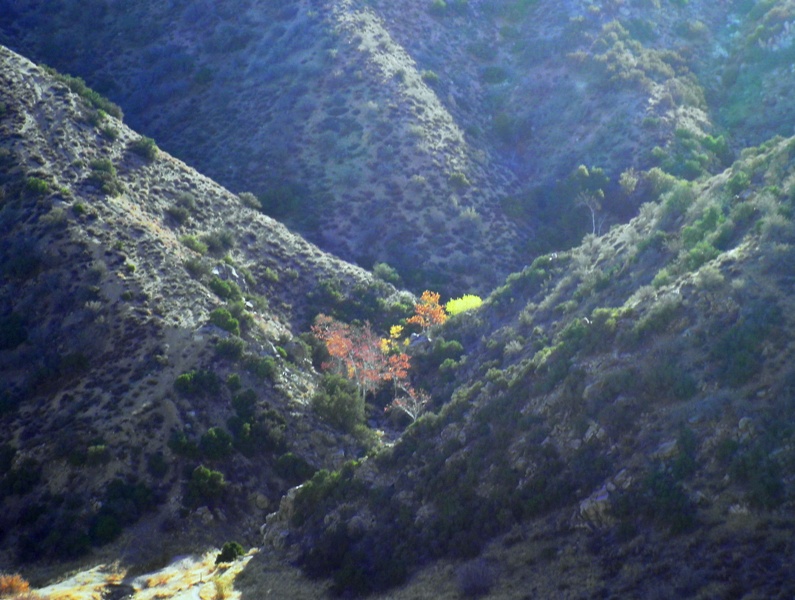
I haven’t even taken my first trip to Washington, and I’m already considering a retrip later this year. There are parts of the Washington section of the Pacific Coast Trail that seem perfect for a fall saunter, and I’m not sure I want to wait another year to set foot on the trail. (Perfect because of weather. Perfect because of available water. Not having to carry as much water as in the desert would make a trek so much easier.)

By having to cut my trip short and come back before Memorial Day (I promised my dance teacher I’d try to be back to do a belly dance performance at the local college, the same place where I destroyed my arm), I will miss out on a second Washington backpacking trip. The original plan was a night or two in the wilderness to make sure it’s what I want to do, and then a longer trip the following week for a wilder adventure. It’s that second trip I still want to take, so if I head back to Washington in the fall, I will get another chance at a “supported” hike.

Presently, because I live not far from the trail, I could take a taxi to the nearest trailhead (assuming, of course, I could get a taxi to take me out that far) and then with no further ado, just start hiking. Not that I want to hike with anyone, but heading out like that on a backpacking trip seems sad. And lonely. (I have to laugh at myself sometimes — I talk about a 2,700 mile hike, and yet balk at a hike that barely makes a blip on the PCT map.)

On the other hand, if I take a train up to Washington, maybe my sister and brother-in-law would be willing to drive me to the trail and even walk a mile or so with me. And meet me at road junctions with food resupply boxes. And pick me up at the end or even in the middle if I have difficulties. (The scariest part of any long hike is the hitchhiking that seems so much a part of the culture. Eek.)

I’d still have plenty of time to do the King’s Canyon National Park trip with my friend who’d be flying in from Texas. We’d get together before or after Washington (since besides lots of trees, she wants to see snow covered mountains, after would make more sense, but either way would work). Which gives me two adventures to plan for! Well, three since I still haven’t taken my May trip.

I feel like such an armchair traveler, talking about things I’m not yet doing. I have to remind myself that I have done things — two months of day hikes in Northern California, a twelve-thousand-mile cross-country trip. But those things now seem long in the past, and one day, these trips (or the planning, anyway) will also be long in the past.

Meantime, there is today. I just got back from five miles in the desert (dripping wet, and not from rain but from the heat and carrying twenty-six pounds), so I better go eat or else I won’t have the strength to go anywhere.

***

Pat Bertram is the author of the suspense novels UnfinishedMadame ZeeZee’s Nightmare, Light BringerMore Deaths Than OneA Spark of Heavenly Fireand Daughter Am IBertram is also the author of Grief: The Great Yearning, “an exquisite book, wrenching to read, and at the same time full of profound truths.” Connect with Pat on Google+. Like Pat on Facebook.
Making and Breaking Habits

I’ve often come across the idea that it takes twenty-one days to create a habit, but in my experience, it takes way longer than that, fifty days at least, which is why I resolved to blog every day for the last fifty days of 2017. And here I am, sixteen days into 2018, and still posting a blog every day. I’m to the point where, if I don’t feel like writing something, I would have to make a special mental leap not to do it.

Of course, daily blogging takes its own mental leap to continue the habit because often there simply is nothing to say. But here I sit anyway.

(Wait a minute! Back up a bit. What was that? Only sixteen days into the new year? Really? It feels like months.)

I’ve also read that it’s supposed to take twenty-one days to break a habit, though from the struggles people have with trying to give up smoking, it seems as if it could take anywhere from twenty-one days to infinity to stop. But when it comes to breaking a good habit, such as daily blogging (assuming that blogging is a good habit), it would take a single day. If I made that leap to not blog today, then it would be easy to make the same leap tomorrow, eroding the impetus, and so the habit would disappear.

Oddly, when it comes to my not eating wheat and sugar, I am already at the “mental leap” stage where I have to stop and think if I feel like a treat, though it has been but twenty days. Not that the habit is engrained enough to truly be a habit. It will take at least thirty more days for that, and even so, it will take a single day for the habit to disappear. And it will disappear when I take my Pacific coast trip — I already know that. After all, the initial idea for the trip was to make chocolate turtles in honor of my mother. And after the habit is broken, who knows how long before I will be able to cultivate the no-sugar habit again.

But that’s a problem for another day.

Oftentimes it’s impossible for me to cultivate a habit because something interferes before the habit is established. For example, I’d planned to try to lift light weights every day to strengthen my upper body and especially my wonky arm for when I go on that brief backpacking trip this May, but the thing that interferes is . . . me. I simply don’t feel like pushing myself, especially on the days I have hand pain. But we’ll see. Maybe after the fifty days of no sugar and wheat are up and they’ve become an engrained habit, I’ll look to establish the lifting-weights habit.

Or not. Sometimes I think being disciplined is highly overrated.

But for now, I’m sort of enjoying the game.

***

Pat Bertram is the author of the suspense novels UnfinishedMadame ZeeZee’s Nightmare, Light BringerMore Deaths Than OneA Spark of Heavenly Fireand Daughter Am IBertram is also the author of Grief: The Great Yearning, “an exquisite book, wrenching to read, and at the same time full of profound truths.” Connect with Pat on Google+. Like Pat on Facebook.

Is it Really so Important to Label Ourselves and Others?

My four-mile saunter today wasn’t quite as exciting or as heartening as yesterday’s. The pack weight was the same, the distance the same, but various parts of me ached at different times. (I haven’t been able figure out how to stop the slight chafing of the shoulder strap, but it’s possible it’s a design defect of the pack since it was mentioned in at least one review.) Still, I met the challenge. And the whole experience was fabulous in its own way.

Although I might be sore, and I might be staggering a bit after all that effort (I have a hunch I didn’t eat enough yesterday), my mind is at rest.

It’s always a joy getting away from the city, even if my “wilderness” is just the expanse of desert beyond the neighborhood. Out there, by myself, there are no labels. There is just me, whatever that might be.

I sometimes call myself a writer but only when it pertains to my books. I don’t call myself a blogger even though I blog more than write. I don’t call myself a hiker even though I hike more than blog. I don’t call myself a dancer even though I dance more than hike. And I don’t call myself a sleeper even though I sleep more than all of those activities put together.

Most especially, in today’s world where gender is such a hot topic, I don’t bother to place myself anywhere on the gender spectrum, nor do I place myself anywhere on the political spectrum.

I am.

What more do I need?

What more do you need?

Is it really so important to label ourselves and others?

I’ve been deleting “labelers” from my Facebook page, even those I’ve kept because I thought it diplomatic not to delete them during past purges, but I am tired of all the labels we slap on others. Ists and isms. Gender classifications. Political views and identity politics.

Even if people deserve being called racist or sexist or ageist or bigot or anything else, why say it? Labeling makes us feel superior because we, of course, are none of those things. Labeling puts people in what we feel is their place, and keeps us from seeing their greater (or lesser) truth.

One thing that grief taught me is that we are all works in progress, even those we dislike or those who anger us. We are all on our own personal Ferris wheel, filling every one of the buckets, but the wheel keeps turning and so all the buckets are us at various moments during the day, at various times during our lives. It’s only when someone dies that the Ferris wheel stops, allowing us (perhaps) to see each of their many parts. By labeling a person, you put a spoke in their Ferris wheel as relates to you, stopping it at that particular view of the person. You never see all the rest of the buckets. Never see that beyond your label, the wheel keeps turning.

I tried to explain this to a friend who insists that I am opinionated, though I do not think I am arrogantly and conceitedly assertive and dogmatic in my opinions. (Which is the definition of opinionated.) And every time she tells me I am opinionated, she uses the same example, “You don’t just say ‘I don’t like Meryl Streep,’ like other people do, you say, ‘I hate her.’” Frankly, I can’t remember the last time I ever thought about the actress, can’t remember the last time I spoke her name, can’t remember the last time I saw one of her movies, but apparently, years ago when we were discussing movies and she was extolling Streep’s virtues, I said I hated the actress. And forever after, in my friend’s mind, that proves I am opinionated.

(As an aside, I told her that the one-time friend who called me contrary was perhaps the most contrary person I ever met. The person who called me negative was so negative I could barely handle being in her presence. Before I could suggest that this friend turn the opinionated finger to herself, she said, “I can see where this is going.”)

So, here’s a thought. What would happen if everyone stopped labeling everyone else? Calling someone racist ignores all the blatantly unracist things the person does. Calling someone leftist ignores . . . etc, etc, etc. But even if they were consistently racist (or whatever label you put on them), why say it? It might not make the world a better place if we stopped the labels, but it sure would make Facebook a much more pleasant place to hang out.

Meantime, there is always the desert, where there are no labels. Just sand and wind and sun and me.

***

Pat Bertram is the author of the suspense novels UnfinishedMadame ZeeZee’s Nightmare, Light BringerMore Deaths Than OneA Spark of Heavenly Fireand Daughter Am IBertram is also the author of Grief: The Great Yearning, “an exquisite book, wrenching to read, and at the same time full of profound truths.” Connect with Pat on Google+. Like Pat on Facebook.
The Sad Story of Chocolate

I try to stay away from current issues because — well, they are current, and my focus is more on timeless topics, such as being, connecting to the world, creating meaning. But today I read something that irritated me so much that here I am.

According to the article, global warming will cause the extinction of chocolate in the next thirty or forty years because it’s getting too hot to grow cacao plants.

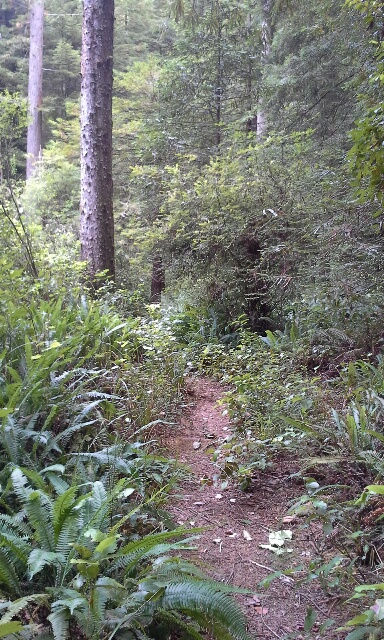
Um, no. I’ve known about the chocolate demise practically my whole life, long before the term “climate change” was ever coined. The threat to chocolate is that cacao trees need the shade of the rain forest to grow seedlings, the soil of the rain forest to nourish them, and full sun to grow. So chocolate farming is done on the edge of rain forests on cleared rain forest land. And rain forests are geared to go extinct in about forty years. So, no more rain forests, no more chocolate.

As a citizen of the United States, I am not one to talk about clearing forests. The land here used to be covered with vast forests, but the first thing any settler did as they moved west was clear the land. In fact, so many of the stories in our readers as schoolchildren were about those great folks and their great work ethic as they chopped down the great trees to build this great country. Cutting down trees has for hundreds of years been considered a good thing to do. It would be hypocritical of me, as one who has enjoyed the “benefits” of that destroyed primeval forest, to castigate others for doing the exact same thing.

But the truth is, half the world’s rainforests have been cleared in the past one hundred years, and at the rate they are continuing to be cleared — every year an area the size of England and Wales is gone — the rain forests will be erased in forty years.

If the rain forests were only cleared to grow chocolate, that would be one thing because the demise of the forests would be quite slow, but it’s a huge business — not just for the trees themselves, but the land for palm oil, soy, rubber, cattle. Not only does a percentage of the carbon dioxide emissions come from the downed forests — 12% — the forests themselves help clear human made pollution from the atmosphere. And with no rain forest, the pollution builds.

By the time the rain forests are gone, the population of Earth will be way over nine billion folks. (Hopefully, minus one — me.) What interests me is how few people talk about overpopulation anymore. Such an unpopular topic! How dare anyone suggest that people limit their reproduction or, horrors, not reproduce at all. But then, no one really wants zero population growth because zero population growth also means zero corporation growth. No growth, no profits.

Still, when I was young, I made the decision to ignore my own ticking biological clock and listen instead to the world’s ticking biological clock. And so I have no children. My footprint on this earth ends at my death. I met a woman my age recently who has more than sixty-five grandchildren and great-grandchildren. What could I possibly do to the earth in my lifetime that would equal even one tenth the effect this one woman has? Even if I never did anything to conserve, to recycle (recycle in the old use of the term meaning to use up and wear out), I would have done my part, but I walk very softly on this earth. I don’t need governments to try to change the climate for me, don’t need pundits to scare me with worst case scenarios, don’t need reactionaries to tell me how best to live my life. I’m doing everything I can for the world as it is.

Well, except for chocolate. I do sometimes eat chocolate.

***

Pat Bertram is the author of the suspense novels UnfinishedMadame ZeeZee’s Nightmare, Light BringerMore Deaths Than OneA Spark of Heavenly Fireand Daughter Am IBertram is also the author of Grief: The Great Yearning, “an exquisite book, wrenching to read, and at the same time full of profound truths.” Connect with Pat on Google+. Like Pat on Facebook.
Sauntering

John Muir, an early advocate for the preservation of the wilderness, was involved in the creation of some of our national parks. Since so many hikers (those who have heard of him, that is) seem to revere him, I always assumed he was an avid hiker. Not so. He once said, “I don’t like either the word or the thing. People ought to saunter in the mountains — not hike!”

He continued, “Do you know the origin of that word ‘saunter?’ It’s a beautiful word. Away back in the Middle Ages people used to go on pilgrimages to the Holy Land, and when people in the villages through which they passed asked where they were going, they would reply, “A la sainte terre,’ ‘To the Holy Land.’ And so they became known as sainte-terre-ers or saunterers. Now these mountains are our Holy Land, and we ought to saunter through them reverently, not ‘hike’ through them.”

This might be only Muir’s interpretation of the word saunter because most definitions say the origin of the word is unclear. And yet, there is this from another source: “Usually the pilgrims [to Saint Terre , the Holy Land] — traveled in caravans for safety. Many saints, and good priests and bishops, from the East and West, preached against what they often saw in such journeymen as a spirit of uncertain and sometimes even scandalous restlessness. The French coined the word saunter to describe such peripatetic meanderings of vagabond types on their way to Saint Terre.”

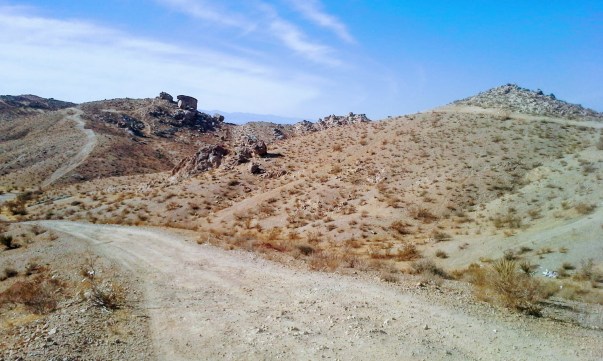
Sauntering, with its connotation of a spiritual ramble, is exactly what I do. Even though I use the term “hike,” the truth is, I don’t really hike. Or even walk. I saunter. I stop to look around. Breathe in the ambiance. Listen to the stillness. Smell the air. Feel the holiness of the land. Touch the spirit of the place. Sometimes even reverently touch a rock or a tree. (Or, not so reverently, the ground, if I trip.)

I used to go on group hikes, but even though there is supposed to be safety in numbers, I never felt safe. I always had to “hike.” To go at their speed. To hurry to catch up after stopping to savor a place. So not my idea of a proper wilderness experience!

Although my dream is of an epic hike, for me the challenge and the joy would be the time spent on the trail, not the distance traveled. Although thru-hikers deny that that hiking one of the major trails such as the Pacific Crest Trail or the Appalachian Trail is a competition, there’s really no other way to describe it. The competition might not be against each other, but there is definitely a race against time, the weather, even one’s own ability. There are only so many months to travel the trail before the winter snows make hiking impossible, and so sometimes grueling paces have to be set. And sometimes people try to break the record of how long it takes to hike the trail.

Not my idea of a spiritual journey or even just a good time.

Now a saunter — yep, that’s for me.

20180107_113937.jpg

***

Pat Bertram is the author of the suspense novels UnfinishedMadame ZeeZee’s Nightmare, Light BringerMore Deaths Than OneA Spark of Heavenly Fireand Daughter Am IBertram is also the author of Grief: The Great Yearning, “an exquisite book, wrenching to read, and at the same time full of profound truths.” Connect with Pat on Google+. Like Pat on Facebook.
 

New Year’s Letter to the Newly Bereft

I’ve been corresponding with a fellow who lost his life mate/soul mate a few short months ago, and after the holidays, he emailed me, telling me how unimaginably difficult it was going into the new year without the love of his life.

I wish I had comforting words to say to him and all the others who are new-born into the world of grief, or a bit of wisdom to help them get through this terrible time, or even a pat of encouragement, but I have no comfort, wisdom, encouragement. All I have is the truth. As I wrote to this new friend in grief:

Yes, it is unimaginably difficult. There is no way to sugar coat it. All the firsts are going to be hard — the first Christmas, the first New Year, the first Valentines day, etc. etc. etc. And such days will always hard.

I wish I had something more to offer than simply a validation that what you are feeling is normal and right and to be expected. Doesn’t help with the pain, though, does it? Sometime this year you will go through a period of peace. Savor that against the long haul. Because it is a long haul.

Wishing you a new year of health and peace.

Whether you are looking forward to a new love or looking back to your lost love, I wish you all a new year of health and peace and renewal.

***

Pat Bertram is the author of the suspense novels UnfinishedMadame ZeeZee’s Nightmare, Light BringerMore Deaths Than OneA Spark of Heavenly Fireand Daughter Am IBertram is also the author of Grief: The Great Yearning, “an exquisite book, wrenching to read, and at the same time full of profound truths.” Connect with Pat on Google+. Like Pat on Facebook.




